

P0016 on 2016 Volkswagen GTI: Crank/Cam Correlation Causes and Fixes
On a 2016 VW GTI, P0016 almost always points to a mechanical timing issue. The most likely cause is a stretched timing chain or a failed tensioner. This is a serious fault that requires immediate attention to prevent catastrophic engine damage. Less common causes include a faulty N205 VVT solenoid or oil-related problems. Expect repair costs of $1,500-$2,500 at a shop for a full timing service.
- P0016 on a 2016 GTI is a serious code that should be diagnosed immediately to prevent severe engine damage.
- The most likely cause is a stretched timing chain and/or failed tensioner, a known issue with the EA888 engine.
- Do not simply replace the sensors; the root cause is almost always mechanical (timing chain) or electro-mechanical (VVT solenoid).
- Diagnosis should involve checking the camshaft adaptation value with a proper scan tool before beginning any teardown.
- Repair is expensive and complex, and professional service at a qualified independent shop specializing in German vehicles is highly recommended.
What's Unique About the 2016-2016 Volkswagen GTI

The 2016 GTI uses the EA888 Gen 3 engine. While this generation features an updated timing chain tensioner design compared to earlier, more failure-prone versions (Gen 1/2), it is not immune to timing chain stretch over time. The P0016 code on this specific platform is a strong indicator of a timing system issue that should be taken very seriously, as it's a well-documented problem area for the EA888 engine family.
Diagnostic Flowchart

Tap your situation to follow the diagnostic path that matches what you're seeing on this vehicle.
Symptoms You May Notice
- Check Engine Light (CEL) is on
- Engine is hard to start or has a long crank time
- Rough or unstable idle
- Reduced engine power and acceleration
- Engine may stall
- Audible rattling noise from the engine, especially on startup, sometimes described as a 'VW Death Rattle'.
- Replacing the camshaft or crankshaft position sensors without first verifying the mechanical timing. The code often points to a mechanical issue, not a sensor failure.
Most Likely Causes

- Stretched Timing Chain or Failed Tensioner 🔴 High Probability The EA888 engine family has a known history of timing chain and tensioner issues. While the Gen 3 is improved, wear and tear, often exacerbated by long oil change intervals, can still lead to chain stretch, causing the timing to become inaccurate.
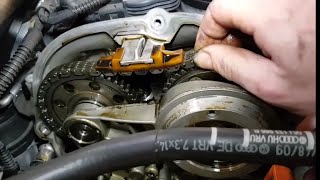
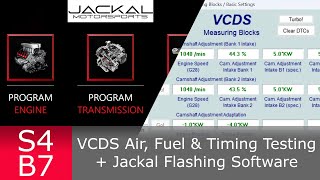
How to confirm: A technician can use a scan tool like VCDS to check the camshaft adaptation value (phase position) in Measuring Block 93 or a live data PID. 🎬 Watch: How to check camshaft adaptation values using VCDS. A value significantly deviated from 0 degrees (e.g., beyond -5 degrees) indicates stretch. Visual inspection of the tensioner's extension through the lower timing cover inspection port is the definitive confirmation 🎬 Watch: How to perform this DIY timing chain stretch test.; more than 6-7 ridges showing means the chain is stretched.
Typical fix: Replace the timing chain, tensioner, and all related guides and seals. This is typically done as a complete kit. Both the main timing chain and the balance shaft chain are often replaced at the same time.
Est. part cost: $400-$850 - Faulty Camshaft Adjuster Magnet (N205 Solenoid) 🟡 Medium Probability This solenoid controls the oil flow for the variable valve timing (VVT) system. It can get stuck due to oil debris or fail electronically, preventing the camshaft from adjusting correctly and causing a correlation fault.
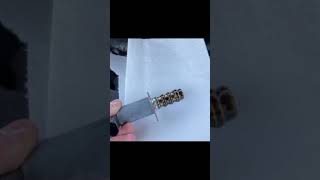
How to confirm: Test the solenoid's resistance and function with a multimeter and a scan tool. Swapping it with the exhaust solenoid (if applicable) to see if the code changes is a quick diagnostic step. A visual sign of failure can be an internal plunger that is stuck extended, whereas a good valve's plunger is flush.
Typical fix: Replace the N205 solenoid. It is located on the upper timing cover and is a relatively accessible part. Note that the retaining bolt is reverse-threaded (left to tighten) and should be torqued to 35 Nm.
Est. part cost: $50-$170 - Low or Dirty Engine Oil 🟡 Medium Probability The timing chain tensioner and VVT system are both operated by oil pressure. Low oil level or oil that is dirty, sludgy, or of the incorrect viscosity can impede their function and trigger a timing correlation code. Using oil that does not meet VW 502 00 specification is a common contributor.
How to confirm: Check the oil level on the dipstick and inspect its condition. If it's low or past its service interval, this should be addressed first before any parts are replaced.
Typical fix: Perform an oil and filter change using the correct VW-spec synthetic oil. In some cases, this alone can resolve the code if it was marginal.
Est. part cost: $70-$120 - Faulty Camshaft Position Sensor (G40) ⚪ Low Probability
How to confirm: Monitor the sensor's output with a scan tool or oscilloscope. Check the wiring and connector for damage. If the signal is erratic or absent while the engine is cranking, the sensor is likely faulty.
Typical fix: Replace the intake camshaft position sensor.
Est. part cost: $40-$100
Rare But Worth Checking
- Faulty Crankshaft Position Sensor (G28): This sensor is generally reliable. It's more likely to cause a no-start condition than a correlation fault, but it's not impossible.
- Sticking Spool Valve in Camshaft Bridge: Debris in the oil, often from a disintegrating screen on the camshaft bridge itself, can cause the mechanical spool valve to stick. This can cause a P0016 even if the chain and N205 solenoid are good. VW has a TSB (15 17 02 / 2045454) addressing the tearing strainer screen as a direct cause of camshaft adjuster issues.
- Slipped Crankshaft Timing Gear/Reluctor Ring: In very rare cases, the gear or the reluctor ring that the crankshaft sensor reads can slip, causing a timing mismatch that isn't related to the chain itself.
Diagnosis Steps
- Check Engine Oil: Verify the oil level is correct and the oil is clean and of the proper VW 502 00 specification. Incorrect oil level or viscosity can cause this code.
- Scan for All Codes: Use an OBD-II scanner to check for any other related codes that could provide more diagnostic clues.
- Analyze Live Data: Use an advanced scan tool (like VCDS or OBDeleven) to monitor 'Camshaft Adaptation Intake Bank 1 Phase Position'. A value greater than +/- 5 degrees strongly suggests a stretched timing chain.
- Physical Tensioner Inspection: Remove the small black inspection plug on the lower timing cover. Using a mirror and light, inspect the timing chain tensioner. If more than 6-7 ridges on the tensioner piston are visible, the chain is confirmed to be stretched.
- Test the N205 Solenoid: Command the VVT solenoid on and off with a scan tool to check for response. Test its internal resistance with a multimeter. Check for debris on the solenoid screens.
- Inspect Camshaft Bridge and Spool Valve: If timing is confirmed good but the code persists, remove the upper timing cover and inspect the camshaft bridge for scoring and ensure the spool valve moves freely. Check for a torn screen, as per VW TSB 2045454.
- Sensor Testing: If mechanical timing and VVT components are confirmed to be correct, test the camshaft and crankshaft sensors individually with an oscilloscope to ensure they are producing a clean, square wave signal.
Parts You'll Likely Need

- Timing Chain Kit
(OEM #06K109158BS (Chain), 06K109467Q (Tensioner))— This is the most common fix. A complete kit ensures all wearable components (chain, tensioner, guides) are replaced at once. A full kit part number can be VWTK07 from some vendors.
Trusted brands: INA, Febi Bilstein, BorgWarner
OEM price range: $600-$900
Aftermarket price range: $400-$650 - Camshaft Adjuster Magnet (N205 Solenoid)
(OEM #06L109259D (superseded by 06L109259E))— A common point of failure in the VVT system that can cause a timing correlation fault. The part number 06L109259D is widely referenced, but has been updated to 06L109259E.
Trusted brands: Volkswagen (OEM), INA, Febi Bilstein
OEM price range: $160-$240
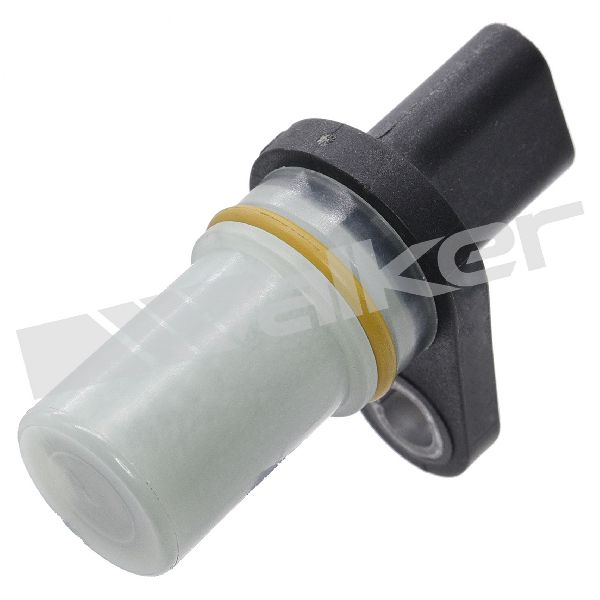
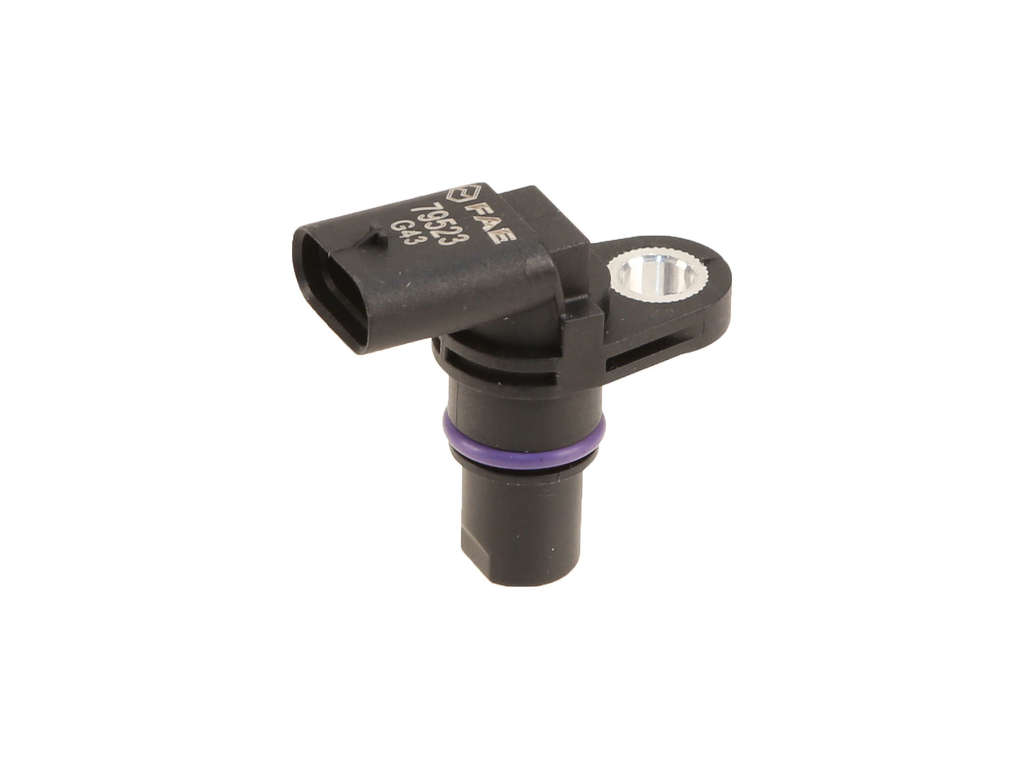
Aftermarket price range: $50-$120 - Camshaft Position Sensor (G40)
(OEM #04C907601K)— Replaced when diagnosis confirms the sensor itself is faulty, which is a less common cause.
Trusted brands: Bosch, Standard Motor Products
OEM price range: $70-$110
Aftermarket price range: $40-$80 - Crankshaft Position Sensor (G28)
(OEM #06H906433)— Replaced only if specific testing proves it has failed. It is rarely the cause of a P0016 code.
Trusted brands: Bosch, Delphi
OEM price range: $80-$120
Aftermarket price range: $50-$90
Related Codes That Often Appear With This One
- P0011 — This code for 'Camshaft Position 'A' - Timing Over-Advanced' often appears with P0016 because a stretched chain or faulty VVT system can cause the camshaft to be out of sync in either direction. A VW TSB mentions P0011 and P0016 together as potential faults.
- P0341 — This code for 'Camshaft Position Sensor 'A' Circuit Range/Performance' can be triggered if the sensor itself is failing or if the erratic movement from a loose timing chain causes an implausible signal.
- P000A — This code for 'Camshaft Positioner 'A' Slow Response' was noted in an NHTSA complaint (ODI #11288305) and points to a sluggish VVT system, which is directly related to the cause of P0016.
Technical Service Bulletins (TSBs) & Recalls
- A general manufacturer bulletin that lists P0011 and/or P0016 as a possible fault code in the ECM among a list of other potential issues, acknowledging it as a recognized fault.
- Addresses P0011 and/or P0016 on 2.0L CCTA engines (a closely related EA888 variant). The bulletin points to wear on the camshaft bearing bridge causing axial camshaft movement, which can lead to these codes. The fix involves inspecting and potentially replacing the camshaft bearing bridge.
- While for an earlier engine version, this TSB is highly relevant as it details procedures for checking a failed timing chain tensioner, a primary cause of P0016, and warns of potential engine damage. It is referenced by Ross-Tech for diagnosing P0016 on chain-driven 2.0T engines.
Platform-Specific Known Issues
- Owner Experience: P0016 with APR Stage 2 Tune: A user on golfmk7.com with a 2017 GTI (16,000 miles) running an APR Stage 2 tune reported a P0016 code along with a noise from the camshaft area. Using VCDS, they observed a 10-degree offset between the specified and actual intake camshaft position at idle. The community suggested this pointed to a faulty N205 solenoid or a sticking spool valve in the cam bridge, rather than a stretched chain at such low mileage.
Mechanic-Grade Diagnostic Values
- Camshaft Adaptation Intake Bank 1 Phase Position — expected: Between 0° and -5.0° at warm idle.. Failure: A value consistently greater than -5.0° (e.g., -6°, -8°) strongly indicates a stretched timing chain.
- Camshaft Position Sensor (G40) Supply Voltage — expected: Approximately 5.0 Volts DC between the power and ground pins on the sensor's wiring harness connector with the key on, engine off.. Failure: No voltage or significantly lower voltage points to a wiring issue or a problem with the ECM's 5V reference circuit.
- N205 VVT Solenoid (Camshaft Adjuster) Bolt Torque — expected: 35 Nm (25.8 ft-lbs). NOTE: This bolt is reverse-threaded; turn left to tighten, right to loosen.. Failure: Improper torque can lead to leaks or damage to the solenoid or cam bridge.
Scan Tool Commands That Help
- VCDS, OBDeleven, ODIS: Read Measuring Values / Live Data for 'Camshaft Adaptation Intake Bank 1 Phase Position' — This is the primary diagnostic step after reading codes. It quantifies the degree of timing deviation to determine if the chain is stretched without disassembly.
- VCDS, ODIS: Output Tests / Actuator Tests for N205 Solenoid — Used to functionally test the N205 solenoid. The scan tool will command the solenoid to cycle, and the technician can observe changes in engine sound or live data to confirm its operation.
Wiring & Ground Locations
- 15 — Earth point on the cylinder head.. The Camshaft Position Sensor (G40) is mounted on the cylinder head. A poor ground at this location could introduce electrical noise into the sensor's circuit, potentially affecting its signal integrity.
- Main Engine/Chassis Ground — A primary ground point with multiple brown wires is located on the bulkhead behind the battery.. This is a critical ground distribution point for many engine components and the ECM. Corrosion or a loose connection here can cause widespread, difficult-to-diagnose electrical issues, including sensor correlation problems.
- G40 Sensor Connector — 3-pin connector on the Camshaft Position Sensor, located on the top of the cylinder head.. This is the direct interface for testing the sensor's power, ground, and signal. The pins typically correspond to a 5V reference from the ECU, a ground provided by the ECU, and the signal wire returning to the ECU.
Real Owner Repair Stories
- vwvortex.com forum user (2011 GTI (EA888 Gen 2, but same principle)) — P0016 code present after a cylinder head rebuild due to a previous tensioner failure.
❌ Tried (didn't work) Double-checking the timing marks, which were confirmed to be perfectly aligned.
✅ What actually fixed it The user discovered heat damage and oil starvation on the camshaft bridge. After replacing the cam bridge, the code was still present intermittently but eventually went away after several months of driving. The user conjectured that the aftermarket timing chain may have needed a 'break-in' period to settle. - golfmk7.com forum user (2015 GTI DSG, 56k miles) — P0016 and P0341 codes, slight chain rattle on startup. Car otherwise ran perfectly.
❌ Tried (didn't work) Replacing the Camshaft Position Sensor (G40). The P0016 code returned within 50 miles.
✅ What actually fixed it The user cleared the code after it returned, and it did not come back for the next 500+ miles of driving. The resolution was inconclusive, but highlights that the issue can be intermittent and not always indicative of immediate, hard failure, complicating diagnosis.
"I Checked Everything" — The Actual Cause
- The equivalent of a 'clean smoke test' for P0016 is confirming the mechanical timing marks are perfectly aligned, yet the code persists. In these cases, the root cause is almost always an oil-flow problem within the VVT system. Debris from a torn camshaft bridge screen can clog the N205 solenoid or cause the internal spool valve in the cam bridge to stick. This prevents the cam phaser from adjusting properly, creating a correlation fault even though the base timing of the chain and sprockets is correct.
OEM Part Supersession History
06H109467-series (Gen 1/2 Tensioner)→06K109467-series (Gen 3 Tensioner, e.g., 06K109467Q)— The original tensioner design was prone to premature failure, allowing the piston to retract when oil pressure was lost, leading to chain slack and catastrophic failure. The new design uses a more robust retaining mechanism.06L109259D (N205 Solenoid)→06L109259E— Standard part revision for improved reliability or manufacturing process.
Heads up: The newer part may look slightly different but is functionally compatible.
Helpful Videos
We Have This Part in Stock


The information in this article is provided for general reference and educational purposes only. Vehicle specifications, procedures, and part compatibility can vary by production date, trim level, and region. Always consult your vehicle's factory service manual and verify part numbers before purchasing or performing repairs. Safety-critical components such as airbags, seat belts, and braking systems should be installed by a qualified professional.
- Volkswagen GTI:
- 🎬 Helpful Videos
- 🛍️ Shop This Part
- What's Unique About the 2016-2016 Volkswagen GTI
- Diagnostic Flowchart
- Symptoms You May Notice
- Most Likely Causes
- Rare But Worth Checking
- Diagnosis Steps
- Parts You'll Likely Need
- Related Codes That Often Appear With This One
- Technical Service Bulletins (TSBs) & Recalls
- Platform-Specific Known Issues
- Mechanic-Grade Diagnostic Values
- Scan Tool Commands That Help
- Wiring & Ground Locations
- Real Owner Repair Stories
- "I Checked Everything" — The Actual Cause
- OEM Part Supersession History
- 🎟️ Get 5% Off