

P0016 on 2013-2016 Volkswagen CC: Crank/Cam Correlation Causes and Fixes for 2.0T TSI
On the 2.0T TSI engine (CCTA/CBFA) in the 2013-2016 VW CC, code P0016 almost always indicates a stretched timing chain or a failed timing chain tensioner. This is a well-documented, critical issue that requires immediate attention to prevent catastrophic engine failure. Less common causes include a faulty N205 VVT solenoid, a stuck spool valve in the camshaft bridge, or faulty sensors.
- P0016 on a 2013-2016 VW CC with the 2.0T engine is a critical warning that should be addressed immediately.
- The most likely cause is a failed timing chain tensioner or a stretched timing chain, a well-documented issue with this engine.
- Do not drive the vehicle. The risk of the timing chain slipping is high and can cause pistons and valves to collide, destroying the engine.
- Diagnosis should start with a scan tool to check the camshaft phase deviation (measuring block 93). A value over 5 degrees strongly suggests a mechanical timing problem.
- Do not simply replace the cam/crank sensors without first ruling out the much more common mechanical timing faults.
What's Unique About the 2013-2016 Volkswagen CC

The 2013-2016 VW CC with the 2.0T TSI engine (engine codes CCTA, CBFA) is highly susceptible to timing chain issues. Early versions of the timing chain tensioner used a faulty mechanical ratchet mechanism that could fail, especially after the engine was shut off, allowing the chain to become slack. Upon the next startup, the chain could jump a tooth, causing immediate and severe engine damage. This design flaw was so widespread it led to a class-action lawsuit and subsequent warranty extensions for this component on vehicles up to 10 years old or 100,000 miles. While 2013+ models were more likely to have an updated tensioner from the factory, chain stretch itself remains a common wear item leading to this code.
Diagnostic Flowchart

Tap your situation to follow the diagnostic path that matches what you're seeing on this vehicle.
Symptoms You May Notice
- Check Engine Light and/or EPC light is on.
- Engine rattles loudly (like a can of marbles) for 2-3 seconds on cold startup.
- Engine cranks for a long time before starting, or fails to start entirely.
- Rough or unstable idle, sometimes hunting for RPM.
- Reduced engine power and poor acceleration.
- Engine misfires, which may be logged as P0300, P0301, etc.
- Audible chain slap or whirring noise from the timing cover area while the engine is running.
- Replacing the camshaft and crankshaft position sensors when the actual fault is a stretched timing chain. This is the most common misdiagnosis and will not fix a persistent P0016 code where the cam phase adaptation value is out of spec.
- Replacing only the N205 solenoid without inspecting the camshaft bridge screen. If the screen has failed, debris will likely cause the new solenoid to fail as well.
Most Likely Causes

- Stretched Timing Chain / Failed Timing Chain Tensioner 🔴 High Probability The original-design tensioner on 2.0T TSI engines (EA888 Gen1/Gen2) from approximately 2008-2013 used a weak ratchet clip that could fail to hold tension when oil pressure was absent (engine off). This allows slack, leading to a jumped tooth on startup. Even with the updated tensioner, the chain itself is a wear item and can stretch over 80k-120k miles, causing the correlation fault.
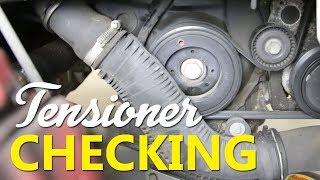
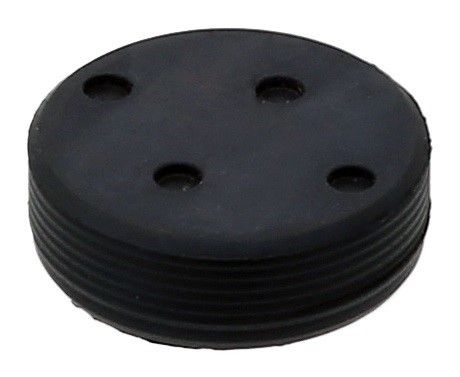
How to confirm: Use a VW-specific scan tool (like VCDS or OBDeleven) to check measuring block 93 for "Camshaft Adaptation" or "Phase Position Bank 1 Intake". A value greater than -5 degrees (e.g., -6, -7) at warm idle indicates significant chain stretch. A visual inspection of the tensioner's extension is also definitive. Remove the small inspection plug on the lower timing cover (Part No. 06H115418AA) and observe the tensioner piston. If more than 6-7 ridges are visible, the chain is stretched and the assembly must be replaced.
Typical fix: Replace the timing chain, the updated tensioner (Part No. 06K109467K), and all related guides, rails, and seals. The lower timing chain cover is a one-time-use part and must also be replaced. This is a major service requiring specialized tools.
Est. part cost: $400-$800 for a complete, high-quality kit (e.g., Iwis, INA). - Faulty Camshaft Adjuster Magnet (N205 Solenoid) or Spool Valve 🟡 Medium Probability The control valve (spool valve) inside the camshaft bridge can stick, or its integrated screen can tear. Debris from a torn screen can travel through oil passages, clogging the N205 solenoid or the cam phaser itself, impeding its ability to adjust timing correctly.
How to confirm: Remove the N205 solenoid (held by a T30 bolt on the upper timing cover) and inspect it for debris. Remove the camshaft bridge (requires removing the upper timing cover) and inspect the spool valve for free movement. Check if the screen on the bridge is intact. A torn screen is a very common finding.
Typical fix: Replace the N205 solenoid (Part No. 06L109259D) and/or the spool valve (Part No. 06H109257C). If the screen on the camshaft bridge is torn, the bridge must be replaced and oil passages thoroughly cleaned.
Est. part cost: $50-$150 for the solenoid or valve. - Faulty Camshaft Position Sensor (G40) ⚪ Low Probability
How to confirm: This is often replaced as a guess but is rarely the root cause for P0016 alone. If the code is intermittent and not accompanied by a high camshaft adaptation value, you can test the sensor's circuit. However, a persistent P0016 with a phase deviation points to a mechanical issue, not an electrical sensor failure.
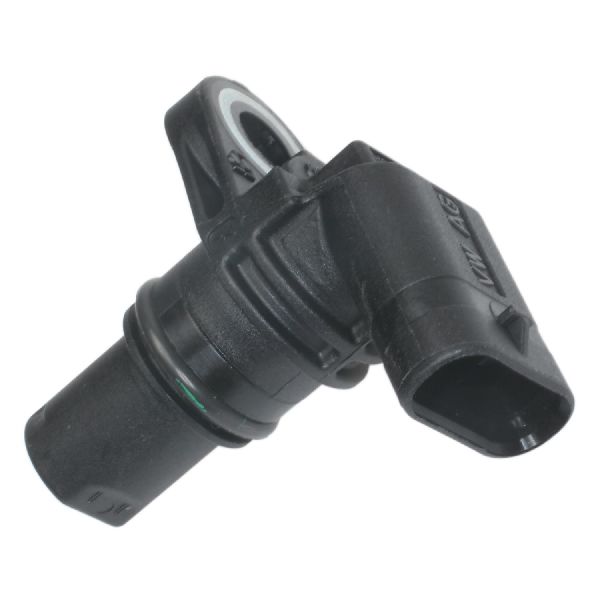
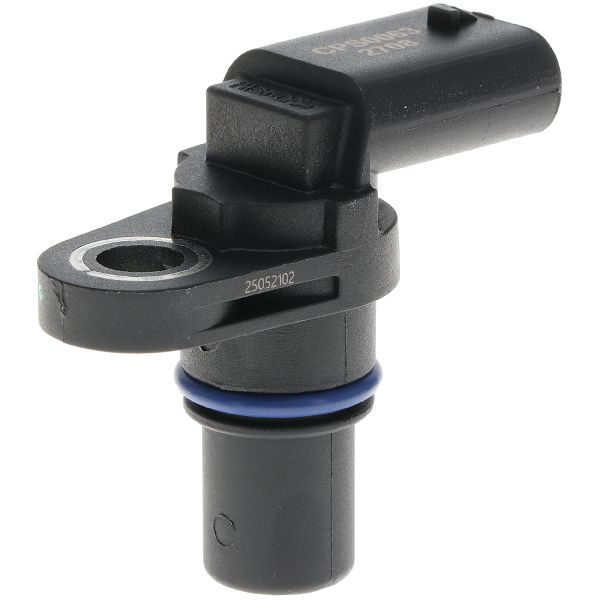
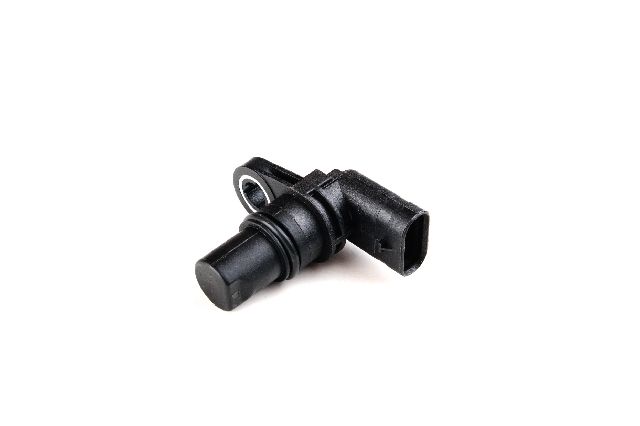
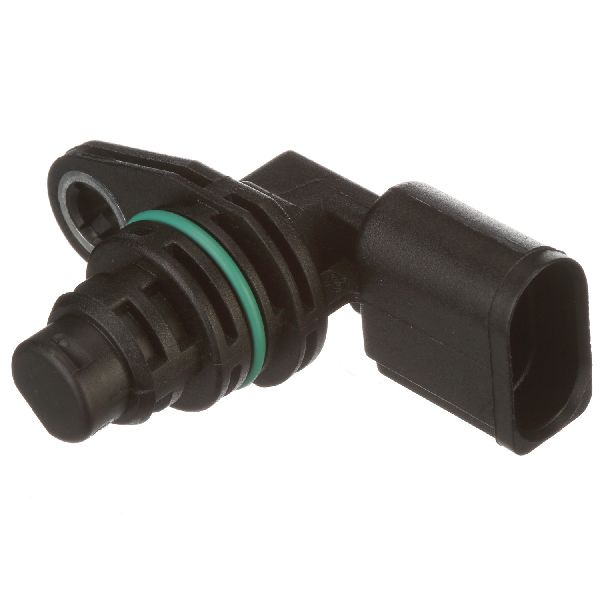
Typical fix: Replace the camshaft position sensor (OEM Part No. 07L905163C).
Est. part cost: $25-$70 - Low or Dirty Engine Oil ⚪ Low Probability The entire VVT system, including the tensioner and cam phaser, is hydraulically operated. Low oil level, low oil pressure, or oil sludge from extended drain intervals can cause the tensioner to lose pressure or the N205/spool valve to stick, leading to timing correlation issues.
How to confirm: Check the engine oil level and condition on the dipstick. Verify oil pressure using a mechanical gauge if sludge or low level is suspected.
Typical fix: Perform an engine oil and filter change using a VW 502.00 approved full-synthetic oil. In cases of sludge, multiple short-interval oil changes may be needed.
Est. part cost: $60-$100 - Faulty Crankshaft Position Sensor (G28) ⚪ Low Probability
How to confirm: Test the sensor's output with an oscilloscope. This sensor is less likely to fail than the camshaft sensor for this code and is rarely the cause. A failure here usually results in a no-start condition.
Typical fix: Replace the crankshaft position sensor.
Est. part cost: $40-$90
Rare But Worth Checking
- Damaged Camshaft Adjuster (Phaser): The mechanical phaser unit on the end of the camshaft can fail internally, but this is much less common than issues with the control solenoid (N205), spool valve, or the chain itself.
- Worn or Damaged Crankshaft Pulley/Harmonic Balancer: On some TDI engines, wear on the crankshaft pulley keyway can cause a P0016 code, but this is not a common issue on the 2.0T TSI petrol engine.
- Failed/Clogged Oil Check Valve in Cylinder Head: As per VW TSB 2045454, a small brass check valve in the cylinder head can fail, affecting oil pressure to the VVT system. Replacement requires cylinder head removal.
Diagnosis Steps
- Verify engine oil level and condition. If low, dirty, or incorrect viscosity, correct this first as the VVT system is oil-pressure dependent.
- Scan the ECM for all stored fault codes with a VW-specific tool (VCDS, OBDeleven). Note any codes that accompany P0016.
- Using the scan tool, navigate to Engine -> Live Data (or Measuring Value Blocks) and select Block 93. Observe the "Camshaft Adaptation" or "Phase Position Bank 1 Intake" value at a stable, warm idle. If the value is consistently greater than -5.0 degrees, the timing chain is stretched and requires replacement.
- If chain stretch is not indicated by Block 93, the next step is to inspect the VVT control system. Remove the upper timing cover. Inspect the Camshaft Adjuster Magnet (N205) for debris. Remove the camshaft bridge and inspect the internal spool valve for sticking and, critically, check if the mesh screen on the bridge is torn or missing.
- If the screen is torn, replace the camshaft bridge and N205 solenoid, and clean all accessible oil passages before reassembly.
- If the above steps do not reveal the cause, test the electrical circuits for the Camshaft Position Sensor (G40) and Crankshaft Position Sensor (G28) for continuity and proper voltage.
- As a final confirmation, perform a physical inspection of the timing chain, guides, and tensioner by removing the lower timing cover. This is labor-intensive and is usually only done once scan tool data has strongly indicated a mechanical timing fault.
Parts You'll Likely Need

- Timing Chain Kit — This is the most common cause of P0016 on the 2.0T TSI engine. A complete kit should include the chain, tensioner, and all plastic guides.
- Camshaft Bridge
(OEM #06H103144K)— The integrated oil screen frequently tears, starving the VVT system of oil pressure and sending debris into oil passages. - Camshaft Adjuster Magnet (N205 Solenoid)
(OEM #06L109259D)— Can become clogged with debris (often from a failed bridge screen) or fail electrically, preventing proper cam phasing. - Camshaft Spool Valve
(OEM #06H109257C)— This valve, located in the camshaft bridge, can stick or become clogged, leading to incorrect cam adjustment. - Lower Timing Cover
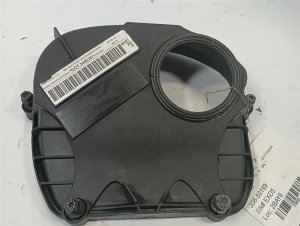
(OEM #06H109210Q)— This is considered a one-time-use part by the manufacturer and should be replaced during a timing chain service to ensure a proper seal.
Related Codes That Often Appear With This One
- P0011 — This code indicates "Camshaft Position 'A' - Timing Over-Advanced or System Performance". It often appears with P0016 because a stretched chain or faulty VVT system can cause the cam timing to be incorrect in either direction (correlation or advanced).
- P0341 — This code indicates a problem with the Camshaft Position Sensor 'A' circuit range/performance. It can be triggered alongside P0016 if the sensor itself is failing or if the erratic movement from a loose timing chain causes an implausible signal for the ECM to read.
- P0300, P0301, P0302, etc. — Random or specific cylinder misfire codes are common because incorrect cam timing disrupts the proper sequence of intake, compression, power, and exhaust, leading to incomplete combustion and a rough running engine.
Technical Service Bulletins (TSBs) & Recalls
- VW TSB 15-17-02 / 2045454: Addresses MIL on with P0016, pointing to a torn strainer screen in the camshaft bearing bracket as a potential cause.
- VW TSB 15-12-01 / TPI 2028302: Referenced for no-start conditions related to timing chain problems.
- VW TSB 01-08-03: An older bulletin that describes the P0016 condition and potential for engine rattle, noting the cause is correlation out of tolerance.
Platform-Specific Known Issues
- A known issue with the strainer screen in the camshaft bearing bracket tearing can cause debris to block oil passages, leading to camshaft adjuster problems and triggering P0016. VW TSB 2045454 directly addresses this.
- The original timing chain tensioner was subject to a design flaw and a class-action lawsuit. While 2013+ models are less likely to have the original part, any vehicle with over 80,000 miles is a candidate for chain stretch regardless of the tensioner version.
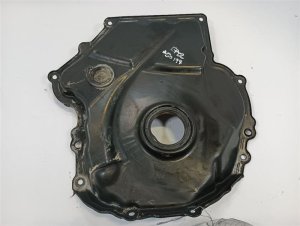
- The lower timing chain cover (06H109210QG) is a thin, stamped metal part sealed with RTV. It is easily bent or damaged during removal and is considered a mandatory replacement item by most specialists to ensure a leak-free repair.
Mechanic-Grade Diagnostic Values
- Camshaft Variable Timing Solenoid (N205) Resistance — expected: 5-15 Ω. Failure: A reading outside this range indicates a faulty solenoid.
- Camshaft Position Sensor (G40) Signal Voltage — expected: Key on, engine off: 5V or 10V static reference. Engine running: Fluctuating voltage, averaging ~6V on a DMM.. Failure: A signal wire stuck at the reference voltage (e.g., 10V) or near 0V while the engine is running indicates a non-functional sensor.
- Camshaft Adaptation Phase Angle (VCDS Block 93) — expected: Between 0° and -5.0° at warm idle.. Failure: A value consistently greater than -5.0° (e.g., -6°, -8°, etc.) strongly indicates a stretched timing chain requiring replacement.
Hidden / Shadow Codes Worth Checking
- P0341 - Implausible Signal: While not a hidden code, its appearance with P0016 on a 2.0T TSI is a strong indicator of a mechanical timing issue. A VW Technical Service Bulletin (TT 01-15-08) directly links this combination to faults with the intake camshaft, adjuster bridge, or spool valve, rather than just a simple sensor failure. (see via Standard OBD-II scanner, VCDS, OBDeleven.)
Scan Tool Commands That Help
- VCDS / ODIS: Basic Setting: "Timing Chain Elongation: reset after chain replacement" (e.g., IDE06716 on UDS modules) — This function must be run after replacing the timing chain. It resets the learned adaptation value for chain stretch in the ECM. Failing to do so can cause the new chain to be timed incorrectly by the computer, leading to rough running or persistent codes even with new parts.
- VCDS / ODIS: Output Test: Camshaft Adjustment Valve (N205) — This bidirectional test commands the N205 solenoid to actuate. It is used to verify if the solenoid is electrically responsive and mechanically moving. This can help differentiate between a failed solenoid and a downstream problem like a stuck spool valve or clogged oil passage.
Wiring & Ground Locations
- G40 Camshaft Position Sensor Connector (T3q) — On the upper timing cover, connected to the G40 sensor.. Allows for precise electrical testing. Pin 1 is Supply Voltage, Pin 2 is the Signal wire, and Pin 3 is Ground. Probing these pins is essential to confirm the sensor is receiving power and sending a signal before replacing it.
- Main Engine Ground — Typically a braided strap from the engine block to the chassis frame rail in the engine compartment.. A corroded or loose main engine ground can cause floating or incorrect reference voltages for critical sensors like the G40 (Camshaft) and G28 (Crankshaft), leading to erroneous correlation codes.
Real Owner Repair Stories
- YouTube: MotorCarNut comment section (2010 VW CC (CBFA engine)) — Persistent P0016 code for one year, but car drives perfectly fine with no startup delay or misfires.
❌ Tried (didn't work) A complete timing chain kit was replaced a year prior.
✅ What actually fixed it Unresolved, but the key finding was that the cam phaser adaptation value was stuck at -12 degrees, well outside the spec, even with a new chain. This points to a faulty camshaft adjuster (phaser) itself or an ECU adaptation issue, not the chain. - YouTube: GTI Runs Rough Timing Issue Cam Crank Correlation P0016 (VW GTI 2.0T (EA888)) — Rough running condition with P0016.
❌ Tried (didn't work) Initial diagnosis might point to timing chain, but further checks were performed first.
✅ What actually fixed it The mechanical timing was verified to be correct. The root cause was a combination of a faulty magnetic adjuster (N205) and a sticking oil control spool valve in the camshaft bridge. Replacing both components resolved the issue without a full timing job. - Reddit: r/AskAMechanic (2017 Volkswagen Tiguan, ~100k miles) — EPC light, engine vibrating, multiple codes including camshaft timing issues.
❌ Tried (didn't work) Replaced valve cover gasket, camshaft sensor, and performed an oil change.
✅ What actually fixed it The final diagnosis was a burst camshaft bridge screen. The story highlights a common misdiagnosis path where sensors are replaced first. The ultimate repair is to address the bridge, either by replacing it or removing the screen debris and ensuring oil passages are clear. The user was advised to see a VW specialist rather than a general mechanic for this specific repair.
"I Checked Everything" — The Actual Cause
- In the context of P0016, the equivalent of a 'clean smoke test' is confirming the base mechanical timing is correct (i.e., the chain has not jumped a tooth). In multiple documented cases, even with correct timing marks, the P0016 code was ultimately caused by a faulty oil control spool valve inside the camshaft bridge or a clogged/failed N205 solenoid. Debris from a torn camshaft bridge screen is a frequent cause of these VVT component failures, leading to a correlation fault despite the chain itself being physically aligned.
OEM Part Supersession History
06H109467N, 06H109467T, 06H109467AB→06K109467K— The original tensioner designs used a ratchet mechanism that was prone to failure, allowing the timing chain to lose tension when the engine was off. The updated 'K' revision uses a stronger design to prevent this failure.
Heads up: Older part numbers must not be used for service. Only the latest revision (06K109467K or newer) should be installed to prevent catastrophic failure.06L109259A→06L109259D— Revisions to the Camshaft Adjuster Magnet (N205 Solenoid) for improved reliability and performance.
Model Year Variations Within This Range
- 2013: Early 2013 model year vehicles may have been built with the older, failure-prone timing chain tensioner design. The transition to the updated tensioner (06K109467K) was not a clean cut-off. The only way to be certain is to visually inspect the tensioner through the inspection port on the lower timing cover.
Helpful Videos

Used OEM Parts in Stock



New Aftermarket Parts Available


The information in this article is provided for general reference and educational purposes only. Vehicle specifications, procedures, and part compatibility can vary by production date, trim level, and region. Always consult your vehicle's factory service manual and verify part numbers before purchasing or performing repairs. Safety-critical components such as airbags, seat belts, and braking systems should be installed by a qualified professional.
- Volkswagen CC:
- 🎬 Helpful Videos
- 🛍️ Shop This Part
- What's Unique About the 2013-2016 Volkswagen CC
- Diagnostic Flowchart
- Symptoms You May Notice
- Most Likely Causes
- Rare But Worth Checking
- Diagnosis Steps
- Parts You'll Likely Need
- Related Codes That Often Appear With This One
- Technical Service Bulletins (TSBs) & Recalls
- Platform-Specific Known Issues
- Mechanic-Grade Diagnostic Values
- Hidden / Shadow Codes Worth Checking
- Scan Tool Commands That Help
- Wiring & Ground Locations
- Real Owner Repair Stories
- "I Checked Everything" — The Actual Cause
- OEM Part Supersession History
- Model Year Variations Within This Range
- 🎟️ Get 5% Off