

P0016 on 2015 Volkswagen Beetle TDI: Crank/Cam Correlation Causes and Fixes
On a 2015 VW Beetle TDI, code P0016 almost always indicates a critical mechanical timing issue, such as a slipped or failed timing belt, or a bad tensioner. A known cause is a leaking AdBlue/DEF injector contaminating the timing belt area, causing the belt to degrade and slip. This is a critical fault that requires immediate attention. Do not drive the vehicle, as it has an interference engine and can suffer catastrophic damage.
- P0016 on a 2015 Beetle TDI is a critical fault that means the engine's mechanical timing is off.
- Do not drive the vehicle. Tow it to a qualified mechanic to prevent catastrophic engine damage.
- The cause is almost certainly a problem with the timing belt system (slipped belt, bad tensioner), not a faulty sensor.
- The correct repair is a complete timing belt service, including a new belt, tensioner, idlers, and water pump.
- This repair requires special tools and expertise; it is not recommended for a novice DIYer.
What's Unique About the 2015-2015 Volkswagen BEETLE TDI
The 2015 Beetle TDI uses the EA288 diesel engine (engine code CVCA), which has a timing belt, not a chain. Unlike the timing chain issues common on VW's gasoline (TSI) engines, the P0016 code on this TDI is almost always related to the timing belt system. A notable and well-documented issue for these engines is the potential for a leaking AdBlue (DEF) injector located above the timing belt cover to drip fluid into the timing assembly. This fluid crystallizes, creating a mess that can cause the tensioner to bind, stretch the belt, and lead to the belt slipping a tooth or failing entirely, directly causing a P0016 fault.
Diagnostic Flowchart
Tap your situation to follow the diagnostic path that matches what you're seeing on this vehicle.
Symptoms You May Notice
- Check Engine Light is on
- Flashing glow plug light
- Engine runs rough or misfires
- Reduced engine performance
- Engine cranks but does not start
- Hard starting / extended crank time
- Rattling or unusual noises from the engine bay
- Engine stalls unexpectedly
- Replacing the camshaft (G40) and crankshaft (G28) position sensors without first verifying the engine's mechanical timing. The P0016 code is most often a mechanical problem, not an electrical one, especially on this engine.
Most Likely Causes
- Slipped or Damaged Timing Belt (Often due to AdBlue Contamination) Very-high Probability A leaking AdBlue injector nozzle, located above the timing cover, can drip fluid that seeps into the timing belt area. The fluid crystallizes into a hard, abrasive substance that contaminates the belt and pulleys. This can cause the belt to stretch, slip a tooth, or shred, leading directly to a P0016 code. Normal wear and tear or a seized water pump can also cause a slip.
How to confirm: A physical inspection of the timing belt area is required. Look for white, crystalline residue, which is a clear sign of AdBlue contamination. The engine's mechanical timing must be verified using specialized locking tools for the crank (T10490), camshaft, and high-pressure fuel pump.
Typical fix: Perform a complete timing belt service, which includes replacing the timing belt, tensioner, and idler pulleys. Thoroughly clean all crystalline residue from the engine block, pulleys, and covers. Replace the water pump as well. Crucially, the source of the AdBlue leak must be repaired 🎬 Watch: Full timing belt replacement and P0016 diagnosis walkthrough. to prevent a recurrence.
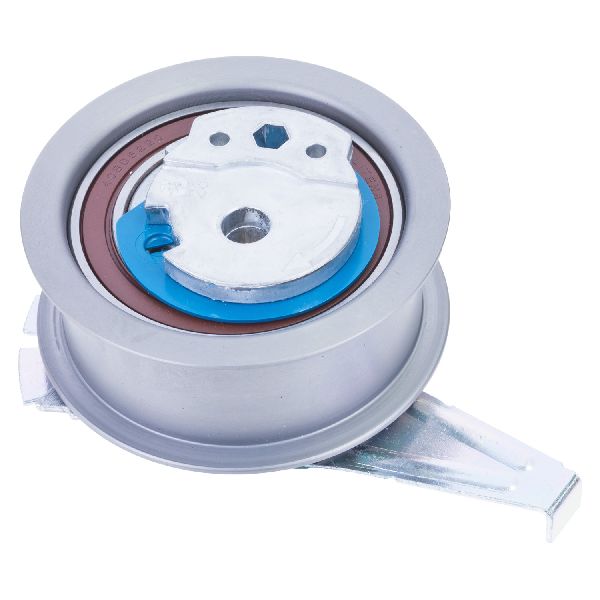
Est. part cost: $250-$500 - Failed Timing Belt Tensioner 🔴 High Probability The tensioner maintains the correct pressure on the timing belt. It can fail mechanically or its function can be impeded by the buildup of crystallized AdBlue, causing it to bind or providing incorrect tension, which allows the belt to become slack and jump a tooth.
How to confirm: During a physical inspection of the timing system, check the tensioner for proper operation. The tensioner's indicator mark will likely be out of its specified window if the belt has stretched or slipped.
Typical fix: Replace the timing belt tensioner as part of a complete timing belt kit replacement. Do not replace the tensioner in isolation.
Est. part cost: $60-$120 - Incorrect Timing After Previous Service 🟡 Medium Probability The EA288 engine requires specific locking tools and procedures. If a previous timing belt service was performed incorrectly, even by one tooth, it can cause a P0016 code to appear immediately or after some time. One forum user reported a P0016 code 10k miles after a timing belt job, with diagnostics showing a 16.5° camshaft adaptation, indicating incorrect installation.
How to confirm: Verify the engine's mechanical timing using the correct locking tools for the crankshaft, camshaft, and high-pressure fuel pump. A VCDS scan may show a large camshaft adaptation value (e.g., > 5 degrees).
Typical fix: Re-perform the entire timing belt service correctly, ensuring all components are locked at TDC and the tensioner is set according to the manufacturer's procedure.
Est. part cost: $250-$450 - Faulty Camshaft or Crankshaft Position Sensor ⚪ Low Probability While possible, sensor failure is a much less common cause for P0016 than a mechanical timing issue. The sensors are often correctly reporting 🎬 See how to diagnose the P0016 fault and sensor locations. the misalignment. Many owners and shops mistakenly replace sensors first, only for the code to return.
How to confirm: Use a scan tool to monitor live data from both sensors. An oscilloscope is the best tool to compare their patterns against a known-good waveform. Swapping sensors is a common but often ineffective diagnostic step.
Typical fix: Replace the faulty sensor. The Crankshaft Position Sensor is G28 (06K906433B); the Camshaft Position Sensor is G40 (04L907601).
Est. part cost: $40-$100
Rare But Worth Checking
- Damaged Crankshaft Pulley or Reluctor Wheel: The toothed ring that the crankshaft sensor reads can become damaged or, in very rare cases, slip its position, causing an incorrect signal that mimics a timing issue. This is highly unlikely but possible. A known failure on TDI engines is wear on the inner keyway of the crankshaft gear, which allows for slight rotational movement, throwing off timing by half a tooth and triggering P0016.
- Sticking Camshaft Adjuster Control Valve: Ross-Tech notes that on 2015 CVCA engines, the camshaft adjuster control valve may stick, which can contribute to timing correlation faults. A VW TSB also mentions that a torn strainer screen in the camshaft bearing bracket can cause debris to enter and affect the adjuster valve. In some cases, the internal mechanical spool valve fails, not the external electronic solenoid (N205).
- Twisted Camshaft After Belt Slip: In a severe timing belt slip event (e.g., caused by a seized water pump), the sudden stop can theoretically twist the camshaft itself, where the lobes are pressed onto a central tube. Even if timing is reset perfectly with locking tools, a persistent P0016 and a large adaptation value in VCDS may point to this internal camshaft damage.
Diagnosis Steps
- Confirm the P0016 code and flashing glow plug light are present using an OBD-II scanner.
- Check for a history of AdBlue/DEF system leaks. Inspect the area around and below the AdBlue injector for signs of white crystalline residue.
- Visually inspect the wiring and connectors for the Camshaft Position Sensor (G40) and Crankshaft Position Sensor (G28) for any damage.
- STOP. Do not replace sensors. The next step is to verify mechanical timing. 🎬 Watch: A quick overview of the P0016 trouble code.
- Gain access to the timing belt assembly. Remove the upper timing cover and inspect for signs of AdBlue contamination, belt fraying, or damage.
- Set the engine to Top Dead Center (TDC) for cylinder 1.
- Using the required special tools (e.g., crank lock T10490, cam/HPFP pins), verify that the crankshaft, camshaft, and high-pressure fuel pump are all perfectly aligned and can be locked in place.
- If timing is off, or if the area is contaminated with AdBlue crystals, a full timing belt service is required. The source of the AdBlue leak must also be fixed.
- If timing appears correct with locking tools, use a VCDS scan tool to check the 'Intake camshaft adaptation' value (IDE00182). A value drifting significantly from 0° (e.g., to -10°) after warmup points to a deeper mechanical issue, even if locks align.
- If timing is perfect and adaptation is near 0°, proceed with electrical diagnosis of the sensors and circuits, or inspect the camshaft adjuster mechanism.
Parts You'll Likely Need
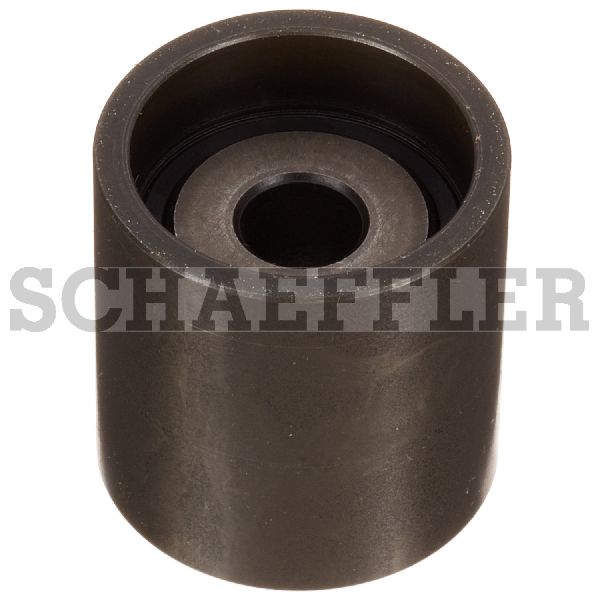
- Timing Belt Kit
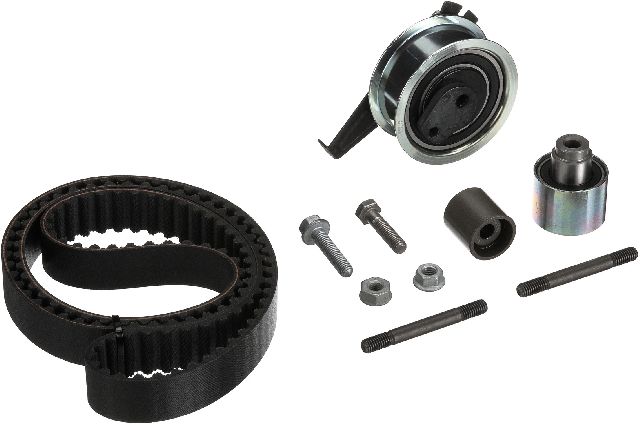
(OEM #04L198119K (supersedes 04L198119A))— This is the most common fix. A complete kit ensures all wear items (belt, tensioner, idlers) are replaced at once. The 'K' revision is the latest kit.
Trusted brands: Continental, INA, Litens
OEM price range: $350-$500
Aftermarket price range: $250-$400 - Water Pump
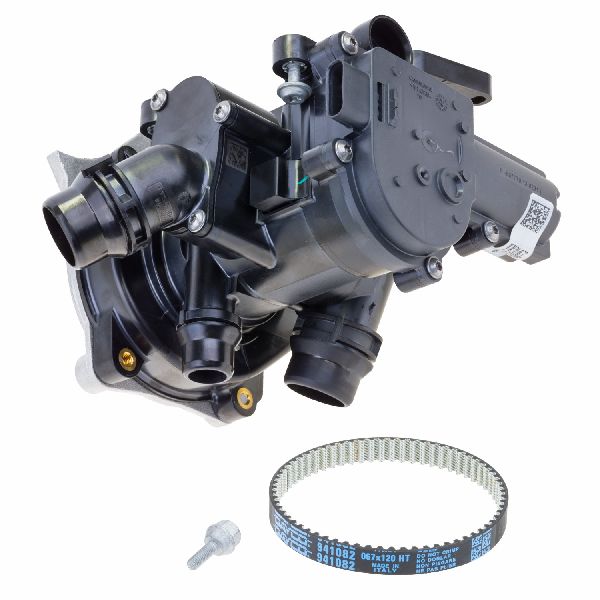
(OEM #04L121011N)— The water pump is driven by the timing belt and is replaced as a preventative measure during a timing belt service to avoid having to repeat the labor-intensive job if it fails later. A seized water pump can also cause the belt to slip.
Trusted brands: Hepu, Graf, Genuine VW
OEM price range: $150-$250
Aftermarket price range: $80-$150 - AdBlue/DEF Injector Feed Line — If AdBlue contamination is the cause of the timing belt failure, the leaking injector or its feed line must be replaced to prevent the new belt from being contaminated.
OEM price range: $80-$150
Aftermarket price range: $50-$100
Related Codes That Often Appear With This One
- P0011 — This code for 'Camshaft Position 'A' - Timing Over-Advanced or System Performance' is also related to camshaft timing and is mentioned alongside P0016 in a manufacturer TSB, suggesting they can result from the same root cause.
- P0341 — This code for 'Camshaft Position Sensor 'A' Circuit Range/Performance' can be triggered if the timing is so far off that the ECM deems the sensor's signal implausible.
Technical Service Bulletins (TSBs) & Recalls
- VIN-4-A-PIN APRI: Mentions P0016 in a list of potential faults, including P0011, related to MIL-ON conditions.
- VW TSB (un-numbered, related to TSI but relevant concept): Details how a torn strainer screen in the camshaft bearing bracket can release debris, clogging the camshaft adjuster control valve and causing timing faults like P0016.
Platform-Specific Known Issues
- AdBlue/DEF Leakage: The most significant vehicle-specific issue is the placement of the AdBlue injector, which can leak and contaminate the timing belt, causing it to slip and trigger P0016. This is a well-documented failure mode.
- A Volkswagen Technical Service Bulletin (TSB), #VIN-4-A-PIN APRI, lists P0016 along with several other fault codes, indicating it can be part of a more complex diagnostic scenario.
- The 2015 model year TDI uses the EA288 engine (CVCA/CRUA codes), which requires a specific set of timing tools (e.g., T10490) that differ from earlier TDI engines.
- Ross-Tech Wiki notes that for the CVCA engine, a sticking camshaft adjuster control valve can be a potential cause for this code. A VW TSB elaborates that a torn screen on the camshaft bearing bracket can cause this.
Mechanic-Grade Diagnostic Values
- VCDS: Intake Camshaft Adaptation (IDE00182) — expected: Should be stable and close to 0.00° on a healthy, warm engine.. Failure: A value that consistently drifts to approximately -10° or more after the engine warms up. This indicates a mechanical timing offset that the ECU can no longer compensate for, triggering P0016.
- Camshaft Adjuster Solenoid (N205) Resistance — expected: 12 to 20 Ω at approximately 20°C (68°F).. Failure: A resistance reading outside of this range indicates a faulty solenoid.
- Camshaft Position Sensor (G40) Signal Voltage — expected: This is a 3-wire Hall sensor. With the ignition on (engine off), the signal wire (Pin 2) should have a reference voltage of approximately 4.8-5.0V. The power wire (Pin 1) should have 12V.. Failure: When a metal object (like a wrench) is passed in front of the sensor tip, the signal voltage should drop to 0V. If the voltage does not change, the sensor is likely faulty.
Hidden / Shadow Codes Worth Checking
- VCDS Extended Fault Data: VCDS can display additional context for a fault code, including 'Fault Priority' (indicating severity), 'Fault Frequency' (how many times it occurred), and 'Reset counter' (drive cycles since last clear). This data helps determine if a fault is intermittent or persistent. (see via Visible in the main fault code screen of a VCDS (VAG-COM) scan tool.)
Scan Tool Commands That Help
- VCDS (VAG-COM): Advanced Measuring Values > IDE00182 - Camshaft adaptation intake bank 1: phase position — This is the most critical diagnostic step after verifying basic mechanical timing. It reveals the precise degree of camshaft deviation that the ECU is detecting and trying to correct. A large, persistent value confirms a mechanical problem even if timing locks appear to align.
- VCDS (VAG-COM): Output Tests > Camshaft Adjustment / N205 Solenoid — Use this to test the functionality of the camshaft adjuster solenoid. The test will cycle the solenoid, and you should hear an audible click. This helps rule out a failed solenoid when diagnosing intermittent P0016 codes where mechanical timing is confirmed to be correct.
Wiring & Ground Locations
- G40 Camshaft Position Sensor Connector — On the cylinder head, reading the camshaft sprocket.. Provides the camshaft position signal. A wiring issue here directly impacts the correlation calculation. Pin 1 is 12V power from a relay, Pin 2 is the signal wire to the ECU, and Pin 3 is the ground wire to the ECU.
- Engine Block Ground Strap — A heavy gauge cable running from the engine block or transmission housing to the vehicle's chassis/frame, often near a motor mount or on the inner fender.. A poor engine ground can cause erratic behavior in various sensors, including the crank and cam sensors, leading to false correlation codes. Ensuring this connection is clean and tight is a fundamental electrical diagnostic step.
Real Owner Repair Stories
- Ross-Tech Forums user (2015 VW Passat TDI SEL Premium (EA288 engine family)) — Intermittent flashing glow plug light and MIL, P0016 code stored. Engine ran perfectly otherwise.
❌ Tried (didn't work) Replacing the N205 camshaft adjuster solenoid.
✅ What actually fixed it The timing was verified as correct. The final fix was replacing the internal camshaft adjuster control valve (spool valve) with an updated part (P/N: 03L 906 455 C). This mechanical valve is controlled by the solenoid but can fail independently. - YouTube video by Ry Thttles (VW 2.0L TDI (Crafter/Transporter, but common issue)) — P0016 code present.
❌ Tried (didn't work) Initial diagnosis often points to timing belt or sensors.
✅ What actually fixed it The keyway on the inside of the crankshaft gear had worn down, causing a slight swelling and allowing the gear to shift rotationally by about half a tooth. This subtle play was enough to trigger the P0016 code. Replacing the crankshaft gear resolved the issue. - MHH AUTO Forum user (2.0L TDI EA288 Family) — Recurring P0016 and flashing glow plug light after a water pump seized and caused the timing belt to slip 2 teeth.
❌ Tried (didn't work) A complete new timing belt kit was installed and timing was set perfectly using all locking tools.
✅ What actually fixed it The code persisted because the VCDS 'Intake camshaft adaptation' value (IDE00182) drifted to -10° as the engine warmed up. The final diagnosis pointed to a twisted intake camshaft, which occurred during the initial sudden seizure of the water pump. The locking tools still fit, but the relationship between the cam lobes and the locking tool slot was altered internally.
"I Checked Everything" — The Actual Cause
- A common scenario for this code is not a smoke test, but when timing is checked with locking tools and found to be perfect, yet the P0016 code returns. In these cases, the root cause is often a hidden mechanical failure. One documented cause is a worn keyway on the crankshaft gear, which allows for slight rotational play that locking tools won't detect. Another is an internally twisted camshaft from a previous severe event (like a seized water pump), where the cam lobes are out of sync with the timing lock slot.
OEM Part Supersession History
04L198119A→04L198119K— This is the timing belt kit. Revisions typically involve improvements to the tensioner or idler pulley design for increased durability and service life.Unknown (older design)→03L906455C— This is the camshaft adjuster control valve (spool valve). The updated part likely has improved resistance to sticking or debris.
Heads up: This updated part resolved a case of intermittent P0016 where the original valve was sticking.
Helpful Videos
Used OEM Parts in Stock

New Aftermarket Parts Available


The information in this article is provided for general reference and educational purposes only. Vehicle specifications, procedures, and part compatibility can vary by production date, trim level, and region. Always consult your vehicle's factory service manual and verify part numbers before purchasing or performing repairs. Safety-critical components such as airbags, seat belts, and braking systems should be installed by a qualified professional.
- Volkswagen BEETLE TDI:
- 🎬 Helpful Videos
- 🛍️ Shop This Part
- What's Unique About the 2015-2015 Volkswagen BEETLE TDI
- Diagnostic Flowchart
- Symptoms You May Notice
- Most Likely Causes
- Rare But Worth Checking
- Diagnosis Steps
- Parts You'll Likely Need
- Related Codes That Often Appear With This One
- Technical Service Bulletins (TSBs) & Recalls
- Platform-Specific Known Issues
- Mechanic-Grade Diagnostic Values
- Hidden / Shadow Codes Worth Checking
- Scan Tool Commands That Help
- Wiring & Ground Locations
- Real Owner Repair Stories
- "I Checked Everything" — The Actual Cause
- OEM Part Supersession History
- 🎟️ Get 5% Off