

P0016 on 2007-2010 Saturn VUE: Crank/Cam Correlation Causes and Fixes
On 2008-2010 VUE models with the 3.6L V6, code P0016 almost always indicates stretched timing chains, a major and expensive repair. This is often caused by extended oil change intervals recommended by the original Oil Life Monitor (OLM) settings. On 4-cylinder models or the 2007 3.5L V6 (with a timing belt), the cause is more likely a faulty camshaft sensor, actuator solenoid, or low engine oil.
- For a 2008-2010 Saturn VUE with the 3.6L V6, P0016 is a strong indicator of stretched timing chains, a significant and costly repair.
- For 4-cylinder models (2.2L/2.4L) or the 2007 3.5L V6, start diagnosis with the easy and cheap items: check engine oil level/condition, then inspect the camshaft position sensor and VVT solenoid.
- Do not ignore this code. Continued driving can lead to stalling, reduced fuel economy, and catastrophic engine failure if the timing chain breaks.
- Due to the high failure rate, GM issued a special coverage program for the 3.6L timing chains; check with a dealer to see if your vehicle might still be covered, although it is unlikely at this point due to age.
- If replacing the timing chain, it is critical to use a complete kit that includes all chains, tensioners, and guides from a quality brand like ACDelco or Cloyes.
What's Unique About the 2007-2010 Saturn VUE
The 2007-2010 Saturn VUE spans two generations with different engines, making diagnosis tricky. The second generation (2008-2010) offered the GM 3.6L 'High Feature' V6 (LLT), which is notorious for premature timing chain stretching that triggers this code. This was exacerbated by GM's original Oil Life Monitor (OLM) programming, which allowed for excessively long oil change intervals, leading to oil degradation that accelerated chain wear. This is a well-documented issue backed by multiple GM Technical Service Bulletins. In contrast, the first generation (2007) used a Honda-sourced 3.5L V6 with a timing belt, and both generations offered 4-cylinder Ecotec engines, all of which have different common failure points for this code.
Diagnostic Flowchart
Tap your situation to follow the diagnostic path that matches what you're seeing on this vehicle.
Generation note: The 2007 model is the first generation VUE, while 2008-2010 models are the second generation. Engine options differ significantly. The 2007 model had a 2.2L I4 or a 3.5L Honda J35 V6 (timing belt). The 2008-2010 models had a 2.4L I4, a 3.5L GM V6 (timing chain, less common), or the 3.6L V6 (timing chain). The severe timing chain issues are most common on the 3.6L V6.
Symptoms You May Notice
- Check Engine Light is on
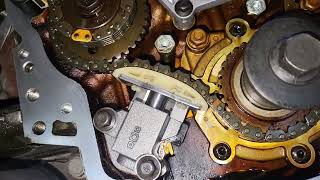
- Engine rattle noise, especially on cold startup, 🎬 See a demonstration of the 3.6L VVT clattering noise at startup. that may last for a few seconds.
- Rough, unstable idle.
- Poor acceleration and reduced engine power, sometimes described as 'limp mode'.
- Engine may hesitate or stall, especially at idle.
- Reduced fuel economy.
- Engine cranks but will not start in severe cases where timing has jumped significantly.
- Replacing the camshaft and crankshaft position sensors on a 3.6L V6 when the actual problem is a stretched timing chain. This is a very common mistake that wastes hundreds of dollars as the code will inevitably return.
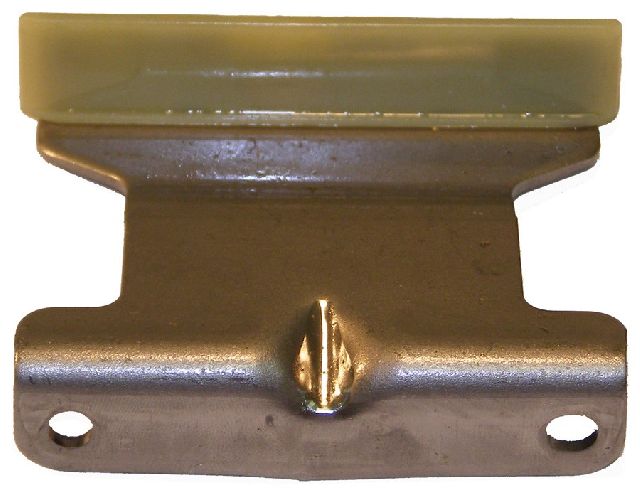
- Replacing only one component of the timing system (e.g., just one chain or one tensioner) on the 3.6L V6. The entire system wears together, and a partial job will likely fail again soon.
Most Likely Causes
- Stretched Timing Chains 🔴 High Probability Primarily affects the 3.6L V6 engine. Early chain designs combined with extended oil change intervals (per the original OLM) caused rapid wear. Direct injection also contaminates oil more quickly, reducing its lubricating properties and accelerating chain stretch. This is a widely known problem confirmed by GM TSBs #PIP3423P and #12-06-01-009F.
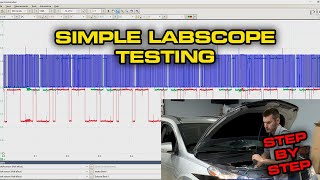
How to confirm: A mechanic can use a scan tool to view cam/crank correlation data blocks. 🎬 Watch: How to use a labscope to test timing chain correlation. A physical inspection for chain slack by removing a valve cover or the front timing cover is the definitive method. Excessive slack or a fully extended tensioner confirms the issue.
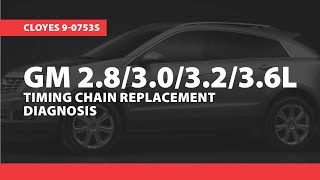
Typical fix: Replace all three timing chains, all tensioners, and all plastic guides. It is critical to use the updated parts. 🎬 Watch this professional walkthrough of the 3.6L timing chain replacement. This is a very labor-intensive job, often requiring 10-14 hours.
Est. part cost: $200-$600 - Low or Dirty Engine Oil 🟡 Medium Probability The camshaft phasers (VVT system) are hydraulically operated by engine oil pressure. Low oil level, incorrect viscosity, or oil that is dirty and sludgy can clog passages in the VVT solenoids or phasers, preventing them from adjusting timing correctly and triggering the code. This is a contributing factor to the 3.6L chain issue and a primary cause on the 2.4L.
How to confirm: Check the engine oil dipstick for proper level and inspect the oil's condition. If the oil is dark, sludgy, or past its change interval, this is a likely contributor. Ensure the correct oil (e.g., Dexos-spec synthetic) is used.
Typical fix: Perform an oil and filter change with a high-quality, manufacturer-specified oil. This may resolve the code if it was caused by a temporary pressure issue, but often the problem will return if components are worn or clogged.
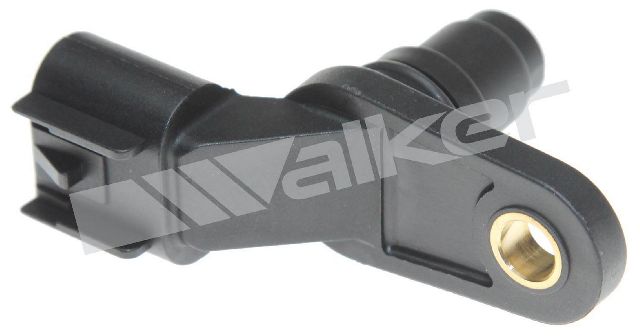
Est. part cost: $40-$80 - Faulty Camshaft Position (CMP) Sensor 🟡 Medium Probability More common on the 2.2L and 2.4L Ecotec engines than the 3.6L V6. The sensor is an electronic component that can fail with age and heat cycles, sending incorrect or no data to the ECM.
How to confirm: Use a multimeter to test the sensor's resistance and voltage output. A common diagnostic trick is to swap the Bank 1 intake sensor with the Bank 1 exhaust sensor to see if the code changes to P0017, which would confirm a bad sensor.
Typical fix: Replace the Bank 1 intake camshaft position sensor. On the 2.4L, this is located on the top of the cylinder head and is relatively easy to access.
Est. part cost: $25-$80 - Faulty Camshaft Actuator Solenoid (VVT Solenoid) ⚪ Low Probability
How to confirm: Use a capable scan tool to command the solenoid on and off while monitoring cam phaser data to check for response. The solenoid can also be removed and tested for resistance (typically 8-12 ohms) and inspected for clogged oil screens, which is a common failure mode.
Typical fix: Replace the Bank 1 intake camshaft actuator solenoid. Often, it's recommended to replace both the intake and exhaust solenoids at the same time.
Est. part cost: $30-$90
Rare But Worth Checking
- Slipped Camshaft Reluctor Ring: TSB #PIP4548F specifically addresses the 2.2L and 2.4L Ecotec engines. The reluctor ring, which the cam sensor reads, is press-fit onto the camshaft and is not keyed. An engine overheat condition can cause the camshaft to expand enough for the ring to spin, leading to a P0016 code even if the timing chain is perfectly aligned. This requires camshaft replacement.
- Faulty Crankshaft Position (CKP) Sensor: While less common than a CMP sensor failure for this specific code, a faulty CKP sensor can provide an erratic signal, making the ECM believe there is a correlation issue when there isn't one.
- Damaged Wiring or Connectors: Frayed wires or corroded connectors to either the camshaft or crankshaft position sensor can disrupt the signal to the ECM. This can be caused by heat, vibration, or oil contamination. A visual inspection of the harness is recommended.
Diagnosis Steps
- Check Engine Oil: Verify the oil level is correct and the oil is clean and of the proper viscosity (GM Dexos specification). This is the simplest first step and can sometimes resolve the issue if it's minor.
- Scan for Codes: Use an OBD-II scanner to confirm P0016 and look for any other related codes (like P0017, P0008, P0009). The presence of multiple timing codes strongly suggests a mechanical timing (chain) issue, especially on the 3.6L V6.
- Inspect Wiring: Visually inspect the wiring and connectors for the Bank 1 intake camshaft position sensor and the crankshaft position sensor for any signs of damage, corrosion, or oil soaking.
- Test Sensors and Solenoids (4-Cyl Focus): On 2.2L/2.4L engines, test the CMP sensor and VVT solenoid. Swap the intake and exhaust CMP sensors to see if the code follows (P0016 becomes P0017). Test the solenoid with a scan tool or by checking resistance.
- Mechanical Timing Check (V6 Focus): If the above steps do not resolve the issue, especially on a 3.6L V6, a mechanical timing inspection is necessary. This is an advanced procedure that involves removing at least the front valve cover to inspect for timing chain slack. This step is best left to a professional.
Parts You'll Likely Need
- Engine Timing Chain Kit
(OEM #12651450 (Superseded by 12700436, check VIN))— This is the most common fix for the 3.6L V6 engine. The kit should include all three chains, guides, and tensioners. It's critical to get the latest revised part number.
Trusted brands: ACDelco (OEM), Cloyes, Melling
OEM price range: $300-$500
Aftermarket price range: $200-$350 - Camshaft Position Sensor
(OEM #12674704 (for 2.4L, supersedes 12577245))— A common failure point on the 2.2L and 2.4L Ecotec engines that can cause P0016.
Trusted brands: ACDelco, Delphi, NTK
OEM price range: $40-$70
Aftermarket price range: $20-$50 - Camshaft Actuator Solenoid — A common failure, especially when oil changes are neglected. They can become clogged with sludge or fail electrically, preventing proper cam phasing.
Trusted brands: ACDelco (OEM), Dorman, Delphi
OEM price range: $40-$80
Aftermarket price range: $25-$50
Related Codes That Often Appear With This One
- P0017 — This code indicates a correlation issue with the Bank 1 exhaust camshaft. It often appears with P0016 when there is a base timing issue like a stretched chain or a spun reluctor ring affecting the entire bank.
- P0008 — This is a more general Engine Position System Performance code for Bank 1. It is frequently set alongside P0016 due to a stretched timing chain, as noted in TSB #12-06-01-009F and Special Coverage #11340.
- P0009 — Similar to P0008, but for Bank 2. If the primary timing chain is significantly stretched, it can affect the timing on both banks, causing multiple codes (P0008, P0009, P0016, P0018, etc.) to appear simultaneously.
Technical Service Bulletins (TSBs) & Recalls
- PIP3423P: Advises inspection of loose timing chains or tensioners for P0016.
- 12-06-01-009F: Mentions availability of timing chain kits for repairing stretched chains causing P0016 and other codes on high feature V6 engines.
- PIP4548F: Details the diagnosis for a spun camshaft reluctor ring on 2.2L/2.4L engines as a cause for P0016/P0017 when mechanical timing is correct.
- 11340C/G: Special Coverage bulletin detailing the extended warranty and repair procedure (chain replacement or ECM reprogram) for the 3.6L V6 timing chain issue.
Platform-Specific Known Issues
- Premature timing chain wear on the 3.6L V6 engine is the most significant issue. GM issued Special Coverage Program #11340 (later revised) extending the warranty on this component to 10 years/120,000 miles for certain models due to the high failure rate. The program also included reprogramming the ECM to shorten oil change intervals.
- On 2.2L and 2.4L engines, a spun camshaft reluctor ring can cause P0016, as detailed in TSB #PIP4548F. This is a less common but important vehicle-specific issue to be aware of, especially if the engine has ever overheated. The fix is to replace the entire camshaft.
Mechanic-Grade Diagnostic Values
- Camshaft Actuator Solenoid (VVT Solenoid) Resistance - 2.4L Ecotec Engine — expected: 8 to 13 Ohms. Failure: A reading outside this range, or an open circuit (OL), indicates a faulty solenoid.
- Camshaft Actuator Solenoid (VVT Solenoid) Resistance - General — expected: 6.9 to 7.9 Ohms at 68°F (20°C). Failure: A reading outside this specific range indicates a faulty solenoid.
- Camshaft End Play - 3.6L V6 Engine — expected: Less than 0.40 mm (0.016 in). Failure: End play equal to or greater than 0.40 mm suggests excessive wear, requiring further inspection of camshaft thrust washers as per TSB 08-06-01-011K.
- Camshaft Position Actuator to Front Camshaft Cap Gap - 3.6L V6 Engine — expected: A 2.0 mm (for Delphi actuators) or 2.5 mm (for Aisin actuators) hex wrench should NOT fit in the gap.. Failure: If the specified hex wrench fits into the gap between the actuator and the cap, it indicates excessive camshaft thrust wear, requiring thrust washer installation.
Scan Tool Commands That Help
- GM Tech2 / GDS2 or equivalent professional scanner: Camshaft Position Actuator Solenoid Control — This bidirectional command allows the technician to manually activate and deactivate the VVT solenoids while the engine is running. Monitoring engine RPM or cam phaser angle PIDs for a change confirms the solenoid is responding electrically and hydraulically. A lack of response points to a bad solenoid, clogged oil passage, or wiring issue.
- GM Tech2 / GDS2 or equivalent professional scanner: Crankshaft Position Variation Learn — This procedure should be performed after replacing a crankshaft position sensor, timing components, or the ECM. It allows the ECM to learn the minor variations in the crankshaft reluctor wheel to ensure accurate misfire detection. A failure of the procedure to complete often indicates that a base mechanical timing problem (like a stretched chain) still exists.
Wiring & Ground Locations
- Engine Control Module (ECM) — Located in the left front of the engine compartment on 2009 3.6L models.. The ECM is the central computer that receives signals from the CMP and CKP sensors and determines if they are out of correlation. All related wiring terminates here.
- G106 — On the engine, at the left front top corner (on 2009 3.6L models).. This is a primary engine ground. A poor connection at this point can cause erratic behavior from various engine sensors, including the CMP and CKP sensors.
- G107 — At the rear of the engine (on 2009 3.6L models).. Another critical engine ground. A loose or corroded G107 can lead to intermittent and hard-to-diagnose electrical issues and sensor faults.
- Crankshaft Position (CKP) Sensor — Located above the starter motor on the 3.6L V6 engine.. Its location makes it susceptible to heat from the engine and exhaust, which can degrade the sensor or its wiring over time.
Real Owner Repair Stories
- YouTube user Griffzilla Garage (GM vehicle with 1.5L Turbo engine (Note: different engine, but illustrates a relevant mechanical failure mode)) — P0017 (Exhaust cam correlation), reduced engine power.
❌ Tried (didn't work) Initial timing component alignment seemed correct.
✅ What actually fixed it The dowel pin that aligns the exhaust camshaft with its phaser (actuator) was damaged, and the holes were ovaled out. This allowed the camshaft to rotate slightly relative to the phaser, throwing off the timing correlation despite the main timing marks being aligned. Replacing the exhaust camshaft and the camshaft position actuator resolved the issue.
OEM Part Supersession History
N/A - Refers to GM Special Coverage #11340→Bulletin versions 11340A, 11340B, 11340C— GM's initial fix for stretched timing chains was to replace the parts. Later bulletin revisions (e.g., 11340C) added a mandatory Engine Control Module (ECM) reprogramming step.
Heads up: The ECM reprogram was a critical part of the long-term fix. It recalibrated the Oil Life Monitor (OLM) to recommend more frequent oil changes, addressing the root cause of oil breakdown that led to premature chain wear. Simply replacing the chains without the reprogram (on applicable vehicles) could lead to a repeat failure.
Model Year Variations Within This Range
- 2007-2009: The timing chain Special Coverage (#11340) was initially for 2007 models with the 3.6L LY7 V6. It was later expanded in subsequent bulletin versions to also cover 2009 models, which could have the direct-injected 3.6L LLT V6, indicating the problem persisted across engine revisions.
Helpful Videos
We Have This Part in Stock


The information in this article is provided for general reference and educational purposes only. Vehicle specifications, procedures, and part compatibility can vary by production date, trim level, and region. Always consult your vehicle's factory service manual and verify part numbers before purchasing or performing repairs. Safety-critical components such as airbags, seat belts, and braking systems should be installed by a qualified professional.
- Saturn VUE:
- 🎬 Helpful Videos
- 🛍️ Shop This Part
- What's Unique About the 2007-2010 Saturn VUE
- Diagnostic Flowchart
- Symptoms You May Notice
- Most Likely Causes
- Rare But Worth Checking
- Diagnosis Steps
- Parts You'll Likely Need
- Related Codes That Often Appear With This One
- Technical Service Bulletins (TSBs) & Recalls
- Platform-Specific Known Issues
- Mechanic-Grade Diagnostic Values
- Scan Tool Commands That Help
- Wiring & Ground Locations
- Real Owner Repair Stories
- OEM Part Supersession History
- Model Year Variations Within This Range
- 🎟️ Get 5% Off