

P0016 on 2005-2009 Saab 9-7X: Crank-Cam Correlation Causes and Fixes
P0016 on a Saab 9-7X indicates a serious timing issue. The most common causes are a faulty camshaft actuator (VVT) solenoid due to dirty oil, or a stretched timing chain. Start by checking your oil and replacing the VVT solenoid (~$30-$70 part), but be prepared for a potential timing chain replacement, which is a much larger job.
- P0016 is a serious timing code; do not ignore it.
- Before buying any parts, check your engine oil level and condition. An oil change is a cheap first step.
- The most likely culprit is a faulty VVT solenoid, which is a relatively inexpensive and easy DIY replacement.
- A rattling noise from the engine strongly points to a stretched timing chain, which is a major and costly repair.
- Do not immediately replace the cam or crank sensors; they are usually reporting a real mechanical problem.
What's Unique About the 2005-2009 Saab 9-7X
The Saab 9-7X is based on the General Motors GMT360 platform, sharing its engines and common faults with the Chevrolet Trailblazer, GMC Envoy, Buick Rainier, and Isuzu Ascender. For these engines, P0016 is frequently caused by a handful of well-documented issues. A critical, vehicle-specific issue is highlighted in a GM Technical Service Bulletin (TSB #PIP4581B), which points to a loose crankshaft balancer bolt as a potential cause, a detail often missed in generic diagnostics. Furthermore, the 4.2L 'Atlas' inline-6 engine is particularly known for stretched timing chains that can trigger this code.
Diagnostic Flowchart
Tap your situation to follow the diagnostic path that matches what you're seeing on this vehicle.
Symptoms You May Notice
- Check Engine Light is on
- Engine runs rough, idles poorly, or stalls
- Rattling, clattering, or scraping noise from the front of the engine, particularly on a cold start, which may indicate broken timing chain guides.
- Reduced engine power and poor acceleration
- Engine may be hard to start or cranks but fails to start.
- Poor fuel economy.
- Voltage gauge flickering or fluctuating at idle due to rough running.
- Replacing the camshaft and crankshaft position sensors without first diagnosing the mechanical timing system. The code will almost always return if the underlying cause is a stretched chain, faulty VVT solenoid, or low/dirty oil.
Most Likely Causes
- Faulty Camshaft Position Actuator Solenoid (VVT Solenoid / CPAS) 🔴 High Probability This is a very common failure point on GMT360 engines, often caused by oil contamination or simple age. The solenoid's small internal screens get clogged with sludge from extended oil change intervals, causing it to stick. The internal seals can also fail, allowing oil to leak into the electrical connector.
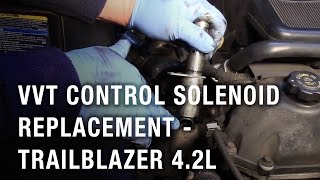
How to confirm: Unplug the solenoid and check for oil inside the electrical connector; oil here is a definitive sign of failure. You can also remove it (one 10mm bolt) and inspect the screens for sludge or debris. A scan tool can command the solenoid to check for response, and a multimeter can test its internal resistance.
Typical fix: Replace the Camshaft Position Actuator Solenoid. It is highly recommended to use an AC Delco or Delphi brand part, as owners report aftermarket versions sometimes fail to fix the code. Change the engine oil and filter at the same time.
Est. part cost: $30-$90 - Stretched Timing Chain or Failed Tensioner/Guides 🔴 High Probability The timing chains on the 4.2L I6 engine, in particular, are known to stretch over time. Worn plastic chain guides can also become brittle, break apart, and fall into the oil pan, causing slack in the chain and allowing it to jump a tooth.
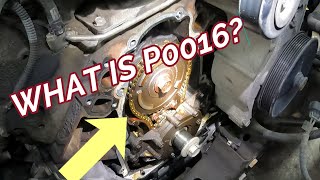
How to confirm: A distinct rattling or scraping noise from the front of the engine is a strong indicator. If other causes are ruled out, the definitive way to confirm is to remove the valve cover and timing cover to physically inspect the chain for slack, check the guides for damage, and verify the timing marks. This is a labor-intensive process.
Typical fix: Replace the timing chain, sprockets, tensioner, and all guides as a complete kit. This is a major repair, often requiring 9+ hours of labor. The Cloyes brand timing kit is highly recommended on owner forums.
Est. part cost: $150-$300 - Low or Dirty Engine Oil 🟡 Medium Probability The VVT system is hydraulically operated by engine oil pressure. Neglecting oil changes leads to sludge buildup that clogs the narrow passages of the VVT solenoid and phaser, causing them to malfunction.
How to confirm: Check the oil level on the dipstick and inspect its condition. If the oil is very dark, thick, or below the minimum level, this is a likely contributor. This should be the very first check performed.
Typical fix: Perform an engine oil and filter change with the correct grade of oil (5W-30). In some cases, a professional engine flush may help, but it can also dislodge sludge and cause other issues, so proceed with caution.
Est. part cost: $40-$80 - Loose Crankshaft Balancer Bolt ⚪ Low Probability A specific GM TSB (#PIP4581B) for this platform mentions this exact issue. If the bolt is not torqued correctly, the harmonic balancer (and the crankshaft position sensor reluctor wheel behind it) can wobble, causing an incorrect signal correlation and a rattling noise.
How to confirm: As per TSB #PIP4581B, if a rattle is present with code P0016 and other diagnosis fails, the crankshaft balancer bolt should be checked. Visually inspect for wobble while the engine is running (use extreme caution).
Typical fix: Properly torque the crankshaft balancer bolt. This is a multi-step, torque-to-yield (TTY) process. The old bolt must be replaced with a new one (GM Part #12557840 or similar). The typical procedure is to torque to 110 ft-lbs, then tighten an additional 180 degrees.
Est. part cost: $10-$25 (for a new bolt)
Rare But Worth Checking
- Failed Camshaft Phaser (Actuator): The gear at the end of the camshaft, which actually adjusts the timing, can fail internally or become stuck due to sludge. This is less common than the solenoid failing but is the next logical step if a new solenoid and clean oil don't fix the issue.
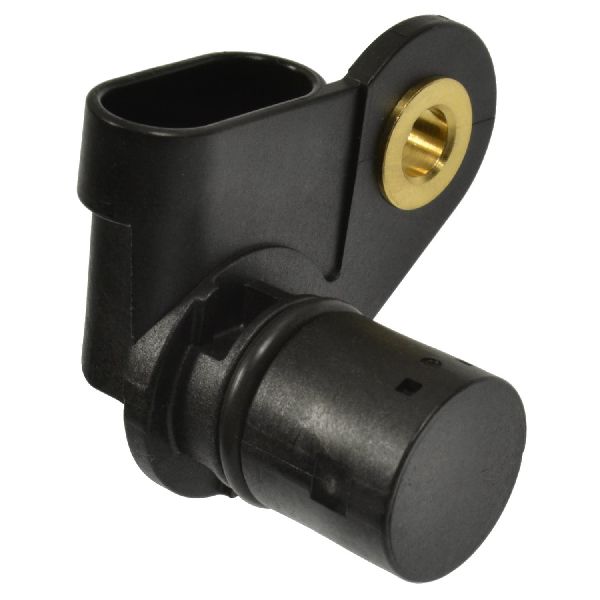
- Faulty Crankshaft or Camshaft Position Sensor: While these sensors can fail, it's uncommon for them to be the root cause of P0016. They are often replaced unnecessarily when the real problem is mechanical timing. The sensors are usually doing their job correctly by reporting the sync error.
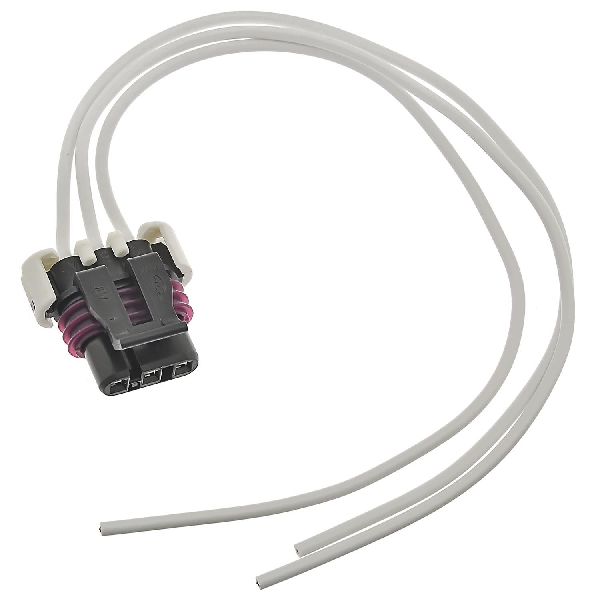
- Wiring Issues: An open or short in the wiring to the VVT solenoid or the cam/crank sensors can cause the code. This can be due to chafing, corrosion, or damage from previous repairs. A visual inspection of the harness is a good idea.
Diagnosis Steps
- Check Engine Oil: This is the first and easiest step. Verify the oil level is correct and the oil is clean. If low or dirty, perform an oil and filter change with 5W-30 synthetic oil.
- Scan for Other Codes: Check for other related codes (like P0014, P0017) that can help pinpoint the issue.
- Listen to the Engine: Start the engine and listen for any rattling, scraping, or clattering from the front of the engine, which strongly indicates a timing chain/guide issue.
- Inspect and Test the VVT Solenoid: Unplug the Bank 1 VVT solenoid. Check for oil in the electrical connector. Remove the solenoid (one 10mm bolt) and inspect its screens for sludge. Test its operation with a scan tool or by applying 12v to see if it clicks.
- Check Crankshaft Balancer Bolt: Following safety procedures, visually inspect the crankshaft balancer for wobble while the engine runs. If there is any doubt or a related rattle, have it professionally inspected and re-torqued per TSB #PIP4581B.
- Verify Mechanical Timing: If all else fails, the valve and timing covers must be removed to physically inspect the timing marks on the chains and sprockets. This step is labor-intensive and best left to a professional.
- Test Sensors: As a final step, test the camshaft and crankshaft position sensors with a multimeter or oscilloscope to confirm they are functioning correctly, but do not replace them without confirming they are faulty.
Parts You'll Likely Need
- Camshaft Position Actuator Solenoid (VVT Solenoid)
(OEM #12615873)— This is the most common and easiest-to-fix cause of P0016, often failing due to oil contamination. It's a frequent first step in diagnosis.
Trusted brands: ACDelco (Recommended), Delphi, Standard Motor Products (SMP)
OEM price range: $50-$90
Aftermarket price range: $30-$60 - Timing Chain Kit — If the timing chain is stretched or the guides are broken, a complete kit is required to restore proper engine timing. This is the most intensive and expensive common repair for this code.
Trusted brands: Cloyes (Highly Recommended), ACDelco, Melling
OEM price range: $200-$350
Aftermarket price range: $150-$300
Related Codes That Often Appear With This One
- P0017 — This code is for the Crank/Cam correlation on the exhaust camshaft ('Bank 1 Sensor B'). The underlying issues (stretched chain, low oil pressure, loose balancer) affect the entire timing system, so these codes often appear together.
- P0014 — This code indicates 'Camshaft Position B - Timing Over-Advanced'. It's also related to the VVT system and often points directly to a failing VVT solenoid or phaser on the exhaust cam.
- P1345 — This is a GM-specific code that can sometimes appear alongside P0016, also indicating a crankshaft to camshaft correlation issue, pointing strongly towards a mechanical timing problem.
Technical Service Bulletins (TSBs) & Recalls
- PIP4581B: Addresses a rattle noise with DTC P0016/P0017, advising technicians to re-torque the crankshaft balancer bolt if other diagnostics do not isolate the cause.
Platform-Specific Known Issues
- A known issue documented in TSB #PIP4581B involves the crankshaft balancer bolt loosening, causing a rattle and setting code P0016. Re-torquing with a new bolt is the specified fix.
- The 4.2L I6 engine is well-regarded but has a known weakness for stretching its timing chain, making it a more probable cause on these engines compared to the V8s.
- Owner forums consistently warn against using non-ACDelco VVT solenoids, as many have found that aftermarket parts do not solve the P0016 code, requiring them to do the job twice.
Mechanic-Grade Diagnostic Values
- VVT Solenoid (CPAS) Resistance — expected: 6.9 to 12 Ohms between the two pins.. Failure: A reading of 0 Ohms (short circuit) or OL/infinite (open circuit) indicates a failed solenoid.
- Crankshaft End Play (4.2L I6) — expected: 0.0044 to 0.0153 inches (0.112 - 0.388 mm).. Failure: Movement greater than 0.0153 inches indicates worn thrust bearings. A measurement approaching or exceeding 0.050 inches signifies a critical internal engine problem that can cause this code.
- Nominal Oil Pressure (4.2L I6) — expected: Minimum of 12 PSI at 1200 RPM.. Failure: Pressure significantly below this level when the engine is warm indicates a worn oil pump or bearing clearances, starving the VVT system of the pressure it needs to operate.
Scan Tool Commands That Help
- GM Tech 2 / GDS2 or equivalent high-end scanner: Crankshaft Position (CKP) Variation Learn Procedure (CASE Relearn) — This procedure is mandatory after replacing the crankshaft position sensor or the Engine Control Module (ECM/PCM). It calibrates the PCM to minor variations in the crankshaft reluctor wheel to ensure accurate misfire detection and timing. Failure to perform it can cause a persistent P1336 code and potentially affect timing correlation diagnostics.
- Advanced Scan Tool: VVT Solenoid Control / Camshaft Position Actuator Test — This bidirectional command allows the technician to manually activate the VVT solenoid while the engine is running. The scan tool will display desired vs. actual camshaft angle. A functioning system will show the actual angle changing to match the commanded angle. If the angle doesn't change, it points to a stuck solenoid, clogged oil passage, or failed phaser.
Wiring & Ground Locations
- Camshaft Position (CMP) Sensor (4.2L) — On the right front of the cylinder head.. This sensor provides one half of the correlation data. Its signal integrity is critical. Its location is necessary for inspection and testing.
- Crankshaft Position (CKP) Sensor (4.2L) — On the left rear of the engine block, below the starter motor.. This sensor provides the other half of the correlation data. Accessing it for testing or replacement requires knowing this location.
- Camshaft Actuator Solenoid (VVT) (4.2L) — On the right front of the cylinder head, near the CMP sensor.. This is the most common part to fail. Its location is needed for the primary diagnostic step of inspecting the connector for oil and replacing the part.
- G108 — On the lower left side of the engine block.. This is a primary engine ground point. A loose or corroded G108 can cause erratic signals from the CKP and CMP sensors, potentially triggering a false P0016 code.
Real Owner Repair Stories
- GMTNation forum user 'kmanz1' (2004 GMC Envoy SLT 4.2L) — P0016 code appeared immediately after performing a valve cover gasket repair.
❌ Tried (didn't work) Clearing the code would temporarily make the idle return to normal (700 RPM), but the code would return on the next engine start.
✅ What actually fixed it The user noted finding oil inside the electrical connector for the VVT solenoid (CPAS). Forum moderators confirmed this is a definitive sign of solenoid failure and recommended replacing it with a genuine ACDelco or Delphi part, followed by a CASE relearn if the code persisted.
When the Usual Fixes Don't Work
- While replacing the VVT solenoid (CPAS) is the most common fix, it is not a silver bullet. A forum report on a 2004 Envoy (a direct platform-mate) showed that P0016 can appear even with a new solenoid if the underlying issue is more complex. In such cases, the next step is often a 'CASE relearn' procedure with a dealer-level scan tool, which calibrates the crank sensor to the PCM. This highlights that even after replacing the most likely failed part, further electronic diagnostics may be required before moving on to a full timing chain replacement.
OEM Part Supersession History
12568078, 12576768, 12597025, 12602516→12615873— Standard part evolution for improved reliability and manufacturing.
Heads up: While many aftermarket versions exist, owner and technician forums frequently report that only genuine GM/ACDelco or original supplier (Delphi) parts reliably solve VVT-related codes on this platform. Using cheaper alternatives may result in the code returning.
Model Year Variations Within This Range
- 2005-2009 (5.3L & 6.0L V8 Engines Only): The V8 engines are equipped with Active Fuel Management (AFM) / Displacement on Demand (DOD). This system is a very common point of failure, where the special AFM lifters collapse or seize. This can cause ticking/knocking noises and misfires, with symptoms that can overlap or be confused with a timing chain issue. The 4.2L I6 engine does not have this system.
- 2005-2009: The physical location of the Engine Control Module (ECM) may vary. Wiring diagrams for a 2006 model show it on the 'upper left side of engine', while diagrams for a 2009 model show it 'near lower left front of engine'. This is important for any wiring diagnostics.
Helpful Videos
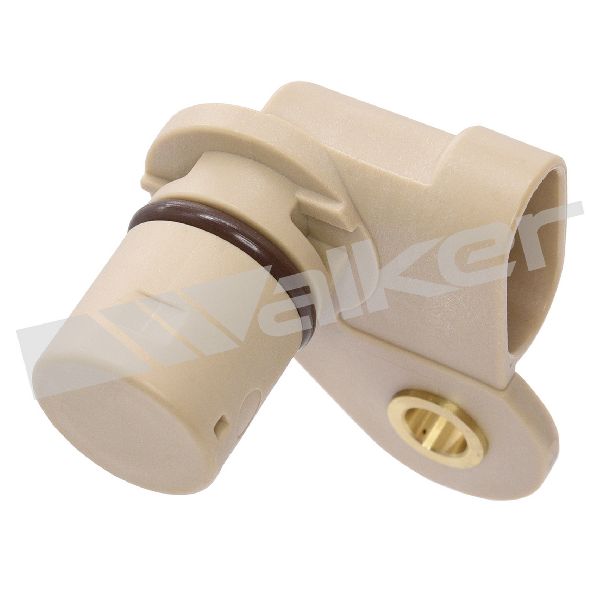
We Have This Part in Stock


The information in this article is provided for general reference and educational purposes only. Vehicle specifications, procedures, and part compatibility can vary by production date, trim level, and region. Always consult your vehicle's factory service manual and verify part numbers before purchasing or performing repairs. Safety-critical components such as airbags, seat belts, and braking systems should be installed by a qualified professional.
- Saab 9-7X:
- 🎬 Helpful Videos
- 🛍️ Shop This Part
- What's Unique About the 2005-2009 Saab 9-7X
- Diagnostic Flowchart
- Symptoms You May Notice
- Most Likely Causes
- Rare But Worth Checking
- Diagnosis Steps
- Parts You'll Likely Need
- Related Codes That Often Appear With This One
- Technical Service Bulletins (TSBs) & Recalls
- Platform-Specific Known Issues
- Mechanic-Grade Diagnostic Values
- Scan Tool Commands That Help
- Wiring & Ground Locations
- Real Owner Repair Stories
- When the Usual Fixes Don't Work
- OEM Part Supersession History
- Model Year Variations Within This Range
- 🎟️ Get 5% Off