

P0016 on 2015-2019 Lincoln MKC: Crank/Cam Correlation Causes and Fixes
On a 2015-2019 Lincoln MKC, code P0016 is most often caused by a sticking Variable Camshaft Timing (VCT) solenoid due to oil contamination, as noted in manufacturer TSBs. Other common causes include a stretched timing chain or low/dirty engine oil. Before replacing parts, Ford recommends a diagnostic procedure to cycle the solenoid multiple times to clear debris. A VCT solenoid replacement can cost between $310 and $454 at a shop.
- For a 2015-2019 Lincoln MKC, P0016 is very often related to the Variable Camshaft Timing (VCT) system.
- Before attempting expensive repairs, check the engine oil level and condition. An oil and filter change is a simple first step.
- The most likely part to fail is the Bank 1 intake VCT solenoid, often due to clogging from oil debris, as confirmed by multiple TSBs.
- Do not immediately assume the timing chain has stretched; this is a possible but more expensive and less common cause than a faulty VCT solenoid.
- Ignoring this code can lead to stalling, poor performance, and potential for severe engine damage.
What's Unique About the 2015-2019 Lincoln MKC
The Lincoln MKC, with its 2.0L and 2.3L EcoBoost engines, relies on a Variable Camshaft Timing (VCT) system to optimize performance and fuel economy. This system is highly dependent on clean engine oil and proper oil pressure. Ford/Lincoln has issued multiple Technical Service Bulletins (TSBs) acknowledging that P0016 and related codes can be triggered by small debris causing the VCT solenoids to stick. TSB SSM 48423 specifically advises technicians to attempt clearing the debris by cycling the solenoid with a scan tool before replacing it. This makes oil-related issues and VCT solenoid failure a primary, and officially recognized, area of concern for this specific vehicle.
Diagnostic Flowchart
Tap your situation to follow the diagnostic path that matches what you're seeing on this vehicle.
Symptoms You May Notice
- Check Engine Light is on
- Rough or vibrating idle
- Engine stalls or is hard to start
- Reduced engine power and sluggish acceleration
- Rattling noise from the engine, especially on startup
- Decreased fuel economy
- Engine hesitates or runs erratically
- Immediately replacing the camshaft or crankshaft position sensor without checking oil level/condition or testing the VCT solenoid. The sensors often correctly report a problem that lies elsewhere.
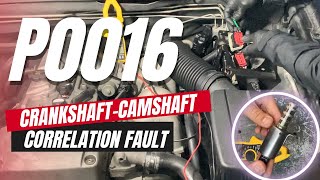
- Assuming a stretched timing chain is the cause without performing proper diagnostics. This leads to a very expensive and unnecessary repair when the actual fault could be a much cheaper VCT solenoid 🎬 Watch this breakdown of P0016 causes and common fixes or an oil change.
- Replacing timing components but failing to use the proper crankshaft pulley alignment/holding tools, leading to the code returning immediately after the repair.
Most Likely Causes
- Sticking or Failed VCT Solenoid 🔴 High Probability Multiple manufacturer TSBs (SSM 48423, SSM 47170, TSB 16-0010) state this code can be caused by small debris causing the VCT solenoid to stick. Dirty or low oil is a primary contributor to this failure. TSB SSM 48423 even suggests a specific diagnostic step (pinpoint test HK11) to cycle the solenoid 10 times to attempt to clear it before replacement.
How to confirm: Use a scan tool's bidirectional controls to command the solenoid on and off at idle. A functional solenoid will cause a noticeable change in engine idle or may cause it to stall; no change indicates a problem. You can also remove the solenoid and inspect it for sludge on its screens and test its resistance with a multimeter. The resistance should be between 5 and 14 ohms.
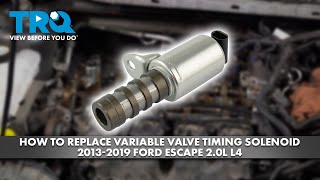
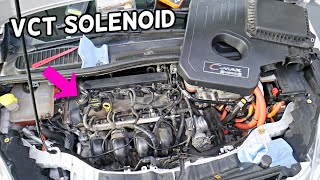
Typical fix: Replace the Bank 1 intake VCT solenoid. 🎬 Watch: Step-by-step guide to replacing the VCT solenoid It is highly recommended to change the engine oil and filter at the same time. The OEM part is often a Motorcraft solenoid.
Est. part cost: $40-$60 - Low, Dirty, or Incorrect Viscosity Engine Oil 🟡 Medium Probability The VCT system is entirely dependent on oil pressure to adjust cam timing. The small passages in the VCT solenoids and phasers are easily clogged by sludge or debris from old oil, which is the number one cause of VCT solenoid failure.
How to confirm: Check the oil level on the dipstick and inspect its condition and service history. If it's dark, gritty, below the 'add' line, or the wrong viscosity, this is a likely contributor.
Typical fix: Perform an engine oil and filter change using the manufacturer-specified grade of oil (e.g., Motorcraft Synthetic Blend) and a quality filter. Clear codes and re-test.
Est. part cost: $50-$100 - Stretched Timing Chain 🟡 Medium Probability Some Ford EcoBoost engines, including the 2.0L and 2.3L, are known to be susceptible to timing chain stretch over time. This can be exacerbated by factors like extended oil change intervals. A stretched chain creates slack, causing the mechanical timing between the crank and cams to fall out of specification.
How to confirm: This is a complex diagnosis. It can be partially confirmed with an oscilloscope by comparing cam and crank sensor waveforms. A rattling noise on startup is a strong audible clue. Definitive confirmation requires physical inspection, which involves significant engine disassembly to access the timing cover.
Typical fix: Replace the timing chain, tensioners, and guides as a complete kit. It is often recommended to replace the water pump at the same time, as it is driven by the timing chain.
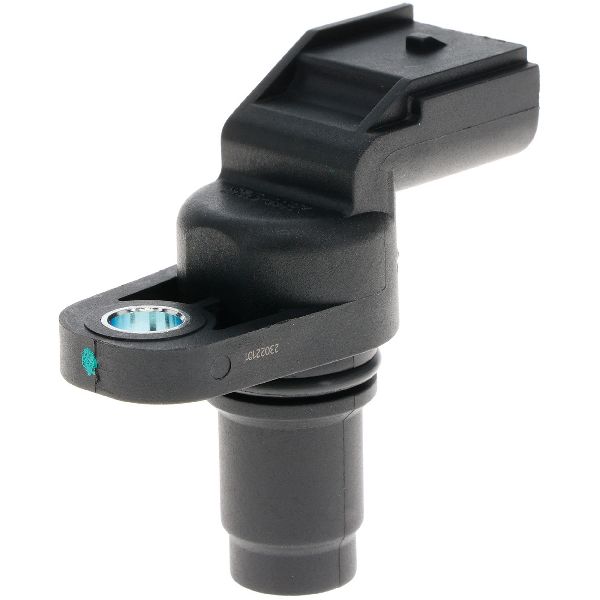
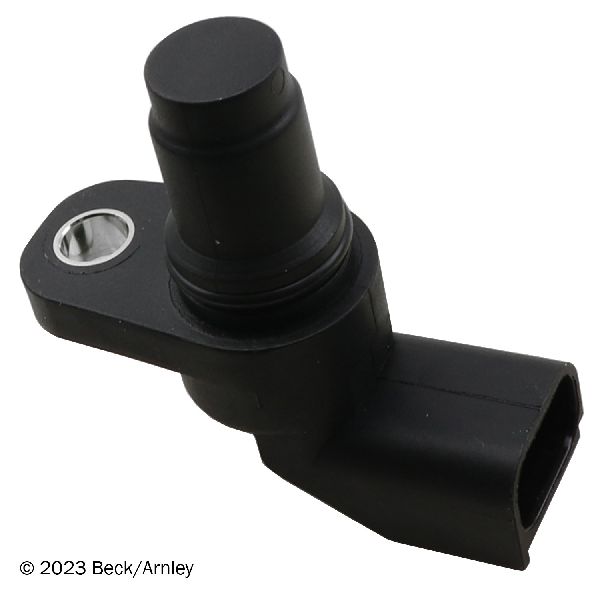
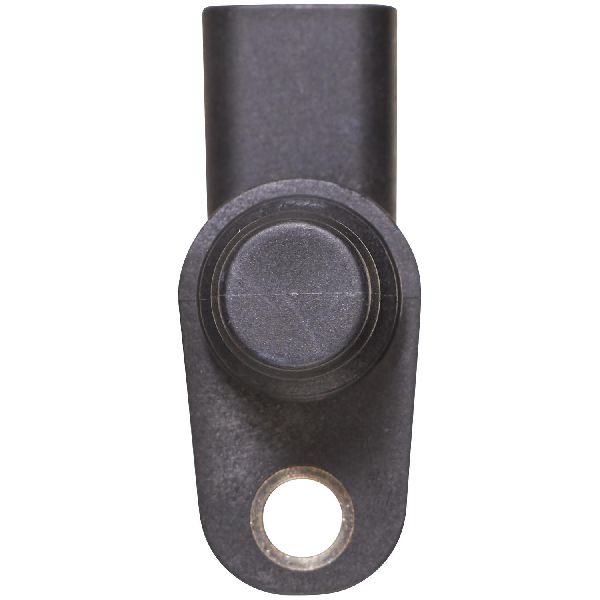
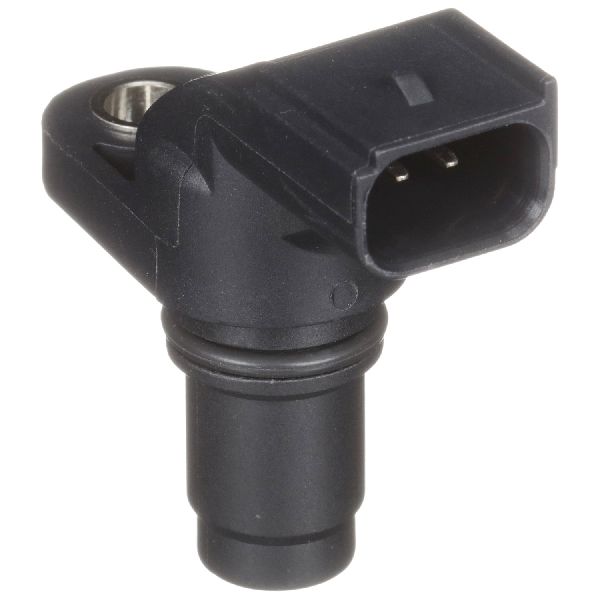
Est. part cost: $300-$600 - Failed Camshaft Position Sensor ⚪ Low Probability
How to confirm: Use a scan tool to check for erratic readings or other sensor-specific codes. Inspect the sensor and its wiring for damage or oil contamination. An oscilloscope can verify a clean, consistent signal. Check the sensor's electrical connector for any signs of engine oil, as sensors can leak internally.
Typical fix: Replace the Bank 1 intake camshaft position sensor. Ensure the o-ring is lubricated before installation to prevent damage.
Est. part cost: $30-$70 - Failed Crankshaft Position Sensor ⚪ Low Probability
How to confirm: An oscilloscope is the best tool to verify a clean signal from the crankshaft sensor. A failing sensor may produce a weak, inconsistent, or non-existent signal. Also inspect wiring for damage.
Typical fix: Replace the crankshaft position sensor.
Est. part cost: $40-$80
Rare But Worth Checking
- Damaged Tone Ring: The reluctor ring (or tone ring) on the crankshaft or camshaft, which the sensor reads, can become damaged, break, or slip out of position, causing incorrect readings even with a good sensor. This can sometimes happen during other repairs if care is not taken.
- Failed VCT Phaser: The VCT phaser (or actuator) is the gear on the end of the camshaft that actually adjusts the timing. It can fail mechanically, get stuck, or become clogged with sludge, preventing it from responding to the VCT solenoid's commands.
- Wiring Issues: Damaged wiring or corroded connectors for the crank sensor, cam sensor, or VCT solenoid can cause a loss of signal or intermittent faults, triggering the code.
Diagnosis Steps
- Check the engine oil level and condition. If it is low, dirty, or the wrong viscosity, address this first. Clear the codes, drive the vehicle, and see if P0016 returns.
- Use an OBD-II scanner to check for any other pending or active trouble codes. Codes for specific sensors can help narrow the diagnosis.
- Monitor live data on the scanner, specifically the VCT Advance Error PID (
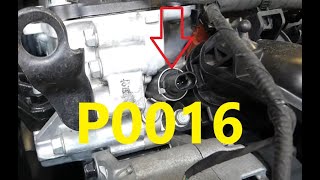
VCT_ADV_ERR). This value should be close to 0 degrees at warm idle, with a tolerance of +/- 5 degrees. A consistent error points to a problem. 🎬 See how to test and fix P0016 correlation codes
- Inspect the wiring and connectors for the crankshaft sensor, Bank 1 intake camshaft sensor, and the VCT solenoid for any visible damage, corrosion, or loose connections. Check the cam sensor connector for oil contamination.
- Following Ford's TSB SSM 48423, use a scan tool's bidirectional controls to command the Bank 1 intake VCT solenoid. Listen for an audible click from the solenoid. If there's no click, the solenoid is likely faulty. If the code/symptom disappears after the test, an oil restriction may have been cleared.
- If the solenoid appears to work, remove it and inspect for sludge or debris on its oil screens. Test its resistance with a multimeter; it should be between 5 and 14 ohms. Clean or replace as necessary.
- If the VCT system and sensors seem okay, the next step is to suspect a mechanical timing issue. This requires more in-depth diagnosis, potentially with an oscilloscope to analyze sensor waveforms or by physically inspecting the timing components for chain stretch and guide wear.
Parts You'll Likely Need
- Variable Camshaft Timing (VCT) Solenoid
(OEM #CJ5Z-6M280-A)— As cited in multiple Ford/Lincoln TSBs, this part is prone to sticking due to oil debris, making it the most likely cause for P0016 on this vehicle.
Trusted brands: Motorcraft, Dorman, NTK
OEM price range: $40-$60
Aftermarket price range: $25-$55 - Timing Chain Kit
(OEM #BL3Z-6D256-C (example for similar engine, verify by VIN))— If the VCT system is functioning correctly and the code persists, a stretched timing chain is the next most probable cause, especially on higher mileage vehicles.
Trusted brands: Motorcraft, Cloyes
OEM price range: $300-$500
Aftermarket price range: $200-$400
Related Codes That Often Appear With This One
- P0017 — Crankshaft Position - Camshaft Position Correlation (Bank 1 Sensor B). This indicates a similar timing issue but on the exhaust camshaft of the same engine bank, often pointing to a common issue like a stretched chain or oil pressure problem.
- P0011 — Intake Camshaft Position Timing - Over-Advanced (Bank 1). This code often points directly to a problem with the VCT solenoid or phaser on the intake cam, and is frequently listed alongside P0016 in Ford TSBs.
- P0012 — Intake Camshaft Position Timing - Over-Retarded (Bank 1). Like P0011, this suggests a VCT system fault, often due to oil flow issues or a sticking solenoid.
Technical Service Bulletins (TSBs) & Recalls
- SSM 48423: Notes that various P00xx timing codes may be due to small debris causing the VCT solenoid to stick on 2015-2020 Ford and Lincoln vehicles.
- SSM 54366: Similar to the above, covering 2015-2021 vehicles and pointing to specific diagnostic tests for VCT-related codes like P0016.
- SSM 47170: An earlier bulletin also identifying sticking VCT solenoids from debris as a potential cause for P0016 and other timing codes.
Platform-Specific Known Issues
- Low Mileage Failures: TSB 16-0010 specifically addresses P0016 (and related codes) on 2016 models with the 2.0L or 2.3L GTDI engine that have less than 2000 miles (3200 km). In these cases, Ford directly points to replacing the intake VCT solenoid as the solution, suggesting a potential issue with early-life failure or contamination of the part from the factory.
Mechanic-Grade Diagnostic Values
- VCT Solenoid Resistance — expected: 5 - 14 Ohms. Failure: An open circuit (infinite resistance) or a reading outside the specified range. A reading over 10k Ohms indicates a definite failure.
- Scan Tool PID: VCT_ADV_ERR (VCT Advance Error) — expected: Close to 0° at warm idle. A deviation of +/- 5° is the maximum allowable tolerance.. Failure: A consistent, large error value that does not return to near zero indicates a correlation problem. A reading over 6° may point to a stretched timing chain.
- Camshaft Position Sensor Voltage (3-wire sensor) — expected: With ignition on, engine off: ~5V on the reference wire, ~5V on the signal wire (relative to battery ground), and ~12V on the ground wire (when measured against battery positive).. Failure: No voltage or incorrect voltage on any wire points to a wiring or PCM issue, not necessarily a bad sensor.
Hidden / Shadow Codes Worth Checking
- Extended PIDs (Parameter IDs): While not 'shadow codes', Ford's IDS and advanced scan tools like FORScan can access specific PIDs that are critical for diagnosis. These include VCT_ADV_ERR (cam timing error), VCTADV (actual cam angle), VCT_CMD (commanded cam angle), and VCTENA (indicates if conditions are correct for VCT operation). (see via Ford IDS (Integrated Diagnostic System), FORScan, or other professional-grade scan tools with Ford-specific capabilities.)
Scan Tool Commands That Help
- Ford IDS (or equivalent): VCT Solenoid Bidirectional Control / Output State Control — This command is used to manually activate the VCT solenoid while the engine is idling. A technician should listen for an audible 'click' from the solenoid. If the solenoid clicks and/or the engine idle changes, the solenoid is likely functional. If the code was caused by debris, this action can sometimes clear the obstruction and resolve the issue temporarily.
Wiring & Ground Locations
- Underhood Fuse Box - Fuse F25 — Located in the main fuse box in the engine compartment.. This fuse, labeled 'Vehicle power 2', supplies power to several components, including the Variable Camshaft Timing (VCT) system. A failure of this fuse would disable the VCT solenoids.
- Factory Wiring Manual (FCS-21348-16) — N/A - This is the OEM service manual.. The official 2016 Lincoln MKC Electrical Wiring Diagrams manual contains detailed schematics, connector pinouts, and physical locations for all grounds and splices related to the CMP sensors, CKP sensor, VCT solenoids, and PCM. This is the ultimate source for tracing wiring faults.
Real Owner Repair Stories
- Reddit user on r/MechanicAdvice (Ford Explorer with 2.0L EcoBoost (mechanically similar to MKC)) — P0016 code appeared immediately after a DIY timing chain and VCT actuator replacement.
❌ Tried (didn't work) Clearing the code; it returned immediately.
✅ What actually fixed it The user noted their live data showed the camshaft position never read below ~8 degrees, even at idle, questioning if it should be 0. The likely cause was a slight mistake in setting the mechanical timing during reassembly, despite using all the correct special tools. This highlights the precision required for this job. - Reddit user on r/Justrolledintotheshop (Ford F-150 with 3.5L EcoBoost (shares VCT design principles)) — P0016 code appeared one year after a timing chain replacement.
❌ Tried (didn't work) The initial timing chain replacement.
✅ What actually fixed it The owner had used an aftermarket (Cloyes) timing chain. It stretched and caused the P0016 code to return exactly one year later. The fix was to replace the chain again, presumably with an OEM Motorcraft part. This suggests these engines can be sensitive to the quality of timing components. - YouTube channel '312Drive' (Generic car, but demonstrates a common issue after service.) — P0016 code and sluggish performance appeared immediately after an oil change.
❌ Tried (didn't work) Initial inspection of cam/crank sensors.
✅ What actually fixed it The technician found a loose electrical connector on an ignition coil that had not been fully seated during the service. While not directly a timing component, the resulting misfire and erratic engine operation was interpreted by the PCM as a correlation fault. This is a prime example of checking for simple, recently-disturbed components first.
OEM Part Supersession History
CJ5Z-6M280-A→No official supersession found. This remains the primary part number.— N/A
Heads up: This is the correct solenoid for the transverse 2.0L/2.3L EcoBoost in the MKC. Do not confuse with 8L3Z-6M280-B (for older 3-valve V8s) or HL3Z-6M280-A. While HL3Z-6M280-A is used on some 2.0L EcoBoost applications (like the F-150), it may be for longitudinal engine layouts. Always verify the part number by VIN, as the TSBs point to the CJ5Z-6M280-A part.
Model Year Variations Within This Range
- 2019: The 2019 model year received a significant facelift, most notably replacing the split-wing front grille with Lincoln's corporate rectangular grille. This change is cosmetic and does not affect the diagnosis of P0016.
- 2016-2019: Starting in 2016, the infotainment system was upgraded from the older MyLincoln Touch to the more modern and responsive SYNC 3 system. This does not affect engine diagnostics.
Helpful Videos
We Have This Part in Stock


The information in this article is provided for general reference and educational purposes only. Vehicle specifications, procedures, and part compatibility can vary by production date, trim level, and region. Always consult your vehicle's factory service manual and verify part numbers before purchasing or performing repairs. Safety-critical components such as airbags, seat belts, and braking systems should be installed by a qualified professional.
- Lincoln MKC:
- 🎬 Helpful Videos
- 🛍️ Shop This Part
- What's Unique About the 2015-2019 Lincoln MKC
- Diagnostic Flowchart
- Symptoms You May Notice
- Most Likely Causes
- Rare But Worth Checking
- Diagnosis Steps
- Parts You'll Likely Need
- Related Codes That Often Appear With This One
- Technical Service Bulletins (TSBs) & Recalls
- Platform-Specific Known Issues
- Mechanic-Grade Diagnostic Values
- Hidden / Shadow Codes Worth Checking
- Scan Tool Commands That Help
- Wiring & Ground Locations
- Real Owner Repair Stories
- OEM Part Supersession History
- Model Year Variations Within This Range
- 🎟️ Get 5% Off