

P0016 on 2012-2016 Land Rover Range Rover Evoque: Camshaft Correlation Causes & Fixes
P0016 on a 2012-2016 Range Rover Evoque usually indicates a serious mechanical timing issue with the 2.0L engine. The most common causes are a stretched timing chain, failed chain tensioner, or a faulty camshaft phaser/sprocket. This is a complex, labor-intensive repair that should be addressed immediately to avoid severe engine damage.
- P0016 on a 2012-2016 Evoque with the 2.0L gas engine is a serious code that points to a mechanical timing problem.
- Do not ignore a rattling sound from the engine, especially on startup; it is a primary warning sign of a failing timing chain or tensioner.
- The most likely cause is a stretched timing chain, a failed tensioner, or a faulty camshaft phaser, as documented in Land Rover TSBs. [SSM69738]
- This is not a simple DIY fix. The repair is labor-intensive and requires special tools and expertise to avoid engine damage.
- Simply replacing the camshaft or crankshaft sensors is unlikely to fix the problem.
What's Unique About the 2012-2016 Land Rover RANGE ROVER EVOQUE

The 2.0L turbocharged gasoline engine (badged Si4 by Land Rover, but part of the Ford EcoBoost family) used in this generation of Evoque is known for premature timing chain and component wear. This is a well-documented issue across the Ford 2.0L EcoBoost platform. Multiple Technical Service Bulletins (TSBs) from Land Rover specifically address engine rattles and this code, pointing to issues with camshaft sprockets and other timing gear. Owners often experience a rattling noise on cold starts, which is a key indicator of a stretched chain or failing tensioner before the code even appears.
🎬 See how P0016 and P0017 codes relate to timing wearDiagnostic Flowchart

Tap your situation to follow the diagnostic path that matches what you're seeing on this vehicle.
Symptoms You May Notice

- Check Engine Light is on.
- Rattling or ticking noise from the engine, especially on a cold startup.
- Rough or unstable idle.
- Reduced engine power and sluggish acceleration.
- Engine may hesitate or stall.
- Worse than normal fuel economy.
- Engine cranks but fails to start in severe cases.
- Replacing only the camshaft or crankshaft position sensors without verifying the mechanical timing. The code is more often a symptom of a mechanical problem (stretched chain, failed VVT actuator) than a sensor failure on this vehicle.
- Replacing VVT solenoids when the root cause is a stretched timing chain. While a new solenoid might temporarily improve the situation, the code will likely return if the chain has excessive slack.
Most Likely Causes

- Stretched Timing Chain and/or Failed Tensioner 🔴 High Probability The 2.0L EcoBoost/Si4 engine family has a documented history of premature timing chain stretch and tensioner failure. This can be accelerated by infrequent oil changes or low oil pressure. In forum discussions, owners report this failure at mileages as low as 54,000 km (approx. 33,500 miles).
How to confirm: A mechanic will listen for the characteristic chain rattle on startup. Diagnosis requires removing the valve cover and timing cover to physically inspect the chain for slack and check the tensioner's extension. A professional scan tool can also show a persistent deviation between desired and actual cam timing angles.
Typical fix: Replace the timing chain, tensioners, guides, and sprockets as a complete kit. It is critical to use the latest revised parts from Land Rover.
Est. part cost: $200-$500 - Failed Camshaft Phaser / VVT Actuator 🔴 High Probability TSB #LTB00916NAS5 specifically identifies the cause as the 'stopper' in the intake camshaft VCT actuator becoming detached, preventing the actuator from functioning correctly. TSB #SSM69738 also points to a failure of the pin on the camshaft sprocket. This is a known weak point on this engine.
How to confirm: After removing the valve cover, the phasers can be inspected for damage as outlined in TSB LTB00916NAS5. A scan tool can also monitor desired vs. actual cam timing to see if the phaser is responding correctly to commands from the PCM.
Typical fix: Replace the faulty intake camshaft VVT actuator. It is often recommended to replace this component during a full timing chain service.
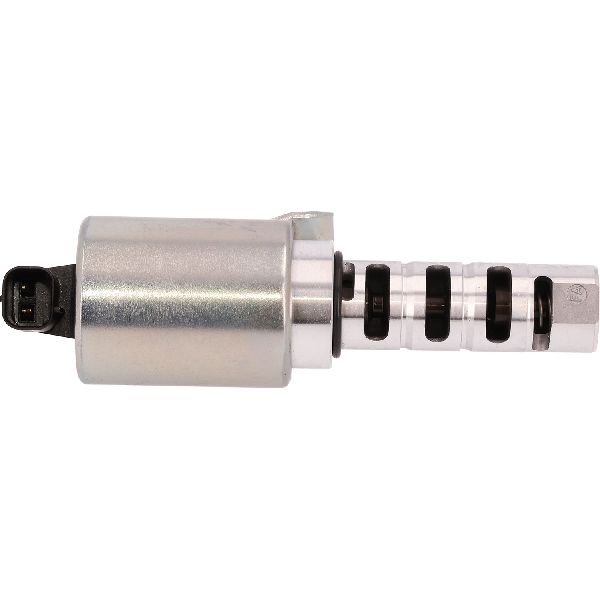
Est. part cost: $100-$250 per phaser - Failed VVT (Oil Control) Solenoid 🟡 Medium Probability These solenoids control the oil flow that operates the cam phasers. They can get clogged with sludge from old oil or fail electrically, preventing the camshaft from adjusting its timing correctly. In some cases on Ford EcoBoost engines, debris from a failing vacuum pump can also clog these solenoids.
How to confirm: A mechanic can test the solenoid's resistance with a multimeter or command it with a scan tool while observing changes in engine timing or sound. They are relatively easy to access and can be swapped between intake and exhaust to see if the problem code changes or moves.
Typical fix: Replace the faulty VVT solenoid. Sometimes they can be removed and cleaned, but replacement is the more reliable fix.
Est. part cost: $40-$100 - Low or Dirty Engine Oil / Incorrect Oil Filter ⚪ Low Probability The entire Variable Valve Timing (VVT) system is hydraulic and depends on clean oil at the correct pressure. Neglecting oil changes can lead to sludge buildup that clogs passages and VVT components. Additionally, some owners on platform-mate forums have traced P0016 to a faulty aftermarket oil filter with a failed internal bypass valve, which starved the VVT system of proper oil pressure.
How to confirm: Check the oil level on the dipstick and inspect its condition. If it's very low, black, or sludgy, this is a likely contributor. Check service records for the type of oil filter used.
Typical fix: Perform an oil and filter change with the manufacturer-specified grade of oil and a high-quality OEM or equivalent filter. If the problem persists, the damage may already be done to mechanical components.
Est. part cost: $70-$120
Rare But Worth Checking
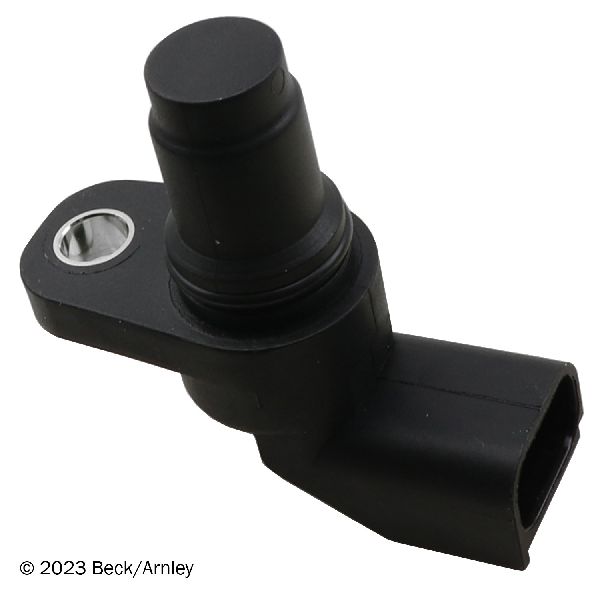
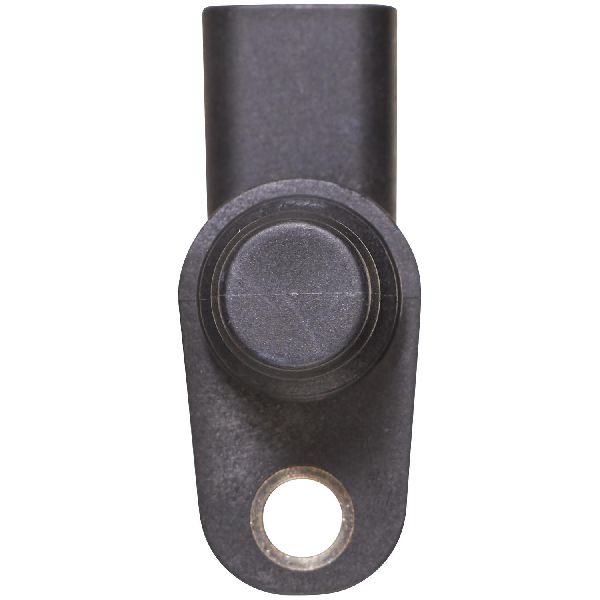
- Faulty Camshaft or Crankshaft Position Sensor: While these sensors can fail, it's less common for them to be the root cause of P0016 on this engine, especially if mechanical symptoms like rattling are present. Owners and mechanics often replace these first as a simple fix, but the issue is usually the mechanical timing itself.
Diagnosis Steps
- Verify engine oil level and condition. An oil change with a high-quality filter may be a good first step if the oil is old or low.
- Use a professional scan tool to check for any other stored trouble codes and view freeze frame data.
- Monitor live data from the scan tool, comparing the 'desired' camshaft angle to the 'actual' camshaft angle for Bank 1 Intake. A significant, persistent deviation, especially off-idle, points to a mechanical issue.
- Listen carefully for any rattling or ticking noises from the front of the engine (timing cover area), especially during a cold start. This is a strong indicator of a timing chain issue.
- Test the VVT solenoids for proper operation by checking resistance and commanding them with a scan tool. Consider swapping the intake and exhaust solenoids to see if the code changes to P0017.
- If the above steps do not resolve the issue, perform a physical inspection as detailed in TSB LTB00916NAS5. This involves removing the valve cover to inspect the VVT actuator 'stopper'. If the issue is still not found, further disassembly is required to check the timing chain for slack, inspect the guides for wear or damage, and verify all timing marks are correctly aligned.
Parts You'll Likely Need
- Timing Chain Kit
(OEM #LR025263)— This is the most common failure point. A kit typically includes the chain, tensioner, and all plastic guides, which should be replaced together. Using a genuine Land Rover kit is highly recommended.
Trusted brands: Land Rover (OEM)
OEM price range: $300-$500
Aftermarket price range: $150-$300 - Intake Camshaft Phaser (VVT Actuator)
(OEM #LR085467)— The phaser itself can fail internally or the locking 'stopper' pin can detach, as noted in TSB LTB00916NAS5, causing incorrect timing.
Trusted brands: Land Rover (OEM)
OEM price range: $200-$350
Aftermarket price range: $100-$200 - VVT Control Solenoid
(OEM #LR073778 (superseded by LR126832))— This solenoid can become clogged or fail, preventing proper oil flow to the phaser. It's a common point of failure and a relatively inexpensive part to replace during a larger timing job.
Trusted brands: Land Rover (OEM), Bosch
OEM price range: $80-$150
Aftermarket price range: $40-$100
Related Codes That Often Appear With This One
- P0017 — This code is for the Crankshaft-Exhaust Camshaft correlation. It often appears with P0016 when the timing chain has stretched, affecting the timing of both camshafts relative to the crankshaft.
- P0341 — This is a Camshaft Position Sensor 'A' Circuit Range/Performance code. It is cited in Land Rover TSBs LTB00916NAS5 and LTB00916NAS2 alongside P0016 as a potential related code, often triggered by the same VVT actuator or timing chain faults. A low engine oil level has also been reported to cause this code.
- P000A — 'A' Camshaft Position Slow Response. This code is also mentioned in TSB #SSM69738, indicating the camshaft is not moving to its desired position as quickly as the PCM expects, often due to oil pressure issues or a failing phaser.
Technical Service Bulletins (TSBs) & Recalls
- LTB00916NAS5: Mentions engine rattle noise in conjunction with DTC P0016.
- SSM69738: Points to a failure of the pin on the camshaft sprocket as a cause for P0016 on 2.0L gasoline engines.
- LTB00916NAS2: Also correlates an engine rattle with the illumination of the MIL and P0016 being stored.
Platform-Specific Known Issues
- TSB #LTB00916NAS5 notes that a rattle noise may be present from the engine along with DTC P0016, P0017, P0026, or P0341. The cause is identified as the 'stopper' in the intake camshaft VCT actuator becoming detached.
- TSB #SSM69738 is highly specific for the 2.0L gasoline engine, stating that the cause for P0016 and related codes may be 'THE PIN ON THE CAMSHAFT SPROCKE...'. This points directly to a mechanical failure of the VVT actuator.
Mechanic-Grade Diagnostic Values
- VVT (VCT) Solenoid Internal Resistance — expected: 7 to 14 Ohms. Failure: A reading outside this range indicates a faulty solenoid coil.
- Live Data: Desired vs. Actual Camshaft Position at Idle — expected: Desired should be 0 degrees; Actual should be very close to 0 degrees.. Failure: A significant and persistent deviation (e.g., actual reading of 8-11 degrees when desired is 0) points to a base timing issue or a stuck phaser.
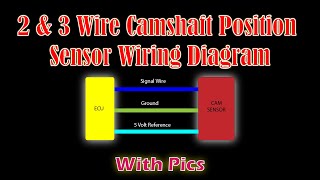
- Camshaft Position Sensor Type — expected: 3-wire Hall Effect sensor.. Failure: These sensors are difficult to test with a multimeter for resistance as the readings are not linear. Testing requires checking for a 5V or 12V reference voltage and a signal using an oscilloscope or scan tool.
Hidden / Shadow Codes Worth Checking
- P0016-76: This sub-code is mentioned in TSB #SSM69738. While the exact definition of the '-76' suffix for Land Rover is not publicly documented, in Ford's convention (which is highly relevant), it often translates to 'Wrong Mounting Position', pointing directly to a mechanical installation or alignment error rather than an electrical fault. (see via A professional Land Rover-specific scan tool like SDD (Symptom Driven Diagnostics) or a high-end aftermarket scanner is required to view these manufacturer-specific sub-codes.)
Scan Tool Commands That Help
- JLR SDD (Symptom Driven Diagnostics) or equivalent high-end scanner: VVT Solenoid / OCV Actuator Test — This bidirectional command allows a technician to manually activate the VVT solenoid while the engine is running to see if it causes a change in engine operation (e.g., hesitation or stalling). If activating the solenoid has no effect, it confirms a problem with the solenoid, its wiring, or the oil passages. This is a critical step before disassembling the engine for timing chain inspection.
- JLR SDD (Symptom Driven Diagnostics): Service Functions / Recommendations Tab — After identifying DTCs, the SDD software will often guide the technician through a series of recommended tests under the 'Service Functions' or 'Recommendations' tab. This can include specific guided diagnostics for cam/crank correlation faults, which may involve automated actuator tests and data logging.
Wiring & Ground Locations
- Crankshaft Position (CKP) Sensor — Located on the lower right front of the engine block.. This is one of the two primary sensors used to determine correlation. Damage to its wiring harness or connector can cause the P0016 code.
- Intake Camshaft Position (CMP) Sensor — Located on the top rear of the engine.. This is the 'Sensor A' referenced in the code. A fault in this sensor's circuit is a direct potential cause. The wiring diagram identifies it as 'Intake camshaft sensor'.
- Exhaust Camshaft Position (CMP) Sensor — Located on the top rear of the engine, near the intake sensor.. While not the primary sensor for P0016, its wiring runs in the same area. Damage to the harness could affect both sensors, and it is the primary sensor for the related P0017 code.
- Engine Control Module (ECM) — Located at the center rear of the engine compartment.. All sensor signals are sent to the ECM. A poor connection at the ECM connector or an internal ECM fault (very rare) could trigger this code.
Real Owner Repair Stories
- YouTube channel 'rangerover evoque' (2015 Range Rover Evoque 2.0L EcoBoost) — Check Engine Light with code P0016 after a recent timing chain replacement. The engine ran fine at idle but would misfire around 2500-3000 RPM.
❌ Tried (didn't work) The initial timing chain job was performed correctly with all new parts and locking tools.
✅ What actually fixed it The mechanic discovered that while torquing one of the camshafts, the tensioner allowed the chain to skip one tooth on the crankshaft sprocket. The fix was to tear the engine down again and correctly re-align the timing, ensuring the crankshaft was held firm during the final torquing sequence. - YouTube channel 'Automotive Diagnostics & Programming' (2016 Range Rover Evoque 2.0L) — Check Engine Light with codes P0016 and P0017. The engine seemed to run and rev fine with no obvious drivability issues.
❌ Tried (didn't work) Initial diagnosis focused on sensor data, which showed both cams were out of sync with the crank, but perfectly in time with each other.
✅ What actually fixed it Upon disassembly, the mechanic found that a small metal piece from the VVT phaser (actuator) had broken off and fallen. This is consistent with the issue described in TSB LTB00916NAS5 where the actuator 'stopper' detaches. The fix was to replace the failed VVT phaser.
OEM Part Supersession History
LR073778→LR126832— This is the VVT Control Solenoid. Part numbers are often superseded to reflect design improvements, changes in manufacturer, or consolidation of parts. Given the known issues with VVT systems on this engine, the new part is likely a more robust revision.
Heads up: LR126832 is the direct replacement for LR073778 and should be used for all repairs. Further supersessions include LR162948, LR163187, and LR177463.LR024999, LR050849, LR083920, LR085467→LR095897— This is the Intake Camshaft Phaser/Sprocket (VVT Actuator). The multiple supersessions indicate ongoing revisions to address the known failure points, such as the detaching internal 'stopper' pin mentioned in TSBs.
Heads up: LR095897 is the latest version for 2015-2017 models, replacing all previous numbers. It is critical to use the most current part number available from Land Rover to ensure the most durable design is installed.
Model Year Variations Within This Range
- 2012-2015: These earlier models exclusively used the Ford-derived 2.0L EcoBoost engine, badged as the Si4. The timing system issues are well-documented for this specific engine family.
- 2016: The 2016 model year was a transition period. While many still used the Ford-based 2.0L Si4, Land Rover began introducing its own 'Ingenium' 2.0L engine. It is crucial to verify which engine is in the vehicle, as the timing components and known failure modes can differ between the Ford and JLR Ingenium engines. The Ingenium engine family has its own set of known issues, including timing chain problems on early versions.
Helpful Videos




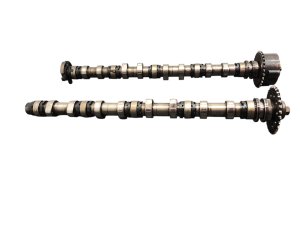
Used OEM Parts in Stock
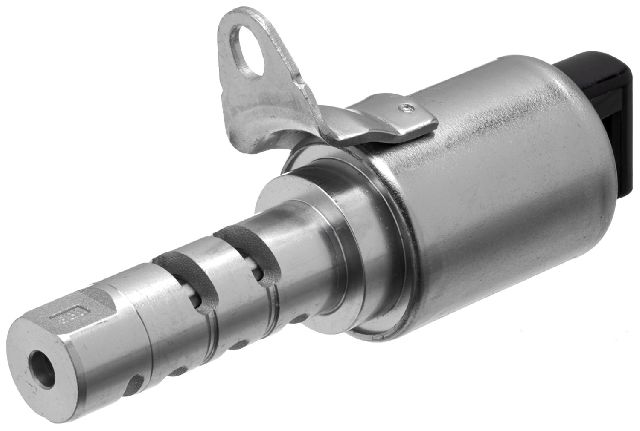
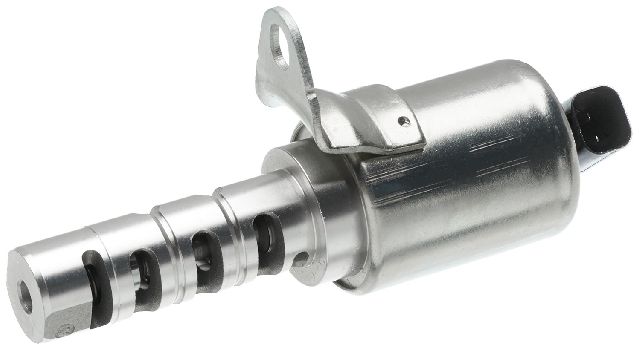
New Aftermarket Parts Available


The information in this article is provided for general reference and educational purposes only. Vehicle specifications, procedures, and part compatibility can vary by production date, trim level, and region. Always consult your vehicle's factory service manual and verify part numbers before purchasing or performing repairs. Safety-critical components such as airbags, seat belts, and braking systems should be installed by a qualified professional.
- Land Rover RANGE ROVER EVOQUE:
- 🎬 Helpful Videos
- 🛍️ Shop This Part
- What's Unique About the 2012-2016 Land Rover RANGE ROVER EVOQUE
- Diagnostic Flowchart
- Symptoms You May Notice
- Most Likely Causes
- Rare But Worth Checking
- Diagnosis Steps
- Parts You'll Likely Need
- Related Codes That Often Appear With This One
- Technical Service Bulletins (TSBs) & Recalls
- Platform-Specific Known Issues
- Mechanic-Grade Diagnostic Values
- Hidden / Shadow Codes Worth Checking
- Scan Tool Commands That Help
- Wiring & Ground Locations
- Real Owner Repair Stories
- OEM Part Supersession History
- Model Year Variations Within This Range
- 🎟️ Get 5% Off