

P0016 on 2010-2017 GMC Terrain: Crank/Cam Correlation Causes and Fixes
On the 2010-2017 GMC Terrain with the 2.4L engine, P0016 almost always indicates a stretched timing chain, a failed tensioner, or broken guides, typically rooted in excessive oil consumption. This is a serious issue requiring immediate attention to prevent catastrophic engine damage. The repair is labor-intensive, often costing between $1,200 and $2,500 at a shop.
- P0016 on a 2010-2017 GMC Terrain 2.4L is a serious code that almost always points to a mechanical timing chain problem, not a bad sensor.
- The root cause is often the engine's tendency to consume oil. Check your oil level frequently (at every fuel fill-up) to prevent this expensive repair.
- Do not continue to drive the vehicle. A stretched or broken timing chain can lead to catastrophic engine failure.
- The correct fix is to replace the entire timing chain kit, including the chain, tensioner, and all guides.
- Due to the complexity and risk, this repair should be performed by a professional mechanic.
What's Unique About the 2010-2017 Gmc TERRAIN

This issue is exceptionally common on the 2010-2017 GMC Terrain equipped with the 2.4L Ecotec engine. These engines are notorious for excessive oil consumption (often more than 1 quart per 2,000 miles) due to a piston ring design defect. This oil starvation compromises the hydraulic timing chain tensioner, leading to a loose, rattling chain that quickly wears out, breaks its plastic guides, and ultimately stretches or jumps a tooth. GM acknowledged this with Special Coverage Adjustments (e.g., #14159, #15285) extending warranties for piston replacement. This underlying mechanical failure is the root cause of P0016 far more often than a simple sensor failure.
Diagnostic Flowchart

Tap your situation to follow the diagnostic path that matches what you're seeing on this vehicle.
Symptoms You May Notice

- Check Engine Light is on
- A distinct rattling or scraping noise from the passenger side of the engine, especially for 2-5 seconds on a cold start.
- Engine runs rough, idles poorly, or shakes.
- Reduced engine power and poor acceleration ('limp mode').
- Engine cranks but fails to start in severe cases.
- Stalling while driving, particularly after the engine warms up.
- Audible ticking or slapping from the timing chain area while running.
- Replacing only the camshaft or crankshaft position sensors without verifying the mechanical timing. This rarely fixes the issue on the GMC Terrain 2.4L.
- Replacing only the VVT solenoids when the timing chain is clearly loose or making noise. This ignores the root mechanical problem.
- Performing a timing chain job but failing to clean debris from the oil pan and oil pickup tube, leading to repeat failure of the new components.
Most Likely Causes

- Stretched Timing Chain 🔴 High Probability Often caused by low oil levels due to the 2.4L engine's oil consumption issue, which starves the chain system of lubrication and hydraulic pressure for the tensioner, leading to accelerated wear and stretch.
How to confirm: A physical inspection is the definitive method. After removing the valve cover, excessive slack in the chain between the cam sprockets is a clear indicator. A scan tool can also show a deviation between desired and actual cam angles.
Typical fix: Replace the entire timing chain kit, including the chain, guides, tensioners, and sometimes the cam phasers (actuators). It is recommended to use an updated chain design if available.
Est. part cost: $150-$400 - Failed Timing Chain Tensioner 🔴 High Probability The hydraulic tensioner relies on clean oil at the proper pressure. Low or dirty oil compromises its ability to keep the chain tight. The tensioner can get stuck or its internal seal can fail, causing slack and noise.
How to confirm: Usually diagnosed during a timing chain inspection. The tensioner plunger may be fully extended but providing no tension, or it may be visibly stuck. In some cases, aftermarket tensioners have been found to come apart.
Typical fix: Replace the tensioner. This is always done as part of a complete timing chain kit replacement to ensure longevity of the repair.
Est. part cost: $30-$60 - Worn or Broken Timing Chain Guides 🟡 Medium Probability The original guides are made of plastic and become brittle with age and heat cycles. A loose, slapping chain will break them.
How to confirm: Listen for a scraping or grinding sound. Pieces of the broken black or brown plastic guides can often be found in the oil pan during an oil change or when the timing cover is removed.
Typical fix: Replace all guides as part of a complete timing chain kit replacement. Finding pieces in the oil pan is a definitive sign that the entire timing system needs service.
Est. part cost: $50-$100 (as part of a kit) - Low or Dirty Engine Oil 🟡 Medium Probability The 2.4L Ecotec engine is known for consuming oil due to its piston ring design. Failure to check and top off oil at least every 1,000 miles is a primary contributor to timing system failure.
How to confirm: Check the oil level on the dipstick. If it's low, or the oil is dark and sludgy, this is a likely contributing factor. Many owners report being unaware of the consumption until the engine starts making noise.
Typical fix: Perform an oil and filter change immediately. However, if the P0016 code is already present, damage to the timing components has almost certainly occurred and an oil change alone will not fix it.
Est. part cost: $40-$80 - Faulty Camshaft Actuator Solenoid (VVT Solenoid) ⚪ Low Probability These solenoids can get clogged with sludge from dirty oil or metal debris from a failing timing system, causing them to stick.
How to confirm: A common diagnostic trick is to swap the intake and exhaust solenoids (they are identical) and see if the code changes to P0017 (exhaust cam correlation). If it does, the solenoid is bad. They can also be removed, cleaned, and tested for operation with a 12v source. Resistance should be between 8 and 13 Ohms.
Typical fix: Replace the faulty solenoid. This is often done as a pair during a timing chain job as a preventative measure.
Est. part cost: $25-$70
Rare But Worth Checking
- Slipped Camshaft or Crankshaft Reluctor Wheel: A known but uncommon issue where the reluctor wheel (which the sensor reads) on the camshaft or crankshaft moves slightly, throwing off the sensor's reading even if the mechanical timing is perfect. TSBs #PIP4548F and #PIP3423P address this, noting it can cause a crank-no-start or persistent codes after a timing job.
- Faulty Crankshaft or Camshaft Position Sensor: While these sensors can fail, it is rare for them to be the root cause of P0016 on this vehicle. They are often replaced mistakenly when the actual problem is mechanical timing. A scope can be used to verify the sensor's signal pattern.
- Swapped Electrical Connectors: After an engine repair, it's possible to swap the connectors for the intake camshaft actuator solenoid and the intake actuator park lock solenoid. They are identical connectors. TSB 19-NA-150 was issued to address this specific scenario, which can cause a P0016 code immediately after reassembly.
Diagnosis Steps
- Verify the oil level and condition. If low or dirty, document this as the likely root cause of wear. An oil change will not fix existing damage.
- Listen for a distinct rattling noise from the passenger side of the engine on a cold start. If present, this strongly indicates a loose timing chain.
- Use a professional scan tool to monitor desired vs. actual camshaft position angles. A significant, persistent deviation (often more than 4-6 degrees at idle) points to a mechanical timing issue.
- Inspect and test the camshaft actuator (VVT) solenoids. Resistance should be 8-13 Ohms. Swap the intake and exhaust solenoids to see if the P0016 code changes to P0017.
- If codes P0089 or P228D are also present, prioritize the diagnosis of P0016 as the root cause. The fuel pressure issue is almost always a symptom of the incorrect cam timing.
- If the above steps do not resolve the issue, a physical inspection of the timing system is required. This involves removing the timing cover to check for chain slack, broken guides, and correct timing mark alignment.
- During the repair, drop the oil pan and check for broken plastic guide pieces in the pan and clogging the oil pickup tube screen. Failure to do so can lead to oil starvation and repeat failure.
- If P0016 persists after a timing chain replacement, verify the reluctor wheels on the cams/crank have not shifted (per TSB PIP4548F) and that the VVT solenoid connectors are not swapped (per TSB 19-NA-150).
Parts You'll Likely Need
- Engine Timing Chain Kit
(OEM #12680750)— This is the most common fix. A complete kit ensures all worn components (chain, tensioner, guides, sprockets) are replaced at once for a durable repair. - Intake Camshaft Position Actuator Solenoid
(OEM #12655420)— Sometimes fails due to sludge or debris, but is often replaced unnecessarily. It's a common first step in diagnosis due to its low cost and easy access. - Exhaust Camshaft Position Actuator Solenoid
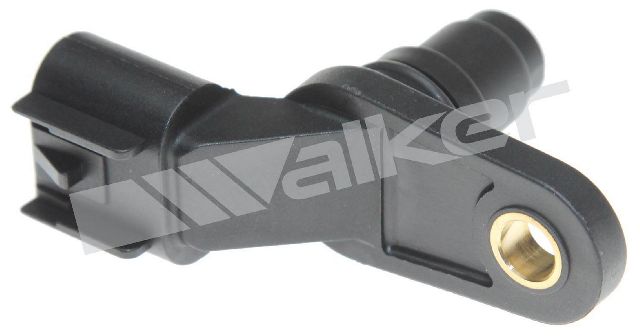
(OEM #12655421)— Same as the intake solenoid. Often replaced as a pair as a preventative measure. - Intake Camshaft Position Sensor
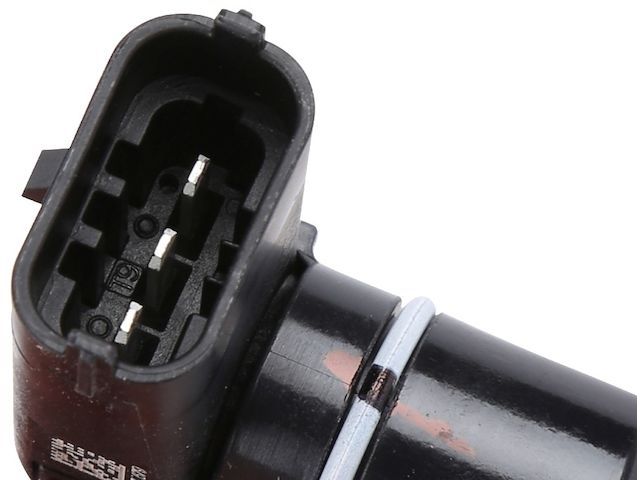
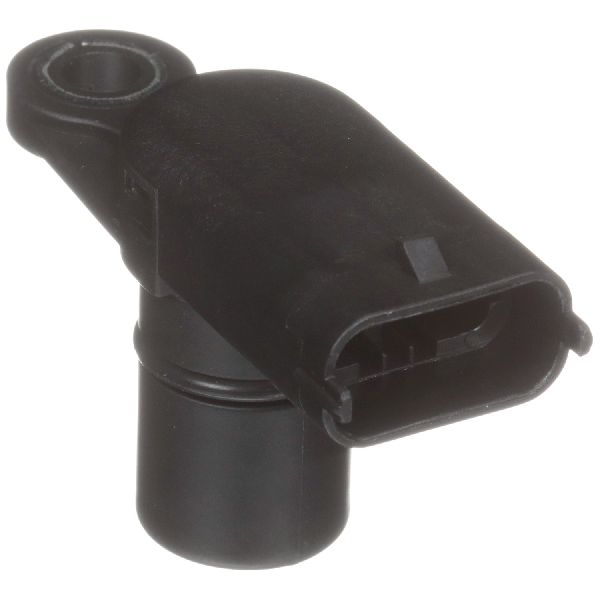
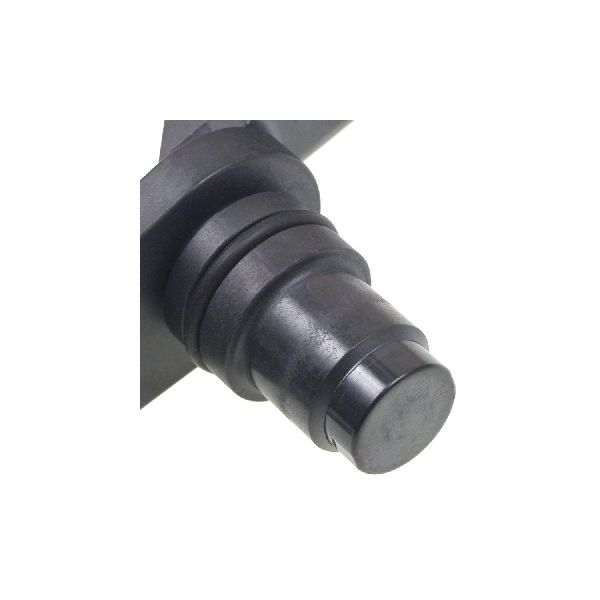
(OEM #12674702)— Rarely the cause of P0016 on this engine, but can be damaged by a loose timing chain or fail on its own. Often misdiagnosed.
Related Codes That Often Appear With This One
- P0017 — This code indicates a correlation issue with the exhaust camshaft. It's common to see both P0016 and P0017 when the timing chain has stretched or jumped time, affecting both cams.
- P0011 — Indicates 'Camshaft Position 'A' - Timing Over-Advanced'. On GM vehicles, this can counter-intuitively mean the cam timing is retarded (late) due to a stretched chain. It often appears with P0016.
- P0089 / P228D — These are fuel pressure regulator performance codes. On the 2.4L direct-injection engine, the high-pressure fuel pump is driven by a lobe on the intake camshaft. If the cam timing is off (P0016), it directly affects fuel pump operation, triggering these codes. This is a strong indicator that the P0016 is a mechanical timing fault.
Technical Service Bulletins (TSBs) & Recalls
- GM Special Coverage Adjustment #14159, #15285, #16118: These cover excessive oil consumption on 2010-2013 models due to piston ring wear, extending the warranty for piston assembly replacement. This is the root cause of the oil starvation that leads to P0016.
- NHTSA TSB #PIP3423P: Advises technicians that codes like P0016 may be set due to loose timing chains or tensioners, requiring physical inspection. Also mentions inspecting the crankshaft reluctor for movement if the cause is not obvious.
- NHTSA TSB #PIP4548F: Guides technicians on inspecting for P0016/P0017 even when timing appears correct, pointing towards a slipped camshaft reluctor wheel as a possible cause.
- NHTSA TSB #19-NA-150: Warns that after a repair, the intake cam actuator solenoid and park lock solenoid connectors (which are identical) may be swapped, causing P0016.
- NHTSA ODI #11719289: Owner complaint from 2026 explicitly linking P0016, P0089, and P228D, corroborating the connection between timing failure and fuel pressure codes.
- NHTSA ODI #11355112: Owner complaint from 2020 quoting a dealer diagnosis of a required timing chain replacement for P0016 at a cost of $2300.
Platform-Specific Known Issues
- NHTSA TSB #PIP3423P: This bulletin advises technicians that codes like P0016 may be set due to loose timing chains or tensioners, requiring a physical inspection.
- NHTSA TSB #PIP4548F: This bulletin guides technicians on inspecting the engine for P0016 even when timing appears correct, pointing towards less obvious causes like reluctor wheel issues.
- Owner Complaint NHTSA ODI #11355112: An owner of a 2011 model reported a P0016 code and was quoted $2300 for a timing chain replacement after experiencing poor acceleration.
- Owner Complaint NHTSA ODI #11719289: A 2017 Terrain owner reported engine shaking and diagnostic codes P0016, P0089, and P228D, noting these are "very well known codes" for this engine that can lead to engine replacement.
Mechanic-Grade Diagnostic Values
- Camshaft Actuator (VVT) Solenoid Resistance — expected: 8 to 13 Ohms. Failure: A reading outside this range (e.g., open circuit or high resistance in the kilo-ohms) indicates a failed solenoid. Wiggling the connector pins during testing can reveal intermittent internal connection issues.
- Scan Tool Camshaft Position Variance — expected: Less than +/- 4 degrees at idle. Failure: A persistent deviation greater than 4-6 degrees between the desired and actual camshaft position angles points to a mechanical timing problem like a stretched chain.
- High-Pressure Fuel System (when P0089/P228D are present) — expected: Desired and actual pressure should match, typically 3.5-5.0 MPa (500-725 PSI) at idle.. Failure: Actual fuel pressure that is erratic, low, or does not respond to RPM changes is a strong secondary symptom of incorrect intake cam timing, as the high-pressure pump runs off this camshaft.
Scan Tool Commands That Help
- GDS2 (GM Dealer Scan Tool): Output Control - Camshaft Position Actuator Solenoid — This bidirectional command allows a technician to manually activate the intake or exhaust VVT solenoid. A change in engine idle or a stumbling sound when commanded confirms the solenoid is receiving the signal and the camshaft phaser is mechanically capable of moving. This helps differentiate between a wiring/ECM issue and a stuck mechanical component.
Wiring & Ground Locations
- G107 — On the left side (driver's side) of the cylinder head.. This is a primary ground point for the Engine Control Module (ECM) and multiple engine sensors. A loose or corroded connection at G107 can cause erratic voltage and signal readings for the cam and crank sensors, potentially leading to false correlation codes.
- Intake Camshaft Position Sensor Connector — On the side of the cylinder head, often partially under the high-pressure fuel pump.. Allows for testing sensor circuits. Pinout is typically: Pin A (5V Reference), Pin B (Low Reference/Ground), Pin C (Signal). Testing for correct voltage and a clean signal here can rule out a sensor or wiring fault.
- Engine Harness Ground (to body) — A 10mm bolt securing a ground strap to the back of the cylinder head.. Ensures the entire engine block has a solid ground reference to the vehicle's chassis and battery. A poor connection here can cause widespread electrical issues, including sensor faults.
Real Owner Repair Stories
- Reddit user in r/MechanicAdvice (2012 Chevrolet Equinox 2.4L (same platform/engine)) — P0016 code present.
❌ Tried (didn't work) Replacing VVT solenoids., Replacing camshaft position sensors.
✅ What actually fixed it A complete timing chain kit replacement. The user noted that after being told by a reputable source to check for chain slack by popping the valve cover, they prioritized the timing job which resolved the issue. - YouTube video by 'Mr. B's Automotive Essentials' (2015 GMC Terrain 2.4L) — P0016, P0089, and P228D codes, engine goes into limp mode.
❌ Tried (didn't work) Initial diagnosis focused on testing the VVT solenoid, which tested good.
✅ What actually fixed it Identified a loose timing chain with excessive slack between the cam gears. The video explains that the incorrect intake cam timing (P0016) was the root cause of the fuel pressure codes (P0089/P228D) because the high-pressure fuel pump is driven by the intake cam. A new timing chain kit fixed all codes. - Reddit user in r/MechanicAdvice (2012 GMC Terrain 2.4L) — Car would not start, P0016 code present after running the engine completely dry of oil.
❌ Tried (didn't work) Refilling engine with oil., Replacing both camshaft and crankshaft position sensors.
✅ What actually fixed it The final resolution was not posted, but the symptoms strongly point to a timing chain that jumped due to oil pressure loss to the tensioner, likely resulting in bent valves (a catastrophic failure). This story highlights running the engine low on oil as the primary catalyst for P0016.
OEM Part Supersession History
Varies (multiple older versions)→12608580— GM updated the timing chain tensioner design multiple times to improve reliability and prevent premature failure that leads to chain slack.
Heads up: Always use the latest available OEM or equivalent aftermarket tensioner when performing a timing chain service to prevent repeat failures.Varies (older kits)→12680750 (current GM kit PN)— Updated kits often include redesigned, more durable chains (e.g., roller chain vs. silent chain) and improved plastic guides to better withstand heat and wear.
Model Year Variations Within This Range
- 2010-2011: These years primarily used the 2.4L LAF Ecotec engine.
- 2012-2017: These years used the updated 2.4L LEA Ecotec engine, which was largely the same but added E85 FlexFuel capability. The underlying timing system and its associated weaknesses remained.
- 2014-2017: GM reportedly introduced an improved piston ring design around 2014 to combat the excessive oil consumption issue that is the root cause of many timing failures. While vehicles from these years may consume less oil, the timing components are still susceptible to failure if oil levels are not maintained.
Helpful Videos

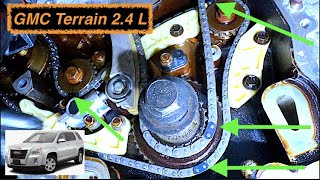
![How to Fix P0016 Engine Code in 6 Minutes [4 DIY Methods / Only $6.94]](https://img.youtube.com/vi/extiOvtV8_Y/mqdefault.jpg)
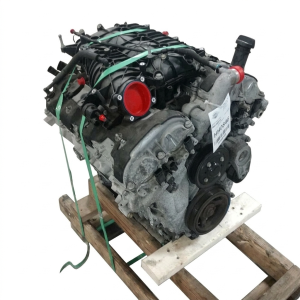
Used OEM Parts in Stock
New Aftermarket Parts Available


The information in this article is provided for general reference and educational purposes only. Vehicle specifications, procedures, and part compatibility can vary by production date, trim level, and region. Always consult your vehicle's factory service manual and verify part numbers before purchasing or performing repairs. Safety-critical components such as airbags, seat belts, and braking systems should be installed by a qualified professional.
- Gmc TERRAIN:
- 🎬 Helpful Videos
- 🛍️ Shop This Part
- What's Unique About the 2010-2017 Gmc TERRAIN
- Diagnostic Flowchart
- Symptoms You May Notice
- Most Likely Causes
- Rare But Worth Checking
- Diagnosis Steps
- Parts You'll Likely Need
- Related Codes That Often Appear With This One
- Technical Service Bulletins (TSBs) & Recalls
- Platform-Specific Known Issues
- Mechanic-Grade Diagnostic Values
- Scan Tool Commands That Help
- Wiring & Ground Locations
- Real Owner Repair Stories
- OEM Part Supersession History
- Model Year Variations Within This Range
- 🎟️ Get 5% Off