

P0016 on 2005-2009 GMC Envoy: Crank/Cam Correlation Causes and Fixes
On a 2005-2009 GMC Envoy with the 4.2L engine, code P0016 usually points to a mechanical timing issue, such as a stretched timing chain or a failing camshaft phaser. Less common causes include a faulty Camshaft Position Actuator Solenoid or bad cam/crank sensors. A full timing chain job can be costly, often exceeding $1,000 in labor alone. Before major repairs, always check engine oil level and condition, as the VVT system is hydraulic.
- P0016 on the 4.2L Envoy is a serious code that most often points to a mechanical timing problem, not just a bad sensor.
- Always start diagnosis by checking the engine oil level and condition, as the entire VVT system relies on hydraulic pressure.
- Replacing the Camshaft Position Actuator Solenoid is a common fix, but using an OEM (ACDelco/Delphi) part is critical for success.
- A definitive diagnosis of a stretched timing chain requires either an oscilloscope to compare sensor signals or physical inspection, both of which are best done by a professional.
- Do not ignore this code. Driving with a P0016 can lead to severe engine damage, especially if the timing chain fails completely.
What's Unique About the 2005-2009 Gmc ENVOY

The GMC Envoy in this year range primarily uses the 4.2L I6 (Atlas LL8) engine, which is known for developing timing chain issues as it ages. While sensors can fail, owners and technicians on forums like GMTNation frequently report that P0016 on this specific engine is a strong indicator of a stretched timing chain, worn plastic guides, or a failing camshaft phaser (actuator). The provided NHTSA TSB #PIP4581B also points towards a potential mechanical issue, specifically a loose crankshaft balancer bolt, which can affect the crank sensor's reading and trigger this code. The 4.2L LL8 is an interference engine, meaning a significant timing error can cause pistons and valves to collide, leading to catastrophic engine damage.
Diagnostic Flowchart

Tap your situation to follow the diagnostic path that matches what you're seeing on this vehicle.
Symptoms You May Notice
- Check Engine Light is on
- Engine idles roughly, sometimes feeling like a 'muscle car'.
- Rattling or grinding noise from the front of the engine, especially on a cold start or at idle, sometimes described as sounding like a diesel.
- Reduced engine power and sluggish acceleration
- Engine cranks but may not start
- Worse than usual fuel economy
- Stalling when coming to a stop.
- Flickering dash lights and fluctuating battery gauge at idle due to engine instability.
- Replacing the camshaft and crankshaft position sensors immediately. While these can be the cause, it's more often a mechanical timing issue. Many owners on forums like GMTNation and Reddit report replacing sensors only to have the code return.
- Replacing the Camshaft Position Actuator Solenoid with a cheap aftermarket part. Forum users strongly advise using ACDelco or Delphi parts, as they have experienced issues with Dorman and other brands not resolving the code.
Most Likely Causes

- Stretched Timing Chain or Worn Timing Components 🔴 High Probability The 4.2L Atlas engine is known for timing chain stretch over time, even with regular maintenance. The plastic timing chain guides can also become brittle, break, and fall into the oil pan, causing chain slack and noise.
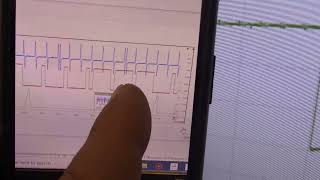
How to confirm: A technician can use an oscilloscope to compare the cam and crank sensor signals against a known-good pattern. A physical inspection is definitive but requires removing the timing cover to check for chain slack, broken guides, and alignment marks.
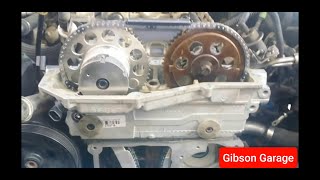
Typical fix: Replacement of the timing chain, sprockets, guides, and tensioner. 🎬 See this walkthrough of a full timing chain kit replacement. This is a significant repair often costing over $1000 in labor. It's also recommended to replace the water pump and oil pump while the front cover is off.
Est. part cost: $200-$400 - Faulty Camshaft Position Actuator Solenoid (VVT Solenoid) 🟡 Medium Probability This solenoid controls oil flow to the cam phaser. It can become clogged with sludge from infrequent oil changes or simply fail electrically. Oil leaking into the electrical connector is a tell-tale sign of internal seal failure. Many owners on forums recommend using only ACDelco or Delphi parts, as aftermarket solenoids have been reported to fail or not resolve the code.
How to confirm: Check for oil in the electrical connector. The solenoid can be removed, and its screens inspected for sludge. A scan tool can command it to check for a response, and its resistance can be tested with a multimeter (typically 6-10 ohms).
Typical fix: Replace the Camshaft Position Actuator Solenoid. 🎬 Watch: Step-by-step guide to replacing the VVT solenoid. It's recommended to use an OEM part from ACDelco (Part No. 12615873) or Delphi.
Est. part cost: $30-$70 - Failing Camshaft Phaser/Actuator 🟡 Medium Probability The phaser is the gear on the end of the camshaft that actually adjusts the timing. It can get stuck, the internal locking pin can fail, or it can fail to hold oil pressure, preventing it from responding to the solenoid's commands.
How to confirm: This is typically diagnosed after replacing the solenoid and sensors without success. A high-end scan tool can monitor desired vs. actual cam phase angle to spot erratic behavior. A definitive bench test involves removing the actuator and using compressed air to check if the internal locking pin releases and the phaser rotates.
Typical fix: Replace the camshaft phaser assembly. This is an involved job that requires special tools to hold the timing chain in place while the valve cover is off. It is often done during a full timing chain service.
Est. part cost: $80-$150 - Low or Dirty Engine Oil ⚪ Low Probability The variable valve timing (VVT) system is entirely dependent on clean oil at the correct pressure to function. Sludge from poor maintenance can clog the tiny passages in the VVT solenoid and the cam phaser, causing them to react slowly or get stuck.
How to confirm: Check the oil level and condition on the dipstick. If the oil is very old, dark, or low, this is a likely contributing factor. A technician may recommend a mechanical oil pressure test at the oil filter housing to rule out a failing oil pump.
Typical fix: Perform an oil and filter change with a quality filter and the correct viscosity oil (5W-30). This may resolve the issue if it's minor, but often the code returns if components are already clogged or worn.
Est. part cost: $40-$80 - Faulty Camshaft or Crankshaft Position Sensor ⚪ Low Probability While sensors can fail, they are less likely to be the root cause of P0016 than the mechanical timing components themselves. The code indicates a correlation *error*, not necessarily a sensor circuit fault. However, a failing sensor can send erratic signals. Many owners replace sensors first due to low cost, only to have the code return.
How to confirm: A scan tool can check for specific sensor fault codes. An oscilloscope is the best way to verify the sensor is producing a clean, correct signal. Resistance can also be checked with a multimeter.
Typical fix: Replace the faulty sensor. A CASE (Crankshaft Angle Sensor Error) relearn procedure with a capable scan tool is required after replacing the crankshaft sensor. 🎬 Watch: Why a CASE relearn is vital after sensor replacement.
Est. part cost: $25-$60 per sensor
Rare But Worth Checking
- Loose Crankshaft Balancer Bolt: As mentioned in TSB #PIP4581B, a loose crankshaft balancer bolt can cause a rattle and this code. The balancer contains the reluctor wheel that the crankshaft sensor reads. If it's loose, the reading will be erratic. The bolt is torque-to-yield and should be replaced if removed. Re-torquing the bolt to specification may resolve the issue.
- Worn Crankshaft Thrust Bearing: In high-mileage engines, excessive crankshaft end play (back and forth movement) due to a worn thrust bearing can cause the crankshaft position sensor reading to become erratic, triggering a P0016. This is mentioned in TSB #PIP3694F for the related P0017 code. Diagnosis requires measuring end play with a dial indicator; spec is 0.0044 to 0.0153 inches.
Diagnosis Steps
- Check engine oil level and condition. If low or dirty, perform an oil and filter change with 5W-30 oil and see if the code returns.
- Scan for other DTCs. Codes for specific sensors (e.g., P0340, P0335) or VVT solenoids (P0014, P0017) can help narrow the diagnosis.
- Inspect the Camshaft Position Actuator Solenoid (CPAS). Check for oil leaking into the electrical connector, a sign of failure. Remove and inspect the screens for metal shavings or sludge.
- If possible, command the CPAS with a bi-directional scan tool to verify it is functioning. If no scan tool is available, replacing the solenoid with an OEM part is a common next step.
- If the code persists, a professional diagnosis is recommended. Use an oscilloscope to compare the live waveform data from the crankshaft and camshaft position sensors to a known-good pattern. This is the most definitive way to confirm a timing misalignment.
- If a timing misalignment is confirmed, inspect the crankshaft balancer bolt to ensure it is torqued to spec, per TSB #PIP4581B.
- If the bolt is tight, the final step is to remove the engine's front cover for a physical inspection of the timing chain, guides, tensioner, and phaser. Look for broken plastic guide pieces in the oil pan.
Parts You'll Likely Need
- Timing Chain Kit — This is the most probable fix for a confirmed mechanical timing issue on the 4.2L engine. A kit ensures all wearable components (chain, guides, tensioner) are replaced at once.
Trusted brands: ACDelco, Cloyes
OEM price range: $250-$400
Aftermarket price range: $150-$250 - Camshaft Position Actuator Solenoid
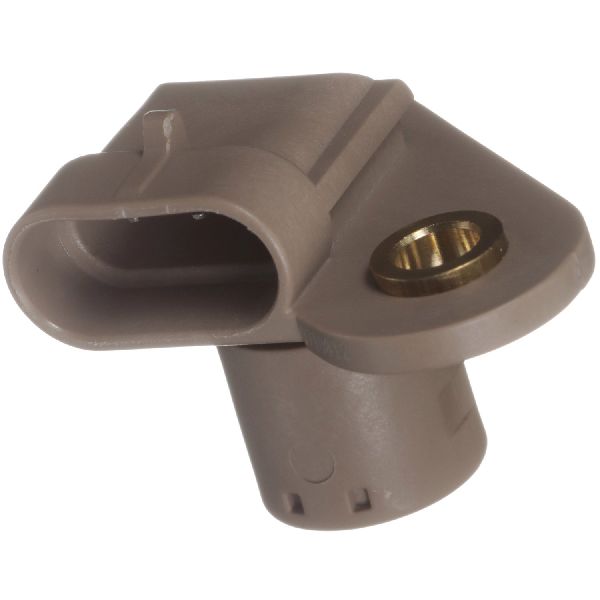
(OEM #12615873)— This is a common failure point that is relatively inexpensive and easy to replace, making it a good diagnostic step before committing to a timing chain job. Owner experiences strongly suggest using OEM brands.
Trusted brands: ACDelco, Delphi
OEM price range: $40-$70
Aftermarket price range: $25-$50 - Camshaft Position Sensor
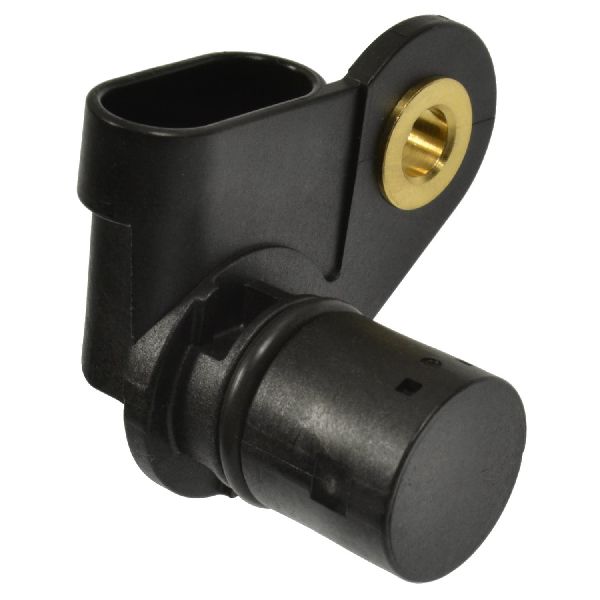
(OEM #12577245)— Replaced when a specific sensor fault is identified or as a lower-cost attempt to fix the code before diagnosing a larger mechanical issue. Less common cause than mechanical faults.
Trusted brands: ACDelco, Bosch
OEM price range: $40-$60
Aftermarket price range: $20-$40 - Camshaft Phaser (VVT Actuator) — Replaced when the phaser is confirmed to be stuck or malfunctioning, usually after the solenoid and sensors have been ruled out. Often replaced during a timing chain job.
Trusted brands: ACDelco, Cloyes
OEM price range: $100-$180
Aftermarket price range: $80-$150
Related Codes That Often Appear With This One
- P0014 — This code ('B' Camshaft Position - Timing Over-Advanced) often appears with P0016 as it also relates to the camshaft timing control system, specifically the exhaust camshaft.
- P0017 — Similar to P0016, but for the exhaust camshaft (Bank 1, Sensor B). If both P0016 and P0017 are present, it strengthens the diagnosis of a base timing issue like a stretched chain or low oil pressure.
- P0300 — This code indicates random or multiple cylinder misfires. Incorrect cam timing disrupts the air/fuel mixture and combustion process, leading to misfires and a rough idle.
Technical Service Bulletins (TSBs) & Recalls

- PIP4581B - Mentions re-torquing the crankshaft balancer bolt for P0016/P0017 with a rattle noise.
- PIP3694F - (Related to P0017) Suggests checking for excessive crankshaft end play.
- 04-06-01-005 - (Related to P1345/P0016) Mentions rough idle and possible cam phaser issues on 4.2L LL8 engines.
Platform-Specific Known Issues
- Owner Experience: Replacing Everything: A user on GMTNation with code P0016 replaced the timing chain, phaser, VVT solenoid, cam sensor, crank sensor, and even the PCM, but the code still returned when coming to a stop. This highlights how frustrating the code can be and the importance of proper diagnosis, including a CASE relearn after sensor replacement.
- Oil in VVT Solenoid Connector: A common real-world finding is engine oil wicking into the electrical connector for the Camshaft Position Actuator Solenoid. A user on GMTNation noted this after doing a valve cover gasket job, which then led to a P0016 code. Replacing the solenoid due to the internal leak is the standard fix.
- The Importance of OEM Solenoids: In a discussion on GMTNation, a user shared that their P0016 code did not go away after installing a Dorman aftermarket VVT solenoid. The problem was only resolved after they replaced it again with a genuine ACDelco part, underscoring a potential quality/compatibility difference with aftermarket electronics on this platform.
Mechanic-Grade Diagnostic Values

- Engine Oil Pressure (Mechanical Gauge) — expected: Minimum 12 PSI at 600 RPM (idle); ~65 PSI at 3,000 RPM.. Failure: Pressure significantly below these values indicates a worn oil pump, clogged pickup tube, or other internal engine wear, which will starve the VVT system of pressure.
- Camshaft Position Actuator Solenoid (VVT Solenoid) Resistance — expected: 6-10 Ohms between the two pins.. Failure: A reading of 0 Ohms (short circuit) or infinite/OL (open circuit) indicates a failed solenoid.
- Crankshaft End Play — expected: 0.0044 to 0.0153 inches.. Failure: Movement greater than 0.0153 inches, measured with a dial indicator on the crankshaft pulley, points to worn thrust bearings. This can cause erratic crank sensor readings.
Scan Tool Commands That Help
- Tech 2 / GDS2 or equivalent: CMP Actuator Solenoid Control — This bidirectional command allows the technician to manually activate the VVT solenoid while the engine is running. A corresponding change in engine RPM or a stall indicates the solenoid is mechanically functioning. This helps isolate a sticky solenoid from a wiring or PCM driver issue.
- Oscilloscope: Crank vs. Cam Waveform Comparison — This is the most definitive non-invasive test. By graphing the live signals from both the crankshaft and camshaft position sensors, a technician can compare the alignment of the signals to a known-good pattern. A consistent offset confirms the mechanical timing is incorrect (e.g., stretched chain) without tearing down the engine.
Wiring & Ground Locations
- G101 — Located at the lower front of the engine block.. This is a primary ground for the Engine Control Module (ECM). A poor connection here can cause erratic behavior and incorrect readings from all engine sensors, including the crank and cam sensors, potentially triggering a false correlation code.
- G102 — Located at the left rear of the engine.. This ground serves the ignition coils. While not directly related to the P0016 code, a bad ground here can cause misfires (P0300) which can sometimes accompany timing codes due to poor engine performance.
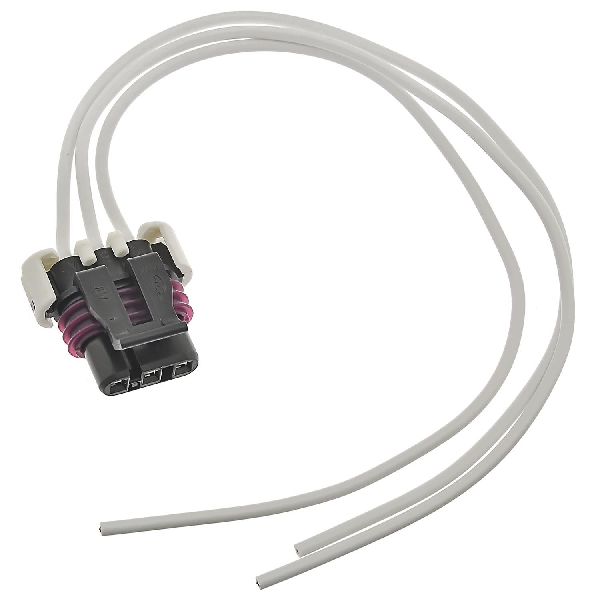
- VVT Solenoid Connector — Front of the cylinder head, near the power steering pump.. This connector is a common failure point. Oil from a leaking internal solenoid seal can contaminate the pins, causing a poor electrical connection and preventing the solenoid from actuating correctly.
Real Owner Repair Stories
- GMTNation Forum user 'kmanz1' (2004 GMC Envoy SLT 4.2L) — P0016 code appeared immediately after performing a valve cover gasket repair. Engine RPM was low (600) with a slight stumble on acceleration.
❌ Tried (didn't work) The user first suspected a relearn procedure was needed after disconnecting the battery.
✅ What actually fixed it The user discovered oil inside the electrical connector for the VVT solenoid (CPAS). The community confirmed this is a classic sign of solenoid failure and the recommended fix was to replace the solenoid with a new ACDelco or Delphi part. - Reddit user r/MechanicAdvice (2004 GMC Envoy XL 4.2L w/ 144k miles) — Persistent P0016 for years, but car idles and runs fine. Unable to pass state emissions test.
❌ Tried (didn't work) VVT solenoid was replaced by a shop, which did not fix the issue.
✅ What actually fixed it The user was advised that since the solenoid was replaced and the car runs fine, the next logical step was to replace both the camshaft and crankshaft position sensors and then perform a CASE relearn procedure. The story does not have a final confirmation but highlights a common scenario where replacing only the solenoid is not sufficient.
"I Checked Everything" — The Actual Cause
- A smoke test is not a relevant diagnostic for P0016. However, a similar pattern exists where common electrical parts are replaced with no success. In these cases, the root cause is often a purely mechanical issue that doesn't set its own specific code. For the 4.2L LL8 engine, this includes: a loose crankshaft balancer bolt (per TSB PIP4581B) causing the crank reluctor wheel to send an erratic signal, or a worn crankshaft thrust bearing allowing excessive end play, which similarly affects the crank sensor's reading.
OEM Part Supersession History
12568078, 12576768, 12597025, 12602516→12615873— GM updated the Camshaft Position Actuator Solenoid (VVT Solenoid) multiple times to improve reliability and address failure issues.
Heads up: The latest part, 12615873, is the correct and most reliable replacement for all previous versions on the 2005-2009 Envoy 4.2L. Using older stock or aftermarket parts is not recommended.
Model Year Variations Within This Range
- 2006-2009: The engine management system was updated for 2006. The PCM was split into a separate Engine Control Module (ECM) and Transmission Control Module (TCM), and a Mass Airflow (MAF) sensor was added. The engine also received a redesigned cylinder head and ignition coils, increasing horsepower from 275 to 291.
- 2006-2008 (approx.): The crankshaft reluctor wheel was changed from a 7x tooth pattern to a 58x pattern. The exact year of change is debated (some sources say 2006, others 2008). This is a critical difference, as an engine with a 7x reluctor is not compatible with an ECM programmed for a 58x reluctor, and vice-versa. This makes engine swaps between these year groups complex.
Helpful Videos
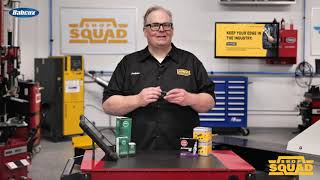
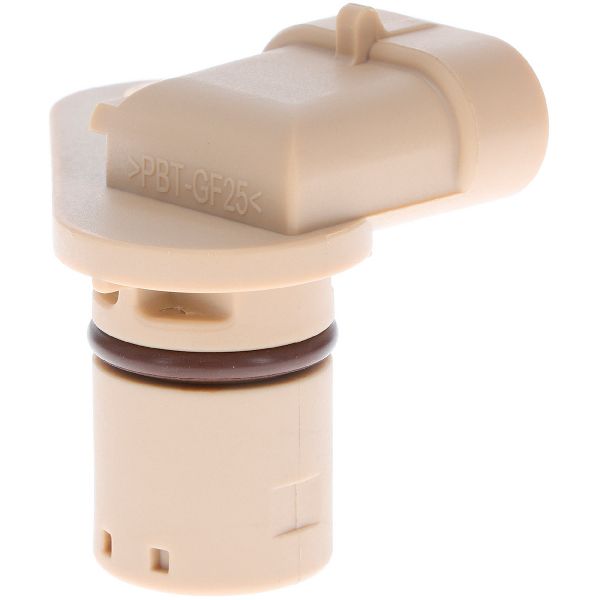
We Have This Part in Stock


The information in this article is provided for general reference and educational purposes only. Vehicle specifications, procedures, and part compatibility can vary by production date, trim level, and region. Always consult your vehicle's factory service manual and verify part numbers before purchasing or performing repairs. Safety-critical components such as airbags, seat belts, and braking systems should be installed by a qualified professional.
- Gmc ENVOY:
- 🎬 Helpful Videos
- 🛍️ Shop This Part
- What's Unique About the 2005-2009 Gmc ENVOY
- Diagnostic Flowchart
- Symptoms You May Notice
- Most Likely Causes
- Rare But Worth Checking
- Diagnosis Steps
- Parts You'll Likely Need
- Related Codes That Often Appear With This One
- Technical Service Bulletins (TSBs) & Recalls
- Platform-Specific Known Issues
- Mechanic-Grade Diagnostic Values
- Scan Tool Commands That Help
- Wiring & Ground Locations
- Real Owner Repair Stories
- "I Checked Everything" — The Actual Cause
- OEM Part Supersession History
- Model Year Variations Within This Range
- 🎟️ Get 5% Off