

P0016 on 2015-2019 Ford Transit: Crank/Cam Correlation Causes & Fixes
P0016 on a 2015-2019 Ford Transit indicates a timing mismatch between the crankshaft and the Bank 1 intake camshaft. The most common causes are a stretched timing chain, particularly on the 3.5L EcoBoost engine, a faulty VCT solenoid due to dirty oil, or low oil levels. A VCT solenoid replacement can cost $260-$614, while a timing chain job is much more expensive, often $1,800-$2,800+. Ignoring the code, especially with a startup rattle, can lead to catastrophic engine failure.
- P0016 indicates a serious timing issue between the crankshaft and camshaft.
- Always check your engine oil level and condition first; low or dirty oil is a simple fix that can cause this code.
- On the 3.5L EcoBoost engine, a stretched timing chain is a very common and expensive root cause of P0016.
- A sticking VCT solenoid is another likely culprit, as noted in Ford's own service bulletins.
- Do not immediately replace the cam or crank sensors without first investigating the oil condition and the possibility of a mechanical timing issue, as the sensors are often just doing their job of reporting the fault.
What's Unique About the 2015-2019 Ford TRANSIT

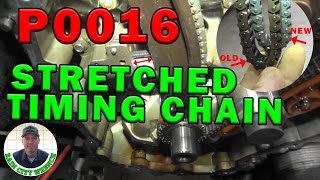
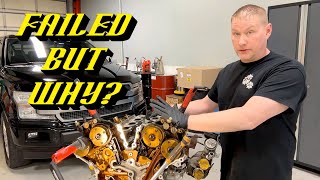
For the Ford Transit, especially those with the 3.5L EcoBoost V6, P0016 is a well-documented issue. The primary chain on the first-generation 3.5L EcoBoost is very long and known to stretch due to wear in the individual chain links. This elongation is a direct cause of the P0016 correlation error. Ford has issued multiple Technical Service Bulletins (TSBs) acknowledging that VCT (Variable Camshaft Timing) solenoids can stick due to small debris in the oil (SSM 48423, SSM 47170, TSB 16-0038), which also triggers this code. While sensor or oil issues can be the cause, a mechanical timing problem (stretched chain) is a very common and serious underlying issue on these engines 🎬 Watch: A deep dive into P0016 on the 3.5L EcoBoost. that should be investigated promptly.
Diagnostic Flowchart

Tap your situation to follow the diagnostic path that matches what you're seeing on this vehicle.
Symptoms You May Notice

- Check Engine Light is on
- Engine runs rough or has a noticeable vibration
- Hard starting, where the engine cranks longer than usual
- Reduced engine power and poor acceleration, sometimes described as 'gutless' or going into 'limp mode'.
- Engine may hesitate or stall
- Decreased fuel economy
- Loud, abrasive rattling noise from the front of the engine, especially on cold startups, that may last for a few seconds. This is a classic sign of a stretched timing chain.
- Replacing the camshaft or crankshaft position sensors when the actual problem is a stretched timing chain. This is a frequent misstep that wastes money, as the sensors are often correctly reporting a real mechanical timing error. However, given the low cost of a sensor, some owners try it first before committing to the expensive timing chain repair.
Most Likely Causes

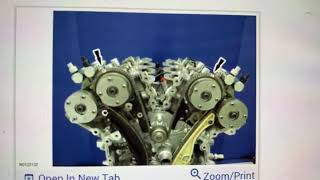
- Stretched Timing Chain 🔴 High Probability The Gen 1 3.5L EcoBoost uses a single, long primary timing chain. Over time, wear on the pins and links causes the chain to elongate ('stretch'), altering the cam/crank correlation and triggering P0016. This is a widely documented failure on this engine platform.
How to confirm: A mechanic can remove the passenger-side (Bank 1) valve cover to inspect the timing chain tensioner. If the tensioner's piston is fully extended, the chain is stretched and requires replacement. A technician can also use a scan tool to monitor the VCT_INT_ACT1 PID; a reading of +6 degrees or greater at idle points towards a stretched chain.
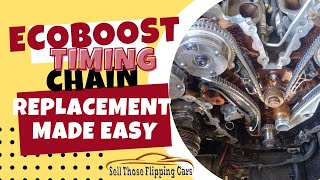
Typical fix: Replace the primary timing chain, all guides, and all tensioners. It is also highly recommended to replace the cam phasers and water pump at the same time. This is a labor-intensive job costing thousands.
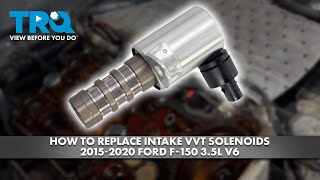
Est. part cost: $400-$600 - Faulty Variable Camshaft Timing (VCT) Solenoid 🟡 Medium Probability Ford TSBs SSM 48423 and SSM 47170 state that small debris from infrequent oil changes can cause the VCT solenoid to stick, leading to this code. TSB 16-0038 also points to faulty solenoids on low-mileage 2016 models.
How to confirm: A mechanic can command the solenoid on and off with a scan tool to check its response; a clicking sound should be audible. It can also be removed and tested for resistance with a multimeter, or temporarily powered with a battery to watch for plunger movement.
Typical fix: Replace the VCT solenoid for Bank 1 Intake. There are four solenoids in total (Intake/Exhaust for each bank). It's often recommended to replace all four at once.
Est. part cost: $50-$120 - Low or Dirty Engine Oil 🟡 Medium Probability The VCT system is hydraulically operated and highly dependent on clean oil at the correct pressure. The direct-injection nature of the EcoBoost engine can lead to fuel dilution and faster oil breakdown, making regular oil changes (every 5,000 miles is often recommended) critical to prevent sludge that clogs VCT components.
How to confirm: Check the oil level on the dipstick and inspect its condition. If it's low, excessively dark, or smells of fuel, this is a likely contributor.
Typical fix: Perform an engine oil and filter change using the manufacturer-specified oil (e.g., Motorcraft 5W-30) and a quality filter.
Est. part cost: $50-$100 - Failed Camshaft Position Sensor (CMP) ⚪ Low Probability
How to confirm: Test the sensor's voltage output with a multimeter or observe its signal on an oscilloscope to see if it is sending a correct and consistent signal. For the 3-wire Hall-effect sensor used, check for 5V power, ground, and a fluctuating signal voltage with the engine running.
Typical fix: Replace the Bank 1 intake camshaft position sensor. In some documented cases, this alone has fixed the P0016 code, making it a worthwhile, relatively inexpensive part to try before a major timing job.
Est. part cost: $30-$80 - Failed Crankshaft Position Sensor (CKP) ⚪ Low Probability
How to confirm: Test the sensor's output signal. This is often more difficult to access than the cam sensor.
Typical fix: Replace the crankshaft position sensor.
Est. part cost: $40-$90
Rare But Worth Checking
- Damaged Camshaft Phaser: The phaser (the gear on the end of the camshaft) can fail mechanically or get clogged with debris, preventing it from adjusting timing correctly. Phaser failure is another common issue on the 3.5L EcoBoost, often causing a startup rattle and replaced during a timing chain job.
- Damaged Reluctor Wheel/Tone Ring: The sensors read teeth on a tone ring on the crankshaft and camshafts. If this ring is damaged, loose, or has sheared its alignment key, it will send incorrect position data. This is a rare failure but possible.
- Wiring Issue: A damaged wire or loose/corroded connector for the cam sensor, crank sensor, or VCT solenoid can cause an intermittent signal and trigger the code. This should be checked before replacing expensive components.
Diagnosis Steps
- Check the engine oil level and condition. Top up or perform an oil and filter change if necessary. This is the simplest and cheapest first step.
- Use an OBD-II scanner to check for any other codes that may provide more context, such as VCT solenoid or specific sensor circuit codes.
- Visually inspect the wiring and connectors for the Bank 1 intake camshaft position sensor, crankshaft position sensor, and VCT solenoid for any signs of damage or corrosion.
- Using an advanced scan tool (like Ford's IDS or FORScan), monitor live data PIDs. Specifically, watch
VCT_INT_ACT1(Bank 1 Intake Actual Cam Position). A reading of +6 degrees or more at idle strongly suggests a stretched timing chain. - Command the Bank 1 intake VCT solenoid on and off with the scan tool to check for a response. If it fails to respond, test the solenoid and its circuit.
- If sensors and solenoids test good, perform a mechanical inspection. Remove the Bank 1 (passenger side) valve cover and visually inspect the timing chain tensioner. If the tensioner piston is extended significantly, it confirms a stretched chain.
- If the chain is stretched, a full timing chain service is required, including chain, guides, tensioners, and often phasers and water pump.
Parts You'll Likely Need
- Timing Chain Kit
(OEM #BL3Z-6D256-C (Kit P/N, may vary/update) or Primary Chain HL3Z-6268-A)— A stretched timing chain is the most common major cause of P0016 on the 3.5L EcoBoost engine. A kit typically includes the chain(s), guides, and tensioners.
Trusted brands: Motorcraft, Cloyes
OEM price range: $400-$600
Aftermarket price range: $200-$400 - Variable Camshaft Timing (VCT) Solenoid
(OEM #AT4Z-6M280-B (Bank 1/Left Side Intake) or AT4Z-6M280-A (Bank 2/Right Side Intake))— Sticking VCT solenoids are a known issue cited in Ford TSBs as a cause for correlation codes.
Trusted brands: Motorcraft, Dorman
OEM price range: $50-$120
Aftermarket price range: $30-$80
Related Codes That Often Appear With This One
- P0017, P0018, P0019 — These are correlation codes for the other camshafts (exhaust and/or the other bank). If a timing chain is stretched, it often affects the timing of all camshafts, causing multiple codes to appear together. Seeing P0016 and P0018 together is a strong indicator of a stretched chain.
- P0011, P0012, P0014, P0015 — These codes relate to the VCT system being over-advanced or over-retarded. They often point to a sticking VCT solenoid or oil flow problem, which are root causes of P0016 as well.
- P0299 — This is a Turbo/Supercharger Underboost code. It can appear alongside P0016 because the PCM may limit turbo boost as a protective measure ('limp mode') when a critical timing fault is detected.
Technical Service Bulletins (TSBs) & Recalls
- SSM 54366
- SSM 48423
- TSB 16-0093
- TSB 16-0038
- SSM 47170
Platform-Specific Known Issues
- TSB SSM 48423 & SSM 47170: Ford notes that on some 2015-2020 vehicles, P0016 (and other VCT codes) may be caused by small debris causing the VCT solenoid to stick. The recommended action is to diagnose the VCT system before performing major engine repairs.
- TSB 16-0038: Specifically for some 2016 models (including Transit) with the 3.5L GTDI engine and very low mileage (<2000 miles), this TSB addresses P0016 and other codes by instructing technicians to replace the specific VCT solenoid related to the code. For P0016, it directs replacement of the Bank 1 intake VCT solenoid.
Mechanic-Grade Diagnostic Values
- VCT_INT_ACT1 PID at idle (Bank 1 Intake Cam Position) — expected: Less than +6 degrees. Failure: A reading of +6 degrees or greater indicates a stretched timing chain.
- VCT Solenoid Electrical Resistance — expected: Compare to factory specifications (values can vary, but should not be an open or short circuit).. Failure: A reading of 0 ohms (short) or infinite/OL (open) indicates a failed solenoid.
- Camshaft Position Sensor (3-wire Hall Effect) Voltage — expected: One wire should have ~5V (power), one should have 0V (ground), and the signal wire should produce a fluctuating voltage/square wave when the engine is running.. Failure: Missing power, bad ground, or a static/absent signal voltage indicates a problem with the sensor or its circuit.
Hidden / Shadow Codes Worth Checking
- Mode 6 Data: Mode 6 provides detailed results from the PCM's self-tests, including misfire counts per cylinder, before a full-blown DTC is set. While not a hidden code itself, it can reveal intermittent issues that haven't yet triggered the Check Engine Light. For P0016, related misfire data could point to the severity of the timing issue. (see via An advanced scan tool like FORScan or a professional-grade scanner that can access OBD-II Mode 6 test results.)
Scan Tool Commands That Help
- Ford IDS, FORScan: VCT Solenoid On/Off Command — This bidirectional control is used to test the mechanical function of a VCT solenoid. When commanded on and off at idle, you should hear an audible click from the solenoid and see a change in engine performance (e.g., rougher idle), confirming the solenoid is physically moving.
- Ford IDS, FORScan: Reset All Adaptations / Clear KAM — After replacing timing components or VCT solenoids, it's critical to clear the Keep Alive Memory (KAM). This forces the PCM to relearn the new component positions and timing strategies from scratch, preventing the old, incorrect learned values from causing persistent codes.
Wiring & Ground Locations
- G100 / G105 (example locations) — Ground points are typically located on the engine block, cylinder head, or chassis near the front of the engine compartment. For example, a common location is the left rear corner of the engine compartment. A wiring diagram is essential for exact locations.. The PCM, CKP, CMP, and VCT solenoids all rely on a clean ground connection. A corroded or loose engine ground can introduce electrical noise or voltage drops, potentially causing incorrect sensor readings and triggering correlation codes like P0016.
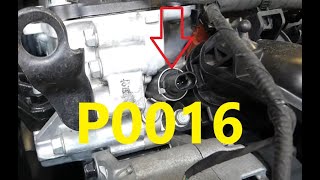
- CMP Sensor Connector — On the top of the valve cover for the respective camshaft (Bank 1 Intake is on the passenger side).. This is the primary connection point for testing the sensor and its circuit. It's a 3-wire connector (Power, Ground, Signal) for the Hall-effect sensors used on this engine.
Real Owner Repair Stories
- Ford F150 Forum user (2013 F-150 3.5L EcoBoost, 90k miles) — P0016 code would appear 5-10 minutes after starting and clearing the code.
❌ Tried (didn't work) Initially, none were mentioned as the user went straight for the timing job based on symptoms.
✅ What actually fixed it The user replaced the timing chain and phasers. However, the P0016 code returned immediately. The ultimate resolution was not posted in the thread, highlighting a common issue where a timing job is done correctly but the code persists, often due to a missed step like clearing adaptations or a secondary issue like a faulty solenoid that was not replaced. - Ford F150 Forum user (2011 F-150 3.5L EcoBoost, 72k miles) — P0016 and P0299 (turbo underboost) codes appeared under load, especially on inclines. No startup rattle was present.
❌ Tried (didn't work) Clearing codes, flashing back to the factory engine tune.
✅ What actually fixed it A full timing chain replacement service. The owner reported the engine ran significantly smoother, quieter, and had better power afterward, confirming the stretched chain was the root cause despite the lack of a startup rattle.
When the Usual Fixes Don't Work
- In one documented case on an F-150 with the same engine, a user performed a full timing chain and phaser replacement to fix a P0016 code, but the code returned within minutes of driving. This indicates that even when the most common cause (stretched chain) is addressed, the code can persist. This could be due to a faulty 'new' part, an unaddressed wiring issue, a sticking VCT solenoid that was not replaced during the job, or a failure to clear the PCM's adaptive memory (KAM) after the repair.
OEM Part Supersession History
BL3Z-6268-A (example, may vary)→HL3Z-6268-A— Updated design for improved durability and wear resistance. The Gen 2 EcoBoost (2017+) uses a different timing setup with two shorter chains.
Heads up: The primary chain HL3Z-6268-A is specified for the second-generation 3.5L EcoBoost engine starting in 2017. While the first-gen engine in the 2015-2016 Transit has a different architecture, part numbers are frequently updated. It is critical to verify the correct part number for the specific vehicle's VIN and build date.AT4Z-6M280-C (Right Exhaust)→Unknown— Part revisions are common to improve reliability and prevent sticking.
Heads up: Ford uses different VCT solenoids for intake vs. exhaust and left vs. right banks. For example, AT4Z-6M280-B (Left Intake) and AT4Z-6M280-A (Right Intake) are not interchangeable. Using the wrong solenoid will prevent the system from working correctly.
Model Year Variations Within This Range
- 2017-2019 (3.5L EcoBoost): Starting in the 2017 model year for the F-150 (and subsequently other platforms), Ford introduced the second-generation 3.5L EcoBoost. This engine features a completely redesigned timing system with two shorter primary chains instead of one long one, new phasers, and a dual fuel injection system. While the P0016 code can still occur, the specific parts (chains, tensioners, phasers) are different from the 2015-2016 models. The 2017+ Transit, however, may have retained the Gen 1 engine design for a period, making VIN verification for parts critical.
Helpful Videos

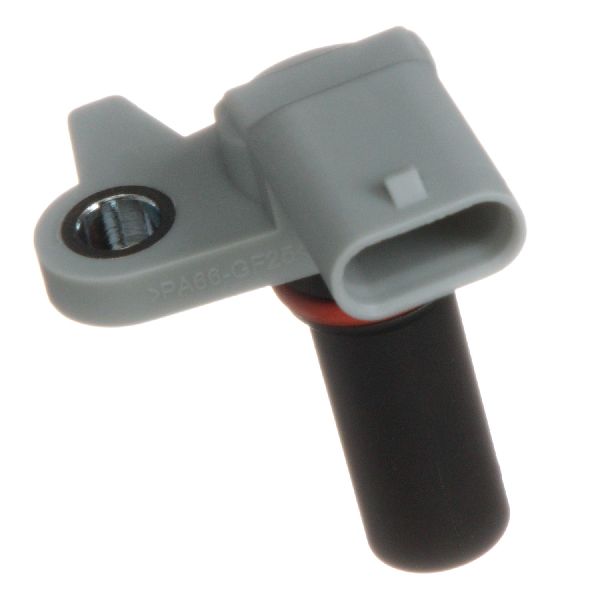
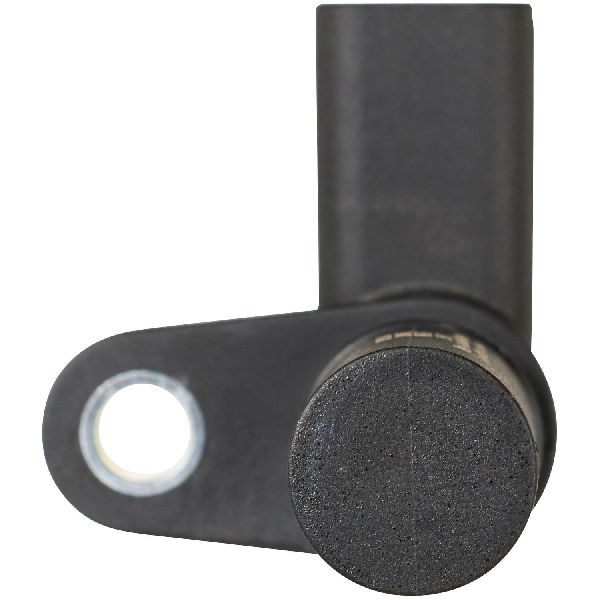
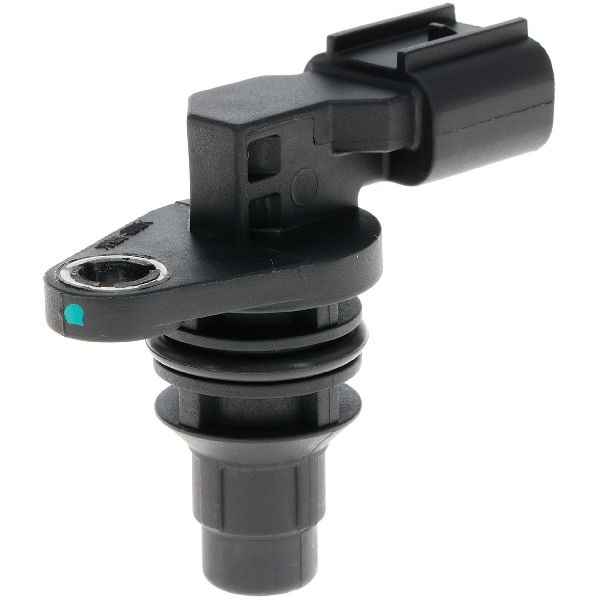
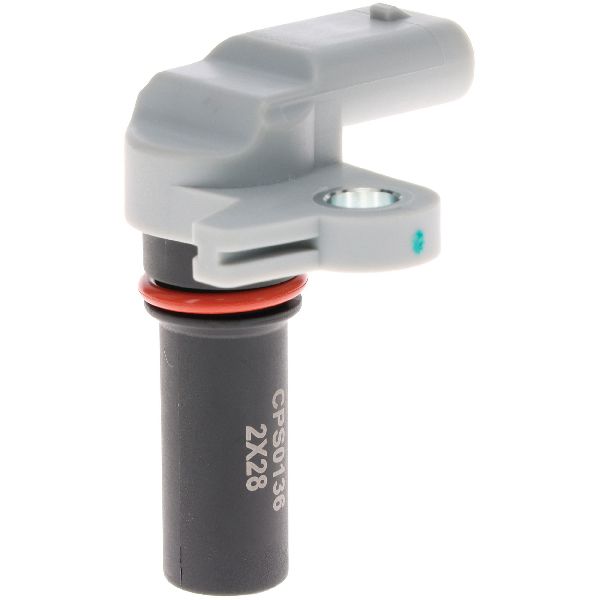
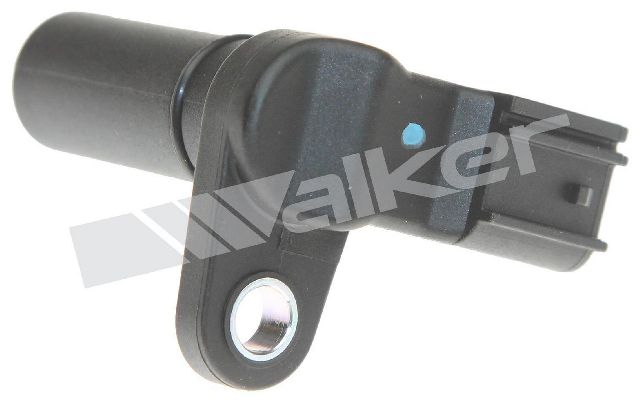
We Have This Part in Stock


The information in this article is provided for general reference and educational purposes only. Vehicle specifications, procedures, and part compatibility can vary by production date, trim level, and region. Always consult your vehicle's factory service manual and verify part numbers before purchasing or performing repairs. Safety-critical components such as airbags, seat belts, and braking systems should be installed by a qualified professional.
- Ford TRANSIT:
- 🎬 Helpful Videos
- 🛍️ Shop This Part
- What's Unique About the 2015-2019 Ford TRANSIT
- Diagnostic Flowchart
- Symptoms You May Notice
- Most Likely Causes
- Rare But Worth Checking
- Diagnosis Steps
- Parts You'll Likely Need
- Related Codes That Often Appear With This One
- Technical Service Bulletins (TSBs) & Recalls
- Platform-Specific Known Issues
- Mechanic-Grade Diagnostic Values
- Hidden / Shadow Codes Worth Checking
- Scan Tool Commands That Help
- Wiring & Ground Locations
- Real Owner Repair Stories
- When the Usual Fixes Don't Work
- OEM Part Supersession History
- Model Year Variations Within This Range
- 🎟️ Get 5% Off