

P0016 on 2019-2021 Ford F-150: Crank/Cam Correlation Causes and Fixes
P0016 on a 2019-2021 F-150 usually points to a mechanical timing issue, most often related to the Variable Camshaft Timing (VCT) system. Common causes are sticking VCT solenoids due to oil contamination or a stretched timing chain, particularly on the 3.5L EcoBoost. A solenoid is a relatively inexpensive fix, but a timing chain replacement is a major repair that can cost over $2,000.
- P0016 is a serious code on the 2019-2021 F-150 that should be diagnosed immediately.
- Do not continue driving, as it could lead to severe engine damage.
- The most likely causes are a stretched timing chain or a faulty VCT solenoid.
- Always check engine oil level and condition first, as low or dirty oil can cause VCT system problems.
- Due to the complexity of the timing system, professional diagnosis is strongly recommended to avoid costly misdiagnosis and unnecessary repairs.
What's Unique About the 2019-2021 Ford F-150

On modern Ford F-150s, particularly those with EcoBoost and Coyote engines, the P0016 code is a serious flag that often points to known issues. While earlier 3.5L EcoBoost models were notorious for stretched timing chains, the 2019-2021 models see this issue as well, though problems with the Variable Camshaft Timing (VCT) system are also very common across all engine platforms (3.5L EcoBoost, 5.0L Coyote, 2.7L EcoBoost). Ford has issued Technical Service Bulletins (TSBs) like SSM 48423 that mention P0016 in relation to sticking VCT solenoids caused by small debris, suggesting it's a recognized problem. For the 5.0L Coyote, cam phaser failures can also be a root cause.
Diagnostic Flowchart

Tap your situation to follow the diagnostic path that matches what you're seeing on this vehicle.
Generation note: This range covers the end of the thirteenth generation (2019-2020) and the beginning of the fourteenth generation (2021) of the F-150. While engine offerings were similar, the 2021 model year introduced updates. However, the underlying causes for P0016, such as VCT solenoid issues and timing chain wear, are common to the engines used in both generations (e.g., 3.5L EcoBoost, 5.0L Coyote), as indicated by TSBs covering a wide range of model years.
Symptoms You May Notice

- Check Engine Light is on
- Engine runs rough or has a rough idle, especially at low RPM
- Reduced engine power and acceleration
- Engine stalls or hesitates, particularly at stops or low speeds
- Decreased fuel economy
- Rattling noise from the engine on startup or at idle
- Replacing the camshaft or crankshaft position sensor first. While these sensors are involved, they are reporting a problem; they are not usually the cause of the problem itself. The issue is typically the mechanical relationship they are monitoring.
- Assuming the issue is a major timing chain job without first diagnosing the VCT solenoids. A sticking solenoid is a much cheaper and easier fix to rule out first.
Most Likely Causes

- Stretched Timing Chain 🔴 High Probability Timing chains on Ford engines, particularly the 3.5L EcoBoost, have a known history of stretching over time due to wear. This causes the tensioner to extend fully, creating slack that allows the camshafts and crankshaft to lose their precise synchronization, triggering correlation codes like P0016.
How to confirm: A technician can use a scan tool to monitor camshaft and crankshaft position data (PIDs) to see the degree of deviation. A definitive check involves removing the valve cover or an inspection port to visually inspect the timing chain tensioner's extension. If the tensioner piston is extended to show more than 5 teeth, the chain is considered excessively stretched.
Typical fix: Replacement of the timing chain, tensioners, guides, and often the cam phasers and water pump at the same time.
Est. part cost: $400-$1200 - Faulty Variable Camshaft Timing (VCT) Solenoid 🟡 Medium Probability TSB SSM 48423 specifically notes that P0016 can be caused by small debris in the oil causing the VCT solenoid to stick. These solenoids control oil flow to the cam phasers to adjust timing. If a solenoid is stuck open or closed, or is slow to respond, it creates a timing mismatch that the PCM detects.
How to confirm: A technician can command the solenoid on and off with a scan tool to check for response. Swapping the suspect solenoid with an adjacent one (e.g., intake with exhaust on the same bank) and seeing if the code changes (e.g., P0016 becomes P0017) is a common and effective diagnostic trick. Resistance can be tested with a multimeter; a reading between 5-15 Ohms is generally expected.
Typical fix: Replace the faulty VCT solenoid for Bank 1 Intake. It's often recommended to replace them in pairs or as a full set of four. Using only Motorcraft OEM solenoids is highly recommended, as aftermarket units are known to cause issues.
Est. part cost: $25-$75 - Low or Dirty Engine Oil 🟡 Medium Probability The VCT system is entirely dependent on clean engine oil at the correct pressure to function. If the oil level is low, or if the oil is dirty and contains sludge or debris from extended change intervals, it can clog the fine mesh screens on the VCT solenoids and the small passages in the cam phasers, impeding their function and causing timing correlation faults.
How to confirm: Check the engine oil level and condition on the dipstick. Review vehicle service history for regular oil changes with the correct Ford-specified oil viscosity.
Typical fix: Perform an oil and filter change using the correct viscosity oil specified by Ford (e.g., Motorcraft Synthetic Blend). In some cases, an engine flush may be recommended by a professional, but this should be done with caution.
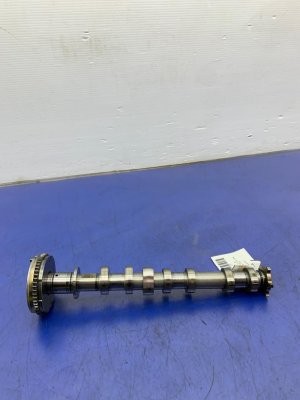
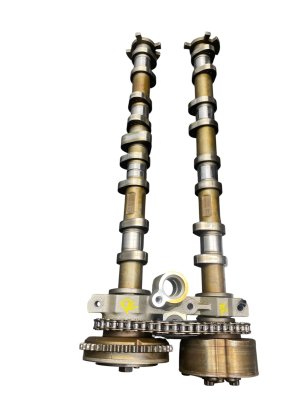
Est. part cost: $50-$100 - Failed Camshaft Phaser ⚪ Low Probability The cam phasers themselves can fail. They might get stuck in one position, have internal oil leaks, or have issues with the locking pin, leading to timing inaccuracies and often a distinct startup rattle. This has been a known issue on the 5.0L Coyote and 3.5L EcoBoost engines for years.
How to confirm: This is typically diagnosed after solenoids and oil issues have been ruled out. Advanced scan tool data showing a large, persistent deviation between desired vs. actual cam angle, even when the solenoid is commanded, points to a phaser problem.
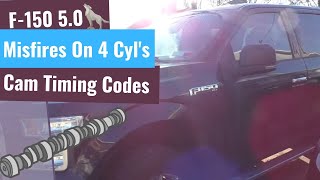
Typical fix: Replacement of the faulty cam phaser(s). This is a labor-intensive job often performed along with a timing chain replacement. Ford has released updated phaser designs 🎬 Watch: Troubleshooting cam timing codes on the 5.0L Coyote engine. to address these issues.
Est. part cost: $150-$400 per phaser
Rare But Worth Checking
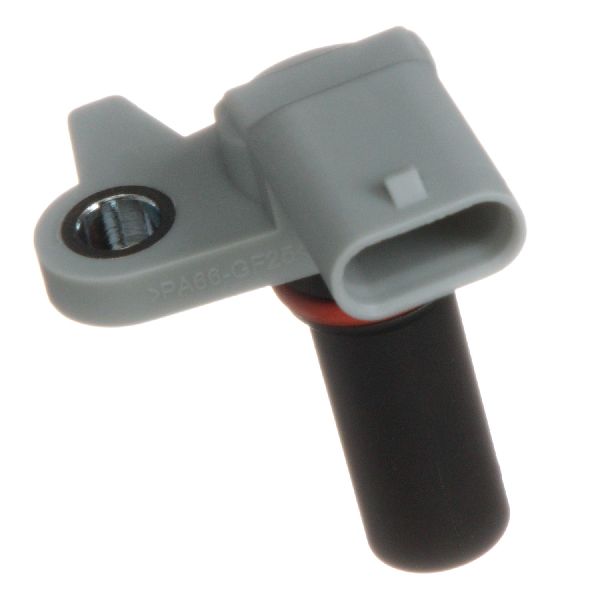
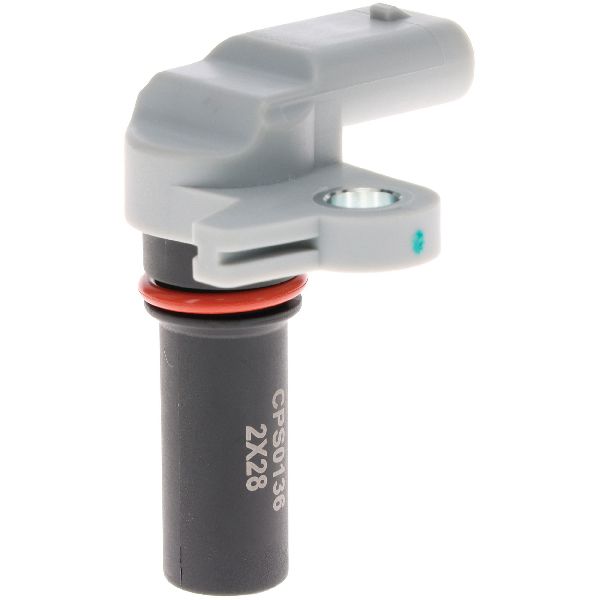
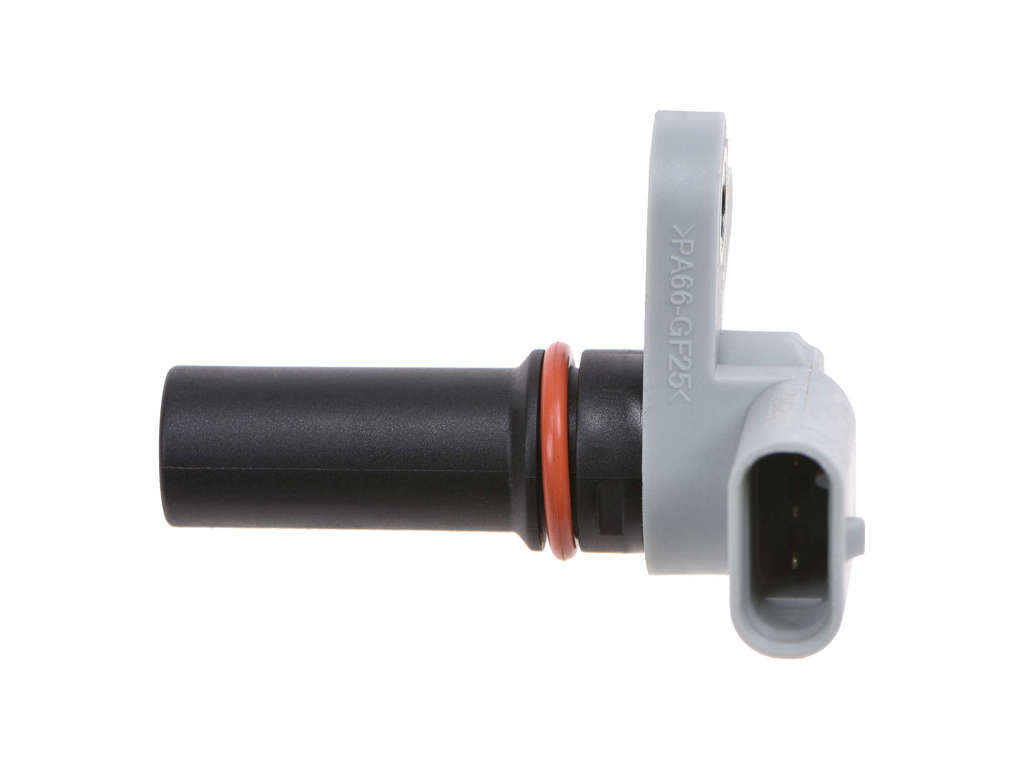
- Faulty Camshaft or Crankshaft Position Sensor: While possible, it's less common for a sensor to fail in a way that creates a correlation code without also setting a specific sensor circuit code (e.g., P0340). However, if the sensor is providing intermittent or inaccurate readings, it could be the culprit. Many owners replace these first, only to find the problem persists.
- Damaged Reluctor Wheel/Tone Ring: The sensors take their readings from a toothed wheel on the camshaft or crankshaft. If this wheel is damaged, cracked, or has slipped/bent, it will cause incorrect readings and trigger timing codes. This is rare but can happen, sometimes during other engine service.
Diagnosis Steps
- Verify engine oil level and condition. An oil change with a Motorcraft filter and correct spec oil is a cheap and easy first step.
- Use a professional scan tool (like FORScan) to check for any other DTCs and view live data.
- Monitor the VCT PIDs: VCT_INT_ADV_DES1 (desired angle) vs. VCT_INT_ACT1 (actual angle) and VCT_ERR1 (error). A significant and persistent error value (more than a few degrees) at idle indicates a problem.
- Use the scan tool's control functions to command the Bank 1 intake VCT solenoid (VCT11) on and off. Listen for an audible click from the solenoid and watch for a change in engine idle or the actual angle PID.
- Swap the Bank 1 intake VCT solenoid with the Bank 1 exhaust VCT solenoid. Clear codes and drive the vehicle. If the code changes to P0017 (Exhaust Cam Correlation), the solenoid is confirmed bad.
- Inspect the wiring and connectors for the Bank 1 intake camshaft position sensor and the VCT solenoid for any damage, corrosion, or oil intrusion.
- If the above steps do not identify the issue, a deeper mechanical inspection is required. This involves removing the valve cover to inspect the cam phaser for damage and the timing chain tensioner for over-extension, which indicates a stretched chain. This is a job for a professional.
Parts You'll Likely Need
- Timing Chain Kit
(OEM #HL2Z-6C590-A (3.5L EcoBoost TSB Kit))— This is the most common high-probability fix for a confirmed stretched timing chain. Kits usually include the chain(s), guides, tensioners, and phasers.
Trusted brands: Motorcraft, Cloyes
OEM price range: $400-$800
Aftermarket price range: $250-$500 - Variable Camshaft Timing (VCT) Solenoid
(OEM #HL3Z-6M280-A (3.5L EcoBoost) / BR3Z-6M280-F (5.0L Coyote))— A sticking solenoid is a common cause identified in Ford TSBs. It's a much cheaper and easier repair to attempt before a full timing job.
Trusted brands: Motorcraft
OEM price range: $35-$60
Aftermarket price range: $25-$45 - Camshaft Phaser
(OEM #ML3Z-6C525-A (Part of 3.5L Kit))— Often replaced with the timing chain as a set, as a failing phaser can cause similar symptoms and they are labor-intensive to access. Updated parts are available.
Trusted brands: Motorcraft
OEM price range: $150-$400
Aftermarket price range: $100-$250
Related Codes That Often Appear With This One
- P0017 — Crankshaft Position - Camshaft Position Correlation (Bank 1, Sensor B). This points to a correlation issue with the exhaust camshaft on the same bank, suggesting a broader timing problem on Bank 1, such as a stretched chain or phaser issue affecting both cams.
- P0018 / P0019 — These are the equivalent correlation codes for Bank 2 (driver's side). Seeing codes for both banks simultaneously strongly suggests a problem with the primary timing chain, crankshaft signal, or severe oil pressure/quality issues affecting the entire VCT system.
- P0011 / P0012 — These codes indicate that the Bank 1 intake camshaft is over-advanced (P0011) or over-retarded (P0012). They often accompany P0016 as they relate to the same VCT system components and can be caused by a sticking VCT solenoid or a failing phaser.
- P0299 — Turbocharger/Supercharger Underboost Condition. On EcoBoost engines, when the PCM detects a severe timing issue like P0016, it may enter a limp mode and limit turbo boost to protect the engine, triggering a P0299 code as a secondary effect.
Technical Service Bulletins (TSBs) & Recalls
- SSM 54366: General diagnostic bulletin for various VCT codes including P0016 on 2015-2021 Ford/Lincoln vehicles.
- SSM 48423: Notes that P0016 and other VCT codes on 2015-2020 vehicles may be due to small debris causing the VCT solenoid to stick, and advises cycling the solenoid before replacement.
- TSB 17-0026: Though for earlier models (2011-2014), this TSB established the precedent for P0016 being caused by a worn primary timing chain on 3.5L GTDI engines.
- TSB 16-0038: For 2016 models with the 3.5L GTDI, specifically directs replacement of the Bank 1 intake VCT solenoid for a P0016 code.
Platform-Specific Known Issues
- engine: 3.5L EcoBoost | story: This engine is widely known for timing chain stretch, even in the second-generation (2017+) design, although it is improved from the first generation. The P0016 code is often the first sign of this issue. A cold start rattle that lasts for a few seconds is a classic symptom that precedes the code. The repair is a complete timing system overhaul, including chains, phasers, tensioners, and guides.
- engine: 5.0L Coyote V8 | story: On the 5.0L engine, while timing chains can stretch at very high mileage, P0016 is more frequently associated with the VCT system. Sticking VCT solenoids are a primary culprit. Additionally, the cam phasers themselves can fail, getting stuck or having issues with their internal locking pins, which will also set this code. Owners often report a rough idle that can be temporarily cleared by increasing RPMs.
Mechanic-Grade Diagnostic Values
- VCT Solenoid Resistance — expected: 5-15 Ohms. Failure: A reading of 0 Ohms (short) or OL/infinity (open circuit).
- VCT Solenoid Connector Voltage (Key On, Engine Off) — expected: ~12V (Battery Voltage). Failure: Low or no voltage points to a wiring or PCM power supply problem.
- Camshaft Position Sensor (3-wire Hall effect) Signal and Power Wires — expected: ~5V (Key On, Engine Off). Failure: Incorrect or no voltage suggests a wiring or PCM fault.
- Minimum Hot Idle Oil Pressure for VCT System — expected: 15-25 PSI. Failure: Pressure dropping to ~10 PSI at hot idle can cause VCT system malfunction and trigger codes.
- FORScan PID: VCT_ADV_ERR (Cam Advance Error) — expected: Should hover around 0° at operating temperature.. Failure: A persistent error greater than +/- 5° for an excessive time indicates a timing control problem.
- FORScan PID: VCT_INT_ACT1 (at idle for stretched chain check) — expected: Should be less than +6 degrees.. Failure: A value of +6 degrees or more at idle strongly suggests a stretched timing chain, per older TSBs.
Scan Tool Commands That Help
- FORScan / Ford IDS: VCT Solenoid On/Off Control — Used to functionally test a VCT solenoid. Commanding the solenoid on at idle should cause a noticeable change in engine RPM or even cause it to stall. No change indicates a stuck or failed solenoid.
- FORScan / Ford IDS: Reset All Adaptations / Reset Camshaft Position Profile — This should be performed after replacing timing components like chains, phasers, or solenoids. It clears the learned values from the PCM, allowing it to learn the positions of the new components correctly.
Wiring & Ground Locations
- PCM Grounds — Located on the firewall in the engine bay. There may be one or two ground studs depending on the model year and engine.. The Camshaft Position Sensor, Crankshaft Position Sensor, and VCT solenoids are all controlled and monitored by the PCM. A poor PCM ground can introduce electrical noise or voltage drops, potentially causing inaccurate sensor readings and triggering correlation codes.
- Main Battery Ground — On the body just in front of the washer fluid reservoir in the engine bay.. While less direct, a poor main battery-to-chassis ground can cause a host of unpredictable electrical issues throughout the vehicle, affecting module stability and sensor performance.
Real Owner Repair Stories
- Ford F150 Forum user 'gonzo8000' (2006 F-150 5.4L with 19,000 miles) — Very rough idle, no power, blinking Check Engine Light, codes P0016, P0012, P0303.
❌ Tried (didn't work) Initial fear was a major cam phaser job.
✅ What actually fixed it After an oil change, the user removed the Bank 1 VCT solenoid and found a piece of its mesh screen had broken off and jammed the internal piston. He cleaned the solenoid, reinstalled it, and the truck ran perfectly. This was a no-cost fix that avoided a major repair. - Ford F150 Forum user 'iNutty' (F-150 (year/engine not specified)) — Misfiring and throwing P0012, P0016, and P0303 DTCs.
❌ Tried (didn't work) Installed VCT solenoids purchased from Amazon.
✅ What actually fixed it The problem was resolved by replacing the aftermarket Amazon VCT solenoids with genuine Motorcraft solenoids. - Reddit user in r/f150ecoboost (2020 F-150 3.5L EcoBoost at 78k miles) — Startup rattle and likely timing codes.
❌ Tried (didn't work) N/A, went straight for the known major repair.
✅ What actually fixed it Dealer replaced the cam phasers for $3,900. The user confirmed the dealer used the latest revised part numbers (ML3Z-6256-A for intake, ML3Z-6C525-A for exhaust) to prevent a repeat failure.
OEM Part Supersession History
HL3Z-6C525-A, HL3Z-6C525-B, HL3Z-6C525-C, HL3Z-6C525-CD→ML3Z-6C525-A— This is the updated exhaust cam phaser for the 3.5L EcoBoost, designed to address the common startup rattle and premature failure issues.HL3Z-6256-A, HL3Z-6256-B, HL3Z-6256-C→ML3Z-6256-A— This is the updated intake cam phaser for the 3.5L EcoBoost, part of the TSB repair for the common startup rattle and timing issues.
Model Year Variations Within This Range
- 2019-2021: The 2021 model year marked the start of the 14th generation F-150. While the 3.5L EcoBoost and 5.0L V8 were carried over, they received software and potentially minor hardware updates. TSB SSM 54366, dated late 2025, covers vehicles up to 2021 for P0016, indicating the VCT system issues persist in the newer generation. Ford also issued TSB 21-2315 for the 10R80 transmission used in these years, which involves a PCM reflash to correct adaptive learning issues that could cause various DTCs and shifting problems, though it does not directly list P0016.
Helpful Videos


Used OEM Parts in Stock
New Aftermarket Parts Available


The information in this article is provided for general reference and educational purposes only. Vehicle specifications, procedures, and part compatibility can vary by production date, trim level, and region. Always consult your vehicle's factory service manual and verify part numbers before purchasing or performing repairs. Safety-critical components such as airbags, seat belts, and braking systems should be installed by a qualified professional.
- Ford F-150:
- 🎬 Helpful Videos
- 🛍️ Shop This Part
- What's Unique About the 2019-2021 Ford F-150
- Diagnostic Flowchart
- Symptoms You May Notice
- Most Likely Causes
- Rare But Worth Checking
- Diagnosis Steps
- Parts You'll Likely Need
- Related Codes That Often Appear With This One
- Technical Service Bulletins (TSBs) & Recalls
- Platform-Specific Known Issues
- Mechanic-Grade Diagnostic Values
- Scan Tool Commands That Help
- Wiring & Ground Locations
- Real Owner Repair Stories
- OEM Part Supersession History
- Model Year Variations Within This Range
- 🎟️ Get 5% Off