

P0016 on 2011-2018 Ford F-150: Timing Chain, VCT Solenoid Causes and Fixes
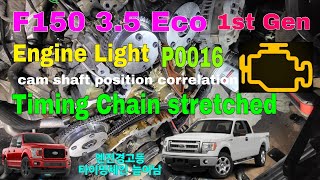
On 2011-2014 F-150s, especially with the 3.5L EcoBoost, P0016 almost always means a stretched timing chain, a major repair costing $2,000-$4,000+. On 2015-2018 models, it can also be caused by faulty VCT solenoids, a less expensive fix. In either case, it's a serious code that should not be ignored.
- For 2011-2014 F-150s with the 3.5L EcoBoost, P0016 is a strong indicator of a stretched timing chain, a known issue for this engine.
- For 2015-2018 models, the cause could be a stretched timing chain or a less-expensive faulty VCT solenoid.
- Do not ignore this code. Continued driving can lead to catastrophic engine failure, especially if the timing chain is the cause.
- Diagnosis should start with the basics (oil check) but will likely require professional-level tools to differentiate between a sensor, solenoid, or mechanical timing fault.
- Repair costs vary dramatically, from a few hundred dollars for solenoids to over $4,000 for a full timing chain and phaser replacement at a dealership.
What's Unique About the 2011-2018 Ford F-150

The 2011-2018 F-150 range spans two generations with distinct issues causing P0016. The first-generation 3.5L EcoBoost (2011-2014) is widely known for premature timing chain stretching, a problem so common that Ford issued a Technical Service Bulletin (TSB 17-0026) for it. The primary symptom is often a brief rattle on a cold start. For the second-generation EcoBoost and 5.0L V8 (2015-2018), while timing chains can still be an issue, faulty Variable Camshaft Timing (VCT) solenoids are also a frequent cause, as noted in another TSB (SSM 48423). This TSB explains that small debris can cause the solenoids to stick.
Diagnostic Flowchart

Tap your situation to follow the diagnostic path that matches what you're seeing on this vehicle.
Generation note: Yes, this range covers the 12th (2011-2014) and 13th (2015-2018) generations of the F-150. For 2011-2014 models (especially the 3.5L EcoBoost), P0016 is strongly associated with a stretched primary timing chain per TSB 17-0026. For 2015-2018 models, TSB SSM 48423 points to sticking VCT solenoids as a possible cause for P0016 on both the 3.5L and 5.0L engines, in addition to timing chain and cam phaser issues.
Symptoms You May Notice
- Check Engine Light is on
- Engine rattles on startup, especially when cold. This is often described as a 'marbles in a can' or grinding noise lasting 2-5 seconds.
- Rough or unstable idle
- Reduced engine power and poor acceleration (sometimes called 'limp mode').
- Engine stalls unexpectedly
- Noticeably worse fuel economy.
- Harsh or erratic shifting, as the engine's performance impacts transmission behavior.
- Engine is hard to start or cranks but won't start.
- Replacing only the camshaft and crankshaft sensors without verifying the mechanical timing. On these trucks, the cause is very often mechanical (timing chain/phasers) rather than electrical (sensor).
- Replacing VCT solenoids on an early (2011-2014) 3.5L EcoBoost that has a cold-start rattle. The rattle is a classic sign of a stretched timing chain, and new solenoids will not fix it.
Most Likely Causes

- Stretched Timing Chain 🔴 High Probability The 2011-2014 3.5L EcoBoost engines are particularly susceptible to premature timing chain wear. Ford acknowledged this with TSB 17-0026, which applies to vehicles built on or before Oct 10, 2014. Owner complaints frequently cite this failure at relatively low mileage. Infrequent oil changes can accelerate wear.
How to confirm: A technician can use a scan tool (like Ford's IDS) to monitor the VCT_INT_ACT1 PID. If it reads +6 degrees or greater at idle, the TSB indicates the chain is worn. 🎬 Watch: Diagnosing a stretched timing chain with a scan tool. A physical inspection, which requires removing the valve cover to see the tensioner's extension, is the definitive confirmation. A technician noted that if the tensioner shows more than 5 teeth extended, the chain is excessively stretched. A fully extended tensioner means the chain has stretched.
Typical fix: Replacement of the primary timing chain, tensioners, guides, and often the cam phasers and water pump at the same time. This is a major job with labor estimates around 9-15 hours.
Est. part cost: $400-$1200 for a complete OEM kit. - Failing VCT Solenoids 🟡 Medium Probability TSB SSM 48423 notes that debris can cause VCT solenoids to stick on 2015-2020 models with both 3.5L and 5.0L engines. These solenoids control oil flow to the cam phasers, and a stuck solenoid can prevent the camshaft from returning to its base position at idle, triggering the correlation code.
How to confirm: Test the solenoids' resistance with a multimeter (should be 6.9-7.9 ohms at 68°F). A capable scan tool can command them on/off to check for response; TSB SSM 48423 specifically recommends cycling the solenoid 10 times to try and clear debris. Unplugging the VCT solenoids forces the phasers to their default neutral position; if the engine runs smoothly (though with less power), the solenoids are likely faulty.
Typical fix: Replace the faulty VCT solenoids for Bank 1 (intake and exhaust are often replaced together). There are four total on the engine.
Est. part cost: $50-$150 per solenoid. - Low or Dirty Engine Oil ⚪ Low Probability The entire Variable Camshaft Timing (VCT) system is hydraulic and relies on clean oil at the correct pressure to function. Neglected oil changes can lead to sludge and debris that clog VCT solenoid passages and strain the timing chain tensioners.
How to confirm: Check the oil level and condition on the dipstick. If the oil is low, black, or sludgy, this could be a contributing factor. Some owners report the code appearing immediately after an oil change if the wrong viscosity was used. Normal oil pressure at idle should be at least 25 PSI on most engines.
Typical fix: Perform an engine oil and filter change using the correct viscosity oil (e.g., Motorcraft Synthetic Blend 5W-30) and a quality filter. In some cases, this may temporarily resolve the issue if it's caused by borderline oil pressure or minor debris.
Est. part cost: $50-$100 - Failed Camshaft or Crankshaft Position Sensor ⚪ Low Probability While less common than mechanical timing issues on this platform, a sensor can fail and send incorrect data to the PCM, causing a false correlation code. However, this should be considered only after ruling out mechanical issues.
How to confirm: Use an oscilloscope to check the signal patterns from both the cam and crank sensors. A faulty sensor will have an erratic or missing signal. Also inspect sensor wiring for damage.
Typical fix: Replace the failed sensor. Bank 1 is the passenger side; Sensor 'A' is the intake camshaft sensor.
Est. part cost: $25-$75 per sensor.
Rare But Worth Checking
- Failed Cam Phaser:
- Slipped Crankshaft Reluctor Ring/Tone Ring:
Diagnosis Steps
- Check Engine Oil: Verify the oil level is correct and the oil quality is good. If overdue, perform an oil change with the manufacturer-specified grade oil and filter. This is a low-cost first step.
- Scan for Other Codes: Use an OBD-II scanner to check for other related codes that might point to a specific area (e.g., other cam banks, sensor circuits, VCT solenoids).
- Analyze Scan Tool Data (Key Step): For 2011-2014 3.5L, monitor the
VCT_INT_ACT1PID at idle. A value of +6 degrees or more strongly suggests a stretched timing chain per TSB 17-0026. For 2015+ models, use the scan tool to command the VCT solenoids on and off to check for response. - Test VCT Solenoids: If scan tool data is inconclusive or points to a solenoid, test the Bank 1 solenoids' resistance with a multimeter (expect 6.9-7.9 ohms). Inspect the connectors for oil contamination or damage.
- Inspect Sensors and Wiring: Visually inspect the crankshaft position sensor and the Bank 1 camshaft position sensors and their wiring for any damage or loose connections. An oscilloscope is the best tool to verify correct sensor output.
- Perform Mechanical Inspection: If data suggests a timing issue, the final step is to remove the Bank 1 valve cover and visually inspect the timing chain tensioner. If the tensioner is fully extended (showing more than 5 teeth), the chain is stretched and must be replaced.
Parts You'll Likely Need

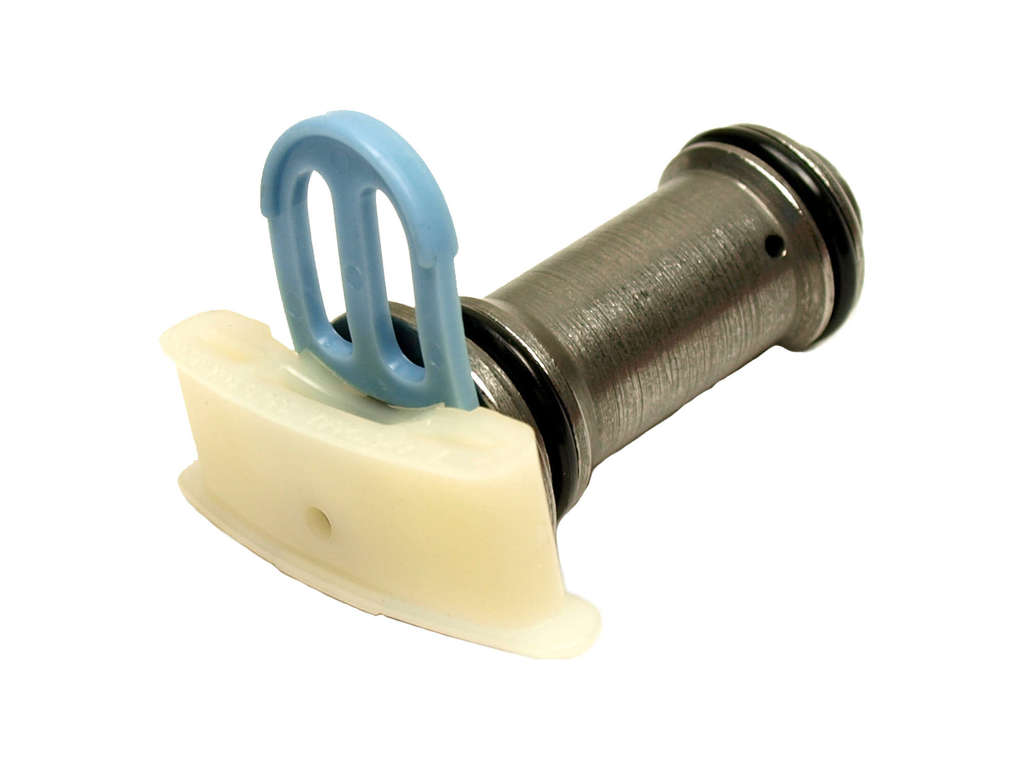
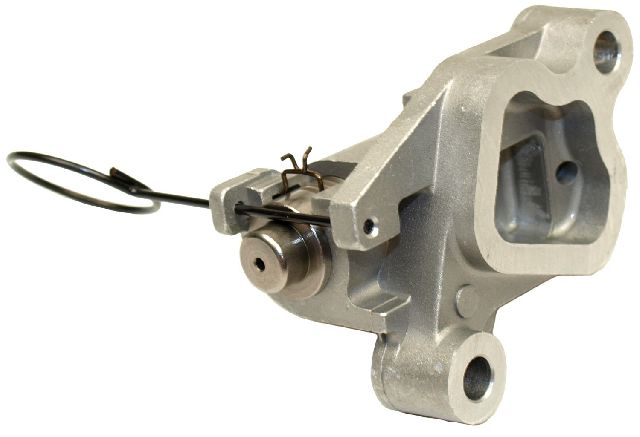
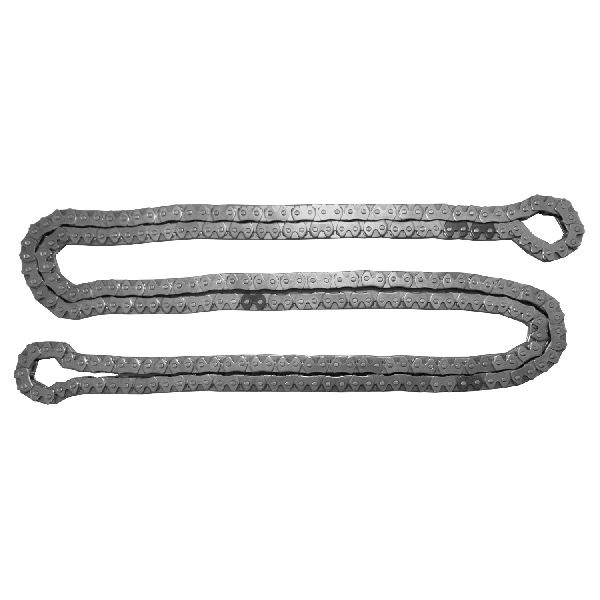
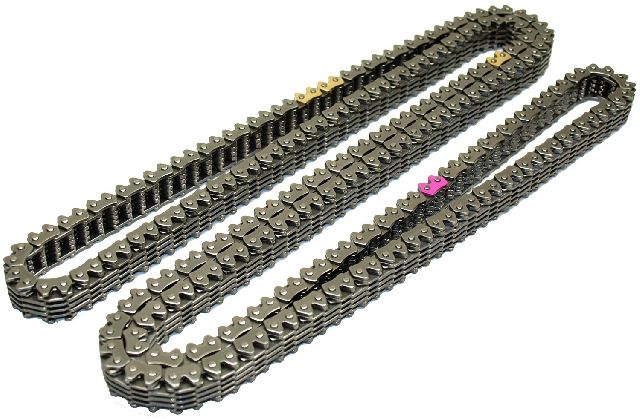
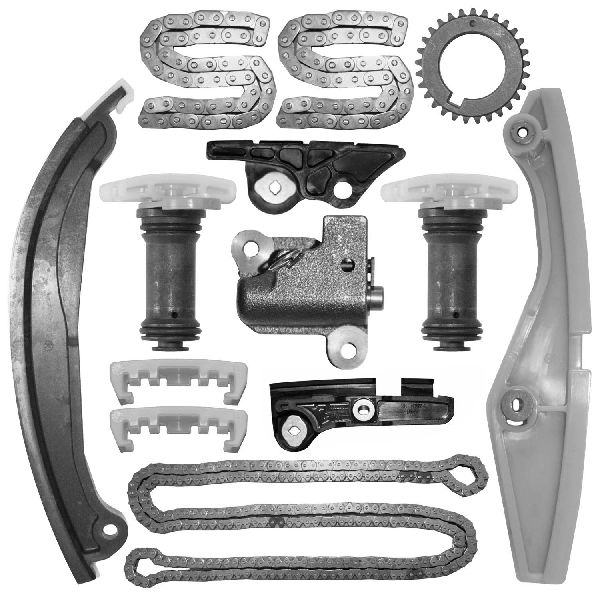
- Timing Chain Kit
(OEM #BL3Z-6D256-C)— This is the most common fix for P0016 on 2011-2014 3.5L EcoBoost F-150s. A complete kit ensures all worn components (chain, guides, tensioner, phasers) are replaced. This part number is the updated kit specified in TSBs.
Trusted brands: Motorcraft
Related Codes That Often Appear With This One
- P0017, P0018, P0019 — These are correlation codes for the other camshafts. Seeing them together strongly suggests a base timing issue, like a stretched primary timing chain affecting all banks, or a slipped crankshaft reluctor ring.
- P0299 — Turbo/Supercharger Underboost. This can occur with P0016 on EcoBoost models because incorrect cam timing affects engine breathing and exhaust flow, which in turn impacts turbocharger performance. A technician reported seeing both codes together, which were resolved by a timing chain replacement.
Technical Service Bulletins (TSBs) & Recalls
- TSB 17-0026: Worn primary timing chain on 3.5L GTDI engines built on or before 10-Oct-2014 causing P0016.
- SSM 48423: Sticking VCT solenoids due to debris on 2015-2020 vehicles causing various VCT codes including P0016.
Platform-Specific Known Issues
- TSB 17-0026: Specifically addresses P0016 on 2011-2014 F-150s with the 3.5L GTDI engine, identifying the cause as a worn primary timing chain and providing a kit for the repair.
- TSB SSM 48423: Pertains to 2015-2020 Ford vehicles (including F-150s with 3.5L and 5.0L) and lists P0016 as a potential code caused by small debris making VCT solenoids stick.
- Owner Complaint ODI #11203984: A 2014 F-150 owner reported code P0016 at 92,000 miles and was told the timing chain was stretched, noting it's a common issue for 2011-2014 3.5L EcoBoosts.
- Real-World Repair Story (f150forum.com): A user with a 2013 F-150 3.5L performed a full timing chain replacement using the updated 'C' kit, but the P0016 code returned, highlighting the complexity and potential for issues even after the correct repair is performed.
- Real-World Repair Story (f150online.com): A 2014 F-150 owner with only 26,000 miles experienced P0016 and P0299 (turbo underboost) while on a road trip. The dealer diagnosed a stretched timing chain, which was replaced under TSB 17-0026, and the truck ran better than ever afterward.
Mechanic-Grade Diagnostic Values
- VCT Solenoid Resistance — expected: 6.9 - 7.9 Ohms at 68°F (20°C). Failure: No reading (open circuit) or a reading significantly outside the expected range.
- Ford IDS Scan Tool PID: VCT_INT_DIF1 (VCT Intake Differential Bank 1) — expected: Should be close to 0 degrees at idle after the engine is warm.. Failure: A reading of +6 degrees or greater at idle indicates a stretched timing chain, according to TSB 17-0026. One technician noted seeing values as high as 15 degrees on initial startup on a truck with a stretched chain.
- Engine Oil Pressure (Mechanical Gauge) — expected: At least 25 PSI at idle for most engines.. Failure: Pressure significantly below 25 PSI at idle indicates an oiling problem that can starve VCT components and trigger timing codes.
- Physical Timing Chain Tensioner Extension — expected: A normal tensioner may show 3-4 teeth.. Failure: If the tensioner piston shows 5 or more teeth, it is considered a definitive sign of a stretched timing chain. Some technicians have seen as many as 7 or 8 teeth on failed chains.
Scan Tool Commands That Help
- Ford IDS (or equivalent): Reset Camshaft Profile — This function should be performed after replacing timing components or VCT solenoids. It clears the learned VCT positions from the PCM's memory, allowing it to relearn the new component tolerances and ensure accurate timing control.
- Ford IDS (or equivalent): Misfire Monitor Neutral Profile Correction — After a major timing job, this procedure must be performed to relearn the crankshaft position sensor profile, which prevents false misfire detection and ensures smooth engine operation.
Wiring & Ground Locations
- G106 / G107 / G108 — On the right side of the engine compartment. G106 is located on the bottom right side of the engine block.. These are primary engine ground points. A poor connection at these locations can cause erratic behavior from the PCM and its sensors, including the crankshaft and camshaft position sensors, potentially leading to false correlation codes.
- PCM Connector C1381B / C1551B — This is one of the main connectors for the Powertrain Control Module (PCM), located on the passenger side firewall.. The signals from the crankshaft and camshaft position sensors are sent to the PCM through this connector. Damage or corrosion at specific pins for the CMP or CKP sensors can interrupt the signal and trigger P0016. A technician found an intermittent PCM power loss due to a bad fuse connection in the main fuse box that fed this connector.
- Crankshaft Position Sensor Connector — Located on the driver's side where the engine and transmission meet. Access is from underneath the vehicle.. This connector is exposed to heat and road debris. Damage to the wiring or corrosion in the connector can cause a loss of the crankshaft signal, directly leading to a P0016 code.
Real Owner Repair Stories
- Ford F150 Forum user 'cobracooter' (Ford F-150 with 5.4L 3V engine (similar VCT system)) — Rough idle and codes P0016 and P0012 after a complete timing job using Cloyes aftermarket parts.
❌ Tried (didn't work) Replacing timing components (initially caused the issue)., Swapping back to an OEM Ford phaser., Experimenting with different oil viscosities (5W20, 5W30, 5W40), which changed symptoms but did not fix the root cause.
✅ What actually fixed it The aftermarket cam phaser bolts purchased from Amazon were incorrect. The machined shoulder on the bolt was slightly shorter than the OEM bolt, which prevented it from properly sealing an oil passage in the phaser. Replacing the incorrect bolt with the proper one supplied with a new Cloyes phaser finally resolved the codes. - Ford F150 Forum user (2011 F-150 3.5L EcoBoost) — Rough running, multiple timing-related codes, and eventually only P0016.
❌ Tried (didn't work) Replacing all cam position sensors.
✅ What actually fixed it A full timing job was performed using a Cloyes aftermarket kit (chain, tensioners, VCT solenoids, phasers). After the job, the engine ran smoothly but developed a new cold-start rattle and still had code P0016. The user concluded that one of the new aftermarket cam phasers was faulty out of the box, causing the rattle, and suspected another new part was causing the persistent P0016. This highlights the risk of faulty new parts, even when the diagnosis is correct.
OEM Part Supersession History
BL3Z-6D256-A→BL3Z-6D256-C— This is the primary timing chain tensioner for the 3.5L EcoBoost. The part was likely updated to improve durability and address premature wear issues that contributed to chain stretch.
Model Year Variations Within This Range
- 2011-2014: These models use the first-generation 3.5L EcoBoost, which is highly prone to timing chain stretch as documented in TSB 17-0026. P0016 on these trucks is almost synonymous with a stretched primary timing chain.
- 2015-2017: The 2015 model year introduced the second-generation 3.5L EcoBoost. While still susceptible to timing issues, this generation and the contemporary 5.0L V8 are also commonly affected by sticking VCT solenoids as a cause for P0016, as noted in TSB SSM 48423.
- 2018: The 2018 model year introduced a heavily revised 'Gen 3' 5.0L Coyote V8 with a dual-fuel (direct and port) injection system. The VCT system was also updated. TSB 18-2058 applies to these engines and lists P0016 as a potential code, indicating VCT issues remain a concern.
Helpful Videos
We Have This Part in Stock


The information in this article is provided for general reference and educational purposes only. Vehicle specifications, procedures, and part compatibility can vary by production date, trim level, and region. Always consult your vehicle's factory service manual and verify part numbers before purchasing or performing repairs. Safety-critical components such as airbags, seat belts, and braking systems should be installed by a qualified professional.
- Ford F-150:
- 🎬 Helpful Videos
- 🛍️ Shop This Part
- What's Unique About the 2011-2018 Ford F-150
- Diagnostic Flowchart
- Symptoms You May Notice
- Most Likely Causes
- Rare But Worth Checking
- Diagnosis Steps
- Parts You'll Likely Need
- Related Codes That Often Appear With This One
- Technical Service Bulletins (TSBs) & Recalls
- Platform-Specific Known Issues
- Mechanic-Grade Diagnostic Values
- Scan Tool Commands That Help
- Wiring & Ground Locations
- Real Owner Repair Stories
- OEM Part Supersession History
- Model Year Variations Within This Range
- 🎟️ Get 5% Off