

P0016 on 2015-2020 Ford Explorer: Crank/Cam Correlation Causes and Fixes
P0016 on a 2015-2020 Ford Explorer most often indicates a stretched timing chain or a related timing component failure, a known issue especially on the 3.5L V6 engines. This is a serious issue requiring immediate attention. On the 3.5L engines, this is frequently caused by a failing internal water pump leaking coolant into the oil, which accelerates timing chain wear. Expect repair costs to range from $1,500 to over $3,000, as it is a labor-intensive job.
- P0016 on a 2015-2020 Explorer is a serious code that points to a mechanical timing problem.
- The most likely cause, especially on 3.5L engines, is a stretched timing chain.
- Do not ignore this code. Continued driving risks severe, and potentially catastrophic, engine damage.
- If you have a 3.5L engine, any timing chain service MUST include replacing the internal water pump to prevent future failure.
- This is not a DIY-friendly repair; it requires special tools and extensive labor. Professional service is strongly recommended.
What's Unique About the 2015-2020 Ford EXPLORER

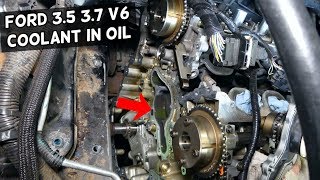
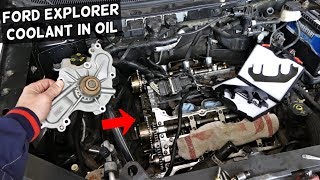
The Ford Explorer's 3.5L engines (both EcoBoost and naturally aspirated) are notorious for a critical design flaw where the water pump is located internally and is driven by the primary timing chain. When the water pump's internal seal fails, it leaks coolant directly into the engine oil pan. This contaminated oil loses its lubricating properties and quickly destroys the timing components—chain, guides, and tensioners—leading directly to chain stretch and the P0016 code. This makes the water pump a common root cause of catastrophic timing failure. Additionally, Ford has issued multiple Technical Service Bulletins (TSBs), such as SSM 47170 and SSM 48423, acknowledging that debris in the oil can cause the Variable Camshaft Timing (VCT) solenoids to stick, which can also trigger this code.
Diagnostic Flowchart

Tap your situation to follow the diagnostic path that matches what you're seeing on this vehicle.
Generation note: The 2015-2020 range covers the end of the 5th generation (2015-2019) and the first year of the 6th generation (2020). The 5th gen used the 2.3L I4, 3.5L V6, and 3.5L EcoBoost V6. The 2020 model carried over the 2.3L and introduced a new 3.0L EcoBoost V6, replacing the 3.5L V6s. The primary causes, especially timing chain stretch on the V6 engines due to the internal water pump design, are consistent across these years and even in earlier models.
Symptoms You May Notice
- Check Engine Light is on.
- Engine rattles, especially a metallic rattle during a cold start for 2-3 seconds.
- Rough or unstable idle, sometimes described as a misfire-like shake.
- Reduced engine power and poor acceleration, feeling 'gutless'.
- Engine may be hard to start or cranks but does not start.
- Decreased fuel economy.
- Engine stalling, especially at low RPMs.
- Replacing only the camshaft or crankshaft position sensor without checking the mechanical timing.
- Replacing VCT solenoids when the root cause is a stretched timing chain or contaminated oil.
- Replacing the timing chain on a 3.5L V6 without also replacing the internal water pump, leading to a repeat failure.
Most Likely Causes

- Stretched Timing Chain and/or Worn Guides/Tensioner 🔴 High Probability The 3.5L engines are known for premature timing chain stretch. This is often a direct result of a failing internal water pump contaminating the oil with coolant, which ruins the oil's lubricating properties. Long oil change intervals exacerbate this wear.
How to confirm: A mechanic can use a scan tool to monitor the VCT_INT_ACT1 PID; a reading of +6 degrees or greater at idle often indicates a stretched chain per Ford's own diagnostics. A VCT error PID (e.g., VCT_INT_ERR1) consistently showing a value greater than 5-8 degrees is also a strong indicator. Visual inspection after removing the valve cover can also reveal a maxed-out tensioner.
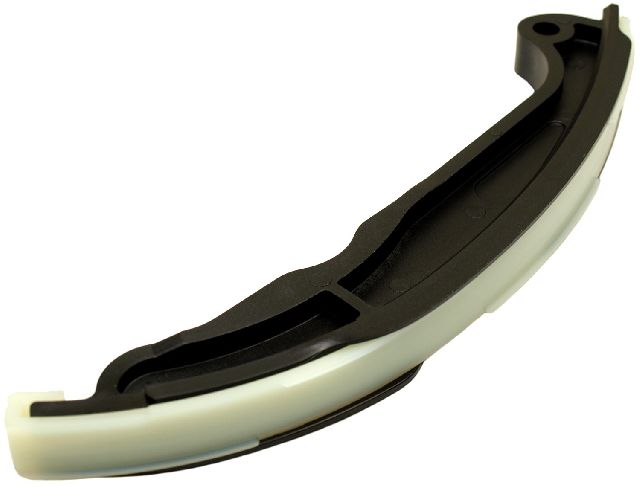
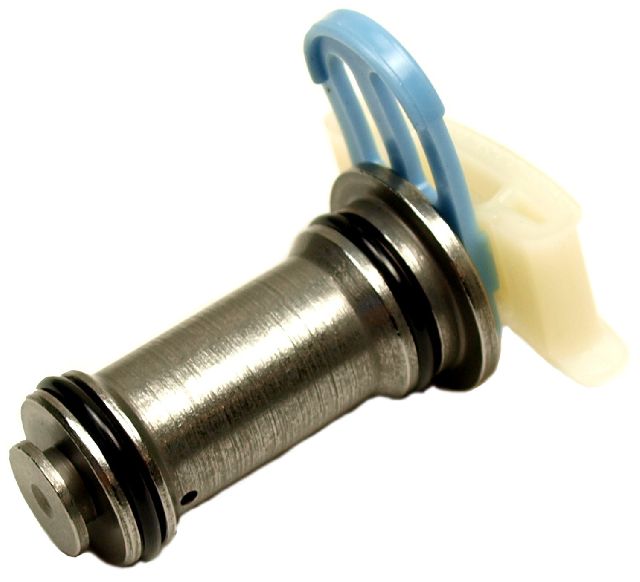
Typical fix: Replace the timing chain, tensioners, guides, and phasers as a complete kit. On 3.5L engines, it is absolutely critical to replace the internal water pump at the same time, even if it hasn't failed yet.
Est. part cost: $300-$700 - Failing Variable Camshaft Timing (VCT) Solenoid 🟡 Medium Probability Ford TSBs SSM 47170 and SSM 48423 state that small debris in the oil can cause the VCT solenoid to stick. This can be due to sludgy oil or particles from other failing components.
How to confirm: A mechanic can command the solenoid on and off with a high-level scan tool to check its response, listening for an audible click. TSB SSM 48423 suggests cycling the solenoid 10 times with a scan tool to try and clear debris before replacement. The solenoid's internal resistance can be tested with a multimeter and should be between 7 and 14 ohms.
Typical fix: Replace the faulty VCT solenoid for Bank 1 Intake. It's often recommended to replace them in pairs (intake and exhaust) or all four on a V6.
Est. part cost: $40-$120 - Low or Dirty Engine Oil 🟡 Medium Probability The entire VCT system is hydraulic and relies on clean oil at the correct pressure to function. The internal water pump issue makes these engines especially sensitive to oil condition, as coolant contamination quickly degrades the oil.
How to confirm: Check the oil level and condition on the dipstick. A milky, 'chocolate milk' appearance indicates coolant contamination. If the oil is low, black, or sludgy, this is a likely contributing factor.
Typical fix: Perform an engine oil and filter change using the correct viscosity oil specified by Ford. If coolant is present, the water pump and timing system must be addressed immediately.
Est. part cost: $50-$100 - Failing Camshaft Phaser (VCT Actuator) ⚪ Low Probability The phasers can fail mechanically, getting stuck, developing internal leaks, or having their locking pins wear out. This is a common failure point on many Ford engines, often causing a 'cold start rattle'.
How to confirm: This is typically diagnosed with a scan tool by monitoring desired vs. actual cam angles. Failure is often confirmed during a timing chain replacement, and they are almost always replaced as part of the job.
Typical fix: Replace the Bank 1 intake camshaft phaser. It is best practice to replace all phasers (2 on I4, 4 on V6) during a timing chain service.
Est. part cost: $150-$300
Rare But Worth Checking
- Failed Internal Water Pump (3.5L V6): A failing water pump on the 3.5L engine is a critical issue. It's driven by the timing chain, and when its internal seal fails, it leaks coolant directly into the oil pan. This contaminated oil then destroys the timing components, causing P0016. The water pump itself isn't the direct cause of the code, but its failure is the root of the entire timing system problem.
- Failed Camshaft or Crankshaft Position Sensor: While possible, sensor failure is less common than mechanical timing issues for this code. People often replace these first, but it rarely solves the problem. Usually, a bad sensor will trigger its own specific circuit code (e.g., P0340) in addition to or instead of P0016.
- Sheared Crankshaft Woodruff Key: In rare cases, the woodruff key that aligns the crankshaft timing sprocket can shear or fail. This can happen if the main crankshaft bolt was not properly torqued to yield during a previous repair, such as a water pump or timing chain replacement. This causes a complete loss of timing correlation and may require engine replacement if the crankshaft is damaged.
Diagnosis Steps
- Verify the engine oil level and condition. Check for a 'milky' appearance indicating coolant contamination. Top up or change the oil if it is low or dirty.
- Use an OBD-II scanner to check for any other pending or stored codes. Note any codes for other banks or for VCT performance.
- With a professional scan tool, monitor the desired vs. actual camshaft position angles for Bank 1 Intake (PIDs: VCT_INT_ADV_DES1 and VCT_INT_ADV_ACT1). A significant, persistent deviation points to a mechanical timing issue. Per TSB 17-0026, a reading of +6 degrees or more on VCT_INT_ACT1 can indicate a worn chain.
- Command the Bank 1 intake VCT solenoid on and off with the scan tool to check for a response. Listen for an audible click from the solenoid. TSB SSM 48423 suggests attempting to cycle the solenoid 10 times to clear debris.
- If VCT solenoids are suspected, swap the Bank 1 intake solenoid with the Bank 1 exhaust solenoid. Clear codes and drive the vehicle. If the code changes to P0017 (Bank 1 Exhaust), the solenoid is confirmed faulty.
- Remove the Bank 1 valve cover to visually inspect the timing chain for slack and check the extension of the chain tensioner. A fully extended tensioner indicates a stretched chain.
- If the timing chain is confirmed to be stretched, proceed with replacing the full timing set (chain, guides, tensioners, phasers) and the water pump (on 3.5L engines).
Parts You'll Likely Need
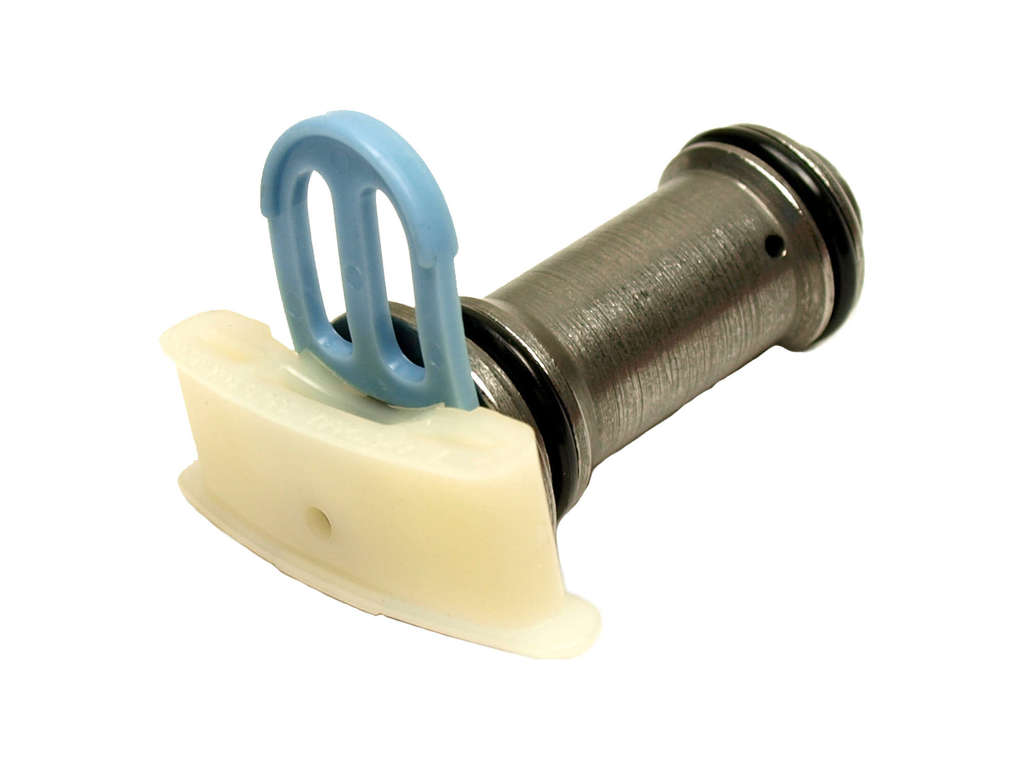
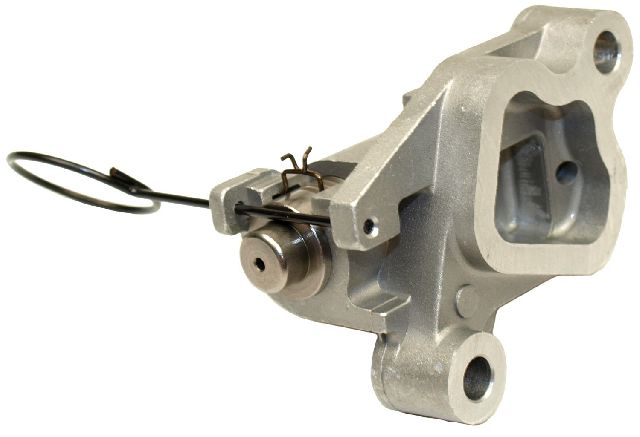
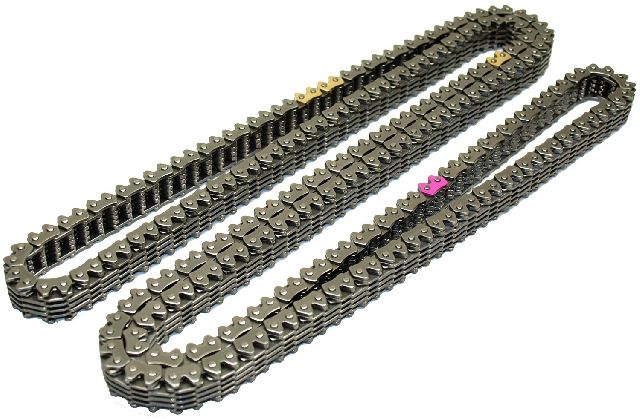
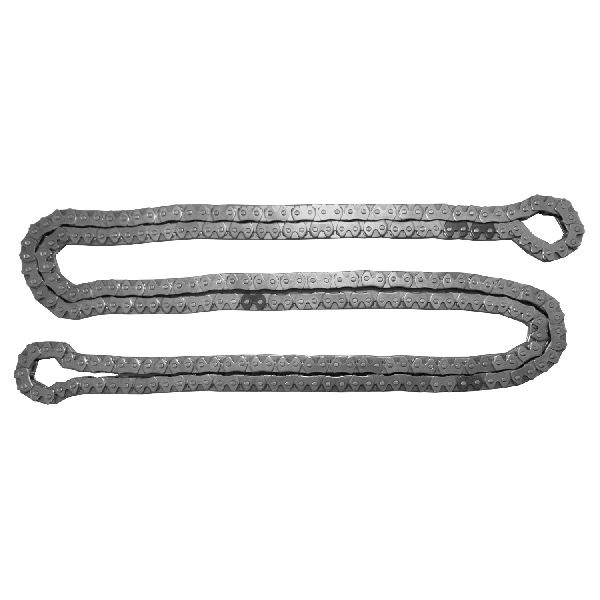
- Timing Chain Kit
(OEM #AT4Z-6L266-B (for 3.5L))— This is the most common cause of P0016 on these engines. A complete kit is required.
Related Codes That Often Appear With This One
- P0017, P0018, P0019 — These are correlation codes for the other camshafts (Exhaust Bank 1, Intake Bank 2, Exhaust Bank 2). If the primary timing chain is stretched, it can affect all camshafts, causing multiple codes to appear together.
- P0011, P0012, P0021, P0022 — These codes indicate that a camshaft is over-advanced or over-retarded, which can be caused by a sticking VCT solenoid or a failing phaser, common root causes shared with P0016.
- P0299 — On EcoBoost models, this code indicates a turbocharger/supercharger underboost condition. Severe timing issues can cause poor engine performance and lack of power, which the PCM may interpret as an underboost situation.
Technical Service Bulletins (TSBs) & Recalls
- Advises that various VCT codes, including P0016, may be caused by small debris sticking in the VCT solenoid. Recommends using a scan tool to cycle the solenoid 10 times to attempt to clear it before replacement.
- Addresses P0016 and other VCT codes on low-mileage 2016 vehicles with 3.5L engines. The prescribed action is to replace the affected VCT solenoid.
- Specifically for 2011-2014 F-150s with 3.5L GTDI, but provides a key diagnostic tip applicable to Explorers: if the VCT_INT_ACT1 PID reads +6 degrees or greater, it indicates a worn primary timing chain requiring replacement.
Platform-Specific Known Issues
- 3.5L Internal Water Pump Failure: On 3.5L Ti-VCT and 3.5L EcoBoost engines, the timing-chain-driven water pump is the Achilles' heel. When it fails, it leaks coolant into the oil, destroying the oil's viscosity. This leads to rapid wear of the timing chain, guides, and phasers, which directly causes the P0016 code. Any P0016 diagnosis on a 3.5L must include checking for coolant in the oil. A timing chain job without a water pump replacement is considered an incomplete repair.
- Owner Experience: Timing Chain at 68k Miles: A user on Reddit with a 2015 Explorer Sport (3.5L EcoBoost) reported getting code P0016 at 68,000 miles. The dealer confirmed a stretched timing chain was needed. The owner, aware of the water pump issue from research, proactively paid to have the water pump replaced during the warranty-covered timing chain job to prevent future failure.
- Owner Experience: Botched Repair Leading to Engine Failure: Another Reddit user with a 2016 Explorer (3.5L non-EcoBoost) had their water pump replaced, but the shop did not replace the timing chain. Shortly after, code P0016 appeared. The dealer then diagnosed a sheared woodruff key on the crankshaft, likely from the crankshaft pulley bolt not being properly torqued during the water pump job, leading to a $12,000 engine replacement quote. This highlights the importance of proper procedure and replacing all related components at once.
Mechanic-Grade Diagnostic Values
- VCT Solenoid Internal Resistance — expected: 7 to 14 Ohms. Failure: A reading outside this range, or infinite resistance (open circuit), indicates a failed solenoid.
- Camshaft Position Sensor (3-wire Hall-effect) Voltage Check — expected: 5V on the reference wire and 5V on the signal wire (KOEO). Ground wire should show battery voltage (approx. 12.6V) when tested against the positive battery terminal.. Failure: Readings outside these ranges suggest a wiring or PCM issue, not necessarily a bad sensor.
- Scan Tool PID: VCT_INT_ERR1 (Cam Timing Error) — expected: Close to 0 degrees at idle when warm.. Failure: A consistent error of 10-12 degrees or more strongly suggests the base timing is off by at least one tooth.
- Scan Tool PID: VCT_INT_ACT1 (Actual Cam Angle) — expected: Should closely match the desired angle PID (VCT_INT_ADV_DES1).. Failure: A reading of +6 degrees or greater than desired at idle can indicate a stretched timing chain, per Ford diagnostics.
Scan Tool Commands That Help
- Ford IDS / FORScan: Reset All Adaptations / Camshaft Profile Correction Reset — This function should be performed after replacing timing components or VCT solenoids. It clears the learned timing tables in the PCM, forcing it to re-learn the new component positions and prevent a code from returning incorrectly.
- Ford IDS / FORScan: VCT Solenoid On/Off Command — Used to test the mechanical function of a VCT solenoid. By commanding it on and off, a technician can listen for an audible click, indicating the solenoid is physically actuating. Lack of a click points to a stuck or failed solenoid.
Wiring & Ground Locations
- G101 / G106 — G101 is at the front of the engine, lower block. It jumpers to G106 at the center of the frame cross rail under the crank pulley.. This is a primary ground for the Engine Control Module (PCM). A poor connection here can cause erratic behavior and incorrect readings from any sensor the PCM monitors, including the crank and cam sensors.
- G103 — Located at the left rear of the engine compartment on the cowl, above the brake booster.. This ground serves the Body Control Module (BCM) and the Data Link Connector (DLC). While not a direct engine ground, a fault here can interfere with scan tool communication during diagnosis.
- Camshaft Position Sensor Connector — On the front of the valve covers for each bank. Bank 1 (passenger side) contains the Sensor 'A' (intake) and Sensor 'B' (exhaust).. The 3-pin connector provides 5V reference, signal return, and ground. Oil leaking from the sensor's O-ring can contaminate the connector, causing intermittent signals or short circuits that can mimic a failed sensor or trigger circuit codes like P0340.
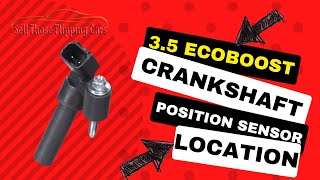
- Crankshaft Position Sensor Connector — On the 3.5L EcoBoost, it is notoriously difficult to access, located on the driver's side of the engine block, behind the turbocharger and hidden by a heat shield. Access is typically through the driver's side wheel well.. Due to its location near high-heat components (turbo and exhaust), the wiring and connector are susceptible to heat damage, which can cause an intermittent or lost signal, directly leading to correlation codes.
Real Owner Repair Stories
- Reddit user in r/f150 (2013 F-150 3.5L EcoBoost, 90k miles) — P0016 code present.
❌ Tried (didn't work) The owner performed a full timing chain and phaser replacement, carefully aligning all timing marks. The truck ran smoothly, but the P0016 code would return after 5-10 minutes of driving.
✅ What actually fixed it The story is unresolved in the thread, but it highlights a critical diagnostic scenario: a P0016 code that returns even after a correct timing job. This points away from the primary chain and toward secondary issues like a faulty VCT solenoid that wasn't replaced, a wiring issue, a problem with the new phasers, or an issue with the crankshaft reluctor wheel that wasn't addressed during the repair. - Ford Explorer Forum user (2016 Explorer Platinum 3.5L EcoBoost, 76k miles) — Check engine light with code P0016. No startup rattle, no noticeable driveability issues other than remote start being disabled.
❌ Tried (didn't work) Replaced the Bank 1 Sensor A (camshaft position sensor). The code came right back.
✅ What actually fixed it The thread discussion points toward the timing chain being the ultimate culprit, even without the classic 'startup rattle' symptom. This story is valuable because it shows that a stretched chain can set P0016 without other common symptoms being present, often leading owners to mistakenly replace sensors first.
OEM Part Supersession History
BL3Z-6D256-B→BL3Z-6D256-C— This is the Ford service kit for timing chain/phaser jobs on the 3.5L EcoBoost. The part number was updated to include revised components, likely improved tensioners or guides, to address premature wear issues.
Heads up: The newer kit should be used on all applicable model years for improved durability. Using older stock (if found) may lead to a repeat of the original failure.
Model Year Variations Within This Range

- 2016-2019: For 2016, the optional EcoBoost four-cylinder was upgraded from a 2.0L to a 2.3L, increasing power. This 2.3L engine could now be paired with AWD, unlike the previous 2.0L. While the P0016 code can occur on both, the specific part numbers for timing components will differ between the 2.3L and the 3.5L V6 engines.
- 2020: The 2020 model year marked the beginning of the 6th generation. The 3.5L V6 engines were replaced by a new 3.0L EcoBoost V6. While the underlying cause of a timing correlation code remains the same (stretched chain, bad phaser/solenoid), the physical parts (chains, guides, water pump design) are different from the 5th generation's 3.5L engines.
Helpful Videos
![How to Fix P0016 Engine Code in 7 Minutes [Just Under $7.99]](https://img.youtube.com/vi/IcKucvUU-10/mqdefault.jpg)
We Have This Part in Stock

The information in this article is provided for general reference and educational purposes only. Vehicle specifications, procedures, and part compatibility can vary by production date, trim level, and region. Always consult your vehicle's factory service manual and verify part numbers before purchasing or performing repairs. Safety-critical components such as airbags, seat belts, and braking systems should be installed by a qualified professional.
- Ford EXPLORER:
- 🎬 Helpful Videos
- 🛍️ Shop This Part
- What's Unique About the 2015-2020 Ford EXPLORER
- Diagnostic Flowchart
- Symptoms You May Notice
- Most Likely Causes
- Rare But Worth Checking
- Diagnosis Steps
- Parts You'll Likely Need
- Related Codes That Often Appear With This One
- Technical Service Bulletins (TSBs) & Recalls
- Platform-Specific Known Issues
- Mechanic-Grade Diagnostic Values
- Scan Tool Commands That Help
- Wiring & Ground Locations
- Real Owner Repair Stories
- OEM Part Supersession History
- Model Year Variations Within This Range
- 🎟️ Get 5% Off