

P0016 on 2015-2021 Ford Escape: Crank/Cam Correlation Causes and Fixes
P0016 on a 2015-2021 Ford Escape most often indicates a problem with the Variable Cam Timing (VCT) system, specifically a sticking VCT solenoid due to low or dirty oil. Start by checking your oil. If the oil is fine, the VCT solenoid is the next likely culprit, costing about $50-$120 for the part. In some cases, especially on higher-mileage vehicles, this code can point to a more serious stretched timing chain.
- Always check your engine oil level and condition first. Low or dirty oil is a primary cause of P0016 on a Ford Escape.
- The most likely failed part, according to Ford's own service bulletins, is a sticking Variable Cam Timing (VCT) solenoid, not necessarily the timing chain itself.
- Replacing a VCT solenoid is a manageable DIY job for many, while a timing chain replacement is a major, expensive repair best left to professionals.
- Ignoring P0016 can lead to serious drivability problems and potential engine damage, so it should be addressed promptly.
What's Unique About the 2015-2021 Ford ESCAPE

On Ford Escape engines, particularly the EcoBoost variants, the Variable Cam Timing (VCT) system is sensitive to oil quality and pressure. Ford has issued multiple Technical Service Bulletins (TSBs) acknowledging that P0016 can be triggered by small debris in the engine oil, causing the VCT solenoids to stick. This makes checking the oil level and condition, and considering a VCT solenoid replacement, a more probable starting point than on many other vehicles where this code might immediately suggest a stretched timing chain. Additionally, some 1.5L and 2.0L EcoBoost engines have a known issue with coolant intrusion into the cylinders, which can contaminate the oil and lead to VCT problems and this code.
Diagnostic Flowchart

Tap your situation to follow the diagnostic path that matches what you're seeing on this vehicle.
Generation note: This year range covers the end of the third generation (2015-2019) and the start of the fourth generation (2020-2021) Ford Escape. The provided TSBs cover vehicles up to the 2021 model year, indicating that the underlying causes, particularly related to the VCT system, are relevant to both generations. The 1.5L EcoBoost engine, in particular, has known TSBs related to coolant intrusion that can cause this code in the 2017-2019 model years.
Symptoms You May Notice

- Check Engine Light is on
- Rough or erratic idle
- Engine stalls or hesitates during acceleration
- Reduced engine power
- Difficulty starting the engine, or it cranks but won't start
- Decreased fuel economy.
- Rattling noise from the engine, especially on startup, which can indicate a timing chain issue
- Immediately replacing the timing chain without first checking the oil and VCT solenoid. The TSBs for this vehicle strongly suggest the VCT system is a more likely culprit.
- Replacing the camshaft or crankshaft position sensors when the underlying issue is mechanical (timing chain) or hydraulic (oil pressure/VCT solenoid). Many forum users report replacing sensors with no change before finding a stretched chain.
Most Likely Causes

- Low or Dirty Engine Oil 🔴 High Probability The VCT system relies on clean oil at the correct pressure to function. Ford TSBs specifically mention debris in oil as a cause for VCT-related codes. Coolant intrusion on some EcoBoost models can also contaminate the oil, leading to sludge and VCT failure.
How to confirm: Check the engine oil dipstick for low level or dark, sludgy, or milky-looking oil (a sign of coolant contamination).
Typical fix: Perform an oil and filter change using the manufacturer-specified grade of oil (e.g., SAE 5W-30 for many EcoBoost engines). If coolant contamination is suspected, the root cause (e.g., engine block issue) must be addressed.
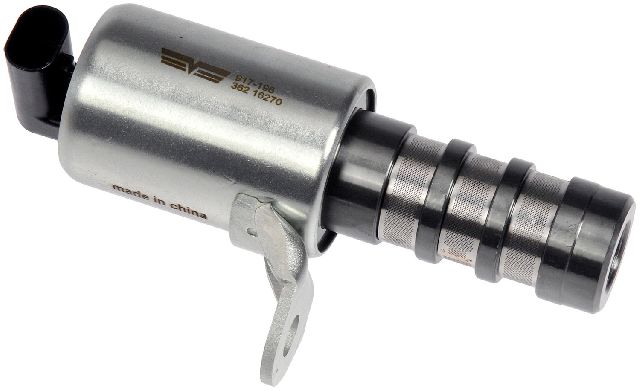
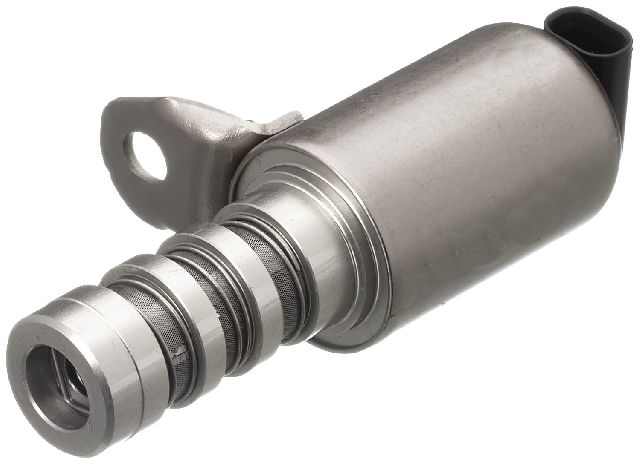
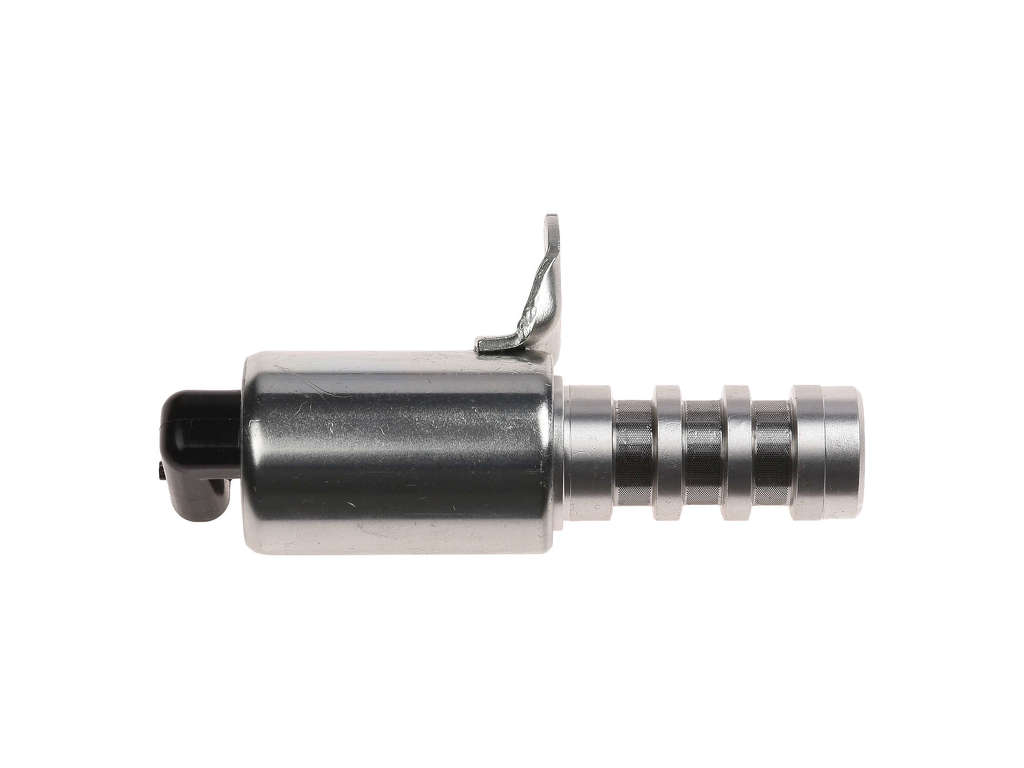
Est. part cost: $40-$80 - Failing Variable Cam Timing (VCT) Solenoid 🔴 High Probability Ford TSBs #SSM 54366, #SSM 48423, and #SSM 47170 all state that small debris can cause the VCT solenoid to stick, leading to this code. This is a very common failure point on these engines.
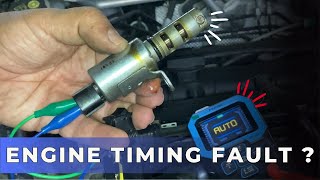
How to confirm: Use a scan tool to command the solenoid on and off to check for a response (Pinpoint Test HK11 in the service manual suggests cycling it 10 times to clear debris). You can also remove and inspect the solenoid's screens for sludge or debris. Swapping the intake and exhaust solenoids (if identical) can see if the code changes to P0017.
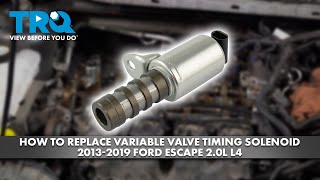
Typical fix: Clean or replace the Bank 1 intake VCT solenoid. Replacement is often the better long-term solution. 🎬 Watch: Step-by-step guide to replacing the VCT solenoid.
Est. part cost: $50-$120 - Stretched Timing Chain or Failed Tensioner 🟡 Medium Probability While less common than VCT issues, timing chains on the EcoBoost engines are known to stretch over time, particularly with extended oil change intervals. A user on SHO Forum noted that these engines can "eat chains like it's going out of business."
How to confirm: A persistent rattling noise from the timing cover is a strong indicator. A mechanic can use a scan tool to compare desired vs. actual cam timing; a deviation of 5 degrees or more often indicates chain stretch. The ultimate confirmation requires removing the timing cover to physically inspect the chain for slack and check timing marks.
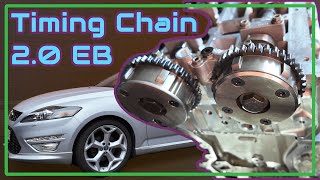
Typical fix: Replace the timing chain, guides, and tensioner. This is a labor-intensive job often costing over $1,500. 🎬 Watch: Step-by-step guide for EcoBoost timing chain replacement. It's also recommended to replace the water pump at the same time on some engines as it is driven by the timing chain.
Est. part cost: $250-$500 - Faulty Camshaft Position Sensor ⚪ Low Probability
How to confirm: Inspect the sensor and its wiring for damage. Use a multimeter to test the sensor's output against specifications in the service manual. Often, a failing sensor will throw its own specific circuit code in addition to P0016.
Typical fix: Replace the Bank 1 intake camshaft position sensor.
Est. part cost: $30-$70 - Faulty Crankshaft Position Sensor ⚪ Low Probability
How to confirm: Inspect the sensor and wiring. Test the sensor's output with a multimeter or oscilloscope to ensure it's sending a correct signal. This is a less likely cause than the camshaft sensor for a Bank 1 specific code.
Typical fix: Replace the crankshaft position sensor.
Est. part cost: $40-$80
Rare But Worth Checking
- Damaged Camshaft Phaser (VCT Actuator): The phaser is the mechanical gear that actually adjusts the cam timing. It can become stuck or damaged, but this is less common than a solenoid failure. A garage in a Ford Owners Club forum noted they had to replace a phaser that had excessive 'play'.
- Wiring or Connector Issues: A damaged wire or corroded connector for the cam sensor, crank sensor, or VCT solenoid can mimic a component failure. Check for chafing or loose pins at the connectors.
- Failed Powertrain Control Module (PCM): This is extremely rare and should only be considered after all other possibilities have been exhaustively ruled out.
- Slipped Reluctor Ring/Tone Ring: The tone ring on the crankshaft or camshaft, which the sensor reads, can slip or become damaged, causing incorrect readings. This requires significant disassembly to inspect.
Diagnosis Steps
- Check Engine Oil: Verify the oil level is correct and the oil is clean. If it's low, dirty, or milky, perform an oil and filter change and investigate any potential coolant leaks. This is the number one step.
- Scan for Codes: Use an OBD-II scanner to confirm P0016 and check for any other related codes. Note any sensor-specific or VCT circuit codes.
- Inspect Wiring: Visually inspect the wiring and connectors for the camshaft position sensor, crankshaft position sensor, and VCT solenoid for any signs of damage, corrosion, or looseness.
- Test the VCT Solenoid: Using a capable scan tool, command the Bank 1 intake VCT solenoid on and off (as per TSB 48423's recommendation to cycle it 10 times). Listen for a click and watch for a change in engine idle. If there's no response, the solenoid is likely faulty.
- Test the Sensors: If the VCT system seems to be working, test the camshaft and crankshaft position sensors using a multimeter to check for correct resistance and voltage signals as per the vehicle's service manual.
- Check for Timing Chain Stretch (Scan Tool): Use an advanced scan tool to monitor desired vs. actual camshaft position angles. A deviation greater than 5 degrees at idle is a strong indication of a stretched timing chain.
- Inspect Timing Components: If all sensors and solenoids test good, the final step is to inspect the mechanical timing. This involves removing the valve cover and/or timing cover to check the timing chain for slack and verify the timing marks on the sprockets and chain are aligned. This step is best left to a professional if you are not experienced.
Parts You'll Likely Need
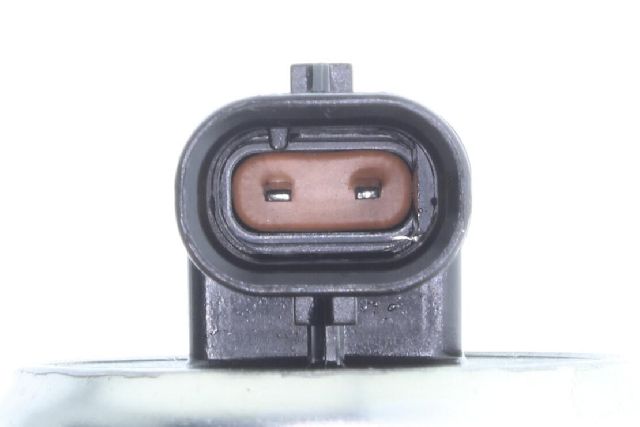
- Variable Cam Timing (VCT) Solenoid
(OEM #CM5Z-6M280-C (2.0L), CJ5Z-6M280-A (2.5L), P2GZ6M280A (1.5L Dragon))— Ford TSBs indicate this part is prone to sticking from oil debris, making it a primary cause for P0016 on this vehicle.
Trusted brands: Motorcraft, Dorman
OEM price range: $80-$120
Aftermarket price range: $50-$90
Related Codes That Often Appear With This One
- P0011, P0012, P0014, P0015, P0017, etc. — These are all VCT and cam/crank correlation codes. The Ford TSBs list them together as being caused by sticking VCT solenoids. [SSM 54366, SSM 48423, SSM 47170, 8]
- P030x (e.g., P0301, P0302) — Incorrect cam timing can disrupt the combustion process, leading to engine misfires in one or more cylinders.
- P04DB — As seen in NHTSA complaint #11648592, this crankcase ventilation system code can appear alongside P0016. TSB 17-0066 addresses P04DB on 2.0L GTDI engines, sometimes requiring a PCM reprogram. A faulty PCV system can affect crankcase pressure and engine performance, potentially contributing to conditions that trigger other codes.
Technical Service Bulletins (TSBs) & Recalls
- SSM 54366: General TSB for various 2015-2021 Ford/Lincoln vehicles with VCT codes (P0011-P0025), pointing towards diagnostic test HK in the PC/ED.
- SSM 48423: Specifically mentions that for 2015-2020 vehicles, P0016 and other VCT codes may be due to small debris causing the solenoid to stick. It advises using a scan tool to cycle the solenoid 10 times to clear it before replacement.
- SSM 47170: An earlier version of SSM 48423, covering 2018 and prior models with the same issue of sticking VCT solenoids due to debris.
- TSB 19B37 / TSB 22-2133: Pertains to 2017-2019 Escape/Fusion with 1.5L engines. It addresses coolant intrusion into cylinders, which can cause oil contamination, misfires, and potentially lead to oil-related codes like P0016.
Platform-Specific Known Issues
- 1.5L and 2.0L EcoBoost Coolant Intrusion: Certain model years (primarily 2017-2019) of the 1.5L and 2.0L EcoBoost engines are known to have an issue where coolant can leak into the engine cylinders due to the engine block design. This is covered by Ford TSB 19B37. This contamination degrades the engine oil, which can cause the VCT solenoids to sludge up and fail, directly leading to a P0016 code. Symptoms include white exhaust smoke and coolant loss.
Mechanic-Grade Diagnostic Values
- VCT Solenoid Internal Resistance — expected: 7 to 14 Ohms. Failure: A reading outside this range indicates a faulty solenoid coil.
- Crankshaft Position Sensor Resistance — expected: 200 to 900 Ohms. Failure: A reading outside this range, or zero, suggests a faulty sensor.
- Camshaft Position Sensor Power Wire Voltage (3-wire sensor) — expected: ~5V or ~12V DC (Key On, Engine Off). Failure: No voltage indicates a wiring or PCM issue.
- Camshaft Position Sensor Signal Wire Voltage (3-wire sensor) — expected: Switches between ~5V and 0V as the engine is cranked or a metal object is passed over the sensor tip.. Failure: Voltage that does not change or is stuck high/low indicates a faulty sensor.
Scan Tool Commands That Help
- Ford IDS (Integrated Diagnostic System): Monitor VCT Advanced Error PIDs (VCT_ERR, VCT_ERR2) — To see the degrees of deviation between the desired and actual camshaft position while driving. This is critical for diagnosing intermittent timing chain stretch or phaser issues.
- Ford IDS (Integrated Diagnostic System): Histogram Mode for VCT PIDs — To visually record and analyze VCT anomalies over a drive cycle, making it easier to spot intermittent faults that might be missed on a standard data log.
- Professional Scan Tool (e.g., FORScan, IDS): VCT Solenoid Bidirectional Control (On/Off Command) — To test the functionality of the VCT solenoid. When commanded on at idle, a working solenoid and phaser should cause the engine to run rough or stall. This confirms the solenoid is mechanically responding to the PCM's command.
- Ford IDS (Integrated Diagnostic System): Mode 6, Test ID for VCT — To check statistical data on VCT performance that the PCM has gathered over time. This can reveal subtle timing issues before they consistently set a DTC.
Wiring & Ground Locations
- C175B — This is the main, large connector at the Powertrain Control Module (PCM). The PCM is typically located in the engine bay, often near the firewall or battery.. The circuits for the camshaft position sensor, crankshaft position sensor, and VCT solenoid all terminate at this connector. Any testing for continuity or shorts between the components and the PCM will involve probing specific pins at this connector.
- G104 / G108 (example ground points) — Engine bay grounds are typically found on the inner fender, firewall, or directly on the engine block/cylinder head. For example, G108 is often located on the left-hand side of the engine compartment.. The PCM and its sensors require a clean, solid ground to function correctly. A corroded or loose ground point can introduce electrical noise and voltage drops, leading to erratic sensor readings and false codes like P0016.
Real Owner Repair Stories
- YouTube video (Vehicle where a timing belt was recently replaced.) — Check Engine Light with code P0016 immediately after a timing belt service.
❌ Tried (didn't work) N/A - went straight to re-checking timing.
✅ What actually fixed it The camshaft timing was off by a single tooth. The mechanic was able to loosen the tensioner and carefully slip the belt back one tooth on the cam gear to correct the alignment without completely removing the belt again.
OEM Part Supersession History
CM5Z-6M280-A→CM5Z-6M280-C— Part revision by the manufacturer, likely for improved durability or performance. This is a common VCT solenoid for the 2.0L EcoBoost engine.
Model Year Variations Within This Range
- 2017-2019 (1.5L EcoBoost): The 1.5L EcoBoost engine used in these years (a 4-cylinder design) uses a timing BELT, not a timing chain. This is a critical distinction, as a belt replacement is a standard maintenance item (unlike a 'lifetime' chain) and the diagnostic process for a slipped tooth is different.
- 2020-2021 (1.5L EcoBoost): The 1.5L EcoBoost engine was changed to a 3-cylinder design for the 4th generation Escape. This engine uses a timing CHAIN. Therefore, P0016 causes on a 2020 1.5L are more likely to align with chain stretch, while on a 2019 1.5L, they would align with a potential belt issue.
- 2015-2016 (1.6L EcoBoost): The 1.6L EcoBoost also uses a timing BELT. The replacement procedure is very similar to the later 1.5L 4-cylinder engine.
Helpful Videos
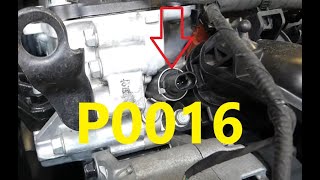

We Have This Part in Stock


The information in this article is provided for general reference and educational purposes only. Vehicle specifications, procedures, and part compatibility can vary by production date, trim level, and region. Always consult your vehicle's factory service manual and verify part numbers before purchasing or performing repairs. Safety-critical components such as airbags, seat belts, and braking systems should be installed by a qualified professional.
- Ford ESCAPE:
- 🎬 Helpful Videos
- 🛍️ Shop This Part
- What's Unique About the 2015-2021 Ford ESCAPE
- Diagnostic Flowchart
- Symptoms You May Notice
- Most Likely Causes
- Rare But Worth Checking
- Diagnosis Steps
- Parts You'll Likely Need
- Related Codes That Often Appear With This One
- Technical Service Bulletins (TSBs) & Recalls
- Platform-Specific Known Issues
- Mechanic-Grade Diagnostic Values
- Scan Tool Commands That Help
- Wiring & Ground Locations
- Real Owner Repair Stories
- OEM Part Supersession History
- Model Year Variations Within This Range
- 🎟️ Get 5% Off