

P0016 on 2016-2017 Dodge Charger: Crankshaft/Camshaft Timing Causes and Fixes
P0016 on a 2016-2017 Dodge Charger indicates a timing misalignment between the crankshaft and the Bank 1 intake camshaft. The most common causes are a faulty camshaft or crankshaft position sensor, a failing VVT solenoid, or low/dirty engine oil. On 6.4L SRT models, a specific TSB points directly to the VVT solenoid or phaser. For 3.6L models, this code can be an early indicator of a stretched timing chain.
- P0016 is a serious code that should be addressed promptly to avoid poor performance and potential engine damage.
- Always check your engine oil level and condition first; low or dirty oil is a simple but common cause.
- On Hemi engines, particularly the 6.4L, the VVT solenoid is a primary suspect, as confirmed by a manufacturer TSB.
- Faulty camshaft and crankshaft position sensors are also very common culprits and are relatively inexpensive to replace.
- Do not assume the timing chain has failed without first ruling out sensors, solenoids, and oil issues, as a timing chain replacement is a much larger and more expensive job.
What's Unique About the 2016-2017 Dodge CHARGER
The Dodge Charger's Pentastar (3.6L) and Hemi (5.7L, 6.4L) engines rely heavily on a Variable Valve Timing (VVT) system to balance power and efficiency. This system uses engine oil pressure, controlled by electronic solenoids, to adjust camshaft timing. P0016 codes on these engines are frequently linked to issues within this VVT system. A notable Technical Service Bulletin (TSB #18-075-17) was issued for 2016 6.4L models, which involves a PCM software update to address false or intermittent P0016 codes, among others. Another TSB (#9003648) for low-mileage 2016-2017 6.4L SRT models specifically points to the VVT solenoid or the camshaft phaser itself as the likely culprit. On the 3.6L Pentastar, P0016 is often a strong indicator of stretched timing chains, a known issue for that engine family.
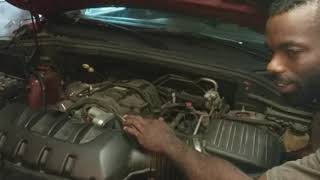
🎬 Watch: Fixing P0016 and traction control lights on the 3.6L Pentastar.Diagnostic Flowchart
Tap your situation to follow the diagnostic path that matches what you're seeing on this vehicle.
Symptoms You May Notice
- Check Engine Light is on
- Engine runs rough or idles poorly
- Engine stalls or hesitates during acceleration
- Reduced engine power or vehicle is in 'limp mode'
- Rattling noise from the front of the engine, especially on startup
- Hard starting (engine cranks for a long time before firing)
- Traction control light may also illuminate
- Engine RPMs fluctuate or seem to 'bog down' at higher RPMs
- Replacing the camshaft position sensor when the actual fault is with the crankshaft position sensor, or vice-versa.
- Replacing timing components (a major repair) when the root cause is simply low/dirty engine oil or a faulty VVT solenoid.
- Replacing sensors when the underlying issue is a stretched timing chain, particularly on the 3.6L V6.
Most Likely Causes
- Faulty Camshaft Position Sensor (Bank 1) 🔴 High Probability Sensors are a common failure point on many modern vehicles and can send incorrect data to the ECM, mimicking a real timing issue. It's a relatively inexpensive and easy part to replace, making it a common first step in diagnosis.
How to confirm: Inspect the sensor and its wiring for damage. Use a multimeter to test the sensor's resistance against specifications or swap it with the Bank 2 sensor to see if the code changes to P0018 (for V-engines).
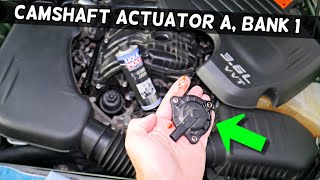
Typical fix: Replace the Bank 1 intake camshaft position sensor. 🎬 See this walkthrough for replacing the camshaft position sensors.
Est. part cost: $20-$60 - Faulty Crankshaft Position Sensor 🔴 High Probability As cited in TSB #18-075-17, the crankshaft position sensor circuit can be a direct cause of P0016. Its failure prevents the ECM from accurately tracking the crankshaft's position, making correlation impossible. Some owners have reported that aftermarket sensors can cause issues, recommending an OEM Mopar part for reliability.
How to confirm: Inspect wiring for damage. Test the sensor's resistance and voltage output with a multimeter according to the service manual. An oscilloscope can be used to compare the crank and cam signals to a known-good waveform to confirm a timing lag caused by a faulty sensor.
Typical fix: Replace the crankshaft position sensor.
Est. part cost: $25-$70 - Faulty VVT (Variable Valve Timing) Solenoid / Oil Control Valve 🔴 High Probability TSB #9003648 specifically identifies the VVT solenoid as a primary suspect on 6.4L engines. These solenoids can get clogged with oil sludge or the internal filter screens can collapse, preventing proper camshaft adjustment. This is a very common failure on the 5.7L and 6.4L Hemi engines.
How to confirm: Check for sludge on the solenoid's screens upon removal. Use a capable scan tool to command the solenoid on and off while listening for a clicking sound. On Hemi engines, the solenoid is located under the intake manifold, making access more difficult.
Typical fix: Clean or replace the VVT solenoid for Bank 1. Due to the labor involved in accessing it on Hemi engines, replacement is often recommended over cleaning. 🎬 Watch: How to replace the VVT solenoid on a 5.7L Hemi.
Est. part cost: $40-$100 - Low or Dirty Engine Oil 🟡 Medium Probability The VVT system is hydraulic and relies on clean oil at the correct pressure. Old, dirty, or low oil can't operate the cam phasers correctly, leading to a timing correlation error. This is often the first and cheapest thing to check.
How to confirm: Check the oil level on the dipstick and inspect its condition. If it's low or appears dark and sludgy, it should be changed. Many forum users and mechanics recommend this as the absolute first step.
Typical fix: Perform an oil and filter change using the manufacturer-specified oil viscosity (e.g., 5W-20 for most 5.7L Hemis).
Est. part cost: $50-$100 - Stretched Timing Chain or Worn Timing Components ⚪ Low Probability While less common on the Hemi V8s at lower mileage, this is a known issue on higher-mileage 3.6L Pentastar V6 engines. The chains can stretch over time, causing slack that the tensioners cannot compensate for, leading to a true mechanical timing error. Broken plastic timing chain guides can also cause this code on Hemi engines.
How to confirm: This is an involved diagnosis. It often starts with a rattling noise from the front of the engine. Confirmation requires removing the timing cover for a visual inspection of chain slack and guide condition. On the 3.6L, slack can sometimes be observed by removing the valve covers.
Typical fix: Replace the timing chains, guides, and tensioners. This is a labor-intensive job.
Est. part cost: $300-$800
Rare But Worth Checking
- Damaged Camshaft Phaser/Sprocket: Mentioned in TSB #9003648 for the 6.4L engine, this is the mechanical component that the VVT solenoid controls. It can fail internally or the locking pin can break, but this is less common than a solenoid or sensor failure.
- Damaged Tone Ring: The reluctor wheel (tone ring) on the crankshaft or camshaft that the sensors read can become damaged or slip, causing incorrect readings. This is rare but can happen and requires significant disassembly to inspect.
- PCM Software Issue: TSB #18-075-17 for 2016 6.4L models indicates that a PCM software update can resolve intermittent or false P0016 codes, suggesting the logic itself can be a fault point.
Diagnosis Steps
- Check the engine oil level and condition. If low or dirty, perform an oil change with the correct viscosity oil and a new filter, clear the codes, and see if the problem returns.
- Scan for any other trouble codes. Codes like P000B, P0335, or others can provide valuable clues.
- Inspect the wiring and connectors for the camshaft and crankshaft position sensors for any signs of damage, corrosion, or looseness.
- Using a scan tool, observe the live data for desired vs. actual camshaft position. A large, persistent discrepancy points to a VVT system or mechanical timing issue.
- Test the VVT solenoid. Use the scan tool's actuator test to command the solenoid on/off while listening for a click. If no click is heard, or if the test fails, the solenoid is likely faulty. On Hemi engines, this requires accessing the solenoid under the intake manifold.
- Test the camshaft and crankshaft position sensors. This can be done by checking their resistance with a multimeter or by swapping the Bank 1 cam sensor with the Bank 2 sensor (if applicable) to see if the code follows.
- If sensors and solenoids test good, use an oscilloscope to compare the cam and crank sensor waveforms against a known-good pattern. A shifted waveform can confirm a mechanical timing issue like a stretched chain.
- If a mechanical fault is suspected, the final step is a physical inspection of the timing chain, guides, and tensioners, which requires removing the engine's timing cover.
Parts You'll Likely Need
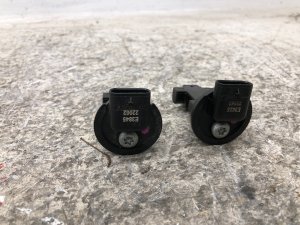
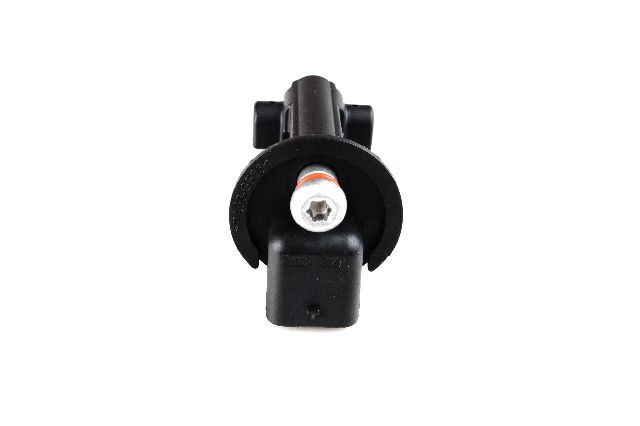
- Camshaft Position Sensor (Bank 1 Intake)
(OEM #05149141AF (for 3.6L V6))— This sensor is a frequent cause of P0016, as it directly measures the position of the camshaft in question. It's a common electronic failure point.
Trusted brands: Mopar, NTK, Standard Motor Products (SMP)
OEM price range: $40-$70
Aftermarket price range: $20-$50 - Crankshaft Position Sensor
(OEM #68477925AB (supercedes 68140678AC, 68140678AB for V8s))— This sensor provides the baseline timing signal that the camshaft signal is compared against. It is cited as a potential cause in TSB #18-075-17.
Trusted brands: Mopar, Bosch, Denso
OEM price range: $50-$80
Aftermarket price range: $25-$70 - VVT Solenoid (Oil Control Valve)
(OEM #5048045AB (for 5.7L/6.4L V8))— This solenoid controls oil flow to the cam phaser. It's a very common failure point on Hemi engines, often getting clogged with sludge, and is directly implicated by TSB #9003648.
Trusted brands: Mopar, Dorman
OEM price range: $60-$110
Aftermarket price range: $40-$80
Related Codes That Often Appear With This One
- P000B — This code for 'Bank 1 Camshaft 2 Position Slow Response' is often seen with P0016, as documented in TSBs #18-075-17 and #9003648. Both point to a problem with the VVT system's ability to adjust cam timing on Bank 1, frequently caused by a faulty VVT solenoid.
- P0335 / P0339 — These codes relate to the Crankshaft Position Sensor Circuit. TSB #18-075-17 lists them alongside P0016, indicating the ECM is having trouble getting a reliable signal from the crankshaft sensor, which is essential for cam/crank correlation.
Technical Service Bulletins (TSBs) & Recalls
- 1807517: Mentions P0016 in conjunction with crankshaft position sensor codes (P0335, P0339) and slow cam response (P000B).
- 9003648: Specifically addresses P0016 on low-mileage 2016-2017 6.4L SRT engines, pointing to the VVT solenoid or phaser as the cause.
Platform-Specific Known Issues
- This engine is known for timing chain stretch. P0016 is a very common code indicating this issue. Diagnosis often involves removing valve covers to check for chain slack before committing to the full timing job.
- The VVT solenoid (Oil Control Valve) is a frequent failure point. It is located inconveniently under the intake manifold. The filter screens on the solenoid are known to degrade and get ingested by the solenoid, causing it to jam.
- TSB #18-075-17 specifically calls for a PCM software update on 2016 models to improve diagnostic logic and prevent false P0016 codes. TSB #9003648 targets low-mileage 2016-2017 models, pointing directly to a potentially faulty VVT solenoid or cam phaser from the factory.
Mechanic-Grade Diagnostic Values
- VVT Solenoid / Oil Control Valve Coil Resistance — expected: 8 to 12 Ohms. Failure: A reading outside this range, or an open circuit (infinite resistance), indicates a faulty solenoid coil.
Scan Tool Commands That Help
- wiTECH or other professional scan tool: VVT Solenoid Actuator Test — To functionally test the VVT solenoid. The tool commands the solenoid to cycle on and off, and the technician listens for an audible click from the engine, confirming the solenoid is mechanically responding to the electrical command.
- wiTECH or other professional scan tool: Cam Phaser Cleaning Procedure — This is a service function mentioned for Pentastar engines that may be available. It attempts to clear debris from the oil passages within the cam phaser by cycling it through its full range of motion, which can sometimes resolve timing response issues without replacing parts.
Wiring & Ground Locations
- VVT Solenoid Fuses — In the under-hood fuse box, located on the passenger side of the engine bay.. The VVT system is electronically controlled. Power is supplied through fuses. Specifically, fuses F31, F34, F35, and F37 should be checked for continuity.
- ASD (Auto Shutdown) Relay — In the under-hood fuse box, typically position 65.. The ASD relay supplies power to the VVT solenoids and other critical engine components. A faulty relay can cut power and cause various timing and running issues.
- G901a — Located at the left front of the engine compartment.. This is a primary engine compartment ground point. A poor ground here can cause erratic behavior from various engine sensors, including the camshaft and crankshaft position sensors, leading to false correlation codes.
- Camshaft Position Sensor Connector — Connects directly to the camshaft position sensor, typically on the front of the cylinder head for Bank 1 (passenger side).. The 3-wire connector and its pigtail are a potential failure point. Damage or corrosion on the terminals can disrupt the signal from the sensor to the PCM, directly causing a P0016 code.
Real Owner Repair Stories
- YouTube user 'THE MOOSE'S WRENCH' (2011 Dodge Ram 1500 with 5.7L Hemi (similar powertrain)) — P0016 code, rattling noise from the timing chain area.
❌ Tried (didn't work) Testing the camshaft position sensor, which was found to be working correctly.
✅ What actually fixed it The timing chain guide was found to be broken into pieces. Replacing the timing chain and guides resolved the code. Chunks of the broken plastic guide were later found in the oil pan. - YouTube user 'Fx It' (Dodge vehicle with 3.6L Pentastar V6 at 177,000 miles) — P0016 code, traction control light on, reduced engine power.
❌ Tried (didn't work) Initially suspecting sensors or oil issues.
✅ What actually fixed it The timing chains had stretched significantly. This was confirmed by removing the valve covers and observing that the hydraulic tensioner was fully extended and could no longer keep the chain tight, causing slack and the timing correlation error. Replacing the timing chains, guides, and tensioners was the required fix. - YouTube user 'Parts shooter' (2011 Dodge Durango with 5.7L Hemi (similar powertrain)) — P0016 and P000B, stalling, hesitation.
❌ Tried (didn't work) An oil change provided a temporary fix, but the codes and symptoms returned.
✅ What actually fixed it The issue was resolved by replacing the VVT solenoid (oil control valve), which is located under the intake manifold on the Hemi engine.
"I Checked Everything" — The Actual Cause
- In cases involving the 5.7L Hemi, diagnostics on the cam and crank sensors may show they are functioning correctly, leading a technician to believe there is no issue. However, a rattling noise can point to a hidden mechanical failure. The actual cause has been documented as a broken plastic timing chain guide, which allows the chain to slap and creates a real, but intermittent, timing misalignment that sets the P0016 code. The root cause is only found after removing the timing cover for visual inspection.
When the Usual Fixes Don't Work
- While faulty sensors are a common cause, multiple owner accounts confirm that on both the 3.6L V6 and 5.7L/6.4L V8 engines, P0016 is frequently a symptom of a deeper mechanical issue. On a high-mileage 3.6L Pentastar, replacing sensors will likely not fix a code caused by stretched timing chains. Similarly, on a 5.7L Hemi, a rattling noise accompanying the code strongly suggests a broken timing chain guide, and replacing the cam sensor will not resolve the problem.
OEM Part Supersession History
5149141AF→05149141AF— Part number consolidation/update.
Heads up: These part numbers are generally interchangeable for the 3.6L V6 engine. The '0' prefix is often used in Mopar's system but refers to the same part.
Model Year Variations Within This Range
- 2016: For the 6.4L V8 engine, TSB #18-075-17 notes that a Powertrain Control Module (PCM) software update is available to address intermittent or false P0016 codes. This suggests the diagnostic logic was revised and may be overly sensitive on 2016 models compared to 2017 models which would have later software.
Helpful Videos
Used OEM Parts in Stock
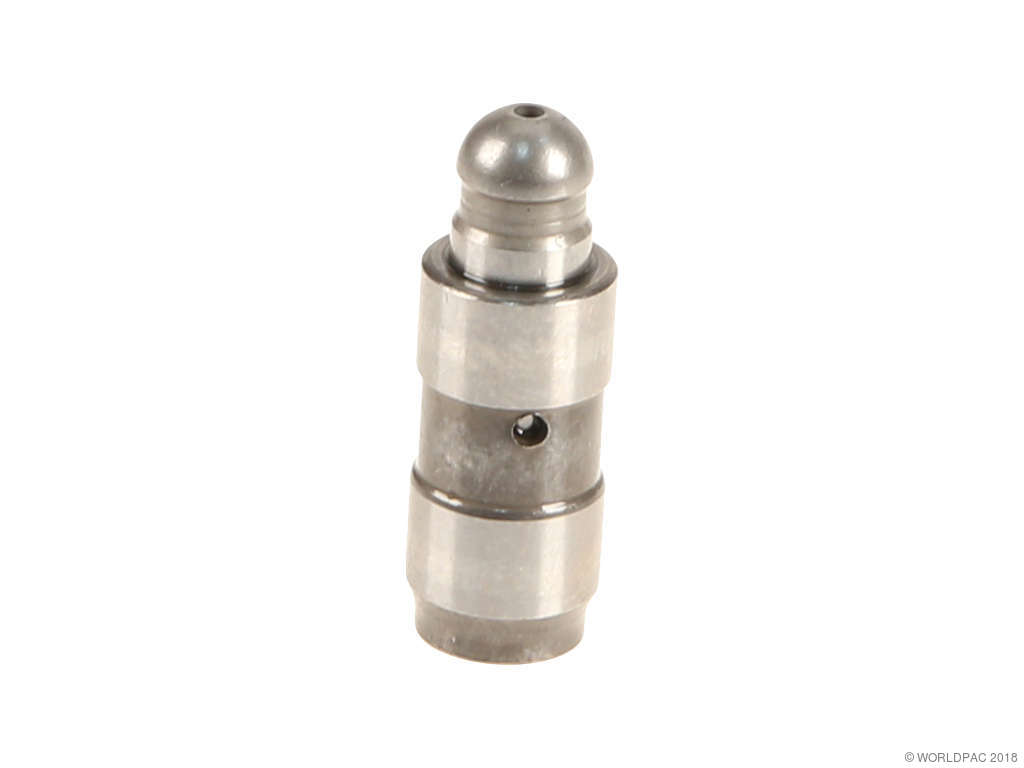
New Aftermarket Parts Available



The information in this article is provided for general reference and educational purposes only. Vehicle specifications, procedures, and part compatibility can vary by production date, trim level, and region. Always consult your vehicle's factory service manual and verify part numbers before purchasing or performing repairs. Safety-critical components such as airbags, seat belts, and braking systems should be installed by a qualified professional.
- Dodge CHARGER:
- 🎬 Helpful Videos
- 🛍️ Shop This Part
- What's Unique About the 2016-2017 Dodge CHARGER
- Diagnostic Flowchart
- Symptoms You May Notice
- Most Likely Causes
- Rare But Worth Checking
- Diagnosis Steps
- Parts You'll Likely Need
- Related Codes That Often Appear With This One
- Technical Service Bulletins (TSBs) & Recalls
- Platform-Specific Known Issues
- Mechanic-Grade Diagnostic Values
- Scan Tool Commands That Help
- Wiring & Ground Locations
- Real Owner Repair Stories
- "I Checked Everything" — The Actual Cause
- When the Usual Fixes Don't Work
- OEM Part Supersession History
- Model Year Variations Within This Range
- 🎟️ Get 5% Off