

P0016 on 2016 Dodge Challenger: Crank/Cam Timing Misalignment Causes and Fixes
On a 2016 Dodge Challenger, P0016 indicates a timing misalignment between the crankshaft and camshaft. For 6.4L SRT models, this often points to a faulty VVT solenoid or phaser, per a manufacturer TSB. For all engines, common causes also include low/dirty oil, a stretched timing chain, or bad sensors. On 5.7L and 6.4L HEMI engines, the VVT solenoid is a frequent culprit, often found with damaged or missing mesh screens.
- P0016 is a serious code that should be addressed promptly to avoid engine damage.
- Always check the engine oil level and condition first; it's the easiest and cheapest potential fix.
- For 2016 Challenger SRT 6.4L models, a faulty VVT solenoid or phaser is a known issue, even at low mileage, according to a manufacturer TSB.
- The repair can range from a simple, inexpensive sensor or oil change to a very expensive and labor-intensive timing chain replacement.
- This code is often accompanied by P000B, strongly pointing the diagnosis towards the Variable Valve Timing (VVT) system.
What's Unique About the 2016-2016 Dodge CHALLENGER
For the 2016 Dodge Challenger, this code has a very specific meaning for low-mileage 6.4L SRT models. A Technical Service Bulletin (TSB #9003648) directly addresses P0016 on these vehicles, pointing technicians toward a potentially faulty Variable Valve Timing (VVT) solenoid or phaser, suggesting a known issue with these parts from the factory. For the 5.7L and 6.4L HEMI engines, the VVT solenoid (also called an Oil Control Valve) is located in the valley of the engine, underneath the intake manifold, making replacement more involved than a simple sensor swap. On the 3.6L Pentastar, P0016 is very commonly associated with stretched timing chains, even at mileages under 100,000. 🎬 Watch: Fixing P0016 and traction control issues on 3.6L engines. In some cases on the 3.6L, a P0016 code can be a false flag triggered by failing rocker arms, which cause inconsistent valve lift and mimic a timing correlation error.
Diagnostic Flowchart
Tap your situation to follow the diagnostic path that matches what you're seeing on this vehicle.
Symptoms You May Notice
- Check Engine Light is on
- Rough or erratic idle
- Engine stalls or is hard to start
- Reduced engine power and sluggish acceleration
- Rattling noise from the front of the engine, near the timing cover, especially on startup.
- Decreased fuel economy
- Traction control light may illuminate simultaneously, as the engine's fault can put the vehicle into a limp mode.
- Replacing the camshaft or crankshaft position sensors without first checking the engine oil level and condition.
- Replacing sensors when the root cause is a mechanical timing issue like a stretched chain or a faulty VVT solenoid.
- Assuming a timing chain is bad on a HEMI engine without first inspecting the VVT solenoid under the intake, which is a more common and less expensive failure point.
- On 3.6L engines, replacing timing components when the actual cause is worn rocker arms creating a false correlation error.
Most Likely Causes
- Low or Dirty Engine Oil 🔴 High Probability The VVT system, which adjusts cam timing, is hydraulically operated by engine oil pressure. Incorrect oil level, using the wrong viscosity (e.g., not using 0W-40 for the 6.4L or 5W-20 for the 5.7L), or sludge buildup can restrict oil flow, preventing the cam phasers from adjusting correctly.
How to confirm: Check the engine oil dipstick for proper level and inspect the oil's condition. If it's dark, gritty, or below the 'add' line, this is a likely contributor. This should always be the first check.
Typical fix: Perform an oil and filter change using the manufacturer-specified grade of oil (e.g., Pennzoil Ultra Platinum Synthetic is often recommended). Clear codes and see if P0016 returns.
Est. part cost: $50-$120 for oil and filter - Faulty Variable Valve Timing (VVT) Solenoid / Oil Control Valve (OCV) 🔴 High Probability TSB #9003648 specifically calls out the VVT solenoid as a primary suspect for P0016 on 2016 6.4L SRT models. On both 5.7L and 6.4L HEMIs, these solenoids are known to fail. A common failure mode is the mesh screens on the solenoid breaking or disintegrating, which can cause the solenoid to stick or send debris into oil passages.
How to confirm: A bidirectional scan tool can command the solenoid to activate; a clicking sound indicates it's working mechanically. The solenoid is located under the intake manifold on HEMI engines and must be removed for visual inspection of the screens.
Typical fix: Replace the VVT solenoid for Bank 1. On HEMI engines, this requires removing the intake manifold. It is a common DIY repair for mechanically inclined owners.
Est. part cost: $50-$150 - Stretched Timing Chain 🟡 Medium Probability Over time, timing chains can stretch. This is a particularly well-documented issue on the 3.6L Pentastar V6, where chain stretch can cause P0016 even before 100,000 miles. On HEMI engines, it's more common at higher mileage. The slack causes the cam/crank correlation to fall out of the acceptable range.
How to confirm: This requires physical inspection by removing the timing cover to check for chain slack and see if the tensioner is fully extended. An oscilloscope can also be used to compare cam and crank sensor patterns against a known-good waveform, which is the definitive non-invasive method.
Typical fix: Replace the timing chain, tensioners, and guides. It is highly recommended to replace the cam phasers and water pump at the same time.
Est. part cost: $200-$600 for a kit - Failed Camshaft Phaser 🟡 Medium Probability TSB #9003648 also lists the VVT phaser as a potential cause on 6.4L engines. These are mechanical gears on the end of the camshafts that can get stuck due to oil sludge or internal failure of the locking pin.
How to confirm: Diagnosis is difficult without ruling out the solenoid and oil issues first. Often diagnosed during a timing chain inspection. A scan tool may show the actual cam angle deviating significantly from the desired angle.
Typical fix: Replace the Bank 1 intake camshaft phaser, typically done during a timing chain service.
Est. part cost: $100-$250 - Faulty Crankshaft or Camshaft Position Sensor ⚪ Low Probability While less common than mechanical or hydraulic issues, a sensor can fail and send incorrect data to the ECM. TSB #1807517 lists P0016 with crankshaft sensor codes (P0335, P0339), indicating a possible link. Owners often replace these first, but they are less frequently the root cause compared to the VVT solenoid or timing chain.
How to confirm: Use a multimeter to check the sensor's resistance or a scope to view its live signal pattern. Swapping the Bank 1 and Bank 2 cam sensors (if applicable) to see if the code follows to the other bank (e.g., P0017) is a simple diagnostic trick.
Typical fix: Replace the faulty sensor (crankshaft or Bank 1 camshaft).
Est. part cost: $30-$80
Rare But Worth Checking
- Damaged Tone Ring: The reluctor wheel (tone ring) on the crankshaft or camshaft, which the sensor reads, can become damaged, bent, or slip, causing incorrect readings even with a good sensor.
- Worn Timing Chain Tensioner or Guides: Failed plastic guides or a weak hydraulic tensioner can cause the timing chain to become slack, leading to timing correlation errors. A worn guide was found to be the cause in one documented 5.7L HEMI repair.
- Wiring Issues: Damaged, corroded, or shorted wiring in the harness for the cam or crank sensors can mimic a sensor failure. A wiggle test on the harness while monitoring the sensor signal can help identify intermittent connections.
- Failing Rocker Arms (3.6L Pentastar): On the 3.6L V6, worn or seized rocker arm bearings can cause a ticking noise and improper valve lift. This mechanical inconsistency can be misinterpreted by the PCM, leading to a false P0016 code even when the timing chain and phasers are perfectly fine.
Diagnosis Steps
- Check the engine oil level and condition. If low, dirty, or the wrong viscosity, perform an oil change with the correct spec oil (e.g., 0W-40 for 6.4L, 5W-20 for 5.7L) and filter. Clear the code and see if it returns. This is the cheapest and easiest first step.
- Use a scanner to check for any other accompanying trouble codes, paying close attention to P000B, P0335, or P0340.
- Inspect the wiring and connectors for the crankshaft position sensor, Bank 1 camshaft position sensor, and the Bank 1 VVT solenoid for any damage or corrosion.
- Use a bidirectional scan tool to command the Bank 1 VVT solenoid on and off. Listen for an audible click. If there's no click, or if the engine RPM does not change, the solenoid or its circuit is suspect.
- For 5.7L/6.4L HEMI engines, if the VVT solenoid is suspected, remove the intake manifold to access and replace it. Inspect the old solenoid's screens for tears or missing pieces, which is a very common finding.
- If VVT components and sensors check out, the next step is to suspect a mechanical timing issue. The most definitive test is to use a lab scope to compare the live waveform patterns of the crankshaft and Bank 1 camshaft sensors against a known-good reference pattern. A deviation confirms a timing misalignment.
- If a mechanical issue is confirmed, perform a physical inspection by removing the timing cover to check for timing chain stretch, broken guides, and correct timing mark alignment.
Parts You'll Likely Need
- Variable Valve Timing (VVT) Solenoid
(OEM #53022338AB (For 5.7L/6.4L HEMI))— A primary cause, especially on the 5.7L and 6.4L engines as noted in TSB #9003648 and multiple owner forums. It controls oil flow to the phaser and is prone to clogging or screen failure.
Trusted brands: Mopar, Dorman
OEM price range: $70-$150
Aftermarket price range: $40-$90 - Timing Chain Kit — If the chain is stretched or the guides/tensioners have failed, a complete kit is the correct repair. This is a very common cause of P0016 on the 3.6L Pentastar engine.
Trusted brands: Mopar, Cloyes, Melling
OEM price range: $300-$600
Aftermarket price range: $150-$400 - Crankshaft Position Sensor
(OEM #05149167AF (For 3.6L V6) / 68477925AB (For 5.7L/6.4L V8))— A possible electrical cause for the correlation issue, as mentioned in TSB #1807517. It's often replaced as a precaution but is less likely to be the root cause than VVT or timing components.
Trusted brands: Mopar, Bosch, NTK, Standard Motor Products
OEM price range: $50-$100
Aftermarket price range: $25-$70 - Camshaft Position Sensor
(OEM #05149141AF (For 3.6L V6) / 5035543AC (For 5.7L/6.4L V8))— The sensor for Bank 1 could be faulty, sending incorrect data that conflicts with the crankshaft sensor's signal. Easy to replace and a common diagnostic step.
Trusted brands: Mopar, Bosch, NTK
OEM price range: $35-$90
Aftermarket price range: $20-$60
Related Codes That Often Appear With This One
- P000B — This code for 'Bank 1 Camshaft Position Slow Response' is explicitly mentioned alongside P0016 in both TSB #1807517 and #9003648, indicating a direct relationship with the VVT system's performance, often pointing to the VVT solenoid or oil pressure issues.
- P0335 / P0339 — These codes relate to the crankshaft position sensor circuit. TSB #1807517 groups them with P0016, suggesting a shared wiring issue or a failing crankshaft sensor could be the root cause.
- P0340 — This code indicates a fault in the Bank 1 camshaft position sensor circuit. It can appear with P0016 if the sensor itself has failed or has an intermittent wiring connection.
Technical Service Bulletins (TSBs) & Recalls
- TSB #9003648: Specifically for 2016-2017 6.4L SRT models with low mileage, this bulletin points to the VVT solenoid or VVT phaser as the likely cause for P0016 or P000B.
- TSB #1807517: Groups P0016 with P000B, P0335, and P0339, suggesting a potential common electrical fault or a failing crankshaft position sensor as a possible cause.
Platform-Specific Known Issues
- As per TSB #9003648, low-mileage models are prone to VVT solenoid or phaser failure causing P0016. The VVT solenoid, located under the intake manifold, is a very common failure point, often with damaged screens.
- Similar to the 6.4L, the VVT solenoid under the intake is a frequent cause of P0016 and P000B. Owners often find the mesh screens on the solenoid are broken or completely missing.
- This engine has a known tendency for the timing chains to stretch prematurely. A stretched chain is a very common cause for P0016 on this engine, often requiring a full timing chain, guide, and tensioner replacement.
Mechanic-Grade Diagnostic Values
- Crankshaft Position Sensor (CKP) 5-Volt Supply — expected: 4.7 - 5.1 Volts (Key On, Engine Off). Failure: Voltage outside this range points to a wiring or PCM supply issue.
- Crankshaft Position Sensor (CKP) Ground Circuit Resistance — expected: Below 5.0 Ohms to chassis ground. Failure: Resistance higher than 5.0 Ohms indicates a poor ground connection, which can cause an erratic signal.
- Crankshaft Position Sensor (CKP) Resistance — expected: Typically 200-900 ohms (test when hot and cold). Failure: A reading outside this range, or a significant change when temperature changes, suggests an internal sensor fault.
Scan Tool Commands That Help
- wiTECH (Dealer Tool): Cam/Crank Relearn — After replacing a camshaft sensor, crankshaft sensor, or timing components, this function must be performed. It synchronizes the learned relationship between the cam and crank sensors with the PCM. Failure to do so can cause the P0016 code to persist even with new parts.
Wiring & Ground Locations
- Crankshaft Position Sensor Connector (3.6L V6) — On the passenger side rear of the engine block, near the transmission bell housing.. This 3-pin connector is the primary test point for the crankshaft signal. Pin 1 is the 5V Supply (F855 circuit), Pin 2 is the CKP Signal, and Pin 3 is the Sensor Ground (K900 circuit).
- Crankshaft Position Sensor Connector (5.7L/6.4L V8) — On the passenger side of the engine block, located behind the starter motor.. Access requires removing the starter. This 3-pin connector is the main test point. Pinout is typically: (F855) 5-volt Supply, (K24) CKP Signal, and (K925) Sensor Ground.
Real Owner Repair Stories
- YouTube user 'The Howards Garage' (Vehicle with 3.6L Pentastar engine, 177,000 miles) — Persistent P0016 code, check engine light, and traction control light on with reduced engine power.
❌ Tried (didn't work) Clearing the code multiple times.
✅ What actually fixed it The timing chains had stretched so much over time that the tensioners were maxed out and could no longer keep proper tension, causing the Bank 1 sensor to read an out-of-time condition. Replacing the timing chains resolved the P0016 code.
OEM Part Supersession History
53022298AA→53022298AB— The new part features an improved internal O-ring for easier assembly and reduced insertion force, suggesting an enhancement for better sealing and fitment.
Heads up: The parts are interchangeable, with the 'AB' version being the updated replacement for 'AA'.
Helpful Videos
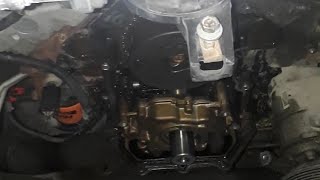
Used OEM Parts in Stock
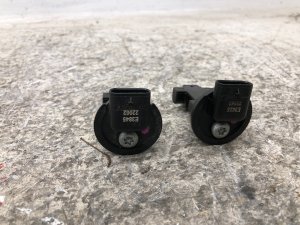
New Aftermarket Parts Available
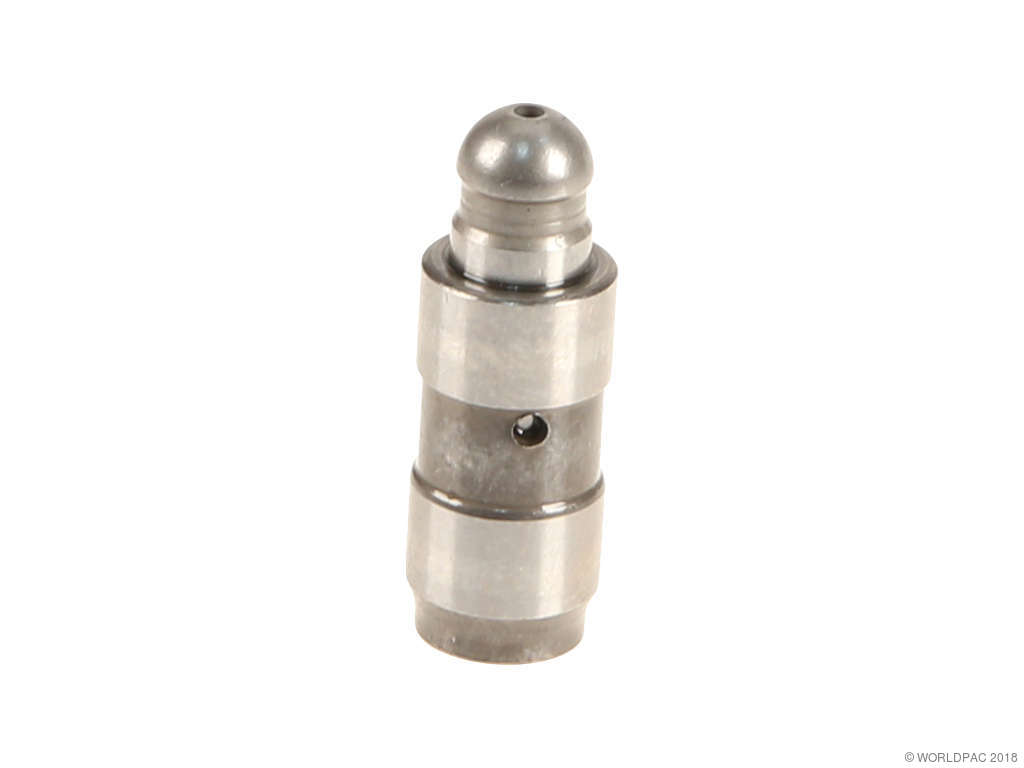



The information in this article is provided for general reference and educational purposes only. Vehicle specifications, procedures, and part compatibility can vary by production date, trim level, and region. Always consult your vehicle's factory service manual and verify part numbers before purchasing or performing repairs. Safety-critical components such as airbags, seat belts, and braking systems should be installed by a qualified professional.
- Dodge CHALLENGER:
- 🎬 Helpful Videos
- 🛍️ Shop This Part
- What's Unique About the 2016-2016 Dodge CHALLENGER
- Diagnostic Flowchart
- Symptoms You May Notice
- Most Likely Causes
- Rare But Worth Checking
- Diagnosis Steps
- Parts You'll Likely Need
- Related Codes That Often Appear With This One
- Technical Service Bulletins (TSBs) & Recalls
- Platform-Specific Known Issues
- Mechanic-Grade Diagnostic Values
- Scan Tool Commands That Help
- Wiring & Ground Locations
- Real Owner Repair Stories
- OEM Part Supersession History
- 🎟️ Get 5% Off