

P0016 on 2015 Chevrolet Malibu: Crank/Cam Correlation Causes & Fixes
On a 2015 Malibu, P0016 almost always indicates a stretched timing chain or a related component failure like a broken guide or failed tensioner. This is a serious and well-documented issue on Ecotec engines. Ignoring it risks catastrophic engine failure. Expect a repair cost of $1,000-$2,500 for a full timing chain service at a professional shop.
- P0016 on a 2015 Malibu is a serious code that almost always points to a stretched timing chain.
- Do not drive the vehicle. A timing chain failure can destroy the engine.
- Do not waste money replacing the camshaft or crankshaft sensors; they are simply reporting the mechanical fault.
- The correct repair is a full timing chain kit replacement, which is a complex job best left to a professional.
- Regular oil changes with high-quality, dexos-spec oil are critical to prolonging the life of the timing components on this engine.
What's Unique About the 2015-2015 Chevrolet MALIBU

The 2015 Malibu, equipped with 2.5L LCV or 2.0L LKW Ecotec engines, is highly susceptible to premature timing chain failure. This issue is rampant across the Ecotec family, as seen in platform mates like the Chevy Equinox and Buick Verano. The primary culprits are a stretched chain, broken plastic guides, and faulty tensioners. Oil quality is a major factor; these direct-injection engines can degrade oil faster, and low or dirty oil starves the hydraulic tensioner and VVT phasers, accelerating wear. In one documented repair, a mechanic found the oil feed nozzle for the tensioner completely clogged with sludge.
Diagnostic Flowchart

Tap your situation to follow the diagnostic path that matches what you're seeing on this vehicle.
Symptoms You May Notice
- Check Engine Light is on
- Engine rattling or chain slap noise, especially on cold startup 🎬 Watch: Hear what a failing Ecotec timing chain sounds like. or at idle
- Rough or unstable idle, sometimes causing the car to shake
- Reduced engine power and poor acceleration
- Engine stalling, sometimes without warning, and difficulty restarting
- Difficulty starting the engine
- Burnt smell from the engine bay after stalling
- Noticeable sludge buildup visible when looking into the oil filler cap
- Replacing only the Camshaft Position Sensor or Crankshaft Position Sensor. These sensors are accurately reporting a real mechanical problem; they are very rarely the cause of a P0016 code on this vehicle.
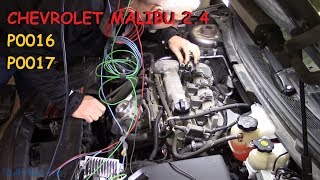
- Replacing VVT solenoids without checking base timing. While easy to access, solenoids are not the primary cause for this specific correlation code. 🎬 See a mechanic's step-by-step diagnosis of P0016 and P0017 codes.
Most Likely Causes

- Stretched Timing Chain 🔴 High Probability Ecotec engines have a well-documented history of premature timing chain wear. The chain itself can stretch over time, causing slack that the tensioner cannot compensate for. This is the most common root cause for P0016.
How to confirm: A physical inspection is required. After removing the valve cover, check for slack in the chain between the cam sprockets. A definitive check involves removing the front timing cover to measure the tensioner plunger extension. A video repair shows a stretched chain being visibly longer when laid next to a new one.
Typical fix: Replace the timing chain, tensioners, all guides, and sprockets as a complete kit. It is also highly recommended to replace the balance shaft chain/guides and the water pump at the same time since they are located behind the same cover.
Est. part cost: $150-$400 - Failed Timing Chain Tensioner or Broken Guides 🔴 High Probability The tensioner is hydraulically operated and can fail if oil pressure is low or if it becomes clogged with sludge. The plastic timing chain guides can become brittle with age and heat cycles, breaking into pieces that fall into the oil pan and disrupt timing.
How to confirm: During a physical inspection, a broken guide will be visibly fractured. A failed tensioner may be over-extended or stuck. In many cases, a broken guide is the first component to fail, leading to the chain slack that sets the code.
Typical fix: The tensioner and guides are always replaced as part of a complete timing chain service. It's critical to retrieve all broken pieces of the old guides from the oil pan.
Est. part cost: $40-$100 (included in most kits) - Low or Dirty Engine Oil 🟡 Medium Probability The timing system is heavily reliant on clean oil with proper viscosity. The tensioner requires oil pressure to keep the chain taut, and the VVT phasers use oil pressure to adjust cam timing. Direct injection engines like the Ecotec can be harder on oil, making regular changes with full synthetic dexos1-spec oil critical.
How to confirm: Check the oil level and condition. If the oil is low, overdue for a change, or appears sludgy, it is a major contributing factor. A mechanic on YouTube noted extreme sludge buildup and a clogged tensioner oil nozzle as the direct cause of failure.
Typical fix: Perform an immediate oil and filter change with high-quality, correct-spec oil (e.g., dexos1 Gen 2 or 3). However, if P0016 is already set due to a stretched chain, an oil change alone will not fix the mechanical damage already done.
Est. part cost: $40-$70 - Faulty Camshaft Position Actuator Solenoid (VVT Solenoid) ⚪ Low Probability These solenoids can get clogged by oil debris or fail electrically. While they can cause timing-related codes, they are much more likely to set solenoid-specific codes (like P0010, P0011, P0013, P0014). It's an unlikely, but not impossible, cause for P0016 alone.
How to confirm: Use a scan tool to command the solenoid on and off while monitoring camshaft angle. A simple and effective test is to swap the intake and exhaust solenoids (they are identical on the 2.5L) and see if the code changes to P0017 (exhaust correlation). If it does, the solenoid is bad.
Typical fix: Replace the faulty solenoid. They are easily accessible on the top of the engine and secured by one bolt.
Est. part cost: $30-$60
Rare But Worth Checking
- Slipped Camshaft Reluctor Wheel: TSB #PIP4548F specifically addresses this scenario. The reluctor wheel, which the cam sensor reads, is press-fit onto the camshaft and is not keyed. It can spin, especially after an engine overheat, causing the sensor to report an incorrect position even if the chain and sprockets are perfectly timed. The TSB provides a visual inspection method: with #1 cylinder's intake valves at max lift, the reluctor should be parallel to the rocker cover gasket surface. If it has spun, the entire camshaft must be replaced.
- Slipped Crankshaft Reluctor Wheel: TSB #PIP3423P (and its successors) notes that the crankshaft reluctor wheel can also move, causing P0016 and other timing codes. The bulletin provides a specific measurement (25-26mm from a machined surface) to verify its position, which can sometimes be done with a borescope through the crank sensor hole. If it has moved, the crankshaft must be replaced.
Diagnosis Steps

- Verify the engine oil level and condition. A low level or sludgy oil is a major red flag. Perform an oil change with the correct dexos1 full synthetic oil and filter, clear codes, and see if the problem returns.
- Scan for all DTCs. The presence of P0017 alongside P0016 strongly indicates a base timing (timing chain) issue.
- Using a capable scan tool, monitor the desired vs. actual camshaft position angles for Bank 1 Intake. A significant, persistent deviation that does not correct itself points to a mechanical problem, not a solenoid.
- Test the intake camshaft position actuator solenoid. Swap the intake and exhaust solenoids and clear codes. If the code changes to P0017, the solenoid you moved is faulty. If P0016 returns, the solenoid is likely not the issue.
- Perform a physical inspection. Remove the valve cover. Check for obvious slack in the chain between the cam sprockets. Inspect the top chain guide for cracks or damage.
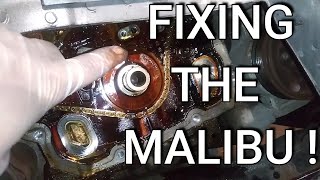
- For definitive diagnosis, remove the front timing cover. Inspect all guides for damage, especially looking for broken plastic pieces in the oil pan. Check the timing chain tensioner plunger; if it is extended more than ~15mm, the chain is considered stretched and the entire timing set must be replaced. 🎬 Watch this video for a walkthrough of the timing chain repair.
- Visually align the timing marks. On the 2.5L, the intake cam has a diamond and the exhaust has a triangle, which align with marked links on the chain. The crank sprocket also has a mark that aligns with a chain link.
- If all timing components are verified to be physically correct and the code persists, investigate a slipped reluctor wheel per TSB #PIP4548F (camshaft) or #PIP3423P (crankshaft).
Parts You'll Likely Need
- Timing Chain Kit
(OEM #12680750)— This is the most common cause of P0016. A complete kit ensures all wearable components are replaced at once. - Camshaft Position Actuator Solenoid
(OEM #12679099)— Though a less common cause for P0016, it's often replaced as a preventative measure during a timing job, or if it fails a resistance test. It is identical for intake and exhaust on the 2.5L engine. - Intake Camshaft — Required only in the rare case of a slipped reluctor wheel, as the wheel is not serviced separately from the camshaft.
Related Codes That Often Appear With This One
- P0017 — This code indicates a correlation issue with the exhaust camshaft. Since a stretched timing chain affects both camshafts, it's extremely common to see P0016 and P0017 together, which is a near-certain confirmation of a base timing problem. [NHTSA ODI #11190432, 31]
- P0014 — This code indicates the exhaust camshaft timing is over-advanced. It can appear with P0016/P0017 as the slack in the chain can cause erratic and uncontrolled camshaft movement. [NHTSA ODI #11481844]
- P0008 / P0009 — These are general engine position system performance codes that also point to a significant timing discrepancy between the crankshaft and camshafts, often caused by a stretched chain. TSB #PIP3423P groups these codes with P0016 as being caused by the same timing chain issues.
- P228D / P0089 — These are fuel pressure regulator performance codes. Severe engine timing issues can affect the high-pressure fuel pump, which is driven by a camshaft lobe on these Ecotec engines, leading to fuel pressure problems as a secondary effect. [NHTSA ODI #11219510]
Technical Service Bulletins (TSBs) & Recalls
- Bulletin #PIP4548F: Advises inspection of the camshaft reluctor wheel if P0016/P0017 codes are present on a properly timed engine, as it may have spun on the camshaft.
- Bulletin #PIP3423P: Points technicians to inspect for loose timing chains, tensioners, or a moved crankshaft reluctor wheel when codes like P0016, P0017, P0008, or P0009 are set.
Platform-Specific Known Issues
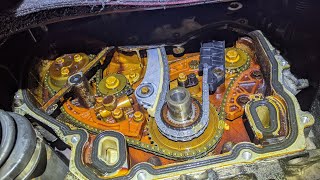
- Stretched Timing Chains & Broken Guides: As noted in TSB #PIP3423P and countless owner forums, loose timing chains from stretching and/or broken plastic guides are the primary cause for P0016. A repair video clearly shows a broken guide and a chain that has stretched enough to be visibly longer than its replacement.
- Slipped Camshaft Reluctor Wheel: TSB #PIP4548F warns that even with a properly timed engine, the code can be set if the camshaft reluctor wheel has spun on the camshaft, as it is not keyed. This is often associated with a past engine overheat. Diagnosis requires a specific visual check of the reluctor's orientation relative to the cylinder head surface. If it has moved, the camshaft must be replaced.
- Clogged Tensioner Oil Nozzle: A detailed repair video highlighted a critical failure point: the oil jet nozzle that feeds the hydraulic tensioner was completely clogged with engine sludge. This starves the tensioner of oil pressure, rendering it useless and allowing the chain to go slack. This emphasizes the importance of frequent oil changes with high-quality synthetic oil.
- Special Coverage Adjustment 14882: While not directly for the timing chain, GM issued Special Coverage 14882 for some Ecotec engines due to a plugged PCV orifice in the intake manifold causing high crankcase pressure and oil leaks. This highlights the engine family's sensitivity to sludge and pressure issues, which are contributing factors to timing chain failure.
Mechanic-Grade Diagnostic Values
- Camshaft Position Actuator (VVT) Solenoid Resistance — expected: 8 to 13 Ohms. Failure: A reading of 0 ohms (short), infinite/OL (open), or significantly outside the expected range.
- Timing Chain Tensioner Plunger Extension — expected: Less than 15mm from the tensioner body.. Failure: An extension of 15mm or more indicates a significantly stretched timing chain requiring replacement.
- Camshaft Position Sensor (CMP) Power and Ground — expected: 5V on the reference wire and a solid ground on the low reference wire with key on, engine off.. Failure: Missing voltage or a poor ground indicates a wiring or ECM problem, not a sensor failure.
- Camshaft Position Sensor (CMP) Signal — expected: A square wave signal that switches between approximately 0V and 5V as the engine is cranked.. Failure: No signal, a fixed voltage, or a distorted waveform points to a faulty sensor or a problem with the reluctor wheel.
Hidden / Shadow Codes Worth Checking
- P0016 with Symptom Byte 00 or 5A: Symptom byte '00' indicates a general or unknown failure reason. Symptom byte '5A' (Correlation) indicates the fault was set specifically because the measured correlation was out of the acceptable range. This can help differentiate from a circuit fault. (see via GM's GDS2 (Global Diagnostic System 2) software can display these symptom bytes, providing more granular detail than a standard OBD-II scanner.)
Scan Tool Commands That Help
- GDS2 (GM Dealer Tool): Engine Control Module > Control Functions > Camshaft Position Actuator — This bidirectional control allows a technician to command the intake VVT solenoid to a specific duty cycle (e.g., 0% to 100%) while observing the 'Actual Camshaft Position' on the live data screen. If the angle changes according to the command, the solenoid and phaser are likely functional, pointing the diagnosis towards base timing.
- GDS2 (GM Dealer Tool): Crankshaft Position Variation Learn — This procedure is used to calibrate the ECM to minor variations in the crankshaft reluctor wheel for misfire detection. It should be performed after replacing a crankshaft, balancer, or sensor, but it will NOT fix a P0016 code caused by a mechanical timing issue like a stretched chain.
Wiring & Ground Locations
- G103 — On the transmission stud, located below the throttle body.. This is a critical ground point for the Engine Control Module (ECM) and Transmission Control Module (TCM). A loose or corroded connection at G103 can cause erratic behavior and incorrect readings from various engine sensors, including the cam and crank sensors, potentially leading to false codes.
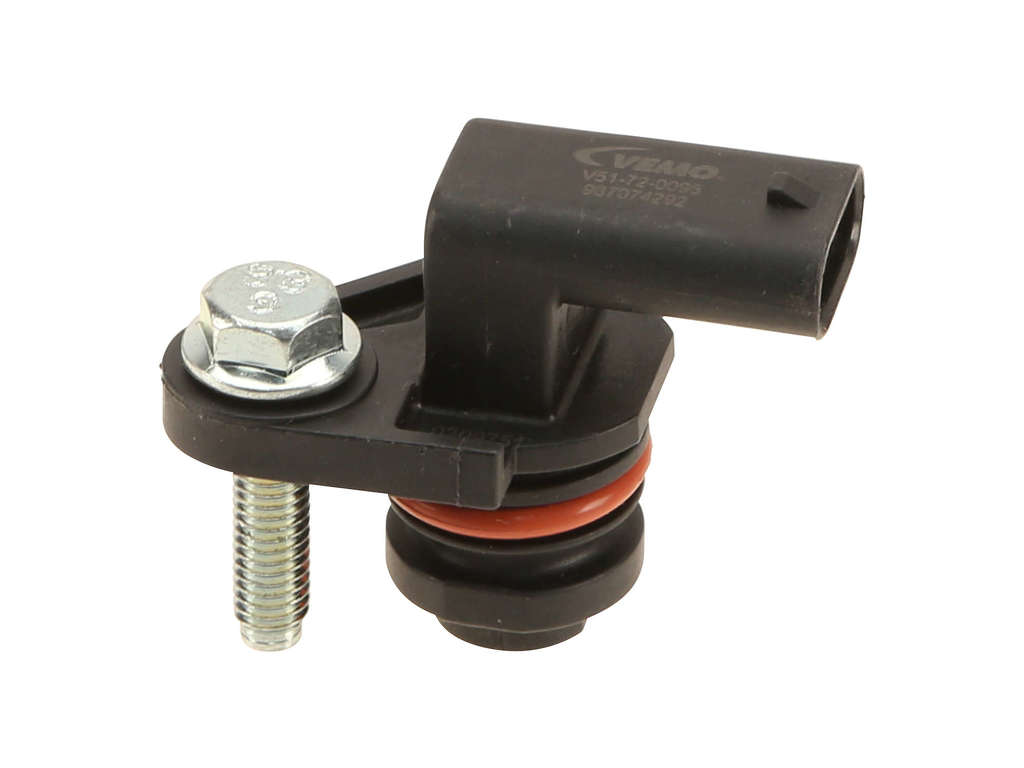
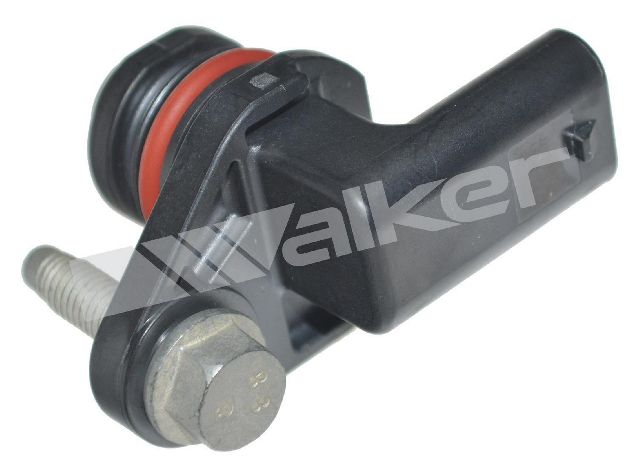
- Intake Camshaft Position Sensor Connector — Top of the engine, on the front of the cylinder head (intake side).. Allows for direct testing of the sensor's power, ground, and signal circuits. Pinout is typically: Pin 1 - 5V Reference, Pin 2 - Low Reference (Ground), Pin 3 - Signal. Verifying voltage at the connector is a key step to rule out harness damage.
- ECM Connector X1 (2.5L LCV) — At the Engine Control Module.. Specific pins on this connector are critical. For example, Pin 57 is the Camshaft Position Sensor signal. Verifying signal integrity directly at the ECM connector is a final step to rule out a wiring harness issue between the sensor and the computer.
Real Owner Repair Stories
- chevymaibuforum.com user report (2014 Chevrolet Malibu 2.5L LCV) — P0016 and P0017 codes present.
❌ Tried (didn't work) Replaced timing chain, guides, and tensioners., Replaced both VVT solenoids.
✅ What actually fixed it The codes returned after the timing chain service. The final fix was replacing the intake camshaft. The reluctor wheel on the original camshaft had spun, causing the correlation error even though the mechanical timing was correct. This aligns with GM TSB PIP4548F. - YouTube video by 'The mech a nic' (Chevrolet Malibu 2.4L Ecotec (similar design)) — P0016, P0017, rough idle, engine noise.
❌ Tried (didn't work) Owner was on a budget and opted against a full engine replacement despite heavy sludge.
✅ What actually fixed it A full timing job was performed, replacing the stretched timing chain, a visibly broken timing guide, and the tensioner. The video shows the old chain was slightly longer than the new one and a guide was shattered, confirming the common cause of failure.
When the Usual Fixes Don't Work
- While the vast majority of P0016 codes on the 2015 Malibu are due to timing chain failure, there are documented cases where a full timing chain service does not resolve the code. In these instances, the root cause was often found to be a spun intake camshaft reluctor wheel, a known issue covered by GM Technical Service Bulletin PIP4548F. This requires replacing the entire intake camshaft, as the reluctor wheel is not serviced separately. Technicians should be aware of this possibility if the code persists after a timing job.
OEM Part Supersession History
12655420→12679099— Internal improvements for durability and resistance to oil contamination.
Heads up: While the old part number will physically fit, using the updated 12679099 is highly recommended for longevity. Some aftermarket solenoids may not perform to OEM standards and can cause codes to return.
Helpful Videos
We Have This Part in Stock


The information in this article is provided for general reference and educational purposes only. Vehicle specifications, procedures, and part compatibility can vary by production date, trim level, and region. Always consult your vehicle's factory service manual and verify part numbers before purchasing or performing repairs. Safety-critical components such as airbags, seat belts, and braking systems should be installed by a qualified professional.
- Chevrolet MALIBU:
- 🎬 Helpful Videos
- 🛍️ Shop This Part
- What's Unique About the 2015-2015 Chevrolet MALIBU
- Diagnostic Flowchart
- Symptoms You May Notice
- Most Likely Causes
- Rare But Worth Checking
- Diagnosis Steps
- Parts You'll Likely Need
- Related Codes That Often Appear With This One
- Technical Service Bulletins (TSBs) & Recalls
- Platform-Specific Known Issues
- Mechanic-Grade Diagnostic Values
- Hidden / Shadow Codes Worth Checking
- Scan Tool Commands That Help
- Wiring & Ground Locations
- Real Owner Repair Stories
- When the Usual Fixes Don't Work
- OEM Part Supersession History
- 🎟️ Get 5% Off