

P0016 on 2008-2015 Chevrolet Equinox: Crank/Cam Correlation Causes and Fixes
On the 2008-2015 Equinox, especially with the 2.4L engine, P0016 almost always points to a stretched timing chain and worn components like tensioners and guides. This is a serious, non-drivable issue requiring professional repair, often costing over $1,200. The failure is frequently accelerated by excessive oil consumption, a notorious problem on 2010-2013 2.4L models, which starves the hydraulic tensioner of pressure.
- P0016 on a 2008-2015 Equinox, especially the 2.4L model, is a strong indicator of a stretched timing chain.
- Do not drive the vehicle. A timing chain failure can destroy the engine.
- Check your engine oil level immediately. Low oil, often from excessive consumption, is a major contributing factor.
- Replacing sensors or VVT solenoids is unlikely to fix the problem and is a common misdiagnosis.
- This is a complex and expensive repair that should be performed by a professional. Expect the cost to be over $1,200.
What's Unique About the 2008-2015 Chevrolet EQUINOX

The second-generation Equinox (2010-2015) is notorious for engine problems, particularly with the 2.4L Ecotec engine. These engines are prone to excessive oil consumption due to piston ring issues, which was the subject of a class-action lawsuit and GM's Special Coverage Adjustment (SCA) programs. This oil starvation accelerates the wear of timing chain components, causing the chain to stretch and the hydraulic tensioner to lose pressure, triggering correlation codes like P0016. While the 3.0L and 3.6L V6 engines can also have timing chain issues, the problem is most prevalent and well-documented on the 2.4L four-cylinder.
Diagnostic Flowchart

Tap your situation to follow the diagnostic path that matches what you're seeing on this vehicle.
Generation note: The 2008-2015 range covers the end of the first generation (2008-2009) and the majority of the second generation (2010-2015). The first generation used a 3.4L V6. The second generation introduced the 2.4L Ecotec I4 and later the 3.0L and 3.6L V6 engines. The P0016 code is most commonly associated with the 2.4L Ecotec engine in the 2010-2015 models due to its well-known oil consumption and timing chain problems. The V6 engines also had timing chain stretch issues covered under an extended warranty (Special Policy 11340C), but the 2.4L problem is more widespread.
Symptoms You May Notice
- Check Engine Light is on
- Engine runs rough or idles poorly
- Reduced engine power and acceleration, may enter 'limp mode'
- Rattling or slapping noise from the passenger side of the engine, especially on a cold startup
- Engine cranks but fails to start
- Stalling at idle
- "Service StabiliTrak" warning message may appear on the dash
- Loud popping sound from the engine followed by a no-start condition
- Replacing only the camshaft or crankshaft position sensors without verifying the mechanical timing.
- Replacing the VVT solenoids. While easy to access, this rarely solves a P0016 code, as confirmed by numerous owner experiences online.
- Replacing only the timing chain without replacing the tensioners, guides, and sprockets. Worn sprockets will quickly ruin a new chain.
Most Likely Causes

- Stretched Timing Chain and/or Worn Tensioners/Guides 🔴 High Probability The 2.4L Ecotec engine has a documented history of premature timing chain wear, often exacerbated by low oil levels from excessive oil consumption. The hydraulic tensioner relies on oil pressure; when oil is low, it allows slack, causing the chain to slap against and break the plastic guides.
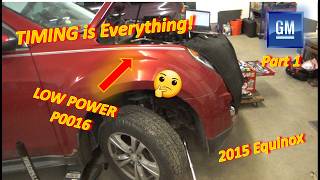
How to confirm: A physical inspection is the definitive method. This involves removing the valve cover to check for visible slack in the chain. In severe cases, pieces of the broken plastic guides can be found in the oil pan or seen after removing the timing cover. An oscilloscope can also compare cam and crank sensor waveforms to confirm a timing discrepancy without a full teardown. 🎬 Watch: Diagnosing low power and P0016 codes on the 2.4L.
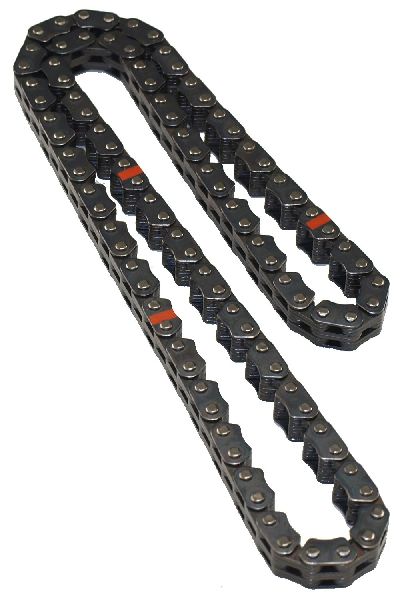
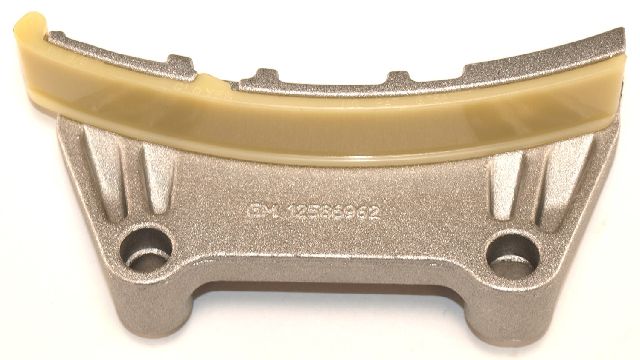
Typical fix: Replace the timing chain, tensioners, guides, and sprockets/phasers as a complete kit. Reputable aftermarket brands like Cloyes are commonly used. It is also wise to replace the balance shaft chain and its components at the same time.
Est. part cost: $150-$400 for a complete aftermarket kit (e.g., Cloyes 9-4201S) - Low or Dirty Engine Oil 🟡 Medium Probability The 2010-2013 2.4L engines are known to consume excessive oil, with many owners reporting running completely dry between changes. The timing chain tensioner is hydraulic and requires clean oil at the proper pressure to function. Low or dirty oil starves the tensioner, leading to a loose chain and accelerated wear.
How to confirm: Check the oil level on the dipstick immediately. Inspect the oil's condition for sludge or metal particles. Many forum users report finding their engine was completely dry when the P0016 code first appeared.
Typical fix: Perform an oil and filter change with the correct viscosity oil (5W-30 synthetic blend or full synthetic). However, if P0016 is already set, damage to the timing components has almost certainly occurred, and an oil change alone will not fix it.
Est. part cost: $40-$80 - Faulty Camshaft or Crankshaft Position Sensor ⚪ Low Probability
How to confirm: Sensors can be tested with a multimeter or by swapping with a known good sensor. An oscilloscope is the best tool to check the sensor's signal pattern. However, these sensors rarely fail and are often replaced needlessly.
Typical fix: Replace the faulty sensor. This is a very common misdiagnosis. Many owners replace sensors first, only for the code to remain, confirming the underlying mechanical timing issue.
Est. part cost: $20-$70 per sensor - Faulty VVT Solenoids (Oil Control Valves) ⚪ Low Probability The screens on these solenoids can become clogged with debris from failing timing chain guides or from sludgy oil.
How to confirm: Solenoids can be removed and inspected for clogged screens or sludge. They can be tested by applying 12V to see if the internal plunger actuates. A common diagnostic step is to swap the intake and exhaust solenoids to see if the code changes from P0016 (intake) to P0017 (exhaust). If the code does not change, the solenoid is not the cause.
Typical fix: Replace the faulty solenoid. This is another common misdiagnosis. While these solenoids can cause other codes (like P0010 or P0013), they are an unlikely cause for a persistent P0016 on this vehicle.
Est. part cost: $25-$60 per solenoid
Rare But Worth Checking
- Slipped Camshaft or Crankshaft Reluctor Wheel: TSB #PIP4548F (and later versions) specifically addresses this. The reluctor wheel (or tone ring) that the sensor reads is press-fit and not keyed to the camshaft. In an engine overheat situation, it can lose its press fit and spin independently on the shaft, causing the sensor to send incorrect position data even if the timing chain is perfect. This requires replacing the entire camshaft as the ring cannot be repositioned reliably.
Diagnosis Steps
- Verify the oil level and condition. If low, top up. This is a critical first step as low oil is a primary contributor, though it will not fix an existing P0016.
- Scan for all DTCs. Note if P0017, P0089, or P228D are also present, which strongly indicates a timing chain issue.
- Listen for a rattling or chain-slapping noise from the passenger side of the engine, especially during a cold start. This is a classic symptom of a loose chain.
- As a simple test, swap the intake and exhaust VVT solenoids. Clear the codes and run the engine. If the code changes to P0017, the solenoid is faulty. If P0016 returns, the solenoids are not the issue.
- For a more advanced diagnosis, use an oscilloscope to compare the crankshaft (CKP) and camshaft (CMP) sensor signals against a known-good waveform. A deviation confirms the timing is off mechanically.
- The definitive step is a physical inspection. Remove the valve cover and timing chain inspection plate (if applicable) to visually inspect for chain slack. A very loose chain confirms the need for replacement.
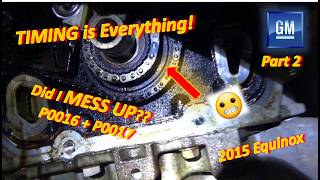
- If timing components appear intact and tight, investigate the rare possibility of a slipped reluctor wheel as described in TSB PIP4548F, especially if the engine has a history of overheating. 🎬 Watch: Troubleshooting persistent P0016 codes after a timing job.
Parts You'll Likely Need
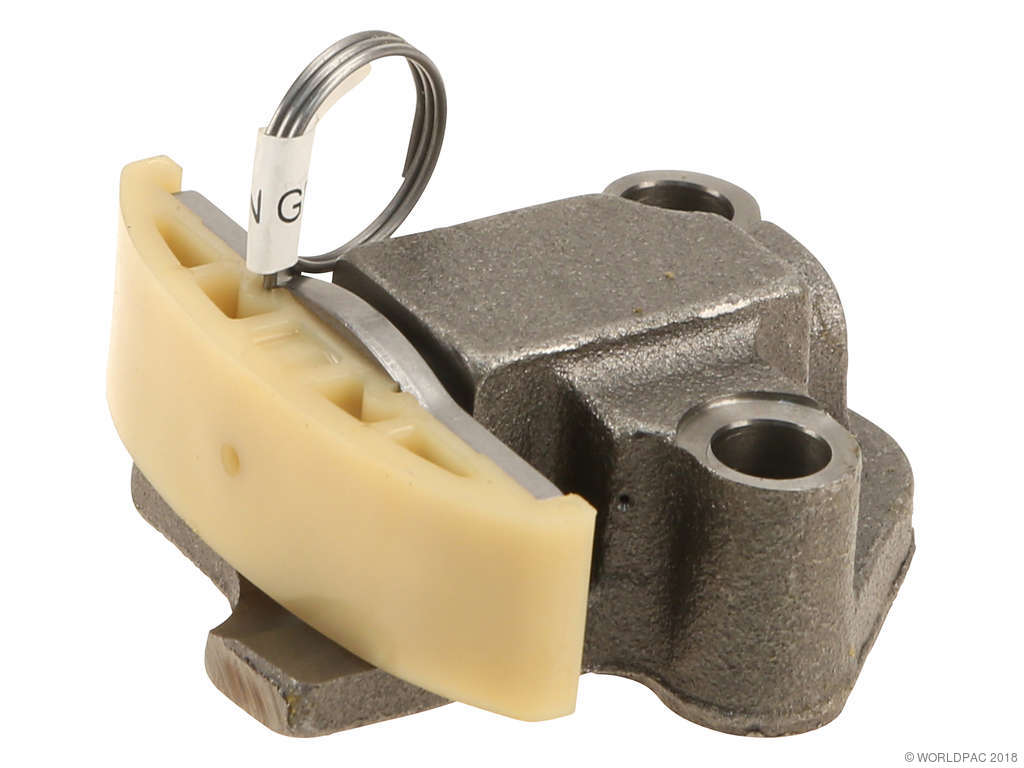
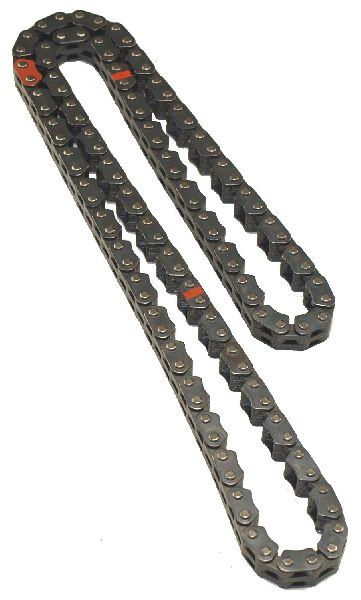
- Timing Chain Kit — This is the primary failure point. A complete kit should include the main timing chain, balance shaft chain, all tensioners (primary and balance), all guides (fixed and pivoting), and both camshaft sprockets/phasers. Using cheap, unbranded kits is known to cause repeat failures.
Trusted brands: ACDelco (OEM), Cloyes (e.g., 9-4201S)
OEM price range: $350-$550
Aftermarket price range: $150-$350 - VVT Solenoids
(OEM #12679099 (Intake), 12679100 (Exhaust))— Often replaced as a preventative measure or if clogged with debris from a failing timing chain. The intake solenoid (grey connector) and exhaust solenoid (black connector) should be replaced as a pair.
Trusted brands: ACDelco (OEM), Dorman
OEM price range: $40-$70 each
Aftermarket price range: $25-$50 each
Related Codes That Often Appear With This One
- P0017 — Crankshaft Position - Camshaft Position Correlation (Bank 1, Sensor B). This is the same error but for the exhaust camshaft. It's extremely common to see P0016 and P0017 together, as a single stretched timing chain affects the timing of both camshafts.
- P0008 / P0009 — Engine Positions System Performance. These are more general timing codes that point to a significant timing discrepancy, often caused by a very stretched chain. TSB #PIP3423P groups these codes with P0016, indicating a common root cause.
- P0089 / P228D — Fuel Pressure Regulator Performance. On the direct-injection 2.4L Ecotec engine, the high-pressure fuel pump is driven by a lobe on the intake camshaft. If the intake cam timing is incorrect (due to P0016), the fuel pump's mechanical timing is also thrown off, leading to fuel pressure codes.
Technical Service Bulletins (TSBs) & Recalls
- TSB #PIP3423P: Groups P0016/P0017 with P0008/P0009, advising technicians to inspect for loose timing chains or tensioners as the primary cause.
- TSB #PIP4548F: Details the rare but possible scenario of a spun camshaft reluctor wheel causing P0016/P0017 even when the chain is properly timed, often after an engine overheat.
- Special Coverage Adjustment #14882: Covers a plugged PCV orifice in the intake manifold on 2.4L engines, which can cause high crankcase pressure, blown seals, rapid oil loss, and subsequent timing chain damage.
- Special Coverage Adjustment #12313D: Addressed premature wear on the balance chain for some 2010-2011 2.4L models, another component that is replaced during a full timing service.
- TSB #19-NA-150: Notes a specific reassembly error where two identical electrical connectors (for the intake cam actuator and park lock solenoid) can be swapped, causing a P0016 code after engine repairs.
Platform-Specific Known Issues
- Excessive Oil Consumption: Many 2010-2013 Equinox models with the 2.4L engine were subject to a class-action lawsuit and Special Coverage Adjustment #14159 for excessive oil consumption due to faulty piston rings. This issue is a direct contributor to premature timing chain failure.
- PCV System Issues: TSB #14882 addresses a condition where the PCV orifice in the intake manifold can become plugged, leading to high crankcase pressure and blown seals (like the rear main seal). This causes rapid oil loss, starving the engine and timing components.
- Slipped Reluctor Ring: TSB #PIP4548F warns technicians that if timing is physically correct but the code persists, the cause may be a spun reluctor ring on the camshaft, often after an overheat event.
Mechanic-Grade Diagnostic Values
- VVT Solenoid (Camshaft Position Actuator) Resistance — expected: 8 to 13 Ohms. Failure: A reading outside this range, or a fluctuating reading when wiggling the connector, indicates a faulty solenoid. Readings in the mega-ohm (millions of ohms) range indicate a definite internal failure.
- Camshaft Position Sensor (CMP) Signal Voltage — expected: 5V on both the power supply and signal wire with key-on, engine-off.. Failure: The signal wire voltage should drop to near 0V when a ferrous metal object is passed in front of the sensor tip. If voltages are incorrect at the sensor, test at the ECM connector to isolate a wiring fault from an ECU fault.
- Camshaft Sprocket Teeth to Crankshaft Degrees — expected: The 2.4L Ecotec camshaft sprockets have 46 teeth. One tooth jump equals 15.6 degrees of crankshaft rotation (720 / 46).. Failure: If an oscilloscope shows a correlation error of ~15-16 degrees or a multiple thereof, it strongly suggests the timing chain has jumped one or more teeth.
Scan Tool Commands That Help
- GDS2 (GM Global Diagnostic System 2): CMP Actuator functional test — This bidirectional control allows a technician to command the intake and exhaust VVT solenoids to advance or retard timing while monitoring the actual vs. desired camshaft position PIDs. If the actual position does not change when commanded, it points to a stuck phaser, a bad solenoid, or an oil pressure/passage issue.
Wiring & Ground Locations
- G105 — On the rear of the engine for the 2.4L model.. This is a primary engine ground. A poor connection at G105 can cause erratic behavior and incorrect readings from various engine sensors, including the crankshaft and camshaft position sensors, potentially leading to false correlation codes.
- ECM Connectors (X1/X2) — Engine Control Module, located in the engine bay.. The large black and white wires in the top corner of the ECM connectors are the main grounds for the PCM. Verifying ground integrity at these pins is a key step when diagnosing sensor circuit faults that don't appear to be caused by the sensor or harness itself.
- Camshaft Position Sensor Connector — Top of the engine, on the valve cover.. The 3-pin connector typically has a 5V power wire, a signal wire (also at 5V KOEO), and a ground wire. Testing for correct voltage at these pins is the first step in diagnosing the sensor circuit.
Real Owner Repair Stories
- YouTube Commenter (2010 Chevrolet Equinox 2.4L, 130k+ miles) — Persistent P0016 & P0017 codes immediately after starting, even after a complete used engine replacement.
❌ Tried (didn't work) Replacing the engine., Tearing down the replacement engine to verify timing was correct., Replacing cam phasers and tensioners on the replacement engine.
✅ What actually fixed it The reluctor wheel on the rear of the intake camshaft had spun due to a previous overheat event on the used engine. The reluctor is only press-fit and can lose its position. The fix required replacing the entire intake camshaft with one that had a correctly positioned reluctor wheel. The 2010 model year used a one-year-only camshaft that was discontinued, complicating the repair. - Reddit user r/MechanicAdvice (2012 Chevrolet Equinox, 77,000 miles) — Initially had a P0013 code. After replacing VVT solenoids, the code changed to P0016 and the engine stalled for the first time.
❌ Tried (didn't work) Replacing both Intake and Exhaust VVT Solenoids.
✅ What actually fixed it The final fix reported by a commenter with a similar issue on a 2015 model was replacing the camshaft gear (phaser), which resolved the problem. The original poster did not provide a final update, but the symptoms strongly point towards a mechanical timing issue (stretched chain/bad phaser) that was unmasked by the new, correctly functioning solenoids.
OEM Part Supersession History
12628347, 12646783, 12655420→12679099— Updated design for improved reliability and performance.12628348, 12646784, 12655421→12679100— Updated design for improved reliability and performance.
Model Year Variations Within This Range
- 2010-2013: The 2.4L engines in this period (RPOs LAF, LEA, LUK) were most affected by the oil consumption issue due to piston ring design. GM issued Special Coverage Adjustment 14882 to address a related PCV orifice plugging issue that could increase crankcase pressure and cause seal leaks, exacerbating oil loss.
- 2010-2011 vs 2012+: The direct-injection 2.4L engines were introduced in 2010. The early versions (LAF) were replaced by the FlexFuel-capable LEA engine starting in 2012 for most models. While mechanically very similar, there can be minor differences in fuel system components and ECU programming.
- 2010: A specific repair story noted that the 2010 model year 2.4L used a one-year-only camshaft design that was later discontinued, making it extremely difficult to find a replacement when a rare reluctor wheel failure occurred.
Helpful Videos
We Have This Part in Stock


The information in this article is provided for general reference and educational purposes only. Vehicle specifications, procedures, and part compatibility can vary by production date, trim level, and region. Always consult your vehicle's factory service manual and verify part numbers before purchasing or performing repairs. Safety-critical components such as airbags, seat belts, and braking systems should be installed by a qualified professional.
- Chevrolet EQUINOX:
- 🎬 Helpful Videos
- 🛍️ Shop This Part
- What's Unique About the 2008-2015 Chevrolet EQUINOX
- Diagnostic Flowchart
- Symptoms You May Notice
- Most Likely Causes
- Rare But Worth Checking
- Diagnosis Steps
- Parts You'll Likely Need
- Related Codes That Often Appear With This One
- Technical Service Bulletins (TSBs) & Recalls
- Platform-Specific Known Issues
- Mechanic-Grade Diagnostic Values
- Scan Tool Commands That Help
- Wiring & Ground Locations
- Real Owner Repair Stories
- OEM Part Supersession History
- Model Year Variations Within This Range
- 🎟️ Get 5% Off