

P0016 on 2011-2016 Chevrolet Cruze: Crank/Cam Correlation Causes and Fixes
P0016 on a first-generation Chevy Cruze usually means the timing is off between the crankshaft and intake camshaft. This is often caused by a stretched timing chain (1.4L) or a bad timing belt/component (1.8L), but can also be due to low oil or faulty VVT solenoids. A timing chain/belt job can cost between $800 and $2,000.
- P0016 on a 2011-2016 Cruze indicates a serious timing misalignment and should be addressed promptly to avoid engine damage.
- Always check your engine oil level and condition first; low or dirty oil is a simple but common cause of VVT system problems.
- For the 1.4L Turbo engine, a rattling noise on startup is a classic sign of a stretched timing chain, a very common cause of P0016.
- For the 1.8L engine, consider if a timing belt service was recently performed, as slight misalignment is a frequent trigger for this code.
- Replacing VVT solenoids is a relatively cheap and easy diagnostic step, but be prepared for a more involved mechanical timing job if that doesn't solve the problem.
What's Unique About the 2011-2016 Chevrolet CRUZE

On the 2011-2016 Cruze, P0016 is a very common and serious code, often pointing to different root causes depending on the engine. The 1.4L Turbo engine is known for premature timing chain stretching, which is a primary cause. The 1.8L engine uses a timing belt, and the code can appear if the belt is installed incorrectly, has jumped a tooth, or a related component like the tensioner has failed. For both engines, issues with the VVT system, such as faulty solenoids or cam phasers, are also frequent culprits.
Diagnostic Flowchart

Tap your situation to follow the diagnostic path that matches what you're seeing on this vehicle.
Generation note: This guide covers the first-generation Chevrolet Cruze (2011-2015) and the 2016 'Cruze Limited' model. The completely redesigned second-generation Cruze was also launched in 2016 with a different 1.4L engine (LE2), which may have different common failure points.
Symptoms You May Notice
- Check Engine Light is on
- Engine runs rough or idles poorly
- Rattling or slapping noise from the engine, especially on startup that may last a few seconds
- Reduced engine power and sluggish acceleration
- Engine stalls, sometimes when coming to a stop
- Worse than normal fuel economy
- Engine cranks but refuses to start
- A deep grumbling or humming sound while driving
- Replacing the camshaft and crankshaft position sensors when the root cause is a mechanical timing issue (stretched chain, jumped belt).
- Replacing only the VVT solenoids when the timing chain has stretched or the cam phasers have failed.
Most Likely Causes

- Stretched Timing Chain or Failed Tensioner (1.4L Engine) 🔴 High Probability The timing chains on the 1.4L Ecotec turbo engine are a known weak point and can stretch prematurely. The plastic chain guides can also become brittle and break, and the tensioner can fail, causing slack and incorrect timing.
How to confirm: A physical inspection is required. Remove the valve cover and check for excessive slack or side-to-side movement in the timing chain between the camshaft sprockets. A rattling noise on startup is a strong indicator.
Typical fix: Replace the timing chain, guides, and tensioner as a complete kit. It is also wise to replace the water pump during this service. An OEM kit part number is GM 25195113.
Est. part cost: $150-$350 - Incorrect Timing Belt Position or Failed Component (1.8L Engine) 🔴 High Probability The 1.8L engine is interference-designed and uses a timing belt. The recommended replacement interval is every 97,500 to 100,000 miles. If the belt is not replaced, it can stretch or jump a tooth. Incorrect installation during a previous service is also a common cause.
How to confirm: Visually inspect the timing belt alignment marks on the camshaft gears and crankshaft pulley after removing the timing cover. A user on Sonic Owners Forum found their timing was off by one tooth after getting a P0016 code.
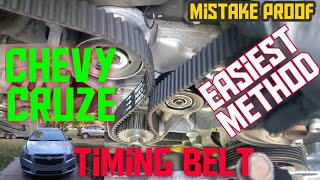
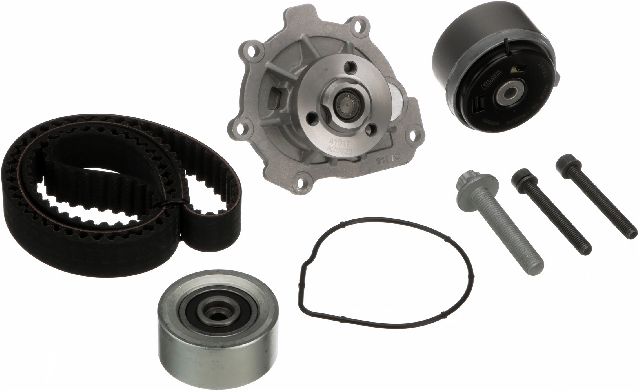
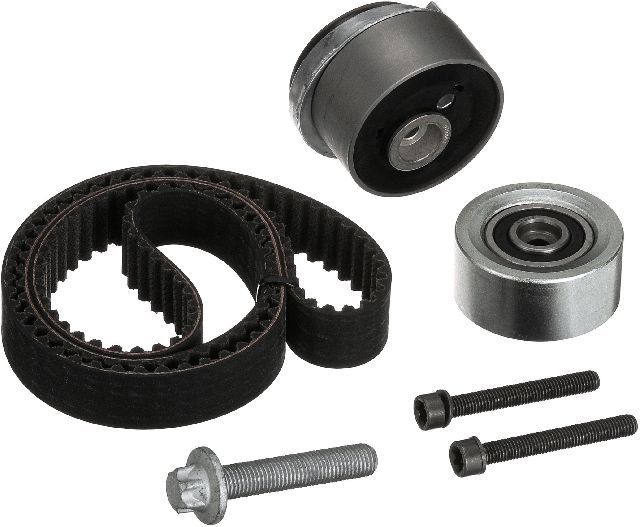
Typical fix: Replace the timing belt, tensioner, and idler pulleys. Ensure all components are correctly aligned using the proper timing marks. A complete kit 🎬 See the quickest method for 1.8L timing belt replacement. with a water pump is recommended.
Est. part cost: $100-$250 - Faulty VVT Solenoid (Camshaft Position Actuator Solenoid) 🟡 Medium Probability These solenoids control oil flow to the cam phasers. They can get clogged with sludge from infrequent oil changes or fail electrically, causing them to stick.
How to confirm: You can test the solenoid's resistance with a multimeter (should be 6-12 ohms, with some sources stating 6.9-7.9 ohms). A common diagnostic trick is to swap the intake and exhaust solenoids; if the code changes to P0017 (exhaust side), the solenoid is bad. This worked for a user on Reddit.
Typical fix: Replace the faulty VVT solenoid. They are located on top of the valve cover and are easy to access. The intake and exhaust solenoids are different parts. Common OEM part numbers are ACDelco 12655420 (Intake) and 12655421 (Exhaust).
Est. part cost: $25-$60 per solenoid - Low or Dirty Engine Oil 🟡 Medium Probability The VVT system uses oil pressure to adjust camshaft timing. If the oil level is low, the oil is old/dirty, or the wrong viscosity is used, the camshaft phasers may not respond correctly. A collapsed oil filter can also restrict flow, triggering the code.
How to confirm: Check the engine oil dipstick for level and inspect the oil's condition. If it's low or appears like sludge, this is a likely contributor. Ensure a quality oil filter is used.
Typical fix: Perform an oil and filter change using the manufacturer-recommended oil viscosity (typically 5W-30 dexos1 synthetic).
Est. part cost: $40-$80 - Failed Camshaft Phaser (Actuator) ⚪ Low Probability The phaser is the gear on the end of the camshaft that actually rotates to change timing. The internal locking pin can fail, or the unit can become clogged with debris, causing it to be out of position at startup.
How to confirm: This is difficult to confirm without disassembly. A rattling sound specifically from the phaser at startup that goes away after a few seconds is a key symptom. This is usually diagnosed after other more common causes are ruled out.
Typical fix: Replace the camshaft phaser(s). This is an involved job that should be done during a timing chain/belt service. OEM part number for the 1.4L intake phaser is 55562224.
Est. part cost: $70-$150 - Faulty Camshaft or Crankshaft Position Sensor ⚪ Low Probability
How to confirm: While a sensor can fail, it's less common for it to cause a correlation code without also setting a sensor-specific circuit code (like P0340/P0341 or P0335). You can inspect the sensor and its wiring for damage. TSB #PIP5329C for the related 1.8L Sonic notes that P0341/P0366 codes are often fixed by simply replacing the sensor.
Typical fix: Replace the corresponding sensor.
Est. part cost: $20-$50
Rare But Worth Checking
- Damaged Reluctor Wheel / Tone Ring: The toothed ring that the crank or cam sensor reads can be damaged or slip on the shaft, causing incorrect readings even if the mechanical timing is perfect. This is an uncommon but possible cause.
- Incorrectly Installed Camshaft Actuator Oil Sleeve: As mentioned in TSB #PIP4543D, after a repair involving the camshaft actuators, a unique black plastic oil sleeve sits between the actuator and the camshaft to direct oil. If this sleeve is damaged, forgotten, or misinstalled during reassembly, the ECM cannot control the cam phaser, which will set correlation codes like P0016. The sleeve is not sold separately and comes with a new actuator assembly.
Diagnosis Steps
- Check the engine oil level and condition. Top off or change the oil if it is low, old, or dirty. Use the correct 5W-30 dexos1 synthetic oil.
- Scan for any other DTCs. Codes like P0011, P0014, P0017, or sensor codes can provide valuable diagnostic clues.
- Inspect the wiring and connectors for the camshaft and crankshaft position sensors, as well as the VVT solenoids, for any damage or corrosion.
- Swap the intake and exhaust VVT solenoids. Clear the codes and drive the vehicle. If the code changes to P0017, the solenoid 🎬 Watch: Diagnosing and fixing VVT solenoids and sensors. you moved is faulty.
- Test the resistance of the VVT solenoids with a multimeter. A reading between 6 and 12 ohms is expected.
- If the above steps don't resolve the issue, a mechanical inspection is necessary. For the 1.4L, remove the valve cover and inspect the timing chain for slack. For the 1.8L, remove the timing cover and verify the timing belt alignment marks are perfectly lined up.
- If timing components are worn or misaligned, replace them as a kit (chain/guides/tensioner or belt/tensioner/pulleys).
- While performing the timing service, inspect the camshaft phasers for damage or signs of failure and ensure the plastic oil sleeves (per TSB PIP4543D) are present and correctly installed.
Parts You'll Likely Need

- Timing Chain Kit (1.4L Engine) — The most common mechanical failure on the 1.4L turbo engine leading to P0016 is a stretched timing chain.
Trusted brands: ACDelco, Cloyes
OEM price range: $200-$300
Aftermarket price range: $120-$200 - Timing Belt Kit (1.8L Engine) — The 1.8L engine uses a belt that is a routine maintenance item. A jumped or incorrectly installed belt is a primary cause of P0016.
Trusted brands: ACDelco, Gates, Continental
OEM price range: $150-$250
Aftermarket price range: $80-$150 - VVT Solenoid / Camshaft Position Actuator Solenoid
(OEM #12655420 (Intake), 12655421 (Exhaust))— These are a common failure point and are relatively inexpensive and easy to replace, making them a good part to check early in the diagnosis.
Trusted brands: ACDelco, Delphi
OEM price range: $40-$60
Aftermarket price range: $20-$40 - Timing Chain Tensioner — A failed tensioner can cause chain slack, leading to noise and timing codes. RepairPal estimates a replacement cost between $441 and $538 including labor.
Trusted brands: ACDelco
OEM price range: $50-$80
Aftermarket price range: $30-$50
Related Codes That Often Appear With This One
- P0017 — This is the correlation code for the exhaust camshaft. If both P0016 and P0017 are present, it strongly suggests a base timing issue like a stretched chain or jumped belt affecting both cams.
- P0011 — This code indicates the intake camshaft timing is over-advanced. It often appears with P0016 and can be caused by a sticking VVT solenoid or phaser.
- P0014 — This is the code for over-advanced exhaust camshaft timing. It can appear alongside P0016 if there's a systemic VVT or oil pressure problem.
- P0341 — This code indicates a performance/range problem with the intake camshaft position sensor circuit. It can be a precursor to P0016 or appear alongside it if the issue is sensor-related or a mechanical timing fault.
Technical Service Bulletins (TSBs) & Recalls
- PIP4543D: Addresses DTCs P0011, P0014, P0016, or P0017 setting after a repair involving the camshaft actuators. It points to a missing or damaged black plastic oil sleeve between the actuator and the camshaft as the likely cause.
- PIP5329C: While for the Chevy Sonic, this TSB is relevant as it addresses P0341 and P0366 on the same 1.8L LWE engine, recommending the replacement of the camshaft position sensor as the primary fix for these codes.
Platform-Specific Known Issues
- 1.4L Timing Chain Rattle: The most common indicator of the root cause for P0016 on the 1.4L engine is a distinct chain rattle or slapping noise from the passenger side of the engine upon cold startup. This noise, which may last for a few seconds, is the sound of the loose timing chain before the oil-pressurized tensioner can take up the slack.
- 1.8L Timing Belt Alignment: For the 1.8L engine, P0016 is very frequently the result of incorrect timing belt alignment. Even being off by a single tooth on either the intake or exhaust cam gear can trigger the code. This often happens during a timing belt service if the technician is not careful or does not use the proper alignment tools.
Mechanic-Grade Diagnostic Values
- VVT Solenoid (Camshaft Position Actuator Solenoid) Resistance — expected: 7 to 14 Ohms. Some sources cite a tighter range of 6.9 to 7.9 Ohms.. Failure: A very low reading indicates a short, while a very high or infinite reading (OL) indicates an open circuit.
- Camshaft Position Sensor (CMP) Connector Voltage — expected: Pin 1: 5V power supply from ECM. Pin 2: Signal wire (voltage varies). Pin 3: Ground reference from ECM.. Failure: Absence of 5V power or a solid ground indicates a wiring or ECM issue, not necessarily a bad sensor.
Scan Tool Commands That Help
- GDS2 (GM Dealer Tool): Camshaft Position Actuator Solenoid Valve Test — This bidirectional control allows a technician to command the VVT solenoids on and off to verify their mechanical operation and check for a response in camshaft angle data, helping to isolate a sticky or failed solenoid from a wiring or mechanical timing issue.
- GDS2 (GM Dealer Tool): Camshaft Position Variance Data — A technician can monitor the desired vs. actual camshaft position angles in the live data stream. A significant and persistent deviation between the desired and actual values while driving points towards a mechanical timing problem (chain/belt) or a failing cam phaser, even if the solenoids test good.
Wiring & Ground Locations
- G103 / G105 — On the driver's side shock tower in the engine compartment.. These are major chassis and ECM ground points. A loose or corroded connection here can disrupt the ground reference for the ECM and its sensors, leading to erratic readings and false correlation codes.
- Main Engine Ground (1.4L) — A ground wire from the main engine wiring harness to a bolt on top of the engine, often near the ignition coil.. A known weak point for corrosion or looseness. A poor connection here can cause multiple, seemingly random codes, including camshaft sensor and correlation faults, due to an unstable ground for the engine's electronics.
- CMP Sensor Connector (1.8L) — At the sensor itself, typically on the valve cover.. For testing, Pin 1 is the 5V power supply, Pin 2 is the signal wire, and Pin 3 is the ECM-provided ground. Verifying power and ground here is essential before condemning the sensor.
- ECM Ground Pins (1.8L) — At the Engine Control Module connectors. For one common configuration, Connector X1 has grounds at pins 20 and 35, while Connector X2 has grounds at pins 1, 3, and 5.. The camshaft position sensor is grounded through the ECM. If chassis grounds are good, a fault could lie in the pin connections at the ECM itself, requiring a check for integrity and corrosion.
Real Owner Repair Stories
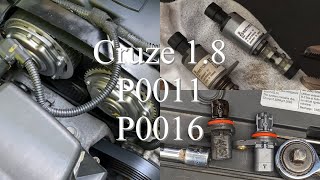
- YouTube channel 'Chevy Cruze 1.8 P0011 P0016 VVT Sprocket, Solenoid, Sensor fix' (First Generation Chevrolet Cruze with 1.8L engine) — Check engine light with P0011 and P0016. Rattling noise from the engine on startup that disappears after a few seconds.
❌ Tried (didn't work) Replacing the VVT solenoid, Replacing the camshaft position sensor
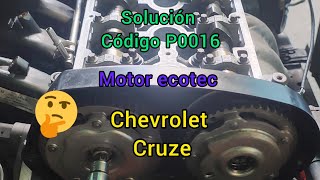
✅ What actually fixed it The root cause was failed variable valve timing sprockets (cam phasers). The internal locking mechanism of the phasers had failed, causing the camshaft to rattle within the sprocket at startup before oil pressure built up. Replacing both cam phasers, along with the timing belt and tensioner, resolved the codes and the startup rattle. - YouTube channel 'chevrolet cruze code P0016 diagnostics and solutions' (Chevrolet Cruze (engine not specified, but uses a timing belt, suggesting 1.8L)) — Check engine light with code P0016.
❌ Tried (didn't work) Initial diagnosis pointed to a correlation issue.
✅ What actually fixed it The reluctor ring (tone ring) on the intake camshaft had slipped from its original position. Even though the timing belt was perfectly aligned, the sensor was getting an incorrect reading because the ring it reads had moved. The technician had to remove the camshaft, press the reluctor ring back to its correct orientation, and reinstall it to fix the code.
OEM Part Supersession History
12655420 (Also 12578517, 12628347, 12646783)→12679099— Likely internal design improvements for reliability and resistance to oil contamination.
Heads up: The new part number, 12679099, is the current replacement for the previous versions and is fully compatible.12655421 (Also 12578518, 12628348, 12646784)→12679100— Likely internal design improvements for reliability, similar to the intake solenoid.
Heads up: 12679100 is the current recommended replacement for the exhaust VVT solenoid.
Model Year Variations Within This Range
- 2011-2016: The 1.4L turbo engine came in two variants, LUJ and LUV. While largely similar, they were part of GM's Family 0 engine line and may have minor internal or software differences. However, for the P0016 code, the primary failure points (timing chain, VVT system) are consistent across both versions within this generation.
Helpful Videos

We Have This Part in Stock


The information in this article is provided for general reference and educational purposes only. Vehicle specifications, procedures, and part compatibility can vary by production date, trim level, and region. Always consult your vehicle's factory service manual and verify part numbers before purchasing or performing repairs. Safety-critical components such as airbags, seat belts, and braking systems should be installed by a qualified professional.
- Chevrolet CRUZE:
- 🎬 Helpful Videos
- 🛍️ Shop This Part
- What's Unique About the 2011-2016 Chevrolet CRUZE
- Diagnostic Flowchart
- Symptoms You May Notice
- Most Likely Causes
- Rare But Worth Checking
- Diagnosis Steps
- Parts You'll Likely Need
- Related Codes That Often Appear With This One
- Technical Service Bulletins (TSBs) & Recalls
- Platform-Specific Known Issues
- Mechanic-Grade Diagnostic Values
- Scan Tool Commands That Help
- Wiring & Ground Locations
- Real Owner Repair Stories
- OEM Part Supersession History
- Model Year Variations Within This Range
- 🎟️ Get 5% Off