

P0016 on 2004-2011 Chevrolet Colorado: Crankshaft Camshaft Correlation Causes and Fixes
On a 2004-2011 Colorado with the I4 or I5 engine (and its platform mates, the GMC Canyon and Hummer H3), code P0016 almost always indicates a stretched timing chain, worn guides, or a failing tensioner. Before committing to this expensive repair, check your oil level and quality, and consider replacing the more accessible and affordable Camshaft Position Actuator Solenoid.
- P0016 on a 2004-2011 Colorado is a serious code that most often points to a mechanical timing chain problem, a known weakness of these engines.
- Always check the engine oil level and condition first. A simple oil change can sometimes resolve the issue if it's related to the VVT system.
- The Camshaft Position Actuator Solenoid is a relatively cheap and accessible part that should be inspected or replaced before assuming a costly timing chain failure.
- Do not immediately replace the cam or crank sensors; they are rarely the true cause of this code on this truck.
- Per TSB PIP4581B, a loose crankshaft balancer bolt is a unique and documented cause that should be investigated by a professional.
What's Unique About the 2004-2011 Chevrolet COLORADO

The first-generation Colorado's 4-cylinder and 5-cylinder Atlas engines are well-documented to have issues with premature timing chain stretching and guide failure. A key reason is that the timing chain tensioner is hydraulically operated by engine oil pressure; low or dirty oil can starve the tensioner, allowing chain slack and noise. Unlike many other vehicles where this code might point to a simple sensor swap, on this specific truck, it is very frequently a sign of a deeper mechanical timing problem. Furthermore, GM issued a Technical Service Bulletin (PIP4581B) specifically for this platform, noting that a loose crankshaft balancer bolt can also cause this code, a unique diagnostic step that should not be overlooked.
Diagnostic Flowchart

Tap your situation to follow the diagnostic path that matches what you're seeing on this vehicle.
Symptoms You May Notice
- Check Engine Light is on
- Rough or unstable idle
- Engine rattling or ticking noise, especially on a cold start, that may quiet down as the engine warms up.
- Stalling, sometimes immediately after starting
- Reduced engine power and poor acceleration.
- Engine may crank but fail to start in severe cases.
- Increased fuel consumption
- Replacing the camshaft position sensor or crankshaft position sensor without first checking the mechanical timing (chain slack), oil condition, or VVT solenoid. Many owners waste money on sensors when the problem is mechanical or hydraulic.
Most Likely Causes

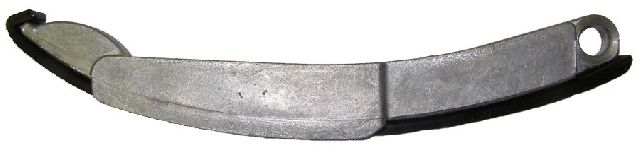
- Stretched Timing Chain and/or Worn Guides/Tensioner 🔴 High Probability The Atlas engines in this generation of Colorado are known for premature wear of timing components. The oil-pressure-fed tensioner can weaken, and the plastic guides can break down, leading to chain slack.
How to confirm: A rattling noise from the front of the engine on startup is a strong indicator. A mechanic can remove the valve cover to physically check for chain slack. 🎬 Watch: How to diagnose a stretched timing chain and P0016 code. A scan tool may also show a 'Cam Variance' PID that is out of spec (typically more than +/- 8-10 degrees).
Typical fix: Replace the timing chain, sprockets, guides, and tensioner as a complete kit. This is a labor-intensive job.
Est. part cost: $150-$400 - Low or Dirty Engine Oil 🔴 High Probability The camshaft phasing system (VVT) and the timing chain tensioner are both operated by engine oil pressure. If the oil is low, dirty, or the wrong viscosity, it can't operate the cam phaser or tensioner correctly, leading to a correlation error.
How to confirm: Check the oil level on the dipstick and inspect its condition. If it's very dark, sludgy, or below the 'add' line, this is a likely contributor. This should always be the first check.
Typical fix: Perform an oil and filter change using the manufacturer-specified oil viscosity (e.g., 5W-30). Clear the code and see if it returns.
Est. part cost: $40-$80 - Faulty Camshaft Position Actuator Solenoid (VVT Solenoid) 🟡 Medium Probability This solenoid controls oil flow to the cam phaser. Its internal screens can become clogged with sludge from dirty oil, or the solenoid can fail electrically, causing it to stick.
How to confirm: Remove the solenoid from the valve cover and inspect its screens for debris. It can be tested with a 12v source to see if it actuates. A common diagnostic trick is to swap the intake solenoid with the exhaust solenoid (they are identical) and see if the code changes to P0017 (Exhaust Cam Correlation). If it does, the solenoid is bad.
Typical fix: Clean the screens or, more reliably, replace the Camshaft Position Actuator Solenoid.
Est. part cost: $25-$60 - Loose Crankshaft Balancer Bolt 🟡 Medium Probability As identified in TSB PIP4581B, the bolt securing the crankshaft balancer can loosen. Since the crankshaft position sensor reluctor ring is attached to the balancer, this causes the timing signal to become erratic.
How to confirm: A technician must verify the bolt torque. The specification is a multi-step process: first pass to 150 Nm (110 lb ft), then an additional 180-degree turn. This is a torque-to-yield bolt and must be replaced if removed.
Typical fix: Replace and re-torque the crankshaft balancer bolt to the correct specification, as outlined in the service manual and TSB PIP4581B.
Est. part cost: $10-$20 (for a new bolt, which is mandatory) - Faulty Camshaft or Crankshaft Position Sensor ⚪ Low Probability
How to confirm: Test the sensor's output with a multimeter or oscilloscope. However, sensor failure is much less common than mechanical timing issues or VVT problems for this specific code on this platform.
Typical fix: Replace the faulty sensor.
Est. part cost: $30-$70
Rare But Worth Checking
- Failed Camshaft Phaser: The actuator sprocket on the camshaft itself can fail internally, getting stuck in an advanced or retarded position. This is usually diagnosed after a timing chain and VVT solenoid replacement doesn't solve the code.
- Stretched or Sheared Crankshaft Key: Related to the loose balancer bolt, the small woodruff key that aligns the crankshaft balancer can shear or the keyway can become worn, allowing the balancer and reluctor ring to spin independently of the crankshaft, causing an immediate P0016.
- Swapped Electrical Connectors: It's possible to swap the intake and exhaust camshaft actuator solenoid connectors after a repair, which will immediately set this code. This is only a concern if the code appeared directly after other engine work was performed.
Diagnosis Steps

- Check the engine oil level and condition. If low or dirty, perform an oil and filter change with 5W-30 oil, clear the code, and drive to see if it returns.
- Scan for any other DTCs. Codes like P0017 strongly suggest a base timing issue.
- Inspect the wiring and connectors for the Camshaft Position Actuator Solenoid and the Camshaft/Crankshaft Position Sensors.
- Remove, inspect, and test the Camshaft Position Actuator Solenoid. Clean any sludge from the screens. Perform a swap test with the exhaust solenoid to see if the code changes to P0017.
- Use a scan tool with live data to command the VVT solenoid on and off, observing the camshaft angle to see if it responds.
- Following TSB PIP4581B, have a technician verify the torque of the crankshaft balancer bolt. This is critical on the Atlas engine.
- If the code persists, perform a mechanical inspection. Remove the valve cover to visually inspect the timing chain for excessive slack between the cam sprockets.
- If slack is confirmed, perform a full timing chain service, replacing the chain, guides, tensioner, and sprockets as a kit.
- Only after confirming mechanical timing is perfect should you consider replacing the camshaft or crankshaft position sensors.
Parts You'll Likely Need
- Timing Chain Kit
(OEM #12649234 (ACDelco Kit for 3.7L, check application))— This is the most common root cause of P0016 on these engines due to premature wear and stretching. A full kit is required.
Trusted brands: ACDelco, Cloyes
OEM price range: $250-$400
Aftermarket price range: $150-$250 - Camshaft Position Actuator Solenoid
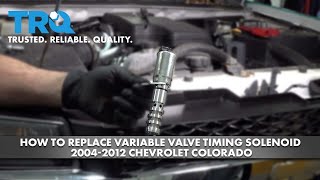
(OEM #12615873)— This solenoid gets clogged with dirty oil or fails electrically, preventing proper cam phasing and triggering the code. It's a common and relatively easy part to replace. 🎬 See this walkthrough on how to replace the VVT solenoid.
Trusted brands: ACDelco, Delphi, Dorman
OEM price range: $40-$70
Aftermarket price range: $25-$50 - Crankshaft Balancer Bolt
(OEM #11570163)— Required if the original is removed to inspect or re-torque, as it is a torque-to-yield bolt and cannot be reused. TSB PIP4581B identifies a loose bolt as a potential cause.
Trusted brands: ACDelco
Related Codes That Often Appear With This One
- P0017 — P0017 is the same correlation error but for the exhaust camshaft. If the timing chain has stretched or jumped, it's common for both the intake and exhaust cams to be out of sync with the crankshaft, causing both codes to appear together.
- P0300 — P0300 indicates a random or multiple cylinder misfire. An incorrect cam/crank correlation leads to improper valve timing, which directly causes misfires, rough running, and poor engine performance.
Technical Service Bulletins (TSBs) & Recalls

- PIP4581B — Engine Rattle Noise With Or Without SES Light And P0016 Or P0017 — This bulletin advises technicians that if P0016 or P0017 is present, especially with a rattle, and standard diagnostics don't find the cause, the crankshaft balancer bolt should be re-torqued to specification. This points to a known issue with the bolt loosening on these engines. (2015-03-06)
Platform-Specific Known Issues
- Timing Chain System Weakness: The GM Atlas engines (2.8L, 2.9L, 3.5L, 3.7L) used in the 2004-2011 Colorado are widely known for issues with the timing chain system. Owners on forums like 355nation.net frequently report rattling noises on startup that progress to P0016/P0017 codes, almost always culminating in a timing chain replacement job.
- Oil Maintenance is Critical: Due to the hydraulic VVT system and chain tensioner, running the engine with low or degraded oil is a primary contributor to P0016. Forum members repeatedly stress that frequent oil changes with quality 5W-30 oil are the best preventative measure for this engine family.
Mechanic-Grade Diagnostic Values
- Camshaft Position Actuator Solenoid (VVT Solenoid) resistance — expected: Approximately 8-10 Ohms. Failure: A reading of infinite resistance (open circuit) or significantly outside the 8-10 Ohm range.
- Crankshaft Position Sensor (CKP) 5-Volt Reference Circuit — expected: 4.8-5.2 Volts DC with ignition on, engine off. Failure: Voltage outside this range indicates a problem with the ECM or wiring. A resistance of 5k Ohms or greater in this circuit can set a DTC.
- Crankshaft Position Sensor (CKP) Low Reference Circuit to Ground — expected: Less than 1 Ohm. Failure: Resistance greater than 1 Ohm indicates an open or high resistance in the ground circuit, which can cause sensor signal issues.
Scan Tool Commands That Help
- Tech2/GDS2 or equivalent professional scan tool: Camshaft Position Actuator Control — This bidirectional command allows a technician to manually command the VVT solenoid on and off while monitoring the cam angle PIDs. It's used to verify if the solenoid is responding to ECM commands and if the phaser is physically moving, helping to isolate a bad solenoid from a stuck phaser or oil pressure issue.
Wiring & Ground Locations
- G101 / G103 — On the lower left side of the engine block.. These are primary engine ground points. G101 specifically grounds the Engine Control Module (ECM). A poor connection at these locations can cause erratic behavior from sensors and the ECM, potentially leading to incorrect correlation codes like P0016.
- ECM (Engine Control Module) — Located on the right rear of the engine compartment.. All sensor signals (CKP, CMP) and actuator commands (VVT Solenoid) are processed by the ECM. Knowing its location is crucial for any circuit testing at the module's connectors.
- Splice Pack SP105 / JX105 — Located on the driver's side of the engine compartment, near the battery and underhood fuse block.. This is a major splice pack where multiple circuits, including grounds for the EBCM and power for the fuel pump relay, are joined. While not directly tied to the CMP/CKP sensors, heat-related degradation of this splice pack is a known issue on this platform causing widespread electrical problems that can mimic sensor failures.
Real Owner Repair Stories
- YouTube video (Vehicle with P0016 (specific model not mentioned, but general diagnosis applies)) — P0016 code and Overdrive (O/D) light blinking, even after a timing chain and gearbox replacement.
❌ Tried (didn't work) Replacing the timing chain and gears, Checking the wiring harness and ECU, Verifying the VVT solenoid was in good condition
✅ What actually fixed it The technician discovered that the oil pressure holes in the intake camshaft were blocked. This prevented oil from reaching and operating the VVT phaser/solenoid assembly correctly, causing the correlation code to persist despite the new timing components. Cleaning the blocked oil passages resolved the issue.
OEM Part Supersession History
12568078, 12576768, 12597025, 12602516→12615873— Standard part evolution for improved durability, materials, or manufacturing process.
Heads up: The newest part number, 12615873, is the correct service replacement for all previous versions on the 2004-2011 Colorado.
Model Year Variations Within This Range
- 2004-2006 vs 2007-2011: In 2007, the Atlas engines were updated. The four-cylinder grew from 2.8L to 2.9L, and the five-cylinder from 3.5L to 3.7L. This was achieved by increasing the cylinder bore from 93 mm to 95.5 mm. While the fundamental design and P0016 causes remain the same, technicians should ensure they order parts (like pistons or engine-specific gaskets) for the correct displacement, as internal hard parts are not interchangeable. The VVT solenoids and timing components, however, are generally shared across the updated engines.
Helpful Videos
We Have This Part in Stock


The information in this article is provided for general reference and educational purposes only. Vehicle specifications, procedures, and part compatibility can vary by production date, trim level, and region. Always consult your vehicle's factory service manual and verify part numbers before purchasing or performing repairs. Safety-critical components such as airbags, seat belts, and braking systems should be installed by a qualified professional.
- Chevrolet COLORADO:
- 🎬 Helpful Videos
- 🛍️ Shop This Part
- What's Unique About the 2004-2011 Chevrolet COLORADO
- Diagnostic Flowchart
- Symptoms You May Notice
- Most Likely Causes
- Rare But Worth Checking
- Diagnosis Steps
- Parts You'll Likely Need
- Related Codes That Often Appear With This One
- Technical Service Bulletins (TSBs) & Recalls
- Platform-Specific Known Issues
- Mechanic-Grade Diagnostic Values
- Scan Tool Commands That Help
- Wiring & Ground Locations
- Real Owner Repair Stories
- OEM Part Supersession History
- Model Year Variations Within This Range
- 🎟️ Get 5% Off