

P0016 on 2012-2015 Chevrolet Captiva: Crank/Cam Correlation Causes and Fixes
P0016 on a 2012-2015 Captiva indicates a timing correlation error, most often caused by a stretched timing chain, especially on the 2.4L Ecotec engine. Low or dirty engine oil is a major contributor, frequently linked to the Ecotec's known oil consumption issues. This is a serious issue that requires immediate attention to avoid severe engine damage.
- P0016 on a 2012-2015 Captiva is a serious code that strongly suggests a mechanical timing issue, most likely a stretched timing chain.
- Do not continue to drive the vehicle. A timing chain failure can cause catastrophic engine damage.
- Always check the engine oil level and condition first, as low or dirty oil is a major contributing factor to timing component failure on these engines.
- The repair almost always involves replacing the entire timing chain kit (chain, guides, tensioners) and is a job for a professional mechanic.
- While sensors and solenoids can fail, they are not the primary cause of P0016 on this platform. They are often replaced during the timing job due to contamination from the failing chain components.
What's Unique About the 2012-2015 Chevrolet CAPTIVA

The Chevrolet Captiva from this era, particularly models with the 2.4L Ecotec engine, has a well-documented history of premature timing chain stretching and failure. This is often accelerated by excessive oil consumption, another known issue with this engine, which starves the timing components of necessary lubrication and hydraulic pressure for the tensioner. While sensors or solenoids can fail, a P0016 code on this specific platform points very strongly toward a mechanical timing problem that should be investigated immediately. The 3.0L V6 is also known to set this code due to stretched timing chains, often accompanied by codes P0008 and P0009.
Diagnostic Flowchart
Tap your situation to follow the diagnostic path that matches what you're seeing on this vehicle.
Symptoms You May Notice
- Check Engine Light is on
- Engine cranks but will not start.
- Rattling noise from the engine, especially a 2-3 second rattle on cold startup.
- Rough or unstable idle
- Reduced engine power and sluggish acceleration, sometimes with the vehicle entering 'limp mode'.
- Increased fuel consumption
- Engine stalling
- StabiliTrak warning light may illuminate 🎬 Watch: Diagnosing P0016 and StabiliTrak warnings on the 2.4L engine. along with the Check Engine Light.
- Replacing only the camshaft or crankshaft position sensor without verifying the mechanical timing. The sensors are often reporting a real mechanical problem, not failing themselves.
- Replacing the camshaft actuator (VVT) solenoids. While these are a common failure part on GM engines, they typically throw different codes (like P0010/P0011). P0016 points more directly to a base timing issue.
Most Likely Causes

- Stretched Timing Chain / Failed Tensioner 🔴 High Probability The 2.4L Ecotec and 3.0L V6 engines are known for premature timing chain wear. This is often exacerbated by low oil levels due to oil consumption issues (a known problem on the 2.4L), which reduces hydraulic pressure on the tensioner, allowing chain slack and accelerating wear. Degraded oil from extended change intervals also contributes.
How to confirm: A mechanic can remove the valve cover to inspect for chain slack and verify timing marks. A distinct rattling noise on cold startup is a strong audible clue. An oscilloscope can be used to compare cam and crank sensor patterns to a known-good waveform to confirm the timing deviation electronically.
Typical fix: Replace the timing chain, tensioners, and guides 🎬 See this walkthrough of a Captiva timing chain replacement. as a complete kit. This is a major repair. It is also wise to replace the balance shaft chain and guides on the 2.4L engine at the same time.
Est. part cost: $150-$400 - Low or Dirty Engine Oil 🟡 Medium Probability The Variable Valve Timing (VVT) system and hydraulic timing chain tensioner are highly sensitive to oil pressure and cleanliness. The 2.4L Ecotec's tendency to consume oil (acknowledged in lawsuits and TSB 15285C for similar models) makes low oil levels a frequent problem that can trigger timing correlation codes.
How to confirm: Check the engine oil level on the dipstick and inspect its condition. If it is low, black, or sludgy, this is a likely contributor. The oil consumption issue was severe enough to cause class-action lawsuits for the 2.4L Ecotec engine in platform mates.
Typical fix: Perform an oil and filter change using the manufacturer-specified full synthetic oil (dexos1 5W-30). If the oil level was very low, damage to the timing chain may have already occurred.
Est. part cost: $40-$80 - Faulty Camshaft Actuator Solenoid (VVT Solenoid) ⚪ Low Probability These solenoids are a common failure point on GM engines, often due to oil sludge clogging their internal passages. However, a solenoid failure typically sets its own codes like P0010 or P0011. While it can contribute, it's less likely to be the sole cause of P0016, which points more directly to a base timing issue.
How to confirm: The solenoid can be removed and inspected for debris on its screens. A common diagnostic trick is to swap the intake and exhaust solenoids; if the code changes to P0014 (exhaust side), the solenoid is confirmed bad. They can also be tested with a 12V source to see if the internal pintle actuates. Resistance should be between 8 and 13 ohms.
Typical fix: Clean or replace the intake camshaft actuator solenoid.
Est. part cost: $25-$60 - Faulty Camshaft or Crankshaft Position Sensor ⚪ Low Probability
How to confirm: This is rarely the cause, as the sensors are usually accurately reporting a real mechanical problem. A sensor-specific circuit code (like P0335 or P0341) would more strongly indicate a sensor failure. The definitive test is using an oscilloscope to verify the signal pattern against a known-good waveform.
Typical fix: Replace the faulty sensor. The intake camshaft sensor is 'Sensor A' for this code.
Est. part cost: $25-$70
Rare But Worth Checking
- Damaged/Slipped Reluctor Wheel / Tone Ring: The toothed ring on the crankshaft or camshaft that the sensor reads can spin on its shaft, as it is a press-fit part without a keyway. This causes the sensor to send a signal that is out of sync with the engine's actual mechanical timing. TSB #PIP4548F directly addresses this, instructing technicians to inspect the reluctor if P0016/P0017 are set on a properly timed engine. TSB #PIP3423L also details this issue for the V6 engines.
- Clogged Oil Passages / Clogged PCV Orifice: Severe oil sludging can block the small oil passages that feed the camshaft phasers, preventing the VVT system from operating correctly. On the 2.4L Ecotec, the fixed PCV orifice in the intake manifold can clog with carbon, leading to excessive crankcase pressure, which can blow out seals and contribute to oil degradation and consumption issues that indirectly cause timing problems.
Diagnosis Steps

- Check Engine Oil: Verify the engine oil is at the proper level and is clean. If the oil is low or very dirty, perform an oil and filter change with full synthetic 5W-30 oil. This is the easiest and cheapest first step and addresses the root cause of many timing failures.
- Scan for Codes: Use an OBD-II scanner to confirm P0016 and check for any other related codes, such as P0017, P0008, or fuel pressure codes, which can help confirm a base timing diagnosis.
- Inspect for Noise: Start the engine when it's cold and listen for a distinct rattling or buzzing sound from the passenger side of the engine for 2-3 seconds. This is a classic sign of a loose timing chain slapping against the guides.
- Inspect Sensors and Wiring: Visually inspect the crankshaft position sensor, intake camshaft position sensor, and their wiring harnesses for any signs of damage, corrosion, or oil contamination.
- Live Data Analysis & Solenoid Test: Use a scan tool to monitor cam/crank data. Note that GM vehicles may disable this data when a timing code is present. A simple test is to swap the intake and exhaust VVT solenoids. If the code changes from P0016 to P0014, the solenoid is bad.
- Oscilloscope Analysis: For a definitive electronic diagnosis, use a lab scope to compare the live signal patterns from the camshaft and crankshaft sensors against a known-good waveform. A shift in the cam signal relative to the crank signal confirms a timing correlation error.
- Mechanical Timing Verification: This is the most critical step if other tests are inconclusive. Remove the valve cover and timing cover to physically inspect the timing chain for slack and verify that the timing marks on the camshafts and crankshaft align correctly. This step is best performed by a professional.
Parts You'll Likely Need

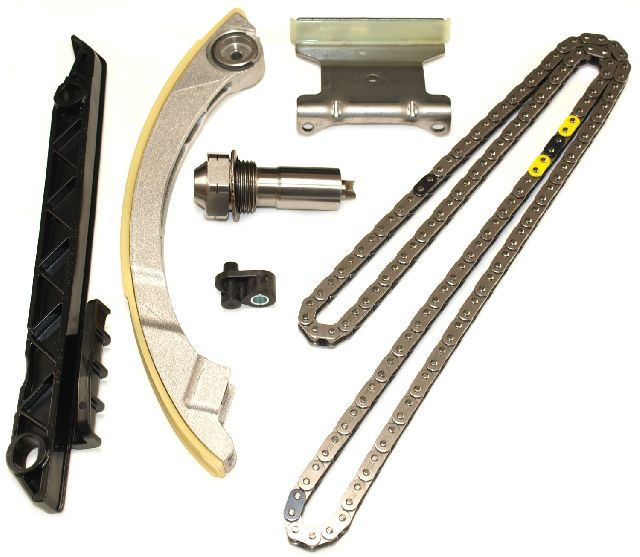
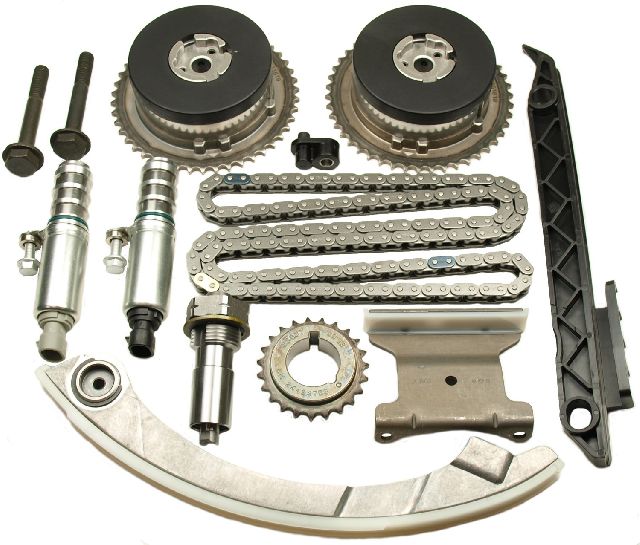
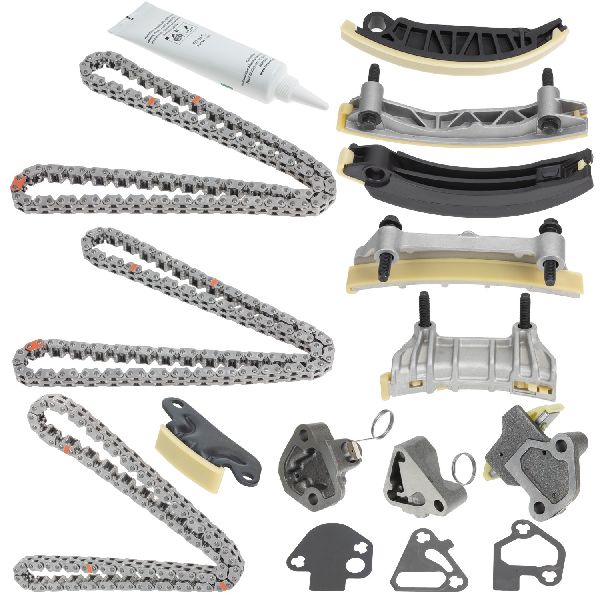
- Engine Timing Chain Kit
(OEM #12680750 (For 2.4L Ecotec))— This is the most common cause of P0016 on the Captiva. A complete kit ensures all worn components (chain, guides, tensioners) are replaced.
Related Codes That Often Appear With This One
- P0017 — This code is for 'Crankshaft Position - Camshaft Position Correlation (Bank 1, Sensor B - Exhaust)'. It is very common to see P0016 and P0017 together, as a stretched timing chain affects both the intake and exhaust camshafts simultaneously.
- P0008 / P0009 — On the 3.0L V6 engine, these codes indicate a more general engine position system performance error, often caused by stretched timing chains. They frequently accompany P0016/P0017 as the problem worsens.
- P0089 / P228D — These are fuel pressure regulator performance codes. On direct injection engines like the 2.4L and 3.0L, the high-pressure fuel pump is driven by a lobe on the camshaft. If the cam timing is incorrect due to a stretched chain, it can directly affect fuel pump operation and set these codes.
Technical Service Bulletins (TSBs) & Recalls
- Advises technicians to inspect the camshaft reluctor ring if P0016/P0017 codes are present on an engine where the mechanical timing has been verified as correct. Notes the reluctor is press-fit and can spin, especially after an overheat, causing a correlation code or a crank-no-start condition.
- Though for the 2011 Equinox/Terrain, this TSB is highly relevant as it acknowledges excessive oil consumption on the 2.4L Ecotec engine due to piston ring wear, which is a primary contributing factor to the oil starvation that damages timing chains.
- Covers a wide range of GM vehicles with High Feature V6 engines (including the 3.0L). It details how a slipped crankshaft reluctor wheel can cause codes P0008, P0009, P0016, P0017, etc., and instructs on how to measure its position.
- Provided information on updated V6 timing chain kits for service repairs, acknowledging the high failure rate of the original components.
Platform-Specific Known Issues
- 2.4L Ecotec Oil Consumption: The 2.4L Ecotec engine used in the Captiva and its platform mates is widely known for excessive oil consumption. This is primarily attributed to premature wear of the piston rings, which allows oil to bypass into the combustion chamber. This condition leads to low oil levels, which starves the hydraulic timing chain tensioner of pressure, causing the chain to go slack and wear out rapidly, directly leading to P0016/P0017 codes. The issue was the subject of multiple class-action lawsuits and GM service bulletins.
- Timing Chain Design and Oil Life Monitor (OLM): Both the 2.4L and 3.0L engines used timing chains that were susceptible to stretching. This problem was made worse by GM's Oil Life Monitor (OLM) system in that era, which often recommended oil change intervals that were too long. Extended intervals allowed the oil to break down and form sludge, further compromising the lubrication and hydraulic pressure needed for the timing components, accelerating the failure process.
Mechanic-Grade Diagnostic Values
- VVT Actuator Solenoid Resistance (2.4L Ecotec) — expected: 8 to 13 Ohms. Failure: A reading outside this range, or a reading of OL (open loop) or megaohms (MΩ), indicates a failed solenoid. Wiggling the connector while testing can reveal intermittent internal connection issues.
- Camshaft Position Sensor Mounting Screw Torque (3.2L V6) — expected: 10 N·m (89 lb-in). Failure: Improper torque could lead to incorrect sensor seating or damage.
Scan Tool Commands That Help
- GDS2 / Professional Scan Tool: Crankshaft Position Variation Learn (CASE Relearn) — This procedure is mandatory after replacing the crankshaft position sensor, the ECM, or performing major engine repairs like a timing chain replacement. Failure to perform the relearn can cause the ECM to incorrectly interpret timing data, potentially setting a false P0016 or other timing codes like P1336. The procedure typically involves bringing the engine to operating temperature and then revving it to a specific RPM (e.g., 4000 RPM) as prompted by the scan tool.
Wiring & Ground Locations
- G105 / G107 — On the cylinder block, left rear of the engine.. These are primary engine grounds. A poor connection at these points can introduce electrical noise or voltage drops, potentially affecting the signals from the camshaft and crankshaft position sensors to the ECM.
- G110 — On the right front corner of the engine (3.0L V6).. This is another critical engine ground point. On the V6, ensuring this ground is clean and tight is essential for stable sensor readings.
- ECM Ground Pins — Pins 67 and 68 on the X1 connector of the ECM for the 2.4L (LD9) engine.. These are the direct ground pins for the Engine Control Module. Any issue with these specific circuits can cause unpredictable ECM behavior, including misinterpretation of cam/crank correlation.
- ECM Location — For the 2.4L engine, the ECM is at the left rear of the engine compartment. For the 3.0L V6, it is at the left front.. Knowing the physical location is the first step in tracing wiring harnesses for the cam/crank sensors and VVT solenoids to check for damage or corrosion.
Real Owner Repair Stories
- Reddit user in r/MechanicAdvice (2012 GMC Terrain with 2.4L Ecotec engine (platform mate to Captiva)) — Car suddenly would not start, then started with a loud popping sound before shutting off. Check Engine Light with code P0016.
❌ Tried (didn't work) Replacing both camshaft and crankshaft position sensors., Refilling engine with oil after finding it completely dry.
✅ What actually fixed it The consensus diagnosis from mechanics was that running the engine out of oil caused a loss of oil pressure to the timing chain tensioner. This allowed the chain to loosen and jump time, bending the intake valves. The required fix was a complete timing chain job and likely cylinder head repair/replacement.
OEM Part Supersession History
12635447, 12673669, 12675579→12680750— Part revision/update by GM for the 2.4L Ecotec engine timing chain kit.
Heads up: The newer part number, 12680750, is the correct and most updated replacement kit to use for this repair.12655420→12679099— Part revision/update by GM for the 2.4L Intake VVT Solenoid.
Heads up: The new part number is a direct replacement. It is often recommended to replace both intake and exhaust solenoids together.12655421→12679100— Part revision/update by GM for the 2.4L Exhaust VVT Solenoid.
Heads up: The new part number is a direct replacement.
Model Year Variations Within This Range
- 2012-2015: The 2.4L engine used in the 2012-2015 Captiva and its platform mates (Equinox/Terrain) is the LEA version, which is E85/FlexFuel compatible. This differs from the 2.4L LAF engine used in 2010-2011 models. While most timing components, sensors, and solenoids are interchangeable for the purpose of a P0016 diagnosis, using the correct engine code (LEA) is critical when ordering specific parts like the ECM or fuel system components.
Helpful Videos

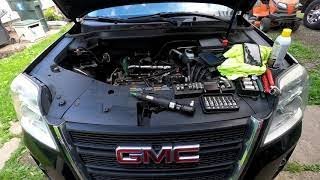
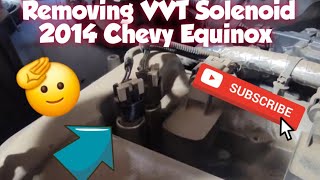
We Have This Part in Stock
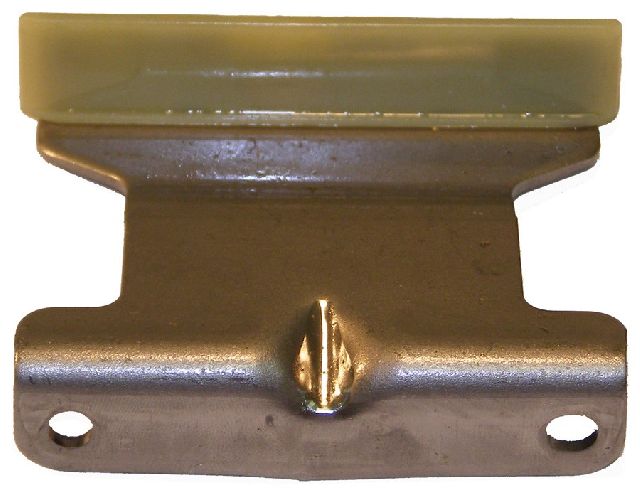


The information in this article is provided for general reference and educational purposes only. Vehicle specifications, procedures, and part compatibility can vary by production date, trim level, and region. Always consult your vehicle's factory service manual and verify part numbers before purchasing or performing repairs. Safety-critical components such as airbags, seat belts, and braking systems should be installed by a qualified professional.
- Chevrolet CAPTIVA:
- 🎬 Helpful Videos
- 🛍️ Shop This Part
- What's Unique About the 2012-2015 Chevrolet CAPTIVA
- Diagnostic Flowchart
- Symptoms You May Notice
- Most Likely Causes
- Rare But Worth Checking
- Diagnosis Steps
- Parts You'll Likely Need
- Related Codes That Often Appear With This One
- Technical Service Bulletins (TSBs) & Recalls
- Platform-Specific Known Issues
- Mechanic-Grade Diagnostic Values
- Scan Tool Commands That Help
- Wiring & Ground Locations
- Real Owner Repair Stories
- OEM Part Supersession History
- Model Year Variations Within This Range
- 🎟️ Get 5% Off