

P0016 on 2011-2018 Chevrolet Camaro: Crank/Cam Correlation Causes and Fixes
On 2011-2018 Chevrolet Camaros, especially V6 models with the LFX engine, P0016 almost always points to a stretched timing chain or failing tensioner. This is a serious, well-documented issue that requires immediate attention to prevent catastrophic engine damage. The repair is complex, often costing over $1,500. A less common but confirmed cause is a slipped crankshaft reluctor wheel, which can present identical symptoms.
- P0016 on a 2011-2018 Camaro is a serious code that should be addressed immediately to prevent severe engine damage.
- For V6 models, the cause is most likely a stretched timing chain, a known weak point for this engine.
- Do not simply replace the sensors; a proper diagnosis is crucial as the repair is often mechanical and expensive.
- Always check the engine oil level and condition first, as low or dirty oil can cause timing system faults.
- If a timing chain replacement does not fix the code, the crankshaft reluctor wheel may have slipped, which is a much more involved repair.
What's Unique About the 2011-2018 Chevrolet CAMARO

The 2011-2018 Camaro, particularly the 5th generation (2011-2015) with the 3.6L V6 (LLT/LFX) engine, is notorious for premature timing chain stretching. This issue is so common that GM issued multiple technical service bulletins (TSBs) about it, such as #12-06-01-009 and PIP3423P. The problem is often attributed to the original timing chain design and oil life monitoring systems that encouraged overly long oil change intervals, leading to oil breakdown and increased wear. While the V8 engines (LS3, L99, LT1) are generally more robust in this area, the V6 models have a very high probability of this code being caused by a physical timing component failure rather than a simpler sensor issue. A less common but documented issue on these V6 engines is a slipped crankshaft reluctor wheel, which can mimic the symptoms of a stretched chain and cause the code to return even after a timing chain replacement.
Diagnostic Flowchart
Tap your situation to follow the diagnostic path that matches what you're seeing on this vehicle.
Generation note: This range covers the end of the 5th generation (2011-2015) and the beginning of the 6th generation (2016-2018). The 5th Gen V6 (LFX) is particularly known for timing chain issues. The 6th Gen introduced the updated LGX V6 🎬 Watch: Locate VVT and camshaft sensors on the LGX engine. and the LT1 V8. While the timing chain design was improved in the LGX, the underlying potential for a timing system fault remains a primary cause for P0016 across all engines in this range, though it is far more prevalent in the V6 models.
Symptoms You May Notice
- Check Engine Light is on
- Rough or surging idle, especially on startup
- Engine rattling or chain noise, especially on cold startup
- Reduced engine power and performance
- Engine may be hard to start or may crank but not start
- Poor fuel economy
- Misfires at higher RPM
- Replacing only the camshaft or crankshaft position sensors without confirming they are faulty. On the V6 Camaro, the cause is very often the mechanical timing system itself.
- Replacing the timing chains but failing to diagnose a slipped crankshaft reluctor wheel, leading to the code returning immediately.
Most Likely Causes

- Stretched Timing Chain 🔴 High Probability The 3.6L V6 engines (LLT/LFX) used in 2011-2015 models have a widely documented history of premature timing chain stretching due to chain design and oil life monitoring systems encouraging long oil change intervals, leading to accelerated wear. GM released updated timing chain kits to address this.
How to confirm: A mechanic must physically inspect the timing chains by removing the engine's front cover. The slack in the chain will be visibly excessive, or the tensioners will be fully extended. An advanced scan tool can also show a persistent deviation between desired and actual cam angles. 🎬 Watch: How to use a labscope to diagnose timing issues.
Typical fix: Replace all three timing chains, all tensioners, and all guides with an updated OEM or equivalent kit. This is a major repair requiring 8-10 hours of labor.
Est. part cost: $300-$600 for a complete, quality kit - Worn or Failed Timing Chain Tensioner(s) 🔴 High Probability The tensioners, which use oil pressure to keep the chains tight, can fail or weaken. This is a component of the overall timing system failure and is almost always addressed during a timing chain job. A broken plastic guide is also a common finding.
How to confirm: Confirmed during physical inspection when replacing the timing chains. A failed tensioner may be stuck, broken, or its seal may have failed.
Typical fix: Replace all timing chain tensioners and guides along with the chains as a complete kit. It is considered bad practice to replace only a single failed component.
Est. part cost: Included in a full timing chain kit. - Low or Dirty Engine Oil 🟡 Medium Probability The camshaft phasers (actuators) are operated by engine oil pressure. Low or dirty oil can cause the phasers to respond slowly or get stuck, or cause the oil-pressure-fed tensioners to lose pressure, leading to a correlation code. This can be a precursor to the larger timing chain failure.
How to confirm: Check the oil level and condition on the dipstick. If it's low or appears sludgy, this is a likely contributing factor.
Typical fix: Perform an oil and filter change using the correct viscosity oil specified by GM (typically 5W-30 synthetic). Clear codes and see if the problem returns. If it does, mechanical wear has likely already occurred.
Est. part cost: $50-$100 - Faulty Camshaft Position Sensor (Bank 1 Intake) ⚪ Low Probability While a sensor can fail, it is rarely the root cause of P0016 on this platform, especially on the V6. Many owners waste money replacing sensors when the actual problem is mechanical (the timing chain).
How to confirm: Swap the Bank 1 intake cam sensor with the Bank 2 intake cam sensor. Clear codes and drive the vehicle. If the code changes to P0018 (Bank 2 correlation), the sensor is bad. If P0016 returns, the sensor is not the issue.
Typical fix: Replace the faulty camshaft position sensor.
Est. part cost: $25-$70
Rare But Worth Checking
- Slipped Crankshaft Reluctor Wheel: TSB #PIP3423P explicitly details this issue for the HFV6 engine family. The reluctor wheel, a toothed ring on the crankshaft that the crank sensor reads, can physically rotate out of position. This causes a persistent P0016/P0017/P0008 code even with new timing chains. A Camaro5 forum user documented this exact scenario: after a timing chain replacement failed to fix the codes, a slipped reluctor wheel was found to be the cause, requiring crankshaft replacement. Inspection can sometimes be done with a borescope through the crank sensor hole.
- Faulty VVT Solenoid (Camshaft Position Actuator Solenoid): A dirty, clogged, or failed solenoid can restrict oil flow to the cam phaser, preventing it from adjusting timing correctly. This can be tested with a scan tool by commanding the solenoid on and off and listening for a click. They can also be removed and inspected for sludge.
- Faulty Crankshaft Position Sensor: It's possible for the crankshaft sensor to fail, but it's much less common than camshaft sensors or timing chain issues for this specific code. This would typically be suspected only after all other, more common causes are ruled out.
Diagnosis Steps

- Check Engine Oil: Verify the engine oil is full, clean, and of the correct viscosity (GM-specified 5W-30). Low or dirty oil is a known cause of VVT system issues that can trigger this code.
- Scan for Other Codes: Use an OBD-II scanner to check for other related codes like P0017, P0008, or sensor-specific codes, which can help confirm a timing system fault.
- Inspect Sensor Wiring: Visually inspect the wiring and connectors for the Bank 1 camshaft position sensor and the crankshaft position sensor for any damage, corrosion, or loose connections.
- Test the Camshaft Position Sensor: As a simple check, swap the Bank 1 intake camshaft sensor with the Bank 2 intake sensor. Clear the codes and drive. If the code returns as P0018 (for Bank 2), the sensor you moved is faulty. If P0016 returns, the sensor is good.
- Analyze Live Data: Using an advanced scan tool, monitor the desired vs. actual camshaft position angles for Bank 1. A significant, persistent deviation, especially at idle, points towards a mechanical timing issue like a stretched chain.
- Test VVT Solenoids: Command the Bank 1 intake VVT solenoid on and off with a scan tool to ensure it is functioning. You can also remove it to inspect for sludge or debris on the screens.
- Physical Timing Inspection: If a mechanical fault is suspected, the next step is to remove the engine's front timing cover to physically inspect the timing chains for stretch/slack, and check the tensioners and guides for wear or damage. This is a labor-intensive step.
- Check Crankshaft Reluctor Wheel: If timing chains are confirmed to be good or have been replaced and the code persists, the crankshaft reluctor wheel must be inspected for movement, as noted in TSB #PIP3423P. This may
Parts You'll Likely Need

- Timing Chain Kit
(OEM #12700436 (ACDelco kit for LFX/LLT))— This is the most frequent cause of P0016 on the V6 Camaro. A complete kit ensures all worn components (chains, tensioners, guides, sprockets) are replaced at once with updated parts.
Trusted brands: ACDelco (GM OE), Cloyes
OEM price range: $400-$600
Aftermarket price range: $250-$450 - Camshaft Position Sensor
(OEM #12674702 (ACDelco))— A potential but less likely cause. It's often replaced as a low-cost, hopeful fix before tackling the larger timing chain job.
Trusted brands: ACDelco, Delphi, NTK
OEM price range: $40-$60
Aftermarket price range: $20-$40 - VVT Solenoid / Camshaft Position Actuator Solenoid
(OEM #12655420 (Intake))— Can get clogged with sludge from infrequent oil changes, causing timing deviation. Often replaced during a timing job as a preventative measure.
Trusted brands: ACDelco
OEM price range: $30-$50
Aftermarket price range: $15-$30
Related Codes That Often Appear With This One
- P0017 — P0017 is the correlation code for the Bank 1 *exhaust* camshaft. If the primary timing chain has stretched or jumped, it often affects both the intake and exhaust cam timing on that bank, causing both codes to appear together.
- P0008 — P0008 is a more general Engine Positions System Performance code for Bank 1. It is very commonly associated with stretched timing chains on the GM 3.6L engine and is a strong indicator of this issue when seen with P0016.
- P0018 / P0019 — These are the correlation codes for Bank 2 (driver's side). If all four codes (P0016, P0017, P0018, P0019) appear simultaneously, it strongly suggests an issue with the primary timing chain or the crankshaft reluctor wheel, as these affect all camshafts.
Technical Service Bulletins (TSBs) & Recalls
- PIP3423P: Details diagnosis for codes P0008, P0009, P0016-P0019, pointing to either loose timing chains or a slipped crankshaft reluctor wheel.
- 12-06-01-009: Announces the release of comprehensive timing chain service kits for the High Feature V6 engine to address wear and related DTCs.
- 23-NA-091: Provides information for technicians on MIL illumination with DTCs P0016 and/or P0018 after engine repairs, suggesting incorrect base timing setting.
- PIP5554A: Preliminary information regarding P0016 setting after internal engine repair due to incorrect base timing procedures.
- PIP5730B: Provides additional diagnostic information for DTCs P0016 and P0018.
Platform-Specific Known Issues
- Premature timing chain stretching on 3.6L V6 engines (LLT and LFX) is a widely documented problem, often triggering P0016.
- TSB #PIP3423P highlights that a slipped crankshaft reluctor wheel can cause P0016 and other timing codes, requiring crankshaft replacement for the fix.
- TSB #PIP5554A and #23-NA-091 note that this code can appear after internal engine repairs if the base timing was not set correctly.
Mechanic-Grade Diagnostic Values
- VVT Actuator Solenoid Resistance — expected: 8 to 13 Ohms. Failure: A reading outside of this range indicates a faulty solenoid.
- Engine Oil Pressure at Idle — expected: At least 25 PSI. Failure: Pressure below 25 PSI at idle can indicate oil starvation to the timing components, which can cause VVT system malfunctions and trigger P0016 before catastrophic chain failure.
Scan Tool Commands That Help
- GDS2 / Tech2 / Advanced Scan Tool: Camshaft Position Actuator Solenoid Control — This bidirectional command allows a technician to manually activate the Bank 1 intake VVT solenoid. You should hear an audible click from the solenoid. Monitoring desired vs. actual cam angles while activating the solenoid can confirm if it is responding to commands from the ECM.
- GDS2 / Tech2 / Advanced Scan Tool: Crankshaft Position Variation Relearn — This procedure is mandatory after replacing the crankshaft position sensor. It allows the ECM to learn the minor variations in the crankshaft reluctor wheel to accurately detect misfires and ensure correct timing correlation. Failure to perform this can cause the code to return or other performance issues.
Wiring & Ground Locations

- G100 / G111 (V8) — On the lower right side of the engine block, above the starter solenoid (G100) or behind the generator (G111).. These are primary engine block grounds. A poor connection here can cause erratic behavior from sensors grounded to the block, such as the crankshaft position sensor.
- G101 — On the lower front of the engine block (V6 LFX) or on the front of the left wheelhouse (V8).. On some models, this ground is a primary connection for the Engine Control Module (ECM) and Transmission Control Module (TCM). A faulty ground here can cause a wide range of sensor data and communication errors.
- G103 — Located at the left rear of the engine compartment on the cowl, above the brake booster.. This is a critical body ground that serves the BCM, Instrument Panel Cluster (IPC), and the Data Link Connector (DLC). While not a direct engine ground, a poor connection can cause communication issues with scan tools during diagnosis.
- Camshaft Position Sensor Connector — On the front of the Bank 1 (passenger side) cylinder head. The intake sensor is one of two sensors located there, typically near the VVT solenoid.. The three wires are power, ground, and signal. The connector and wiring are susceptible to oil contamination and heat damage, which can disrupt the signal the ECM needs to correlate with the crankshaft.
- Crankshaft Position Sensor Connector (V6 LGX) — On the driver's side of the engine block, below the knock sensor and behind the catalytic converter.. Its location near the exhaust manifold makes the wiring susceptible to heat damage, which can cause an intermittent or complete loss of the crank signal.
- Crankshaft Position Sensor Connector (V8) — On the passenger side of the engine block, typically located above and behind the starter motor, requiring starter removal for access.. Difficult access increases the chance of a poor connection if not seated correctly during service. The wiring should be inspected for damage when the starter is removed.
Real Owner Repair Stories
- Reddit user in /r/MechanicAdvice (2013 Ford F150 3.5L EcoBoost (engine with similar VVT design and known timing chain issues)) — P0016 code returned 5-10 minutes after startup, even after a full timing chain replacement.
❌ Tried (didn't work) Replaced the entire timing chain set with the latest revised OEM parts because the original chain was visibly stretched.
✅ What actually fixed it The user did not post a final resolution, but the symptoms (code returning immediately after a timing chain job on a perfectly running engine) are a classic example of what happens when a slipped crankshaft reluctor wheel is the true cause, not the chain itself. This scenario directly mirrors the warnings in GM's TSBs for the Camaro's V6 engine.
OEM Part Supersession History
Various early 3.6L timing chain kits→Updated kits released around the 2012 model year.— The original timing chains were prone to premature stretching. GM updated the chain design to improve durability.
Heads up: When performing a timing job on an early (pre-2012) LFX or LLT engine, it is critical to use the latest superseded part number for the chain kit to prevent a recurrence of the issue. TSB 12-06-01-009F also notes that replacement phasers may require different thickness thrust washers than the originals.
Model Year Variations Within This Range
- 2011-2015 (LFX V6): These 5th Gen models use the LFX engine, which has a front-mounted timing chain design that is highly susceptible to the well-documented stretching issue. GM issued a customer satisfaction program to recalibrate the oil life monitor to recommend more frequent changes to mitigate wear.
- 2016-2018 (LGX V6): The 6th Gen introduced the LGX V6, a significant redesign. The timing chain system was moved to the rear of the engine, and the overall design is more robust, making premature chain stretch far less common than on the LFX. The LGX also features a variable displacement oil pump and an improved VVT system, which changes the diagnostic approach slightly from the LFX. While less common, timing system faults can still occur, especially at high mileage or with poor maintenance.
Helpful Videos
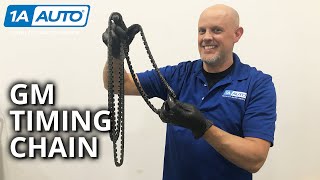
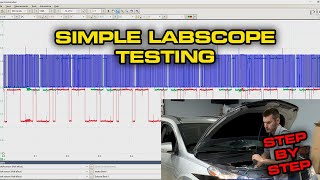
Used OEM Parts in Stock
New Aftermarket Parts Available




The information in this article is provided for general reference and educational purposes only. Vehicle specifications, procedures, and part compatibility can vary by production date, trim level, and region. Always consult your vehicle's factory service manual and verify part numbers before purchasing or performing repairs. Safety-critical components such as airbags, seat belts, and braking systems should be installed by a qualified professional.
- Chevrolet CAMARO:
- 🎬 Helpful Videos
- 🛍️ Shop This Part
- What's Unique About the 2011-2018 Chevrolet CAMARO
- Diagnostic Flowchart
- Symptoms You May Notice
- Most Likely Causes
- Rare But Worth Checking
- Diagnosis Steps
- Parts You'll Likely Need
- Related Codes That Often Appear With This One
- Technical Service Bulletins (TSBs) & Recalls
- Platform-Specific Known Issues
- Mechanic-Grade Diagnostic Values
- Scan Tool Commands That Help
- Wiring & Ground Locations
- Real Owner Repair Stories
- OEM Part Supersession History
- Model Year Variations Within This Range
- 🎟️ Get 5% Off