

P0016 on 2009-2011 Chevrolet Aveo: Crank/Cam Correlation Causes and Fixes
On a 2009-2011 Aveo, P0016 almost always means the timing belt has slipped or a pulley has failed. This is an interference engine, so stop driving immediately. The most common fix is a complete timing belt kit replacement, including the belt, water pump, and upgraded metal pulleys, costing between $400 and $800 for a professional repair.
- P0016 on a 2009-2011 Aveo is a critical code. Stop driving immediately to prevent catastrophic engine damage.
- The cause is almost certainly a failed timing belt system, likely due to the notoriously weak original plastic tensioner/idler pulleys.
- The correct fix is to replace the entire timing belt kit (belt, tensioner, idlers) and the water pump. Insist on a kit with metal pulleys.
- Do not replace sensors as a first step. Verify mechanical timing is perfect before spending money on electrical components.
- Due to the risk of premature failure, consider the timing belt service interval to be 60,000 miles, not 100,000.
What's Unique About the 2009-2011 Chevrolet AVEO

The 1.6L E-TEC II engine in the Chevrolet Aveo is an interference design, which makes this code extremely serious. A timing belt failure will cause the pistons to collide with the valves, leading to catastrophic engine damage. These engines are notorious for premature failure of the original plastic timing belt tensioner and idler pulleys, which can crack and cause the belt to slip or break, often well before the recommended 100,000-mile service interval. For this reason, many specialists and owner forums strongly recommend replacing the timing belt kit every 60,000 miles as a preventative measure.
Diagnostic Flowchart
Tap your situation to follow the diagnostic path that matches what you're seeing on this vehicle.
Symptoms You May Notice
- Check Engine Light is on
- Engine runs rough or misfires, sometimes described as idling 'like a V8 with a huge cam'
- Engine cranks but will not start
- Rattling or ticking noise from the timing belt area of the engine
- Sluggish acceleration and significantly reduced power
- Poor fuel economy
- Hard starting, especially when cold
- Engine may enter 'limp mode,' limiting RPMs to around 4,000
- Replacing only the camshaft or crankshaft sensors without first verifying the mechanical timing. The code indicates a correlation *problem*, which is most often a physical timing issue, not a sensor failure.
Most Likely Causes

- Worn or Slipped Timing Belt / Failed Pulleys 🔴 High Probability The original timing belt idler and tensioner pulleys are made of plastic and are a well-documented, common failure point that can crack, disintegrate, and cause the belt to lose tension or slip.
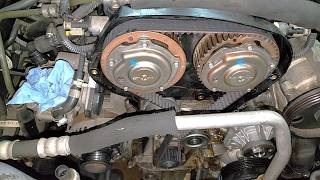
How to confirm: Visually inspect the timing belt and pulleys by removing the upper timing cover. Look for a loose or damaged belt, missing teeth, or for broken pieces of the plastic pulleys in the timing cover area.
Typical fix: Replace the complete timing belt kit, including the belt, tensioner, and idler pulleys. 🎬 Watch: Step-by-step timing belt and water pump installation guide. It is critical to use a kit with metal pulleys (e.g., Gates, ACDelco). The water pump should also be replaced at the same time as it is driven by the timing belt.
Est. part cost: $80-$200 - Incorrect Timing After a Recent Repair 🔴 High Probability If the code appears immediately after a timing belt replacement, the camshafts and crankshaft were likely misaligned by one or more teeth during the service. This is a common mistake due to the precision required.
How to confirm: Re-check the alignment of all timing marks on the crankshaft and camshaft sprockets. This requires partial disassembly to access the timing components.
Typical fix: The timing belt must be removed and re-installed correctly, meticulously aligning all timing marks. A crankshaft position variation relearn procedure may be needed afterward.
Est. part cost: $0 (labor only) - Faulty VVT Solenoids (Camshaft Actuators) 🟡 Medium Probability Low or dirty engine oil can clog the small screens in the solenoids, causing them to stick and fail to adjust cam timing properly.
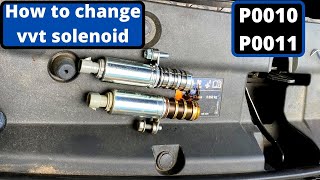
How to confirm: Check engine oil level and condition first. The solenoids can be removed, cleaned with brake cleaner, and tested by applying 12V to see if the internal piston actuates. 🎬 See how to properly replace a faulty VVT solenoid. Resistance should be 6.9-7.9 Ohms at 68°F (20°C).
Typical fix: First, try an engine oil and filter change. If the issue persists, replace the faulty intake and/or exhaust VVT solenoids (P/N 55567050). Per TSB #PIP4543D, ensure the small black plastic oil sleeve between the actuator and camshaft is not missing or damaged during service, as this will cause this code.
Est. part cost: $30-$80 for a pair - Faulty Camshaft Position Sensor (CMP) ⚪ Low Probability
How to confirm: After confirming mechanical timing is perfect, test the sensor's wiring for continuity and check its signal with an oscilloscope. Swapping the intake and exhaust sensors (they are interchangeable) can see if the code changes to P0017, which would confirm a bad sensor.
Typical fix: Replace the Bank 1 (intake) camshaft position sensor.
Est. part cost: $20-$50
Rare But Worth Checking
- Faulty Crankshaft Position Sensor (CKP): This sensor is very difficult to access, located behind the starter motor. Forum posts confirm owners often replace this last after exhausting all other options. Failure is less common than the timing components, but it can cause P0016 if its signal is erratic.
- Stretched Timing Belt: Even if the belt hasn't slipped and the pulleys are intact, an old, stretched belt can cause enough timing deviation to trigger the code. This is another reason to adhere to a strict 60,000-mile replacement interval instead of the 100,000-mile factory recommendation.
- Damaged Crankshaft Reluctor Wheel: The reluctor wheel (or tone ring) on the crankshaft provides the position signal. If it is damaged, bent, or has debris on it, it can send an incorrect signal to the CKP sensor, causing a correlation code even if the mechanical timing is perfect. This should be inspected during a timing belt or crank sensor replacement.
Diagnosis Steps

- Check the engine oil level and condition. Low or dirty oil can cause VVT issues.
- Scan for other fault codes. P0017, P0106, or P1336 can provide additional clues.
- If the code appeared immediately after a timing belt service, assume the timing is incorrect and take it back to the shop.
- Remove the upper timing cover and inspect the timing belt for slack, damage, or missing teeth. Inspect the plastic idler and tensioner pulleys for cracks or disintegration.
- If the belt and pulleys appear intact, verify the mechanical timing. This involves rotating the engine to Top Dead Center (TDC) and ensuring all timing marks on the cam and crank sprockets are perfectly aligned.
- If mechanical timing is correct, inspect and test the VVT solenoids. Check for clogged screens and test for actuation using a 12V source. Resistance should be 6.9-7.9 Ohms. When servicing, check for the presence of the black plastic oil sleeve per TSB #PIP4543D.
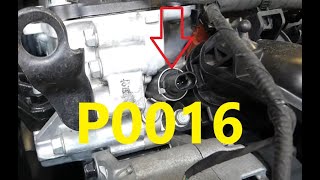
- If all mechanical and VVT components are good, test the camshaft and crankshaft position sensor wiring and signals. The crank sensor is located behind the starter. Check for proper ground at G104 (next to starter).
- After a repair involving the timing system or crankshaft sensor, a Crankshaft Position Variation (CKP) relearn procedure with a capable scan tool (like a GM Tech2) is required to sync the new sensor data with the ECM.
Parts You'll Likely Need

- Timing Belt Kit with Water Pump
(OEM #TCKWP338 (ACDelco and Gates Kit P/N))— This is the most probable cause of the failure. A complete kit replaces the failure-prone belt, plastic pulleys, and tensioner. The water pump is replaced as preventative maintenance since it's driven by the belt.
Trusted brands: Gates (often considered the gold standard), ACDelco, Dayco, ContiTech
OEM price range: $150-$220
Aftermarket price range: $80-$150 - VVT Solenoid / Camshaft Actuator
(OEM #55567050 (Genuine GM P/N, Interchangeable for Intake/Exhaust))— Can become clogged or fail electrically, causing timing correlation issues. Often replaced as a pair (intake and exhaust). This part number also fits other GM vehicles like the Cruze and Sonic.
Trusted brands: ACDelco, Dorman, SKP, Standard Motor Products
OEM price range: $40-$60 each
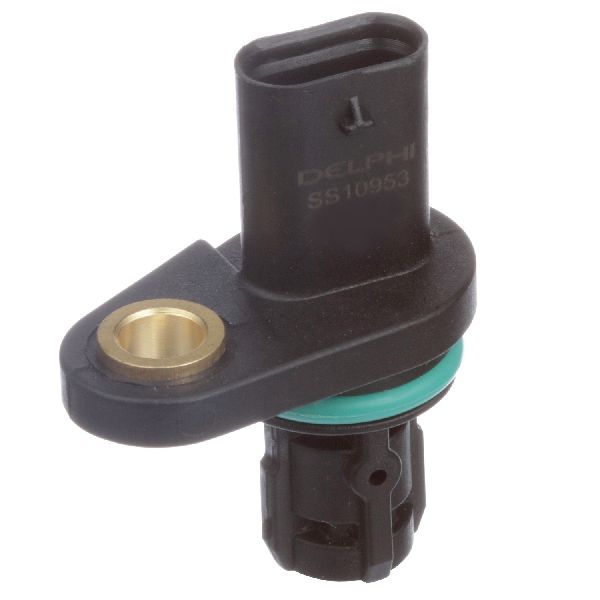
Aftermarket price range: $15-$35 each - Camshaft Position Sensor
(OEM #55565708 (Intake), 55565709 (Exhaust) - Note: VVT Solenoids are often confused with these. The sensors read position, solenoids control it.)— A less common cause. Replaced if mechanical timing and VVT system are confirmed to be in good working order.
Trusted brands: ACDelco, Bosch, Delphi, Standard Motor Products (PC850)
OEM price range: $35-$55
Aftermarket price range: $15-$30 - Crankshaft Position Sensor
(OEM #PC831 (Standard Motor Products example, for 09-11 models))— A rare but possible cause, often replaced as a last resort due to its difficult location behind the starter. A forum member noted that part number P
Related Codes That Often Appear With This One
- P0017 — This code is for the exhaust camshaft correlation. It often appears with P0016 when the timing belt has slipped, throwing both cams out of sync with the crank.
- P0106 — This code for the Manifold Absolute Pressure (MAP) sensor can be triggered by the erratic engine running condition and poor vacuum caused by incorrect cam timing. A Reddit user reported this exact combination of codes after a timing belt service.
- P1336 — This GM-specific code indicates that the Crankshaft Position Variation Relearn procedure has not been learned or failed. It will often appear after replacing a CKP sensor or ECM until the relearn procedure is successfully completed with a scan tool.
Technical Service Bulletins (TSBs) & Recalls
- PIP4543D: Mentions DTCs P0016/P0017 can set after a repair involving the camshaft actuators, pointing to a unique black plastic oil sleeve that may be installed incorrectly.
Platform-Specific Known Issues
- The 1.6L E-TEC II is an interference engine; a timing belt failure will cause severe engine damage.
- The original equipment timing belt tensioner and idler pulleys are made of plastic and are known to fail prematurely, causing the belt to slip or break. It is highly recommended to use a replacement kit with metal pulleys.
- While the manufacturer's recommended timing belt interval is 100,000 miles, the consensus among specialists and owners is to replace it every 60,000 miles due to the high failure rate of plastic pulleys.
- The Crankshaft Position Sensor (CKP) is notoriously difficult to access, requiring removal of the starter motor. Multiple forum and video accounts confirm this is a blind, frustrating job.
Mechanic-Grade Diagnostic Values
- VVT Solenoid (Camshaft Actuator) Resistance — expected: 6.9 - 7.9 Ohms at 68°F (20°C). Failure: A reading outside this range, or an open/short circuit, indicates a faulty solenoid.
- Crankshaft Position Sensor (CKP) AC Voltage — expected: Approximately 200 millivolts (AC) while cranking. Failure: A reading of zero volts while cranking indicates a failed sensor.
- ECM Connector X2, Pin 21 (CKP Signal) — expected: Pulsing voltage signal when engine is cranking.. Failure: No signal indicates a problem with the sensor or wiring.
- ECM Connector X2, Pin 26 (CMP Signal) — expected: Pulsing voltage signal when engine is cranking.. Failure: No signal indicates a problem with the sensor or wiring.
Hidden / Shadow Codes Worth Checking
- P1336: Indicates the Crankshaft Position System Variation has not been learned by the Engine Control Module (ECM). (see via This is a standard GM-specific DTC visible with most OBD-II scanners. It will be stored if the relearn procedure is required but has not been successfully completed.)
Scan Tool Commands That Help
- GM Tech2 or equivalent professional scan tool: Crankshaft Position Variation Relearn (also known as CASE Relearn) — This procedure is required after replacing the crankshaft position sensor, the ECM, or after major engine work like a timing belt replacement. It synchronizes the ECM with the precise position of the new or disturbed components. Failure to perform this can cause a persistent P0016 or P1336, misfires, and rough running.
Wiring & Ground Locations
- G104 — On the engine block, next to the starter motor.. This is the primary ground for components in that area, including the starter. The Crankshaft Position Sensor is located behind the starter, making this ground's integrity critical for a clean sensor signal. A loose or corroded G104 can cause erratic sensor readings.
- G103 — On the engine block, below the Engine Control Module (ECM).. As a main engine ground, poor contact at G103 can cause a variety of sensor and module issues, including those related to the cam and crank sensors.
- ECM Connector X2, Pin 21 — At the main Engine Control Module (ECM).. This is the specific pin for the Crankshaft Position Sensor Signal (on a D-BU/WH wire). It's a key point for testing the signal directly at the ECM to rule out wiring issues.
- ECM Connector X2, Pin 26 — At the main Engine Control Module (ECM).. This is the specific pin for the Camshaft Position Sensor Signal (on a L-BU/BK wire). It allows for direct testing of the CMP signal at the computer.
Real Owner Repair Stories
- AveoForum.com user 'spazntwitch' (2011 Chevrolet Aveo LT) — Persistent P0016 code after several repairs.
❌ Tried (didn't work) Replaced water pump, Replaced timing belt, idler pulley, and tensioner, Triple-checked that all timing marks were correct, Replaced both intake and exhaust camshaft position sensors
✅ What actually fixed it The problem was finally resolved by replacing the Crankshaft Position Sensor (CKP). The user noted it was extremely difficult to access, located behind the starter motor, and required blind work with an allen wrench to remove.
When the Usual Fixes Don't Work
- While the most common cause of P0016 on this Aveo is a failed timing belt or pulley, it should not be the only part considered. A documented case from an owner showed that even after a complete timing service and verification that timing was perfect, the P0016 code remained. The ultimate cause was a faulty, and very difficult to access, crankshaft position sensor located behind the starter motor. This proves that a full diagnostic approach, including testing sensors and their wiring, is necessary even when symptoms strongly point to a mechanical timing failure.
OEM Part Supersession History
12992408→55567050— Standard part update/revision by the manufacturer.
Heads up: The new part number (55567050) is the correct replacement for the original. Using old stock of 12992408 is not recommended.
Model Year Variations Within This Range
- 2009-2011: The 2009 model year introduced a new 1.6L Ecotec engine with Variable Valve Timing (VVT) to the Aveo platform. This is a significant change from pre-2009 models and is why VVT solenoids and actuators are listed as potential causes for P0016 in this specific vehicle range.
Helpful Videos

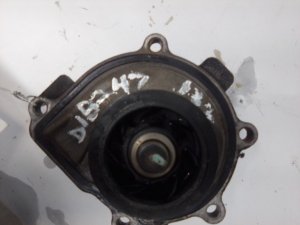
Used OEM Parts in Stock
New Aftermarket Parts Available


The information in this article is provided for general reference and educational purposes only. Vehicle specifications, procedures, and part compatibility can vary by production date, trim level, and region. Always consult your vehicle's factory service manual and verify part numbers before purchasing or performing repairs. Safety-critical components such as airbags, seat belts, and braking systems should be installed by a qualified professional.
- Chevrolet AVEO:
- 🎬 Helpful Videos
- 🛍️ Shop This Part
- What's Unique About the 2009-2011 Chevrolet AVEO
- Diagnostic Flowchart
- Symptoms You May Notice
- Most Likely Causes
- Rare But Worth Checking
- Diagnosis Steps
- Parts You'll Likely Need
- Related Codes That Often Appear With This One
- Technical Service Bulletins (TSBs) & Recalls
- Platform-Specific Known Issues
- Mechanic-Grade Diagnostic Values
- Hidden / Shadow Codes Worth Checking
- Scan Tool Commands That Help
- Wiring & Ground Locations
- Real Owner Repair Stories
- When the Usual Fixes Don't Work
- OEM Part Supersession History
- Model Year Variations Within This Range
- 🎟️ Get 5% Off