

P0016 on 2004-2011 Cadillac CTS: Stretched Timing Chain Causes and Fixes
On a 2004-2011 Cadillac CTS with the 3.6L V6 engine, P0016 almost always indicates stretched timing chains. This is a well-documented issue, often linked to extended oil change intervals, requiring a complete timing chain kit replacement. This is a complex and expensive repair best left to professionals.
- For the 2004-2011 Cadillac CTS 3.6L V6, P0016 is a strong indicator of a stretched timing chain, not a bad sensor.
- Do not replace sensors as a first step; the primary diagnosis involves checking the mechanical timing system.
- This is a serious issue that requires an expensive and complex repair. It should not be ignored.
- Using high-quality full synthetic oil and adhering to shorter oil change intervals (e.g., 5,000 miles) may help prolong the life of the replacement chains.
What's Unique About the 2004-2011 Cadillac CTS

The GM 3.6L High Feature V6 engines (LY7 and LLT) used in this era of Cadillac CTS are notorious for premature timing chain stretching. This issue is so common that GM issued multiple Technical Service Bulletins (TSBs) and even extended warranty coverage for some vehicles to 10 years or 120,000 miles. Key contributing factors include an overly optimistic Oil Life Monitor (OLM) system that encouraged excessively long oil change intervals, leading to oil degradation and low oil levels. The hydraulic timing chain tensioners rely on clean oil at proper pressure; when the oil breaks down, the tensioners can't maintain proper chain tension, accelerating wear on the original-design chains. Unlike many other vehicles where P0016 might point to a simple sensor failure, on the CTS V6, it is a strong indicator of this specific, significant mechanical problem.
Diagnostic Flowchart
Tap your situation to follow the diagnostic path that matches what you're seeing on this vehicle.
Generation note: The 2004-2011 range covers the first generation CTS (2004-2007) and the second generation (2008-2013). The 3.6L V6 engine, which is the primary engine affected by the timing chain issues that cause P0016, was available in both generations. The problem is prevalent across this entire year span for vehicles equipped with the LY7 and early LLT engines, with GM making improvements around the 2012 model year to help alleviate the issue.
Symptoms You May Notice
- Check Engine Light is on
- Engine rattling noise, especially on cold startup
- Rough or unstable idle
- Reduced engine power and poor acceleration
- Difficulty starting the engine
- Engine surging or a fluctuating idle.
- Replacing the camshaft position sensor without checking for timing chain slack.
- Replacing the crankshaft position sensor without checking for timing chain slack.
- Replacing the VVT solenoids (oil control valves) when the root cause is mechanical chain stretch.
Most Likely Causes

- Stretched Timing Chains 🔴 High Probability This is a widely documented factory issue on the 3.6L V6 engine, as confirmed by GM Technical Service Bulletin #12-06-01-009F, which discusses the availability of kits for repairing stretched timing chains setting DTC P0016. The original chains were susceptible to wear, exacerbated by long oil change intervals.
How to confirm: A technician must physically inspect the timing chains for excessive slack, which requires removing the engine's front cover. A professional scan tool or lab scope can be used to analyze the cam/crank correlation waveforms to confirm a timing deviation electronically before disassembly. 🎬 Watch: How to test timing chain stretch with a lab scope
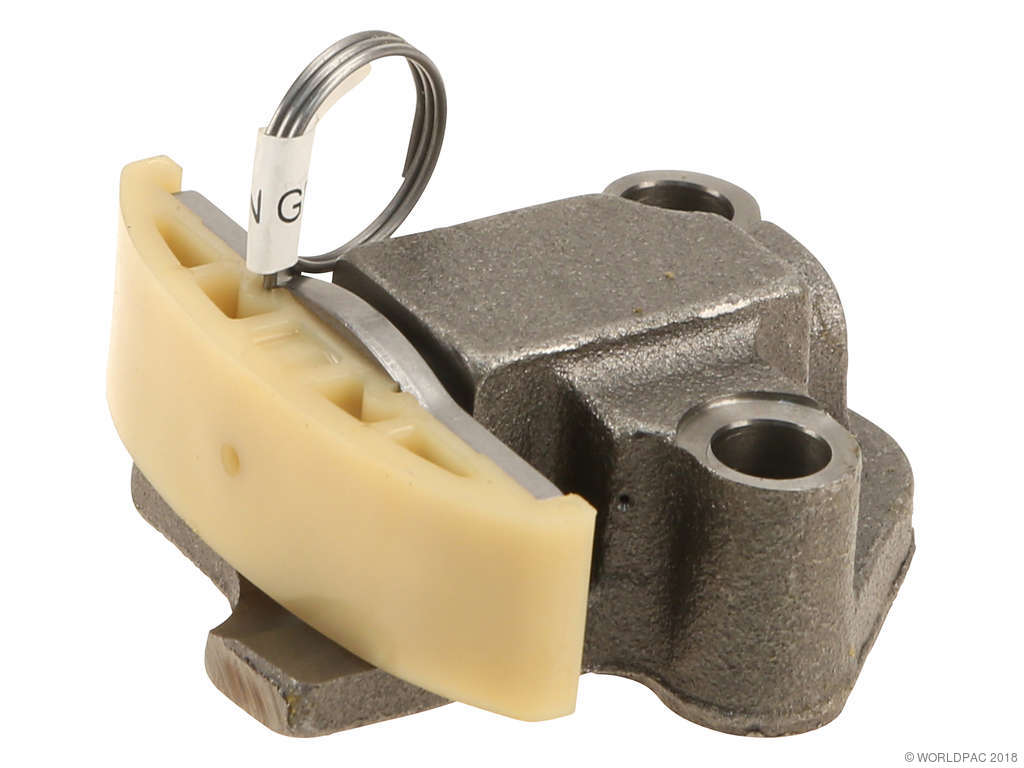
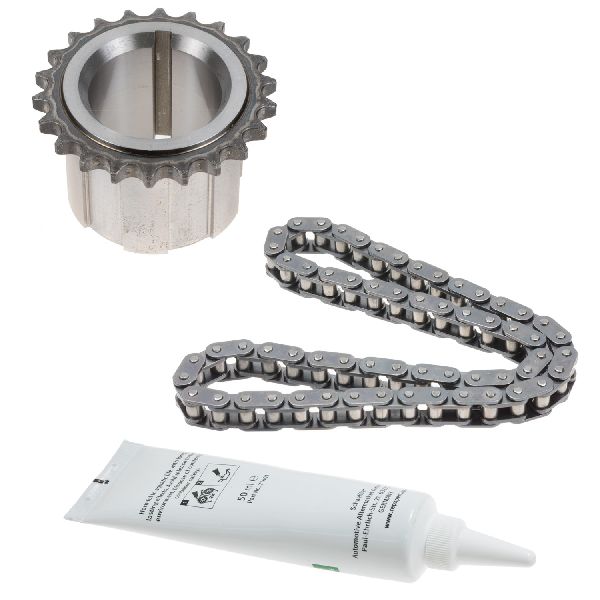
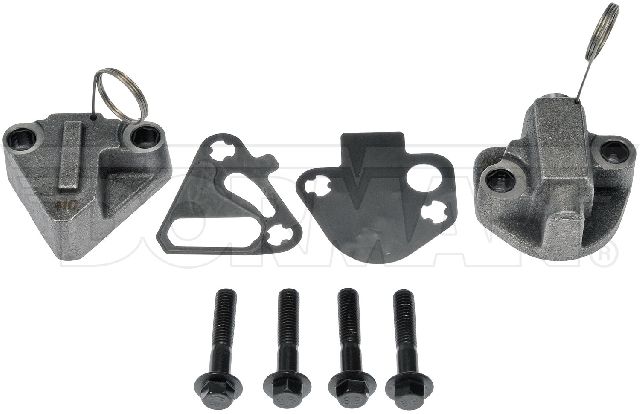
Typical fix: Replace all three timing chains, all tensioners, and all guides with an updated kit. It is critical to use the complete kit.
Est. part cost: $300-$600 - Failed Timing Chain Tensioners or Guides 🔴 High Probability The tensioners are hydraulic and lose their ability to keep the chain taut when oil becomes dirty or low. The plastic guides can become brittle and break. TSB #PIP3423P instructs technicians to inspect for loose timing chains or tensioners when P0016 is present.
How to confirm: Visual inspection for broken guide material in the oil pan or worn/failed tensioners during a timing chain inspection. A rattling noise is a strong audible clue.
Typical fix: Replaced as part of a complete timing chain service kit. They should never be replaced in isolation.
Est. part cost: $0 (Included in kit) - Low or Dirty Engine Oil 🟡 Medium Probability The timing chain tensioners and VVT phasers are hydraulic and rely on clean oil at the proper pressure to function. Degraded oil from extended drain intervals, a known issue with the factory oil life monitor calibration, can lead to sludge, tensioner failure, and accelerated chain wear.
How to confirm: Check the oil level on the dipstick and inspect its condition. If it's low, black, or sludgy, this is a likely contributor. Some owners attempt an engine flush as a last-ditch effort before a chain replacement.
Typical fix: Perform an oil and filter change with high-quality oil. However, if the chain is already stretched and the code is set, this will not solve the P0016 code and the mechanical repair is still necessary.
Est. part cost: $50-$100 - Faulty Camshaft or Crankshaft Position Sensor ⚪ Low Probability While sensors can fail on any vehicle, they are not the common cause for this code on this specific platform. The mechanical timing system is the well-documented weak point. Misdiagnosing this as a sensor issue is a common and costly mistake.
How to confirm: Use a multimeter to test sensor resistance or a scope to analyze its pattern, but only after confirming the timing chains are not loose. If other sensor-specific codes (like P0010) are present, the likelihood of a sensor issue increases.
Typical fix: Replace the faulty sensor.
Est. part cost: $40-$120
Rare But Worth Checking
- Failed Camshaft Phaser/Actuator: The variable valve timing (VVT) actuator (phaser) can get stuck due to oil sludge or internal failure, causing a correlation error. This is less common than chain stretch but is often replaced during the timing chain job as a preventative measure.
- Damaged Reluctor Wheel: The tone ring on the crankshaft that the sensor reads can physically shift its position. This is very rare, but GM issued a bulletin (PIP3423 series) on how to check for it, sometimes possible with a borescope through the crank sensor hole. An experienced GM technician noted they had seen hundreds of timing chain issues but never a shifted reluctor wheel.
Diagnosis Steps

- Verify the code with an OBD-II scanner.
- Check the engine oil level and condition. If low or dirty, correct it, clear the codes, and see if the code returns. An engine flush might be attempted but is unlikely to fix a stretched chain.
- Use a professional scan tool to view live data for cam/crank correlation. A significant deviation points towards a timing issue.
- For advanced diagnosis, use a lab scope to compare the crankshaft sensor waveform with the camshaft sensor waveforms to visually confirm the timing relationship without engine disassembly.
- Listen for a rattling noise from the front of the engine (timing cover area), especially during a cold start.
- The definitive step: Physically inspect the timing chains for slack. This is an advanced procedure that involves removing the front engine cover and is best left to a professional. 🎬 See this detailed DIY walkthrough for replacing the timing chains
- If and only if the timing chains are confirmed to be tight and correctly timed, proceed with testing the camshaft and crankshaft position sensors and their wiring.
Parts You'll Likely Need

- Timing Chain Kit
(OEM #12651450 (superseded by 12700436 and others, verify by VIN))— This is the definitive fix for the common stretched timing chain issue. A complete kit ensures all worn components (chains, guides, tensioners, gaskets) are replaced with updated parts.
Trusted brands: ACDelco, Cloyes
OEM price range: $400-$600
Aftermarket price range: $250-$450
Related Codes That Often Appear With This One
- P0008 — A general engine timing system performance code for Bank 1, often the first sign of a stretching chain.
- P0017 — Indicates a similar correlation issue on Bank 1, but for the 'B' (exhaust) camshaft.
- P0018 — Indicates a correlation issue on Bank 2 for the 'A' (intake) camshaft.
- P0019 — Indicates a correlation issue on Bank 2 for the 'B' (exhaust) camshaft. TSB #12-06-01-009F explicitly lists all these codes together as symptoms of a stretched timing chain.
Technical Service Bulletins (TSBs) & Recalls

- 12-06-01-009F: Availability of high feature V6 timing chain kits for repairing stretched timing chains setting DTCs P0008, P0009, P0016, P0017, P0018 and/or P0019.
- PIP3423P: Provides information for technicians that DTCs P0016, P0017, P0018, P0019, P0008 or P0009 may be set and to inspect for loose timing chains or tensioners, or a shifted crankshaft reluctor wheel.
- Special Policy 11340C: GM issued this special policy which extended the warranty on timing chains to 10 years or 120,000 miles for many affected vehicles.
Platform-Specific Known Issues
- NHTSA Technical Service Bulletin #12-06-01-009F directly addresses the problem, noting the availability of timing chain kits for repairing stretched chains that cause codes like P0016.
- NHTSA TSB #PIP3423P guides technicians to inspect for loose timing chains or tensioners when P0016 and related codes are present, and also mentions the rare possibility of a slipped crankshaft reluctor wheel.
- An owner of a 2005 CTS filed a complaint with the NHTSA (ODI #10794483) specifically for error code P0016 related to engine timing chains at 86,176 miles, highlighting this as a real-world problem for owners.
- A thread on ChevroletForum titled '2009 Traverse 3.6 p0016, p0017, p0018 p0008' details a user's experience replacing the timing set, highlighting the necessity of using proper camshaft alignment tools to do the job correctly.
Mechanic-Grade Diagnostic Values
- Camshaft Position Actuator Solenoid (VVT Solenoid) resistance — expected: 8 to 13 Ohms. One source specifies 6.9-7.9 Ohms at 68°F.. Failure: A reading outside the specified range, or an open/infinite resistance reading, indicates a faulty solenoid.
- Crankshaft/Camshaft Position Sensor (3-wire Hall Effect) connector voltage, key on engine off — expected: Pin 1 (Low Reference): ~0V. Pin 2 (Signal): 5V (pull-down design). Pin 3 (5V Reference): 5V.. Failure: Voltage on the signal wire significantly below 5V (e.g., 0.02V) with the sensor disconnected suggests a short to ground in the wiring or ECM.
Scan Tool Commands That Help
- GM Tech2 / GDS2 or equivalent professional scanner: Camshaft Position Actuator Solenoid Test — This bidirectional command allows the technician to command the intake and exhaust VVT solenoids on and off, or vary their duty cycle, while the engine is running. A change in engine idle RPM when the solenoid is commanded indicates it is mechanically responding; no change suggests a stuck solenoid or oil pressure issue.
Wiring & Ground Locations
- G101 / G102 — For 2009+ models: G101 is on the left front strut tower. G102 is on the right front of the engine compartment.. These are primary engine and chassis grounds. A poor ground connection can cause erratic sensor readings and phantom codes.
- G130 / G131 / G132 — For 2009+ models: G130 is at the rear of the right cylinder head, G131 is at the left rear of the engine, and G132 is on the top right of the engine. A video also shows ground straps near the ECU on a 2007 model.. These are critical grounds for the engine control system. The ECM for the 3.6L is mounted on the valve cover, making these cylinder head grounds particularly important for sensor and actuator circuits.
- Crankshaft Position Sensor Connector (3.6L DI) — On the lower side of the engine block, reading the crankshaft.. Pinout is critical for testing: Pin 1 is Low Reference (ground), Pin 2 is the Signal wire, and Pin 3 is the 5-volt reference from the ECM.
Real Owner Repair Stories
- YouTube channel 'Pauly's Automotive' (2007 Cadillac CTS 3.6L (LY7) with 88,000 miles) — Check Engine Light with codes P0008 and P0017.
❌ Tried (didn't work) Replacing the Bank 1 exhaust camshaft position sensor (Sensor B).
✅ What actually fixed it The check engine light returned after replacing the sensor. A professional shop then diagnosed stretched timing chains. The owner performed a complete timing chain, guide, and tensioner replacement, which resolved the codes. - ScannerDanner Forum user 'Patrickreaves' (Cadillac CTS 3.6L D.I. (LLT engine)) — No start condition with code P0335 (Crankshaft Position 'A' Circuit Malfunction). Scan tool showed 0 CKP counts during cranking.
❌ Tried (didn't work) Unplugging all sensors on the same 5V reference circuit to check for a shared short.
✅ What actually fixed it Technician found only 0.02V on the crank sensor signal wire, which should have been 5V. After isolating the signal wire from the harness by cutting it near the ECM, the wire at the ECM connector still showed a short to ground. The final diagnosis was an internally shorted ECM. Replacing the ECM was the fix.
OEM Part Supersession History
Varies by year (Early LY7 vs. Late LY7/LLT)→Varies, multiple kits available— GM updated the timing chain design to improve durability and reduce stretching.
Heads up: Different timing chain designs were used (e.g., roller vs. silent chains). For vehicles built during a change-over period, the only way to guarantee the correct kit is to remove a valve cover and visually inspect the existing chains before ordering parts.
Model Year Variations Within This Range
- 2004-2009 (LY7) vs 2008-2011 (LLT): The LY7 is a port-injected engine, while the LLT features direct injection (SIDI). This means they have different pistons (higher compression on LLT), cylinder heads, and the LLT has a high-pressure fuel pump driven by an extra lobe on the camshaft. While both suffer from timing chain issues, their timing kits and covers may differ, making VIN-specific part verification essential.
Helpful Videos

We Have This Part in Stock




The information in this article is provided for general reference and educational purposes only. Vehicle specifications, procedures, and part compatibility can vary by production date, trim level, and region. Always consult your vehicle's factory service manual and verify part numbers before purchasing or performing repairs. Safety-critical components such as airbags, seat belts, and braking systems should be installed by a qualified professional.
- Cadillac CTS:
- 🎬 Helpful Videos
- 🛍️ Shop This Part
- What's Unique About the 2004-2011 Cadillac CTS
- Diagnostic Flowchart
- Symptoms You May Notice
- Most Likely Causes
- Rare But Worth Checking
- Diagnosis Steps
- Parts You'll Likely Need
- Related Codes That Often Appear With This One
- Technical Service Bulletins (TSBs) & Recalls
- Platform-Specific Known Issues
- Mechanic-Grade Diagnostic Values
- Scan Tool Commands That Help
- Wiring & Ground Locations
- Real Owner Repair Stories
- OEM Part Supersession History
- Model Year Variations Within This Range
- 🎟️ Get 5% Off