

P0016 on 2016-2020 Cadillac CT6: Crank/Cam Correlation Causes and Fixes
P0016 on a Cadillac CT6 indicates a timing mismatch between the crankshaft and the Bank 1 intake camshaft. The most common causes are a stretched timing chain, a faulty VVT solenoid, or a bad sensor. However, a severe and documented issue on these vehicles is a broken crank sprocket, making this a critical code to address immediately. While timing chain issues were more prevalent on older GM V6 engines, the LGX 3.6L V6 in the CT6 is still susceptible, especially with poor oil maintenance.
- P0016 on a 2016-2020 CT6 is a critical code that should be addressed immediately.
- Do not continue to drive the vehicle, as this could lead to catastrophic engine failure.
- While a bad sensor or VVT solenoid is possible, the most likely cause is a mechanical timing issue, such as a stretched timing chain.
- A rare but documented cause is a broken crankshaft sprocket, which is a severe engine failure.
- Diagnosis should be performed by a professional who is aware of the specific TSBs for this platform.
What's Unique About the 2016-2020 Cadillac CT6
While many vehicles can get a P0016 code from a simple sensor failure, the Cadillac CT6 platform has a more serious potential issue. A GM Technical Service Bulletin (TSB #17NA272) specifically calls out the possibility of a broken engine crank sprocket, which can cause this code and lead to catastrophic engine damage. Furthermore, the 3.6L LGX V6 engine, common in the CT6, has a known history of timing chain issues that can also trigger this code, though it is considered more reliable than its LFX and LLT predecessors. This makes immediate and accurate diagnosis especially critical, as ignoring the code could lead to piston-to-valve contact.
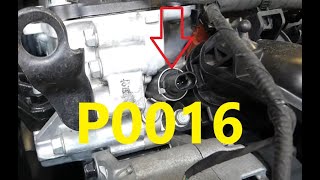
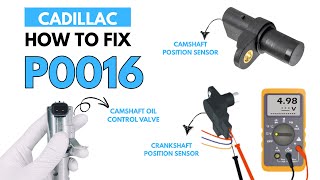
🎬 Watch: Complete fixing guide for Cadillac P0016 codes.Diagnostic Flowchart
Tap your situation to follow the diagnostic path that matches what you're seeing on this vehicle.
Symptoms You May Notice
- Check Engine Light is on
- Engine runs rough or has a noticeable rattle, especially on cold starts
- Reduced engine performance and acceleration
- Engine cranks but fails to start
- Poor fuel economy
- Hesitation during acceleration
- Engine stalling, particularly when coming to a stop.
- Replacing only the camshaft or crankshaft sensor without checking the timing chain. On this platform, a mechanical timing issue is more likely than a sensor failure.
- Replacing VVT solenoids when the root cause is low oil pressure or severe sludge buildup from lack of maintenance.
- Assuming the code is a minor glitch and clearing it without investigation, which can lead to catastrophic engine failure if a mechanical timing issue exists.
Most Likely Causes
- Stretched Timing Chain or Failed Tensioner 🔴 High Probability The GM 3.6L V6 (LGX) engine, while improved over prior generations, can still suffer from timing chain stretch and guide/tensioner issues, often exacerbated by extended oil change intervals or low oil levels. This is a very common cause for P0016 on this platform.
How to confirm: A mechanic can use a scan tool to check cam/crank correlation data PIDs. A physical inspection is required for definitive proof, which involves significant labor to remove the front timing cover to check for chain slack against the guides.
Typical fix: Replace the primary and secondary timing chains, tensioners, and guides. This is a labor-intensive job often quoted at 9+ hours.
Est. part cost: $300-$600 for a full timing kit. - Low or Dirty Engine Oil 🟡 Medium Probability The Variable Valve Timing (VVT) system uses oil pressure to adjust cam timing via phasers. If the oil is low, dirty, or the wrong viscosity (GM specifies dexos-approved 5W-30 synthetic oil), the VVT phasers may not respond correctly, causing a correlation error. Sludge can clog the small passages in the VVT solenoids and phasers.
How to confirm: Check the oil level on the dipstick and inspect its condition. Note the date/mileage of the last oil change. An oil change is the simplest first step in diagnosis.
Typical fix: Perform an oil and filter change using the correct specification of oil (e.g., ACDelco dexos-approved synthetic oil).
Est. part cost: $50-$100 - Faulty VVT Solenoid (Camshaft Actuator) 🟡 Medium Probability This solenoid controls the oil flow to the cam phaser. It can become clogged with sludge or fail electrically, preventing proper timing adjustments. It's a relatively common failure point and much easier to replace than the timing chain.
How to confirm: A mechanic can command the solenoid with a scan tool to check its response. It can also be removed, inspected for clogged screens, and tested for resistance (typically 6.9-7.9 ohms).
Typical fix: Replace the Bank 1 intake VVT solenoid. It is often recommended to replace both intake and exhaust solenoids on the affected bank at the same time.
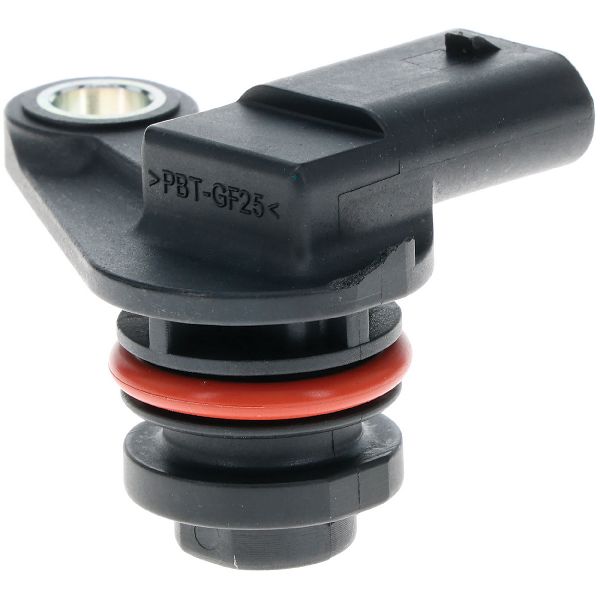
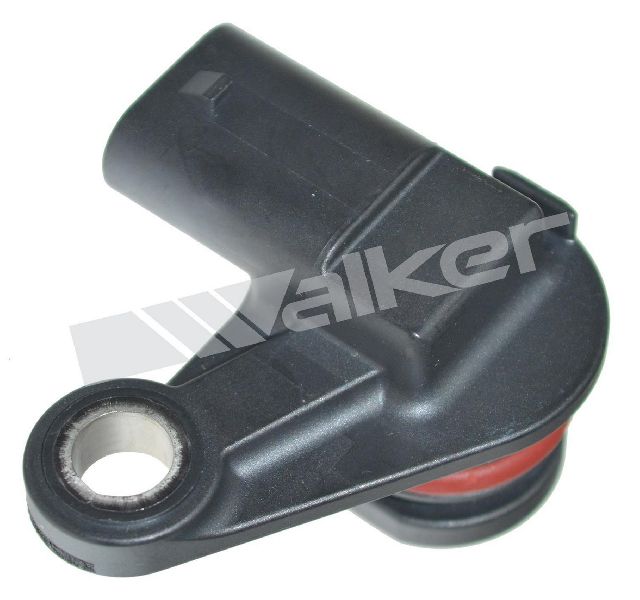
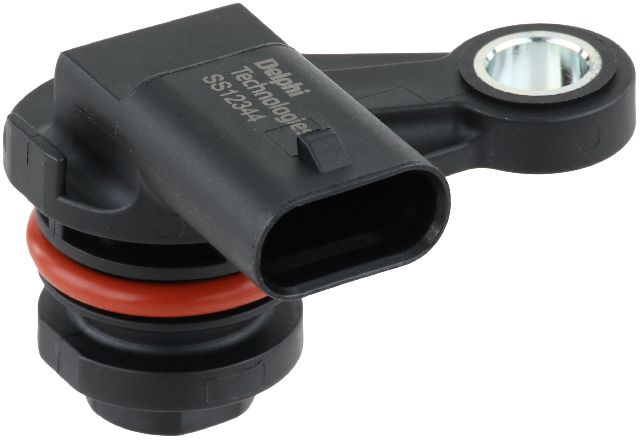
Est. part cost: $40-$80 - Faulty Camshaft or Crankshaft Position Sensor ⚪ Low Probability While less common than timing chain or VVT issues, a sensor can fail and send incorrect data to the ECM, falsely triggering the P0016 code. Technicians often report that on GM V6 engines, a P0016 code is more likely to be mechanical than a sensor fault.
How to confirm: Use an oscilloscope to check the sensor's signal pattern. A common DIY method is to swap the Bank 1 and Bank 2 intake cam sensors to see if the code changes to P0018 (indicating a Bank 2 issue), which would point to a bad sensor.
Typical fix: Replace the faulty sensor (either camshaft or crankshaft).
Est. part cost: $30-$70 per sensor.
Rare But Worth Checking
- Broken Engine Crank Sprocket: This is a rare but critical failure specifically mentioned in GM TSB #17NA272 for this vehicle. It can cause a loud noise, a no-start condition, and requires extensive engine repair or replacement. The TSB outlines a procedure to replace the entire engine if this failure is confirmed.
- Spun or Damaged Crankshaft Reluctor Wheel: The reluctor wheel (or tone ring) is what the crankshaft sensor reads. If it becomes loose on the crankshaft or is damaged, it will send an incorrect signal relative to the actual crank position, causing a timing correlation code. This is a major mechanical failure requiring significant disassembly to inspect and repair.
- Failed Camshaft Phaser/Actuator: The phaser itself, located on the end of the camshaft, can become stuck or fail internally. This is different from the VVT solenoid that controls it. Replacement requires removal of the timing chain.
Diagnosis Steps
- Verify engine oil level and condition. An immediate oil and filter change with the correct spec oil (dexos 5W-30) is a wise first step if maintenance history is unknown.
- Use a professional scan tool to read the freeze frame data and check for any other related trouble codes. Note the conditions when the code was set.
- Observe live data from the crankshaft position sensor and both Bank 1 camshaft position sensors. Check for erratic signals or dropouts.
- Graph the desired vs. actual camshaft position PIDs for the Bank 1 intake cam. A large deviation or slow response can indicate a VVT system problem.
- Command the Bank 1 intake VVT solenoid with the scan tool to verify its operation. Listen for a click and watch for a change in engine idle.
- If possible, swap the Bank 1 and Bank 2 intake camshaft position sensors. Clear codes and see if the fault moves to Bank 2 (P0018). If it does, the sensor is bad. You can do the same with the VVT solenoids.
- If sensors and solenoids test good, the next step is a mechanical inspection. This involves removing the engine timing cover to physically inspect the timing chains for slack, check the guides for wear or broken pieces, and verify the timing marks are aligned on the sprockets, phasers, and crank.
- During mechanical inspection, specifically check the crankshaft sprocket for damage as noted in TSB #17NA272.
Parts You'll Likely Need
- Timing Chain Kit
(OEM #12713649)— This is the most probable cause of P0016 on the 3.6L V6 engine due to known issues with chain stretch. A full kit is required.
Trusted brands: ACDelco, Cloyes
OEM price range: $400-$600
Aftermarket price range: $250-$450 - Intake VVT Solenoid (Camshaft Position Actuator)
(OEM #12662736)— These can get clogged or fail, leading to incorrect cam phasing and triggering the code. It's a common and relatively easy part to replace as a diagnostic step.
Trusted brands: ACDelco, Dorman
OEM price range: $50-$70
Aftermarket price range: $40-$80
Related Codes That Often Appear With This One
- P0017 — This code indicates a correlation issue with the Bank 1 *Exhaust* camshaft. If both P0016 and P0017 appear together, it strongly suggests a base timing issue, like a stretched chain or jumped tooth, affecting the entire bank.
- P0018 / P0019 — These are the equivalent codes for Bank 2. Seeing them alongside P0016 could indicate a problem with the primary timing chain or the crankshaft reluctor/sensor, which affects all camshafts. TSB #17NA272 for the broken crank sprocket lists all four codes (P0016-P0019) as possible results.
- P0008 — A more general code for Engine Positions System Performance Bank 1. It often precedes the more specific P0016/P0017 codes as a timing chain begins to stretch.
Technical Service Bulletins (TSBs) & Recalls
- 23-NA-091: Rough Idle, Malfunction Indicator Lamp (MIL) Illuminated After Engine Repairs with DTCs P0016 and/or P0018 Set.
- PIP5730B: Preliminary information communicates additional diagnostic information for DTC's P0016 and P0018.
- 17NA272: Procedure to replace the engine for vehicles that have the condition of Loud Noise, Malfunction Indicator Lamp Illuminated, and/or No Start with DTC P0016, P0017, P0018, or P0019 Set, due to a broken engine crank sprocket.
Platform-Specific Known Issues
- TSB #17NA272: Warns of a broken engine crank sprocket causing P0016, P0017, P0018, or P0019, potentially requiring engine replacement. This is the most severe scenario for this code.
- TSB #23-NA-091: Provides guidance for technicians who find P0016 and/or P0018 set after engine repairs, indicating potential complexity in setting timing correctly. This suggests that even after a timing chain job, if not done perfectly, the code can return.
- TSB #PIP5730B: Offers additional diagnostic information for codes P0016 and P0018, highlighting that this is a known issue requiring specific diagnostic attention beyond simple sensor replacement.
Mechanic-Grade Diagnostic Values
- VVT Solenoid (Camshaft Oil Control Valve) Resistance — expected: 6.9 to 7.9 Ohms at 68°F (20°C). Failure: A reading outside this range, or an open/short circuit (OL or 0 ohms), indicates a faulty solenoid.
- Camshaft Position Sensor (3-wire Hall effect) Voltage Test — expected: With key-on, engine-off, the power wire should have ~5V, the ground wire should show continuity to ground, and the signal wire should also show ~5V.. Failure: No voltage on the power or signal wire points to a wiring or ECM issue. When testing the sensor itself by passing a metal object in front of it, the signal voltage should drop from ~5V to 0V. If it doesn't switch, the sensor is bad.
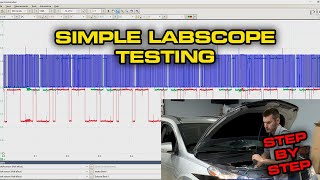
- Labscope Cam/Crank Correlation (3.6L LGX) — expected: On Bank 1, the intake cam sensor signal should cross in the middle of the 'gap' of the crankshaft sensor's 58x pattern. The exhaust cam sensor signal should cross about three teeth after the gap.. Failure: If the camshaft sensor signals are shifted to the right (retarded) relative to the crankshaft signal's gap, it's a strong indicator of a stretched timing chain. This electronic test can confirm a mechanical timing issue before engine disassembly.
Scan Tool Commands That Help
- GDS2 / Professional Scan Tool: Crankshaft Position Variation Relearn — This procedure is required after replacing the crankshaft position sensor, the ECM, or after some major engine or transmission work. It synchronizes the sensor with the actual crankshaft reluctor wheel's minor variations. Failure to perform this relearn can cause misfires or other performance issues, and may set code P1336.
- GDS2 / Professional Scan Tool: Camshaft Position Actuator Solenoid Test — This bidirectional command allows a technician to manually activate the VVT solenoid. The technician can observe the engine's response (a change in idle) and monitor desired vs. actual cam position on the scan tool to confirm if the solenoid is responding to commands. This helps isolate a faulty solenoid from a mechanical phaser or oil pressure problem.
Wiring & Ground Locations
- G102 — Located at the left rear of the engine.. This ground point serves the 8 ignition coils. While not directly tied to the cam/crank sensors, a poor ground here can cause erratic engine behavior and misfires that might complicate diagnosis.
- G101 / G106 — G101 is at the left front of the engine block, near the starter. G106 is on the front center of the frame cross rail, under the crank pulley. They are often jumpered together.. This is a primary engine ground location that serves the Engine Control Module (ECM). A poor connection here can cause a wide range of issues, including incorrect sensor readings and false trouble codes like P0016.
- Bank 1 Camshaft Position Sensors — On the 3.6L V6, Bank 1 is the passenger side of the engine. The two camshaft position sensors are located on the front of the cylinder head, often behind the ECU and its mounting bracket.. Correctly identifying Bank 1 is critical. P0016 specifically refers to the intake sensor on this bank. Swapping the wrong sensors during diagnosis will lead to incorrect conclusions.
Real Owner Repair Stories
- YouTube video by L1 Automotive Training (GM vehicle with 3.6L V6 (demonstrates a common LGX issue)) — Check Engine Light with a camshaft position sensor performance code (P0366, which was misleading).
❌ Tried (didn't work) Replacing the sensor with a new, OEM ACDelco part did not fix the issue and resulted in the same faulty waveform on an oscilloscope., A second new OEM sensor also produced the same bad result., Moving the faulty new sensor to the other bank caused the code and the bad waveform to follow, proving the engine/wiring was not the issue.
✅ What actually fixed it The technician found that multiple new, in-box OEM sensors were faulty. The issue was finally resolved by installing a used sensor sourced from eBay, which produced a correct waveform and cleared the code. This highlights a rare but frustrating quality control issue where even new OEM parts can be defective.
OEM Part Supersession History
12627117, 12655434→12662736— Standard part evolution and consolidation for GM's VVT solenoids across multiple engine platforms.
Model Year Variations Within This Range
- 2016-2020: The Cadillac CT6 featured the 3.6L LGX V6, which is a 'Gen IV' High Feature V6. This engine is a significant redesign of the earlier LLT and LY7 engines, featuring a stiffer block, larger valves, and improved Active Fuel Management (AFM). While timing chain issues are less common than on the older engines, they can still occur.
- 2019-2020: For the 2019 model year, the CT6 received a facelift and some powertrain updates. While the 3.6L LGX remained a core engine, this is also when the 4.2L 'Blackwing' V8 was introduced. The fundamental diagnosis for P0016 on the LGX engine remains the same across the 2016-2020 range.
Helpful Videos
We Have This Part in Stock


The information in this article is provided for general reference and educational purposes only. Vehicle specifications, procedures, and part compatibility can vary by production date, trim level, and region. Always consult your vehicle's factory service manual and verify part numbers before purchasing or performing repairs. Safety-critical components such as airbags, seat belts, and braking systems should be installed by a qualified professional.
- Cadillac CT6:
- 🎬 Helpful Videos
- 🛍️ Shop This Part
- What's Unique About the 2016-2020 Cadillac CT6
- Diagnostic Flowchart
- Symptoms You May Notice
- Most Likely Causes
- Rare But Worth Checking
- Diagnosis Steps
- Parts You'll Likely Need
- Related Codes That Often Appear With This One
- Technical Service Bulletins (TSBs) & Recalls
- Platform-Specific Known Issues
- Mechanic-Grade Diagnostic Values
- Scan Tool Commands That Help
- Wiring & Ground Locations
- Real Owner Repair Stories
- OEM Part Supersession History
- Model Year Variations Within This Range
- 🎟️ Get 5% Off