

P0016 on 2020-2023 Cadillac CT4: Crankshaft/Camshaft Correlation Causes and Fixes
On a 2020-2023 Cadillac CT4, code P0016 is most often caused by a faulty camshaft position actuator magnet (solenoid), especially on the 2.7L L3B engine, or a more serious mechanical issue with the intake cam actuator. Replacing the solenoid (ACDelco Part #12698384 for the L3B) is a straightforward DIY fix costing around $40-$80.
- P0016 on a 2020-2023 CT4 indicates a timing mismatch between the crankshaft and intake camshaft.
- Before attempting complex repairs, check the engine oil level and condition, as low or dirty oil is a common cause.
- The most likely part to fail is the Camshaft Position Actuator Magnet (solenoid), which is relatively inexpensive and easy to replace.
- If you hear a rattling or scraping noise from the engine (especially on a 2.7L model), suspect a more serious mechanical issue with the cam actuator as described in TSB #PIP5921B.
- Do not immediately replace the cam or crank sensors, as they are usually just reporting the timing problem correctly.
What's Unique About the 2020-2023 Cadillac CT4
For the 2020-2023 Cadillac CT4, particularly those with the 2.7L L3B engine, this code is specifically addressed by manufacturer bulletins. TSB #PIP5921B points directly to a unique mechanical failure where screws can back out of the intake cam actuator, causing a rattling noise and making contact with the cam carrier. Another TSB, #PIP5855, identifies faulty camshaft position actuator magnets (solenoids) as a common culprit for a range of timing codes, including P0016. Furthermore, GM has issued bulletins regarding engine wiring harnesses chafing on various underhood components on L3B engines, which can cause a host of electrical issues and trigger codes like P0016. These bulletins suggest the issue is often a known component failure rather than a simple sensor error or a stretched timing chain.
Diagnostic Flowchart
Tap your situation to follow the diagnostic path that matches what you're seeing on this vehicle.
Symptoms You May Notice
- Check Engine Light (MIL) illuminated
- Rough idle
- Poor acceleration or reduced engine power
- Engine rattling, ticking, or scraping noise, especially from the front of the engine on the intake side
- Engine may crank but not start in severe cases
- No noticeable symptoms other than the Check Engine Light in some cases
- Replacing the camshaft or crankshaft position sensors without first checking for mechanical issues, oil problems, or faulty actuator solenoids.
- Assuming a stretched timing chain without first investigating the more common and platform-specific issues like the actuator solenoids or the L3B engine's intake cam actuator screw problem.
Most Likely Causes
- Faulty Camshaft Position Actuator Magnet (Solenoid) 🔴 High Probability TSB #PIP5855 specifically calls out replacing the camshaft position actuator magnet as a necessary fix when P0016 is present along with other timing codes. This is a very common failure point in modern VVT systems.
How to confirm: Swap the intake and exhaust actuator solenoids. They are typically located on the front of the valve cover and are identical. If the code changes to P0017 (Exhaust Camshaft Position Correlation), the solenoid is confirmed bad. You can also test the solenoid's resistance with a multimeter; the expected range is typically 8 to 12 Ohms.
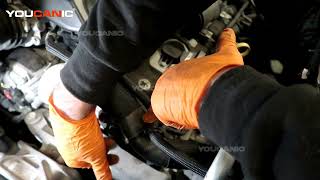
Typical fix: Replace the Bank 1 intake camshaft actuator solenoid. It's often recommended to replace both intake and exhaust solenoids at the same time as a preventative measure. The ACDelco part number for the 2.7L L3B engine is 12698384. 🎬 Watch: How to replace the camshaft position actuator solenoid valve.
Est. part cost: $30-$80 - Failing Intake Cam Actuator (Phaser) 🟡 Medium Probability Specifically on the 2.7L L3B engine, TSB #PIP5921B notes that the torx cover plate screws on the intake cam actuator can back out. This causes a rattling or scraping noise as they contact the cam carrier face, generating metal debris and setting timing codes.
How to confirm: Requires removing the upper timing chain cover to visually inspect the intake cam actuator for loose screws or damage. A strong indicator is a scraping noise from the intake side of the engine and finding significant aluminum debris in the oil filter or oil pickup tube screen.
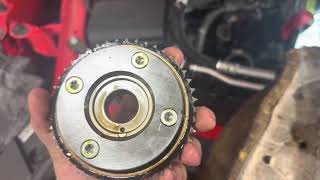
Typical fix: If screws are loose but no damage has occurred, the fix involves replacing the Intake Cam Actuator. If the cam carrier is damaged, a full engine replacement may be necessary due to widespread metal debris contamination. The ACDelco part number for the actuator is 12690959, which supersedes 12666666.
Est. part cost: $150-$400 for the actuator - Low or Dirty Engine Oil 🟡 Medium Probability The Variable Valve Timing (VVT) system, which controls the camshafts, is operated by engine oil pressure. Low, old, or incorrect viscosity oil (non-dexos approved) can impede the function of the phasers and solenoids, triggering timing codes.
How to confirm: Check the engine oil level on the dipstick and review service records to ensure the correct oil and change interval are being used. An oil change is a crucial first step in diagnosis.
Typical fix: Perform an oil and filter change with the manufacturer-specified grade of oil (e.g., SAE 0W-20 dexos-approved).
Est. part cost: $50-$100
Rare But Worth Checking
- Wiring Harness Damage: A GM service bulletin (#21-NA-149) for vehicles with the 2.7L L3B engine notes that the engine wiring harness can chafe against sharp edges on the cam carrier cover, ECM/TCM bracket, or shock tower. This can cause a short to ground and trigger a wide variety of codes, including P0016.
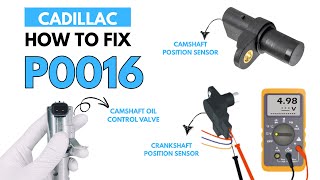
- Faulty Camshaft or Crankshaft Position Sensor: While possible, these sensors are often replaced unnecessarily. They are more likely to be accurately reporting a mechanical timing problem than to have failed themselves. 🎬 Check out this complete guide to fixing Cadillac P0016 codes. TSB #PIP5855 advises checking wiring and the actuator magnet before suspecting the sensor.
- Stretched or Damaged Timing Chain / Tensioner: On the 2.0L LSY engine, a GM TechLink article notes that a stuck or collapsed timing chain tensioner can cause a loose chain and set P0016. While less common on these newer engines than older GM models, it's a possibility, especially with lubrication issues.
Diagnosis Steps
- Check the engine oil level and condition. Ensure it is full, clean, and of the correct viscosity (dexos-approved). If in doubt, change the oil and filter as a first step.
- Scan the ECM for any other trouble codes. Note codes like P0011, P0014, or P0017, as they point to a timing system issue.
- Listen for any rattling or scraping noises from the front of the engine. On the 2.7L L3B, this could indicate the cam actuator issue described in TSB #PIP5921B.
- Inspect the engine wiring harness for any signs of damage or chafing, particularly on 2.7L models around the cam carrier and ECM bracket, as noted in GM bulletins.
- Perform a diagnostic test on the intake camshaft position actuator solenoid. The easiest way is to swap the intake and exhaust solenoids. Clear the codes and run the engine. If the code changes to P0017, the solenoid you moved is faulty and must be replaced.
- If the solenoid is good, test the camshaft position sensor itself, though it is a less likely cause.
- If all else fails, the issue is likely mechanical. For the 2.7L L3B, the upper timing chain cover must be removed to inspect the intake cam actuator for loose torx screws. Check the oil pickup tube for aluminum debris. For the 2.0L LSY, inspect the timing chain and tensioner for slack or damage.
Parts You'll Likely Need
- Camshaft Position Actuator Magnet (VVT Solenoid)
(OEM #12698384 (for 2.7L L3B))— This is the most likely cause according to TSB #PIP5855 and is a common failure point in VVT systems. It is also the easiest and cheapest part to replace first.
Trusted brands: ACDelco, Delphi
OEM price range: $60-$100
Aftermarket price range: $30-$80 - Intake Camshaft Actuator (Phaser)
(OEM #12690959)— TSB #PIP5921B identifies a potential mechanical failure with this part on the 2.7L L3B engine, where screws can back out and cause timing issues and severe engine damage.
Trusted brands: ACDelco
OEM price range: $200-$400
Aftermarket price range: $150-$300
Related Codes That Often Appear With This One
- P0011 — This code for 'Intake Camshaft Position Timing - Over-Advanced' is mentioned in both TSB #PIP5855 and #PIP5921B as appearing with P0016, indicating a problem with the intake cam timing control.
- P0017 — This code indicates a correlation issue with the exhaust camshaft. It can appear alongside P0016 if there is a systemic issue like low oil pressure or if a technician swaps a faulty intake solenoid to the exhaust position for diagnosis.
- P0014 — This code for 'Exhaust Camshaft Position Timing - Over-Advanced' is also mentioned in TSB #PIP5855 as potentially setting with P0016.
Technical Service Bulletins (TSBs) & Recalls
- PIP5855: MIL Illuminated with Any Combination of DTCs P0011 P0014 P0016 P0017 Setting.
- PIP5921B: Possibility of DTC p0011 p0016 and potential for a rattle or ticking noise
Platform-Specific Known Issues
- TSB #PIP5855: Faulty Camshaft Position Actuator Magnet: Notes that a Malfunction Indicator Lamp with codes P0011, P0014, P0016, or P0017 may be resolved by first inspecting wiring and then replacing the affected Camshaft Position Actuator Magnet as necessary.
- TSB #PIP5921B: Intake Cam Actuator Screws Backing Out (2.7L L3B): Specifically for the 2.7L L3B engine, this bulletin warns of a potential rattle, scrape, or ticking noise from the Intake Cam Actuator. This is caused by the actuator's cover plate screws backing out and contacting the cam carrier, which can set codes P0011 and P0016 and may lead to a no-start or no-compression condition.
- Bulletin #21-NA-149: Engine Wiring Harness Chafing (2.7L L3B): Details multiple locations where the engine wiring harness on the 2.7L L3B engine can rub through, causing shorts to ground. This can result in a wide array of DTCs, including timing codes, and various drivability problems.
Mechanic-Grade Diagnostic Values
- Camshaft Position (CMP) Actuator Solenoid Resistance — expected: 8 to 12 Ohms. Failure: A reading outside this range, or an open/short circuit, indicates a faulty solenoid.
- Crankshaft vs. Camshaft Sensor Waveform Correlation — expected: Using an oscilloscope at idle, the 17th signal pulse of the crankshaft sensor after the missing tooth should align with the high signal of the camshaft sensor.. Failure: If the signals are not aligned as specified, it indicates a mechanical timing misalignment.
Scan Tool Commands That Help
- GDS2 or similar professional scan tool: VVT Solenoid (OCV) Actuation Test — This bidirectional control allows the technician to command the solenoid on and off to verify its mechanical operation and its effect on cam timing, isolating a stuck or slow-to-respond solenoid without removing it from the engine.
- Oscilloscope / Graphing Scan Tool: Crankshaft and Camshaft Waveform Analysis — This is the definitive, non-invasive test to confirm if the physical timing between the crank and cam is correct. It should be used after verifying sensors and solenoids are functioning electrically to rule out or confirm a mechanical issue like a jumped chain.
Wiring & Ground Locations
- Engine Harness Chafe Point 1 (L3B) — The ECM/TCM black metal bracket, located behind the felt liner in the front driver's side wheel well.. Per TSB 21-NA-149, the harness can rub against a sharp edge on this bracket, shorting out sensor or actuator circuits and causing various DTCs, including P0016.
- Engine Harness Chafe Point 2 (L3B) — The driver's side upper control arm and shock tower bolt area.. TSB 21-NA-149 identifies this as another primary contact point where engine movement can cause the harness to rub through, leading to intermittent electrical faults.
- G103 — Located at the left rear of the engine compartment on the cowl, above the brake booster.. This is a major ground point for the Engine Control Module (ECM). A poor connection here can cause incorrect readings from the cam and crank sensors, leading to false correlation codes.
- G101 / G106 — Located on the frame cross rail under the crank pulley.. This ground serves the Engine Control Module. A compromised ground can disrupt the sensitive signals from the crankshaft position sensor, which is located nearby.
Real Owner Repair Stories
- GM Preliminary Information Bulletin #PIP5921B (2020-2023 Cadillac CT4-V with 2.7L L3B engine) — Tapping or scraping noise from front intake side of engine, Check Engine Light with P0011 and P0016, possible crank-no-start or no compression.
❌ Tried (didn't work) Assuming a simple sensor or solenoid failure without investigating the specific noise.
✅ What actually fixed it Removing the upper timing chain cover revealed the intake cam actuator's torx cover plate screws had backed out and were contacting the cam carrier face. In cases with no cam carrier damage, replacing the Intake Cam Actuator (PN 12690959) and changing the oil/filter resolved the issue. In severe cases where the carrier face was damaged and aluminum debris contaminated the engine, a full engine and turbocharger replacement was required.
"I Checked Everything" — The Actual Cause
- A technician may find that all sensors test good, VVT solenoids click when activated, and even manual timing marks appear aligned. However, the P0016 code may persist intermittently. The actual cause, as identified in TSB 21-NA-149 for the 2.7L L3B engine, is often an engine wiring harness that is chafing against the ECM bracket or upper control arm. This creates an intermittent short-to-ground on a critical sensor or actuator wire that won't be found by standard component tests or a smoke test.
OEM Part Supersession History
12666666→12690959— This is the Intake Camshaft Position Actuator (Phaser). The reason for supersession is not officially stated, but it often relates to design improvements or manufacturing changes.
Heads up: The new part number 12690959 is the correct replacement for the original.
Model Year Variations Within This Range
- 2022-2023 (L3B Engine): For the 2022 model year, the 2.7L L3B engine received hardware upgrades and a new high-output tune, increasing torque from 348 lb-ft to 430 lb-ft. While the fundamental causes of P0016 remain, technicians should be aware of the different power ratings and potential internal component differences when sourcing parts or diagnosing.
- 2023 (L3B Engine): A specific batch of 2023 L3B engines were subject to GM Customer Satisfaction Program N232415060 for a casting defect in the block's main oil gallery. This could lead to a cracked block, which could manifest in various engine issues and codes, potentially including timing correlation problems due to oil pressure loss.
Helpful Videos
![How to Fix CADILLAC P0016 Engine Code in 6 Minutes [4 DIY Methods / Only $6.81]](https://img.youtube.com/vi/ifgKFu7bci4/mqdefault.jpg)
We Have This Part in Stock


The information in this article is provided for general reference and educational purposes only. Vehicle specifications, procedures, and part compatibility can vary by production date, trim level, and region. Always consult your vehicle's factory service manual and verify part numbers before purchasing or performing repairs. Safety-critical components such as airbags, seat belts, and braking systems should be installed by a qualified professional.
- Cadillac CT4:
- 🎬 Helpful Videos
- 🛍️ Shop This Part
- What's Unique About the 2020-2023 Cadillac CT4
- Diagnostic Flowchart
- Symptoms You May Notice
- Most Likely Causes
- Rare But Worth Checking
- Diagnosis Steps
- Parts You'll Likely Need
- Related Codes That Often Appear With This One
- Technical Service Bulletins (TSBs) & Recalls
- Platform-Specific Known Issues
- Mechanic-Grade Diagnostic Values
- Scan Tool Commands That Help
- Wiring & Ground Locations
- Real Owner Repair Stories
- "I Checked Everything" — The Actual Cause
- OEM Part Supersession History
- Model Year Variations Within This Range
- 🎟️ Get 5% Off