

P0016 on 2013-2016 Buick Verano: Crank/Cam Correlation Causes and Fixes
On the 2013-2016 Buick Verano, P0016 usually points to a stretched timing chain or a faulty camshaft actuator solenoid. Always check the engine oil level first, as low or dirty oil, often due to the 2.4L Ecotec's high oil consumption, is a primary contributor to this failure. A timing chain replacement is a costly, professional repair, while solenoids are a much cheaper and easier DIY fix.
- P0016 on a 2013-2016 Verano is a serious code that should not be ignored.
- The most likely cause is a stretched timing chain, a known issue with the 2.4L Ecotec engine.
- Always check your engine oil level first; low or dirty oil is a frequent trigger for this code.
- A faulty camshaft actuator solenoid is another common cause that is much cheaper and easier to fix than a timing chain.
- Do not simply replace sensors without confirming the mechanical and hydraulic systems (timing chain, oil pressure, solenoids) are functioning correctly.
What's Unique About the 2013-2016 Buick VERANO

The 2.4L Ecotec engine used in most Veranos is known for timing chain issues. These chains can stretch over time, directly causing the P0016 correlation fault. This issue is often accelerated by excessive oil consumption problems or clogged PCV orifices, which can lead to low oil levels and increased wear on the chain, guides, and tensioner. While sensors can fail, on this specific platform, a mechanical timing or oil-related issue is the most probable root cause.
Diagnostic Flowchart

Tap your situation to follow the diagnostic path that matches what you're seeing on this vehicle.
Symptoms You May Notice
- Check Engine Light is on
- Engine runs rough or idles poorly
- Shaking or vibrating while stopped at a red light.
- Reduced engine power and sluggish acceleration
- Rattling or buzzing noise from the right side of the engine, especially on a cold start, 🎬 Watch: Hear what a failing timing chain rattle sounds like. which can last for a few seconds.
- Engine cranks but fails to start in severe cases.
- Stalling at stop signs or traffic lights.
- Worse than usual fuel economy
- Replacing the camshaft and crankshaft position sensors when the actual problem is a stretched timing chain or a faulty VVT solenoid. Sensors are a less frequent cause of P0016 on this engine compared to mechanical or oil-related issues.
- Replacing only the VVT solenoids when the screens are clogged with plastic debris. The debris is a symptom of broken timing chain guides, and the underlying mechanical failure must be addressed.
Most Likely Causes

- Stretched Timing Chain or Worn/Broken Timing Components 🔴 High Probability The 2.4L Ecotec engine has a well-documented history of premature timing chain wear, tensioner failure, and brittle plastic guides that break apart. This is frequently caused by oil starvation due to the engine's tendency to consume oil.
How to confirm: A physical inspection is required. A mechanic will remove the valve cover or timing cover to measure the slack in the chain and inspect the guides for wear or damage. Finding pieces of the dark plastic guides in the oil pan or on the VVT solenoid screens is a definitive sign of failure.
Typical fix: Replacement of the entire timing chain kit, which includes the chain, tensioners, guides, and often the cam phasers (actuators). It is critical to also replace the balance shaft chain kit and clean the oil pan and oil pickup tube of debris.
Est. part cost: $200-$550 - Low or Dirty Engine Oil 🔴 High Probability The VVT system, which adjusts cam timing, is hydraulically operated by engine oil. The 2.4L Ecotec can consume significant amounts of oil due to piston ring design issues. Low oil levels starve the VVT phasers and timing chain tensioner, causing them to function improperly and accelerating wear, which triggers a correlation code.
How to confirm: Check the engine oil dipstick for level and inspect the oil's condition. If it is low, black, or sludgy, this is a likely contributor. Note that the engine may be low by 1.25 quarts or more before oil registers on the dipstick.
Typical fix: Perform an oil and filter change using the manufacturer-specified full synthetic oil (typically 5W-30 for the Verano). Top off oil if low and monitor consumption at every fuel fill-up to prevent recurrence.
Est. part cost: $40-$80 - Faulty Intake Camshaft Position Actuator Solenoid 🟡 Medium Probability These solenoids control oil flow to the cam phasers. They can become clogged with sludge from infrequent oil changes or debris from failing timing chain guides, or they can fail electrically.
How to confirm: A common diagnostic step is to swap the intake and exhaust solenoids. If the code changes to P0017 (Exhaust Camshaft Correlation), the solenoid is faulty. They can also be tested for resistance with a multimeter or inspected for debris on their screens.
Typical fix: Replacement of the faulty solenoid. They are located on top of the valve cover and are relatively easy to access and replace 🎬 See how to replace VVT solenoids to fix a rough idle. with a 10mm socket.
Est. part cost: $30-$60 - Faulty Camshaft or Crankshaft Position Sensor ⚪ Low Probability
How to confirm: Test the sensor's output signal with a multimeter or oscilloscope. Inspect the wiring and connector for damage or corrosion. On this platform, sensor failure is much less common than mechanical timing issues for a P0016 code.
Typical fix: Replace the failed sensor.
Est. part cost: $20-$50
Rare But Worth Checking
- Slipped Camshaft Reluctor Ring: As mentioned in GM TSB #PIP4548F, the reluctor ring that the camshaft sensor reads is press-fit onto the camshaft and is not keyed. In rare cases, especially after an engine overheat, this ring can spin on the camshaft. This causes a timing correlation code even if the timing chain is perfectly aligned. A technician experienced this on a 2010 Equinox, confirming it's a real-world, though uncommon, failure. This requires camshaft replacement.
- Clogged PCV Orifice: The 2.4L Ecotec has a fixed PCV orifice in the intake manifold that can clog with carbon and sludge, especially in cold climates. This leads to excessive crankcase pressure, which can cause oil leaks (notably a blown-out rear main seal) and increase oil consumption, indirectly contributing to the oil starvation that causes timing system failure.
- Swapped Solenoid Connectors: According to GM TSB #19-NA-150, on some GM engines, the connectors for the intake camshaft actuator solenoid and the intake actuator park lock solenoid are identical and can be accidentally swapped during reassembly after a repair. This will immediately set a P0016 code. The connectors must be identified by wire color to ensure they are in the correct locations.
Diagnosis Steps
- Check the engine oil level and condition. This is the most critical first step. If low, top off and see if symptoms change, but assume underlying damage may have already occurred.
- Use a scan tool to check for any other related trouble codes, such as P0017, P0011, or fuel pressure codes.
- Listen for a rattling noise from the timing chain area (passenger side of engine) on a cold start. A brief rattle strongly indicates a loose chain or bad tensioner.
- Inspect the VVT solenoid screens. Remove the intake and exhaust VVT solenoids (top of valve cover) and check their mesh screens for metal shavings or pieces of black/brown plastic. Debris confirms a timing guide failure.
- Swap the intake and exhaust VVT solenoids. Clean them, swap their positions, clear the codes, and drive. If the code changes to P0017, the solenoid you moved to the exhaust position is bad.
- If solenoids are clean and the swap test is inconclusive, use a scan tool with live data to monitor desired vs. actual camshaft position angles. A large, persistent deviation that doesn't correct itself points to a mechanical timing issue (stretched chain or slipped reluctor).
- If a mechanical issue is suspected, a physical inspection of the timing chain, guides, and tensioner is required. This is a labor-intensive step that involves removing the timing cover.
- As a final check per TSB PIP4548F, if timing components are confirmed to be good but the code persists, inspect the camshaft reluctor ring for any signs of movement relative to the camshaft.
Parts You'll Likely Need
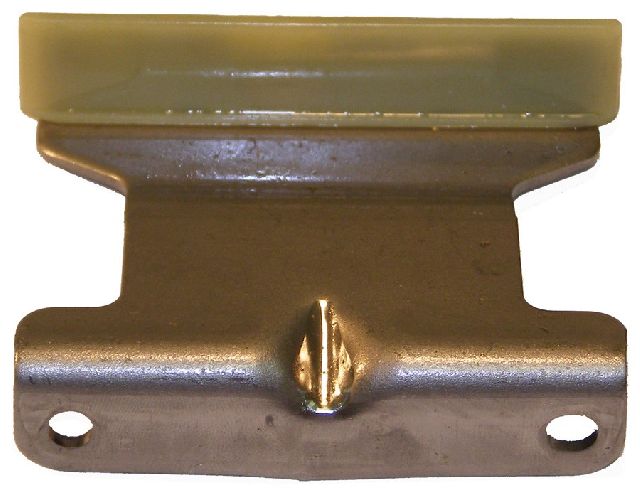
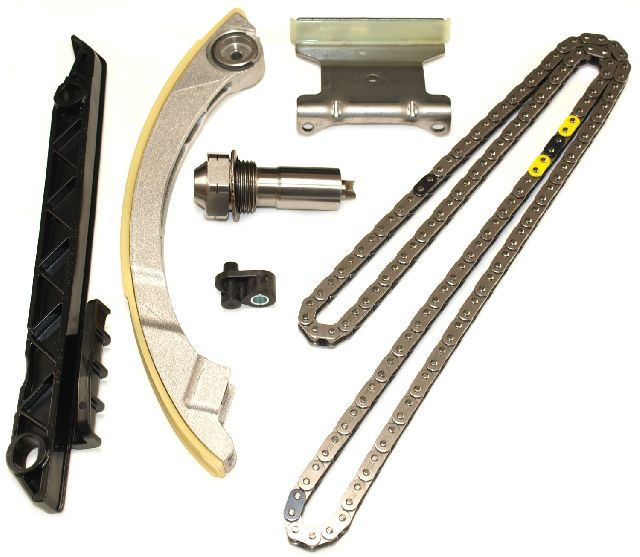
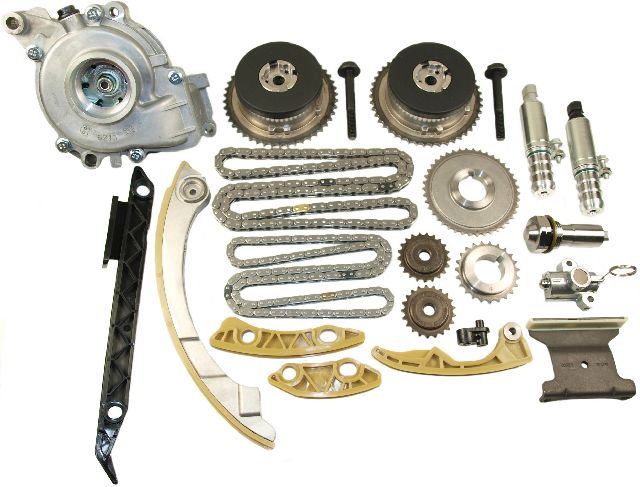
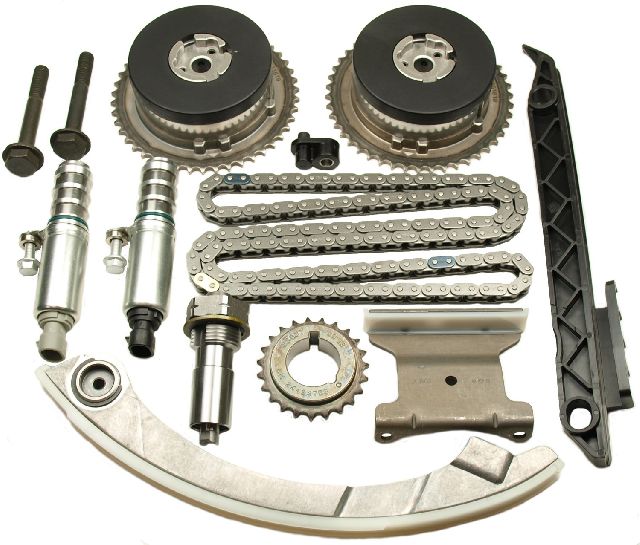
- Timing Chain Kit
(OEM #12680750)— This is the most common high-probability fix for P0016 on the 2.4L Ecotec engine due to chain stretch and guide failure. The kit typically includes the chain, guides, tensioner, seal, and bolts. 🎬 Watch: A complete walkthrough of the Ecotec timing chain replacement.
Trusted brands: ACDelco, Cloyes, Melling
OEM price range: $150-$250
Aftermarket price range: $100-$200
Related Codes That Often Appear With This One
- P0017 — Crankshaft Position - Camshaft Position Correlation (Bank 1, Sensor B - Exhaust). Often appears with P0016 when a stretched timing chain affects both camshafts, which is very common.
- P0011 — 'A' Camshaft Position - Timing Over-Advanced (Bank 1). This can be caused by a stuck VVT solenoid, a failing cam phaser, or a stretched chain causing the ECM to see an implausible value.
- P0087 / P228D — Fuel Pressure Regulator Performance. On the 2.4L direct-injection engine, the high-pressure fuel pump is driven by a lobe on the intake camshaft. If cam timing is incorrect due to a stretched chain, it can affect fuel pump operation and set these codes.
Technical Service Bulletins (TSBs) & Recalls
- PIP4548F: Advises inspection for a spun camshaft reluctor ring if P0016/P0017 is present on an engine where the mechanical timing is confirmed to be correct.
- 12-06-01-009G: While for the V6, this TSB series highlights GM's awareness of timing chain issues setting P0016/P0017 codes and provides updated service kits.
- 19-NA-150: Warns that identical electrical connectors for two different solenoids can be swapped during engine reassembly, causing an immediate P0016 code.
- GM Special Coverage #14159 / #15285: These address the root cause of many timing failures by extending the warranty for excessive oil consumption caused by piston ring wear on 2010-2013 2.4L engines.
Platform-Specific Known Issues
- The 2.4L Ecotec engine is widely documented to have issues with timing chain stretch and failure of the plastic timing chain guides.
- These engines can also suffer from excessive oil consumption due to piston ring issues (addressed in GM Special Coverage Adjustment #14159) and clogged PCV orifices, which starves the engine of lubrication and accelerates timing component wear.
- A real-world repair story on a 2013 Verano involved a timing chain tensioner failure that caused the chain to jump teeth. After replacement, solenoid and fuel pressure codes appeared due to debris from the failed tensioner clogging the VVT solenoids, requiring another oil change and further diagnosis.
Mechanic-Grade Diagnostic Values
- VVT (OCV) Solenoid Power Supply — expected: Battery voltage (~12.6V with key on, engine off). Failure: No voltage indicates an open or short in the power supply wiring from the fuse box.
- VVT (OCV) Solenoid Internal Resistance — expected: A specific resistance value (typically 8-13 ohms, but check service manual for exact spec).. Failure: A reading of infinite resistance (open circuit) or zero resistance (short circuit) indicates a failed solenoid coil.
- Crankshaft Position Sensor Circuit Voltage — expected: With key on, engine off, the 5V reference wire and the signal wire should both read ~5.2V. The low reference wire should read 0V.. Failure: Incorrect voltages point to a wiring issue or a fault in the ECM. A noisy or non-square wave signal while running (viewed on an oscilloscope) indicates a failing sensor or reluctor wheel issue.
- High-Pressure Fuel Pump Pressure at Idle — expected: At idle, desired and actual pressure should be around 450 PSI. On deceleration, the ECM commands 0 PSI, and the actual pressure should drop to match the low-side pump pressure (~70 PSI).. Failure: If pressure fails to drop on deceleration (e.g., stays at 290+ PSI), it indicates a stuck regulator inside the high-pressure pump, which is mechanically driven by the camshaft and can be affected by timing issues.
Scan Tool Commands That Help
- GDS2 / Professional Scan Tool: VVT Solenoid Actuator Test (Bidirectional Control) — Use this to command the intake VVT solenoid on and off at idle. A functioning solenoid and phaser will cause the engine to run rough, hesitate, or stall, confirming the hydraulic/mechanical parts are working.
- GDS2 / Professional Scan Tool: Crankshaft Position System Variation Learn (CASE Relearn) — This procedure is mandatory after replacing the timing chain, crankshaft sensor, or ECM. It calibrates the ECM to minor variations in the crankshaft reluctor wheel. Failure to perform this can cause a P0016 to set even after a correct repair.
Wiring & Ground Locations
- G101 — Likely located at the lower front of the engine block.. This is a primary ground point for the Engine Control Module (ECM) and multiple critical sensors. A poor connection here can cause erratic sensor readings, including from the crank and cam sensors, leading to false correlation codes.
- G105 — Likely located on the front left of the engine block, near the crankshaft pulley.. Another critical engine block ground. Its proximity to the crankshaft makes it a key ground point to check when diagnosing a crank sensor-related code like P0016.
Real Owner Repair Stories
- GMC Terrain Forum user '51r' (2017 GMC Terrain 2.4L Ecotec) — Check engine light with codes P0016, P0011, and P228D after a few miles of driving. Vehicle ran okay.
❌ Tried (didn't work) Replaced the entire timing chain kit, even though the original chain did not appear to be stretched and the timing marks were correct.
✅ What actually fixed it Replacing the intake VVT solenoid and the intake camshaft position sensor with genuine GM (ACDelco) parts, and cleaning the camshaft reluctor wheel. This resolved the codes. - Chevy HHR Network user post (2010 Chevy Equinox 2.4L Ecotec (89,000 miles)) — Multiple codes including cam/crank correlation, reduced engine power, StabiliTrak error, and high fuel pressure after a previous dealer repair.
❌ Tried (didn't work) The dealer had previously replaced the water pump/balance-shaft chain, which requires removing the timing chain.
✅ What actually fixed it The root cause was found to be an incorrectly reset or damaged timing chain tensioner from the previous repair. The tensioner failed, allowing the timing chain to jump one or more teeth. A complete and correct timing chain service was the ultimate fix.
"I Checked Everything" — The Actual Cause
- A common scenario for P0016 is when a technician confirms the timing chain marks align perfectly, the solenoids test good, and sensors are replaced, yet the code persists. The cause is often a slipped reluctor ring on the intake camshaft, as noted in TSB PIP4548F. Since the ring is press-fit and not keyed, it can rotate independently of the camshaft, causing the sensor to report an incorrect position to the ECM even though the mechanical timing is perfect.
When the Usual Fixes Don't Work
- In one documented case on a 2017 GMC Terrain with the 2.4L engine, a technician replaced the timing chain for a P0016 code, even though the old chain appeared to be in good condition. The code immediately returned. The problem was only resolved after replacing the intake VVT solenoid and intake cam sensor with OEM parts, suggesting that on some occasions, an electrical or sensor-related failure can be the true root cause, even when a mechanical fault is suspected.
OEM Part Supersession History
12635447, 12673669, 12675579→12680750— GM has released several updated versions of the 2.4L Ecotec timing chain kit to improve the durability of the timing chain, plastic guides, and tensioner, which were known failure points.
Model Year Variations Within This Range
- 2013-2017: While the core engine design and P0016 failure pattern are consistent, GM made running changes to the 2.4L Ecotec (LEA/LCV). Piston rings were updated around 2013 to address high oil consumption, a major contributor to timing failures. Later models (2016-2017) are more likely to have the updated rings from the factory, but are still susceptible to timing chain stretch over time.
Helpful Videos

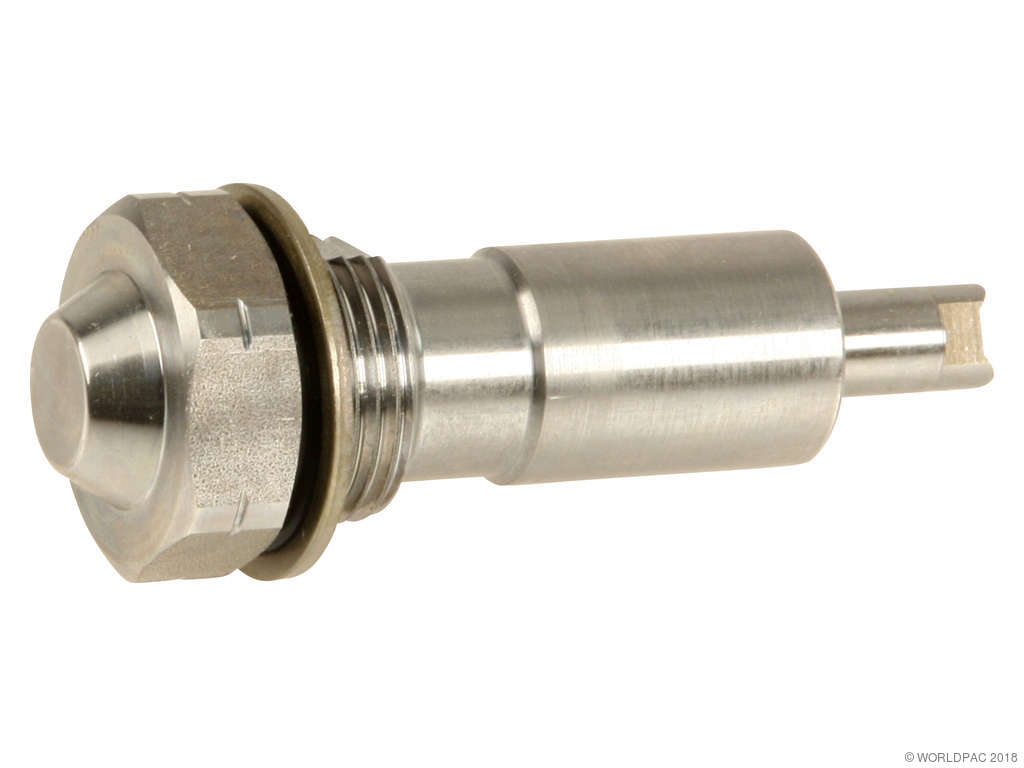
We Have This Part in Stock


The information in this article is provided for general reference and educational purposes only. Vehicle specifications, procedures, and part compatibility can vary by production date, trim level, and region. Always consult your vehicle's factory service manual and verify part numbers before purchasing or performing repairs. Safety-critical components such as airbags, seat belts, and braking systems should be installed by a qualified professional.
- Buick VERANO:
- 🎬 Helpful Videos
- 🛍️ Shop This Part
- What's Unique About the 2013-2016 Buick VERANO
- Diagnostic Flowchart
- Symptoms You May Notice
- Most Likely Causes
- Rare But Worth Checking
- Diagnosis Steps
- Parts You'll Likely Need
- Related Codes That Often Appear With This One
- Technical Service Bulletins (TSBs) & Recalls
- Platform-Specific Known Issues
- Mechanic-Grade Diagnostic Values
- Scan Tool Commands That Help
- Wiring & Ground Locations
- Real Owner Repair Stories
- "I Checked Everything" — The Actual Cause
- When the Usual Fixes Don't Work
- OEM Part Supersession History
- Model Year Variations Within This Range
- 🎟️ Get 5% Off