

P0016 on 2005-2012 Buick LaCrosse: Timing Chain & Sensor Guide
On the 2005-2012 Buick LaCrosse, especially those with the 3.6L V6 engine, the P0016 code almost always points to a stretched timing chain. This is a well-documented, serious, and expensive repair, often costing over $2,000. The issue was so prevalent that GM issued a special warranty extension (Special Coverage 11340C) for this specific problem. While faulty sensors are possible, they are a much less likely cause.
- P0016 on a 2005-2012 LaCrosse, especially with a 3.6L V6, is a strong indicator of a stretched timing chain.
- Do not simply replace the cam/crank sensors without further diagnosis; this is a common misdiagnosis that won't fix a mechanical timing problem.
- A rattling sound from the engine is a major red flag for a loose timing chain.
- This is a serious issue that should be addressed promptly to avoid the risk of catastrophic engine failure.
- Due to the complexity of the repair, professional service is highly recommended.
What's Unique About the 2005-2012 Buick LACROSSE

This generation of Buick LaCrosse, particularly models equipped with the 3.6L V6 (engine codes LY7 and LLT), is notorious for premature timing chain stretching. This isn't a random part failure; it's a well-documented pattern for this specific GM High Feature V6 engine family. The issue was so common that General Motors issued multiple Technical Service Bulletins (TSBs) and a Special Coverage Adjustment (11340C) that extended the warranty to 10 years/120,000 miles for this specific repair. A contributing factor was an overly optimistic Oil Life Monitor (OLM) calibration in early models, which led to oil degradation and accelerated chain wear.
Diagnostic Flowchart
Tap your situation to follow the diagnostic path that matches what you're seeing on this vehicle.
Generation note: The 2005-2012 range covers two LaCrosse generations. The first (2005-2009) and second (2010-2012) both used versions of the 3.6L V6 engine prone to this timing chain issue. The second generation also introduced 2.4L 4-cylinder and 3.0L V6 engines which can also experience this code, though the timing chain problem is most famous on the 3.6L.
Symptoms You May Notice
- Check Engine Light is on
- Engine rattles on startup or during idle
- Rough or unstable idle
- Reduced engine power and poor acceleration
- Engine cranks but fails to start
- Worse than usual fuel economy
- Replacing only the camshaft or crankshaft position sensors without verifying the mechanical timing. Many owners and shops replace these inexpensive sensors first, only for the code to return because the underlying issue is a stretched timing chain. This is especially true if P0008, P0009, or P0017 are also present.
Most Likely Causes

- Stretched Timing Chain 🔴 High Probability The 3.6L V6 engines (LY7, LLT) used in this period had a known design issue with premature timing chain wear. This was exacerbated by extended oil change intervals recommended by the original Oil Life Monitor (OLM) software, leading to oil breakdown and inadequate lubrication. The problem is confirmed by numerous owner complaints and manufacturer TSBs like 12-06-01-009F.
How to confirm: A physical inspection is required. A technician will remove the timing cover to measure the slack in the chain. A scan tool may also show a deviation in cam/crank correlation, but visual confirmation is definitive. 🎬 Watch: How to test for timing chain stretch using a labscope.
Typical fix: Replace all three timing chains, the tensioners, and guides. This is typically done as a complete kit. Per TSB 12-06-01-009, sprockets and actuators should only be replaced if visibly worn.
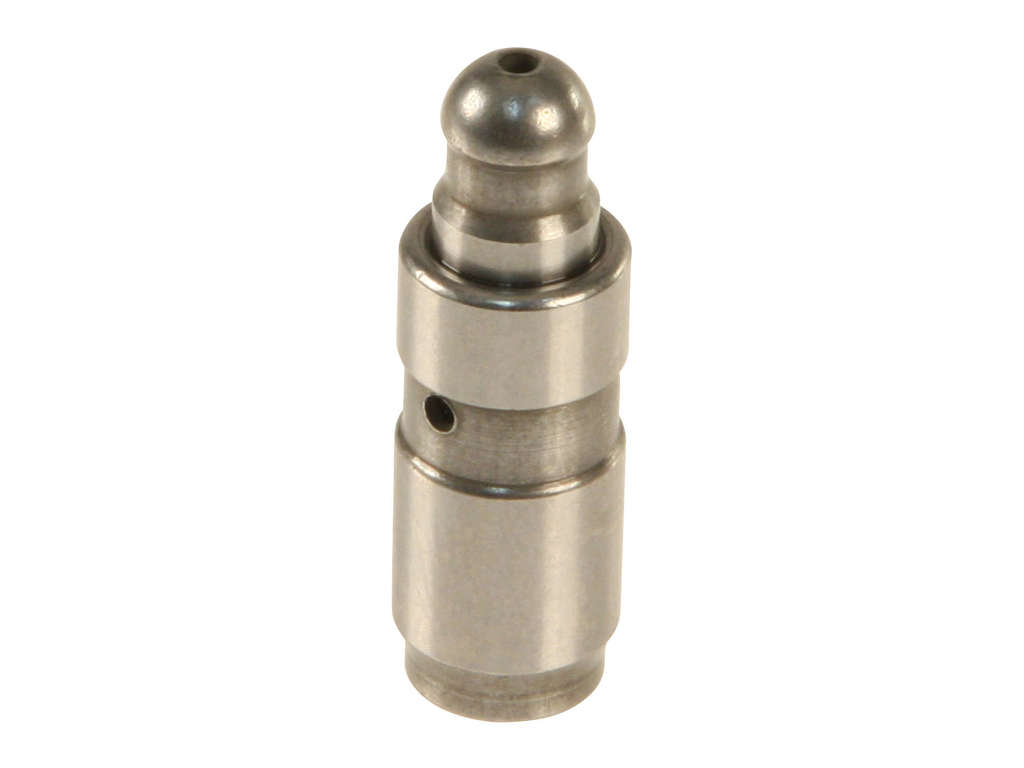
Est. part cost: $250-$500 for a full kit - Failed Timing Chain Tensioner(s) 🔴 High Probability The tensioners, which use oil pressure to keep the chains tight, can fail, get stuck, or weaken, leading to slack. This is part of the same common timing system failure and is often caused by degraded or low engine oil.
How to confirm: Diagnosed during a physical inspection of the timing system. A rattling noise from the engine is a strong indicator.
Typical fix: Replace the tensioners. It is highly recommended to replace the chains and guides at the same time as part of a complete kit.
Est. part cost: $40-$100 per tensioner - Low or Degraded Engine Oil 🟡 Medium Probability The timing chain tensioners and camshaft phasers (VVT system) are hydraulically operated by engine oil. Infrequent oil changes or using the wrong viscosity oil can lead to sludge, clogged passages, and low pressure, preventing the system from operating correctly and accelerating chain wear.
How to confirm: Check the oil level on the dipstick and inspect its condition. If it's very dark, thick, or below the minimum level, this is a likely contributing factor.
Typical fix: Perform an engine oil and filter change using a full synthetic oil that meets the GM dexos1 specification (typically 5W-30). This is critical maintenance but will not fix an already stretched chain.
Est. part cost: $40-$80 - Faulty Camshaft Position Sensor (Bank 1 Intake) ⚪ Low Probability
How to confirm: Use a multimeter to test the sensor's resistance and voltage, or swap it with the sensor from the other bank (if applicable) to see if the code changes (e.g., to P0018). However, if codes like P0008 or P0017 are also present, the sensor is almost never the root cause.
Typical fix: Replace the Bank 1 intake camshaft position sensor.
Est. part cost: $30-$75 - Faulty Crankshaft Position Sensor ⚪ Low Probability
How to confirm: Test the sensor's output signal with a multimeter or oscilloscope. A failing sensor may have an erratic or non-existent signal.
Typical fix: Replace the crankshaft position sensor.
Est. part cost: $30-$80
Rare But Worth Checking
- Slipped Camshaft Reluctor Ring: A TSB (#PIP4548F) mentions that the reluctor ring, which the camshaft sensor reads, can spin on the camshaft, especially after an engine overheat. This causes a mismatch even if the timing chain is perfect. The fix is to replace the entire camshaft, as the ring cannot be repositioned.
- Faulty VVT Solenoid (Oil Control Valve): A clogged or failed VVT solenoid for the Bank 1 intake camshaft can prevent proper timing adjustments, leading to a correlation error. These can sometimes be cleaned, but replacement is often necessary. They typically set their own codes (e.g., P0010, P0013).
- Damaged Wiring or Connectors: Frayed wires or corroded connectors for either the camshaft or crankshaft position sensor can cause a loss of signal, triggering the code. This should be visually inspected before replacing any parts.
Diagnosis Steps

- Verify the engine oil level and condition. If low or dirty, perform an oil change with the correct full synthetic dexos1-spec oil, clear the codes, and re-test.
- Use an OBD-II scanner to check for any other related trouble codes. Codes like P0008, P0009, or P0017 strongly point towards a mechanical timing issue. Also check for VVT solenoid codes (P0010, P0013, etc.).
- Listen for a metallic rattling noise from the front of the engine (passenger side), especially on a cold start. This is a classic sign of a loose timing chain.
- Inspect the wiring and connectors for the Bank 1 intake camshaft position sensor and the crankshaft position sensor for any damage or corrosion.
- If sensors and oil are good, the next step is to assume a mechanical timing issue. This requires removing the engine timing cover for a visual inspection of the timing chains, guides, and tensioners. This step is labor-intensive and best left to a professional. 🎬 Watch: A professional mechanic performs this repair on a 2010 LaCrosse.
- While the cover is off, check for excessive slack in the chains. If the chain can be easily lifted off the sprockets or shows significant play, it is stretched. If found, the entire timing chain kit should be replaced.
Parts You'll Likely Need

- Timing Chain Kit
(OEM #12651450 (ACDelco))— This is the most common failure. A complete kit ensures all worn components (chains, tensioners, guides) are replaced at once.
Trusted brands: ACDelco, Melling, Cloyes
OEM price range: $400-$600
Aftermarket price range: $250-$450 - Camshaft Position Sensor
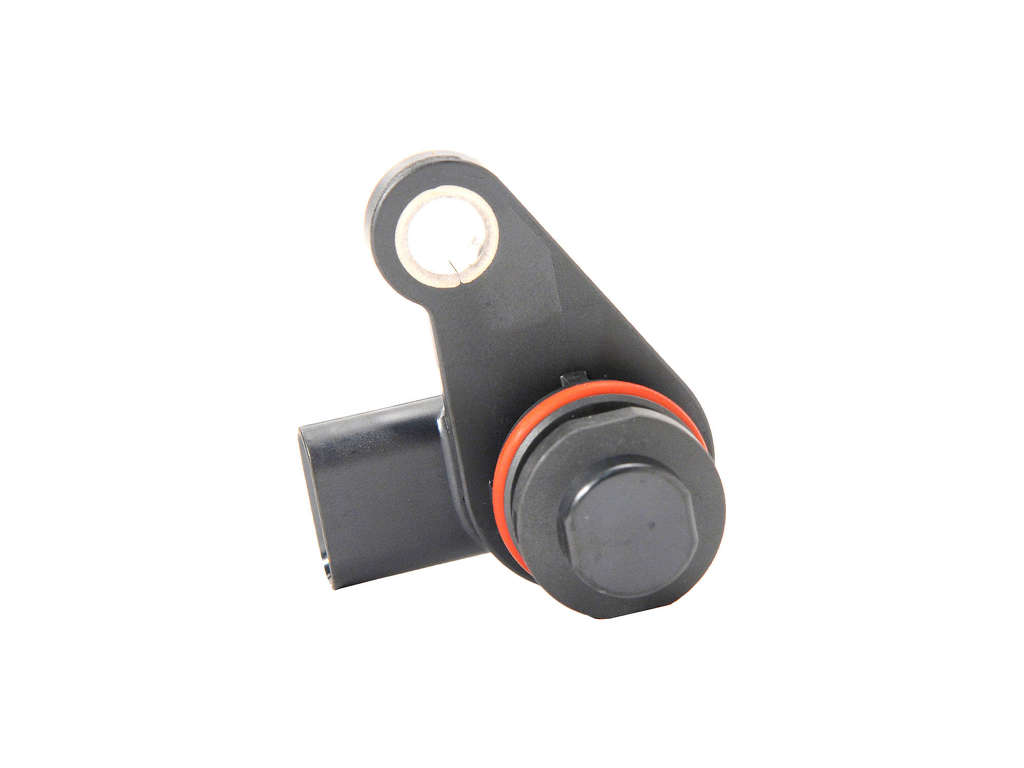
(OEM #12674704 (GM Genuine Parts))— A less common but possible cause. It's a relatively inexpensive part to replace during diagnosis, but unlikely to be the sole cause of P0016 on these engines.
Trusted brands: ACDelco, Delphi, Bosch
OEM price range: $50-$90
Aftermarket price range: $25-$70 - Crankshaft Position Sensor — Rarely the cause, but can fail and produce this code. Should be tested before replacement.
Trusted brands: ACDelco, Delphi, NTK
OEM price range: $40-$80
Aftermarket price range: $30-$60
Related Codes That Often Appear With This One
- P0017 — Crankshaft/Camshaft correlation error for the Bank 1 exhaust camshaft. It often appears with P0016 when the timing chain has stretched, affecting both cams on Bank 1.
- P0008 — Engine Positions System Performance (Bank 1). This is a more general timing correlation code for Bank 1, often set alongside P0016 as a primary indicator of a stretched timing chain.
- P0009 — Engine Positions System Performance (Bank 2). If this code is present with P0008 and P0016, it strongly suggests a primary timing chain issue affecting the entire engine, not just one bank.
Technical Service Bulletins (TSBs) & Recalls
- PIP3423P: Advises technicians to inspect for loose timing chains or tensioners when DTCs P0016, P0017, P0018, P0019, P0008 or P0009 are set.
- PIP4548F: Provides guidance for inspecting a slipped camshaft reluctor ring as a possible cause for P0016/P0017 on a properly timed engine.
Platform-Specific Known Issues
- Fuel Dilution and PCV System Issues: On the 2.4L Ecotec engines, P0016 is often a secondary symptom of other problems. A failing seal on the high-pressure fuel pump, which is driven by the camshaft, can allow gasoline to leak into the crankcase. This dilutes the engine oil, reducing its lubricating properties and causing accelerated wear and stretching of the timing chain. Additionally, the PCV system can accumulate water, which may freeze in cold climates, blocking the system and causing crankcase overpressure that can blow out engine seals.
Mechanic-Grade Diagnostic Values
- Scan Tool: Cam/Crank Correlation — expected: Bank 1 intake camshaft should be within +12 (advanced) and -9 (retarded) degrees of the crankshaft position.. Failure: The ECM will set code P0016 if the correlation exceeds these thresholds.
- VVT Actuator Solenoid Resistance — expected: 8 to 13 Ohms.. Failure: A reading outside this range, or infinite resistance, indicates a faulty solenoid.
- Engine Oil Pressure (Mechanical Gauge) — expected: At least 25 PSI at idle.. Failure: Pressure significantly below this can starve VVT and timing components of lubrication, causing correlation codes.
- Lab Scope: Cam vs. Crank Waveform — expected: A known-good waveform shows the cam sensor signal edge aligning at a specific point relative to the crank sensor's missing tooth pattern.. Failure: A stretched chain will cause the camshaft sensor's waveform to shift to the right (retard) on the screen relative to the crankshaft signal.
Scan Tool Commands That Help
- GDS2 / Tech2 or equivalent professional scanner: VVT Solenoid Actuator Test / Camshaft Position Actuator Solenoid Valve Control — Use this bidirectional control to command the Bank 1 intake solenoid on and off. A healthy solenoid will produce an audible click and a change in engine idle or cam angle data on the scanner. A lack of response suggests a failed solenoid or wiring issue.
Wiring & Ground Locations
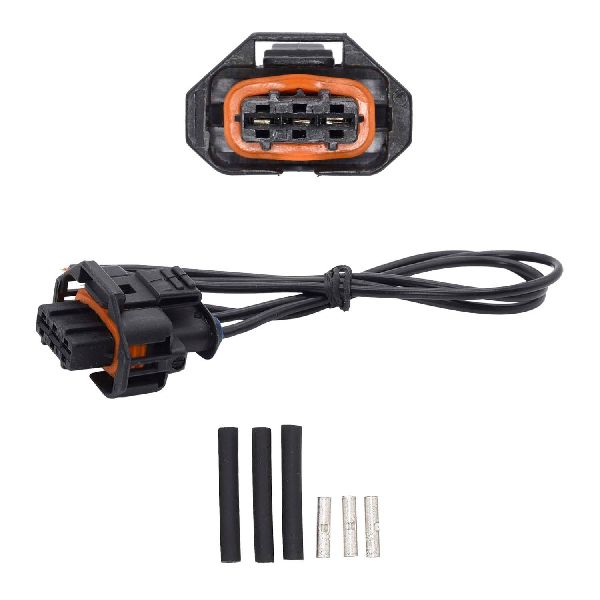
- Camshaft Position Sensor Connector — Connects to the camshaft position sensor, typically on the front of the cylinder head for Bank 1 (the bank closer to the firewall on transverse-mounted engines).. The connector or its wiring can become brittle, corroded, or contaminated with oil, causing an intermittent or lost signal from the sensor. Replacement pigtails (e.g., Dorman 645-513 for 2.4L) are available.
- Engine Wiring Harness — Routed across the top and front of the engine, connecting all sensors and actuators to the ECM.. Chafing or heat damage to the harness can cause shorts or opens in the circuits for the cam and crank sensors. A full harness part number for a 2008 3.6L (LY7) is GM 25795962.
Real Owner Repair Stories
- GM Forum user (2012 Chevy Malibu 3.6L) — Persistent P0016 code after engine work.
❌ Tried (didn't work) Re-timing the engine multiple times, verifying marks were perfect., Replacing the crankshaft position sensor., Verifying 5V reference and signal circuits were perfect.
✅ What actually fixed it The issue was defective aftermarket timing components. After replacing the new, faulty parts with another set of new timing chains and tensioners, the code did not return. - YouTube comment/story (2010 Chevy Equinox 2.4L) — Immediate P0016 and P0017 codes after installing a used replacement engine.
❌ Tried (didn't work) Tearing down the front cover multiple times to verify timing was perfect., Replacing phasers and tensioners with new parts., Consulting a GM master certified technician who had not seen the issue.
✅ What actually fixed it The reluctor ring on the rear of the intake camshaft had spun, likely due to a previous overheat event on the donor engine. Because the ring is only pressed on, it moved, causing a mismatch between what the sensor read and the actual cam position. The final fix was replacing the entire camshaft with one that had a correctly positioned reluctor ring. - 1A Auto YouTube Video (2012 GMC Acadia 3.6L) — P0016 Check Engine Light.
❌ Tried (didn't work) Initial diagnosis pointed away from sensors due to the high probability of a timing issue on this engine.
✅ What actually fixed it A complete timing chain job, replacing all three chains, guides, and tensioners, resolved the code. The video documents the extensive labor involved in removing the engine to perform the service.
"I Checked Everything" — The Actual Cause
- The diagnostic equivalent for P0016 is 'timing marks align perfectly, but the code persists.' This happens in rare cases where the reluctor ring that the sensor reads has physically moved on the crankshaft or camshaft. TSB PIP3423P specifically warns that if timing chains are found to be tight, the crankshaft reluctor wheel may have slipped. A technician can inspect this with a borescope through the crank sensor hole before committing to major disassembly. A similar failure can happen on the camshaft reluctor, often after an engine overheat, which requires camshaft replacement to fix.
When the Usual Fixes Don't Work
- While the overwhelming cause of P0016 is a stretched timing chain, there are documented cases where a complete timing job with new parts did not fix the code. In one instance involving a similar GM engine, the root cause was found to be defective aftermarket timing components; replacing them with a second new set finally resolved the issue. In another, more extreme case, the code persisted because the reluctor ring on the camshaft itself had spun after a previous overheat, meaning the timing was mechanically correct but the sensor reading was wrong. This required replacing the entire camshaft. These cases highlight that if the code returns immediately after a timing job, the problem may lie with the new parts or a secondary, less obvious failure.
OEM Part Supersession History
N/A - Software→Recalibrated ECM Software— The original Oil Life Monitor (OLM) algorithm was too optimistic, allowing oil change intervals that were too long for the direct-injection engines, leading to oil degradation and premature timing chain wear.
Heads up: Vehicles running the old software are at higher risk. GM issued a customer satisfaction program to update the software, which effectively cut the recommended oil change interval in half.
Model Year Variations Within This Range
- 2005-2009 (First Gen LaCrosse): Primarily used the port-injected 3.6L LY7 engine. While still prone to timing chain issues, the problem was amplified with the introduction of direct injection.
- 2010-2012 (Second Gen LaCrosse): Used the direct-injected 3.0L LF1 and 3.6L LLT engines. Direct injection increased fuel dilution of the engine oil, which, combined with the old OLM software, accelerated timing chain wear compared to earlier LY7 engines. GM later issued software updates to shorten oil change intervals to combat this.
Helpful Videos

We Have This Part in Stock


The information in this article is provided for general reference and educational purposes only. Vehicle specifications, procedures, and part compatibility can vary by production date, trim level, and region. Always consult your vehicle's factory service manual and verify part numbers before purchasing or performing repairs. Safety-critical components such as airbags, seat belts, and braking systems should be installed by a qualified professional.
- Buick LACROSSE:
- 🎬 Helpful Videos
- 🛍️ Shop This Part
- What's Unique About the 2005-2012 Buick LACROSSE
- Diagnostic Flowchart
- Symptoms You May Notice
- Most Likely Causes
- Rare But Worth Checking
- Diagnosis Steps
- Parts You'll Likely Need
- Related Codes That Often Appear With This One
- Technical Service Bulletins (TSBs) & Recalls
- Platform-Specific Known Issues
- Mechanic-Grade Diagnostic Values
- Scan Tool Commands That Help
- Wiring & Ground Locations
- Real Owner Repair Stories
- "I Checked Everything" — The Actual Cause
- When the Usual Fixes Don't Work
- OEM Part Supersession History
- Model Year Variations Within This Range
- 🎟️ Get 5% Off