

P0015 on 2015-2019 Ford Police Interceptor Utility: Causes and Fixes
On a 2015-2019 Police Interceptor Utility, P0015 is most often caused by low or dirty engine oil, or a failing Bank 1 exhaust VCT solenoid. An oil change is the first step. If the code returns, the VCT solenoid is the next likely fix, though replacement is labor-intensive for the firewall-side bank.
- The first and most crucial step is to check your engine oil. Low or dirty oil is the leading cause of P0015.
- The most likely failed part is the Bank 1 (firewall side) exhaust VCT solenoid, which gets stuck with oil debris.
- Do not immediately replace the camshaft position sensor; it is rarely the cause of the problem.
- Replacement of the Bank 1 VCT solenoid is a labor-intensive job because the upper intake manifold must be removed for access.
- If you hear a rattling noise from the engine, especially at startup, stop driving and have the vehicle inspected for a possible timing chain issue.
What's Unique About the 2015-2019 Ford POLICE INTERCEPTOR UTILIT
The Ford Police Interceptor Utility's typical duty cycle, which often includes extended periods of idling, can lead to faster oil breakdown and sludge formation. This increases the likelihood of VCT system faults, as the system is hydraulic and highly sensitive to oil quality. Ford has issued a Technical Service Bulletin (TSB #SSM 49821) acknowledging that P0015 and other related codes can be caused by small debris in the engine oil, causing the Variable Camshaft Timing (VCT) solenoid to stick. The TSB advises using a diagnostic tool to cycle the solenoid 10 times to attempt to clear debris before replacement.
Diagnostic Flowchart
Tap your situation to follow the diagnostic path that matches what you're seeing on this vehicle.
Symptoms You May Notice
- Check Engine Light is on
- Rough idling or engine shake
- Engine stalling or hesitation, especially at low speeds
- Reduced engine power and poor acceleration
- Decreased fuel economy
- Knocking, rattling, or tapping noise from the engine, especially on startup
- Replacing the camshaft position sensor first. The sensor is usually just accurately reporting the timing error caused by an oil flow or solenoid problem.
- Replacing the timing chain without first diagnosing the VCT solenoids. A faulty solenoid is a much more common and less expensive repair, though a misdiagnosis can go the other way if a rattle is ignored.
Most Likely Causes
- Low or Dirty Engine Oil 🔴 High Probability The VCT system is hydraulic and highly dependent on oil pressure and cleanliness. Extended idling common in police use can degrade oil faster, leading to sludge and debris. Using oil of the incorrect viscosity can also cause this code.
How to confirm: Check the engine oil dipstick for a low level or oil that appears dark, thick, or sludgy. Ensure the correct oil viscosity is being used (e.g., SAE 5W-30 for EcoBoost, 5W-20 for 3.7L).
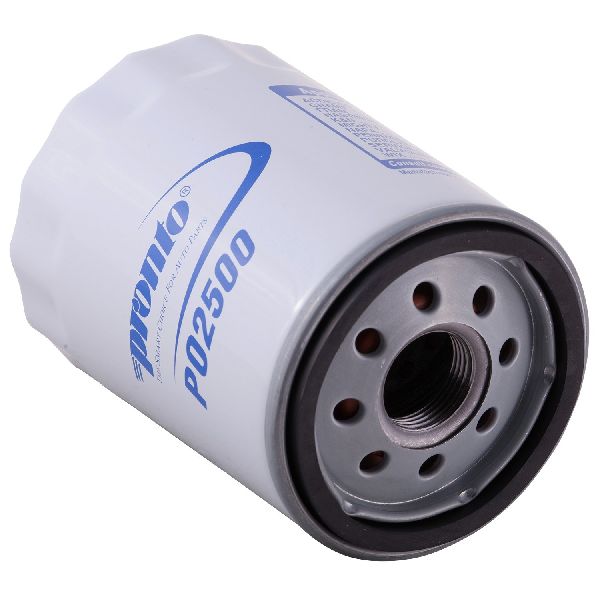
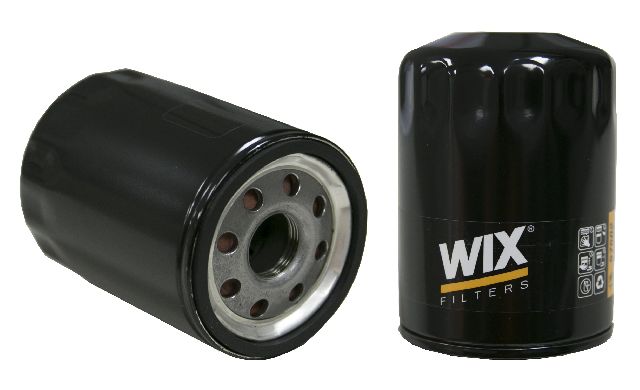
Typical fix: Perform an engine oil and filter change using the Ford-specified viscosity oil and a quality filter like the Motorcraft FL-500S.
Est. part cost: $40-$80 - Faulty Bank 1 Exhaust VCT Solenoid 🔴 High Probability Ford TSB #SSM 49821 directly states that debris in the oil can cause these solenoids to stick, which is a common failure mode. Forum posts from owners of platform-mate vehicles confirm that solenoids can become covered in varnish and their internal screens can clog.
How to confirm: After an oil change, if the code persists, the solenoid is the next logical part to test. A capable scan tool (like FORScan) can command the solenoid to cycle (per TSB #SSM 49821). Swapping it with the identical intake solenoid on the same bank (if applicable, not all are swappable) to see if the code changes to P0011 is a definitive diagnostic step. The solenoid's resistance can be tested with a multimeter and should be between 6.9 and 7.9 Ohms.
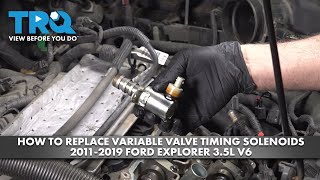
Typical fix: Replace the Bank 1 exhaust VCT solenoid. On the V6 engines, this is on the firewall side and located under the valve cover, requiring removal of the upper intake manifold. 🎬 See this walkthrough for replacing solenoids on the 3.5L engine. It is recommended to replace the valve cover gasket at the same time.
Est. part cost: $50-$150 - Stretched Timing Chain or Worn Timing Components ⚪ Low Probability This becomes more likely on higher-mileage vehicles (over 100,000 miles) or those with poor maintenance history. The 3.5L EcoBoost engine, in particular, is known for timing chain stretch and phaser issues, sometimes leading to customer satisfaction programs like 21N03 for cam phaser replacement.
How to confirm: A distinct rattling or slapping noise from the engine, especially on cold startup, is a key indicator. A mechanic can confirm by checking camshaft deviation angles (PIDs like VCT_ERR1) with a scan tool or by physical inspection, which is labor-intensive.
Typical fix: This is a major repair that involves replacing the timing chain, guides, and tensioners. If the vehicle has an internal water pump (as on the 3.5L/3.7L), it is highly recommended to replace it at the same time.
Est. part cost: $400-$1200 - Faulty Camshaft Position Sensor ⚪ Low Probability The sensor is more likely to accurately report a timing problem than be the problem itself. It's a common misdiagnosis. Owners often replace these sensors with no change in symptoms.
How to confirm: Swap the Bank 1 exhaust camshaft sensor with the intake sensor (if they are the same part number) and see if the code changes to P0011. If it does, the sensor is faulty. A scan tool can also be used to monitor the sensor's output for dropouts.
Typical fix: Replace the Bank 1 exhaust camshaft position sensor.
Est. part cost: $30-$70
Rare But Worth Checking
- Clogged Oil Passages: Severe engine sludge can block the small oil passages that feed the VCT phasers and solenoids, preventing them from operating correctly. This usually points to a history of severely neglected oil changes.
- Failed Camshaft Phaser: The phaser itself, which is the mechanical gear that actually adjusts the cam timing, can fail or get stuck. This is less common than a solenoid failure but can occur, especially if run with dirty oil. On 3.5L EcoBoost engines, noisy phasers on startup are a known issue addressed by Ford's Customer Satisfaction Program 21N03 and may require a full timing job.
- Wiring or Connector Issues: Damage to the wiring harness for the VCT solenoid, or oil leaking into the connector, can cause a poor connection and trigger the code. This should be inspected during solenoid replacement.
Diagnosis Steps
- Check the engine oil level and condition. If it is low, dirty, or the wrong viscosity, perform an oil and filter change with the manufacturer-specified oil (e.g., Motorcraft 5W-20 or 5W-30) and a Motorcraft FL-500S filter. Clear the code and see if it returns.
- Use an OBD-II scanner to check for other related trouble codes. The presence of other codes (like P0017 or codes for Bank 2) can help narrow down the diagnosis.
- Inspect the wiring and connector for the Bank 1 exhaust VCT solenoid for any signs of damage or corrosion. The solenoid is under the valve cover on the firewall side of the engine.
- Using a capable scan tool (like Ford's IDS or FORScan), perform the manufacturer-specific VCT solenoid diagnostic test (Pinpoint Test HK) to cycle the solenoid 10 times and attempt to clear any debris, as recommended by TSB SSM 49821. 🎬 Watch: Two quick DIY methods to fix the P0015 code.
- If the code persists, perform a resistance test on the VCT solenoid. The coil resistance should be between 6.9 and 7.9 Ohms. If the value is out of range, the solenoid is faulty.
- If the solenoid tests good but the code remains, and especially if there is a rattling noise or the vehicle has high mileage, suspect a timing chain or phaser issue. A professional mechanic should verify timing chain stretch and guide wear.
- As a less common cause, test the camshaft position sensor itself, potentially by swapping it with an adjacent one to see if the code follows.
Parts You'll Likely Need
- Engine Variable Valve Timing (VCT) Solenoid
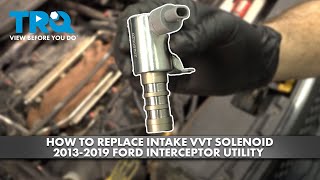
(OEM #AT4Z-6M280-A, 7T4Z-6M280-C)— This is the most common cause of P0015 on this vehicle, as noted in manufacturer TSBs. It gets stuck from oil debris. On the 3.5L/3.7L V6, four solenoids are used. Part 7T4Z-6M280-C is for the Bank 1 Exhaust (firewall side). Part AT4Z-6M280-A is used for the other three positions. 🎬 Watch: Step-by-step intake VVT solenoid replacement guide for the 3.7L. Always verify with VIN.
Trusted brands: Motorcraft, Dorman, Motiv8
OEM price range: $70-$120
Aftermarket price range: $30-$80 - Valve Cover Gasket (Bank 1 / Right Side)
(OEM #DL3Z-6584-C)— Required when replacing the VCT solenoid on the 3.5L/3.7L engines, as the solenoid is located under the valve cover. It is essential to replace the gasket to prevent oil leaks.
Trusted brands: Motorcraft, Fel-Pro
OEM price range: $20-$40
Aftermarket price range: $15-$30 - Engine Oil and Filter
(OEM #FL-500S)— Correct oil level and cleanliness are critical for the VCT system to function. This is the first and most important diagnostic step.
Related Codes That Often Appear With This One
- P0017 — This code indicates a correlation issue between the crankshaft and the Bank 1 exhaust camshaft. Seeing it with P0015 strengthens the diagnosis of a base timing problem like a stretched timing chain or a phaser that has jumped a tooth.
- P0025 — This is the same 'Over-Retarded' code but for Bank 2 (radiator side). If both P0015 and P0025 are present, it strongly suggests a systemic problem affecting the whole engine, like low oil pressure, severe oil contamination, or a failing oil pump.
- P0011, P0012, P0021, P0022 — Seeing multiple VCT codes for both banks and both intake/exhaust camshafts points overwhelmingly to a severe oil quality or pressure issue, such as heavy sludge.
Technical Service Bulletins (TSBs) & Recalls
- SSM 49821: Some 2015-2021 Ford and Lincoln vehicles may exhibit an illuminated MIL with diagnostic trouble codes (DTC) P0011, P0012, P0014, P0015, P0016, P0017, P0018, P0019, P0021, P0022, P0024 and/or P0025. This may be due to small debris causing the VCT solenoid to stick.
Platform-Specific Known Issues
- TSB #SSM 49821 notes that on 2015-2021 Ford vehicles, DTCs like P0015 may be caused by small debris causing the VCT solenoid to stick. The bulletin advises attempting to clear the debris by cycling the solenoid with a scan tool (Pinpoint Test HK11) before replacement.
- The location of the Bank 1 (firewall side) VCT solenoids under the valve cover makes replacement significantly more labor-intensive and costly than for Bank 2 (radiator side), as the upper intake manifold must be removed for access.
Mechanic-Grade Diagnostic Values
- VCT Solenoid Resistance — expected: 6.9 - 7.9 Ohms. Failure: A reading outside this range, or an open/short circuit, indicates a faulty solenoid coil.
- VCT Solenoid Connector Voltage (Key On, Engine Off) — expected: ~12V (Battery Voltage). Failure: No voltage or significantly low voltage points to a problem in the power supply circuit, such as a blown fuse or damaged wire.
- Scan Tool PID: VCT_ERR1 / CAMERRR (Bank 1 Camshaft Timing Error) — expected: Close to 0 degrees at hot idle.. Failure: A consistent deviation of more than +/- 5 degrees indicates the camshaft is not at its commanded position, pointing to a solenoid, phaser, or oil flow issue.
- Engine Oil Pressure at Hot Idle — expected: At least 25 PSI. Failure: Pressure below this threshold can starve the VCT system of the hydraulic pressure needed to operate, causing timing codes.
Hidden / Shadow Codes Worth Checking
- Mode $06, Test ID ~$81/$82 or ~$51-$54: This is not a traditional trouble code but a report from the PCM's non-continuous self-tests. For the VCT system, it stores statistical data on the last measured camshaft angle error. This data can reveal a developing problem or an intermittent fault before it's severe enough to set a standard P-code like P0015. (see via A professional scan tool like Ford's IDS or an advanced consumer tool like FORScan is required to access and interpret Mode $06 data.)
Scan Tool Commands That Help
- Ford IDS or FORScan: VCT Solenoid On/Off State Control / Output State Control — This is a primary bidirectional test. With the engine idling, a technician can manually command the VCT solenoid on. If the solenoid and oil passages are working, the engine should stumble or run rough. No change in engine operation points to a stuck solenoid or a blockage. This can also be used to cycle the solenoid rapidly to dislodge small debris, as suggested by Ford TSBs.
- Ford IDS or FORScan: Datalogger for VCT PIDs (VCT_ERR1, RCAM1, VCTDC1) — This is used to monitor the system in real-time during a drive cycle. By graphing the Commanded Angle (RCAM), Actual Angle (from CMP sensor), and Error (ERR), a technician can diagnose if the solenoid is slow to respond, sticking, or if the phaser is not moving as commanded.
Wiring & Ground Locations
- VCT Solenoid Connector — On the VCT solenoid itself, under the valve cover. Accessing the Bank 1 (firewall side) connectors requires removing the upper intake manifold.. The connector or its wiring can become brittle from heat, or contaminated with oil, leading to a poor electrical connection that can mimic a failed solenoid.
- Camshaft Position Sensor Connector — On the camshaft position sensor, located on the top/end of the valve cover for the corresponding camshaft.. While less common, damage to this sensor's connector or wiring (pigtail part number WPT-986 is an example for the 3.5L) can cause erratic signals that might contribute to timing codes.
Real Owner Repair Stories
- Commenter on LETMELIVE YouTube Channel (2015 Ford F-150 3.5L EcoBoost (same engine family and VCT system)) — Check engine light with code P0016 (a related VCT correlation code).
❌ Tried (didn't work) Taking it to a Ford dealer, who diagnosed it as needing a complete timing chain overhaul for $5,900.
✅ What actually fixed it The owner independently purchased all four VCT solenoids for $110 from RockAuto, replaced them, and the issue was resolved. This is a classic case of misdiagnosing a major repair when the root cause was the much cheaper solenoids. - Ford F150 Forum user (2013 Ford F-150 3.5L EcoBoost) — P0015 code accompanied by a loud engine knock/rattle and stalling.
❌ Tried (didn't work) Initial troubleshooting focused on the starting and charging system due to a no-crank symptom that developed.
✅ What actually fixed it The combination of the P0015 code and a significant mechanical rattle correctly pointed to a major timing component failure. The fix was a complete timing job, including the timing chain and cam phasers. This serves as a critical counterpoint, showing that when P0015 is accompanied by significant mechanical noise, the more expensive phaser/chain repair is often necessary. - Go-Parts.com research article (Ford 3.5L engine in a Flex) (Ford Flex with 3.5L engine) — P0015 and other related timing codes.
❌ Tried (didn't work) Replacing the VCT solenoids, which is the most common fix.
✅ What actually fixed it The ultimate solution was replacing the mechanical cam phasers themselves. This demonstrates that if solenoid replacement does not work, the phaser is the next most likely mechanical culprit before suspecting the timing chain itself.
When the Usual Fixes Don't Work
- While a faulty VCT solenoid is the most common cause, several owner-submitted repair stories confirm that it should not be the only part considered. In a case involving a 2013 F-150 with a 3.5L EcoBoost, a P0015 code accompanied by a loud rattle was only resolved by a complete timing chain and cam phaser replacement, demonstrating that audible symptoms should be taken seriously as an indicator of mechanical failure. Conversely, another owner of a similar engine was quoted nearly $6,000 for a timing job by a dealer, but fixed the issue completely by replacing the four VCT solenoids for just over $100. This highlights a critical diagnostic split: P0015 without noise is very likely a solenoid, while P0015 with noise is much more likely to be a phaser or timing chain.
OEM Part Supersession History
7T4Z-6M280-A, 7T4Z-6M280-AA, 7T4Z-6M280-B→7T4Z-6M280-C— Part revision and update by Ford.
Heads up: This part is specific to the Bank 1 (firewall side) Exhaust camshaft on many 3.5L and 3.7L V6 engines within this vehicle's year range.N/A→AT4Z-6M280-A— This is the current part number for the other three VCT solenoids (Bank 1 Intake, Bank 2 Intake, Bank 2 Exhaust).
Heads up: This part is physically different from 7T4Z-6M280-C and cannot be interchanged. Using the wrong solenoid in the wrong position will prevent the VCT system from functioning correctly.
Model Year Variations Within This Range
- 2015-2019: While the Ford Explorer platform on which the Police Interceptor Utility is based received a facelift in 2016, the core 3.5L EcoBoost, 3.5L NA, and 3.7L NA V6 engine offerings and their VCT systems remained consistent through the 2019 model year. Therefore, the causes and diagnostic procedures for code P0015 are the same across this entire range.
Helpful Videos
![How to Fix P0015 Engine Code in 4 Minutes [2 DIY Methods / Only $6.62]](https://img.youtube.com/vi/kO0eG5jKmzg/mqdefault.jpg)
We Have This Part in Stock




The information in this article is provided for general reference and educational purposes only. Vehicle specifications, procedures, and part compatibility can vary by production date, trim level, and region. Always consult your vehicle's factory service manual and verify part numbers before purchasing or performing repairs. Safety-critical components such as airbags, seat belts, and braking systems should be installed by a qualified professional.
- Ford POLICE INTERCEPTOR UTILIT:
- 🎬 Helpful Videos
- 🛍️ Shop This Part
- What's Unique About the 2015-2019 Ford POLICE INTERCEPTOR UTILIT
- Diagnostic Flowchart
- Symptoms You May Notice
- Most Likely Causes
- Rare But Worth Checking
- Diagnosis Steps
- Parts You'll Likely Need
- Related Codes That Often Appear With This One
- Technical Service Bulletins (TSBs) & Recalls
- Platform-Specific Known Issues
- Mechanic-Grade Diagnostic Values
- Hidden / Shadow Codes Worth Checking
- Scan Tool Commands That Help
- Wiring & Ground Locations
- Real Owner Repair Stories
- When the Usual Fixes Don't Work
- OEM Part Supersession History
- Model Year Variations Within This Range
- 🎟️ Get 5% Off