

P0015 on 2015-2021 Ford Expedition 3.5L EcoBoost: Causes and Fixes
On a 2015-2021 Ford Expedition with the 3.5L EcoBoost, code P0015 is most often caused by a faulty or dirty Variable Camshaft Timing (VCT) solenoid on the exhaust camshaft of Bank 1. This is often due to dirty oil or debris. Replacing the solenoid is a common fix, costing around $30-$80 for the part.
- P0015 on your Expedition means the exhaust camshaft timing on the passenger side is delayed.
- Before buying any parts, check your engine oil level and condition. Low or dirty oil is a common cause.
- The most likely failed part is the Bank 1 (passenger side) exhaust VCT solenoid, which is relatively inexpensive and accessible to replace.
- Multiple Ford TSBs confirm that sticking VCT solenoids are a known issue on this engine.
- If a new solenoid and fresh oil don't fix the problem, you may have a more serious mechanical issue like a bad cam phaser or timing chain.
What's Unique About the 2015-2021 Ford EXPEDITION
The 3.5L EcoBoost engine in the Expedition is highly dependent on clean engine oil at the correct pressure for its VCT system to function properly. Ford has issued multiple Technical Service Bulletins (TSBs) for this platform, noting that small debris in the oil can cause the VCT solenoids to stick, leading to codes like P0015. [TSB #SSM 48423, TSB #SSM 47170] This indicates a sensitivity to oil condition and makes solenoid issues a more common starting point for diagnosis 🎬 Watch: A quick guide on which sensors to check first. than on some other vehicles. Some owners report the issue even with regular oil changes, suggesting a potential vulnerability in the solenoid design itself.
Diagnostic Flowchart
Tap your situation to follow the diagnostic path that matches what you're seeing on this vehicle.
Generation note: This range covers the end of the third generation (2015-2017) and the beginning of the fourth generation (2018-2021). Both generations use versions of the 3.5L EcoBoost V6 engine, and the causes and fixes for code P0015 are largely consistent across these years. However, part numbers for VCT solenoids may differ between the early and late years of this range due to a significant engine update in 2018.
Symptoms You May Notice
- Check Engine Light is on
- Rough or irregular idle
- Poor acceleration and loss of power
- Decreased fuel economy
- Engine may hesitate or stall, especially at stops
- Rattling or tapping noise from the engine, especially a 2-4 second 'cold start rattle' which can point to a more serious phaser issue
- Strong smell of fuel from the exhaust due to inefficient combustion
- Replacing the camshaft position sensor when the actual problem is the VCT solenoid or an oil quality issue.
- Assuming a major timing chain issue before checking the much more common and simpler fixes like oil level/condition and the VCT solenoid. An F-150 owner with a similar code was quoted $5900 for a timing job by a dealer, but fixed the issue by replacing the VCT solenoids for $110.
Most Likely Causes
- Dirty or Failing VCT Solenoid 🔴 High Probability Multiple Ford TSBs indicate that debris in the oil can cause these solenoids to stick. [TSB #SSM 54366, TSB #SSM 48423, TSB #SSM 47170] The VCT system is sensitive to oil contamination, and the solenoids themselves can fail internally. TSB-16-0093 specifically calls for replacing the solenoid on low-mileage 2016 models for this code.
How to confirm: Use a capable scan tool to command the Bank 1 exhaust VCT solenoid on and off; listen for a click and watch for a change in camshaft timing data. Another method is to swap the suspect solenoid with an adjacent one (like the intake solenoid) and see if the trouble code follows to the new position (e.g., changing to P0014). You can also remove the solenoid and test it directly by applying 12V to its pins to see if the internal plunger actuates.
Typical fix: Replace the Bank 1 exhaust VCT solenoid. It is located on the valve cover for the passenger-side cylinder bank.
Est. part cost: $30 - $80 - Low or Dirty Engine Oil 🟡 Medium Probability The VCT system is hydraulic and requires clean oil at the proper pressure and viscosity to function correctly. Sludge or low oil levels can starve the system, clog the tiny passages in the solenoids, and cause them to stick.
How to confirm: Check the engine oil level on the dipstick and inspect its condition. If the oil is low, black, or gritty, it needs to be changed. An owner on an Expedition forum noted their issue appeared after being two quarts low on oil.
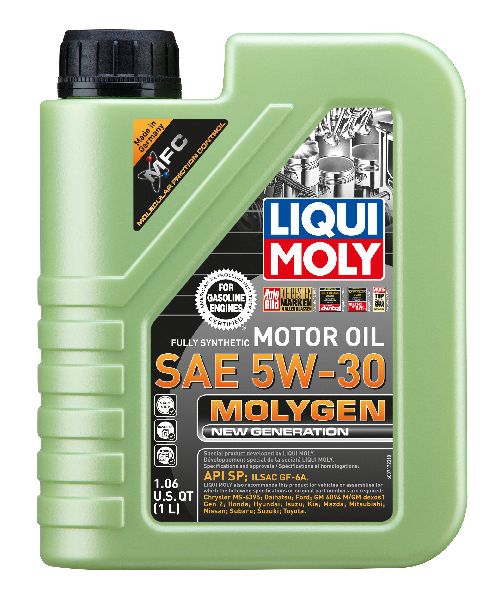
Typical fix: Perform an oil and filter change using the manufacturer-specified oil (e.g., Motorcraft SAE 5W-30 Full Synthetic) and a quality filter. Clear the code and see if it returns.
Est. part cost: $50 - $100 - Worn Camshaft Phaser ⚪ Low Probability While less common than a solenoid failure for an isolated P0015 code, the phaser itself can fail, especially on higher-mileage engines or those with a history of infrequent oil changes. A classic symptom is a loud 'cold start rattle' that lasts for a few seconds. The locking pin mechanism inside the phaser can wear out, causing timing deviation.
How to confirm: This is typically diagnosed after ruling out the oil and VCT solenoid. A key symptom is the cold start rattle. Diagnosis is confirmed by removing the valve cover to inspect for timing chain slack and phaser integrity.
Typical fix: Replace the camshaft phaser, which is a more involved and expensive repair that often includes replacing the timing chain, tensioners, and guides at the same time.
Est. part cost: $150 - $400
Rare But Worth Checking
- Stretched Timing Chain: If the vehicle has high mileage and exhibits a rattling noise on startup, a stretched timing chain could be the root cause, throwing off the base timing enough to trigger this code. This is a significant repair and is often done in conjunction with cam phaser replacement.
- Faulty Camshaft Position Sensor: While possible, a bad camshaft position sensor is more likely to trigger its own specific circuit codes. However, if it sends incorrect data, it could contribute to a P0015 code. This is an uncommon cause for this specific DTC.
Diagnosis Steps
- Check Engine Oil: Verify the oil level is correct and the oil is clean. If it's low or dirty, perform an oil change with the correct viscosity oil (Ford Spec 5W-30) and filter, clear the code, and re-test.
- Scan Tool Analysis: Use a scan tool to monitor live data for the commanded vs. actual camshaft position for Bank 1 Exhaust. This can confirm the timing is indeed retarded and by how many degrees.
- Test the VCT Solenoid: With the scan tool, command the Bank 1 exhaust VCT solenoid to activate. Listen for an audible click from the solenoid. No click suggests a failed solenoid or wiring issue.
- Inspect Solenoid and Wiring: Unplug the solenoid's electrical connector and check for corrosion or damage. Remove the solenoid (typically held by one bolt) and inspect its screens for sludge or debris. A clogged screen is a clear sign of an oil quality problem.
- Swap Solenoids (Diagnostic Trick): Swap the Bank 1 exhaust solenoid with the Bank 1 intake solenoid. Clear the codes and drive the vehicle. If the code changes to P0014 ('B' Camshaft Position - Timing Over-Advanced), you have confirmed the solenoid is faulty. This is a very common and effective DIY diagnostic step.
- Bench Test Solenoid: As shown by an owner in a YouTube video, you can use a small 12V battery to directly power the solenoid's two pins. A healthy solenoid will produce a sharp, audible click as the internal plunger moves. Be careful not to short the pins.
- Check Mechanical Timing: If oil and solenoids are good, the next step is to suspect a mechanical issue like a camshaft phaser or timing chain, especially if a cold-start rattle is present. This is a more advanced diagnosis and may require professional help.
Parts You'll Likely Need
- Variable Camshaft Timing (VCT) Solenoid (Bank 1 Exhaust)
(OEM #HL3Z-6M280-A (for 2017+ models, supersedes older parts))— This is the most frequent cause of P0015, often failing due to internal sticking or clogging from oil debris, as noted in Ford TSBs. It is a common point of failure across the 3.5L EcoBoost platform.
Trusted brands: Motorcraft, Dorman
OEM price range: $45-$70
Aftermarket price range: $30-$60 - Engine Oil and Filter
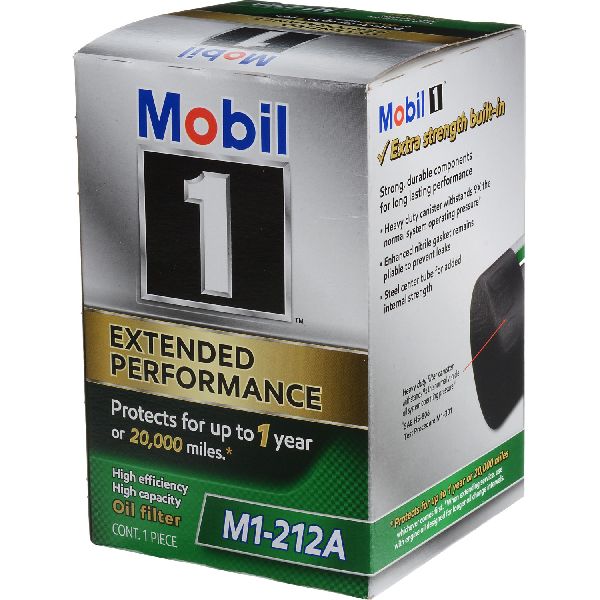
(OEM #Motorcraft FL-500S (Filter))— The VCT system is hydraulic. Low, dirty, or incorrect viscosity oil is a primary cause of solenoid and phaser issues. Using Ford-specified SAE 5W-30 synthetic blend or full synthetic oil is critical.
Trusted brands: Motorcraft, Mobil 1
OEM price range: $60-$100
Aftermarket price range: $40-$70
Related Codes That Often Appear With This One
- P0017 — P0017 ('Crankshaft Position - Camshaft Position Correlation Bank 1 Sensor B') often appears with P0015 because if the exhaust cam timing is retarded, its correlation with the crankshaft will also be incorrect. An owner on YouTube documented getting both P0015 and P0017 together.
- P0011, P0012, P0014 — These are other VCT-related codes for Bank 1. Their presence alongside P0015 can point to a more systemic issue like low oil pressure, widespread sludge, or a failing timing component affecting the entire bank.
- P054B — This code for 'Cold Start B Camshaft Position Timing Over-Retarded Bank 1' can appear with P0015, specifically pointing to the timing issue being present during engine startup.
Technical Service Bulletins (TSBs) & Recalls
- SSM 54366: Notes P0015 among other DTCs for 2015-2021 vehicles.
- SSM 48423: States P0015 may be due to small debris causing the VCT solenoid to stick.
- TSB-16-0093: Addresses P0015 on low-mileage 2016 models.
- TSB160038: Similar to TSB-16-0093, for low-mileage 3.5L GTDI engines.
- SSM 47170: Also points to debris causing sticky VCT solenoids.
- 16-0038: Another issuance of the TSB for low-mileage engine DTCs.
Platform-Specific Known Issues
- Ford has issued several Technical Service Bulletins (TSBs) like SSM 48423 and SSM 47170 that mention P0015 on these vehicles, pointing to small debris in the engine oil causing the VCT solenoids to stick. [TSB #SSM 48423, TSB #SSM 47170]
- TSB-16-0093 specifically addresses this code appearing on low-mileage (under 2000 miles) 2016 models with the 3.5L engine, instructing dealers to replace the affected solenoid, indicating a potential batch of faulty parts from the factory.
Mechanic-Grade Diagnostic Values
- VCT Solenoid Internal Resistance — expected: 6.9 to 7.9 Ohms at 68°F (20°C). A general acceptable range is often cited as 5-15 Ohms.. Failure: A reading of infinite Ohms (open circuit) or near zero Ohms (short circuit) indicates a failed solenoid.
- VCT Solenoid Connector Voltage (Key On, Engine Off) — expected: Approximately 12V (battery voltage) on the power supply pin.. Failure: No voltage indicates a problem with the power supply wire or the fuse (shared with other critical components like injectors).
- Scan Tool PID: VCT Advance Error (VCT_ADV_ERR) — expected: Should be stable and hover around 0°, with an acceptable variance of +/- 5°.. Failure: A large, persistent error value (e.g., -15°) while the engine is running in closed loop confirms the PCM is seeing a significant deviation between commanded and actual cam position.
Scan Tool Commands That Help
- Ford IDS (or equivalent professional scanner): VCT Solenoid Duty Cycle PID Monitoring — Use this to see if the PCM is commanding the solenoid to work. If the PCM is commanding a high duty cycle to the Bank 1 exhaust solenoid with little to no change in cam angle error, it points to a mechanical or hydraulic issue (stuck solenoid, bad phaser) rather than an electrical one.
- Professional Scan Tool with Bidirectional Control: VCT Solenoid Activation Test — This command directly energizes the solenoid while the engine is off. A technician should be able to hear an audible 'click' from the solenoid. If no click is heard, it strongly suggests the solenoid is seized or has failed electrically. This is a primary step to confirm solenoid failure before removal.
Wiring & Ground Locations
- Bank 1 Exhaust VCT Solenoid Connector — On the top of the valve cover for the passenger-side cylinder bank, connected to the rearmost (exhaust) VCT solenoid.. This is the direct electrical connection for the component in question. It has two pins: Pin 1 is typically the 12V power supply from the PCM power relay/fuse box, and Pin 2 is the control wire (ground-pulsed) from the PCM. Checking for voltage at Pin 1 and continuity to the PCM on Pin 2 is a key electrical diagnostic step.
- Main Engine and Body Ground Straps — Key locations include the battery negative terminal to the chassis, chassis to the engine block, and smaller grounds from the wiring harness to the cylinder heads/block.. While not specific to the VCT circuit, poor or corroded main grounds can cause a host of 'phantom' electrical issues, including erratic sensor readings and improper actuator function. Verifying that main grounds are clean and tight is a best practice when diagnosing any electronic DTC.
Real Owner Repair Stories
- Commenter on LETMELIVE YouTube Channel (2015 Ford F-150 3.5L EcoBoost (same engine family and VCT system)) — Check engine light with code P0016 (a related VCT correlation code).
❌ Tried (didn't work) Taking it to a Ford dealer, who diagnosed it as needing a complete timing chain overhaul.
✅ What actually fixed it The owner was quoted $5,900 by the dealer. Instead, they watched the diagnostic video, purchased all four VCT solenoids from RockAuto for $110, replaced them, and the issue was resolved. This highlights how a major repair can be misdiagnosed when the root cause is a simple, inexpensive solenoid. - Ford F150 Forum user (2013 Ford F-150 3.5L EcoBoost) — Started as a no-crank issue, then progressed to a P0015 code with a loud engine knock/rattle and stalling.
❌ Tried (didn't work) Initial troubleshooting focused on battery cables and starter circuit due to the no-crank symptom.
✅ What actually fixed it The combination of P0015 and a progressive mechanical rattle pointed directly to a major timing component failure. The fix was a complete timing job, including the timing chain and cam phasers, using Ford's service kit (BL3Z-6D256-C). This story serves as a critical counterpoint, showing that when P0015 is accompanied by significant mechanical noise, the more expensive phaser/chain repair is often necessary.
OEM Part Supersession History
AT4Z-6M280-C (for Bank 1 Exhaust)→N/A, this is the part for the earlier models.— This part is for the Gen 1 3.5L EcoBoost engine.
Heads up: This part is for the first-generation 3.5L EcoBoost and is not interchangeable with the later part number.FL3Z-6M280-D (an earlier version for Gen 2)→HL3Z-6M280-A— Part revision and update by Ford for the Gen 2 3.5L EcoBoost engine.
Heads up: HL3Z-6M280-A is the current recommended OEM replacement for these model years and should not be used on 2015-2017 models.
Model Year Variations Within This Range
- 2015-2017: These Expedition models use the first-generation 3.5L EcoBoost V6. This engine features direct injection only and uses VCT solenoids with part numbers like AT4Z-6M280-C for the Bank 1 exhaust.
- 2018-2021: These Expedition models use the second-generation 3.5L EcoBoost V6. This engine was significantly updated with both port and direct fuel injection (PDI) to combat carbon buildup, a redesigned turbo and timing system, and different VCT solenoids (PN HL3Z-6M280-A). The causes of P0015 are the same, but the specific replacement parts are different.
Helpful Videos
![How to Fix P0015 Engine Code in 4 Minutes [2 DIY Methods / Only $6.62]](https://img.youtube.com/vi/kO0eG5jKmzg/mqdefault.jpg)

Used OEM Parts in Stock

New Aftermarket Parts Available


The information in this article is provided for general reference and educational purposes only. Vehicle specifications, procedures, and part compatibility can vary by production date, trim level, and region. Always consult your vehicle's factory service manual and verify part numbers before purchasing or performing repairs. Safety-critical components such as airbags, seat belts, and braking systems should be installed by a qualified professional.
- Ford EXPEDITION:
- 🎬 Helpful Videos
- 🛍️ Shop This Part
- What's Unique About the 2015-2021 Ford EXPEDITION
- Diagnostic Flowchart
- Symptoms You May Notice
- Most Likely Causes
- Rare But Worth Checking
- Diagnosis Steps
- Parts You'll Likely Need
- Related Codes That Often Appear With This One
- Technical Service Bulletins (TSBs) & Recalls
- Platform-Specific Known Issues
- Mechanic-Grade Diagnostic Values
- Scan Tool Commands That Help
- Wiring & Ground Locations
- Real Owner Repair Stories
- OEM Part Supersession History
- Model Year Variations Within This Range
- 🎟️ Get 5% Off