

P0014 on 2012-2019 Land Rover Range Rover Evoque: Exhaust Camshaft Timing Fixes
On a 2012-2019 Range Rover Evoque, code P0014 is most often caused by a faulty Variable Valve Timing (VVT) solenoid, especially on the JLR Ingenium engine (2018-2019). Replacing the solenoid is a common and relatively inexpensive fix. Always check engine oil level and condition first, as low or dirty oil is a frequent trigger. For Ingenium engines, a known manufacturing defect in the VVT solenoid is the primary cause, addressed by a TSB.
- P0014 on a Range Rover Evoque points to the exhaust camshaft timing being too far advanced.
- Before any complex repairs, check your engine oil level and condition. Low or dirty oil is a common cause.
- The most likely part to fail is the Variable Valve Timing (VVT) solenoid. This is a known issue acknowledged by Land Rover in service bulletins.
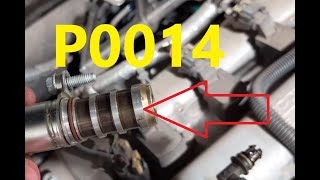
- Diagnosing a faulty solenoid can be done at home by swapping it with the intake solenoid to see if the code changes to P0011.
- While the code can indicate a serious timing chain issue, it's much more probable on this specific vehicle that it's just a faulty solenoid.
What's Unique About the 2012-2019 Land Rover RANGE ROVER EVOQUE

This code is particularly noteworthy on the Range Rover Evoque due to two distinct engines used in this generation. Models from 2012-2017 use a Ford-derived 2.0L EcoBoost engine, while 2018-2019 models use the JLR Ingenium 2.0L petrol engine. For the Ingenium engines, Land Rover has issued a Technical Service Bulletin (JLRTB02023NAS1) acknowledging that a faulty Variable Camshaft Timing (VCT) solenoid is a known issue causing this code due to 'insufficient wear resistance of the VCT solenoid bush'. The TSB SSM74161 also points to a stuck actuator on models with both engine types due to a batch of solenoids not manufactured to specification. This confirms the VVT solenoid as a common, well-documented failure point across both engine variants for this vehicle.
🎬 See how to fix over-advanced exhaust camshaft timing issues.Diagnostic Flowchart

Tap your situation to follow the diagnostic path that matches what you're seeing on this vehicle.
Generation note: The 2012-2019 Range Rover Evoque is the first generation (L538). However, it uses two different 2.0L I4 petrol engines. Models from 2012-2017 use a Ford EcoBoost-based engine. Models from 2018-2019 use the Jaguar Land Rover (JLR) Ingenium engine. While the cause is often similar (VVT solenoid), the specific parts and TSBs can differ. The Ford engine issue is often shared with vehicles like the Ford Edge and Fusion. The Ingenium issue is shared with other JLR products like the Discovery Sport and Jaguar XE/XF.
Symptoms You May Notice
- Check Engine Light is on.
- No noticeable driveability issues (as noted in TSB SSM74161).
- Rough idle or engine stalling.
- Reduced engine performance and accelerator response, especially sluggishness from a stop.
- Poor fuel economy.
- Rattling noise from the engine, particularly on startup.
- Hard starting.
- Replacing the camshaft position sensor. While a sensor can fail, it typically throws its own specific codes (like P0341 or P0365). P0014 points to a mechanical timing or actuator issue, not usually a sensor data issue. An owner on babyrr.com reported a misfire issue that was ultimately traced to a faulty cam sensor, but this was accompanied by other symptoms and codes.
Most Likely Causes

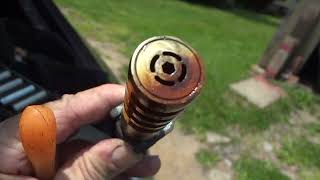
- Faulty Variable Valve Timing (VVT) Solenoid 🔴 High Probability Land Rover has issued TSBs for both the Ford-derived and JLR Ingenium engines identifying the VVT (or VCT) solenoid as a common failure point. TSB JLRTB02023NAS1 cites 'insufficient wear resistance of the VCT solenoid bush' for Ingenium engines, and SSM74161 notes a batch of solenoids made before August 23, 2018 were not to spec, causing the '-71' (Actuator Stuck) suffix.
How to confirm: Check the solenoid's resistance with a multimeter (typically 5-15 Ohms). A common diagnostic trick is to swap the exhaust VVT solenoid with the intake solenoid. If the code changes to P0011 (Intake Camshaft Over-Advanced), the solenoid is faulty. A scan tool can also be used to command the solenoid and observe the engine's response; no change in idle suggests a failed solenoid.
Typical fix: Replace the faulty VVT solenoid. TSBs for the Ingenium engine recommend replacing them in pairs initially. For solenoids affected by TSB SSM74161, ensure the replacement part has a manufacturing date on or after August 23, 2018 (180823xxxxx).
Est. part cost: $40-$120 - Low or Dirty Engine Oil 🟡 Medium Probability The VVT system is hydraulically operated by engine oil. If the oil level is low, or if the oil is dirty, the wrong viscosity, or contains sludge, it can clog the fine mesh screens on the VVT solenoids and prevent the phasers from actuating correctly. This is a common cause across all vehicles with VVT systems.
How to confirm: Check the engine oil dipstick for proper level and inspect the oil's color and consistency. If it's dark, gritty, or below the minimum mark, this is a likely contributor.
Typical fix: Perform an engine oil and filter change using the manufacturer-specified oil grade (e.g., SAE 5W-30 for the EcoBoost, specific JLR spec for Ingenium).
Est. part cost: $70-$150 - Worn Timing Chain or Components ⚪ Low Probability While less common than solenoid failure, timing chain stretch can occur over time, especially with poor maintenance. Independent specialists emphasize diagnosing solenoids first, as timing chain replacement is often quoted unnecessarily.
How to confirm: This is a more complex diagnosis. It often presents with a rattling noise on startup. A mechanic would need to check for timing chain stretch or inspect the tensioners and guides, which requires significant engine disassembly. A dealership quote for this job can be very high, as noted by owners.
Typical fix: Replace the timing chain, tensioners, and guides. This is a labor-intensive job best left to a professional.
Est. part cost: $800-$2500+
Rare But Worth Checking
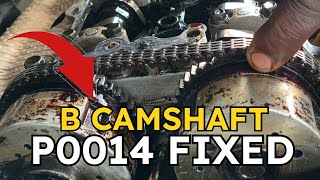
- Failing Camshaft Phaser (Actuator): The phaser is the mechanical gear on the end of the camshaft that actually does the rotating. While less common than a solenoid failure, it can get stuck or fail internally, causing a persistent P0014 code even after replacing the solenoid. A video by NiX FiX on YouTube details a failure of the VVT actuator on the 2.0L engine, showing how the internal locking pin can fail.
- Wiring or Connector Issue: Damage or corrosion to the wiring harness or connector for the VVT solenoid can interrupt the signal from the PCM, causing the code. This should be checked before replacing more expensive components by testing for battery voltage at the solenoid connector with the ignition on.
Diagnosis Steps
- Check the engine oil level and condition. Top up or change the oil and filter if necessary, using the correct OEM-specified oil.
- Scan for other trouble codes to see if P0014 appears with related codes like P0011, P054A, or P000B.
- Locate the 'B' (exhaust) camshaft VVT solenoid on the top of the engine.
- Inspect the solenoid's electrical connector and wiring for any damage or corrosion. Test for battery voltage at the connector with the ignition on.
- Swap the exhaust VVT solenoid with the intake VVT solenoid (they are typically identical). Clear the codes and drive the vehicle. If the code returns as P0011, the solenoid you moved is faulty and needs replacement.
- If the code remains P0014 after the swap, the issue is not the solenoid. The next steps involve testing the wiring and potentially inspecting the camshaft phaser and timing chain, which may require a professional mechanic.
- For Ingenium engines, a JLR-approved diagnostic tool can run a 'Guided Diagnostics' routine to test the function of the VCT solenoids directly.
Parts You'll Likely Need
- Variable Valve Timing (VVT) Solenoid (Ingenium Engine, 2018-2019)
(OEM #LR126832 (supersedes LR073778))— This is the most common failure part for code P0014 on the Ingenium engine, as confirmed by TSB JLRTB02023NAS1. It is recommended to replace in pairs.
Trusted brands: Genuine Land Rover, Standard Motor Products, Dorman
OEM price range: $80-$120
Aftermarket price range: $40-$70 - Variable Valve Timing (VVT) Solenoid (Ford EcoBoost Engine, 2012-2017)
(OEM #LR024995 (also cross-references to Ford part BB5E-6M280-AB))— This is the corresponding solenoid for the earlier Ford-based engine. Failures are also common, though perhaps less documented by TSBs than the Ingenium part.
Trusted brands: Genuine Land Rover, Febi, URO Parts
OEM price range: $70-$110
Aftermarket price range: $35-$65
Related Codes That Often Appear With This One
- P0011 — This code is for the 'A' (intake) camshaft timing being over-advanced. It often appears with P0014 if there is a systemic issue like low/dirty oil or if both VVT solenoids are failing, which is common on the Ingenium engine. A 2014 Evoque owner on babyrr.com reported receiving both P0011 and P0014 simultaneously.
- P054A — 'Cold Start 'B' Camshaft Position Timing Over-Advanced'. This code is specifically mentioned in TSB SSM74161 alongside P0014, indicating the problem is most apparent during cold starts.
- P000B — 'B' Camshaft Position Slow Response'. This code also points to a problem with the exhaust camshaft's VVT system and is cited in the same TSBs, suggesting the actuator is not moving as quickly as commanded.
- P0341 — 'Camshaft Position Sensor 'A' Circuit Range/Performance'. This code can appear alongside P0014, as seen in TSB SSM74161 and forum posts, indicating a potential correlation issue between the sensor's reading and the crankshaft position, even if the sensor itself isn't the root cause.
Technical Service Bulletins (TSBs) & Recalls
- SSM74161: Mentions P0014-71 on models with Ingenium engines with no driveability concern, stored in the PCM. It identifies a batch of faulty VVT solenoids made before 08/23/2018 and specifies replacing them with part LR073778 (now superseded).
- JLRTB02023NAS1: Addresses P0014-71 on 2018-2019 Evoque models with the Ingenium engine, identifying a faulty VCT solenoid bush as the cause and recommending replacement of both solenoids with part LR126832.
Platform-Specific Known Issues
- TSB JLRTB02023NAS1 addresses P0014-71 on 2018-2020 JLR Ingenium 2.0L petrol engines, citing 'insufficient wear resistance of the Variable Camshaft Timing (VCT) solenoid bush' as the cause and recommending replacement of both VCT solenoids.
- TSB SSM74161 notes that a batch of solenoids manufactured before August 23, 2018, were not to specification, causing the P0014-71 (Actuator Stuck) code. This affects both engine types within the specified vehicle range.
Mechanic-Grade Diagnostic Values
- VVT Solenoid (OCV) internal resistance — expected: 5 to 15 Ohms. Failure: A reading outside this range (open circuit or short) indicates a faulty solenoid.
- VVT Solenoid connector voltage — expected: Battery voltage (~12V) on one pin with ignition on, engine off.. Failure: No voltage suggests a wiring or fuse issue upstream of the solenoid.
- PCM Fault Trigger Threshold — expected: The difference between desired and actual camshaft position is less than 20 degrees.. Failure: A difference greater than 20 degrees will trigger the P0014 fault code.
Hidden / Shadow Codes Worth Checking
- P0014-71: Indicates that the 'B' (Exhaust) Camshaft Position timing is over-advanced due to a stuck actuator. (see via This sub-code is visible on JLR-specific diagnostic tools like SDD or Pathfinder and some advanced professional scanners. It is explicitly defined in Land Rover Technical Service Bulletins.)
Scan Tool Commands That Help
- JLR SDD / Pathfinder: Guided Diagnostics > Warnings - Lamps - Engine Malfunction Indicator Lamp (MIL) — This is the manufacturer-specified procedure to test the function of the intake and exhaust VCT solenoids when codes like P0014-71 are present, as per TSB JLRTB02023NAS1.
- Professional OBD-II Scan Tool: Actuator Test / Bidirectional Control for Exhaust VVT Solenoid — To manually command the solenoid on and off while the engine is idling. A healthy solenoid will cause a noticeable change in engine idle (stumble or stall), while a faulty one will produce no change.
Wiring & Ground Locations
- VVT Solenoid Connector (Ford 2.0L GTDi) — The two VVT solenoids are located on the top, front-facing side of the cylinder head. They are identified as item #3 in the official component location diagram.. This is the primary electrical connection to test for voltage and inspect for damage when diagnosing P0014. One pin should have battery voltage with the key on, and the other is the control signal from the PCM.
- VVT Solenoid Oil Filter Screen — Located in the oil passage within the cylinder head, just before the VVT solenoid receives its oil supply.. This small screen can become clogged with sludge from dirty oil, starving the solenoid and phaser of the oil pressure needed to operate, causing a P0014 code even if the solenoid itself is electrically sound.
Real Owner Repair Stories
- Reddit user on r/MechanicAdvice (2016 Kia Sportage 2.4L (similar VVT system)) — P0014 code, engine won't rev over 2,000 RPM, rattling noise from top of engine, engine sputters under load.
❌ Tried (didn't work) Cleaning the exhaust VVT solenoid., Replacing the camshaft position sensor.
✅ What actually fixed it The root cause was severe oil starvation; the oil level was so low it didn't register on the dipstick. While the user's next step was to check the timing chain, the story highlights that replacing common parts like sensors and solenoids will not fix the code if the underlying cause is mechanical damage from lack of lubrication.
OEM Part Supersession History
LR073778→LR126832— The original part was prone to premature wear in the solenoid bush, leading to sticking, as identified in TSB JLRTB02023NAS1. The new part is an updated design to improve wear resistance.LR024995→N/A— This is the part number for the Ford EcoBoost engine (2012-2017). It also cross-references to Jaguar part AJ813114.
Model Year Variations Within This Range
- 2018-2019: These models use the JLR Ingenium 2.0L petrol engine. They are subject to TSB JLRTB02023NAS1 for a known VCT solenoid bush wear issue, requiring the updated part LR126832.
- 2012-2017: These models use the Ford-derived 2.0L EcoBoost engine. The VVT solenoid is part number LR024995. While also a common failure, it is a different part from the one used in the later Ingenium engines.
Helpful Videos



The information in this article is provided for general reference and educational purposes only. Vehicle specifications, procedures, and part compatibility can vary by production date, trim level, and region. Always consult your vehicle's factory service manual and verify part numbers before purchasing or performing repairs. Safety-critical components such as airbags, seat belts, and braking systems should be installed by a qualified professional.
- Land Rover RANGE ROVER EVOQUE:
- 🎬 Helpful Videos
- What's Unique About the 2012-2019 Land Rover RANGE ROVER EVOQUE
- Diagnostic Flowchart
- Symptoms You May Notice
- Most Likely Causes
- Rare But Worth Checking
- Diagnosis Steps
- Parts You'll Likely Need
- Related Codes That Often Appear With This One
- Technical Service Bulletins (TSBs) & Recalls
- Platform-Specific Known Issues
- Mechanic-Grade Diagnostic Values
- Hidden / Shadow Codes Worth Checking
- Scan Tool Commands That Help
- Wiring & Ground Locations
- Real Owner Repair Stories
- OEM Part Supersession History
- Model Year Variations Within This Range
- 🎟️ Get 5% Off