

P0014 on 2010-2017 Kia Soul: Exhaust Cam Timing Causes and Fixes
Code P0014 on a Kia Soul usually points to a problem with the exhaust camshaft timing being over-advanced. The most common and simple fixes are topping off or changing low/dirty engine oil, or replacing a faulty Oil Control Valve (OCV). Always check your oil level first, as many Kia engines from this era consume oil, and the VVT system is highly sensitive to oil level and pressure.
- First, immediately check your engine oil level. Low oil is the most common cause of P0014 on a Kia Soul.
- If the oil level is fine, the next most likely culprit is a faulty exhaust Oil Control Valve (OCV), which is a relatively inexpensive and accessible part to replace.
- This code can be a symptom of a more serious issue. An official TSB exists for this code, and owners have linked it to major engine recalls.
- Do not mistake this for a bad camshaft position sensor. The sensor is usually just reporting the problem, not causing it.
What's Unique About the 2010-2017 Kia SOUL

For the 2010-2017 Kia Soul, code P0014 is frequently linked to underlying engine oil issues, as these engines can be prone to high oil consumption. Running the engine even slightly low on oil can starve the hydraulic Continuously Variable Valve Timing (CVVT) system, triggering this code. Furthermore, Kia issued a Technical Service Bulletin (TSB PS731) acknowledging that an incorrect camshaft reluctor wheel configuration could cause this code on these specific models. One owner complaint also noted a dealer linking P0014 to a broader engine bearing failure recall (SC200P), highlighting the seriousness of timing-related faults on this platform. On the 2.0L Nu engine specifically, P0014 can be a precursor to a more serious internal failure of the CVVT actuator (cam phaser), where a dowel pin breaks, requiring significant repairs.
Diagnostic Flowchart

Tap your situation to follow the diagnostic path that matches what you're seeing on this vehicle.
Generation note: This range covers two generations of the Kia Soul: the first generation (2010-2013, AM) and the start of the second generation (2014-2017, PS). The primary causes, especially those related to oil and the Oil Control Valve, are common across both generations and their various engines (1.6L Gamma, 2.0L Beta II, 2.0L Nu). A key TSB (#PS731) also applies to both generations within this range.
Symptoms You May Notice
- Check Engine Light is on
- Rough or poor idle
- Engine stalling or hesitating on acceleration
- Engine knocking, rattling, or chugging sounds
- Reduced engine power, especially at higher RPM
- Poor fuel economy
- Difficulty starting the engine
- Engine won't rev above 2,000-3,000 RPM (Limp Mode)
- Replacing the Camshaft Position Sensor. While the sensor reads the cam position, it rarely causes an 'over-advanced' code. The fault is typically mechanical or hydraulic (oil-related). One owner replaced the camshaft after getting codes P0014 and P0013. Multiple forum users report replacing this sensor with no change in the P0014 code.
Most Likely Causes

- Low or Dirty Engine Oil 🔴 High Probability Many Kia engines from this era are known for oil consumption. The CVVT system is hydraulic and highly sensitive to oil level and quality. Running the engine just a couple of quarts low is a very common trigger for this code. 🎬 Watch: See how low oil levels trigger these VVT codes.
How to confirm: Check the engine oil dipstick. If the level is not visible or is below the 'L' mark, this is the most likely cause. Inspect the oil's color; if it's black and thick, it's overdue for a change.
Typical fix: Add the correct specification engine oil (typically 5W-20 or 5W-30, check owner's manual) to the proper level or perform a complete oil and filter change.
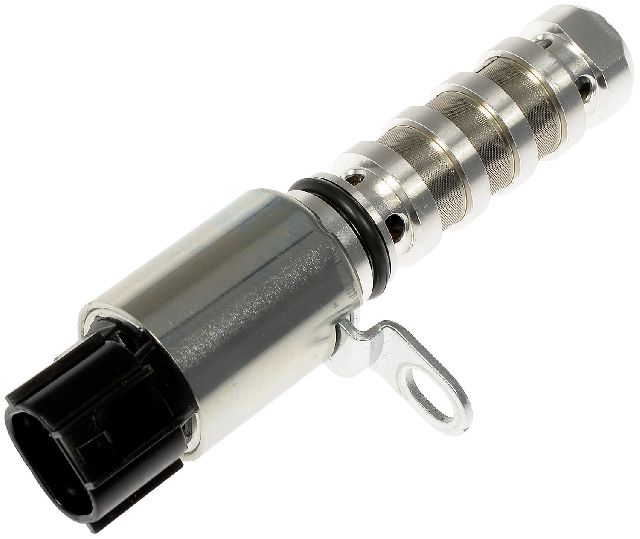
Est. part cost: $30-$70 - Faulty Exhaust Oil Control Valve (OCV) 🔴 High Probability The OCV can become clogged with sludge from infrequent oil changes or fail electrically. It's a very common failure point for VVT-related codes on Kia/Hyundai engines.
How to confirm: You can test the solenoid's resistance with a multimeter (typically 6.9-7.9 ohms). Applying 12V to see if the internal plunger actuates is another test. Often, swapping the exhaust OCV with the intake OCV (if they are identical) will cause the code to change to P0011, confirming the OCV is the fault.
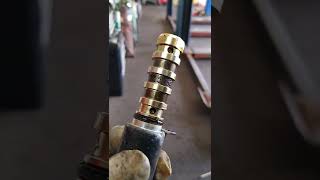
Typical fix: Replace the exhaust OCV solenoid. It is located on the valve cover, typically towards the firewall 🎬 Watch: A quick guide to replacing the exhaust OCV solenoid. (exhaust side).
Est. part cost: $50-$150 - Incorrect Camshaft Reluctor Wheel Configuration 🟡 Medium Probability This is a known issue documented by Kia in TSB #PS731 for 2010-2019 Soul models, which can also trigger P0011, P0016, and P0017.
How to confirm: This requires inspection by a technician familiar with the TSB, as it involves checking the physical installation and configuration of the reluctor wheel on the camshaft.
Typical fix: Correcting the reluctor wheel configuration as per the manufacturer's procedure. This is a labor-intensive fix.
Est. part cost: $0 (if under warranty/recall) or labor cost - Stretched Timing Chain / Failing Tensioner ⚪ Low Probability While less common than oil issues, timing chains can stretch over time, especially with high mileage or poor maintenance, affecting the correlation between the crank and camshafts. One owner on a forum found their timing was off by one tooth.
How to confirm: This is a complex diagnosis involving removal of the valve cover and/or timing cover to inspect for chain slack and check timing marks. Often accompanied by rattling noises on startup.
Typical fix: Replace the timing chain, guides, and tensioner. This is a significant repair.
Est. part cost: $200-$500
Rare But Worth Checking
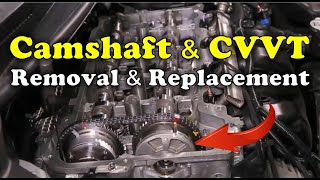
- Failing CVVT Actuator (Cam Phaser): The gear/sprocket on the end of the camshaft can fail internally. On the 2.0L Nu engine, a common failure is the dowel pin on the actuator breaking 🎬 Watch: Detailed walkthrough of the Nu engine CVVT actuator replacement. off and getting stuck in the camshaft, requiring replacement of both the CVVT actuator and sometimes the camshaft itself. This is a major repair.
- Clogged Oil Passages: Severe engine sludge from severely neglected oil changes can block the small oil passages leading to the CVVT system, including small filter screens in the cylinder head, preventing proper operation.
- Aftermarket OCV/Sensor Issues: Some owners have reported that using non-OEM (aftermarket) Oil Control Valves or Camshaft Position Sensors caused the code to persist or return, with the issue only being resolved after installing genuine Kia/Hyundai parts.
Diagnosis Steps
- Check Engine Oil Level and Condition: This is the first, easiest, and most important step. Pull the dipstick. If the oil is low, top it off with the manufacturer-specified grade, clear the code, and drive. If the oil is old or dirty, perform a full oil and filter change. Many P0014 issues on these cars are resolved at this step.
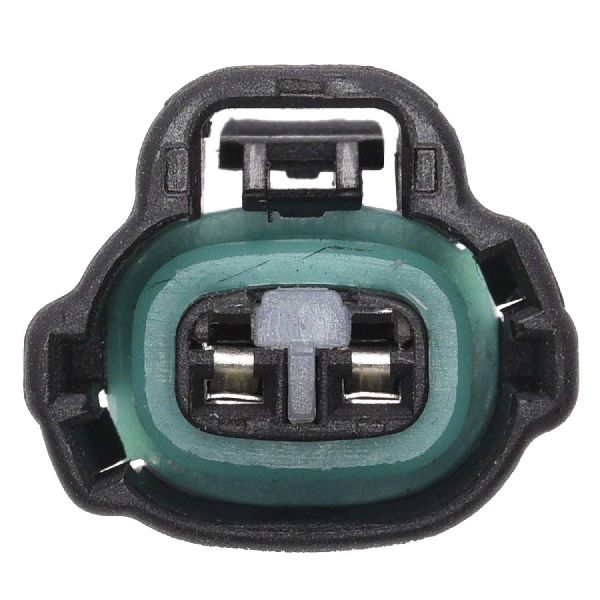
- Inspect OCV Wiring: Check the electrical connector and wiring to the exhaust Oil Control Valve for any damage, corrosion, or loose connections.
- Test/Swap the Oil Control Valve (OCV): The exhaust OCV is accessible on the valve cover, usually toward the rear/firewall side. A simple and effective test is to swap it with the intake OCV (if they are identical parts) and see if the code changes to P0011. If it does, the OCV is bad. Alternatively, test its resistance (should be ~6.9-7.9 ohms) or replace it.
- Inspect for Sludge: When the OCV is removed, look into the port for signs of heavy oil sludge. Significant sludge may indicate a more serious internal blockage requiring an engine flush or further teardown.
- Advanced Mechanical Checks: If the above steps do not resolve the issue, the problem is likely mechanical and more severe. This involves inspecting the timing chain for slack, checking the CVVT actuator (cam phaser) for failure (especially the dowel pin on 2.0L Nu engines), and verifying the reluctor wheel alignment per TSB #PS731. These steps are best performed by a qualified technician.
Parts You'll Likely Need
- Engine Oil & Filter — The CVVT system is dependent on oil pressure and cleanliness. This is the most common and cheapest first step. Use a full synthetic 5W-20 or 5W-30 oil as specified by the owner's manual.
Trusted brands: Shell, Mobil 1, Castrol, Pennzoil
OEM price range: $60-$90
Aftermarket price range: $30-$70 - Exhaust Oil Control Valve (OCV) / VVT Solenoid
(OEM #24375-2G500 (2.0L Nu, 2.4L Theta II), 24360-2GGD0 (1.6L Gamma GDI), 24350-2B000 (1.6L Gamma non-GDI) - Always verify by VIN.)— This solenoid is a common failure point, getting stuck or clogged and preventing proper cam timing adjustment.
Trusted brands: Genuine Hyundai/Kia (OEM), Dorman, Standard Motor Products (SMP)
OEM price range: $140-$150
Aftermarket price range: $50-$150
Related Codes That Often Appear With This One
- P0011 — This is the equivalent code for the intake camshaft ('A' Camshaft). Problems affecting the VVT system, like low oil or sludge, often impact both intake and exhaust cams simultaneously.
- P0017 — This code indicates a Crankshaft/Camshaft Correlation error. It often appears with P0014 when the timing is off enough to create a conflict between the two sensors' readings. This combination is very common on the 2.0L Nu engine when the CVVT actuator fails.
- P1326 — This is a Kia-specific code for the Knock Sensor Detection System (KSDS). It's a very common code on these vehicles and can be triggered by the engine vibrations or knocking that P0014 symptoms might cause. Many owners report receiving P0014 and P1326 together, especially after the KSDS software update (Recall SC200 / TSB PI2002B) was performed.
- P0300-P0304 — These are random or specific cylinder misfire codes. Incorrect cam timing disrupts the combustion process, leading to misfires. One owner reported P0014 with P0303 (Misfire Cylinder 3).
Technical Service Bulletins (TSBs) & Recalls
- PS731: Provides information that DTC P0014 (along with P0011, P0016, P0017) can be caused by an incorrectly installed camshaft reluctor wheel on 2010-2019 Soul models.
- SC200 / PI2002B: This is the recall/TSB for the Knock Sensor Detection System (KSDS) software update for the Nu 2.0L GDI engine. While not directly for P0014, its installation is often correlated with the appearance of P0014 and P1326 codes as the system is designed to detect vibrations that could indicate bearing wear or other internal issues.
- SC147: This TSB relates to the Theta II engine inspection and replacement for connecting rod bearing wear. A P0014 code could be an early symptom of the oiling and internal friction issues this TSB addresses.
Platform-Specific Known Issues
- A manufacturer Technical Service Bulletin (TSB #PS731) exists for DTC P0014 due to incorrect camshaft reluctor wheel configuration on 2010-2019 Soul models.
- An owner of a 2015 Soul with P0014 was told by a dealer that the condition was 'consistent with the Kia engine bearing failure recall' (SC200P), indicating a potential link to more severe engine problems like rod bearing failure.
- Multiple owners report receiving P0014 along with P1326 (Knock Sensor Detection) after receiving the KSDS software update. The update makes the system more sensitive to vibrations, which can be caused by timing issues.
- On the 2.0L Nu engine, a known failure point is the dowel pin on the CVVT actuator (cam phaser) shearing off, causing P0014 and P0017. This requires significant engine work to access and replace the actuator and remove the broken pin from the camshaft.
Mechanic-Grade Diagnostic Values
- Oil Control Valve (OCV) Solenoid Resistance — expected: 6.9 - 7.9 Ohms at 68°F (20°C). Failure: A reading outside this range, or an open/infinite reading, indicates a faulty solenoid.
- Scan Tool Live Data: Camshaft Angle Deviation — expected: Less than 5 degrees difference between 'Current Position of Exhaust Camshaft' and 'Control Camshaft Position Setpoint'.. Failure: A difference greater than 5 degrees while revving the engine from idle to 4000 RPM indicates a system performance issue.
- CVVT Cam Gear Bolt Torque (2.0L Nu Engine) — expected: 63.5 - 73.5 Newton-meters (approx. 47-54 lb-ft).. Failure: Improper torque can lead to bolt failure or incorrect gear function. This value should be confirmed with manufacturer service information for the specific year.
Scan Tool Commands That Help
- Kia GDS or equivalent professional scan tool: Actuator Test for 'Exhaust OCV' or 'VVT Solenoid' — Use this test with the engine at idle to functionally check the OCV and CVVT hydraulics. Commanding the solenoid 'ON' should cause a noticeable change in engine idle (stumble, hesitation, or stall). If there is no change, it points to a stuck OCV, clogged oil passage, or failed CVVT actuator.
Real Owner Repair Stories
- Reddit user in r/MechanicAdvice (Kia Soul (year not specified, but sister-in-law's car)) — P0014 code present.
❌ Tried (didn't work) Cleaning the exhaust VVT solenoid, Replacing the camshaft position sensor
✅ What actually fixed it The engine oil level was extremely low, not registering on the dipstick. Adding almost 4 quarts of oil to reach the correct level and clearing the code resolved the issue permanently. - Commenter on a YouTube repair video (2019 Kia Soul 2.0L Nu Engine) — Timing job being performed to fix timing codes.
❌ Tried (didn't work) Using a cheap, aftermarket timing chain kit. The tensioner spring was too weak to hold the chain, causing the timing to jump repeatedly when the engine was turned over by hand.
✅ What actually fixed it The mechanic ordered two different, higher-quality tensioners to find one that had sufficient spring tension to hold the timing chain guide securely before oil pressure builds up. The fix was using a properly manufactured tensioner. - Forum user comment (Kia with 2.0L Nu engine) — Camshaft sensor code (implying P0014/P0017).
❌ Tried (didn't work) Initial diagnosis from a dealership was to replace the entire engine.
✅ What actually fixed it The user identified the actual, common cause: the dowel pin that aligns the CVVT sprocket to the camshaft sinks into the cam, allowing the sprocket to rotate independently and throw off the timing. The user states this is a known fault and can be repaired without removing the timing cover.
When the Usual Fixes Don't Work
- While replacing the Camshaft Position Sensor is a common misdiagnosis, it's important to note why it's so tempting. The code directly references the camshaft's position, leading many DIY mechanics to assume the sensor that reads this position is at fault. However, as one owner's story confirms, replacing the sensor often has no effect because the root cause is hydraulic (low oil) or mechanical (stuck OCV, failed CVVT). The sensor is simply reporting the timing error accurately; it is not the cause of the error.
OEM Part Supersession History
22100-2G520, 416Z4-2GH00→24375-2G500— Part revision or consolidation by the manufacturer.
Heads up: No specific incompatibilities noted, the new part number is the correct replacement for the older numbers on applicable 2.0L and 2.4L engines.
Model Year Variations Within This Range
- 2010-2011: First-generation models primarily used the 1.6L Gamma MPI and 2.0L Beta II engines. These are generally considered reliable but are still susceptible to oil consumption and OCV issues.
- 2012-2017: These model years introduced the 1.6L Gamma GDI and, more significantly, the 2.0L Nu engine. The 2.0L Nu engine is known for a specific failure mode where the CVVT actuator's dowel pin can break or recede into the camshaft, causing P0014 and P0017 codes. This is a more severe mechanical failure than a simple OCV fault.
Helpful Videos

We Have This Part in Stock


The information in this article is provided for general reference and educational purposes only. Vehicle specifications, procedures, and part compatibility can vary by production date, trim level, and region. Always consult your vehicle's factory service manual and verify part numbers before purchasing or performing repairs. Safety-critical components such as airbags, seat belts, and braking systems should be installed by a qualified professional.
- Kia SOUL:
- 🎬 Helpful Videos
- 🛍️ Shop This Part
- What's Unique About the 2010-2017 Kia SOUL
- Diagnostic Flowchart
- Symptoms You May Notice
- Most Likely Causes
- Rare But Worth Checking
- Diagnosis Steps
- Parts You'll Likely Need
- Related Codes That Often Appear With This One
- Technical Service Bulletins (TSBs) & Recalls
- Platform-Specific Known Issues
- Mechanic-Grade Diagnostic Values
- Scan Tool Commands That Help
- Real Owner Repair Stories
- When the Usual Fixes Don't Work
- OEM Part Supersession History
- Model Year Variations Within This Range
- 🎟️ Get 5% Off