

P0014 on 2015-2022 GMC Canyon: Exhaust Cam Timing Causes and Fixes
On a 2015-2022 GMC Canyon, code P0014 is most often caused by a faulty Bank 1 exhaust camshaft position actuator solenoid or low/dirty engine oil. Replacing the solenoid is a common DIY fix costing around $40-$80 for the part. In some cases, a wiring harness issue or stretched timing chain could be the cause.
- First, check your engine oil. Low or dirty oil is a very common cause for code P0014 and the easiest thing to fix.
- The most likely part to have failed is the Bank 1 (passenger side) exhaust camshaft position actuator solenoid. This is a DIY-friendly repair for many.
- A simple diagnostic trick is to swap the exhaust and intake solenoids on Bank 1. If the trouble code moves (to P0011), you've confirmed the solenoid is the problem.
- If a new solenoid and fresh oil don't fix the issue, inspect the engine wiring harness for chafing as described in TSB #18-NA-307 before suspecting a more serious timing chain problem.
What's Unique About the 2015-2022 Gmc CANYON

The GMC Canyon, particularly with the 3.6L V6 engine, uses a sensitive Variable Valve Timing (VVT) system that relies heavily on clean engine oil of the correct viscosity. These systems can be prone to issues from contaminated oil, which can clog the small passages in the camshaft actuator solenoids. While a faulty solenoid is the most frequent culprit, a notable Technical Service Bulletin (TSB #18-NA-307) also points to potential wiring harness chafing against the cylinder head or camshaft cover, which can trigger this and other codes like P0365 and P0366.
Diagnostic Flowchart

Tap your situation to follow the diagnostic path that matches what you're seeing on this vehicle.
Symptoms You May Notice

- Check Engine Light (MIL) is on
- Rough idle
- Reduced engine power or "Lack of Power" message on the Driver Information Center (DIC).
- Stabilitrak light may illuminate, sometimes intermittently with the check engine light.
- Engine is hard to start.
- Increased fuel consumption.
- Rattling, ticking, or knocking noise from the engine.
- Engine stalling.
- Rough or harsh shifting.
- Replacing the camshaft position *sensor* instead of the camshaft position *actuator solenoid*. The sensor reads the camshaft's position, while the solenoid is the valve that controls the oil flow to change the position. P0014 is almost always related to the actuator solenoid or the mechanical timing components, not the sensor itself. Some owners have replaced the sensor only to have the code return.
Most Likely Causes

- Low or Dirty Engine Oil 🔴 High Probability The VVT system uses engine oil pressure to adjust timing. Low levels, incorrect viscosity, or sludge from missed oil changes can clog the small passages and screens in the actuator solenoids, preventing proper function. This is a very common trigger for P0014 after an improper oil change.
How to confirm: Check the engine oil level on the dipstick and inspect its condition. If the oil is low, excessively dark, or sludgy, this is a likely contributor.
Typical fix: Top off the oil if low. If the oil is old or dirty, perform a complete oil and filter change using the manufacturer-recommended oil viscosity (e.g., 5W-30 synthetic). Then, clear the codes and test drive.
Est. part cost: $40-$80 - Faulty Exhaust Camshaft Position Actuator Solenoid (Bank 1) 🔴 High Probability This solenoid is an electromechanical valve that controls oil flow to the cam phaser. It is a very common failure point on many GM vehicles and can get stuck or clogged with debris.
How to confirm: After confirming correct oil level and condition, this is the next logical part to inspect. A common diagnostic technique is to swap the exhaust solenoid (lower position on the cylinder head) with the intake solenoid (upper position) on the same bank. Clear the codes and run the engine. If the code changes to P0011 (Intake Camshaft Position Timing), the solenoid is confirmed to be faulty. You can also test the solenoid's resistance with a multimeter; it should typically be between 6-12 ohms.
Typical fix: Replace the Bank 1 exhaust camshaft position actuator solenoid. This is a 15-minute DIY job for many owners.
Est. part cost: $40-$80 - Stretched Timing Chain or Faulty Tensioner 🟡 Medium Probability The 3.6L V6 engine, in particular, has a known history of timing chain issues across various GM platforms. Over time, the chain can stretch, or the tensioners can weaken, causing timing to become inaccurate and setting correlation codes.
How to confirm: This is a more advanced diagnosis. It often presents with a rattling noise on startup and may be accompanied by other codes like P0016, P0017, or P0008. A mechanic will need to measure timing chain deflection or use a scan tool to compare desired vs. actual cam angles, which may require partial engine disassembly.
Typical fix: Replace the timing chains, tensioners, and guides. This is a labor-intensive and expensive job.
Est. part cost: $500-$900
Rare But Worth Checking
- Chafed Engine Wiring Harness: TSB #18-NA-307 specifically calls out that the engine wiring harness can rub against the camshaft cover or cylinder head, causing a short to ground or an open circuit. This can trigger P0014 along with other codes like P0365, P0366, and P06A3. This should be inspected carefully if a new solenoid doesn't solve the issue.
- Faulty Camshaft Phaser: The phaser is the gear on the end of the camshaft that actually rotates to change timing. It can fail mechanically or become clogged with debris, but this is less common than a solenoid failure. It is often replaced as part of a complete timing chain service.
- Incorrect Oil Filter: Using a low-quality or incorrect oil filter can lead to oil pressure issues or allow debris to circulate, which can clog the VVT solenoids and trigger the P0014 code. One owner on a forum reported the code appeared after an oil change where the shop installed the filter incorrectly.
Diagnosis Steps
- Verify the code with an OBD-II scanner.
- Check the engine oil level and condition. If low, dirty, or past its service interval, correct this first. An oil and filter change is a common fix. Clear the code and see if it returns.
- Inspect the wiring harness for the Bank 1 exhaust camshaft actuator solenoid for any visible damage, paying close attention to areas where it might rub against the engine per TSB #18-NA-307.
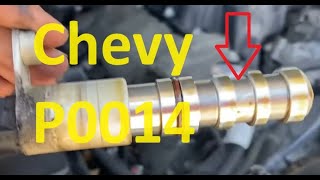
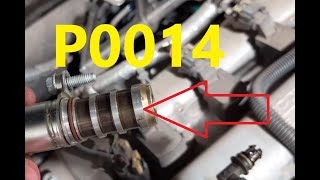
- Identify the Bank 1 (passenger side on V6) exhaust solenoid. It is typically the lower of the two solenoids on the front of the cylinder head. 🎬 Watch: How to locate and identify the Bank 1 solenoids.
- Swap the exhaust solenoid with the intake solenoid (the upper one). Clear the codes and run the engine. If the code changes to P0011, the solenoid you moved is bad and needs to be replaced. This is a very reliable DIY diagnostic step.
- If the code does not change after the swap, you can test the solenoid's resistance with a multimeter (expect 6-12 ohms) or apply 12V to see if it actuates. 🎬 See this walkthrough on testing and fixing the exhaust timing.
- If the solenoid and wiring are good but the code remains P0014, the problem is likely more advanced, such as a clogged oil passage, a faulty camshaft phaser, or a stretched timing chain. These steps typically require a professional mechanic.
Parts You'll Likely Need
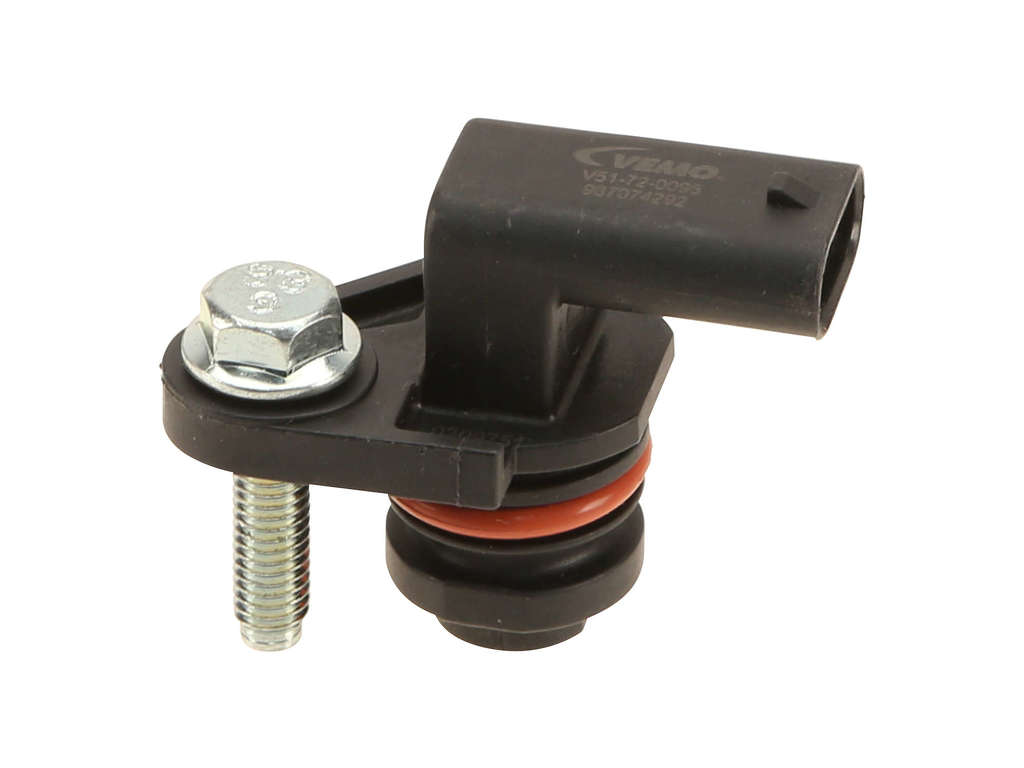
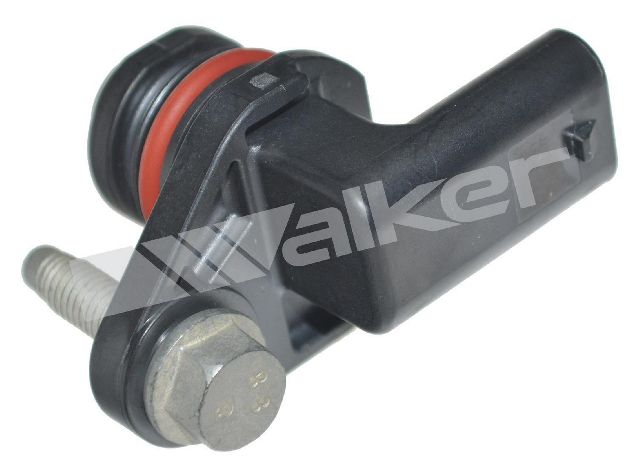
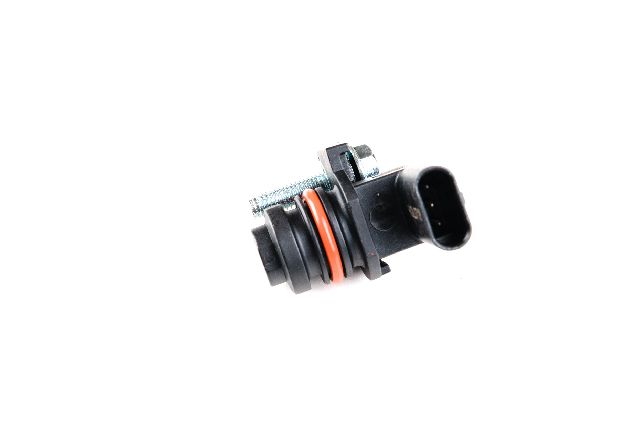
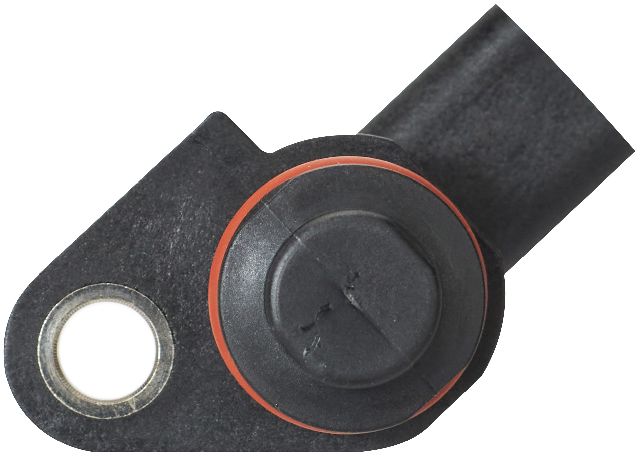
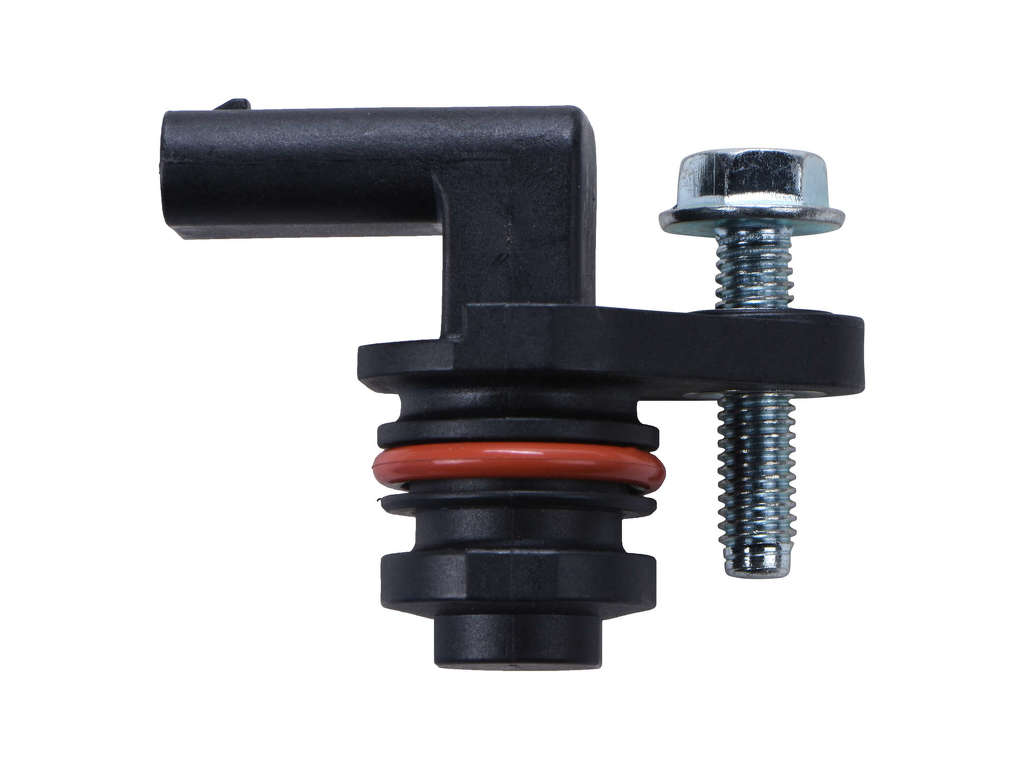
- Exhaust Camshaft Position Actuator Solenoid (Bank 1)
(OEM #12679099)— This is the most frequent cause of P0014. It's an accessible, relatively inexpensive part that directly controls the cam timing 🎬 Watch: A quick guide to common causes and solenoid fixes. adjustment that is failing. Note that the intake and exhaust solenoids are often the same part number. This part number supersedes previous versions like 12628347 and 12655420.
Trusted brands: ACDelco, Delphi
OEM price range: $60-$90
Aftermarket price range: $30-$60
Related Codes That Often Appear With This One
- P0011 — This is the equivalent code for the *intake* camshaft on Bank 1. If both appear, it could point to a more systemic issue like oil pressure or a timing chain problem affecting the entire bank.
- P0017 — This code indicates a Crankshaft/Camshaft Correlation issue. Seeing it with P0014 strongly suggests a base timing problem, such as a stretched timing chain, and is mentioned in some related TSBs.
- P0365 / P0366 — These codes are related to the camshaft position sensor 'B' circuit and are mentioned alongside P0014 in TSB #18-NA-307, often pointing to a wiring issue as the root cause.
Technical Service Bulletins (TSBs) & Recalls
- 18-NA-307: Addresses customer concerns of lack of power, rough idle, and Stabilitrak light with DTCs P0014, P0365, P0366, P06A3, P16A1, and/or P16A2 set, pointing to a potential wiring harness chafing issue or a cylinder head problem.
Platform-Specific Known Issues
- A known issue documented in TSB #18-NA-307 involves the engine wiring harness chafing on the edge of the camshaft cover or cylinder head, which can cause shorts and trigger P0014 along with other codes. The fix involves repairing the damaged wires and securing the harness away from the sharp edges.
Mechanic-Grade Diagnostic Values
- Camshaft Position Actuator Solenoid Resistance — expected: Between 6.9 and 7.9 ohms at 68°F (20°C). Other sources give broader ranges like 5-15 ohms.. Failure: A reading of 0 ohms (short), infinite/O.L. (open circuit), or a value significantly outside the specified range indicates a faulty solenoid.
- Scan Tool Desired vs. Actual Camshaft Position Angle — expected: The 'Actual' angle should closely track the 'Desired' angle as engine RPM and load change.. Failure: A significant, persistent deviation between the desired and actual angles, or the actual angle being stuck, points to a problem with the solenoid, phaser, or oil pressure.
- VVT Solenoid Voltage Supply (Key On, Engine Off) — expected: Battery voltage (approx. 12V) should be present at one of the two pins on the solenoid's electrical connector.. Failure: No voltage suggests a wiring issue, blown fuse, or problem with the ECM's power supply circuit.
Scan Tool Commands That Help
- GDS2 or equivalent professional scan tool: Camshaft Position Actuator Solenoid Test (or VVT Actuator Test) — This bidirectional control allows you to command the solenoid on and off while the engine is idling. A functioning solenoid will cause a noticeable change in engine operation, such as a stumble, hesitation, or stall. If the engine sound doesn't change, it confirms a fault in the solenoid, its oil supply, or the phaser itself, without having to remove the part first.
Wiring & Ground Locations
- G120 — Right front bottom side of the engine block.. While not exclusively for the VVT circuit, this is a primary engine block ground point. A poor connection here can cause unstable voltage and erratic behavior in various engine sensors and actuators, including the VVT solenoids. The TSB-mentioned harness chafing is still the most direct wiring concern for P0014.
- Bank 1 Cylinder Identification — Bank 1 on the 3.6L V6 is the passenger side of the engine, containing cylinders 1, 3, and 5. Bank 2 is the driver's side.. Correctly identifying Bank 1 is critical to avoid diagnosing and replacing parts on the wrong side of the engine.
Real Owner Repair Stories
- YouTube channel 'Nathan's DIY Garage' (Chevrolet Trailblazer with a similar GM VVT system.) — Recurring P0014 Check Engine Light that would return 80-100 miles after being cleared.
❌ Tried (didn't work) Clearing the code without replacing parts.
✅ What actually fixed it The owner replaced the exhaust VVT solenoid. After driving for over 240 miles, he confirmed with a scan tool that the code had not returned, verifying the fix. - YouTube channel 'DIY Auto' (2015-2022 GMC Canyon with 3.6L V6) — Check Engine Light with codes P0017 and P0019 (correlation codes for both banks).
❌ Tried (didn't work) Initial diagnosis pointed towards timing chains.
✅ What actually fixed it The owner replaced both exhaust camshaft position actuator VVT solenoids. This resolved the codes and resulted in a noticeable 1-2 MPG improvement in fuel economy. This demonstrates the same part and procedure on the target vehicle can resolve similar timing-related codes.
OEM Part Supersession History
12578517, 12628347, 12646783, 12655420→12679099— GM regularly updates service parts to integrate new materials and technologies for improved durability and performance.
Heads up: While the solenoids themselves are often interchangeable between intake and exhaust, some model years (particularly 2017+ with the LGZ engine) may have different electrical connector shapes for the intake vs. exhaust solenoids. Always verify the connector shape before ordering.
Model Year Variations Within This Range
- 2015-2016: These years primarily used the 3.6L LFX V6 engine. This was the final iteration of the Gen 2 'High Feature' V6.
- 2017-2022: These years used the updated 3.6L LGZ V6 engine. The LGZ is a 'clean sheet redesign' with a new block, wider bore spacing, and redesigned heads, tuned for better truck-application torque. While the VVT system operates on the same principles, some components like wiring connectors may differ from the earlier LFX. For example, some parts listings indicate the intake and exhaust solenoid connectors are different on the LGZ.
Helpful Videos

We Have This Part in Stock

The information in this article is provided for general reference and educational purposes only. Vehicle specifications, procedures, and part compatibility can vary by production date, trim level, and region. Always consult your vehicle's factory service manual and verify part numbers before purchasing or performing repairs. Safety-critical components such as airbags, seat belts, and braking systems should be installed by a qualified professional.
- Gmc CANYON:
- 🎬 Helpful Videos
- 🛍️ Shop This Part
- What's Unique About the 2015-2022 Gmc CANYON
- Diagnostic Flowchart
- Symptoms You May Notice
- Most Likely Causes
- Rare But Worth Checking
- Diagnosis Steps
- Parts You'll Likely Need
- Related Codes That Often Appear With This One
- Technical Service Bulletins (TSBs) & Recalls
- Platform-Specific Known Issues
- Mechanic-Grade Diagnostic Values
- Scan Tool Commands That Help
- Wiring & Ground Locations
- Real Owner Repair Stories
- OEM Part Supersession History
- Model Year Variations Within This Range
- 🎟️ Get 5% Off