

P0014 on 2015-2019 Ford Police Interceptor Sedan: Causes and Fixes
On a 2015-2019 Ford Police Interceptor Sedan, P0014 is most often caused by low or dirty engine oil, or a failing Variable Camshaft Timing (VCT) solenoid. The most common fix is an oil change and/or replacing the Bank 1 exhaust VCT solenoid. Before replacing parts, Ford recommends using a scan tool to cycle the solenoid to clear debris. On the 3.5L/3.7L V6, this code can also be a symptom of a failing internal water pump leaking coolant into the oil.
- The most likely cause of P0014 on this vehicle is either old/low engine oil or a sticking exhaust VCT solenoid on Bank 1.
- Always start your diagnosis by checking the engine oil level and condition. An oil change is the cheapest and easiest first step.
- Ford has issued a TSB (#SSM 49821) confirming that VCT solenoids on these engines can stick due to debris, making solenoid replacement a very common and effective fix.
- Ignoring this code can lead to reduced performance, poor fuel economy, and potential for more serious engine damage over time.
- Be aware of the potential for internal water pump failure on the V6 engines, which can contaminate the oil and cause this code as a secondary symptom.
What's Unique About the 2015-2019 Ford POLICE INTERCEPTOR SEDAN
The Ford Police Interceptor Sedan, based on the Taurus platform, uses 3.5L and 3.7L V6 engines whose Variable Camshaft Timing (VCT) systems are notoriously sensitive to oil quality and level. Ford's own Technical Service Bulletin, TSB #SSM 49821, directly states that small debris in the oil can cause VCT solenoids to stick, leading to codes like P0014. Furthermore, these V6 engines feature an internal, timing-chain-driven water pump. A seal failure on this pump will leak coolant directly into the engine oil, leading to widespread lubrication failure, VCT system damage, and potentially catastrophic engine failure, with P0014 being a possible early symptom.
Diagnostic Flowchart
Tap your situation to follow the diagnostic path that matches what you're seeing on this vehicle.
Symptoms You May Notice
- Check Engine Light is on
- Rough or unstable idle
- Engine stalling, especially at low speeds or when stopping
- Hard starting
- Reduced fuel economy
- Loss of power and poor acceleration
- Rattling, ticking, or knocking noise from the engine, especially on cold startups, which can indicate a failing cam phaser or timing chain.
- Replacing the camshaft position sensor. The sensor's job is to report the position; it rarely causes an over-advanced condition itself. A bad sensor usually triggers different codes (e.g., circuit codes).
- Immediately replacing the cam phaser without first checking oil quality and replacing/testing the much cheaper and more common failure point, the VCT solenoid.
Most Likely Causes
- Low, Dirty, or Incorrect Viscosity Engine Oil 🔴 High Probability The VCT system is hydraulically operated and highly sensitive to oil pressure and cleanliness. Ford's own TSBs confirm that debris in the oil is a primary cause of VCT solenoid issues on these engines. Many owners on forums report the code appears near a scheduled oil change and is resolved by it.
How to confirm: Check the oil level on the dipstick and inspect its condition. If it is low, dark, sludgy, or smells of gasoline or coolant, it needs to be changed immediately.
Typical fix: Change the engine oil and filter using the manufacturer-recommended full synthetic oil and a quality filter (e.g., Motorcraft 5W-20 or 5W-30 depending on engine). Some owners recommend an engine flush before the oil change to help clear sludge.
Est. part cost: $40-$80 - Sticking or Failing VCT Solenoid (Oil Control Valve) 🔴 High Probability As stated in TSB #SSM 49821, these solenoids are known to stick due to small debris in the engine oil, a common issue for this vehicle platform. The fine mesh screens on the solenoids can become clogged, restricting oil flow.
How to confirm: After verifying oil is good, use a scan tool to perform the pinpoint test from TSB #SSM 49821, which cycles the solenoid to attempt to clear it. A common DIY method is to swap the Bank 1 exhaust VCT solenoid with the Bank 2 exhaust solenoid. Clear the codes and drive. If the code changes to P0024 (the equivalent code for Bank 2), the solenoid is faulty. Upon removal, inspect the solenoid's screens for gunk or tears. You can also test resistance with a multimeter (should be 5-15 ohms).
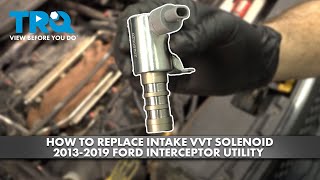
Typical fix: Replace the Bank 1 exhaust VCT solenoid. Since the solenoids are located under the valve cover on these engines, the valve cover gasket must also be replaced. 🎬 Watch: Step-by-step guide to replacing the VCT solenoid.
Est. part cost: $30-$80 for the solenoid, $25-$50 for the gasket. - Worn Camshaft Phaser 🟡 Medium Probability The cam phasers on Ford's V6 engines are a known failure point, especially at higher mileage or with a history of infrequent oil changes. The internal locking pin can fail, causing the phaser to be stuck in an advanced position.
How to confirm: This often presents with a distinct 2-3 second rattling noise on cold startups. Diagnosis is more involved and requires removing the valve cover to inspect for excessive play in the timing chain and phaser, often requiring professional assessment.
Typical fix: Replacement of the camshaft phaser, which is a significant labor-intensive job that often includes replacing the timing chain, guides, and tensioners as well.
Est. part cost: $150-$400
Rare But Worth Checking
- Failing Internal Water Pump (3.5L/3.7L V6): CRITICAL: A well-documented and catastrophic failure point on these V6 engines is the internal, timing-chain-driven water pump. When its bearing or seal fails, it leaks coolant directly into the oil pan. This contamination destroys the oil's lubricating properties, leading to sludge and rapid wear of VCT solenoids, phasers, and the timing chain itself. P0014 can be a symptom of this impending engine failure. Check for milky, frothy oil on the dipstick or oil cap. This requires immediate professional service. 🎬 See how to identify a failing internal water pump.
- Stretched Timing Chain or Failed Tensioner: While less common than a solenoid failure for a single code, a stretched chain can cause timing to be consistently off. This is usually accompanied by rattling noises, especially on the 3.5L EcoBoost, and may throw correlation codes like P0016 as well.
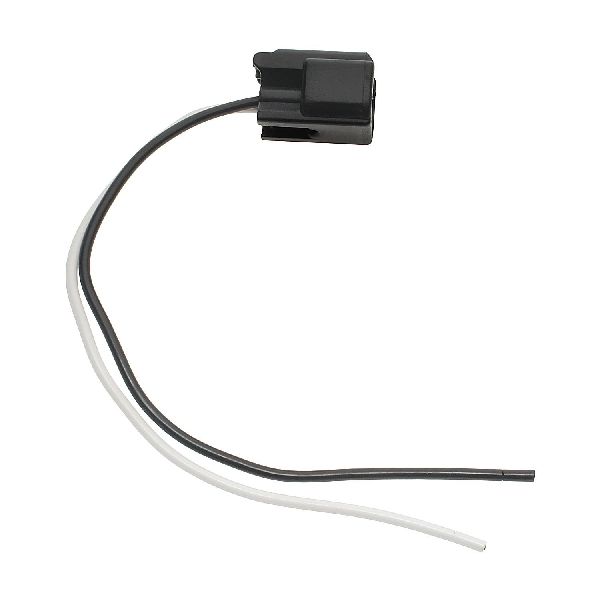
- Damaged Wiring or Connector for VCT Solenoid: Check the wiring harness leading to the Bank 1 exhaust solenoid for any visible damage, corrosion, or loose connections. A poor connection can cause intermittent failure.
Diagnosis Steps
- Check the engine oil level and condition. If low, dirty, or contaminated (milky appearance), perform an oil and filter change with the correct full synthetic oil (e.g., Motorcraft 5W-20/5W-30) and a high-quality filter. Consider an engine flush if sludge is suspected. Clear the code and see if it returns.
- If the oil is good, use a diagnostic scan tool to follow the procedure in TSB #SSM 49821: attempt to cycle the Bank 1 exhaust VCT solenoid 10 times to clear potential debris. If the code clears and does not return, the issue is resolved.
- If the code persists, locate the VCT solenoids. On the V6, Bank 1 is the rear bank (firewall side) and Bank 2 is the front bank. The exhaust solenoid is typically the one closer to the exhaust manifold.
- Swap the Bank 1 (rear) exhaust VCT solenoid with the Bank 2 (front) exhaust VCT solenoid. This is a proven DIY diagnostic step. Clear the codes and test drive.
- If the code returns as P0024 (for Bank 2), the solenoid you moved is faulty and needs to be replaced.
- If the code P0014 returns, the issue is not the solenoid. The problem may lie with the cam phaser, timing chain, or a clogged oil passage supplying that phaser.
- When a solenoid is removed, inspect its small mesh screens for sludge, debris, or tears. A dirty screen can sometimes be cleaned with brake or MAF sensor cleaner as a temporary fix, but replacement is recommended.
- Listen for a distinct rattle from the front of the engine on cold starts. This is a strong indicator of a failing cam phaser or timing chain issue, which requires professional diagnosis.
Parts You'll Likely Need
- Variable Camshaft Timing (VCT) Solenoid
(OEM #7T4Z-6M280-C (for 3.7L/3.5L NA), AT4Z-6M280-C (alternate), HL3Z-6M280-A (for 3.5L EcoBoost))— This is the most common failure part for P0014, often getting stuck due to oil debris, as noted in multiple Ford TSBs.
Trusted brands: Motorcraft, Dorman
OEM price range: $50-$95
Aftermarket price range: $30-$80 - Engine Oil and Filter
(OEM #Motorcraft FL-500S (Filter example, verify for specific engine))— Clean oil of the correct viscosity is essential for the VCT system to function. An oil change is the first and most important step in diagnosis and prevention.
Trusted brands: Motorcraft, Mobil 1, Purolator
OEM price range: $40-$80
Aftermarket price range: $40-$80 - Valve Cover Gasket
Related Codes That Often Appear With This One
- P0011 — Intake camshaft timing over-advanced on the same bank (Bank 1). This often appears with P0014 if there's a systemic oil pressure issue or sludge affecting the entire bank.
- P0024 — Exhaust camshaft timing over-advanced on the opposite bank (Bank 2). If both P0014 and P0024 are present, it strongly points to a global issue like low/dirty oil. This code will also appear after swapping a bad Bank 1 solenoid to Bank 2 as a diagnostic step.
- P0015 — Exhaust camshaft timing over-retarded on Bank 1. Seeing this with P0014 could indicate a VCT solenoid that is sticking intermittently and moving erratically.
- P0016 — Crankshaft/Camshaft Position Correlation error. This code is more serious and often points towards a stretched timing chain or failing phaser, as the base timing between the crank and cam is incorrect.
Technical Service Bulletins (TSBs) & Recalls
- SSM 49821: Some 2015-2021 Ford and Lincoln vehicles may exhibit an illuminated MIL with diagnostic trouble codes (DTC) P0011, P0012, P0014, P0015, P0016, P0017, P0018, P0019, P0021, P0022, P0024 and/or P0025. This may be due to small debris causing the VCT solenoid to stick. Before attempting component replacement, refer to PC/ED pinpoint test HK11 to cycle the affected VCT solenoid 10 times to attempt to clear the debris.
- TSB 20-2315: (Context from platform mate Ford Expedition) Addresses notorious cam phaser failure on 3.5L EcoBoost engines, which causes a loud rattle on startup and can be associated with VCT codes like P0014.
- SSM 48423 / SSM 47170: (Context from platform mate Ford F-150) Also acknowledge that VCT codes can be caused by debris in the oil causing solenoids to stick, reinforcing this as a common Ford issue.
Platform-Specific Known Issues
- Technical Service Bulletin #SSM 49821 directly addresses this code, noting it may be caused by small debris causing the VCT solenoid to stick. It recommends attempting to clear the debris by cycling the solenoid with a scan tool before replacement.
- The 3.5L and 3.7L V6 engines are known for having an internal, timing-chain-driven water pump. A failure of this pump can introduce coolant directly into the engine oil, leading to widespread VCT system failure and this code. This is a catastrophic failure that requires immediate attention.
Mechanic-Grade Diagnostic Values
- VCT Solenoid Internal Resistance — expected: 5 to 15 Ohms. More specific ranges cited are 6.9-7.9 Ohms or 8-12 Ohms.. Failure: A reading of 0 Ohms (short), infinite/OL (open), or outside the specified range indicates a faulty solenoid.
- VCT Solenoid Connector Voltage (Key On, Engine Off) — expected: Approximately 12.6V (Battery Voltage) on the power supply pin.. Failure: Low or no voltage points to a wiring issue, a blown fuse, or a problem with the PCM power relay.
- Scan Tool VCT Advance Error PID (e.g., VCT_ADVERR, VCT_ERR) — expected: Should hover close to 0° at warm idle in closed-loop operation.. Failure: A large, persistent error value (e.g., greater than +/- 5 degrees) indicates the phaser is not reaching its commanded position, pointing to a sticking solenoid, low oil pressure, or a faulty phaser.
- Engine Oil Pressure at Hot Idle — expected: Minimum of 15 PSI.. Failure: Pressure below the minimum threshold can cause the VCT system to malfunction and set timing codes.
Hidden / Shadow Codes Worth Checking
- Mode 6, Test ID $81 (and others): Ford vehicles utilize OBD-II Mode 6 data, which provides non-continuous monitor test results. For the VCT system, specific Test IDs and Component IDs show the raw pass/fail data and measured values for camshaft angle deviation. A failing value here can precede a full-blown DTC. (see via An advanced scan tool capable of reading Mode 6 data, such as Ford's IDS, FORScan, or other professional-grade scanners.)
Scan Tool Commands That Help
- Ford IDS, FORScan: VCT Solenoid On/Off Command (Bidirectional Control) — With the engine running at idle, this command manually actuates the target VCT solenoid. A healthy solenoid and phaser will cause the engine to stumble or run rough when commanded. If there is no change in idle quality, it confirms a problem with the solenoid, a clogged oil passage, or a seized phaser.
- Ford IDS, FORScan: Monitor PIDs: VCT_EXH_DSD1, VCT_EXH_ACT1, VCT_EXH_ERR1 — These PIDs represent Desired Cam Angle, Actual Cam Angle, and the Error between them for Bank 1 Exhaust. Graphing these during a drive cycle can reveal a solenoid that is slow to respond or overshoots its target, which is visible as a large VCT_EXH_ERR1 value.
- Basic Diagnostic Procedure: Disconnect VCT Solenoids — If an engine noise or severe rough idle is present, disconnecting both VCT solenoids electrically will cause the PCM to default them to the locked (zero advance) position. If the symptom disappears during a subsequent test drive, it strongly indicates the fault lies within the VCT system (solenoids or phasers).
Wiring & Ground Locations
- VCT Solenoid Connector — On the 3.5L/3.7L V6 engines, the electrical connectors are visible on top of the valve covers, but the solenoids themselves are located underneath the covers, requiring their removal for replacement.. This is the primary point for electrical testing (voltage and resistance). A poor connection here can mimic a failed solenoid.
- VCT Solenoid Power Source — The power for the VCT solenoids often comes from a fuse in the battery junction box (under the hood) that also supplies power to the fuel injectors (e.g., fuse F16 on some models).. If this fuse were blown, the engine would not start, so a lack of power at the solenoid with a running engine points to a wiring break between the fuse and the solenoid, not the fuse itself.
- VCT Solenoid Control — The ground signal for the solenoid is pulse-width modulated (PWM) by the Powertrain Control Module (PCM) to control its position.. A break in the ground wire between the PCM and the solenoid will prevent it from actuating, causing a timing fault.
Real Owner Repair Stories
- Ford F150 Forum user (Ford F-150 with 3.5L engine (shared engine platform)) — Engine misfire/shudder and rough idle after long highway drives, accompanied by code P0022 (Bank 2 equivalent of P0014).
❌ Tried (didn't work) Initial diagnosis was uncertain between a failing VCT solenoid and a much more expensive cam phaser replacement.
✅ What actually fixed it The user captured scan tool data using FORScan while the issue was occurring. The data for the VCT error PID (VCT_INT_DIF2) showed the cam timing was slow to react and would overshoot the desired value. Other forum members confirmed this data pattern was characteristic of a failing VCT solenoid, not a cam phaser, allowing the owner to confidently replace the cheaper part to resolve the issue.
OEM Part Supersession History
7T4Z-6M280-A, 7T4Z-6M280-AA, 7T4Z-6M280-B→7T4Z-6M280-C— Part revision and improvement by the manufacturer.
Heads up: The newest part number, 7T4Z-6M280-C, is the correct service replacement for the earlier versions on the 3.5L/3.7L NA V6 engines.
Model Year Variations Within This Range
- 2015-2019: The V6 engines (3.5L NA, 3.7L NA, 3.5L EcoBoost) used in the Police Interceptor Sedan have four VCT solenoids in total, and they are all located under the valve covers, making replacement a more labor-intensive job that requires replacing the valve cover gaskets. This differs from some other Ford platforms like the 2.7L EcoBoost F-150 where the solenoids are externally accessible.
Helpful Videos
We Have This Part in Stock


The information in this article is provided for general reference and educational purposes only. Vehicle specifications, procedures, and part compatibility can vary by production date, trim level, and region. Always consult your vehicle's factory service manual and verify part numbers before purchasing or performing repairs. Safety-critical components such as airbags, seat belts, and braking systems should be installed by a qualified professional.
- Ford POLICE INTERCEPTOR SEDAN:
- 🎬 Helpful Videos
- 🛍️ Shop This Part
- What's Unique About the 2015-2019 Ford POLICE INTERCEPTOR SEDAN
- Diagnostic Flowchart
- Symptoms You May Notice
- Most Likely Causes
- Rare But Worth Checking
- Diagnosis Steps
- Parts You'll Likely Need
- Related Codes That Often Appear With This One
- Technical Service Bulletins (TSBs) & Recalls
- Platform-Specific Known Issues
- Mechanic-Grade Diagnostic Values
- Hidden / Shadow Codes Worth Checking
- Scan Tool Commands That Help
- Wiring & Ground Locations
- Real Owner Repair Stories
- OEM Part Supersession History
- Model Year Variations Within This Range
- 🎟️ Get 5% Off