

P0014 on 2015-2019 Ford Fiesta: Exhaust Cam Timing Causes and Fixes
On a 2015-2019 Ford Fiesta, code P0014 is most often caused by a sticking exhaust VCT (Variable Camshaft Timing) solenoid or low/dirty engine oil. The VCT system is highly sensitive to oil quality and pressure. Replacing the solenoid is a common, affordable DIY fix that often resolves the issue.
- P0014 on your Fiesta points to the exhaust camshaft timing being too far advanced.
- The most common cause is a sticking exhaust VCT solenoid, a known issue acknowledged by Ford in TSBs.
- Always check your engine oil level and condition first; low or dirty oil is a frequent trigger for this code.
- Replacing the exhaust VCT solenoid is a straightforward and affordable DIY job that often resolves the problem.
- Swapping the intake and exhaust solenoids is a no-cost diagnostic step to confirm if a solenoid is faulty.
What's Unique About the 2015-2019 Ford FIESTA
The Ford Fiesta uses a Twin Independent Variable Camshaft Timing (Ti-VCT) system that relies on oil pressure to adjust timing for both the intake and exhaust cams. As highlighted in multiple Ford Technical Service Bulletins (TSBs), the VCT solenoids that control this system can be susceptible to sticking due to small debris in the engine oil. This makes regular oil changes with the correct type of oil especially critical for these engines. Some owners report that even with regular maintenance, the solenoid can fail and require replacement.
Diagnostic Flowchart
Tap your situation to follow the diagnostic path that matches what you're seeing on this vehicle.
Symptoms You May Notice
- Check Engine Light is on
- Rough idle or stalling
- Poor acceleration and reduced engine power
- Decreased fuel economy
- Hard starting
- Rattling noise from the engine, especially on startup
- Replacing the camshaft position sensor. While a faulty sensor can cause timing codes (like P0340), it's less common for P0014 than the VCT solenoid itself. The solenoid is the actuator that controls oil flow, while the sensor just reads the camshaft's position. The solenoid is the more frequent point of failure in this system.
Most Likely Causes
- Sticking or Failing Exhaust VCT Solenoid 🔴 High Probability Ford has issued multiple TSBs (SSM 48423) stating that small debris in the oil can cause VCT solenoids to stick. This is the most likely culprit, confirmed by numerous owner experiences on forums where replacement solved the P0014 code.
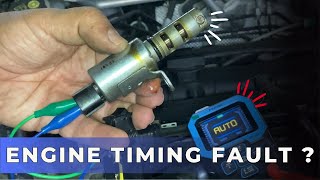
How to confirm: Swap the exhaust VCT solenoid with the intake VCT solenoid (they are identical). If the code changes to P0011 (Intake Camshaft Position Timing), the solenoid is faulty. You can also test the solenoid's resistance with a multimeter (a normal reading is around 7.5–9.0 ohms) or use a scan tool to command it on and off, listening for a click or change in engine RPM. 🎬 Watch: A mechanic explains Ford VCT solenoid diagnostics in detail.
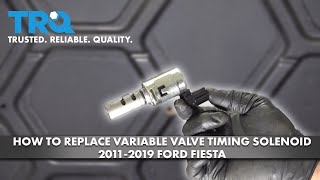
Typical fix: Replace the Bank 1 exhaust VCT solenoid. It is located on the top of the valve cover, held in by a single 8mm bolt, making it very accessible. 🎬 Watch: See this step-by-step VCT solenoid replacement walkthrough. Ensure the O-ring seal is replaced with the new solenoid to prevent oil leaks.
Est. part cost: $20-$70 - Low or Dirty Engine Oil 🔴 High Probability The Ti-VCT system is entirely dependent on clean oil at the correct pressure to function. Degraded, incorrect viscosity, or low oil can prevent the VCT phasers from adjusting correctly. Some owners have reported the code appearing when an oil change is overdue.
How to confirm: Check the oil level on the dipstick and inspect its condition. If the oil is dark, gritty, or below the minimum level, it needs to be changed. An oil change is the cheapest and easiest first step.
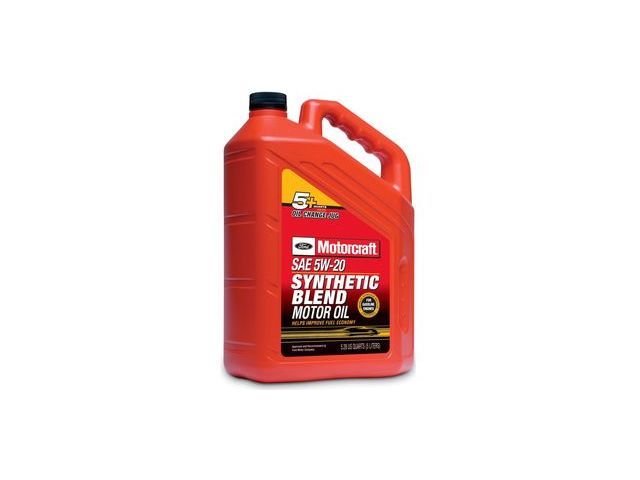
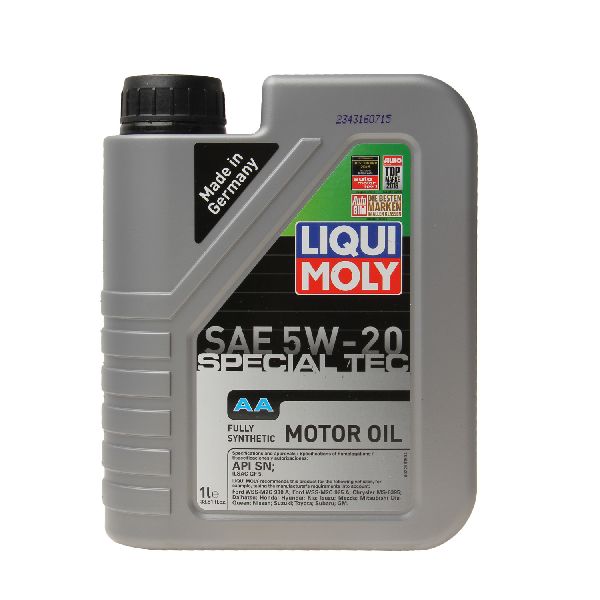
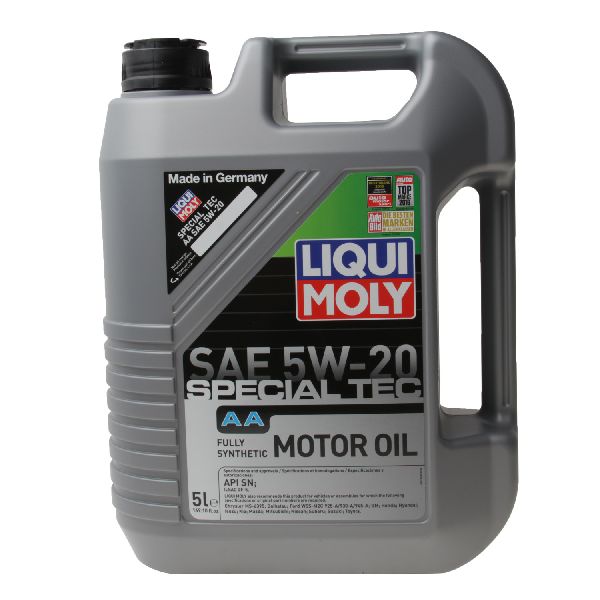
Typical fix: Perform an engine oil and filter change using the manufacturer-recommended oil viscosity (typically 5W-20 for the 1.6L engine) and a quality filter. Clear the codes and drive to see if the issue returns.
Est. part cost: $40-$80 - Wiring or Connector Issue at VCT Solenoid ⚪ Low Probability
How to confirm: Inspect the electrical connector and wiring going to the exhaust VCT solenoid for any signs of damage, corrosion, or looseness. Check for battery voltage at the connector with the ignition on. Ensure the connector clicks securely into place.
Typical fix: Repair the damaged wiring or clean/replace the connector.
Est. part cost: $5-$30
Rare But Worth Checking
- Failed Camshaft Phaser: The phaser is the mechanical gear on the end of the camshaft that actually does the adjusting. It can get stuck or fail internally, but this is much less common than a solenoid failure. This is a more involved and expensive repair.
- Stretched Timing Belt or Worn Guides: The 1.6L Ti-VCT is an interference engine with a timing belt, not a chain. If the belt has stretched or jumped a tooth, it can cause the base camshaft timing to be off, triggering this code. This is a significant mechanical repair and should be investigated if solenoids and oil are confirmed good.
- Clogged Oil Passages: In cases of severe engine sludge from neglected oil changes, the small oil passages leading to the VCT phaser and solenoid can become blocked, starving the system of oil pressure. An engine flush product may help before an oil change, but severe cases may require more extensive cleaning.
Diagnosis Steps
- Verify the engine oil level and condition. If low, dirty, or overdue for a change, perform an oil and filter change with the correct 5W-20 spec oil. Clear the code and drive to see if it returns. This is the most crucial first step. 🎬 Watch: How to test and fix the P0014 engine code.
- Scan for any other DTCs. Codes like P0011, P0012, or P0340 can provide additional clues.
- Inspect the electrical connector and wiring for the exhaust VCT solenoid (the one closer to the exhaust manifold). Look for damage, corrosion, or a loose connection.
- Perform a solenoid swap. The intake and exhaust VCT solenoids are identical and easily accessible on top of the valve cover. Swap their positions. Clear the codes and run the engine. If the code returns as P0011 (for the intake cam), the solenoid you moved is confirmed to be faulty. This is a highly effective, no-cost diagnostic step.
- If you have a capable scan tool, use the bidirectional control function to cycle the VCT solenoid. Per TSB SSM 48423, cycling the solenoid 10 times may clear debris. You should also hear a click from the solenoid and see a change in engine RPM.
- If the solenoid tests good and the oil is clean, the issue may be mechanical. This could be a failing camshaft phaser, a stretched or jumped timing belt, or clogged oil passages, which require more in-depth diagnosis and professional service.
Parts You'll Likely Need
- Variable Camshaft Timing (VCT) Solenoid
(OEM #BE8Z-6M280-A (or superseded BE8Z-6M280-B))— This is the most frequent failure point for this code on this vehicle, often due to sticking from oil debris as noted in Ford TSBs. The part is identical for intake and exhaust.
Trusted brands: Motorcraft, Dorman (p/n 916-722 for exhaust), Standard Motor Products (p/n VVT266 for exhaust), Delphi
OEM price range: $40-$70
Aftermarket price range: $20-$50 - Engine Oil and Filter — Low, dirty, or incorrect viscosity oil is a primary cause of VCT system faults. An oil change is a critical first step in diagnosis and a common fix. Use a full synthetic 5W-20 oil.
Trusted brands: Motorcraft, Mobil 1, Castrol
OEM price range: $50-$80
Aftermarket price range: $40-$60
Related Codes That Often Appear With This One
- P0011 — This code is for the intake camshaft ('A') timing being over-advanced. Seeing both codes together could point to a systemic issue like low oil pressure affecting both VCT solenoids or incorrect base timing.
- P0012 — Intake camshaft timing over-retarded. Seeing P0014 and P0012 together indicates a potential major timing issue, as one cam is too advanced and the other is too retarded, possibly from a jumped timing belt or incorrect timing job.
- P0015 — This is the opposite code for the exhaust camshaft, indicating 'Timing Over-Retarded'. It's less common to see with P0014 but could appear if the solenoid is acting erratically or if there are significant oil pressure problems.
Technical Service Bulletins (TSBs) & Recalls
- SSM 48423: Notes that DTCs including P0014 may be due to small debris causing the VCT solenoid to stick. Recommends cycling the solenoid with a scan tool before replacement.
- SSM 54366: Mentions P0014 in a list of VCT-related codes and directs technicians to specific diagnostic tests.
- SSM 47170: An earlier bulletin also identifying sticking VCT solenoids from debris as a potential cause for P0014 and other related codes.
Platform-Specific Known Issues
- Ford has issued Technical Service Bulletin #SSM 48423 which states: 'Some 2015-2020 Ford and Lincoln vehicles may exhibit an illuminated MIL with diagnostic trouble codes (DTCs) P0011, P0012, P0014, P0015... This may be due to small debris causing the VCT solenoid to stick.' The TSB recommends using a scan tool to cycle the solenoid 10 times to try and clear the debris before replacement.
- Similar bulletins #SSM 54366 and #SSM 47170 reiterate this known issue across a wide range of Ford vehicles, including the Fiesta.
- Owner forums for the Fiesta ST are filled with threads where P0014 was the first sign of trouble, often resolved simply by replacing the exhaust VCT solenoid. In some cases, even after replacement, the code returned, pointing to a more complex timing issue.
Mechanic-Grade Diagnostic Values
- VCT Solenoid Internal Resistance — expected: 7.0 to 12.0 ohms. A common reading on a good solenoid is ~7.8 ohms.. Failure: A reading of 0 ohms (short circuit) or infinite/OL (open circuit) indicates a failed solenoid coil.
- VCT Solenoid Connector Voltage (Key On, Engine Off) — expected: Battery voltage (~12V) on one pin.. Failure: No voltage suggests a wiring issue, blown fuse, or problem with the PCM power relay.
Hidden / Shadow Codes Worth Checking
- Mode $06, TID $81, CID $12: This test monitors the VCT Bank 1 system response time. A value outside the manufacturer's specified min/max thresholds can indicate a sluggish VCT system, even before a hard fault like P0014 is set. (see via A professional scan tool capable of displaying Mode $06 data.)
Scan Tool Commands That Help
- Ford IDS (Integrated Diagnostic System) or FORScan: Output State Control (OSC) or Active Command for VCT Solenoids (RCVTC, VCT_EXH_DSD). — This allows a technician to directly command the exhaust VCT solenoid to a specific duty cycle (e.g., 0%, 25%, 50%) while monitoring the camshaft position sensor (RCAM). This definitively tests if the PCM, wiring, solenoid, and phaser are all responding to commands. A lack of change in RCAM when VCT_EXH_DSD is commanded indicates a fault in the system.
Wiring & Ground Locations
- Exhaust VCT Solenoid Connector (C145) — On top of the valve cover, closer to the exhaust manifold (rear of the engine).. This is the direct electrical connection for the component most likely to cause P0014. Pin 1 (VT-OG wire) should have battery voltage with key on. Pin 2 (GN-BU wire) is the control signal wire that goes to the PCM (Pin 45 on Connector C175B). Damage here will cause immediate failure.
- G103 — On the left front of the engine compartment, often on the cowl or shock tower area.. This is a primary ground point for the engine control system, including the Powertrain Control Module (PCM). A corroded or loose ground at G103 can cause erratic voltage and unpredictable behavior from sensors and actuators, including the VCT solenoids, potentially leading to false codes.
Real Owner Repair Stories
- Fiesta ST Forum User (Ford Fiesta ST (year not specified)) — P0014 and P0011 codes appeared simultaneously.
❌ Tried (didn't work) Replacing both intake and exhaust VCT solenoids, Replacing both camshaft position sensors, Performing an oil change
✅ What actually fixed it A full timing belt service. The mechanic discovered the timing belt had jumped by one tooth, causing the camshafts to be out of sync with the crankshaft, which the VCT system could not compensate for. - Reddit user on r/MechanicAdvice (2014 Ford Fiesta) — Persistent P0014 code.
❌ Tried (didn't work) Replacing the exhaust VCT solenoid with a new aftermarket part.
✅ What actually fixed it The shop discovered the new aftermarket solenoid had a defective internal screen that was blocking oil flow. Replacing the faulty aftermarket part with a genuine OEM Motorcraft solenoid resolved the issue immediately.
When the Usual Fixes Don't Work
- While replacing the VCT solenoid is the most common fix, there are documented cases where this does not solve the problem. In one instance, a vehicle owner replaced both VCT solenoids and cam sensors for codes P0011 and P0014, but the issue persisted. The final resolution was a complete timing belt service, as the belt had jumped a tooth, throwing off the base engine timing beyond the VCT system's ability to correct. This highlights the importance of verifying base mechanical timing if new solenoids do not fix the issue.
OEM Part Supersession History
BE8Z-6M280-A→BE8Z-6M280-B— Internal design revision for improved durability and resistance to sticking from oil debris.
Heads up: None. BE8Z-6M280-B is the correct and direct replacement for the original part and is fully compatible.
Helpful Videos

We Have This Part in Stock




The information in this article is provided for general reference and educational purposes only. Vehicle specifications, procedures, and part compatibility can vary by production date, trim level, and region. Always consult your vehicle's factory service manual and verify part numbers before purchasing or performing repairs. Safety-critical components such as airbags, seat belts, and braking systems should be installed by a qualified professional.
- Ford FIESTA:
- 🎬 Helpful Videos
- 🛍️ Shop This Part
- What's Unique About the 2015-2019 Ford FIESTA
- Diagnostic Flowchart
- Symptoms You May Notice
- Most Likely Causes
- Rare But Worth Checking
- Diagnosis Steps
- Parts You'll Likely Need
- Related Codes That Often Appear With This One
- Technical Service Bulletins (TSBs) & Recalls
- Platform-Specific Known Issues
- Mechanic-Grade Diagnostic Values
- Hidden / Shadow Codes Worth Checking
- Scan Tool Commands That Help
- Wiring & Ground Locations
- Real Owner Repair Stories
- When the Usual Fixes Don't Work
- OEM Part Supersession History
- 🎟️ Get 5% Off