

P0014 on 2015-2021 Ford Expedition: Exhaust Cam Timing Causes and Fixes
On a 2015-2021 Ford Expedition with the 3.5L EcoBoost, P0014 is most often caused by a sticking exhaust VCT solenoid on Bank 1, which is a relatively inexpensive fix (~$60 for the part). However, it can also signal a much more serious cam phaser or timing chain failure, a known issue for this engine that can cost thousands to repair. The first diagnostic step should always be to check the engine oil level and condition, as low or dirty oil is a very common trigger for this code.
- P0014 on a 2015-2021 Expedition means the passenger-side exhaust camshaft timing is over-advanced.
- The first and simplest step is to check your engine oil. Low or dirty oil is a very common cause.
- A loud, 2-3 second rattle on a cold start is the classic sign of failing cam phasers, a known and expensive issue with the 3.5L EcoBoost engine.
- If there is no rattle, the most likely culprit is a faulty VCT solenoid, which is an affordable and accessible part to replace.
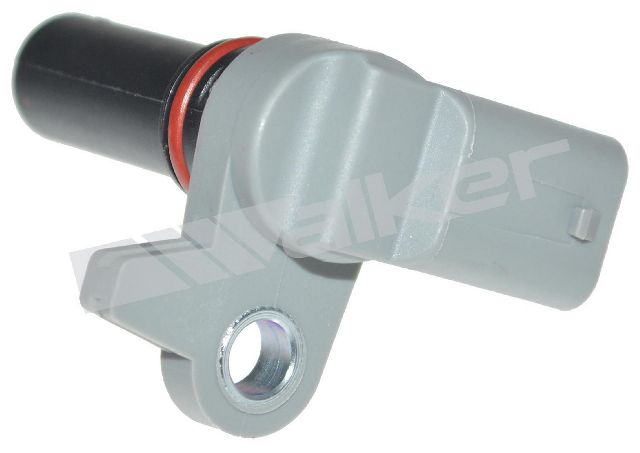
- Do not immediately replace the camshaft position sensor, as it is rarely the cause of this specific code.
What's Unique About the 2015-2021 Ford EXPEDITION

The 3.5L EcoBoost V6 engine in this generation of Expeditions is well-known for timing-related issues. While the P0014 code can be as simple as a dirty solenoid, it's often an early warning sign of the platform's notorious cam phaser failure. This failure typically causes a loud engine rattle on cold starts as the phaser's internal locking pin fails, an issue acknowledged in owner complaints and addressed by updated part designs from Ford and multiple Technical Service Bulletins (TSBs), such as TSB 20-2315.
Diagnostic Flowchart

Tap your situation to follow the diagnostic path that matches what you're seeing on this vehicle.
Generation note: This range covers the end of the third generation (2015-2017) and the beginning of the fourth generation (2018-2021). Both generations use a 3.5L EcoBoost V6 engine, and the causes and fixes for P0014 are largely the same across both. The cam phaser issue is particularly well-documented for the Gen 2 EcoBoost found in 2017+ models.
Symptoms You May Notice
- Check Engine Light illuminated
- Engine rattle, especially a loud 2-5 second rattle on cold startup (often called 'death rattle').
- Rough or unstable idle
- Poor acceleration and loss of power
- Decreased fuel economy
- Engine stalling at low speeds
- Hard starting
- Replacing the camshaft position sensor. While a sensor can fail, it is not the typical cause for an over-advanced timing code and often presents with different codes entirely or no-start conditions.
Most Likely Causes

- Low, old, or incorrect viscosity engine oil 🔴 High Probability The VCT system is hydraulic and highly sensitive to oil pressure and cleanliness. Sludge or incorrect oil can easily restrict passages or cause solenoids to stick, making this the most common cause of intermittent VCT codes.
How to confirm: Check the oil level on the dipstick and review vehicle service records. If the oil is low, dark, or past its change interval, this is the first and most crucial step. Some owners on forums report the code appearing only when oil life is below 30%.
Typical fix: Perform an oil and filter change using the manufacturer-specified grade (e.g., Motorcraft 5W-30 Synthetic Blend). Clear codes and re-test.
Est. part cost: $60-$100 - Sticking or failed VCT Solenoid (Bank 1 Exhaust) 🔴 High Probability Ford TSBs #SSM 47170 and #SSM 48423 explicitly state that small debris in the oil can cause the VCT solenoid to stick, leading to this code. The solenoids contain fine mesh screens that can become clogged.
How to confirm: Swap the Bank 1 exhaust solenoid with another one (e.g., the intake solenoid on the same bank). Clear codes and drive. If the code changes to P0011 (Intake Cam Over-Advanced), the solenoid is confirmed bad. You can also 🎬 See how a failed VCT solenoid behaves during testing. test the solenoid's resistance with a multimeter (should be 6-12 ohms) or by applying 12V to see if it actuates.
Typical fix: Replace the faulty VCT solenoid. Some owners attempt to clean them, but replacement is recommended for reliability.
Est. part cost: $50-$90 - Failed Cam Phaser (Bank 1 Exhaust) 🟡 Medium Probability This is a widely documented failure on the 3.5L EcoBoost, addressed by TSB 20-2315. The internal locking pin wears out, causing the phaser to rattle on startup and fail to hold the correct timing. NHTSA complaint #11660897 for a 2019 Expedition with P0014 was diagnosed with this issue.
How to confirm: Listen for a distinct 2-5 second rattle from the top front of the engine on a cold start. This is the primary indicator. Professional diagnosis involves removing the valve cover to inspect for play in the phaser and monitoring cam/crank deviation with a high-level scan tool.
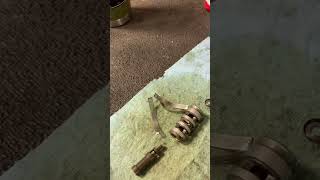
Typical fix: Replace all four cam phasers with the latest updated parts from Ford (part number ML3Z-6256-A is a common updated part), along with the primary timing chain and tensioners. This is a major repair often costing $3000-$5000 at a dealer.
Est. part cost: $500-$1200 - Stretched Timing Chain or Failed Tensioner ⚪ Low Probability While less common than phaser failure on the Gen 2 EcoBoost, chain stretch can still occur over high mileage, causing timing correlation codes. This is almost always addressed during a cam phaser replacement job.
How to confirm: This requires significant engine disassembly to measure chain slack. It is usually diagnosed and repaired concurrently with a cam phaser replacement.
Typical fix: Replace the timing chains, guides, and tensioners. This is standard practice when replacing cam phasers.
Est. part cost: $300-$600
Rare But Worth Checking
- Clogged VCT Solenoid Oil Filter:
Diagnosis Steps
- Verify engine oil level and condition. If low, dirty, or overdue for a change, service it first, clear the code, and re-test. This simple step resolves the issue in many cases.
- Using a scan tool with live data capability, monitor PIDs for commanded vs. actual cam angles for Bank 1 Exhaust (e.g., VCT_EXH_CAM_ACT_B1 vs VCT_EXH_CAM_CMD_B1) and the error PID (e.g., VCT_EXH_CAM_ERR_B1). A large, persistent error confirms the fault.
- Listen for a prominent rattle from the engine during a cold start (after sitting 6+ hours). A 2-5 second rattle strongly suggests cam phaser failure as described in TSB 20-2315.
- If no rattle is present, the issue is more likely oil-related or a sticking VCT solenoid. Locate the Bank 1 (passenger side) exhaust VCT solenoid on the top of the valve cover.
- Swap the exhaust VCT solenoid with the intake VCT solenoid on the same bank. They are typically the same part. Be extremely careful not to drop the mounting bolt into the engine when removing the solenoid.
- Clear the codes and drive the vehicle. If the code returns as P0011 (Intake Camshaft Position Timing Over-Advanced), the solenoid you moved is faulty and must be replaced.
- If the code remains P0014 after the swap, the issue is likely mechanical (cam phaser, timing chain, clogged oil passage) and requires professional diagnosis, likely involving removal of the valve cover.
Parts You'll Likely Need
- Engine Variable Camshaft Timing (VCT) Solenoid
(OEM #AT4Z-6M280-B (or newer revisions like -C))— This is the most common and least expensive cause. It controls oil flow to the cam phaser and is prone to sticking from oil debris, as noted in Ford TSBs. The solenoids are color-coded and have keyed connectors to prevent incorrect installation.
Trusted brands: Motorcraft
OEM price range: $55-$85
Aftermarket price range: $30-$60 - Cam Phaser Kit (Updated Design)
(OEM #ML3Z-6256-A (Phaser), HL2Z-6C590-A (Full Kit))— The original cam phasers are a known failure point causing rattles and timing codes. Ford has released updated parts to permanently fix the issue. It is recommended to replace all four phasers, timing chains, guides, and tensioners at the same time.
Trusted brands: Motorcraft
OEM price range: $400-$800 for a set of four phasers
Aftermarket price range: $250-$500 - Timing Chain Kit
(OEM #HL3Z-6268-A (Chain))— If performing a cam phaser replacement, it is best practice to also replace the timing chains, guides, and tensioners, as they are wear items and require the same labor to access.
Trusted brands: Motorcraft
OEM price range: $300-$600
Related Codes That Often Appear With This One
- P0016 — Indicates a correlation issue between the crankshaft and the Bank 1 intake camshaft, often set alongside phaser or timing chain problems.
- P0024 — This is the identical code (Exhaust Cam Over-Advanced) but for Bank 2 (driver's side). It's common to see both when the issue is systemic, like dirty oil, or if phasers on both banks are failing.
- P054C — Cold Start 'B' Camshaft Position Timing Over-Advanced Bank 1. This code specifically points to the over-advanced condition during a cold start, strongly suggesting a failing cam phaser that cannot hold its locked position.
- P0011, P0012, P0015, etc. — Ford TSB #SSM 54366 groups all VCT-related codes together, as a systemic issue like low oil pressure or debris can affect all four camshafts.
Technical Service Bulletins (TSBs) & Recalls
- SSM 54366: Groups various VCT codes (P0011-P0025) and points to standard pinpoint tests, often leading back to oil quality or VCT solenoid issues.
- SSM 47170 / SSM 48423: Specifically call out that small debris in the oil can cause VCT solenoids to stick, leading to timing codes. Recommends oil/filter change and solenoid cleaning/replacement before deeper mechanical diagnosis.
- TSB 20-2315: Addresses the cold start ticking/tapping or rattle noise on 2018-2020 Expedition/Navigator and 2017-2020 F-150s. It identifies worn VCT units (phasers) as the cause and prescribes replacing all four phasers and updating the PCM software.
Platform-Specific Known Issues

- Cold Start Rattle (Cam Phaser Failure): The most significant issue for the 3.5L EcoBoost is a loud rattle upon startup after the vehicle has sat for several hours. This is caused by oil draining out of failing cam phasers, whose internal locking pins can no longer hold them in place. This is a direct precursor to timing-related codes like P0014 and is specifically addressed in Ford TSB 20-2315 for 2018-2020 models.
- Sticking VCT Solenoids: TSBs #SSM 47170 and #SSM 48423 were issued by Ford specifically because small debris in the engine oil can cause the VCT solenoids to stick, leading to a range of camshaft timing codes including P0014. This highlights the importance of regular, high-quality oil changes.
- Owner Complaint Confirmation: NHTSA Owner Complaint #11660897 on a 2019 Expedition confirms the real-world occurrence of P0014 with an abnormal rattling sound, leading to a diagnosis of timing chain and cam phaser replacement.
Mechanic-Grade Diagnostic Values
- VCT Solenoid Resistance — expected: 5 to 25 Ohms, with many Ford solenoids falling between 6-12 Ohms.. Failure: A reading outside the specified range, or an open (infinite resistance) or shorted (zero resistance) circuit.
- Scan Tool PID: VCT_EXH_CAM_ERR_B1 (VCT Exhaust Cam Error Bank 1) — expected: Close to 0 degrees at idle and under most steady-state conditions.. Failure: A large, persistent deviation from 0 degrees, especially if it matches the over-advanced amount the PCM is trying to correct.
Hidden / Shadow Codes Worth Checking
- Mode $06, Test ID $81: This test monitor in Mode $06 specifically tracks the performance of the Bank 1 Variable Camshaft Timing system. Failing values here can indicate a problem before a full DTC like P0014 is set. (see via A professional scan tool capable of displaying Mode $06 data.)
Scan Tool Commands That Help
- Ford IDS (Integrated Diagnostic System): Data Logger with VCT Error PIDs and Histogram Mode — This function is used to record VCT performance during a drive cycle, especially during wide-open throttle events. The histogram helps visualize the frequency and magnitude of timing errors, which is crucial for diagnosing intermittent faults that don't set a code immediately.
- Ford IDS (Integrated Diagnostic System): Camshaft Position Learn Procedure — After replacing cam phasers or other major timing components, this procedure must be performed. It allows the PCM to recalibrate and learn the positions of the new components, preventing future timing codes.
Wiring & Ground Locations
- C1580, Pin 46 (VT/OG wire) — This is a connector at the Powertrain Control Module (PCM). Pin 46 is the control circuit for the Bank 1 Exhaust VCT Solenoid.. A technician would test this pin for continuity to the solenoid and check for shorts to power or ground to rule out a wiring harness issue between the PCM and the solenoid.
- C1580, Pin 45 (YE/VT wire) — This is a connector at the Powertrain Control Module (PCM). Pin 45 is the control circuit for the Bank 1 Intake VCT Solenoid.. When swapping solenoids for diagnosis, knowing both pin locations allows for a complete electrical check if the code does not follow the swapped solenoid.
Real Owner Repair Stories
- Reddit user on r/MechanicAdvice (2013 Ford F-150 3.5L EcoBoost) — Check engine light with codes P0014, P054A (cold start over-advanced), and P0151 (O2 sensor). Also had the typical timing chain rattle on startup.
❌ Tried (didn't work) The owner did not report trying other fixes first.
✅ What actually fixed it The owner had a new timing chain kit installed for $2900. This resolved the P0014 code and the startup rattle, though other codes remained, indicating the timing chain was the primary cause of the P0014.
OEM Part Supersession History
AT4Z-6M280-A, AT4Z-6M280-B→AT4Z-6M280-C, HL3Z-6M280-A— Ford has updated the VCT solenoids over time to improve durability and resistance to contamination. The solenoids are often color-coded (black for exhaust, white for intake) and have different connector keying to prevent incorrect installation.
Heads up: While physically similar, the intake and exhaust solenoids are not interchangeable due to different connector keying. AT4Z-6M280-C is listed for the Bank 1 (Right) exhaust position.
Model Year Variations Within This Range
- 2015-2017 (Gen 1 EcoBoost): These engines use a single, long primary timing chain. They are known for direct-injection-only fueling, which can lead to carbon buildup on intake valves, though this is not a direct cause of P0014. Timing chain stretch was a more noted issue on early (pre-2015) Gen 1 engines.
- 2018-2021 (Gen 2 EcoBoost): The Gen 2 engine was a significant redesign. It features a more robust dual-chain timing system, redesigned cam phasers (which still have their own failure modes), and a dual fuel injection system (port and direct) that mitigates intake valve carbon buildup. The notorious 'cold start rattle' is most associated with this generation's cam phaser issue, as detailed in TSB 23-2143.
Helpful Videos
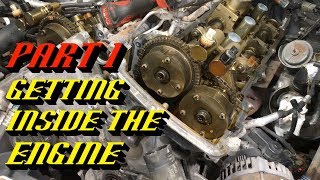
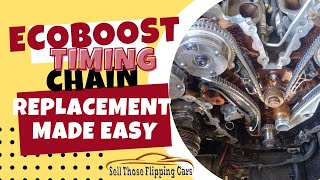
Used OEM Parts in Stock

New Aftermarket Parts Available


The information in this article is provided for general reference and educational purposes only. Vehicle specifications, procedures, and part compatibility can vary by production date, trim level, and region. Always consult your vehicle's factory service manual and verify part numbers before purchasing or performing repairs. Safety-critical components such as airbags, seat belts, and braking systems should be installed by a qualified professional.
- Ford EXPEDITION:
- 🎬 Helpful Videos
- 🛍️ Shop This Part
- What's Unique About the 2015-2021 Ford EXPEDITION
- Diagnostic Flowchart
- Symptoms You May Notice
- Most Likely Causes
- Rare But Worth Checking
- Diagnosis Steps
- Parts You'll Likely Need
- Related Codes That Often Appear With This One
- Technical Service Bulletins (TSBs) & Recalls
- Platform-Specific Known Issues
- Mechanic-Grade Diagnostic Values
- Hidden / Shadow Codes Worth Checking
- Scan Tool Commands That Help
- Wiring & Ground Locations
- Real Owner Repair Stories
- OEM Part Supersession History
- Model Year Variations Within This Range
- 🎟️ Get 5% Off