

P0014 on 2010-2015 Chevrolet Equinox: Exhaust Cam Timing Fixes
On the 2010-2015 Chevy Equinox, especially with the 2.4L engine, code P0014 is most often caused by a faulty exhaust camshaft actuator solenoid or low/dirty engine oil. The oil issue is critical due to known excessive oil consumption problems in the 2.4L engine. Replacing the exhaust solenoid is a common, accessible DIY fix costing between $25 and $60.
- First, check your engine oil. Low or dirty oil is a primary cause of P0014 on the 2.4L Equinox.
- The most common faulty part is the exhaust camshaft actuator solenoid (part #12655421).
- A simple and effective diagnostic is to swap the intake and exhaust solenoids to see if the trouble code follows the part.
- Replacing the solenoid is a beginner-friendly DIY job that requires minimal tools and can be done in under an hour.
- If oil and solenoids are good, the issue could be a more serious timing chain problem, which requires professional service.
What's Unique About the 2010-2015 Chevrolet EQUINOX

The 2010-2015 Equinox, particularly models with the 2.4L Ecotec engine, is known for issues with excessive oil consumption, often due to piston ring wear. This is critical because the VVT system, which controls camshaft timing, is hydraulically operated by engine oil. Low or dirty oil starves the system, directly causing codes like P0014. While the camshaft actuator solenoid is a frequent failure point, the underlying cause is often related to the engine's oil level and condition, a well-documented problem for this specific platform that was subject to special coverage programs by GM.
Diagnostic Flowchart

Tap your situation to follow the diagnostic path that matches what you're seeing on this vehicle.
Symptoms You May Notice

- Check Engine Light is on
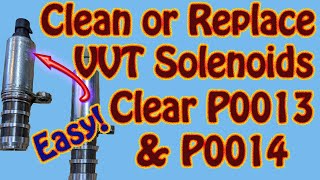
- Rough idle or stalling 🎬 Watch this guide to fixing rough idle and VVT codes.
- Engine hesitation or lack of power
- Hard starting
- Reduced fuel economy
- Engine rattling or knocking noises
- Replacing the camshaft position sensor. The sensor is usually just reporting the timing problem correctly; the fault lies within the mechanical or hydraulic parts of the VVT system (oil, solenoid, phaser, or chain).
- Replacing only the solenoid when a timing chain is stretched. If the code returns quickly after a solenoid replacement and oil change, and especially if a startup rattle is present, the underlying issue is likely the timing chain.
Most Likely Causes

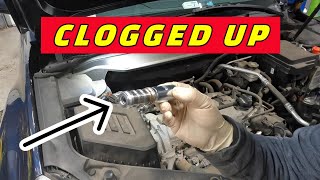
- Low or Dirty Engine Oil 🔴 High Probability The 2.4L Ecotec engine in this generation is notorious for excessive oil consumption, which starves the VVT system of the hydraulic pressure it needs to function. GM issued special coverage for this issue, which was caused by piston ring wear. Even with correct oil levels, old or sludgy oil can clog the fine mesh screens on the VVT solenoids, causing P0014.
How to confirm: Check the engine oil level on the dipstick. If it is low, top it off, clear the code, and see if it returns. Note the oil's color and consistency; if it's dark and sludgy, it needs to be changed. Many owners report an oil change alone can resolve the code, at least temporarily.
Typical fix: Top off or change the engine oil and filter. Use the manufacturer-recommended oil viscosity. Regularly monitor oil levels (e.g., every fuel fill-up) due to the engine's known consumption issues.
Est. part cost: $30-$70 - Failed Exhaust Camshaft Position Actuator Solenoid 🔴 High Probability This is a very common failure part on these GM engines, as confirmed by manufacturer TSBs and numerous owner complaints. The solenoid gets clogged with dirty oil or fails electronically. The screens on the solenoid can become blocked with sludge or debris.
How to confirm: A simple and widely recommended diagnostic test is to swap the exhaust solenoid (rear, black connector on the 2.4L) with the intake solenoid (front, gray connector). Clear the codes and run the engine. If the code changes to P0011 (Intake Camshaft Position), the solenoid is confirmed to be faulty. You can also test the solenoid's resistance with a multimeter; it should be between 8-13 ohms. 🎬 Watch: How to test and replace the solenoid yourself.
Typical fix: Replace the exhaust camshaft position actuator solenoid. It is held in by one 10mm bolt and is accessible on top of the engine's valve cover. Many owners and mechanics recommend replacing both the intake and exhaust solenoids at the same time.
Est. part cost: $25-$60 - Stretched Timing Chain 🟡 Medium Probability Timing chain issues are another known problem on higher-mileage 2.4L Ecotec engines, often exacerbated by poor oil maintenance or the oil consumption issue. TSB PIP4716F also links P0014 with a sharp rattle noise at startup, which can indicate timing chain problems. A stretched chain causes the cam/crank correlation to be off, triggering the code.
How to confirm: This is a more advanced diagnosis. A key symptom is a rattling noise from the front of the engine on a cold startup that lasts for a few seconds. A mechanic can check for timing chain slack by removing the valve cover or observing timing correlation data with an advanced scan tool.
Typical fix: Replace the timing chain, tensioners, and guides. This is a significant and costly repair, often running over $1,000. 🎬 See how a stretched timing chain causes these specific codes. It is recommended to replace the cam phasers (actuators) at the same time.
Est. part cost: $200-$400 for a kit, labor is the major cost.
Rare But Worth Checking
- Failed Camshaft Phaser (Actuator): The phaser is the gear that the solenoid controls. While less common than a solenoid failure, the phaser itself can become clogged with sludge or mechanically fail, requiring a more intensive repair that involves removing the timing chain. Often replaced along with a timing chain job.
- Faulty Camshaft Position Sensor: While possible, a bad camshaft position sensor will typically throw other codes along with P0014. It reports the problem but is not usually the cause of it. Some owners replace it after solenoids fail to fix the issue, but it's a less likely culprit.
- Clogged PCV Orifice: On the 2.4L Direct Injection engine, the PCV orifice in the intake manifold can clog. This increases crankcase pressure and can affect oil consumption and overall engine performance, indirectly contributing to conditions that might set VVT codes. One owner on a forum recommended cleaning it as part of a thorough diagnosis.
Diagnosis Steps
- Check Engine Oil: Before doing anything else, check the oil level and condition. This is the most common cause. If low, top it off. If old or dirty, perform an oil change with the correct grade oil and a new filter. Clear the code and drive to see if it returns.
- Scan for Other Codes: Use an OBD-II scanner to check for any other related codes that could provide more clues, such as P0013, P0011, or P0016.
- Inspect Solenoid Wiring: Check the wiring harness and connector going to the exhaust camshaft actuator solenoid for any visible damage, corrosion, or loose connections.
- Swap the Solenoids (2.4L Engine): The intake and exhaust solenoids are identical and interchangeable for testing. They are on top of the valve cover. The exhaust solenoid is at the rear (black connector) and the intake is at the front (gray connector). Swap their positions. Clear the codes and run the engine. If the code changes to P0011, you have confirmed the solenoid you moved is bad.
- Replace the Solenoid(s): If the solenoid is confirmed bad, replace it. It is secured with a single 10mm bolt. It's often recommended to replace both intake and exhaust solenoids at the same time with OEM or high-quality aftermarket parts.
- Listen for Startup Rattle: On a cold start, listen for a 2-3 second rattle from the engine. This sound is a classic symptom of a stretched timing chain or bad tensioner.
- Advanced Diagnosis: If a new solenoid and correct oil level do not fix the issue, the problem is likely more serious, such as a stretched timing chain or a faulty camshaft phaser. This diagnosis and repair should be performed by a professional mechanic.
Parts You'll Likely Need
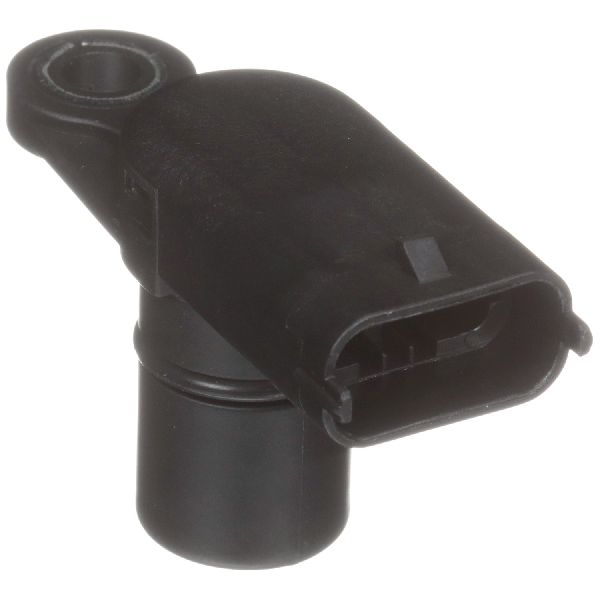
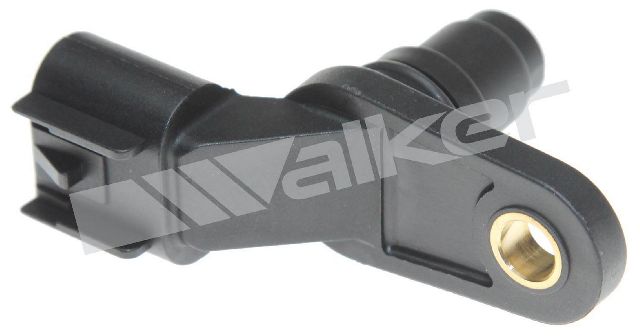
- Exhaust Camshaft Position Actuator Solenoid
(OEM #12655421 / Superseded by 12679100)— This is the most frequent point of failure for code P0014. It controls oil flow to the cam phaser and is prone to clogging from dirty oil or electrical failure. The part number has been updated by GM.
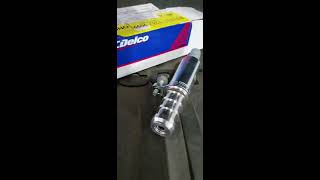
Trusted brands: ACDelco (OEM), Delphi, Dorman
OEM price range: $40-$60
Aftermarket price range: $25-$45 - Intake Camshaft Position Actuator Solenoid
(OEM #12655420 / Superseded by 12679099)— It is common practice to replace both solenoids at the same time, as they are the same age and subjected to the same oil conditions. If the exhaust solenoid has failed, the intake solenoid may not be far behind.
Trusted brands: ACDelco (OEM), Delphi, Dorman
OEM price range: $40-$60
Aftermarket price range: $25-$45
Related Codes That Often Appear With This One
- P0013 — This code points to an electrical circuit issue with the same exhaust camshaft actuator solenoid. Seeing both P0013 and P0014 strongly indicates a failing solenoid or a problem with its wiring/connector.
- P0011 — This is the equivalent code for the intake camshaft ('A' Camshaft). If both P0011 and P0014 are present, it could point to a systemic issue like severe oil sludge, low oil pressure, or a timing chain problem affecting both camshafts.
- P0016/P0017 — These codes indicate a correlation issue between the crankshaft and camshafts. Seeing these alongside P0014 is a strong indicator of a stretched or jumped timing chain, which is a much more serious mechanical problem.
Technical Service Bulletins (TSBs) & Recalls
- 17NA098: Notes that DTCs including P0014 can be caused by camshaft position actuator solenoid valve failure.
- PIP5096C: For V6 models, suggests a specific solenoid replacement procedure if certain engine markings are present, indicating a known manufacturing tolerance issue.
- PIP4716F: Links P0014 (and related codes) to a short, sharp rattle noise from the engine at start up, pointing towards a potential timing chain issue.
- 14159D / 16118: Special Coverage for excessive oil consumption on 2.4L engines, the root cause of many P0014 issues.
Platform-Specific Known Issues
- Excessive Oil Consumption (2.4L Engine): Many 2010-2013 models with the 2.4L engine were subject to a class-action lawsuit and special coverage from GM (e.g., 14159D, 16118) for excessive oil consumption due to piston ring issues. This directly contributes to VVT system problems and codes like P0014 by causing low oil levels and oil sludging.
- TSB #17NA098: GM issued this bulletin for multiple DTCs, including P0014, on 2010-2012 models, identifying the cause as camshaft position actuator solenoid valve failure leading to rough running, hesitation, and stalling.
- TSB #PIP5096C: For V6 engines (3.0L, 3.6L), this bulletin addresses codes P0011/P0014/P0021/P0024 with no other symptoms. It advises checking for an 'A' on the engine's EUN sticker and, if present, replacing the solenoid with a specific service part from a different supplier to correct an internal clearance issue.
Mechanic-Grade Diagnostic Values
- Camshaft Position Actuator Solenoid Resistance — expected: 8 to 13 Ohms at ~68°F (20°C). Failure: A reading outside this range, an open circuit (infinite resistance), or a short circuit (0 ohms) indicates a faulty solenoid.
- Scan Tool: Desired vs. Actual Camshaft Position Angle — expected: At idle, both desired and actual angles should be at or near 0 degrees. The actual angle should closely follow the desired angle as RPMs change.. Failure: A significant, persistent difference between the desired and actual angles. The code may set if the actual angle is off by more than 5 degrees for over 10 seconds. An actual angle that is stuck and unresponsive to RPM changes points to a mechanical or hydraulic issue.
Hidden / Shadow Codes Worth Checking
- Engine EUN Sticker Identifier 'A': This is not an OBD-II code, but a physical identifier on the engine. TSB #PIP5096C states that on some 2012-2015 V6 engines, if P0014 is present with no other drivability concerns, technicians should check the Engine Unique Number (EUN) sticker. If an 'A' is present before the sequence number, it indicates a known manufacturing clearance issue. (see via Visually inspect the EUN sticker, located on the engine's left side below the head or on the back of the right head.)
Scan Tool Commands That Help
- GDS2 / Tech2Win (GM Dealer Tools): Camshaft Position Actuator Control — This bidirectional control allows a technician to command the exhaust camshaft actuator (phaser) to a specific angle (e.g., 0 to 20 degrees) while the engine is running. Observing if the 'Actual' angle on live data responds correctly confirms if the solenoid, oil passages, and phaser are capable of functioning. Failure to respond indicates a fault in that system. A user on a forum also used this function to get a 'stuck' phaser to start moving again temporarily.
Wiring & Ground Locations
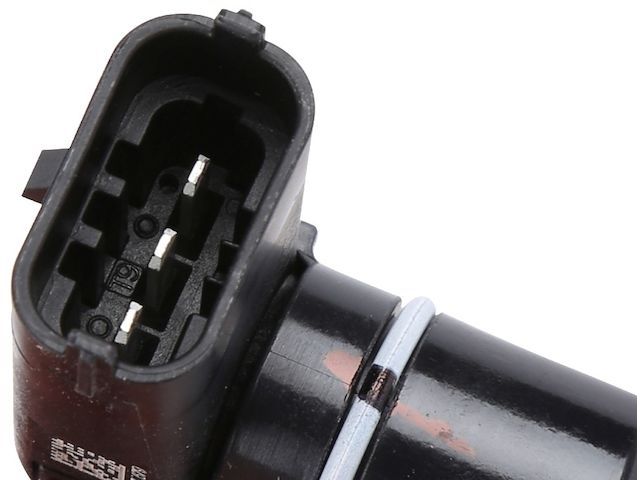
- Exhaust Camshaft Actuator Solenoid Connector — On the top of the valve cover, the rearward of the two VVT solenoids on the 2.4L I4 engine.. This connector provides power and the control signal from the ECM. On the 2.4L, it is often black, while the intake is gray. The two pins are for the 12V power supply and the duty-cycle ground signal from the ECM. Testing for power and the control signal with a test light or multimeter can rule out wiring issues.
Real Owner Repair Stories
- Chevy Equinox Forum user 'Aldo0280' (2011 Chevrolet Equinox 2.4L Ecotec, 214,000 miles) — Persistent P0014 code. Live data showed the exhaust CMP angle was stuck at 0 degrees at startup.
❌ Tried (didn't work) Tested original exhaust VVT solenoid, it passed resistance test., Used Seafoam in oil, then performed an oil and filter change., Replaced the exhaust VVT solenoid with a new part.
✅ What actually fixed it Unresolved, but diagnosis revealed a critical symptom: the cam angle would start working correctly after 20 minutes of driving or after being commanded with a scan tool, but would get stuck at 0 again on every restart. This strongly points to a failing/sticking camshaft phaser (actuator), not the solenoid. - Reddit user 'WoahVinnie' (2014 Chevrolet Equinox 2.4L Ecotec) — P0014 code returned immediately after clearing.
❌ Tried (didn't work) Oil and filter change., Replaced exhaust VVT solenoid (even though the old one tested bad, the new one did not fix it).
✅ What actually fixed it The user took the vehicle to the dealership. The story highlights that the two most common DIY fixes (oil change, solenoid replacement) did not resolve the issue, indicating a deeper mechanical problem like a timing chain or phaser. - Reddit user 'ItsGK' (2012 Chevrolet Equinox 2.4L Flex Fuel) — Recurring P0014 code, no misfires or major starting issues.
❌ Tried (didn't work) Oil change., Cleaning the original solenoid., Replacing the solenoid (which had also been replaced 9 months prior).
✅ What actually fixed it The final fix was not posted, but other users strongly suggested the next step was a timing chain replacement, as the vehicle was notorious for chain stretch and guide failure, and all common, simple fixes had failed.
When the Usual Fixes Don't Work
- While replacing the VVT solenoid is a very common and often successful fix, multiple owner reports confirm it is not a guaranteed solution. In cases with higher mileage or where oil changes have been neglected, the code may return immediately after solenoid replacement. This often indicates the problem is deeper, such as a mechanically sticking camshaft phaser (actuator) or a stretched timing chain. One high-mileage owner found their cam phaser was getting stuck on every startup, a problem a new solenoid could not fix. Therefore, if a new solenoid and fresh oil don't resolve the code, the next diagnostic step should be to investigate the phasers and timing chain, rather than assuming another bad solenoid.
OEM Part Supersession History
12655421 (Exhaust)→12679100— GM often updates parts to improve reliability or change suppliers. This is a common replacement part, and using the latest version is recommended.
Heads up: For certain 2012-2015 V6 engines identified by TSB PIP5096C, a standard replacement part may not resolve the code. A special 'service' valve from a different supplier is required to make up for internal engine clearance differences.12655420 (Intake)→12679099— Part update for reliability, consistent with the exhaust solenoid.
Model Year Variations Within This Range
- 2010-2011 vs. 2012-2015 (2.4L I4): The 2010-2011 Equinox used the 2.4L LAF Ecotec engine. From 2012 onward, it used the 2.4L LEA Ecotec engine. The LEA is the E85/FlexFuel compatible version of the LAF. While they share the same core architecture and VVT components relevant to P0014, this distinction is critical when diagnosing fuel system issues or replacing the ECM.
Helpful Videos


We Have This Part in Stock


The information in this article is provided for general reference and educational purposes only. Vehicle specifications, procedures, and part compatibility can vary by production date, trim level, and region. Always consult your vehicle's factory service manual and verify part numbers before purchasing or performing repairs. Safety-critical components such as airbags, seat belts, and braking systems should be installed by a qualified professional.
- Chevrolet EQUINOX:
- 🎬 Helpful Videos
- 🛍️ Shop This Part
- What's Unique About the 2010-2015 Chevrolet EQUINOX
- Diagnostic Flowchart
- Symptoms You May Notice
- Most Likely Causes
- Rare But Worth Checking
- Diagnosis Steps
- Parts You'll Likely Need
- Related Codes That Often Appear With This One
- Technical Service Bulletins (TSBs) & Recalls
- Platform-Specific Known Issues
- Mechanic-Grade Diagnostic Values
- Hidden / Shadow Codes Worth Checking
- Scan Tool Commands That Help
- Wiring & Ground Locations
- Real Owner Repair Stories
- When the Usual Fixes Don't Work
- OEM Part Supersession History
- Model Year Variations Within This Range
- 🎟️ Get 5% Off