

P0014 on 2011-2016 Chevrolet Cruze: Exhaust Camshaft Timing Fixes
On a 2011-2016 Chevy Cruze, code P0014 is most often caused by a faulty exhaust camshaft position actuator solenoid or low/dirty engine oil. Replacing the solenoid is a common DIY fix, with the part costing between $25 and $60. Always check oil level and condition first.
- P0014 on a Cruze almost always points to the exhaust camshaft actuator solenoid or the engine oil.
- Before buying any parts, check your oil level and quality. An oil change is the cheapest and easiest first step.
- The most effective diagnostic trick is to swap the intake and exhaust solenoids. If the code changes to P0011, you've found the bad part.
- The correct OEM part number for the exhaust solenoid is 12655421. It's wise to replace both intake (12655420) and exhaust solenoids at the same time.
- If you have the 1.8L engine and the code appeared after a major repair, be aware of the specific TSB regarding a small, easy-to-lose oil sleeve.
What's Unique About the 2011-2016 Chevrolet CRUZE

The Ecotec engines in the first-generation Cruze are known for being sensitive to oil quality and level. The variable valve timing (VVT) system, which this code relates to, uses oil pressure to adjust timing. As a result, simple issues like dirty oil or a clogged screen on the actuator solenoid are extremely common triggers for P0014 on this specific vehicle. In one documented case, a technician found the screen on the solenoid had become completely dislodged, causing the failure. Additionally, a specific GM Technical Service Bulletin points to a unique plastic oil sleeve on the 1.8L engine that can be lost during repairs, leading directly to this code.
Diagnostic Flowchart

Tap your situation to follow the diagnostic path that matches what you're seeing on this vehicle.
Generation note: The 2011-2016 model years primarily cover the first generation of the Chevrolet Cruze (J300). However, in 2016, the second-generation Cruze was introduced. The first-generation model was sold alongside it as the "Cruze Limited" for that year. The information here applies to both the standard 2011-2015 models and the 2016 Cruze Limited. The all-new 2016 second-gen Cruze uses a different 1.4L engine (LE2) with different VVT components.
Symptoms You May Notice

- Check Engine Light is on
- Rough idle, sometimes described as sounding like a diesel
- Engine stalling, especially at stops
- Poor acceleration and reduced engine power
- Decreased fuel economy
- Rattling or knocking noise from the engine
- Engine hesitates or surges during steady driving 🎬 See how P0014 causes rough idling and how to fix it.
- Replacing the camshaft position *sensor* when the camshaft position actuator *solenoid* is the actual faulty component. The solenoid is the part that controls oil flow and is far more likely to fail due to clogging or internal issues.
Most Likely Causes

- Faulty Exhaust Camshaft Position Actuator Solenoid 🔴 High Probability The solenoids contain fine mesh screens that can become clogged with oil sludge, causing them to stick or respond slowly. They can also fail internally, sometimes with the screen breaking or dislodging completely. In some instances, oil can leak past the internal seal and contaminate the electrical connector.
How to confirm: Swap the exhaust solenoid with the intake solenoid (they are located next to each other and are interchangeable on the 1.4L engine). Clear the codes and drive the vehicle. If the code changes to P0011 (Intake Camshaft Position), the solenoid is faulty. You can also test the solenoid's resistance with a multimeter; it should be between 6.9 and 7.9 ohms at 68°F, though some sources give a wider acceptable range of 6-12 ohms.
Typical fix: Replace the exhaust camshaft position actuator solenoid. It is held in by one E10 external Torx bolt (on the 1.4L) or a 10mm bolt (on other Ecotec engines) and is easily accessible on top of the engine. 🎬 Watch: Step-by-step guide to replacing your camshaft actuator solenoids.
Est. part cost: $25-$60 - Low or Dirty Engine Oil 🔴 High Probability The VVT system is entirely dependent on clean oil at the correct pressure to function. These engines can consume oil, and owners may not realize the level is low. Delayed oil changes lead to sludge that clogs the solenoid screens and oil passages. The presence of both P0011 and P0014 codes, along with a "Low Oil Pressure" warning, strongly points to an oil-related issue.
How to confirm: Check the oil dipstick for the correct level and inspect the oil's condition. If it is dark, thick, or below the 'add' line, this is a likely contributor.
Typical fix: Perform an oil and filter change using the manufacturer-specified oil viscosity (typically 5W-30 full synthetic).
Est. part cost: $30-$70 - Stretched Timing Chain 🟡 Medium Probability Over time, especially with extended oil change intervals, the timing chain can stretch. This is a known issue on the 1.4L Turbo engine, often becoming apparent after 100,000 miles. A stretched chain causes a discrepancy between the crankshaft and camshaft positions that the VVT system cannot compensate for.
How to confirm: This is an advanced diagnosis. It involves removing the valve cover to inspect the chain for slack and verifying the timing marks align correctly. This issue is often accompanied by rattling noises on startup and codes P0016 or P0017.
Typical fix: Replace the timing chain, tensioners, and guides. This is a significant repair.
Est. part cost: $150-$400 - Faulty Camshaft Phaser (Actuator) ⚪ Low Probability The phaser is the gear on the end of the camshaft that actually rotates to change timing. It can become stuck due to internal wear or oil sludge, preventing it from returning to the base position.
How to confirm: This is usually diagnosed after replacing the solenoid and verifying oil quality and timing chain condition. A scan tool capable of commanding the phaser position can help confirm if it is stuck.
Typical fix: Replace the exhaust camshaft phaser/actuator.
Est. part cost: $50-$120
Rare But Worth Checking
- Missing Camshaft Actuator Oil Sleeve (1.8L Engine): According to TSB #PIP4543D, a small black plastic oil sleeve between the camshaft and the actuator can be lost or damaged during repairs like a cylinder head or actuator replacement. Its absence prevents proper oil flow, causing timing codes like P0011, P0014, P0016, or P0017. This part is not sold separately and comes with a new camshaft actuator assembly.
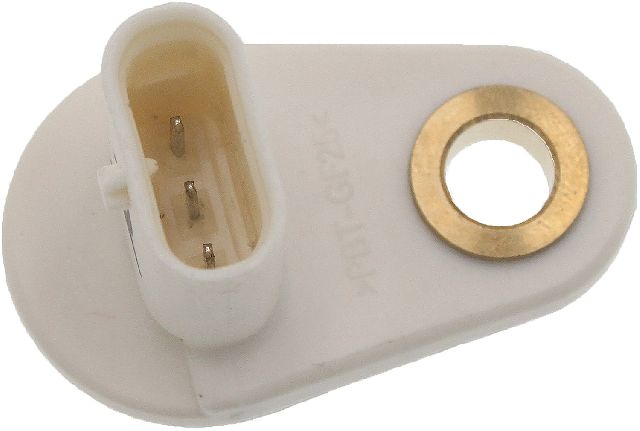
- Faulty Camshaft Position Sensor: While possible, it's much less common for the sensor to fail than the solenoid. A failing sensor usually triggers other specific sensor circuit codes. Owners often misdiagnose the issue by replacing the sensor when the actuator solenoid is the real problem.
- Wiring Issues: A damaged wire or corroded connector for the exhaust VVT solenoid can mimic a failed solenoid. Visually inspect the harness for any signs of damage or oil contamination from a leaking solenoid. High resistance (over 8 Ω) in the control circuit can trigger the code.
- Exhaust Camshaft Reluctor Out of Phase: TSB #21-NA-268 mentions that on some 2016+ models with LE2 and LFV engines, conditions like crank-no-start or extended crank accompanied by P0014 or P0017 can be caused by the exhaust camshaft reluctor ring being out of phase with the camshaft.
Diagnosis Steps
- Check the engine oil level and condition. Top off or perform an oil change if necessary. Use the correct 5W-30 synthetic oil. This is the first and most important step.
- Scan for any other DTCs. Codes like P0011, P0013, P0016, or P0017 provide important clues to narrow down the cause.
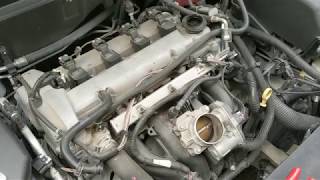
- Inspect the wiring and connector for the exhaust camshaft actuator solenoid (the rearmost of the two solenoids on top of the valve cover). Look for damage or oil wicking into the connector.
- For a definitive test, swap the exhaust solenoid with the identical intake solenoid. They are located next to each other on top of the engine and held by a single bolt each.
- Clear the codes and start the engine. Let it run or take a short drive. If the code returns as P0011 (Intake), the solenoid you moved is confirmed to be faulty. 🎬 Watch: How to swap and test your VVT solenoids.
- If the P0014 code returns, the problem is not the solenoid. The next steps involve a more in-depth diagnosis of the timing chain, tensioner, and camshaft phaser, which may require professional assistance.
- For 1.8L engines, if a recent repair was performed involving the camshafts, check for the presence of the black plastic oil sleeve per TSB #PIP4543D.
Parts You'll Likely Need
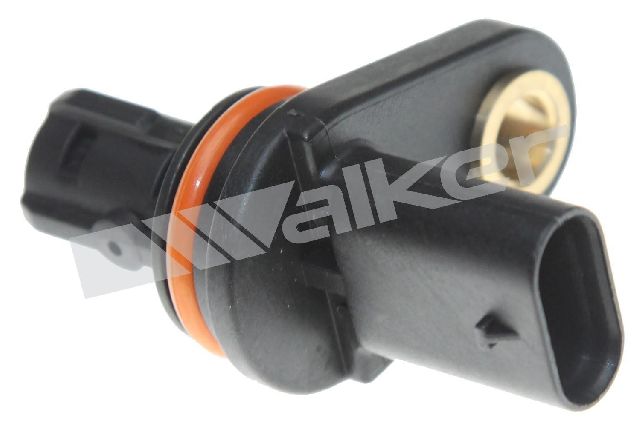
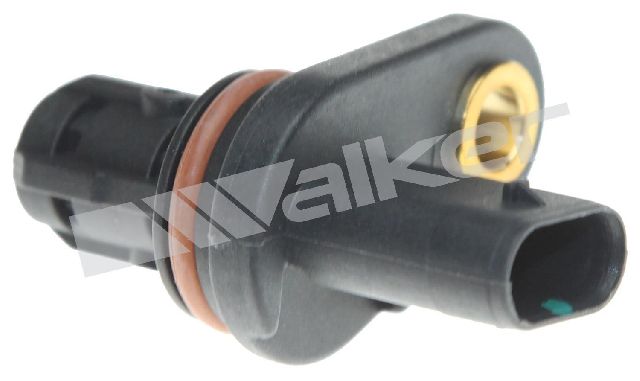
- Exhaust Camshaft Position Actuator Solenoid
(OEM #12655421)— This is the most frequent point of failure for code P0014 on the Cruze, typically due to clogging or internal failure. Superseded part numbers include 12628348, 12646784, and 12679100.
Trusted brands: ACDelco, Delphi, Dorman
OEM price range: $40-$60
Aftermarket price range: $25-$45 - Intake Camshaft Position Actuator Solenoid
(OEM #12655420)— Since both solenoids are identical on the 1.4L engine and have the same service life, it is often recommended to replace them as a pair. The intake and exhaust solenoids for the 1.8L and other Ecotec engines are different parts.
Trusted brands: ACDelco, Delphi, Dorman
OEM price range: $40-$60
Aftermarket price range: $25-$45
Related Codes That Often Appear With This One
- P0011 — This is the corresponding code for the intake camshaft ('A'). If both P0011 and P0014 are present, it often points to a systemic issue like low/dirty oil or a timing chain problem affecting both cams.
- P0016 / P0017 — These codes indicate a correlation issue between the crankshaft and the intake (P0016) or exhaust (P0017) camshafts. They strongly suggest a base timing problem, such as a stretched timing chain or, on the 1.8L, a missing actuator oil sleeve as per TSB PIP4543D.
- P0013 — This code indicates an electrical circuit problem (open circuit) with the exhaust camshaft actuator solenoid. If seen with P0014, it strongly suggests the solenoid itself has failed electrically or has a wiring issue.
Technical Service Bulletins (TSBs) & Recalls
- PIP4543D: Mentions that DTCs P0011, P0014, P0016, or P0017 can appear after engine repair on 1.8L engines if a unique black plastic oil sleeve for the camshaft actuator is missing or improperly installed.
- 21-NA-268: Addresses a potential cause of P0014 on some 2016 and newer models being a misaligned exhaust camshaft reluctor.
Platform-Specific Known Issues
- TSB #PIP4543D: This bulletin warns technicians that after a repair involving the camshaft actuators on the 1.8L engine, codes P0011, P0014, P0016, or P0017 can be set if a specific black plastic oil sleeve is not reinstalled correctly.
Mechanic-Grade Diagnostic Values
- Exhaust Camshaft Position Variance (Scan Tool) — expected: Less than 2°. Failure: A value greater than 2° when the actuator is commanded to a specific state (e.g., 20°) indicates a mechanical issue with the phaser or oil flow.
- VVT Solenoid Control Circuit Voltage (at connector) — expected: Transitions from ~12V (B+) when commanded OFF to <10V when commanded ON.. Failure: Voltage does not change with scan tool commands, indicating a short to voltage or an open circuit.
- VVT Solenoid Control Circuit Resistance — expected: Less than 8 Ω. Failure: Resistance greater than 8 Ω may set this DTC, indicating high resistance in the wiring or connections.
- VVT Solenoid Internal Resistance — expected: 6 to 12 ohms. Failure: A reading outside this range, or an open/shorted reading, indicates a failed solenoid.
Scan Tool Commands That Help
- GDS2 / Professional Scan Tool: Command Exhaust Camshaft Position Actuator — Used to command the camshaft phaser to a specific degree (e.g., 20°) to check if the actual position matches the command and if the variance is within spec (<2°). This tests the mechanical function of the phaser.
- GDS2 / Professional Scan Tool: Exhaust Camshaft Position Actuator Solenoid Valve ON/OFF — Used to manually cycle the solenoid to verify electrical circuit integrity. While commanding it ON/OFF, a technician can check for an audible click from the solenoid and measure voltage changes at the connector.
- GDS2 / Professional Scan Tool: View Camshaft Position Variance Parameter — This live data PID shows the difference between the commanded and actual camshaft angle in real-time. It is the primary value the ECM uses to determine if the system is performing correctly.
Wiring & Ground Locations
- Exhaust VVT Solenoid Connector — On the exhaust camshaft position actuator solenoid, located on the left-front of the engine, the rearmost of the two solenoids on the valve cover.. This is the primary connection point to test voltage and resistance of the solenoid and its control circuit. Oil contamination is common here.
- ECM Connector Pin 14 — At the Engine Control Module (ECM). The wire is typically Gray/Dark Blue.. This is the control circuit for the exhaust camshaft phaser solenoid. Testing here can confirm continuity from the ECM to the solenoid.
- ECM Connector Pin 15 — At the Engine Control Module (ECM). The wire is typically Black/Brown.. This is the low reference (ground) return circuit for the exhaust camshaft phaser.
- ECM Ground (Pin 73) — At the Engine Control Module (ECM). The wire is typically Black.. This is a main ground for the ECM. A poor ground here can cause numerous and unpredictable engine control issues, including VVT problems.
Real Owner Repair Stories
- YouTube Channel 'proclaimliberty2000' (Chevrolet Cruze, year not specified, 1.4L Turbo) — Check engine light with P0014, rough running.
❌ Tried (didn't work) Initially suspected dirty oil.
✅ What actually fixed it The exhaust VVT solenoid was replaced. Upon inspection, the fine mesh screen at the tip of the old solenoid had completely broken off and was floating freely, causing an internal blockage and malfunction. - Reddit user in /r/MechanicAdvice (2012 Chevy Cruze 1.8L) — Recurring P0014 code after previous repairs.
❌ Tried (didn't work) Oil and filter change, likely other basic repairs.
✅ What actually fixed it A mechanic used an advanced, professional-grade scanner to find and delete the historical fault codes from the ECM. The owner's cheap $10 OBD2 scanner was not clearing the memory completely, causing the code to reappear despite the mechanical issue being resolved. - Reddit user in /r/cruze (Chevy Cruze 1.4L Turbo) — Loud chirping noise, followed by "Oil Pressure Low Stop Engine" message and codes P0011 and P0014 after a DIY crankshaft seal replacement.
❌ Tried (didn't work) Replacing serpentine belt and tensioner, performing an oil change after the codes appeared.
✅ What actually fixed it The issue was not resolved in the thread, but the diagnosis pointed towards a failed oil pump. The original chirping noise was likely the oil pump failing, which then led to a catastrophic loss of oil pressure, triggering the VVT codes. This highlights that VVT codes can be a symptom of a larger oil pressure failure.
"I Checked Everything" — The Actual Cause
- In one documented case, a recurring P0014 on a 2012 1.8L Cruze was not fixed by part replacement. The actual solution was using a professional-level scan tool to fully clear the historical fault codes from the engine computer's memory, a step a basic consumer-grade scanner failed to do.
OEM Part Supersession History
12578518, 12628348, 12646784→12655421, which was later superseded by 12679100— Standard part evolution for improved reliability and manufacturing.
Heads up: The listed part numbers are generally interchangeable for the specified 2.0L, 2.2L, and 2.4L Ecotec engines, including the 1.4L Turbo in the first-gen Cruze. Always verify with VIN.
Model Year Variations Within This Range
- 2011-2016 (First Gen & Limited): The 1.4L (LUJ/LUV) engine uses a timing chain, while the 1.8L (LWE) engine uses a timing belt. This fundamentally changes the diagnosis for timing-related causes.
- 2016: The all-new second-generation 2016 Cruze introduced the LE2 1.4L Turbo engine, which is different from the first-gen LUJ/LUV. It has an aluminum block and different VVT components (e.g., solenoid P/N 12701385). The first-gen model sold in 2016 as the 'Cruze Limited' still uses the older LUJ/LUV engine and parts.
Helpful Videos
We Have This Part in Stock


The information in this article is provided for general reference and educational purposes only. Vehicle specifications, procedures, and part compatibility can vary by production date, trim level, and region. Always consult your vehicle's factory service manual and verify part numbers before purchasing or performing repairs. Safety-critical components such as airbags, seat belts, and braking systems should be installed by a qualified professional.
- Chevrolet CRUZE:
- 🎬 Helpful Videos
- 🛍️ Shop This Part
- What's Unique About the 2011-2016 Chevrolet CRUZE
- Diagnostic Flowchart
- Symptoms You May Notice
- Most Likely Causes
- Rare But Worth Checking
- Diagnosis Steps
- Parts You'll Likely Need
- Related Codes That Often Appear With This One
- Technical Service Bulletins (TSBs) & Recalls
- Platform-Specific Known Issues
- Mechanic-Grade Diagnostic Values
- Scan Tool Commands That Help
- Wiring & Ground Locations
- Real Owner Repair Stories
- "I Checked Everything" — The Actual Cause
- OEM Part Supersession History
- Model Year Variations Within This Range
- 🎟️ Get 5% Off