

P0014 on 2018-2019 Buick Enclave: Causes, Fixes, and TSBs
On a 2018-2019 Buick Enclave, code P0014 is most often caused by a software issue that requires a dealer to reprogram the Engine Control Module (ECM), as outlined in GM Technical Service Bulletin #N192266190. Before heading to the dealer, a critical first step is to check the engine oil level and condition, as low or dirty oil is another very common cause. If the oil is fine, a faulty camshaft actuator solenoid is the next likely culprit, which is a relatively inexpensive part to replace.
- The first step for a P0014 code on a 2018-2019 Enclave should be to check for the ECM software update outlined in TSB #N192266190, especially if other timing codes (P0011, P0021, P0024) are present.
- Before assuming a mechanical fault, check the engine oil level and condition. Low or dirty oil is a frequent and simple-to-fix cause of this code.
- If software and oil are ruled out, the most likely mechanical culprit is a faulty exhaust camshaft actuator solenoid on Bank 1 (firewall side), which is an accessible and affordable DIY replacement.
What's Unique About the 2018-2019 Buick ENCLAVE
For the 2018-2019 Buick Enclave and its platform mates, there is a well-documented history of P0014 being caused by a software calibration error in the Engine Control Module. General Motors issued multiple Technical Service Bulletins (TSBs) acknowledging that this code, often appearing with P0011, P0021, and P0024, could cause rough running and stalling, particularly after an auto start/stop event. The official fix is an ECM reprogram, making a trip to the dealer a primary diagnostic step, which is unusual for what is typically a mechanical or hydraulic fault on other vehicles.
Diagnostic Flowchart
Tap your situation to follow the diagnostic path that matches what you're seeing on this vehicle.
Symptoms You May Notice
- Check Engine Light (Malfunction Indicator Lamp) is on
- Engine runs rough or has a low idle.
- Reduced engine power.
- Engine may stall, especially when stopped.
- Hard starting.
- Transmission shudder.
- Decreased fuel economy.
- Engine noise (rattling or ticking).
- Replacing the camshaft position sensor. While related, the sensor's job is to report the camshaft's position. It is rarely the cause of a timing *performance* code like P0014; it's usually the mechanical or hydraulic components (solenoid, phaser) or a system-wide issue (oil pressure, software) that are at fault.
Most Likely Causes
- Engine Control Module (ECM) Software Calibration 🔴 High Probability Multiple GM Technical Service Bulletins (N192266190, PIP5568E) specifically call out this issue for this model year range and its platform mates, indicating a known software problem from the manufacturer that can trigger P0014 along with P0011, P0021, and P0024.
How to confirm: A GM dealer or a qualified shop with access to GM's programming tools can check the current software version of the ECM and determine if the update specified in TSB #N192266190 applies and has been performed.
Typical fix: Reprogram the Engine Control Module (ECM) with the updated software. This is a dealer-only fix.
Est. part cost: $0 - Low or Dirty Engine Oil 🟡 Medium Probability The variable valve timing (VVT) system is hydraulic and uses pressurized engine oil to adjust camshaft timing. If the oil is low, old, the wrong viscosity, or has broken down into sludge, the system cannot operate correctly. Some owners report significant oil consumption between changes, leading to a low oil level that triggers these codes.
How to confirm: Check the engine oil dipstick for proper level and inspect the oil's condition. If it's dark, gritty, or below the 'full' mark, it needs attention. An owner on a 2CarPros forum reported that finding very low oil and adding two quarts fixed an issue where all four timing codes (P0011, P0014, P0021, P0024) were present.
Typical fix: Perform an oil and filter change using the manufacturer-recommended oil type and weight (typically SAE 5W-30 full synthetic). Some owners perform an engine flush to attempt to clear sludge.
Est. part cost: $50-$100 - Faulty Camshaft Position Actuator Solenoid 🟡 Medium Probability These solenoids control oil flow to the cam phasers. They are a common failure point and can become clogged with sludge or fail electrically, causing them to stick in one position.
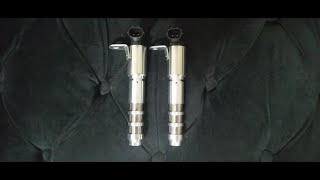
How to confirm: A mechanic can command the solenoid with a scan tool to check its response. A common DIY method is to swap the Bank 1 exhaust solenoid with the Bank 2 exhaust solenoid. If the code changes to P0024 (the same fault on Bank 2), the solenoid is confirmed to be faulty. You can also test the solenoid's internal resistance with a multimeter; it should typically be between 6 and 12 ohms.
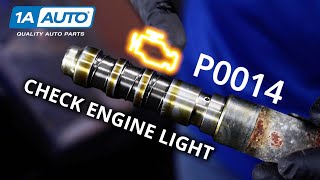
Typical fix: Replace the Bank 1 exhaust camshaft position actuator solenoid (Part No. 12687041). Many owners choose to replace both the intake and exhaust solenoids on the bank at the same time.
Est. part cost: $30-$70
Rare But Worth Checking
- Stretched Timing Chain: While less common on this newer model, the 3.6L V6 family has a history of timing chain issues in previous generations. If other causes are ruled out and a rattling noise is present, this becomes a possibility, especially at higher mileage. This is a significant and expensive repair.
- Faulty Camshaft Phaser (Actuator): The mechanical phaser gear that the solenoid controls can fail internally, getting stuck in an advanced position. This is a more involved and expensive repair than the solenoid.
- Chafed Engine Wiring Harness: On some related GM V6 engines, TSB 18-NA-307 notes that the engine wiring harness can rub against the edge of the camshaft cover, causing wires to short. This can lead to a variety of DTCs, including P0014. A visual inspection of the harness near the top of the engine is warranted if other causes are eliminated.
Diagnosis Steps
- Check for Technical Service Bulletins (TSBs). Specifically, reference GM TSB #N192266190, which points to an ECM reprogram as the primary fix for a combination of timing codes (P0011/P0014/P0021/P0024).
- Verify engine oil level and condition. This is the most critical first step. Ensure it is full and clean. If the oil level is low, top it off, clear the codes, and see if the problem returns. If in doubt, perform an oil and filter change with 5W-30 full synthetic oil.
- Scan for other DTCs. Codes P0011, P0021, and P0024 frequently appear with P0014 and reinforce the likelihood of the TSB-related software issue or a low oil condition.
- Inspect the wiring and connector for the Bank 1 exhaust camshaft actuator solenoid for any damage or loose connections. Check the surrounding harness for signs of chafing against the engine covers.
- Test the solenoid. The easiest DIY method is to swap the Bank 1 exhaust solenoid with the Bank 2 exhaust solenoid. Clear the codes and drive the vehicle. If the code returns as P0024, the solenoid you moved is faulty. Alternatively, test the solenoid's resistance with a multimeter; a reading outside the 6-12 ohm range indicates failure.
- Listen for engine noises. A persistent rattling or ticking could indicate a stretched timing chain or failing phaser, which requires more advanced mechanical diagnosis.
- If the code does not move after swapping solenoids and oil is clean and full, the issue may be with oil passages, the cam phaser, or timing chain components, which may require professional diagnosis.
Parts You'll Likely Need
- Camshaft Position Actuator Solenoid (Exhaust, Bank 1)
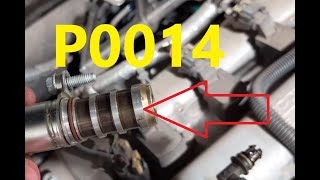
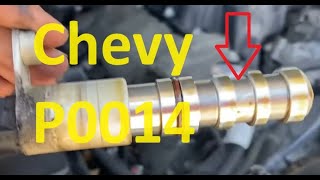
(OEM #12687041)— This specific solenoid controls oil flow for the exhaust cam timing on Bank 1. It can get stuck or fail electronically, directly causing the P0014 code. It is located on the firewall side of the engine, typically the lower of the two solenoids.
Trusted brands: ACDelco, Delphi
OEM price range: $40-$60
Aftermarket price range: $25-$45 - Camshaft Position Actuator Solenoid (Intake, Bank 1)
(OEM #12679099)— Often replaced as a pair with the exhaust solenoid as preventative maintenance. A failing intake solenoid would typically set a P0011 code, but since they are located next to each other and subject to the same conditions, replacing both is common practice.
Trusted brands: ACDelco, Delphi
OEM price range: $40-$60
Aftermarket price range: $25-$45
Related Codes That Often Appear With This One
- P0011 — Intake camshaft timing over-advanced on Bank 1. Both codes are often triggered together by the same underlying issue, as noted in TSB #N192266190.
- P0021 — Intake camshaft timing over-advanced on Bank 2. Often appears with P0011, P0014, and P0024 due to the ECM software issue or a systemic problem like low engine oil.
- P0024 — Exhaust camshaft timing over-advanced on Bank 2. Often appears with P0011, P0014, and P0021 due to the ECM software issue. If P0014 changes to P0024 after swapping solenoids, the solenoid is the confirmed fault.
Technical Service Bulletins (TSBs) & Recalls
- N192266190: Notes that P0014 (and related codes) can cause rough running, reduced power, or stalling, and the fix is to reprogram the ECM. This TSB applies to the Enclave, Traverse, LaCrosse,
Platform-Specific Known Issues
- As per GM TSB #N192266190, a software issue in the ECM is a primary cause for P0014, often in conjunction with P0011, P0021, and P0024. The fix is a dealer-performed ECM reprogram.
- An owner complaint (NHTSA ODI #11221573) from June 2019 confirms a real-world case of these codes appearing together before the TSB fix was widely available, with the dealer acknowledging it as a known issue under study by GM.
- A real-world repair story on a 2CarPros forum highlighted the importance of checking engine oil. A user with a similar GM V6 engine experienced sluggish performance and all four timing codes (P0011, P0014, P0021, P0024), which were resolved simply by discovering the oil was extremely low and topping it off.
Mechanic-Grade Diagnostic Values
- Camshaft Position Actuator Solenoid Resistance — expected: 6 to 12 Ohms at 68°F (20°C). Failure: A reading outside this range, or an open circuit (infinite resistance), indicates a failed solenoid.
- Camshaft Position Actuator Solenoid Power Supply — expected: Battery voltage (approx. 12.6V) at the solenoid connector with the ignition on, engine off.. Failure: No voltage or low voltage indicates a wiring or ECM power supply issue upstream of the solenoid.
- Live Scan Tool Data: Desired vs. Actual Camshaft Position Angle — expected: The 'Actual' position should closely follow the 'Desired' position as engine RPM changes. The variance should be minimal at steady RPM.. Failure: A large, persistent variance (e.g., more than a few degrees) between the desired and actual angles, or the actual angle being stuck, points to a problem in the VVT system.
Scan Tool Commands That Help
- GDS2 (GM Dealer Software): Camshaft Position Actuator Solenoid Control — This bidirectional control allows a technician to command the Bank 1 Exhaust solenoid on and off while monitoring engine RPM. A functioning solenoid and phaser will cause the engine to hesitate or run rough when commanded, confirming the hydraulic and mechanical parts are responding. If there is no change, it points to a failed solenoid, clogged oil passage, or stuck phaser.
- GDS2 (GM Dealer Software): Crankshaft Position Variation Learn — This procedure should be performed after replacing the ECM, crankshaft position sensor, or reprogramming the ECM. While not a direct fix for P0014, failing to perform this relearn can cause other running issues or correlation codes.
Wiring & Ground Locations
- Bank 1 Camshaft Actuator Solenoids — On the side of the cylinder head for Bank 1 (firewall side), typically under the engine mount. Access is difficult from the top.. This is the physical location of the component that needs to be tested, swapped, or replaced. Knowing that Bank 1 is on the firewall side is critical for correct diagnosis.
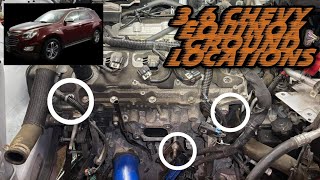
- Engine Block Grounds — The 3.6L engine family typically has several small ground wires bolted directly to the cylinder heads or block, and one large ground strap from the battery/chassis.. A loose or corroded ground can cause erratic voltage signals for the entire VVT system, including the camshaft position sensors and the actuator solenoids, leading to false or intermittent codes.
Real Owner Repair Stories
- YouTube Comment (Chevrolet/GMC with P0014) — Check Engine Light with code P0014.
✅ What actually fixed it The owner took the vehicle for an oil change. The technician noted the oil was extremely black. After a standard oil and filter change, the Check Engine Light turned off and the code was resolved.
Model Year Variations Within This Range
- 2018-2019: There are no significant mechanical or electronic differences noted between the 2018 and 2019 Buick Enclave models with the 3.6L LFY V6 engine that would affect the diagnosis or repair of code P0014. Both years are covered by the same key TSBs.
Helpful Videos

We Have This Part in Stock


The information in this article is provided for general reference and educational purposes only. Vehicle specifications, procedures, and part compatibility can vary by production date, trim level, and region. Always consult your vehicle's factory service manual and verify part numbers before purchasing or performing repairs. Safety-critical components such as airbags, seat belts, and braking systems should be installed by a qualified professional.
- Buick ENCLAVE:
- 🎬 Helpful Videos
- 🛍️ Shop This Part
- What's Unique About the 2018-2019 Buick ENCLAVE
- Diagnostic Flowchart
- Symptoms You May Notice
- Most Likely Causes
- Rare But Worth Checking
- Diagnosis Steps
- Parts You'll Likely Need
- Related Codes That Often Appear With This One
- Technical Service Bulletins (TSBs) & Recalls
- Platform-Specific Known Issues
- Mechanic-Grade Diagnostic Values
- Scan Tool Commands That Help
- Wiring & Ground Locations
- Real Owner Repair Stories
- Model Year Variations Within This Range
- 🎟️ Get 5% Off