

P0012 on 2008-2011 Mitsubishi Lancer Evolution: MIVEC Timing Causes and Fixes
For a P0012 on an Evo X, first check your engine oil level and condition. If the oil is fine, the issue is often a software glitch fixed by a dealer reflash per TSB-12-13-006, especially on pre-2011 models. Otherwise, the next most likely causes are a faulty intake MIVEC (VVT) solenoid or a stretched timing chain, a known issue on earlier 4B11T engines.
- Before buying any parts, check your engine oil. Low or dirty oil is a simple but very common cause for P0012.
- This specific vehicle is subject to TSB-12-13-006. A simple, relatively inexpensive dealer ECM reflash might be the only fix required.
- If oil and software are good, the intake MIVEC solenoid (OCV) is the next most likely part to fail and is a manageable DIY replacement.
- A stretched timing chain is a possible, but more serious and expensive, cause. Listen for a rattling sound from the engine, especially on cold starts.
What's Unique About the 2008-2011 Mitsubishi LANCER EVOLUTION
The Lancer Evolution X platform is unique regarding P0012 due to a specific Technical Service Bulletin (TSB-12-13-006). This TSB acknowledges that an incorrect parameter in the ECM's software can cause a false P0012 code, often triggering an "ENGINE SYSTEM SERVICE REQUIRED" message without the main check engine light. This means that unlike many other vehicles, the root cause for this code on an Evo X can be a simple software bug requiring a dealer reflash, rather than an immediate mechanical failure. Additionally, the original timing chain on 2008-2010 models is prone to premature stretching, making it a more common cause on this platform than on many other vehicles.
Diagnostic Flowchart
Tap your situation to follow the diagnostic path that matches what you're seeing on this vehicle.
Symptoms You May Notice
- "ENGINE SYSTEM SERVICE REQUIRED" message on the multi-information display (MID), often without a solid Check Engine Light.
- Rough or unstable idle, sometimes stalling when coming to a stop.
- Reduced engine power and sluggish acceleration.
- Decreased fuel economy.
- Audible rattling or noise from the timing chain area, especially on cold starts (if the chain is stretched).
- The code may appear intermittently, especially when the engine is warm and idling at a stop.
- Replacing the camshaft position sensor. This sensor reads the cam position, but it rarely causes an actual over-retarded timing condition. The fault usually lies in the mechanical or hydraulic parts that control the timing.
- Replacing the timing chain without first checking for the ECM software update (TSB-12-13-006) or a faulty OCV solenoid, leading to unnecessary, expensive repairs.
- Replacing the timing chain but failing to reset the 'Timing Chain Learned Value' in the ECU with a MUT-III scan tool, which can cause the P0012 code to return even with a new chain.
Most Likely Causes
- Incorrect ECM Software Logic 🔴 High Probability A known issue documented in Mitsubishi TSB-12-13-006 states that incorrect judgment criteria in the software can cause a false detection of this fault, even if the timing chain is within its service limit. This TSB applies to vehicles built before January 27, 2011.
How to confirm: Contact a Mitsubishi dealership with your vehicle's VIN to see if TSB-12-13-006 has been performed. If not, this is a highly probable cause, especially if only the 'SERVICE REQUIRED' message appears without a Check Engine Light.
Typical fix: Reprogramming (reflashing) the Engine Control Module (ECM) with updated software and resetting the timing chain learned value.
Est. part cost: $0 (if under warranty/campaign) or ~$150 (dealer labor) - Stretched Timing Chain 🔴 High Probability The original timing chain on 2008-2010 models is known to stretch prematurely, sometimes in as little as 50,000-60,000 miles. An updated, more robust chain was introduced in 2011. Aggressive driving and infrequent oil changes can accelerate wear.
How to confirm: This is an advanced diagnosis. It involves removing the valve cover to visually inspect the chain tensioner's extension. A rattling noise on startup is a common symptom. The ECU also stores a 'stretch' value that can be read by a dealer's MUT-III tool; a value of 5.8 degrees or more indicates a stretched chain.
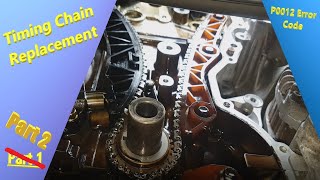
Typical fix: Replace the timing chain, tensioner, and guides with the updated OEM parts. This is a labor-intensive job. 🎬 See this step-by-step timing chain replacement walkthrough After replacement, the 'Timing Chain Learned Value' must be reset in the ECM.
Est. part cost: $300-$800 - Low or Dirty Engine Oil 🟡 Medium Probability The MIVEC system is entirely dependent on clean engine oil at the correct pressure to function. Low levels or contaminated/sludgy oil can clog the small passages in the OCV solenoids and cam phasers, preventing them from moving correctly.
How to confirm: Check the engine oil dipstick for level and inspect the oil's color and consistency. Dark, sludgy, or low oil is a red flag. Ensure the correct oil viscosity is being used.
Typical fix: Perform an engine oil and filter change using a high-quality synthetic oil that meets Mitsubishi's specifications. In some cases, an engine flush may help clear sludge.
Est. part cost: $40-$80 - Faulty Intake Oil Control Valve (OCV) / MIVEC Solenoid 🟡 Medium Probability This solenoid controls oil flow to the camshaft phaser. It can become clogged with debris from dirty oil or fail electrically over time.
How to confirm: Remove the solenoid and inspect its filter screen for sludge. Test its resistance with a multimeter (typically 6.9-7.9 ohms at 68°F). You can also temporarily swap it with the exhaust solenoid (if identical) to see if the code changes to P0011. Applying 12V should produce an audible click.
Typical fix: Clean the solenoid and its screens with brake cleaner. If cleaning doesn't work or it fails electrical tests, replace it.
Est. part cost: $75-$265
Rare But Worth Checking
- Failing Camshaft Phaser (MIVEC Actuator Gear): The gear on the end of the camshaft that actually rotates can get stuck or fail internally, but this is less common than an OCV solenoid failure.
- Clogged MIVEC Gear Oil Passage: In rare cases, sludge or debris can block the oil passages within the MIVEC actuator gear itself, preventing it from advancing timing even with a functional OCV solenoid. This typically requires replacement of the gear.
Diagnosis Steps
- Read the code with an OBD-II scanner to confirm P0012 is present.
- Check the engine oil level and condition. If low, dirty, or the wrong viscosity, service it immediately. Clear the code and see if it returns.
- Contact a Mitsubishi dealer to verify if TSB-12-13-006 (ECM reflash) has been performed on your vehicle, especially if it was built before January 2011. If not, this is a primary suspect.
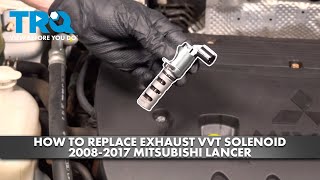
- Locate and inspect the intake MIVEC oil control valve (OCV) solenoid on the front of the cylinder head. 🎬 Watch: How to replace the variable valve timing solenoid Check the wiring and connector for damage.
- Remove the OCV solenoid. Inspect the mesh screens for sludge or debris. Clean with brake cleaner if dirty.
- Test the solenoid's resistance with a multimeter. A reading outside the 6.9-7.9 ohm range indicates failure.
- As a diagnostic test, swap the intake and exhaust OCV solenoids (if they are identical part numbers) and see if the trouble code changes to P0011 ('A' Camshaft Position - Timing Over-Advanced). If it does, the solenoid is faulty.
- If the above steps don't resolve the issue, the next step is a more in-depth mechanical diagnosis to check for a stretched timing chain. This involves removing the valve cover to check the tensioner extension and may require a professional mechanic.
Parts You'll Likely Need
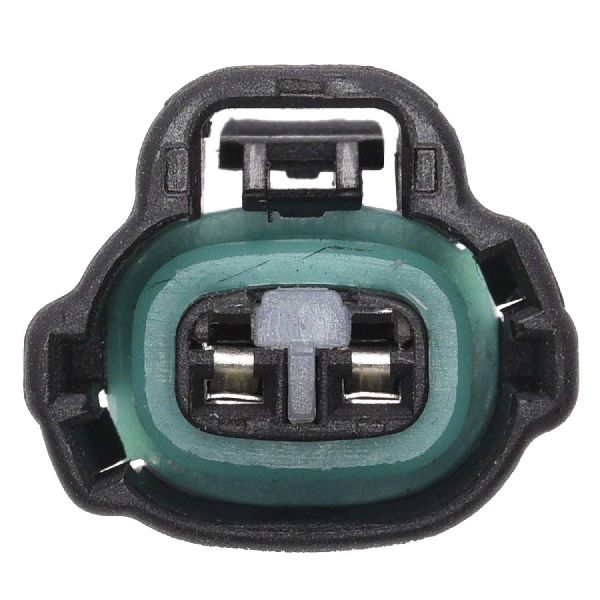
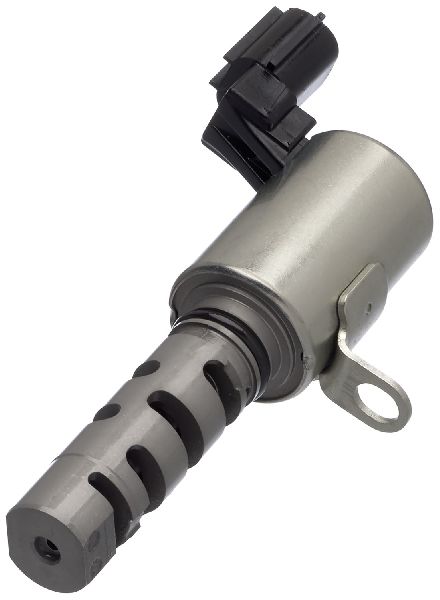
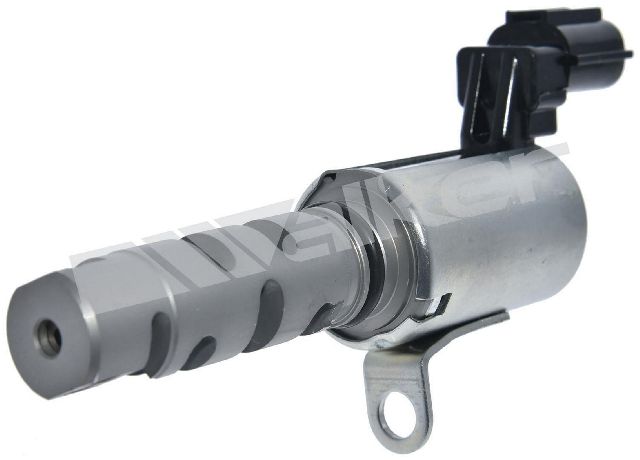
- Intake MIVEC Oil Control Valve Solenoid
(OEM #1028A021)— This solenoid is a common failure point that directly controls the oil flow for intake cam timing. It can get clogged with sludge or fail electrically.
Trusted brands: Mitsubishi Genuine, Standard Motor Products
OEM price range: $260-$390
Aftermarket price range: $75-$150 - Timing Chain Kit (Updated)
(OEM #1140A073 (Chain only))— If the chain has stretched, it must be replaced to restore correct mechanical timing. It is critical to use the updated post-2011 design. A full kit often includes the chain, tensioner (MN183894), and guides (MN183892, MN183893).
Trusted brands: Mitsubishi Genuine
OEM price range: $300-$500
Aftermarket price range: $200-$400
Technical Service Bulletins (TSBs) & Recalls
- TSB-12-13-006: Addresses a false P0012 code caused by an incorrect parameter in the ECM's judgment criteria on 2008-2011 Lancer Evolution and Ralliart models. The fix is an ECM reflash and resetting the timing chain learned value.
Platform-Specific Known Issues
- TSB for False P0012 Code: TSB-12-13-006 documents that an ECM software issue can falsely trigger code P0012 on 2008-2011 Evo X and Ralliart models. The fix is a dealer-installed software update and a reset of the timing chain learned value, not a mechanical repair.
- Premature Timing Chain Stretch: Models built before mid-2011 used a timing chain design that was prone to premature stretching. This is a well-documented issue in the community, often leading to P0012. Replacement with the updated chain (part #1140A073) is the permanent fix.
- Code Returns After Chain Replacement: Some owners have reported the P0012 code returning shortly after a timing chain replacement. This is often because the mechanic failed to reset the 'Timing Chain Maintenance' or 'learned value' within the ECU using a Mitsubishi-specific scan tool, a required step after the repair.
Mechanic-Grade Diagnostic Values
- Timing Chain Elongation Value — expected: Less than 5.8 degrees. Failure: A value of 5.8 degrees or greater indicates a stretched timing chain requiring replacement.
- MIVEC Oil Control Valve (OCV) Solenoid Resistance — expected: 6.9 - 7.9 Ohms at 68°F (20°C). Failure: A reading outside of this range indicates an electrical fault in the solenoid.
Scan Tool Commands That Help
- Mitsubishi MUT-III: Timing chain maintenance -> Learned value reset — This function is mandatory after replacing the timing chain. The ECM stores a learned value for chain stretch; failing to reset it will cause P0012 to return even with a new chain.
- Mitsubishi MUT-III: Actuator Test -> MIVEC Solenoid — This bidirectional test allows a technician to command the intake MIVEC solenoid on and off to verify its mechanical operation without removing it from the engine. A change in engine idle should be observed if the solenoid is working.
Wiring & Ground Locations
- ECU Ground — On the passenger side chassis, behind the kick panel, and also on a grounding point near the battery tray.. A poor ECU ground can cause erratic sensor readings and incorrect operation of output drivers for components like the MIVEC solenoid, potentially leading to false codes.
- Engine Block/Head Ground — Multiple braided ground straps connect the engine block and cylinder head to the chassis on both the left and right side of the engine bay.. The MIVEC solenoids and camshaft/crankshaft sensors rely on a solid engine ground. A corroded or broken ground strap can cause intermittent signal loss or voltage drops, affecting the MIVEC system's performance.
Real Owner Repair Stories
- EvolutionM.net Forum User (2010 Lancer Evolution X, ~60,000 miles) — 'Engine System Service Required' message, code P0012.
❌ Tried (didn't work) Dealer performed TSB-12-13-006 ECM reflash. The code returned within a week.
✅ What actually fixed it Replacement of the timing chain with the updated part number. The original chain was found to be significantly stretched upon removal. The 'Timing Chain Learned Value' was also reset via MUT-III after the replacement. - EvoXForums.com User (2008 Lancer Evolution X) — P0012, rough idle, and hesitation under acceleration.
❌ Tried (didn't work) Oil and filter change.
✅ What actually fixed it The intake MIVEC oil control valve (OCV) solenoid was removed, cleaned, and tested, but the problem persisted. Replacing the intake OCV solenoid with a new OEM part resolved all symptoms and the code did not return. - Lancer Ralliart Owner (Reddit) (2009 Lancer Ralliart (4B11T engine)) — P0012 code returned one day after a DIY timing chain replacement.
❌ Tried (didn't work) Clearing the code with a standard OBD-II scanner., Checking all wiring connections and mechanical work.
✅ What actually fixed it The owner took the car to a Mitsubishi dealership, which performed the 'Timing Chain Learned Value Reset' using the MUT-III scan tool. The code did not come back after the reset procedure.
OEM Part Supersession History
1140A031→1140A073— The original timing chain (1140A031) was prone to premature stretching. The updated part (1140A073) is a more robust design to prevent this issue.
Heads up: While the old part will physically fit newer models, it is highly advised to only use the updated 1140A073 chain on all 2008-2015 models during replacement.
Model Year Variations Within This Range
- 2008 - early 2011: Vehicles built before January 27, 2011, were equipped with the original timing chain (1140A031) prone to stretching and have ECM software that may falsely trigger P0012. These vehicles are the subject of TSB-12-13-006, which calls for a software reflash.
- late 2011+: Vehicles built after January 27, 2011, came from the factory with the updated, more durable timing chain (1140A073) and revised ECM software, making them less susceptible to both the false code and premature chain stretch issues.
Helpful Videos


We Have This Part in Stock




The information in this article is provided for general reference and educational purposes only. Vehicle specifications, procedures, and part compatibility can vary by production date, trim level, and region. Always consult your vehicle's factory service manual and verify part numbers before purchasing or performing repairs. Safety-critical components such as airbags, seat belts, and braking systems should be installed by a qualified professional.
- Mitsubishi LANCER EVOLUTION:
- 🎬 Helpful Videos
- 🛍️ Shop This Part
- What's Unique About the 2008-2011 Mitsubishi LANCER EVOLUTION
- Diagnostic Flowchart
- Symptoms You May Notice
- Most Likely Causes
- Rare But Worth Checking
- Diagnosis Steps
- Parts You'll Likely Need
- Technical Service Bulletins (TSBs) & Recalls
- Platform-Specific Known Issues
- Mechanic-Grade Diagnostic Values
- Scan Tool Commands That Help
- Wiring & Ground Locations
- Real Owner Repair Stories
- OEM Part Supersession History
- Model Year Variations Within This Range
- 🎟️ Get 5% Off