

P0012 on 2015-2019 Ford Police Interceptor Sedan: Causes and Fixes for Over-Retarded Camshaft Timing
On a 2015-2019 Police Interceptor Sedan, P0012 is almost always caused by low/dirty engine oil or a sticking intake VCT solenoid on Bank 1 (firewall side). First, check your oil. If the oil is good, the likely fix is replacing the VCT solenoid, which is a labor-intensive job due to its location requiring intake manifold removal.
- Always check your engine oil level and condition first. A simple oil change with the correct Ford-spec oil can sometimes fix P0012.
- The most likely failed part is the Bank 1 intake VCT solenoid, which is a known issue confirmed by Ford TSBs.
- Repairing the Bank 1 solenoid is labor-intensive due to the need to remove the upper intake manifold.
- A rattling noise from the engine on startup, combined with P0012, points to a more serious and expensive timing chain or cam phaser problem.
- A good diagnostic step before replacing parts is to swap the Bank 1 and Bank 2 intake solenoids to see if the trouble code follows the part.
What's Unique About the 2015-2019 Ford POLICE INTERCEPTOR SEDAN
The V6 engines in the Ford Police Interceptor Sedan are known for having a Variable Camshaft Timing (VCT) system that is very sensitive to oil quality and pressure. Ford has issued multiple Technical Service Bulletins (TSBs) confirming that P0012 is often caused by small debris in the oil causing the VCT solenoids to stick. 🎬 Watch: A mechanic explains Ford's VCT solenoid TSBs and codes. Because this code points to Bank 1, the repair is significantly more difficult than for Bank 2. The firewall-side location requires removing the upper intake manifold for access, increasing labor costs substantially.
Diagnostic Flowchart
Tap your situation to follow the diagnostic path that matches what you're seeing on this vehicle.
Symptoms You May Notice
- Check Engine Light is on
- Rough, unstable, or fluctuating idle
- Stalling, especially at low speeds or when coming to a stop.
- Poor or sluggish acceleration.
- Reduced fuel economy.
- Hard starting condition.
- Rattling, ticking, or knocking noise from the engine, especially on cold startups.
- Replacing the camshaft position sensor. A faulty sensor typically sets a different code related to the sensor's electrical circuit (e.g., P0340), whereas P0012 indicates a mechanical timing problem or oil flow issue.
Most Likely Causes
- Low, Dirty, or Incorrect Viscosity Engine Oil 🔴 High Probability The VCT system is operated by engine oil pressure, and the small passages in the solenoids are easily clogged by sludge or debris from infrequent oil changes. Police vehicles often experience extended idle times, which can be hard on engine oil and accelerate its breakdown.
How to confirm: Check the oil dipstick for proper level. Inspect the oil's color and consistency. If it's dark, below the 'add' line, or the wrong viscosity (Ford specifies 5W-20 or 5W-30 depending on the engine and year), this is the likely cause. Sludge on the oil cap is another indicator.
Typical fix: Perform an oil and filter change using the correct full synthetic oil specified by Ford and a quality filter (e.g., Motorcraft). Clear codes and test drive to see if the issue is resolved.
Est. part cost: $50-$100 - Failing Intake Variable Camshaft Timing (VCT) Solenoid 🔴 High Probability Ford TSBs like SSM 49821, SSM 47170, and SSM 48423 specifically state that debris can cause the Bank 1 intake VCT solenoid to stick, a well-documented issue on this platform. These solenoids control oil flow to the cam phasers, and when one sticks, it cannot correctly adjust timing.
How to confirm: After confirming the oil is good, a technician can use a scan tool to monitor commanded vs. actual cam angle (PID: VCT_ADV_ERR). A definitive DIY test is to swap the suspect Bank 1 intake solenoid with the more accessible Bank 2 intake solenoid. If the code changes to P0022 (Bank 2), the solenoid is confirmed bad.
Typical fix: Replace the Bank 1 intake VCT solenoid and its seal. Due to its location against the firewall, this requires removing the upper intake manifold. 🎬 Watch: Detailed walkthrough for removing the upper intake manifold. It is often recommended to replace both the intake and exhaust solenoids on Bank 1 at the same time to save on future labor.
Est. part cost: $60-$150 - Stretched Timing Chain or Worn Cam Phaser ⚪ Low Probability High mileage and poor oil maintenance can accelerate wear on the timing chain, plastic guides, and phasers. The 3.5L EcoBoost, in particular, is known for timing chain stretch and phaser issues over 100k miles.
How to confirm: A distinct rattling noise from the engine for 2-5 seconds on a cold startup is a strong indicator of phaser or chain slack issues. This is an advanced diagnosis requiring removal of the valve or timing covers for visual inspection of chain slack and guide condition.
Typical fix: This is a major repair involving the replacement of the timing chain(s), tensioners, guides, and cam phasers. It is a very labor-intensive and expensive job.
Est. part cost: $400-$850
Diagnosis Steps
- Check the engine oil level and condition. If it is low, dirty, or the wrong viscosity, perform an oil and filter change with the correct Ford-specified oil. Clear the codes and test drive.
- If the code returns, use an OBD-II scanner to view live data. Monitor the PIDs for desired vs. actual intake cam angle for Bank 1, and specifically look at 'VCT_ADV_ERR' (VCT Advance Error). A significant, persistent non-zero value indicates a problem.
- Listen for any rattling noises during a cold start. A 2-5 second rattle strongly suggests a timing chain or cam phaser issue.
- If possible, use a high-end scan tool to perform the VCT solenoid diagnostic test (Pinpoint Test HK11 or HK12 mentioned in TSBs) to command the solenoid and attempt to clear debris.
- A practical diagnostic step is to swap the Bank 1 intake VCT solenoid with the Bank 2 intake solenoid. Clear codes and drive. If the fault moves to Bank 2 and triggers a P0022, the solenoid is faulty.
- Inspect the wiring and connector for the Bank 1 intake VCT solenoid for any damage, corrosion, or loose pins.
- If the solenoid is suspected, it should be replaced. Given the labor to access it (intake manifold removal), cleaning is not recommended and it's wise to replace both Bank 1 solenoids (intake and exhaust) at the same time.
- If a new solenoid and fresh oil do not resolve the code, a more in-depth mechanical diagnosis is needed to inspect the timing chain, guides, and cam phaser for wear or failure.
Parts You'll Likely Need
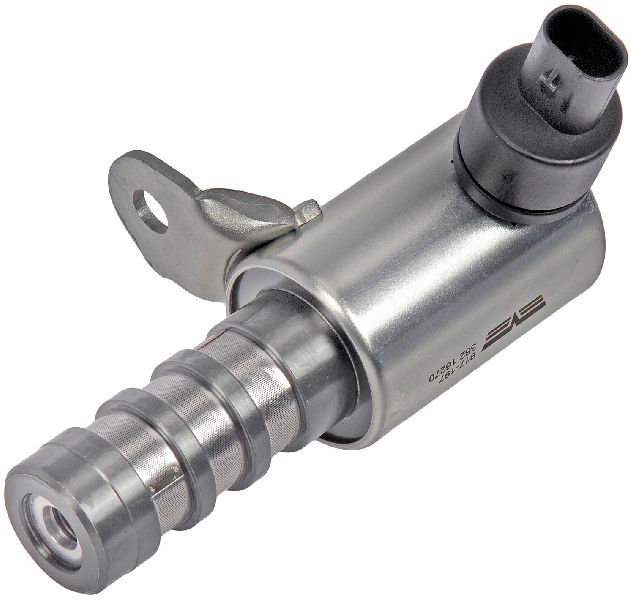
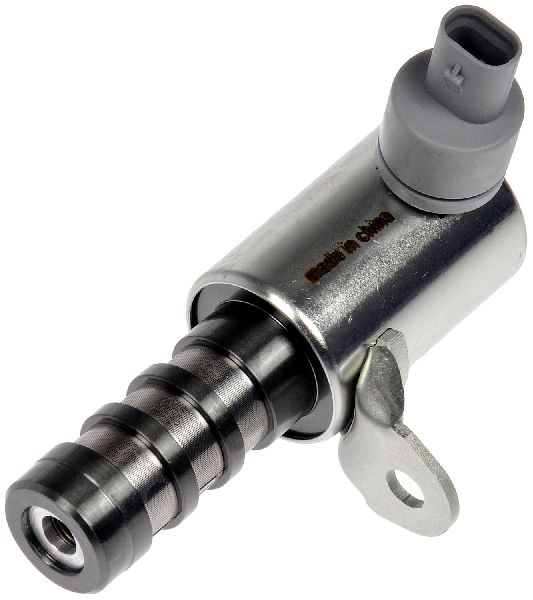
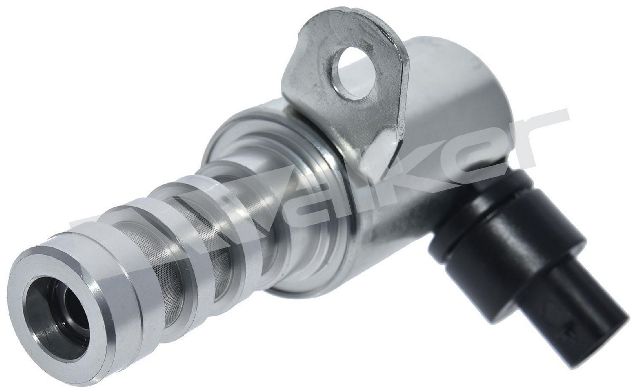
- Intake VCT Solenoid (Bank 1)
(OEM #AT4Z-6M280-B)— This solenoid is the most common point of failure for this code on this vehicle, often due to sticking from oil debris as noted in multiple Ford TSBs. The -B revision supersedes the -A version. Note that there are different solenoids for intake/exhaust, often identified by connector color (grey for this part).
Trusted brands: Motorcraft, Standard Motor Products (SMP), Dorman
OEM price range: $60-$120
Aftermarket price range: $40-$100 - Upper Intake Manifold Gasket Set
(OEM #Fel-Pro MS971181 (Aftermarket Example))— Required for replacing the Bank 1 (firewall side) VCT solenoid, as the intake manifold must be removed for access. It is critical to replace these single-use gaskets to prevent vacuum leaks. Part number lookup should be verified with the vehicle's VIN.
Trusted brands: Motorcraft, Fel-Pro, Mahle
OEM price range: $40-$70
Aftermarket price range: $20-$50
Related Codes That Often Appear With This One
- P0011 — This code is for 'Intake Camshaft Position Timing - Over-Advanced (Bank 1)'. It can appear with P0012 if the VCT solenoid is sticking intermittently, causing both over-retarded and over-advanced conditions.
- P0016 — This code indicates a 'Crankshaft Position - Camshaft Position Correlation (Bank 1, Sensor A)' error. It can be triggered if the timing is off enough to cause a mismatch between the two sensors, pointing towards a potential timing chain issue.
- P0022 — This is the same 'Over-Retarded' code but for Bank 2 (front/radiator side). If this code appears alongside P0012, it strongly suggests a systemic problem like low/dirty oil affecting both banks, rather than a single failed solenoid.
- P052B — This code is for 'Cold Start 'A' Camshaft Position Timing Over-Retarded Bank 1'. Seeing it with P0012 is a very strong indicator of a failing cam phaser or a VCT solenoid that is sticking specifically when the oil is cold and thick.
Technical Service Bulletins (TSBs) & Recalls
- SSM 49821: Notes that P0012 may be due to small debris causing the VCT solenoid to stick.
- SSM 47170 / SSM 48423: Earlier bulletins also identifying debris causing the VCT solenoid to stick and recommending a diagnostic test to cycle the solenoid before replacement.
- SSM 50067: A newer TSB for the platform-mate Explorer that also states VCT codes can be set by debris and recommends Pinpoint Test HK12 to cycle the solenoid before replacement.
- Note: While TSB 21-2315 and 23-2062 exist, they are not directly related to the P0012 engine code, but rather address transmission and other vehicle issues.
Platform-Specific Known Issues
- The location of the Bank 1 VCT solenoids on the firewall side of the engine makes replacement significantly more labor-intensive than for Bank 2.
- Owners on forums often recommend replacing both the intake and exhaust VCT solenoids on Bank 1 simultaneously, as the primary cost is the labor to remove the intake manifold.
Mechanic-Grade Diagnostic Values
- VCT Solenoid Internal Resistance — expected: 6.9 - 7.9 Ohms at 68°F (20°C). A general acceptable range is often cited as 5-15 Ohms.. Failure: A reading of 0 ohms (short circuit), infinite/OL (open circuit), or a value significantly outside the specified range.
- VCT Solenoid Connector Voltage (Key On, Engine Off) — expected: Approximately 12V (battery voltage) on the power supply pin (Pin 1).. Failure: No voltage or significantly low voltage suggests a wiring issue, a blown fuse, or a problem with the PCM power relay.
- Scan Tool PID: VCT_ADV_ERR (VCT Advance Error) — expected: Should hover close to 0° at a stable, warm idle.. Failure: A sustained, non-zero value (e.g., greater than +/- 5 degrees) indicates the PCM cannot achieve the commanded cam angle.
- Scan Tool PID: VCT_INT_DIF1 (VCT Intake Differential Bank 1) — expected: Should be close to 0° at warm idle.. Failure: A reading of +6 degrees or greater at idle is a strong indicator of a stretched timing chain.
Hidden / Shadow Codes Worth Checking
- Mode 6, Test ID $81: This is not a specific code but a test monitor in the OBD-II system for Variable Camshaft Timing. A failing result for the component ID related to Bank 1 Intake can confirm the P0012 fault before the main DTC is set in some cases. (see via Requires an advanced scan tool capable of reading OBD-II Mode 6 data.)
Scan Tool Commands That Help
- Ford IDS / FORScan: Pinpoint Test HK11 / HK12 (VCT Solenoid Cycle Test) — As recommended by Ford TSBs (SSM 47170, SSM 48423), this function cycles the VCT solenoid 10 times to attempt to dislodge small debris causing it to stick. This should be performed after an oil change and before deciding to replace the solenoid.
- Ford IDS / FORScan: VCT_ADV_ERR PID Monitoring — This live data PID is the most critical for diagnosing P0012. It shows the real-time difference between commanded and actual cam timing. A large, persistent error confirms a mechanical or hydraulic fault (sticking solenoid, bad phaser, low oil pressure) rather than a sensor circuit issue.
Wiring & Ground Locations
- Main Engine Harness Ground — On the transmission case, located below the brake booster.. A poor engine ground can cause erratic sensor readings and incorrect PCM behavior. While not a primary cause for P0012, verifying this ground is a fundamental step in diagnosing any electronic engine control issue.
- PCM Engine Harness Ground — A specific ground point for the PCM harness is located on the engine block, which can be mistaken for the main ground strap.. A fault at this specific ground could directly impact the PCM's ability to control and monitor the VCT solenoids, potentially causing timing codes.
Real Owner Repair Stories
- CarKiller Forum User (Vehicle not specified, but behavior is relevant. User had a VVT Bank 1 failure code and rough idle.) — Rough idle at low speeds, car jumping to high RPM while braking to park.
❌ Tried (didn't work) The user had no check engine light initially but replaced the VVT solenoid (Bank 1) and valve cover gasket as a preventative measure during an oil change.
✅ What actually fixed it After replacing the solenoid with an aftermarket part (Beck/Arnley) and using 5W-20 oil instead of the specified 0W-20, the P0012 code appeared. The car drove normally, but the code persisted, leading to a warranty claim for the new part and a plan to revert to the correct oil viscosity. This highlights that a new aftermarket part could be faulty out of the box or that incorrect oil viscosity can trigger the code even with a new solenoid.
OEM Part Supersession History
AT4Z-6M280-A→AT4Z-6M280-B— Standard part revision, likely for improved durability or manufacturing process. The -B revision is the current replacement part.
Heads up: The -B part is a direct replacement for the -A part. Using the older -A part if found is not recommended.
Model Year Variations Within This Range
- 2015-2019: There were no major changes to the 3.5L, 3.7L, or 3.5L EcoBoost engines or their VCT systems within this specific model year range that would fundamentally alter the causes or diagnosis of a P0012 code. The primary causes (oil condition, VCT solenoid) remain consistent across these years.
Helpful Videos
Used OEM Parts in Stock


New Aftermarket Parts Available


The information in this article is provided for general reference and educational purposes only. Vehicle specifications, procedures, and part compatibility can vary by production date, trim level, and region. Always consult your vehicle's factory service manual and verify part numbers before purchasing or performing repairs. Safety-critical components such as airbags, seat belts, and braking systems should be installed by a qualified professional.
- Ford POLICE INTERCEPTOR SEDAN:
- 🎬 Helpful Videos
- 🛍️ Shop This Part
- What's Unique About the 2015-2019 Ford POLICE INTERCEPTOR SEDAN
- Diagnostic Flowchart
- Symptoms You May Notice
- Most Likely Causes
- Diagnosis Steps
- Parts You'll Likely Need
- Related Codes That Often Appear With This One
- Technical Service Bulletins (TSBs) & Recalls
- Platform-Specific Known Issues
- Mechanic-Grade Diagnostic Values
- Hidden / Shadow Codes Worth Checking
- Scan Tool Commands That Help
- Wiring & Ground Locations
- Real Owner Repair Stories
- OEM Part Supersession History
- Model Year Variations Within This Range
- 🎟️ Get 5% Off