

P0011 on 2004-2013 Subaru Forester XT: Causes, Fixes, and Turbo Warning
On a 2004-2013 Forester XT, P0011 is most often caused by low/dirty oil or a clogged banjo bolt filter starving the turbo and AVCS system of oil. Check your oil immediately. If the oil is fine, the passenger-side Oil Control Valve (OCV) is the next likely culprit. This code is a serious warning for potential turbo failure, often appearing just before the turbo fails catastrophically.
- P0011 on a Forester XT is a serious code that requires immediate attention.
- Your first and most important check is the engine oil level and condition.
- This code is a direct warning sign of potential oil starvation to your turbocharger. Inspect the banjo bolt filters, especially the turbo oil feed line filter, as the next step.
- The most common parts to fail are the Oil Control Valve (OCV) and the tiny, clog-prone banjo bolt filters.
- Do not assume you need a new turbo or have major engine damage until you have checked the oil, filters, and OCV first.
What's Unique About the 2004-2013 Subaru Forester XT
For the turbocharged Forester XT, this code is more than a simple timing issue—it's a critical warning for your turbocharger. The EJ255 engine uses small, removable mesh filters in the banjo bolts that feed oil to both the AVCS system and the turbo. These filters are notorious for clogging with oil sludge, which can trigger P0011 and, more importantly, starve the turbo of oil, leading to rapid and catastrophic failure. Many owners on forums report this code appearing with a whining noise just before the turbo blows. 🎬 Watch: Is your turbo dead? Diagnosing P0011 and turbo health. Subaru themselves issued a Technical Service Bulletin (TSB #02-103-07) acknowledging that these screens can become clogged, leading to turbo failure.
Generation note: This guide covers the SG (2004-2008) and SH (2009-2013) generations of the Forester XT. Both use the EJ255 engine and share the same fundamental causes for P0011 related to the AVCS and oiling system. However, be aware that the part number for the Oil Control Valve (OCV) may differ by year, with a specific split occurring in 2010 models. The banjo bolt filter issue was so prevalent that Subaru issued TSB 02-103-07 to address it.
Symptoms You May Notice
- Check Engine Light is on
- Flashing cruise control light
- Traction control/VDC light is on
- Rough or unstable idle
- Engine stalling or hesitation, especially when warm
- Reduced engine power and acceleration
- Noticeable decrease in fuel economy
- A distinct whining or grinding sound from the engine bay, especially under boost (indicates turbo distress)
- Excessive smoke from the exhaust and oily liquid discharge if turbo seals have failed
- Replacing the camshaft position sensor. This sensor rarely fails and usually triggers different codes. The issue is almost always oil-related or with the OCV solenoid, though a faulty aftermarket sensor has been documented as a cause.
- Assuming a major engine failure immediately. Always start with the simple and common causes: check the oil, inspect the banjo filters, and test the OCV before assuming the worst.
- Replacing the turbo without addressing the cause. If a clogged banjo bolt filter caused the P0011 and subsequent turbo failure, replacing the turbo without removing the filter will cause the new turbo to fail almost immediately.
Most Likely Causes
- Low or Dirty Engine Oil 🔴 High Probability The AVCS system is hydraulic and extremely sensitive to oil level, pressure, and viscosity. Turbocharged EJ255 engines run hot and can consume oil between changes, making low oil levels a frequent problem that can trigger this code.
How to confirm: Check the engine oil dipstick. If the level is below the 'full' mark or the oil appears dark, sludgy, or past its service interval, this is the most likely cause.
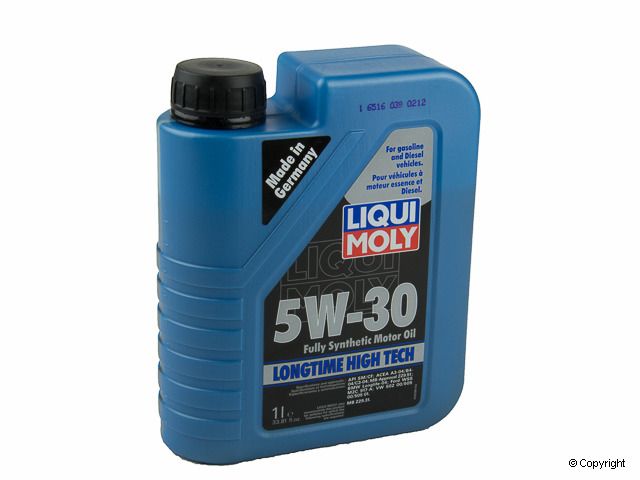
Typical fix: Perform a complete oil and filter change using a quality full synthetic oil that meets Subaru's specifications (e.g., 5W-30). Reset the ECU and see if the code returns.
Est. part cost: $50-$90 - Clogged Banjo Bolt Filters 🔴 High Probability Subaru installed tiny mesh filters in the banjo bolts that feed oil to the AVCS solenoids and the turbocharger. These are a known major failure point, as they clog with debris over time, restricting oil flow. This was acknowledged by Subaru in TSB 02-103-07.
How to confirm: Visually inspect the filters. There are three primary locations for these filters: one on the back of the passenger-side cylinder head for the turbo oil feed line (the most critical one), and one on the front of each cylinder head for the AVCS solenoids. If they are clogged with black sludge or metallic particles, they are the cause. Often, the screen may have disintegrated, sending debris into the OCV.
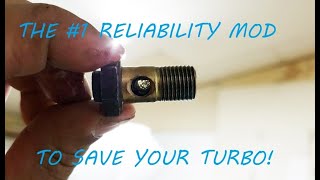
Typical fix: Remove the banjo bolts, and either clean or, more commonly, permanently remove the mesh filters to prevent future clogging. Always replace the copper crush washers when reinstalling banjo bolts to prevent leaks. Many owners and shops consider removing these filters as essential preventative maintenance. 🎬 See this walkthrough on how to remove the banjo bolt filters.
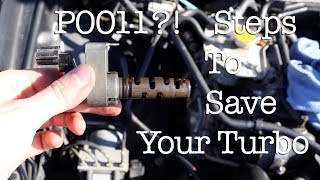
Est. part cost: $5-$20 for new crush washers - Failing Oil Control Valve (OCV) / VVT Solenoid 🟡 Medium Probability The Bank 1 (passenger side) OCV can become clogged with sludge, fail electronically, or its internal screen can break apart and jam the valve. Debris from a disintegrating banjo bolt filter is a common cause of OCV failure.
How to confirm: Swap the passenger-side (Bank 1) and driver-side (Bank 2) intake OCVs. They are identical and located on the front of the cylinder heads. Clear the codes and drive. If the trouble code changes to P0021 (Bank 2), the solenoid you moved is faulty. You can also test its resistance with a multimeter; it should be between 6.9-7.9 ohms.
Typical fix: Replace the faulty Oil Control Valve. If debris is found in the OCV, it is critical to locate the source (likely a banjo bolt filter) and clean the system.
Est. part cost: $90-$180
Rare But Worth Checking
- Stretched or Skipped Timing Belt: If the timing belt has skipped a tooth, the mechanical timing of the camshaft will be incorrect, which the AVCS system cannot compensate for, triggering the code. This is a severe issue that can lead to engine damage. One owner reported this code was ultimately caused by the timing belt being off by two teeth.
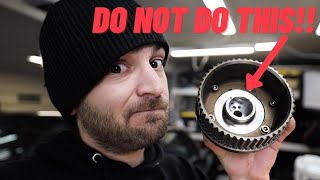
- Failed AVCS Cam Sprocket (Phaser): The hydraulic actuator on the camshaft itself can fail, getting stuck in the advanced position. This is a more involved and expensive repair, but less common than OCV or oil issues. In one case, the issue was a self-induced failure from installing the cam gear incorrectly so it was not properly keyed to the camshaft.
- Damaged Wiring to OCV: Check the wiring harness and connector for the passenger-side OCV for any breaks, corrosion, or oil contamination which can disrupt the signal. Per TSB 02-170-17R, a leaking OCV can cause oil to 'wick' through the wiring harness, causing issues far from the solenoid itself.
- Faulty Camshaft Position Sensor: While rare, a faulty sensor can send incorrect data. In one documented case, an owner replaced multiple parts, but the P0011 code was only resolved after replacing an aftermarket camshaft sensor with an OEM Subaru part.
- Outdated ECM Software: In some instances, the Engine Control Module (ECM) may require an update to resolve performance issues. NHTSA ODI #11683546 notes an owner experience where the ECM was not loaded with current software, leading to a persistent P0011.
Diagnosis Steps
- Check Engine Oil: Immediately check the oil level and condition. If low, top it off. If old or sludgy, perform an oil and filter change with high-quality 5W-30 synthetic oil. Clear the code and see if it returns. This is the simplest and most common fix.
- Inspect/Remove Banjo Bolt Filters: If the oil is fine, the next step is to inspect the banjo bolt filters. The most critical is the turbo oil feed line on the back of the passenger-side head. Also check the two for the AVCS solenoids on the front of the engine. Many owners and TSBs recommend removing the filter screens permanently and replacing the crush washers.
- Swap Oil Control Valves (OCVs): If the filters are clean (or removed), swap the intake OCVs from the passenger side to the driver side. They are identical. Clear the codes and drive. If the code changes to P0021, you have confirmed a bad OCV. This is the definitive test for a faulty OCV. 🎬 Watch: How to fix P0011 codes and save money on repairs.
- Test OCV: Alternatively, remove the Bank 1 OCV. Test its resistance with a multimeter (target: 6.9-7.9 ohms). Carefully apply 12V power to see if the internal plunger actuates. Check its internal screen for debris from a disintegrated banjo filter.
- Check Mechanical Timing: If all of the above check out, the issue may be more serious. Verify the timing belt has not skipped a tooth and that all timing marks align correctly. Ensure all timing belt guides are present and intact.
- Inspect AVCS Sprocket: As a final step, the AVCS cam sprocket itself may need to be inspected for damage or failure, though this is uncommon.
Parts You'll Likely Need
- Oil Control Valve (OCV) / AVCS Solenoid
(OEM #10921AA080 (2006-Early 2010), 10921AA140 (Late 2010+))— This solenoid is a common failure point. It gets clogged with sludge or fails electronically, causing incorrect cam timing. Verify the correct part number with your VIN.
Trusted brands: Subaru (OEM), Denso
OEM price range: $90-$180
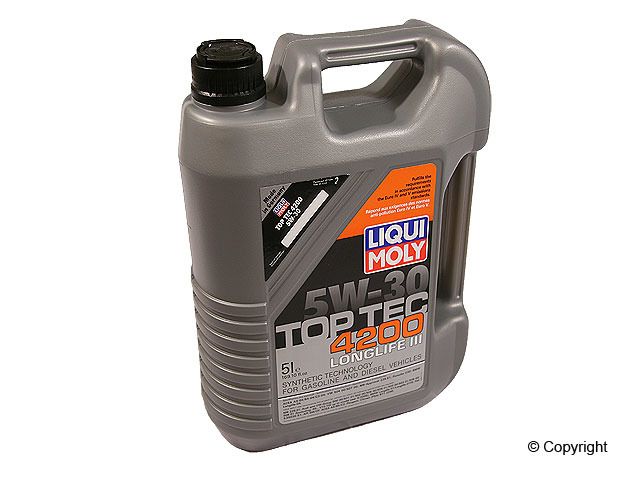
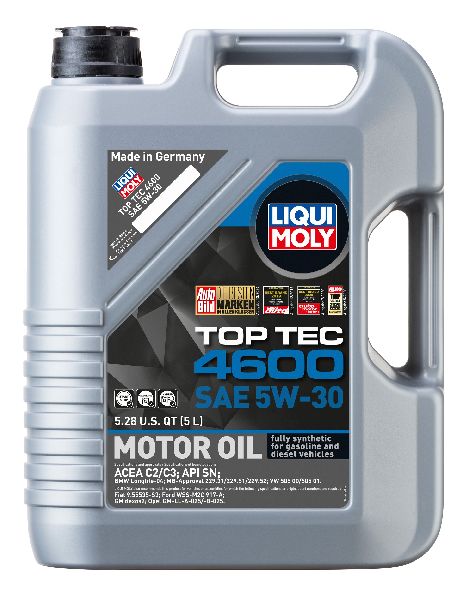
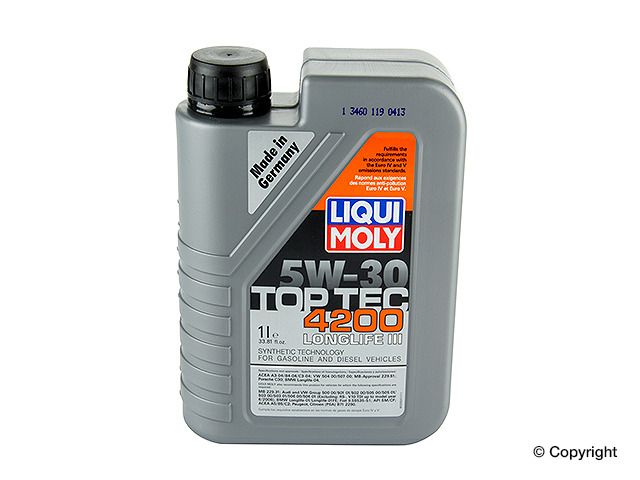
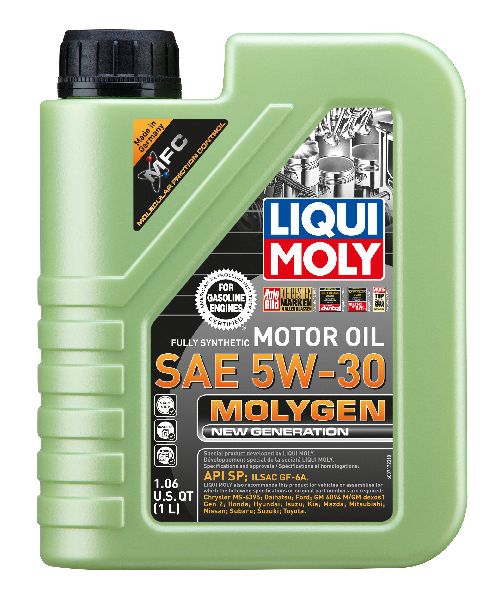
Aftermarket price range: $70-$130 - Engine Oil and Filter — The most common cause of P0011 is low or contaminated oil. An oil change is the first and most important step.
Trusted brands: Subaru Genuine, Mobil 1, Castrol Edge 5W-30
OEM price range: $60-$90
Aftermarket price range: $50-$80
Related Codes That Often Appear With This One
- P0021 — This is the identical code but for Bank 2 (driver's side). If both P0011 and P0021 appear together, it strongly points to a systemic oil problem like extremely low oil level or severe sludge affecting both sides of the engine.
- P0301 — This is a misfire code for Cylinder 1, which is on Bank 1. An incorrect camshaft timing on Bank 1 can lead to poor combustion and misfires in the cylinders on that bank.
Technical Service Bulletins (TSBs) & Recalls
- 02-103-07 — Turbocharger Oil Supply Mesh Screen — Published in October 2007, this TSB identifies that the mesh screen inside the banjo bolt for the turbo oil supply can become clogged, restricting oil flow and causing turbo failure. It recommends inspecting the screen at every oil change.
- 09-104-23R — This bulletin announces the availability of reprogramming files for the Engine Control Module (ECM) to address rare cases of DTCs P0011 and P0021.
- 02-132-12R — This bulletin provides specific diagnosis and repair procedures for AVCS-related DTCs including P0011, P0021, and others.
- 09-128-24R — A manufacturer service bulletin that includes P0011 as a "Timing Over-Advanced or System Performance Bank 1" fault requiring technical attention.
Platform-Specific Known Issues
- Turbocharger Oil Starvation: The P0011 code is a very common early warning sign of a clogged turbo oil feed line banjo bolt filter. Ignoring this code frequently leads to the destruction of the turbocharger, a multi-thousand dollar repair. If you get this code, stop driving and investigate immediately.
- Banjo Filter Removal as a 'Must-Do': Many experienced Subaru owners and independent shops consider the removal of the banjo bolt filters (especially the turbo feed line one) to be a mandatory preventative maintenance item to ensure turbo longevity, even if no codes are present.
Mechanic-Grade Diagnostic Values
- Oil Control Valve (OCV) Solenoid Resistance — expected: 6.9 - 7.9 Ohms. A general acceptable range is often cited as 6-12 Ohms.. Failure: A reading outside of this range (open circuit or short) indicates a failed solenoid coil.
- OCV Connector Voltage (Power Supply Pin) — expected: Approximately 10-12.6 Volts with key on, engine off.. Failure: No voltage suggests a break in the power supply wire or a blown fuse.
- Scan Tool Live Data: AVCS Advance Angle (Bank 1 vs. Bank 2) — expected: At idle, both Bank 1 and Bank 2 intake AVCS advance angles should be near 0 degrees and should closely match each other. When revving the engine, they should advance and retreat in unison.. Failure: If the Bank 1 angle is stuck at a high value, does not change with RPM, or lags significantly behind Bank 2, it points to a problem in the Bank 1 AVCS system.
Scan Tool Commands That Help
- Subaru Select Monitor (SSM) or advanced scan tool (e.g., Cobb AccessPort): Live Data Monitoring of 'AVCS Advance Angle L' and 'AVCS Advance Angle R' — This is a critical diagnostic step to visually confirm if the Bank 1 (Right) camshaft is actually over-advanced or stuck compared to the properly functioning Bank 2 (Left). It helps differentiate between a sensor reporting an issue and the mechanical system actually failing.
- Manual Test (No Scan Tool Needed): Temporarily Disable AVCS by Unplugging OCV — By unplugging the OCV for the affected bank, you disable the AVCS system for that camshaft. If a rough idle or other symptom disappears when the OCV is unplugged, it strongly suggests the issue is within the AVCS system (OCV, sprocket) rather than a base timing problem.
Wiring & Ground Locations
- Bank 1 OCV Connector — On the front of the passenger side (right side) cylinder head, connecting to the AVCS solenoid.. This is the primary connection point for electrical testing (resistance, voltage). It is also prone to oil contamination from a leaking OCV, which can cause poor connection and faults.
- ECM Connector B136, Pin 6 — At the Engine Control Module (ECM), typically located in the passenger footwell area for a 2006 Forester XT.. This specific pin is the signal wire for the Bank 1 intake OCV. It can be used for advanced continuity or short-to-ground/power testing of the wiring harness between the ECM and the solenoid.
- Engine Wiring Harness (General) — The entire loom running from the OCVs back to the ECM.. Per TSB 02-170-17R, a leaking OCV can cause engine oil to 'wick' through the harness via capillary action, contaminating connectors far downstream from the solenoid itself. If the OCV connector is oily, other connectors should be inspected.
Real Owner Repair Stories
- Reddit user on r/SubaruForester (2010 Subaru Forester XT) — P0011 code appeared. Checked oil and found it was low. Topped it off. A day later, a new whining noise started from the engine under boost, which turned into a crunching sound, followed by a loss of boost.
❌ Tried (didn't work) Topping off low oil
✅ What actually fixed it The turbocharger had failed due to oil starvation, which was preceded by the P0011 code. This required a turbo replacement and addressing the root cause of the oil flow issue. - YouTube channel 'smeedia' (2005 Subaru STI (EJ257 engine, similar AVCS system)) — Persistent P0011 code after an engine rebuild, causing severe misfiring and a 'cammed' sound.
❌ Tried (didn't work) Replacing both Oil Control Valves (OCVs), Checking oil galleys for blockage
✅ What actually fixed it The intake cam gear on Bank 1 was installed incorrectly during the rebuild. The keyway on the gear was not properly aligned with the camshaft, causing the mechanical timing to be off from the start. Replacing the incorrectly installed cam gear with a new one and setting the timing correctly resolved the code. - YouTube channel 'JRobling' (2005 Subaru Forester XT) — P0011 code appeared while driving.
❌ Tried (didn't work) Performing an oil change (code returned), Removing the banjo bolt filters (code returned)
✅ What actually fixed it After the oil change and banjo filter removal did not solve the issue, the passenger-side Oil Control Valve (OCV) was replaced, which finally fixed the code. - NHTSA ODI #10579242 — An owner reported that after a P0011 diagnostic reading for "A Camshaft Position Timing Over-Advanced System Performance Bank 1," the turbocharger stopped working entirely.
When the Usual Fixes Don't Work
- While the vast majority of P0011 codes on the EJ255 are caused by oil quality/level, clogged banjo filters, or a failed OCV, there are documented cases where the root cause is purely mechanical and unrelated to the hydraulic control system. In one instance on a similar EJ engine, after replacing OCVs to no effect, the problem was traced to an intake cam gear that had been installed incorrectly during a rebuild, misaligning its keyway with the camshaft. This created a base timing error that the AVCS system could not correct, triggering the P0011 code. This serves as a critical reminder for anyone who encounters this code immediately after performing major engine service.
OEM Part Supersession History
10921AA080→10921AA140 (for some later models)— Part revision and model year changes. The split typically occurs around the 2010 model year.
Heads up: Using the wrong part number can result in improper AVCS function. It is critical to verify the correct part number for your specific vehicle's VIN, especially for 2010 models which were a changeover year.Various older OCVs→Newer OCVs with improved internal seals— To fix a known issue of oil leaking from the solenoid body and wicking into the wiring harness.
Heads up: A TSB for later models (02-170-17R) notes that OCVs with a lot number starting '17159' or higher have a redesigned internal seal. While this TSB applies to newer cars, it highlights an ongoing improvement by Subaru to fix leaking OCVs.
Model Year Variations Within This Range
- 2004-2009 vs 2010-2013: The primary difference affecting this repair is the Oil Control Valve (OCV) part number. Early models in the range (approx. 2006-early 2010) typically use part number 10921AA080. Later models may use a different number, such as 10921AA140. Always confirm with a VIN.
Diagnostic Flowchart
Other Known Issues on This Vehicle
Issues unrelated to this code that are worth knowing about as an owner of this generation:
- Piston Ringland Failure 🔴 High — More common on modified vehicles but can occur on stock engines, especially those driven hard or with inconsistent oil maintenance. It is a well-known weak point of the EJ255/EJ257's hypereutectic pistons.
- Excessive Oil Consumption 🟠 Medium — These turbocharged engines tend to consume oil, especially as they age. Failure to regularly check and top off the oil level is a primary contributor to sludge formation, clogged banjo filters, and eventual turbo/engine failure.
- Head Gasket Failure 🟠 Medium — While more infamous on the naturally aspirated EJ25 engines, the turbo EJ255 is not immune. It is less frequent but can still occur, typically at higher mileage. It is considered less of a primary concern on the XT compared to its non-turbo counterparts.
- Turbocharger Failure 🔴 High — Often a consequence of other issues like oil starvation from clogged banjo filters (see P0011) or oil consumption. The stock turbo can be a wear item, especially past 100k miles, but failure is frequently accelerated by maintenance issues. (Ref: TSB 02-103-07 (indirectly, by addressing the cause))
- Rear Quarter Panel Rust 🟡 Low — Common on vehicles in rust-belt regions. The area around the rear wheel arches is a known trap for moisture and debris, leading to rust that can be difficult to repair if not caught early.
Used vs. New Parts: Buying Guide for This Vehicle
When a used part is the smart pick: For this specific repair, using a used Oil Control Valve (OCV) is generally not recommended. The part is prone to failure from internal sludge and electronic issues, making a used part a significant gamble. A used part should only be considered if it is from a verified, very low-mileage vehicle and is cleaned and tested before installation.
Donor-vehicle mileage cap: roughly under 40000 miles for the part to have meaningful remaining life.
What to inspect on the donor part:
- Check the electrical connector for any signs of oil; if it's wet, the internal seal has failed.
- Inspect the small filter screen on the valve for any metallic debris or sludge.
- If possible, test the resistance with a multimeter before purchase (should be 6.9-7.9 Ohms).
OEM-only on this vehicle (don't cheap out):
- Oil Control Valve (AVCS Solenoid)
Aftermarket brands forum-validated for this vehicle:
- Denso (often the Original Equipment Manufacturer for Subaru)
Brands owners have reported issues with on this vehicle:
- Dorman: While widely available, some owners have reported premature failure of Dorman VVT solenoids in various applications, making it a risky choice for this critical component.
Real Owner Stories
Aggregated from forums and TSBs cited above. Mileages and costs reflect what owners reported in those sources.
2010 Subaru Forester XT EJ255
Symptoms: Check engine light with code P0011, a whining sound from the engine bay, followed by complete turbo failure.
What fixed it: The owner warned that if the turbo is replaced, the banjo bolt filters must also be addressed or the new turbo will fail.
Source hint: Reddit: Blown Turbo P0011
2005-2009 Subaru Legacy GT EJ255
Symptoms: Performance issues and trouble codes occurring only when the car was warm.
What fixed it: Removing and cleaning the Oil Control Valve (OCV).
Source hint: LegacyGT.com: P0011, P0021, Missfire, OCV or Oil flow Control Valve
Related OBD-II Codes
Frequently Asked Questions
Does TSB 02-103-07 apply to my 2004-2013 Subaru Forester XT?
Where are the banjo bolt filters located on the EJ255 engine?
Can I test if the Bank 1 Oil Control Valve is the problem without buying a new part?
Why does my Forester XT only experience P0011 symptoms like stalling when the engine is warm?
Is it true that I should permanently remove the mesh filters in the banjo bolts?
What kind of oil should I use to prevent P0011 in my Turbo Forester?
Helpful Videos
We Have This Part in Stock


The information in this article is provided for general reference and educational purposes only. Vehicle specifications, procedures, and part compatibility can vary by production date, trim level, and region. Always consult your vehicle's factory service manual and verify part numbers before purchasing or performing repairs. Safety-critical components such as airbags, seat belts, and braking systems should be installed by a qualified professional.
- Subaru Forester XT:
- 🎬 Helpful Videos
- 🛍️ Shop This Part
- What's Unique About the 2004-2013 Subaru Forester XT
- Symptoms You May Notice
- Most Likely Causes
- Rare But Worth Checking
- Diagnosis Steps
- Parts You'll Likely Need
- Related Codes That Often Appear With This One
- Technical Service Bulletins (TSBs) & Recalls
- Platform-Specific Known Issues
- Mechanic-Grade Diagnostic Values
- Scan Tool Commands That Help
- Wiring & Ground Locations
- Real Owner Repair Stories
- When the Usual Fixes Don't Work
- OEM Part Supersession History
- Model Year Variations Within This Range
- Diagnostic Flowchart
- Other Known Issues on This Vehicle
- Used vs. New Parts: Buying Guide for This Vehicle
- Real Owner Stories
- 2010 Subaru Forester XT EJ255
- 2005-2009 Subaru Legacy GT EJ255
- Related OBD-II Codes
- Frequently Asked Questions
- 🎟️ Get 5% Off