

P0011 on 2010-2017 Kia Soul: Causes and Fixes for Camshaft Timing Issues
On a 2010-2017 Kia Soul, code P0011 is most often caused by low or dirty engine oil, or a failing Oil Control Valve (OCV). An oil change and replacing the OCV is a common fix, costing around $40-$120 for parts. Always check your oil level first, as these engines are known for oil consumption. Using a genuine Kia oil filter is strongly recommended by mechanics.
- Always check your engine oil level and quality first; this is the simplest and most common fix for P0011 on a Kia Soul.
- The second most likely culprit is a faulty or clogged Oil Control Valve (OCV), which is a relatively inexpensive and accessible part to replace.
- This code can be an early warning for more severe engine problems, especially if it appears with other codes like P0014 or P1326. Do not ignore it.
- For 2010-2013 models, if the engine has been recently worked on or replaced, a specific TSB points to a possible misalignment of the camshaft reluctor wheel.
What's Unique About the 2010-2017 Kia SOUL

The 2010-2017 Kia Soul, particularly models with the GDI (Gasoline Direct Injection) engines, can be prone to oil consumption and sludge buildup, which is a subject of class-action lawsuits. These issues directly impact the CVVT system, which relies on clean oil and stable pressure to function. A specific Technical Service Bulletin (TSB PS731) also points to an incorrect camshaft reluctor wheel configuration on some 2010-2013 models after engine replacement, which can trigger this code. Owner complaints often link P0011 to more significant engine issues, sometimes appearing with the P1326 knock sensor code, which can be an indicator of impending engine failure.
🎬 Watch: Understanding the P1326 knock sensor code and engine knocking.Diagnostic Flowchart

Tap your situation to follow the diagnostic path that matches what you're seeing on this vehicle.
Generation note: This range covers two Kia Soul generations. The first generation (AM; 2010-2013) and the second generation (PS; 2014-2017). While causes like low oil and faulty OCVs are common to both, a specific TSB (PS731) for an incorrectly configured camshaft reluctor wheel applies to the 2010-2013 models. The GDI engines in later models are noted in lawsuits for oil consumption issues that directly lead to sludge and CVVT problems.
Symptoms You May Notice
- Check Engine Light is on
- Rough or unstable idle, sometimes idling higher than normal (up to 2000 RPM)
- Engine stalling, especially at low speeds
- Poor acceleration or sluggish performance
- Decreased fuel economy
- Engine making a ticking or knocking noise
- Car feels 'jolty' or hesitates
- Replacing the camshaft position sensor first. While related, the sensor is often not the root cause; it is simply reporting the timing error caused by an oil flow or mechanical issue.
- Assuming the timing chain has jumped a tooth without first checking the simpler causes like oil level and the OCV.
- Replacing the OCV without also cleaning or replacing the separate, small OCV filter screen in the cylinder head, which can be the actual point of restriction.
Most Likely Causes

- Low or Dirty Engine Oil 🔴 High Probability Many Kia engines from this era, including the Gamma and Nu series, are known for consuming oil between changes, which can lead to low oil levels and sludge formation. The CVVT system is highly sensitive to oil level and cleanliness to maintain the hydraulic pressure needed to adjust cam timing.
How to confirm: Check the engine oil level using the dipstick and inspect its color and consistency. If it's low or looks like dark sludge, this is the likely starting point. Many owners report the dipstick being completely dry despite a recent oil change.
Typical fix: Top off the oil to the correct level or perform a complete oil and filter change using the manufacturer-specified oil weight. Using a genuine Kia oil filter is often recommended by mechanics to avoid oil pressure issues.
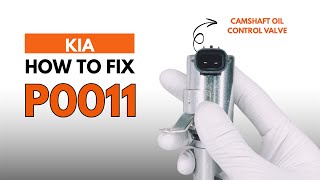
Est. part cost: $30-$70 - Faulty Oil Control Valve (OCV) / VVT Solenoid 🔴 High Probability The OCV can become clogged with sludge from dirty oil or fail electrically over time, causing it to stick open or closed. This is one of the most common repair parts for a P0011 code.
How to confirm: You can test the solenoid with a multimeter for correct resistance (typically 6.9-7.9 ohms at 68°F). You can also remove it and check its small filter screens for clogs and debris. Applying 12v power should make the internal plunger click. Visually, the screens may be completely clogged with black sludge.
Typical fix: Replace the intake camshaft's Oil Control Valve for Bank 1. It is often recommended to use an OEM part from Kia, as some owners report that aftermarket sensors cause erratic performance or fail quickly. It's also wise to replace both intake and exhaust solenoids at the same time.
Est. part cost: $40-$120 - Stretched Timing Chain or Failed Tensioner 🟡 Medium Probability Over time, especially with poor oil maintenance or extended periods of low oil pressure, the timing chain can stretch or the hydraulic tensioner can weaken, causing camshaft timing to become inaccurate.
How to confirm: This is a more involved diagnosis. It often involves removing the valve cover to inspect for chain slack or listening for a characteristic chain rattle, especially on cold starts. A stretched chain can cause the timing marks to be misaligned.
Typical fix: Replace the timing chain, guides, and tensioner. This is a significant repair.
Est. part cost: $200-$500 - Clogged OCV Filter Screen ⚪ Low Probability Separate from the OCV itself, some Kia engines have a small, cylindrical filter screen in the oil passage in the cylinder head leading to the OCV. This can become completely clogged with sludge, starving the OCV of oil.
How to confirm: The filter must be located and removed for inspection. On some 1.6L engines, it is a 14mm bolt head located near the OCV. It can be difficult to access. Once removed, the screen can be inspected for blockage.
Typical fix: Remove and clean the OCV filter screen with brake cleaner, or replace it. The OEM part number for some models is 24150-23761.
Est. part cost: $10-$25
Rare But Worth Checking
- Incorrect Camshaft Reluctor Wheel Configuration: According to TSB PS731, this can occur after an engine has been replaced on 2010-2013 models. The reluctor wheel's position may be incorrect, sending an erroneous signal. The TSB covers P0011, P0014, P0016, and P0017.
- Failing Camshaft Position Sensor: While possible, a failing sensor itself usually triggers a different code. However, if it provides an inaccurate reading, it could contribute to a P0011 code. Owners often replace this first, but it is frequently not the root cause.
- Failing Camshaft Phaser (CVVT Gear): The gear assembly at the end of the camshaft, which is actuated by oil pressure, can fail mechanically. This is less common than an OCV failure but can happen if the engine has been starved of oil.
- Worn Camshaft Bearings: In cases of severe oil starvation or sludge, the camshaft bearings in the cylinder head can wear out. This causes the camshaft to move slowly, which can trigger an over-advanced timing code.
Diagnosis Steps
- Check Engine Oil Level and Condition: This is the first and most important step. If the oil is low, top it off, clear the code, and drive to see if it returns. If the oil is old or dirty, perform an oil and filter change, preferably with a genuine Kia filter.
- Scan for Other Codes: Check if other codes like P0014, P0016, or P1326 are present, as they can provide clues to the root cause.
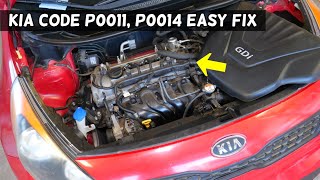
- Inspect and Test the Oil Control Valve (OCV): Locate the intake OCV on Bank 1 (it's on the top/front of the engine). Unplug it and check the resistance with a multimeter (should be 6.9-7.9 ohms). Remove the valve (typically a single 10mm bolt) and inspect its filter screens for sludge or debris. Test it by applying 12V to see if the solenoid clicks.
- Inspect OCV Filter (if applicable): Check service information for your specific engine to see if it has a separate OCV filter in the cylinder head. On some models, it's a 14mm bolt near the OCV. Remove and inspect it for blockages.
- Inspect Timing Components: If the above steps don't resolve the issue, the next step is a more in-depth inspection of the timing chain for stretching and the tensioner for proper operation. This usually requires removing the valve cover.
- Check Camshaft Reluctor Wheel: For 2010-2013 models, especially if the engine was recently replaced, refer to TSB PS731 to verify the reluctor wheel alignment.
Parts You'll Likely Need
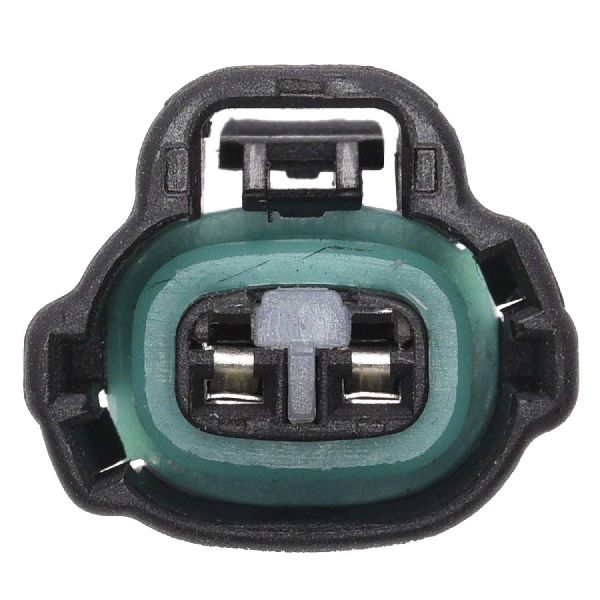
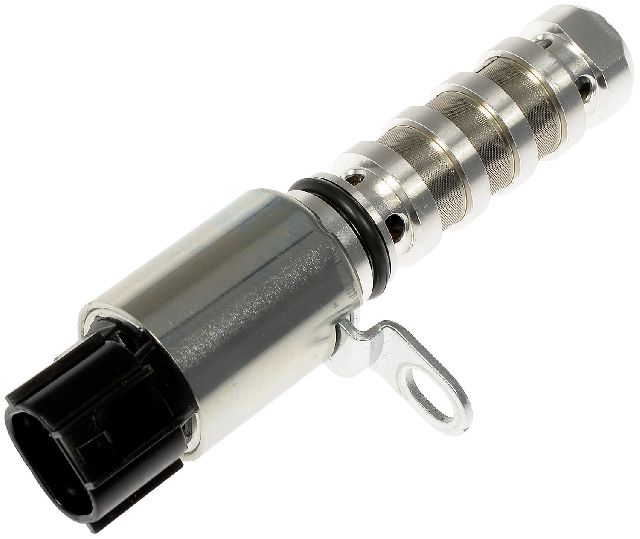
- Engine Oil Control Valve (VVT Solenoid)
(OEM #24355-2G500 (for some 2.0L/2.4L Nu engines, verify by VIN), 24355-2B700 (common for 1.6L Gamma engines, verify by VIN))— This solenoid is the most common point of failure. It gets clogged with debris from engine oil or fails electrically, preventing proper operation.
Related Codes That Often Appear With This One
- P0014 — This code is for the exhaust camshaft ('B') timing being over-advanced. Since both intake and exhaust cams use the same oil supply, issues like low/dirty oil or sludge often affect both, causing the codes to appear together.
- P1326 — This is a Kia-specific code for the Knock Sensor Detection System. It often indicates a potential engine failure and places the car in limp mode. Multiple owner complaints and forum discussions show P0011 appearing alongside P1326, suggesting the timing issue is a symptom of a larger engine problem like connecting rod bearing wear, often leading to engine replacement under warranty or recall.
- P0016 — This code indicates a Crankshaft/Camshaft Correlation error. If the timing chain has stretched or jumped, or if the reluctor wheel is misaligned, the computer will see a mismatch between the two sensors, triggering P0016 along with P0011. Some owners report P0011 disappearing and being replaced by P0016 after attempting other repairs.
Technical Service Bulletins (TSBs) & Recalls
- PS731: Provides information on DTCs P0011, P0014, P0016, and P0017 being caused by an incorrect camshaft reluctor wheel configuration on 2010-2013 Soul models, among others.
- SC147: Though not directly for P0011, this TSB details the inspection and replacement procedure for Theta II engines due to manufacturing debris causing bearing wear, a root cause that can manifest as oil pressure-related codes.
- TSB ENG236 (NHTSA 10214392): Details an oil consumption test and engine cleaning procedure for Nu, Gamma, Theta, and Kappa engines, acknowledging the underlying oil consumption and sludge issue.
Platform-Specific Known Issues
- NHTSA Technical Service Bulletin #PS731 notes that on 2010-2013 Soul models, codes P0011/P0014/P0016/P0017 can be triggered by an incorrectly configured camshaft reluctor wheel, especially after engine replacement.
- Many of the engines used in the Soul (Gamma, Nu) are part of a class-action lawsuit for excessive oil consumption, which leads to sludge buildup and is a primary driver for CVVT system faults like P0011.
- The appearance of P0011 is often a precursor or companion to the P1326 Knock Sensor code, which triggers limp mode and frequently leads to a dealer diagnosis of catastrophic engine failure requiring replacement.
Mechanic-Grade Diagnostic Values
- Oil Control Valve (OCV) / VVT Solenoid Resistance — expected: 6.9 to 7.9 Ω at 68°F (20°C). Some sources state a wider range of 6.8 to 8.0 Ω.. Failure: A reading of zero, infinity (open circuit), or significantly outside the specified range indicates a faulty solenoid coil.
- Oil Control Valve (OCV) / VVT Solenoid Function Test — expected: An audible 'click' as the internal plunger moves.. Failure: No movement or sound when 12V power is briefly applied to the terminals indicates the solenoid is stuck or burned out.
Scan Tool Commands That Help
- Kia GDS (Global Diagnostic System) or equivalent professional scan tool: E-CVVT Values Reset / CVVT System Adaptation Reset — After replacing a CVVT component like an OCV, camshaft phaser, or timing chain, this function should be used to clear learned values and force the ECM to re-adapt to the new parts' performance characteristics.
- Professional scan tool with bidirectional controls: CVVT Solenoid Activation Test — To test the OCV's functionality without removing it from the engine. The scan tool commands the solenoid to activate, and the technician can observe the change in engine performance or timing angles on live data to confirm it is working.
Wiring & Ground Locations
- OCV Control Wire at ECM (2014-2019 Models) — For the exhaust OCV, the control wire is located at Pin 15 of the C100-MA connector at the Engine Control Module (ECM).. This allows a technician to perform a continuity test on the wiring harness between the ECM and the OCV to rule out an open or shorted wire, which would mimic a failed solenoid.
- Engine Block to Chassis Ground — A primary ground strap is typically located on the side of the engine block, connecting to the vehicle's frame rail in the engine bay.. A poor engine ground can cause a variety of electrical issues and erratic sensor readings, potentially contributing to timing codes. Ensuring this connection is clean and tight is a crucial electrical diagnostic step.
- Interior Fuse Panel Ground — A common grounding bolt with multiple wires attached can often be found on the metal chassis near the interior fuse panel (typically driver's side).. This is a central grounding point for many interior and control circuits. While less likely to be the primary cause for a P0011, checking it is good practice when diagnosing any electrical fault.
Real Owner Repair Stories
- Reddit user on r/KiaSoulClub (2019 Kia Soul w/ 170k miles) — Sluggish running, P0011 code present.
❌ Tried (didn't work) Replacing the VVT solenoid (worked for a bit, then sluggishness returned)., Replacing the camshaft position sensor (worked a bit better, then code came back).
✅ What actually fixed it The user's journey shows a complex failure. After replacing the VVT solenoid, the P0011 code was replaced by P0016 (Crank/Cam Correlation). Replacing the camshaft sensor provided a brief improvement. Replacing the crankshaft sensor made the car run 'AMAZING' for one day before the P0016 code returned. The final resolution was not posted, but the story is a valuable example of how P0011 can be a symptom of a deeper timing correlation issue that is not fixed by replacing individual sensors.
OEM Part Supersession History
22100-2G521, 22100-2G700, 420Y4-2GH00→24355-2G500— Part consolidation and potential design improvements.
Heads up: This part number is generally for the 2.0L/2.4L engines. The 1.6L engines typically use a different part, such as 24355-2B700. Always verify the correct part number by VIN.
Model Year Variations Within This Range
- 2010-2013 (First Generation 'AM'): Used 1.6L Gamma (122 hp) and 2.0L Beta II (142 hp) engines. These models are specifically mentioned in TSB PS731 regarding incorrect camshaft reluctor wheel configuration after engine replacement.
- 2014-2017 (Second Generation 'PS'): Introduced a redesigned chassis with a longer wheelbase and updated engines, primarily the 1.6L Gamma GDI (130 hp) and 2.0L Nu GDI (164 hp). These GDI engines are more frequently cited in discussions about oil consumption and sludge, which are direct causes of CVVT system problems.
Helpful Videos
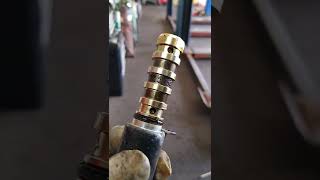
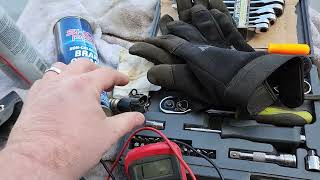
![How to Fix KIA P0011 Engine Code in 4 Minutes [1 DIY Method / Only $19.45]](https://img.youtube.com/vi/q6SXfKwM5Ak/mqdefault.jpg)
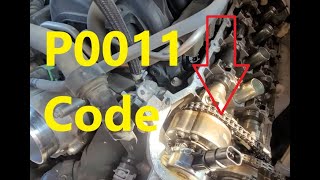
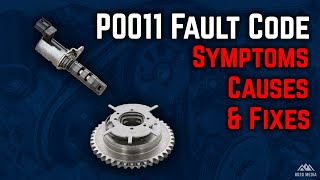
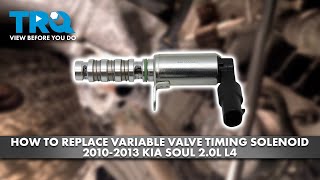

We Have This Part in Stock


The information in this article is provided for general reference and educational purposes only. Vehicle specifications, procedures, and part compatibility can vary by production date, trim level, and region. Always consult your vehicle's factory service manual and verify part numbers before purchasing or performing repairs. Safety-critical components such as airbags, seat belts, and braking systems should be installed by a qualified professional.
- Kia SOUL:
- 🎬 Helpful Videos
- 🛍️ Shop This Part
- What's Unique About the 2010-2017 Kia SOUL
- Diagnostic Flowchart
- Symptoms You May Notice
- Most Likely Causes
- Rare But Worth Checking
- Diagnosis Steps
- Parts You'll Likely Need
- Related Codes That Often Appear With This One
- Technical Service Bulletins (TSBs) & Recalls
- Platform-Specific Known Issues
- Mechanic-Grade Diagnostic Values
- Scan Tool Commands That Help
- Wiring & Ground Locations
- Real Owner Repair Stories
- OEM Part Supersession History
- Model Year Variations Within This Range
- 🎟️ Get 5% Off