

P0011 on 2012-2016 Chevrolet Sonic: Causes and Fixes for Camshaft Timing Issues
For a 2012-2016 Chevy Sonic, code P0011 is most often caused by a faulty intake camshaft position actuator solenoid or low/dirty engine oil. An oil change and/or replacing the solenoid is a common, relatively inexpensive DIY fix. Always check oil level and quality first before replacing parts.
- Always check your engine oil level and condition first; it's the simplest and a very common cause for P0011.
- The most likely failed part is the intake camshaft position actuator solenoid (part #12655420).
- A quick way to diagnose a bad solenoid is to swap the intake and exhaust solenoids and see if the code changes to P0014.
- It is strongly recommended to replace both intake and exhaust solenoids at the same time.
- If oil and solenoids don't fix the issue, the problem could be more serious, such as the timing belt/chain or the camshaft phaser itself, which requires more intensive labor.
What's Unique About the 2012-2016 Chevrolet SONIC

The Ecotec engines in the Sonic (both 1.8L and 1.4L Turbo) rely heavily on clean oil and proper oil pressure to operate the VVT system. These engines are known to be sensitive to oil maintenance, and the camshaft actuator solenoids are a very frequent failure point leading to P0011. Additionally, a specific TSB points to a unique black plastic oil sleeve between the camshaft and actuator that can be lost during repairs, causing this exact code.
Diagnostic Flowchart

Tap your situation to follow the diagnostic path that matches what you're seeing on this vehicle.
Symptoms You May Notice
- Check Engine Light is on
- Rough or erratic idle
- Engine stalling, especially when slowing down or stopping
- Reduced engine power and acceleration
- Increased fuel consumption
- Knocking, rattling, or clunking noises from the engine, sometimes just on startup
- Replacing the camshaft position *sensor* when the camshaft position actuator *solenoid* is the actual faulty part.
- Replacing timing components when the issue is simply low or dirty engine oil, or a clogged oil passage.
- Repeatedly replacing VVT solenoids when the root cause is a failing camshaft phaser (actuator gear) or a clogged oil passage.
Most Likely Causes


- Failed Intake Camshaft Position Actuator Solenoid 🔴 High Probability The solenoids on these Ecotec engines are a well-documented, common failure item. Internal seals can fail or the small mesh screens on the solenoid can become clogged with sludge, restricting oil flow. Some owners on forums report that using non-OEM solenoids can lead to the code returning quickly.
How to confirm: Swap the intake solenoid (closer to the firewall) with the exhaust solenoid (front of engine). Clear the codes and run the engine. If the code changes to P0014 (Exhaust Camshaft Position), the solenoid is bad. You can also test its resistance (should be 7-12 ohms). The bolt holding the solenoid requires an E8 Torx socket.
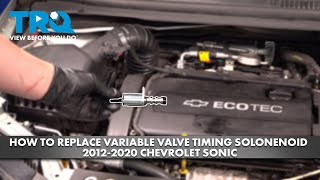
Typical fix: Replace the intake camshaft position actuator solenoid. 🎬 Watch: This step-by-step guide shows you how to replace the solenoid. It's recommended to replace both intake and exhaust solenoids at the same time as they are the same age and subject to the same conditions.
Est. part cost: $25-$75 - Low or Dirty Engine Oil 🔴 High Probability The VVT system is operated by oil pressure. If the oil is low, or if it's thick and sludgy from missed oil changes, it cannot operate the camshaft phasers correctly. Many owners on Reddit and forums report the code appearing when an oil change is due.
How to confirm: Check the oil level on the dipstick and inspect its condition. If it's low or looks like dark sludge, this is a likely cause. An oil change is the cheapest and easiest first step.
Typical fix: Perform an engine oil and filter change using the manufacturer-specified full synthetic oil viscosity (typically 5W-30). Some users suggest running an engine flush product like Seafoam or Liqui Moly to clean passages before the oil change.
Est. part cost: $30-$60 - Stretched Timing Belt (1.8L) or Timing Chain (1.4L) 🟡 Medium Probability The 1.8L engine uses a timing belt that requires replacement at regular intervals (typically around 100,000 miles). If neglected, it can stretch or jump a tooth. The 1.4L's timing chain can also stretch over time, especially with high mileage.
How to confirm: Requires removing the valve cover and timing cover to physically inspect the timing marks on the camshafts and crankshaft. This is a more advanced diagnostic step. A rattling noise on startup that goes away after a few seconds can be a sign of a failing timing component.
Typical fix: Replace the timing belt/chain, tensioners, and guides. On the 1.8L, the water pump is typically replaced at the same time. Some owners have replaced the timing belt and still had the P0011 code return, indicating other issues.
Est. part cost: $150-$400 - Failed Camshaft Phaser / Actuator ⚪ Low Probability The phaser is the mechanical gear on the end of the camshaft that actually adjusts the timing. It can become stuck, fail to lock at startup, or fail internally due to oil starvation or wear.
How to confirm: This is usually diagnosed after all other possibilities (oil, solenoids, timing) have been ruled out. A scan tool may show the desired vs. actual cam angle are not matching despite a working solenoid. A startup rattle is a strong indicator. Some owners have spent thousands replacing other parts before finding the phaser was the root cause.
Typical fix: Replace the intake camshaft phaser. This is a labor-intensive job that requires timing belt/chain removal.
Est. part cost: $100-$200
Rare But Worth Checking
- Missing Camshaft Actuator Oil Sleeve: According to GM TSB #PIP4543D, a unique black plastic oil sleeve fits between the camshaft and the actuator. This sleeve directs oil into the actuator. It can be easily lost or damaged during repairs like a cylinder head or cam actuator replacement, leading to codes P0011, P0014, P0016, or P0017. The sleeve is not sold separately and comes with a new actuator assembly.
- Clogged Oil Filter Housing Drainback Valve: Some owners on Sonic Owners Forum have found that a small, spring-loaded anti-drainback valve in the bottom of the oil filter housing can get stuck or clogged with debris. This causes low oil pressure at idle after the engine warms up, starving the VVT system and triggering P0011. One owner reported idle oil pressure jumping from 5 psi to 38 psi after cleaning the valve seat.
- Clogged Oil Flow Control Check Valve: On the 1.8L engine, there is a small oil check valve located behind the alternator. It can become clogged with sludge and restrict oil flow to the cylinder head and VVT system. This is difficult to access, requiring removal of the alternator. There are DIY methods documented on YouTube for removing the stuck valve. 🎬 Watch: How to clean the oil check valve to fix P0011.
- Failed Camshaft Position Sensor: While possible, this is less common than a solenoid failure. A failing sensor will often trigger other codes related to sensor circuit faults (like P0010 or P0016) and may cause no-start or long-crank conditions.
Diagnosis Steps
- Check the engine oil level and condition. Top up or change the oil and filter if necessary. Use the correct full synthetic viscosity oil (5W-30). This is the first and most critical step.
- Scan for any other trouble codes. Codes like P0010, P0016, or P0014 provide important clues.
- Inspect the wiring and connector for the intake camshaft position actuator solenoid for any damage or corrosion.
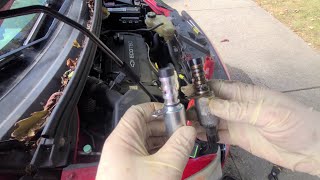
- A common and effective diagnostic trick is to swap the intake solenoid (rear, by firewall) with the identical exhaust solenoid (front). Clear the codes and run the engine. If the code returns as P0014, you have confirmed the solenoid is faulty. 🎬 See a mechanic diagnose and fix the P0011 code on a Sonic.
- If the code does not change, you can remove the solenoid and inspect its screens for metallic debris or sludge. Clean with brake cleaner and re-test.
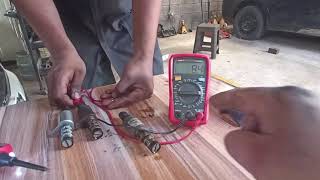
- Test the solenoid's resistance with a multimeter. It should be between 7-12 ohms.
- If solenoids and oil are good, the next step is to inspect the mechanical timing. This involves removing the valve cover and timing cover to verify the timing marks on the cams, phasers, and crank are aligned correctly. Listen for startup rattle which points to a bad phaser.
- If timing is correct, the issue may be with the camshaft phaser itself or a clogged oil passage, such as the oil filter housing drainback valve or the check valve behind the alternator.
Parts You'll Likely Need
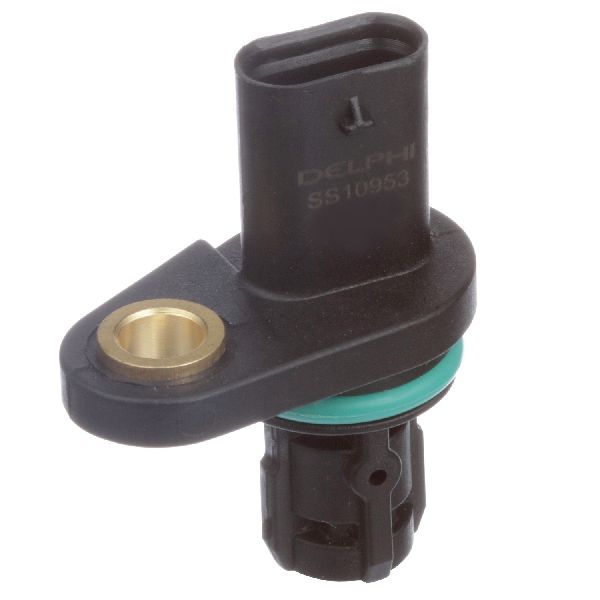
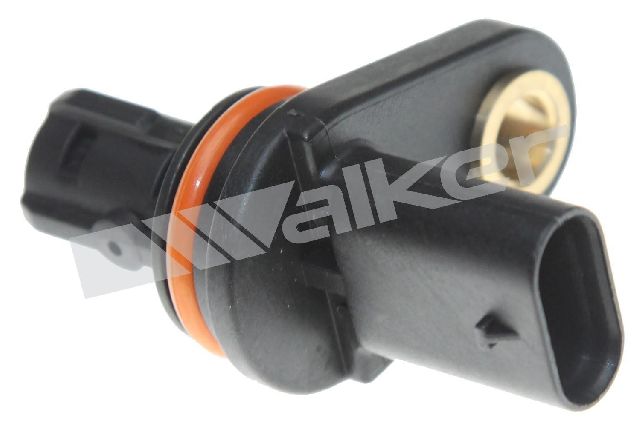
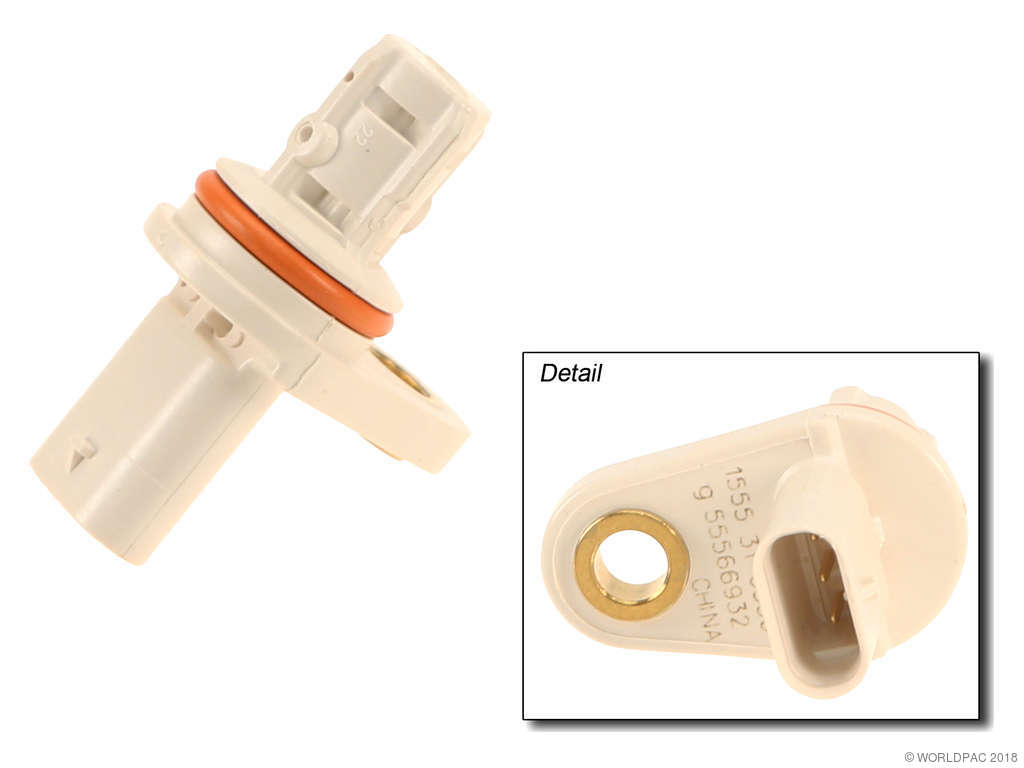
- Intake Camshaft Position Actuator Solenoid
(OEM #12655420 (Superseded by 12679099))— This is the most frequent cause of P0011 on the Sonic. It controls the oil flow that adjusts the intake camshaft timing.
Trusted brands: ACDelco (OEM), Delphi, Dorman
OEM price range: $40-$65
Aftermarket price range: $20-$45 - Exhaust Camshaft Position Actuator Solenoid
(OEM #12655421 (Superseded by 12679100))— It is highly recommended to replace both solenoids at the same time as they are the same age and subject to the same conditions.
Related Codes That Often Appear With This One
- P0014 — This is the corresponding code for the exhaust camshaft ('B' Camshaft). Since the solenoids are identical and fail similarly, it's common to see both codes if both solenoids are failing. It will also appear if the solenoids are swapped for diagnosis.
- P0016 / P0017 — These codes indicate a correlation problem between the crankshaft and camshaft(s). They often point to a more serious mechanical timing issue, like a stretched timing belt/chain, a jumped tooth, or a failing phaser.
- P0010 — This code points specifically to an electrical circuit fault for the intake camshaft actuator solenoid (e.g., open, short). If you see P0010 alongside P0011, it strongly suggests an issue with the solenoid's wiring, connector, or the solenoid itself.
Technical Service Bulletins (TSBs) & Recalls
- Bulletin #PIP4543D: Mentions that DTC P0011 can set after a repair involving camshaft actuators due to a missing plastic oil sleeve. This TSB applies to the Sonic, Cruze, Aveo, and Astra.
Platform-Specific Known Issues
- Owner complaints frequently mention P0011 causing rough running and stalling.
- One owner reported that even after a dealer replaced VVT actuators, solenoids, timing belt, and water pump, the P0011 code persisted, indicating complex diagnostic challenges. [NHTSA ODI #11449052]
- GM issued Technical Service Bulletin #PIP4543D regarding DTCs P0011, P0014, P0016, or P0017 setting after engine repairs. The cause is often a missing black plastic oil sleeve that fits between the camshaft actuator and the camshaft.
- A user on Sonic Owners Forum documented a year-long battle with P0011, spending over $2,500 on a new timing kit, gear, solenoids, and oil changes, with the code persistently returning, highlighting how difficult it can be to resolve.
- Multiple users on Reddit describe having the P0011 code for years, with it sometimes disappearing after an oil change only to return later, making it difficult to pass emissions tests.
Mechanic-Grade Diagnostic Values
- Camshaft Position Actuator Solenoid Resistance — expected: 7-13 Ohms. Failure: A reading outside this range, or an open/infinite reading, indicates a faulty solenoid coil.
- Scan Tool: Intake Camshaft Variance — expected: Close to 0 degrees at idle.. Failure: A consistent variance of several degrees (e.g., 4-5 degrees) indicates the actual cam position does not match the commanded position, even after an oil change and solenoid replacement, pointing towards a mechanical issue like a phaser or oil passage blockage.
- Camshaft Position Sensor Power Supply — expected: 5 Volts DC. Failure: Voltage significantly higher or lower than 5V points to a wiring or ECM issue, not the sensor itself.
Scan Tool Commands That Help
- GDS2 (GM Dealer Scan Tool): Camshaft Position Actuator Control — This bidirectional command allows a technician to manually command the intake and exhaust VVT solenoids to specific positions (e.g., 0 to 20 degrees) while the engine is running. This is used to verify if the solenoid, phaser, and oil passages are working correctly. If the camshaft angle (actual) does not match the commanded angle, it isolates the problem to the VVT system.
- GDS2 (GM Dealer Scan Tool): Freeze Frame/Failure Records — When P0011 is set, the ECM stores a snapshot of all engine parameters at the moment of the fault. Reviewing this data (engine speed, coolant temp, load, etc.) is critical to understand the conditions under which the fault occurs (e.g., only on cold start, only at high RPM), which helps narrow down the cause.
Wiring & Ground Locations
- G106 — Left rear of the engine block.. This is a primary ground path for the Engine Control Module (ECM). A poor connection here can cause erratic ECM behavior and incorrect readings from various engine sensors, potentially contributing to false codes.
- G105 — Left front of the engine compartment, behind the cooling fan relays.. This is a major engine compartment ground point. While less direct than the ECM ground, a loose or corroded G105 can introduce electrical noise and unstable sensor readings across the engine harness.
- Intake Camshaft Actuator Solenoid Connector — On the 1.8L engine, this is the solenoid located towards the firewall/rear of the engine.. This is the connector for the component most likely to be at fault. The pins are: Pin 1 for the control signal from the ECM and Pin 2 for the low reference/return. Testing for voltage and resistance happens at this connector.
Real Owner Repair Stories
- Reddit user in r/ChevySonic (2017 Chevrolet Sonic 1.4L Turbo, 56k miles) — Persistent P0011 code, rough idle, engine shaking when accelerating from a stop.
❌ Tried (didn't work) Replaced Camshaft Position Actuator (solenoid).
✅ What actually fixed it The dealer found the camshaft sprocket (phaser) was locked and not adjusting. Replacing the intake camshaft sprocket/phaser ultimately cleared the code. - Reddit user in r/MechanicAdvice (2017 Chevrolet Sonic LS, 1.8L, 68k miles) — Persistent P0011 code, high oil consumption.
❌ Tried (didn't work) Replaced cam actuator solenoids (five times)., Frequent oil changes., Replaced timing belt, cam seals, and water pump., Replaced VVT sprockets (phasers).
✅ What actually fixed it The user was told by a mechanic that the camshafts themselves were bent, possibly from aggressive driving (releasing clutch causing stalls or red-lining). The final conclusion was that the engine/transmission likely needed replacement or trade-in.
OEM Part Supersession History
12628347, 12655420→12679099— Standard part evolution, likely for improved durability or material changes.12628348, 12655421→12679100— Standard part evolution for the exhaust solenoid, mirroring the intake side.
Model Year Variations Within This Range
- 2012-2016: The 1.8L (LWE/LUW) engine uses a timing belt, while the 1.4L Turbo (LUV) engine uses a timing chain. This is a critical difference for diagnosis, as P0011 on a high-mileage 1.8L could point to a stretched/due timing belt, whereas on the 1.4L it would point to chain stretch or guide failure.
Helpful Videos
We Have This Part in Stock


The information in this article is provided for general reference and educational purposes only. Vehicle specifications, procedures, and part compatibility can vary by production date, trim level, and region. Always consult your vehicle's factory service manual and verify part numbers before purchasing or performing repairs. Safety-critical components such as airbags, seat belts, and braking systems should be installed by a qualified professional.
- Chevrolet SONIC:
- 🎬 Helpful Videos
- 🛍️ Shop This Part
- What's Unique About the 2012-2016 Chevrolet SONIC
- Diagnostic Flowchart
- Symptoms You May Notice
- Most Likely Causes
- Rare But Worth Checking
- Diagnosis Steps
- Parts You'll Likely Need
- Related Codes That Often Appear With This One
- Technical Service Bulletins (TSBs) & Recalls
- Platform-Specific Known Issues
- Mechanic-Grade Diagnostic Values
- Scan Tool Commands That Help
- Wiring & Ground Locations
- Real Owner Repair Stories
- OEM Part Supersession History
- Model Year Variations Within This Range
- 🎟️ Get 5% Off