

P0011 on 2007-2014 Chevrolet Impala: Causes and Fixes for Camshaft Timing Issues
For a 2007-2014 Impala, code P0011 is most often caused by low or dirty engine oil, or a faulty camshaft actuator solenoid. Start by checking your oil level and condition. If the oil is fine, replacing the Bank 1 intake camshaft actuator solenoid is the next logical step and a common, affordable DIY fix. On 3.6L engines (2012+), this code can also be an early warning of a stretched timing chain.
- P0011 on a Chevy Impala is almost always related to the engine's oiling system.
- Always check your engine oil level and condition first; it's the simplest and cheapest potential fix.
- The most common part to fail is the Bank 1 intake camshaft actuator solenoid, which is an accessible and affordable DIY replacement.
- If the code is accompanied by rattling noises, especially on a 3.6L V6 (2012-2014), be prepared for the possibility of a more serious timing chain problem.
- Do not replace the camshaft position sensor for this code; focus on the oil and the actuator solenoid first.
What's Unique About the 2007-2014 Chevrolet IMPALA

The 2007-2014 Impala range used several V6 engines (3.5L, 3.9L, and 3.6L from 2012-on). Across these engines, the VVT system is highly sensitive to oil pressure and cleanliness. GM issued multiple Technical Service Bulletins (TSBs) highlighting that low oil pressure or debris in the oil can clog the small screens on the camshaft actuator solenoids, causing this code. [PIP5167, PIP5064C, PIP5162] The 3.6L LFX engine (2012-2014) in particular can also be prone to timing chain stretch, which is a more serious potential cause that often presents with codes P0008 and P0017 as well.
Diagnostic Flowchart

Tap your situation to follow the diagnostic path that matches what you're seeing on this vehicle.
Generation note: This range covers the end of the 9th generation (2007-2013) and the first year of the 10th generation (2014). The 9th gen used 3.5L and 3.9L V6 engines until 2011, then switched to the 3.6L LFX V6 for 2012-2013. The 2014 10th gen Impala also used the 3.6L LFX V6. While the causes are similar, the 3.6L engine is more noted for timing chain issues. The 2014 model year is a split year, with the 'Impala Limited' being a carry-over of the 9th generation body style with the 3.6L LFX engine.
Symptoms You May Notice

- Rough or erratic idle
- Reduced engine power and sluggish acceleration
- Engine stalling, especially when coming to a stop or at idle
- Hard starting or sputtering on startup
- Decreased fuel economy
- Engine rattling, knocking, or grinding noises
- Replacing the camshaft position sensor. The P0011 code indicates a mechanical timing performance issue, not an electrical fault with the sensor itself. While a sensor can fail, it's not the primary cause for this specific code, and forum users report replacing it without success.
Most Likely Causes

- Low or Dirty Engine Oil 🔴 High Probability The VVT system is hydraulic and relies on clean oil at the correct pressure to function. GM TSBs for this platform specifically call out checking oil pressure and for debris. [PIP5167, PIP5064C, PIP5162] Neglecting oil changes leads to sludge that clogs the fine solenoid screens.
How to confirm: Check the engine oil dipstick for level and inspect the oil's color and consistency. If it's low, dark, or sludgy, it needs to be changed. This should always be the first step.
Typical fix: Perform an oil and filter change using the manufacturer-specified oil viscosity (typically 5W-30) that meets the GM Dexos specification.
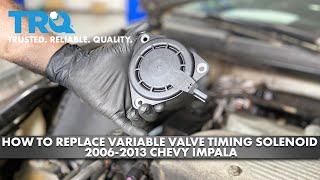
Est. part cost: $40-$80 - Faulty Camshaft Actuator Solenoid (VVT Solenoid) 🔴 High Probability Debris in the oil can clog the fine mesh screens on the solenoid, causing it to stick or respond slowly. It's a very common failure point on these GM engines, and a simple DIY replacement. 🎬 Watch: How to replace the VVT solenoid on 9th gen Impalas.
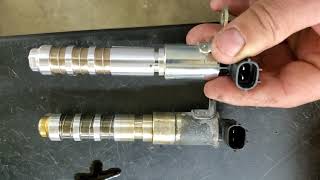
How to confirm: Remove the Bank 1 intake solenoid (located on the valve cover, firewall side). Inspect the screens for debris. A definitive test is to swap the intake solenoid with the exhaust solenoid on the same bank. If the code changes to P0014, the solenoid is faulty. Resistance should be between 8 and 13 Ohms.
Typical fix: Replace the Bank 1 intake camshaft actuator solenoid. It is often recommended to replace both the intake and exhaust solenoids at the same time, or even all four on the 3.6L engine.
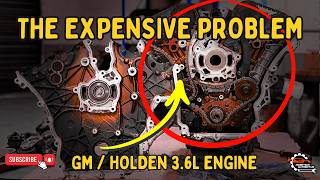
Est. part cost: $25-$60 per solenoid - Stretched Timing Chain or Worn Timing Components 🟡 Medium Probability The 3.6L LFX V6 engine (2012-2014 models) is known to develop timing chain issues, especially if oil changes are neglected. A stretched chain causes the camshaft timing to be out of sync with the crankshaft, which can trigger P0011, though it more commonly sets P0008 or P0017.
How to confirm: This is a complex diagnosis. It requires checking camshaft deviation angles with an advanced scan tool like a GM GDS2. A persistent P0011 after replacing oil and solenoids, especially if accompanied by rattling noises on startup, points strongly to a timing chain issue.
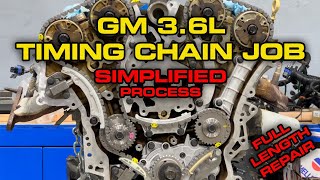
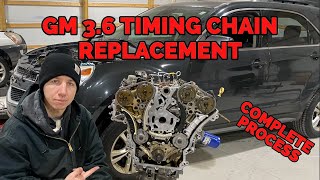
Typical fix: Replace all timing chains, tensioners, and guides with an updated OEM kit. This is a labor-intensive job, typically costing $2000-$4000 🎬 See a full walkthrough of the 3.6L timing chain replacement. at a professional shop.
Est. part cost: $300-$700 for a complete kit
Rare But Worth Checking
- Failed Camshaft Phaser: The phaser is the gear on the end of the camshaft that the solenoid controls. It can fail internally by getting stuck or leaking oil pressure, but this is much less common than a solenoid failure.
- Clogged Oil Passages: In cases of severe engine sludge, the oil passages leading to the VVT system can become blocked, starving the components of oil pressure. This usually indicates a history of poor maintenance and may require an engine flush or significant disassembly to clean.
- Incorrect Oil Filter: GM Service Bulletin #12-06-01-009G warns that using an oil filter with the wrong internal bypass pressure (e.g., 15 PSI instead of the specified 22 PSI for later models) can allow debris to bypass the filter and damage VVT components.
- Spun Camshaft Reluctor Wheel: On 3.6L engines, GM has noted in TSB #PIP4548C that the reluctor wheel, which the camshaft sensor reads, can spin on the camshaft itself. This causes a timing correlation code even if the timing chain and phaser are in perfect condition, as the sensor is getting a false reading. This requires camshaft replacement.
Diagnosis Steps
- Check the engine oil level and condition. Top off or change the oil and filter if necessary, using a full synthetic 5W-30 oil meeting the Dexos spec.
- Scan for any other DTCs to see if P0011 is paired with codes like P0014, P0300, or P0008.
- For a no-cost diagnostic, swap the Bank 1 intake solenoid with the Bank 1 exhaust solenoid. Clear the codes and drive. If the code changes to P0014, the solenoid is confirmed to be faulty.
- Locate the Bank 1 (firewall side) intake camshaft actuator solenoid. Unplug it and remove the single 10mm bolt holding it in place.
- Carefully remove the solenoid and inspect its screens for metallic debris or sludge. If dirty, replacement is highly recommended 🎬 Watch this quick guide on fixing the P0011 code. over cleaning for reliability.
- If the solenoid is clean or replacement does not fix the code, the next step is to verify engine oil pressure is within specification. TSB PIP5064C specifies for the 3.5L/3.9L engines: 30–45 PSI @ 1850 RPM. For the 3.6L, normal warm idle pressure can be as low as 20-30 PSI but should rise with RPM.
- If oil pressure is good and solenoids are new, the issue may be a stretched timing chain or a faulty camshaft phaser, which typically requires professional diagnosis with an advanced scan tool.
Parts You'll Likely Need
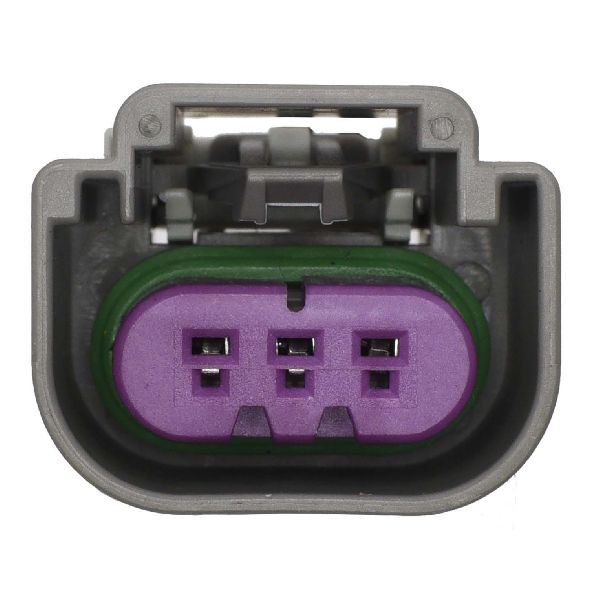
- Intake Camshaft Position Actuator Solenoid (Bank 1)
(OEM #12679099 (for 3.6L LFX), 12679099 (for 3.5L/3.9L))— This solenoid controls oil flow to the cam phaser and is the most common point of failure due to clogged screens or internal faults. It is specified as the fix in multiple TSBs.
Trusted brands: ACDelco (OEM), Delphi, Dorman
OEM price range: $40-$60
Aftermarket price range: $25-$45 - Exhaust Camshaft Position Actuator Solenoid (Bank 1)
(OEM #12655421 (for 3.6L LFX), 12628348 (for 3.5L/3.9L))— Often replaced as a pair with the intake solenoid, as it is subjected to the same conditions and has a similar failure rate.
Trusted brands: ACDelco (OEM), Delphi, Dorman
OEM price range: $40-$60
Aftermarket price range: $25-$45
Related Codes That Often Appear With This One
- P0014 — This is the corresponding code for the exhaust camshaft ('B') on the same bank (Bank 1). They often appear together as they are controlled by similar components and affected by the same oiling issues.
- P0300 — This is a 'Random/Multiple Cylinder Misfire' code. Incorrect camshaft timing disrupts the engine's combustion cycle, leading to misfires. TSBs PIP5167 and PIP5064C directly link P0011 with P0300.
- P0016 — This code indicates a 'Crankshaft Position - Camshaft Position Correlation' error. It can be triggered along with P0011 if the timing is off due to low oil pressure or a timing chain issue, as noted in TSB PIP5064C.
- P0008 — This code for 'Engine Position System Performance' on the 3.6L LFX engine is a strong indicator of a stretched timing chain. If you see P0011 alongside P0008, a timing chain issue is highly probable.
Technical Service Bulletins (TSBs) & Recalls
- PIP5167: Mentions P0011 with P0300, advises inspecting camshaft solenoid screens for debris.
- PIP5064C: Links P0011 with rough idle, P0300, and P0016, and points to checking engine oil pressure first.
- PIP5162: Advises removing and cleaning camshaft solenoid screens for P0011 and P0014 codes.
- PIP5096C: For 2012-2014 3.6L engines, suggests replacing the solenoid with an updated part (from a new supplier) if no other symptoms are present, to correct for internal clearances.
Platform-Specific Known Issues
- TSB PIP5167 and PIP5162 specifically advise technicians to inspect and clean the camshaft solenoid screens for debris when P0011 is present.
- TSB PIP5064C points to checking engine oil pressure as a primary diagnostic step, specifying 30-45 PSI at 1850 RPM for the 3.5L/3.9L engines.
- TSB PIP5096C notes that on some 2012+ models with the 3.6L LFX engine, P0011 with no other symptoms may be caused by an overly sensitive original solenoid. The fix is to replace it with an updated 'service' part from a different supplier and explicitly warns *not* to swap solenoids for diagnosis in this case.
Mechanic-Grade Diagnostic Values
- VVT (Camshaft Actuator) Solenoid Resistance — expected: 8 to 13 Ohms. Failure: A reading of infinite resistance (open circuit) or very low resistance (short circuit) indicates a failed solenoid.
- Engine Oil Pressure (3.6L LFX V6, warm idle) — expected: Approximately 20-30 PSI. Failure: Pressure consistently below 20 PSI at warm idle can starve the VVT phasers and trigger timing codes.
- Engine Oil Pressure (3.5L/3.9L V6, at 1850 RPM) — expected: 30-45 PSI. Failure: Pressure below this range at the specified RPM indicates an oil pressure issue that must be addressed.
Scan Tool Commands That Help
- GDS2 (GM Global Diagnostic System 2): Camshaft Position Actuator Solenoid Test — This bidirectional command allows a technician to manually activate and deactivate each VVT solenoid while the engine is running. It is used to verify the solenoid's mechanical function and confirm that oil pressure is being delivered to the phaser. A change in engine idle (or a stall) when commanded ON confirms the circuit and solenoid are working.
- GDS2 (GM Global Diagnostic System 2): Camshaft Position Actuator Variance (Live Data) — This data parameter shows the difference between the desired and actual camshaft position in degrees. It is the primary data point the ECM uses to set codes like P0011. A deviation of more than a few degrees at idle or steady RPM indicates a problem.
Real Owner Repair Stories
- Reddit user (Unknown year, GM vehicle with P0011) — Persistent P0011 code for two years.
❌ Tried (didn't work) Using Seafoam in the crankcase., Performing an engine flush.
✅ What actually fixed it The ultimate cause was a bad timing chain. - 2CarPros Forum User (2013 Chevrolet Impala, 3.6L V6, 109,545 miles) — P0011 code, grinding noise, sluggish performance.
❌ Tried (didn't work) Replaced the Bank 1 intake solenoid (P0011).
✅ What actually fixed it After replacing the intake solenoid, the car then set both P0011 and P0014 and the rattling noise became more frequent. This strongly suggests the initial problem was not the solenoid but a more significant underlying issue like a stretched timing chain or failing tensioners affecting both cams. The user did not post the final resolution, but the progression of symptoms points away from a simple solenoid fix.
OEM Part Supersession History
12628347 (also 12578517, 12646783, 12655420)→12679099— Standard part evolution for improved reliability and performance. TSB PIP5096C specifically calls for using a new 'service' valve from a different supplier to correct clearance issues in some 3.6L engines, which this new part number represents.
Heads up: TSB PIP5096C warns technicians *not* to simply swap solenoids from another location for diagnosis on affected 2012+ 3.6L engines, as the original part may be overly sensitive and the issue requires the updated service part.
Model Year Variations Within This Range
- 2012-2014 (3.6L LFX Engine): These models may be subject to TSB PIP5096C, where a P0011 code without other symptoms can be caused by an overly sensitive original solenoid. The fix is to replace the solenoid with an updated part, not just swap it with another.
- 2014: The 2014 model year is a split year. The 'Impala Limited' is a fleet model that is a direct carry-over of the 2013 ninth-generation body style and its 3.6L LFX V6. The all-new tenth-generation 2014 Impala also uses the 3.6L LFX. Diagnostics for this code are identical for both.
- 2007-2011 (3.5L & 3.9L Engines): These earlier engines are not known for the timing chain stretch issues common on the later 3.6L V6. For these models, P0011 is more exclusively linked to oil pressure/quality and faulty VVT solenoids.
Helpful Videos

We Have This Part in Stock


The information in this article is provided for general reference and educational purposes only. Vehicle specifications, procedures, and part compatibility can vary by production date, trim level, and region. Always consult your vehicle's factory service manual and verify part numbers before purchasing or performing repairs. Safety-critical components such as airbags, seat belts, and braking systems should be installed by a qualified professional.
- Chevrolet IMPALA:
- 🎬 Helpful Videos
- 🛍️ Shop This Part
- What's Unique About the 2007-2014 Chevrolet IMPALA
- Diagnostic Flowchart
- Symptoms You May Notice
- Most Likely Causes
- Rare But Worth Checking
- Diagnosis Steps
- Parts You'll Likely Need
- Related Codes That Often Appear With This One
- Technical Service Bulletins (TSBs) & Recalls
- Platform-Specific Known Issues
- Mechanic-Grade Diagnostic Values
- Scan Tool Commands That Help
- Real Owner Repair Stories
- OEM Part Supersession History
- Model Year Variations Within This Range
- 🎟️ Get 5% Off