

P0011 on 2007-2014 Chevrolet Corvette: Causes, Fixes & VVT Issues
For a 2007-2014 Corvette, code P0011 is most often caused by a faulty intake camshaft position actuator solenoid or low, dirty, or incorrect viscosity engine oil. Replacing the solenoid (GM Part #12681018 for C6 LS3, #12687043 for C7 LT1) is a common and relatively inexpensive fix.
- P0011 on your Corvette is a serious code that can cause stalling or prevent the car from starting.
- Before buying any parts, check your engine oil level and condition. A simple oil change can sometimes fix the issue.
- The most likely failed part is the Bank 1 intake camshaft position actuator solenoid (GM Part #12655420).
- Diagnosing this issue is straightforward for a DIYer: swap the intake solenoids between Bank 1 and Bank 2 to see if the code follows the part.
- Do not ignore this code. What starts as a minor annoyance can leave you stranded.
What's Unique About the 2007-2014 Chevrolet CORVETTE
On the LS and LT series V8 engines in this generation of Corvette, the VVT system is highly dependent on clean oil and correct oil pressure to function. As confirmed by multiple GM Technical Service Bulletins, the camshaft position actuator solenoid is a known weak point that can stick or fail, leading directly to code P0011 and causing significant drivability issues like stalling or a no-start condition.
Diagnostic Flowchart
Tap your situation to follow the diagnostic path that matches what you're seeing on this vehicle.
Generation note: This range covers two Corvette generations: the C6 (2007-2013) and the first year of the C7 (2014). The C6 models use LS2, LS3, or LS7 engines, while the 2014 C7 introduced the LT1 engine. While all have VVT systems, the specific part numbers for solenoids and sensors may differ. However, the fundamental causes of P0011 (oil issues, faulty solenoids) are common across both generations. A 2017 Grand Sport owner on CorvetteForum reported this exact code with no other symptoms.
Symptoms You May Notice
- Check Engine Light is on
- Engine stalling
- Crank but no start condition
- Rough or unstable idle
- Reduced engine power
- Poor fuel economy
- Rattling, ticking, or knocking noise from the engine
- Hesitation during acceleration
- Replacing the camshaft position *sensor* when the actual fault is with the camshaft position actuator *solenoid*.
- Replacing timing components before thoroughly diagnosing the VVT solenoids and checking oil pressure and quality.
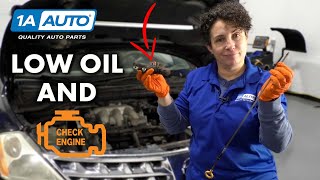
- Assuming a major mechanical failure before performing an oil and filter change with the correct viscosity oil, which often resolves the issue. 🎬 See how an oil change can provide a free fix for P0011.
Most Likely Causes
- Faulty Camshaft Position Actuator Solenoid (Bank 1 Intake) 🔴 High Probability This is a well-documented issue. TSB #PIP5130K directly states the solenoid may be sticking or binding, causing this code. It is the most common point of failure for VVT-related codes on these engines.
How to confirm: Test the solenoid's resistance with a multimeter (typically 6-12 ohms). Apply 12V to the removed solenoid; a healthy part will make an audible 'click'. A common diagnostic trick is to swap the Bank 1 intake solenoid with the Bank 2 intake solenoid, clear the codes, and see if the fault moves to Bank 2 (e.g., code P0021).
Typical fix: Replace the Bank 1 intake camshaft position actuator solenoid.
Est. part cost: $40-$70 - Low, Dirty, or Incorrect Viscosity Engine Oil 🔴 High Probability The VVT system uses pressurized engine oil as hydraulic fluid. If the oil is low, contaminated with sludge, or the wrong viscosity (too thick), it cannot flow properly through the solenoid's small passages to actuate the cam phaser. LS engines have tight tolerances and using an oil thicker than the recommended 5W-30 or 0W-40 can starve the top end of the engine during cold starts, directly causing this code.
How to confirm: Check the engine oil dipstick for level and inspect the oil's condition. If it is dark, sludgy, or below the 'add' line, this is a likely cause. If the code appeared shortly after an oil change, verify the receipt or service record to ensure the correct oil viscosity was used.
Typical fix: Perform an oil and filter change using a high-quality synthetic oil meeting the manufacturer's specification (e.g., Mobil 1 5W-30 meeting the Dexos standard). In cases of heavy sludge, using an engine flush product before the oil change may help clear passages.
Est. part cost: $60-$120 - Low Oil Pressure 🟡 Medium Probability Beyond just low oil level, mechanical issues like a failing oil pump or a worn pickup tube O-ring can cause system-wide low oil pressure, starving the VVT system. TSB #PIP5258A specifically advises checking oil pressure if other diagnostics fail.
How to confirm: Connect a mechanical oil pressure gauge to the engine and verify that the pressure is within the factory specifications at idle and various RPMs.
Typical fix: Diagnose and repair the root cause of the low oil pressure, which could involve replacing the oil pump or addressing other engine wear issues.
Est. part cost: $200-$1500+ - Faulty Camshaft Position Sensor (Bank 1 Intake) ⚪ Low Probability While less common than a solenoid failure, the sensor that reads the camshaft's position can fail and send incorrect data to the ECM, triggering the code.
How to confirm: Use a scan tool to monitor the live data from the cam sensor. If the readings are erratic or do not change with RPM, the sensor may be faulty. Swapping it with the Bank 2 sensor is also a valid diagnostic step.
Typical fix: Replace the Bank 1 intake camshaft position sensor.
Est. part cost: $25-$50
Rare But Worth Checking
- Stretched Timing Chain or Faulty Cam Phaser: On higher mileage engines, a stretched timing chain can cause the base cam timing to be off, which the VVT system cannot compensate for. A failing cam phaser (the gear itself) can also get stuck in an over-advanced position due to internal debris or failure.
- Wiring Harness Issues: A damaged wire or loose connection at the camshaft position actuator solenoid can cause intermittent operation and trigger this code. Inspect the connector and wiring for any signs of damage, corrosion, or being too close to moving parts like belts.
Diagnosis Steps
- Check the engine oil level and condition. If low, dirty, or if the wrong viscosity was recently added, perform an oil and filter change with the correct oil type (e.g., full synthetic 5W-30) and clear the code.
- Scan for any other accompanying trouble codes. Address codes for sensors or circuits first.
- Inspect the wiring and connector for the Bank 1 intake camshaft position actuator solenoid for any damage or corrosion.
- Using a scan tool, monitor the desired vs. actual camshaft position for Bank 1. A large, persistent discrepancy confirms the fault.
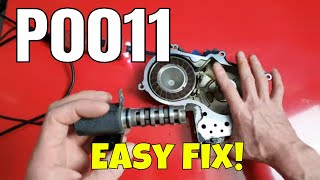
- Swap the Bank 1 intake solenoid with the Bank 2 intake solenoid. Clear the codes and drive the vehicle. If the code changes to P0021 (Bank 2), the original solenoid is faulty. This is a highly effective diagnostic step. 🎬 Watch: How to diagnose VVT solenoids and clear rough running codes.
- If the code does not move, test the original solenoid. Remove it, and apply a 12V source to its terminals. You should hear a distinct 'click' as the internal plunger moves. No click means the solenoid is seized.
- If the solenoid and oil are good, check engine oil pressure with a mechanical gauge to rule out a low-pressure condition.
- If all else fails, investigate the camshaft position sensor and, in rare cases, the mechanical timing components (chain, phaser).
Parts You'll Likely Need
- Camshaft Position Actuator Solenoid (VVT Solenoid)
(OEM #12681018)— This is the most frequent point of failure for code P0011 on this vehicle, as confirmed by GM TSBs and extensive owner reports. It is often called an 'Oil Control Valve' (OCV). This part is for 2007-2013 C6 models with LS-family engines.
Trusted brands: ACDelco (GM Genuine Parts)
OEM price range: $40-$70
Aftermarket price range: $25-$50 - Camshaft Position Actuator Solenoid (VVT Solenoid) for LT1
(OEM #12687043)— For the 2014 Corvette with the Gen V LT1 engine, a different VVT solenoid is used. This part is not interchangeable with the LS-series solenoid.
Trusted brands: ACDelco (GM Genuine Parts)
OEM price range: $50-$80
Aftermarket price range: $30-$60 - VVT Solenoid Seal (for 2014+ LT1 Engine)
(OEM #12623437)— For the 2014 Corvette with the Gen V LT1 engine, this seal is critical for preventing oil leaks around the VVT solenoid and should be replaced at the same time as the solenoid.
Trusted brands: ACDelco (GM Genuine Parts)
OEM price range: $5-$15
Aftermarket price range: $3-$10
Related Codes That Often Appear With This One
- P00C6 — This code is specifically mentioned alongside P0011 in multiple TSBs (#PIP5130K, #PIE0359A) for crank/no-start conditions, indicating they share a common root cause in the VVT system.
- P0010 — This code indicates a circuit malfunction for the Bank 1 intake solenoid. If you see P0010 with P0011, it points more strongly to an electrical issue with the solenoid or its wiring rather than a mechanical sticking problem.
- P0014 — This is the corresponding code for the exhaust camshaft on Bank 1 being over-advanced. Seeing them together could point to a more systemic issue like oil pressure or a timing problem affecting the entire bank.
Technical Service Bulletins (TSBs) & Recalls
- PIP5130K: Intermittent crank no start with DTC P0011 or P00C6.
- PIP5258A: Service Engine Soon lamp on with DTC P0011.
- PIE0359A: Engineering information request for vehicles with crank no start or stalling with DTC P0011.
- PIE0359: Initial engineering information request for crank no start with DTC P0011.
- PIP5130D: Earlier version of TSB on diagnos
Platform-Specific Known Issues
- TSB #PIP5130K: Specifically calls out a sticking or binding Camshaft Position Actuator Solenoid Valve as the cause for P0011 and intermittent crank-no-start conditions.
- TSB #PIP5258A: Advises technicians to check oil pressure with a mechanical gauge if standard diagnostics for P0011 do not resolve the issue, indicating that low oil pressure is a known, albeit less common, cause.
- TSB #PIE0359A / #PIE0359: GM issued these bulletins to gather information from the field about vehicles stalling or having a crank-no-start issue with code P0011, highlighting the severity and frequency of the symptom.
Mechanic-Grade Diagnostic Values
- Camshaft Position Actuator Solenoid Resistance — expected: 8 to 12 ohms. Failure: A reading significantly outside this range (open or shorted) indicates a faulty solenoid.
- Engine Oil Pressure (Hot Idle) — expected: 25-35 PSI. Failure: Pressure below 20 PSI at hot idle is a strong indicator of a lubrication problem that will affect the VVT system.
- Engine Oil Pressure (at 2000 RPM, Hot) — expected: 40-60 PSI. Failure: Pressure that does not increase significantly with RPM points to a weak oil pump or other mechanical issue.
- Scan Tool Live Data: Camshaft Position Variance (Bank 1) — expected: ~0 degrees at idle. Failure: A consistent, significant variance between the commanded and actual camshaft position (e.g., >8 degrees) confirms a performance fault.
Hidden / Shadow Codes Worth Checking
- Freeze Frame / Failure Records: While not a 'hidden code,' GM's GDS2 software provides extensive Freeze Frame and Failure Records for DTCs. This data captures a snapshot of all engine parameters (RPM, oil temp, engine load, etc.) at the exact moment the P0011 code was set, which is invaluable for diagnosing intermittent issues. (see via GM GDS2 or equivalent professional-grade scan tool.)
Scan Tool Commands That Help
- GM GDS2 / Tech2Win: Camshaft Position Actuator Solenoid Test — This is a bidirectional control found under the Engine Control Module (ECM) special functions. It allows the technician to command the solenoid to a specific duty cycle (e.g., 25%, 50%) and observe if the actual cam position on the live data screen responds accordingly. This directly tests the solenoid, wiring, and hydraulic response of the cam phaser, confirming if the solenoid is stuck or if there's a hydraulic blockage.
Wiring & Ground Locations
- G105 / G106 (C6) — On the frame rails in the engine bay, near the front of the vehicle.. These are primary grounds for the Engine Control Module (ECM). A loose or corroded connection here can cause erratic ECM behavior, including incorrect readings from sensors or faulty commands to actuators like the VVT solenoid.
- G103 / G104 (C7) — G103 is on the right front of the engine block; G104 is on the left front of the engine block.. These are the main engine block grounds for the 2014+ LT1 engine. A poor connection can disrupt the sensitive sensor signals and actuator commands managed by the ECM for the VVT system.
- VVT Solenoid Connector — Front of the engine, on the timing cover, inserting into the VVT solenoid.. This 2-pin connector provides the ground reference and the pulse-width modulated 12V signal from the ECM. Check for oil contamination, damaged pins, or a loose connection, which would cause a P0010 (circuit code) but could also lead to the P0011 performance code.
Real Owner Repair Stories
- CorvetteForum User (2014 Corvette Stingray (C7)) — Check Engine Light with code P0011.
❌ Tried (didn't work) Dealer replaced the VVT solenoid, but the code returned.
✅ What actually fixed it The owner insisted the dealer perform a mechanical oil pressure test. The test revealed low oil pressure caused by a failing oil pump. Replacing the oil pump permanently resolved the P0011 code. - CorvetteForum User (2009 Corvette (C6)) — P0011 code and rough running.
❌ Tried (didn't work) Performing an oil change., Replacing the camshaft position *sensor*.
✅ What actually fixed it Replacing the correct part, the camshaft position actuator *solenoid* (VVT solenoid), finally fixed the issue. This highlights the common misdiagnosis between the sensor and the solenoid.
When the Usual Fixes Don't Work
- In several documented cases from Corvette forums, owners have replaced the VVT solenoid (the most common fix) only to have the P0011 code return. The ultimate cause was then traced back to low oil pressure from a failing oil pump. This contradicts the idea that the solenoid is always the root cause and reinforces the guidance in TSB #PIP5258A to check mechanical oil pressure when initial electronic diagnostics fail.
OEM Part Supersession History
12628347, 12655420→12681018— Likely design improvements for reliability and to prevent sticking, which is the primary failure mode.12636175→12687043— Design revision for the Gen V LT1 engine's VVT system.
Heads up: This part is for LT-family engines and is not compatible with LS engines.
Model Year Variations Within This Range
- 2007-2013 (C6): These models use the Gen IV LS-family engines (e.g., LS3). They use VVT solenoid part number 12681018. The VVT system is effective but less advanced than the subsequent generation.
- 2014 (C7): The 2014 model introduced the Gen V LT1 engine. This engine features a more advanced continuous VVT system for a flatter torque curve. It uses a different VVT solenoid (part number 12687043) and seal, which are not interchangeable with the C6 parts.
Helpful Videos
Used OEM Parts in Stock
New Aftermarket Parts Available


The information in this article is provided for general reference and educational purposes only. Vehicle specifications, procedures, and part compatibility can vary by production date, trim level, and region. Always consult your vehicle's factory service manual and verify part numbers before purchasing or performing repairs. Safety-critical components such as airbags, seat belts, and braking systems should be installed by a qualified professional.
- Chevrolet CORVETTE:
- 🎬 Helpful Videos
- 🛍️ Shop This Part
- What's Unique About the 2007-2014 Chevrolet CORVETTE
- Diagnostic Flowchart
- Symptoms You May Notice
- Most Likely Causes
- Rare But Worth Checking
- Diagnosis Steps
- Parts You'll Likely Need
- Related Codes That Often Appear With This One
- Technical Service Bulletins (TSBs) & Recalls
- Platform-Specific Known Issues
- Mechanic-Grade Diagnostic Values
- Hidden / Shadow Codes Worth Checking
- Scan Tool Commands That Help
- Wiring & Ground Locations
- Real Owner Repair Stories
- When the Usual Fixes Don't Work
- OEM Part Supersession History
- Model Year Variations Within This Range
- 🎟️ Get 5% Off