

P0011 on 2011-2018 Chevrolet Camaro: Causes for Over-Advanced Camshaft Timing
On a 2011-2018 Camaro, code P0011 is most often caused by a faulty camshaft position actuator solenoid, which is an affordable and accessible part to replace. Before replacing parts, always check for low or dirty engine oil, as the VVT system relies on clean oil and proper pressure to function. In some V6 models, a rattling noise accompanying the code could indicate a more serious stretched timing chain.
- Always check your engine oil level and condition first; it's the simplest fix and crucial for the VVT system.
- The most likely part to fail is the Bank 1 (passenger side) intake camshaft position actuator solenoid.
- A simple diagnostic is to swap the intake and exhaust solenoids on Bank 1 to see if the code follows the part (changing to P0014).
- Be aware of the specific TSBs for this vehicle, which point to known issues like sticking solenoids and chafed wiring harnesses.
- If the problem persists after addressing oil and solenoids, the issue could be a more serious mechanical problem like a stretched timing chain, especially on V6 models.
What's Unique About the 2011-2018 Chevrolet CAMARO

The 2011-2018 Camaro, particularly V6 models with the 3.6L engine (LLT and LFX), can be susceptible to timing-related issues. While P0011 often points to a simple solenoid failure, it can sometimes be an early indicator of a more serious timing chain problem, a known issue for this engine family that some owners have reported. Additionally, several Technical Service Bulletins (TSBs) from Chevrolet highlight specific, documented causes for this code, including sticking solenoids and chafed wiring harnesses, making diagnosis more direct than on other vehicles.
Diagnostic Flowchart

Tap your situation to follow the diagnostic path that matches what you're seeing on this vehicle.
Generation note: This range covers two Camaro generations: the end of the 5th Gen (2011-2015) and the start of the 6th Gen (2016-2018). The 5th Gen V6 used the LLT and LFX 3.6L engines, while the 6th Gen introduced the LGX 3.6L V6. V8 models include the LS3/L99 (5th Gen) and the LT1 (6th Gen). While the causes of P0011 are similar, part numbers for sensors and solenoids differ between these engines. For example, the L99 and LT1 V8s use VVT, but the LS3 V8 (manual transmission 5th Gen) does not have VVT and should not set this code unless there are major mechanical timing issues after modifications.
Symptoms You May Notice
- Check Engine Light is on
- Engine runs rough or has an unstable idle
- Difficulty starting the engine or a crank-no-start condition
- Engine stalling, particularly at stop signs
- Reduced engine power and poor, sluggish acceleration
- Decreased fuel economy
- Engine making rattling or ticking noises, especially on startup or when flooring it
- Replacing the camshaft position *sensor* when the issue is with the camshaft position actuator *solenoid*. The sensor reads the position, but the solenoid controls the oil flow to change the position. While a sensor can fail, the solenoid is the more frequent culprit for this code.
Most Likely Causes

- Faulty Camshaft Position Actuator Solenoid 🔴 High Probability A manufacturer TSB specifically identifies sticking or binding of this solenoid as a direct cause for P0011. It's a common failure point due to contamination or debris from engine oil clogging the internal screens.
How to confirm: Check for a clean electrical connection. A scan tool can command the solenoid on and off to test its response. A common DIY method is to swap the intake solenoid with the exhaust solenoid on Bank 1 (they are often identical parts) and see if the code changes to P0014 (exhaust camshaft timing). If the code moves, the solenoid is bad.
Typical fix: Replace the Bank 1 intake camshaft position actuator solenoid. This is a relatively simple repair, often requiring only a 10mm socket.
Est. part cost: $25-$60 - Low or Dirty Engine Oil 🟡 Medium Probability The Variable Valve Timing (VVT) system is hydraulic and uses engine oil pressure to adjust cam timing. If the oil is low, old, the wrong viscosity, or has broken down, the solenoids and phasers cannot operate correctly. This is a very common trigger for VVT-related codes across all GM platforms.
How to confirm: Check the engine oil level on the dipstick and inspect its condition. If it's dark, gritty, or below the 'add' line, it needs to be changed. Many owners report fixing the code with a simple oil and filter change.
Typical fix: Perform an oil and filter change using a full synthetic oil that meets GM's dexos specification.
Est. part cost: $50-$100 - Chafed Wiring Harness ⚪ Low Probability TSB #PIP5553A points to a specific issue where a wiring jumper harness can chafe at the X154 connector bolt, causing a short and triggering P0011 along with other codes.
How to confirm: Visually inspect the wiring harness near the X154 connector for any signs of rubbing, exposed wires, or damage. This issue often presents with a cluster of other electrical codes.
Typical fix: Repair the damaged section of the wiring harness and secure it away from the point of friction.
Est. part cost: $5-$50 for repair materials
Rare But Worth Checking
- Stretched Timing Chain: While less common for just a P0011 code, the 3.6L V6 engines (especially the earlier LLT) are known for premature timing chain wear. A Reddit user with a 2012 V6 confirmed their P0011 code, which was accompanied by a rattle, was caused by a stretched timing chain requiring replacement. This is a more serious mechanical problem that usually presents with other codes like P0008, P0017, or P0018, but can't be ruled out if other fixes fail.
- Failed Camshaft Phaser: The phaser is the mechanical gear that the solenoid controls. It can fail mechanically or become clogged with sludge, preventing it from adjusting timing correctly.
- Incorrect Camshaft Installed or Timed: TSB #PIP5115 warns that if the code appears after a camshaft replacement, the wrong part may have been installed. Forum users have also reported this code appearing after a cam swap if the timing marks were not perfectly aligned or if VVT was deleted without a proper corresponding tune.
Diagnosis Steps
- Check Engine Oil: Verify the oil level is correct and the oil is clean. If low or dirty, perform an oil change with the correct viscosity oil (meeting dexos spec) and a new filter, then clear the code.
- Inspect Electrical Connector: Check the wiring connector on the Bank 1 intake camshaft actuator solenoid for a secure connection, corrosion, or damage.
- Test the Solenoid (Solenoid Swap): The easiest DIY test is to swap the intake and exhaust solenoids on Bank 1. They are located on the front of the passenger-side cylinder head. Clear the codes and drive the car. If the code changes to P0014 (Exhaust Camshaft Position Timing Over-Advanced), the solenoid is confirmed to be faulty and needs replacement.
- Inspect Wiring Harness: Per TSB #PIP5553A, inspect the wiring harness near the X154 connector for any signs of chafing or damage, especially if multiple electrical codes are present.
- Professional Diagnosis: If the above steps do not resolve the issue, the problem may be a faulty camshaft phaser or a stretched timing chain. These require more advanced diagnostics (like checking timing marks and camshaft end play) and are best left to a professional mechanic.
Parts You'll Likely Need
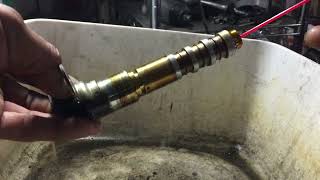
- Camshaft Position Actuator Solenoid (VVT Solenoid)
(OEM #12679099 (Supersedes 12655420 for many applications))— This solenoid is the most common point of failure for code P0011, as identified by both common knowledge and a specific manufacturer TSB. It gets stuck or clogged, preventing proper oil flow. Part number 12655420 was common but has been superseded by 12679099 in many GM systems. Always verify the correct part for your specific engine (V6/V8) and year.
Trusted brands: ACDelco, Delphi
OEM price range: $40-$60
Aftermarket price range: $25-$45
Related Codes That Often Appear With This One
- P0014 — This is the corresponding code for the exhaust camshaft on Bank 1. If you swap a faulty intake solenoid with the exhaust solenoid for diagnosis, P0011 will be replaced by P0014.
- P0021 — This is the equivalent intake camshaft code (P0011) but for Bank 2 (driver's side). Seeing both codes together strongly suggests a systemic problem like low/dirty oil affecting the whole engine.
- P0300 — Random Misfire. Incorrect camshaft timing disrupts the air/fuel mixture and ignition timing, which can lead to misfires across multiple cylinders.
- P06DA, P0340, P0341, P0335 — TSB #PIP5553A notes that a chafed wiring harness can cause P0011 along with these other circuit and sensor-related codes, indicating a shared electrical fault.
Technical Service Bulletins (TSBs) & Recalls
- PIP5130K: Intermittent crank no start with DTC P0011, pointing to a sticking camshaft position actuator solenoid.
- PIE0359A: Engineering bulletin regarding stalling or crank-no-start conditions with DTC P0011.
- PIP5115: Preliminary information regarding P0011 after camshaft replacement due to incorrect parts.
- PIP5553A: Communication regarding a chafed wiring harness causing P0011 and other electrical DTCs.
Platform-Specific Known Issues

- TSB #PIP5130K: Notes that an intermittent crank-no-start condition with P0011 can be caused by a sticking Camshaft Position Actuator Solenoid Valve. The diagnostic procedure involves using a scan tool to cycle the solenoid to see if it frees up.
- TSB #PIP5553A: Warns of a potential for a chafed wiring harness at the X154 connector bolt, which can cause P0011 and a variety of other electrical DTCs.
- TSB #PIP5115: Provides guidance for technicians who encounter P0011 after a camshaft replacement, advising them to verify the correct camshaft part number was used.
- 3.6L V6 Timing Chains: The V6 engines, particularly the LLT used in 2010-2011 models, have a known history of stretched timing chains that can cause P0011, often with an associated engine rattle.
Mechanic-Grade Diagnostic Values
- VVT Solenoid (Camshaft Position Actuator) Resistance — expected: 8 to 13 Ohms. Failure: A reading that is out of specification, or a reading that fluctuates wildly when wiggling the connector, indicates a bad solenoid.
- Scan Tool Data: Desired vs. Actual Camshaft Position Angle — expected: The actual angle should closely follow the desired angle commanded by the ECM.. Failure: A significant, persistent deviation between the desired and actual angle indicates a problem. If the ECM commands a change and the actual angle is slow to respond or doesn't respond at all, it points to a mechanical or hydraulic issue (solenoid, phaser, oil pressure).
Scan Tool Commands That Help
- GDS2 (GM Dealer Tool): Camshaft Position Actuator Control — A technician can use this bidirectional command to manually activate the Bank 1 intake solenoid while the engine is running at idle. If the engine stumbles, stalls, or runs rough, it indicates the solenoid is activating and the oil passages are likely clear. If there is no change in engine operation, it confirms a faulty solenoid, a blockage in an oil passage, or a wiring issue.
Wiring & Ground Locations

- Bank 1 Camshaft Actuator Solenoids — On V6 and V8 engines, Bank 1 is the passenger side of the engine. The intake and exhaust solenoids are located on the front of the cylinder head.. Correctly identifying Bank 1 is the first step in diagnosing P0011, as this code specifically refers to the intake camshaft on that bank.
- Camshaft Position Actuator Solenoid Connector — This is the 2-wire electrical connector that plugs into the solenoid. On many GM engines, the intake solenoid has a gray connector and the exhaust has a black one. The wires are typically brown and tan.. Knowing the wire colors and connector location is essential for performing resistance and voltage tests directly at the component.
Real Owner Repair Stories
- Camaro5 Forum (2013 Camaro SS (L99 to LS3 conversion)) — Car died at a stop sign twice and had difficulty restarting immediately after a cam swap. Threw a P0011 code.
❌ Tried (didn't work) The owner was certain the mechanical timing was correct., The tuner confirmed VVT was disabled in the tune but did not initially tune out the related DTCs.
✅ What actually fixed it The issue was determined to be in the tune. After a VVT-delete and cam swap, the related diagnostic codes must also be set to 'Do Not Report' in the tune to prevent the ECM from flagging a fault. - Camaro6 Forum (2017 Camaro V6 (LGX)) — Check Engine Light with a P0014 code (exhaust side equivalent of P0011). No noticeable driveability issues.
❌ Tried (didn't work) The code would turn off and on intermittently over a 6,000-mile trip.
✅ What actually fixed it The owner replaced the Bank 1 exhaust camshaft position actuator solenoid. The post is valuable because the owner first disconnected the driver's side (Bank 2) solenoid and rescanned, which generated an 'open circuit bank 2' code, confirming that Bank 1 is on the passenger side. The Bank 1 solenoids were hidden under foam insulation.
OEM Part Supersession History
12628347, 12646783, 12655420→12679099— Standard part evolution and updates by GM.
Heads up: These part numbers are for the intake solenoid on many 4-cylinder and V6 GM engines and are generally interchangeable, but always verify with VIN. The exhaust solenoid has a different set of part numbers (e.g., 12655421).
Model Year Variations Within This Range
- 2011 (LLT) vs 2012-2015 (LFX): The 3.6L V6 was updated in 2012 from the LLT to the LFX. The LFX features an integrated exhaust manifold (meaning no traditional headers), a composite (plastic) intake manifold instead of aluminum, and a different ECM. While the cause of P0011 is often the same (solenoid, oil), some performance modifications and parts are not interchangeable between the two engines.
- 2016-2018 (LGX): The 6th Gen Camaro introduced the LGX 3.6L V6, which is a significant redesign from the LFX. While it still uses VVT, many internal components, journal sizes, and part numbers are different. For example, the VVT solenoid for the LGX is a different part number (e.g., 12687167) than the one used on the LFX.
Helpful Videos
![What does P0011 Chevy Silverado mean? [ know How To Fix It ]](https://img.youtube.com/vi/Q5QQKuwH_jQ/mqdefault.jpg)
Used OEM Parts in Stock
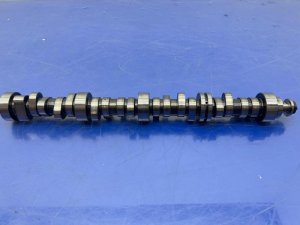
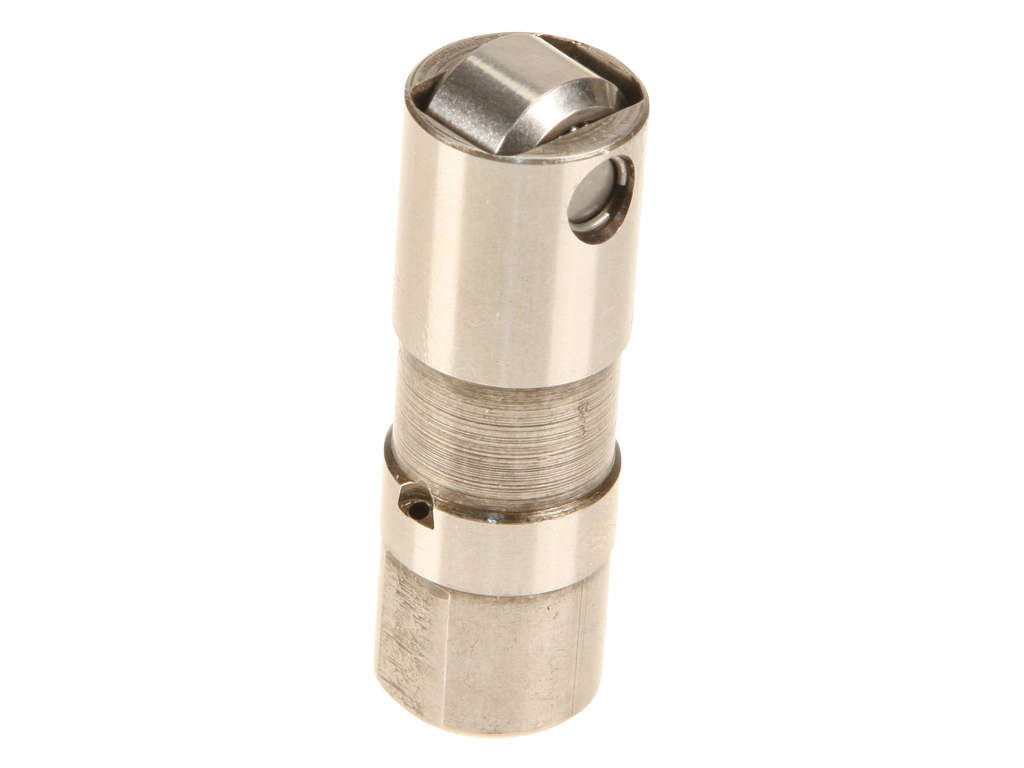
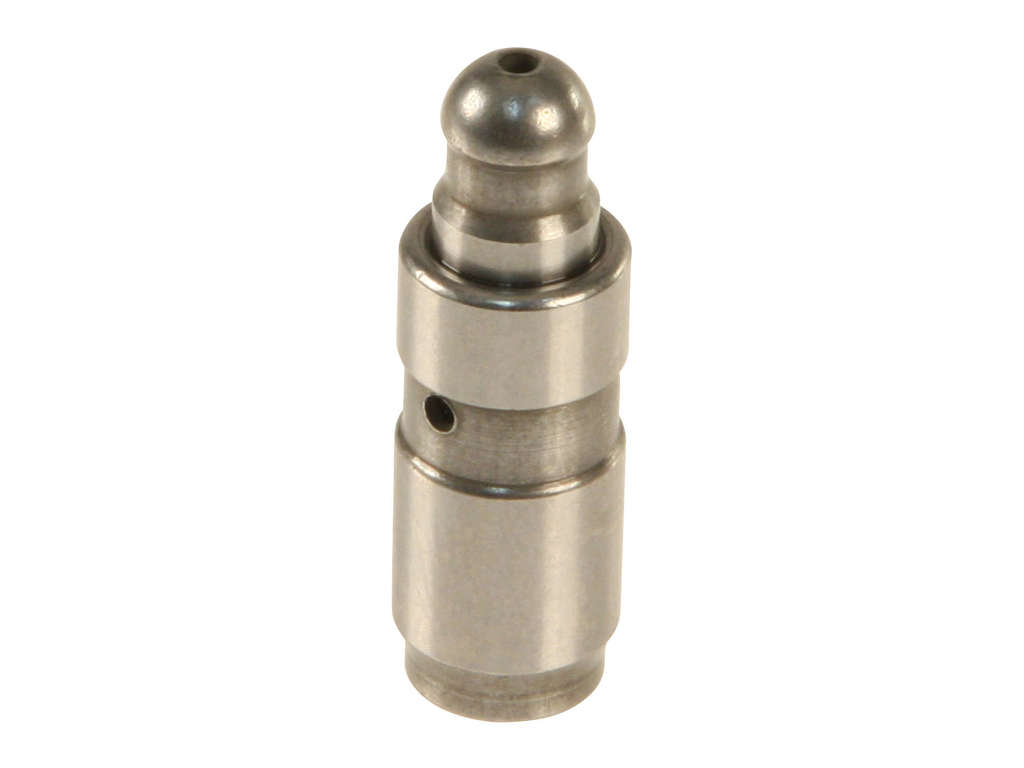
New Aftermarket Parts Available


The information in this article is provided for general reference and educational purposes only. Vehicle specifications, procedures, and part compatibility can vary by production date, trim level, and region. Always consult your vehicle's factory service manual and verify part numbers before purchasing or performing repairs. Safety-critical components such as airbags, seat belts, and braking systems should be installed by a qualified professional.
- Chevrolet CAMARO:
- 🎬 Helpful Videos
- 🛍️ Shop This Part
- What's Unique About the 2011-2018 Chevrolet CAMARO
- Diagnostic Flowchart
- Symptoms You May Notice
- Most Likely Causes
- Rare But Worth Checking
- Diagnosis Steps
- Parts You'll Likely Need
- Related Codes That Often Appear With This One
- Technical Service Bulletins (TSBs) & Recalls
- Platform-Specific Known Issues
- Mechanic-Grade Diagnostic Values
- Scan Tool Commands That Help
- Wiring & Ground Locations
- Real Owner Repair Stories
- OEM Part Supersession History
- Model Year Variations Within This Range
- 🎟️ Get 5% Off