

P0011 on 2009-2011 Chevrolet Aveo: Camshaft Timing Causes and Fixes
On the 2009-2011 Aveo, code P0011 is most often caused by low or dirty engine oil, or a failing intake camshaft position actuator solenoid. Always check your oil first; if the oil is clean and full, replacing the solenoid is a common, affordable DIY fix. In some cases, especially after recent engine work, a missing plastic oil sleeve on the camshaft can be the culprit.
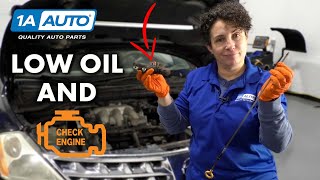
- First, check your engine oil. Low or dirty oil is the number one cause of P0011 on an Aveo.
- If the oil is fine, the intake VVT solenoid is the next most likely culprit and is a relatively easy and inexpensive part to replace.
- The 1.6L engine is an interference engine, so if the timing belt is old or shows signs of wear, it should be replaced immediately to prevent catastrophic engine damage.
- If the code appeared immediately after other engine work, refer to TSB #PIP4543D and check for a missing camshaft oil sleeve.
What's Unique About the 2009-2011 Chevrolet AVEO

The 1.6L E-TEC II engine in the Aveo is an interference engine with a timing belt, making correct timing critical. This engine's VVT system is highly sensitive to oil quality and pressure, and low or dirty oil is a primary trigger for this code. A unique and well-documented issue, detailed in GM Technical Service Bulletin #PIP4543D, involves a small black plastic oil sleeve located between the camshaft and the actuator. This sleeve, which directs oil flow, can be easily lost, forgotten, or damaged during repairs like a timing belt change or cylinder head work, leading directly to VVT-related codes like P0011.
Diagnostic Flowchart
Tap your situation to follow the diagnostic path that matches what you're seeing on this vehicle.
Symptoms You May Notice
- Check Engine Light is on
- Rough or unstable idle
- Engine stalling, especially at low speeds or when coming to a stop
- Poor acceleration and loss of power
- Hesitation when accelerating
- Worse than usual fuel economy
- Rattling noise from the engine
- Replacing the camshaft position sensor when the actuator solenoid is the actual problem.
- Replacing the timing belt without addressing a faulty VVT solenoid, leading to the code returning.
- Performing expensive timing belt work when the actual issue was simply low or dirty engine oil.
Most Likely Causes

- Low or Dirty Engine Oil 🔴 High Probability The VVT system uses oil pressure to adjust cam timing. The small passages in the actuator solenoids are easily clogged by sludge or debris from old or incorrect viscosity oil, preventing proper function. These engines are known to be very picky about oil quality.
How to confirm: Check the engine oil dipstick. The oil level should be between the 'add' and 'full' marks. Inspect the oil's color and consistency; if it is black, thick, or gritty, it needs to be changed. Low oil level is a very common cause.
Typical fix: Perform an oil and filter change using the manufacturer-recommended oil viscosity (5W-30). In some cases, an engine flush may help clear sludge before adding fresh oil.
Est. part cost: $30-$60 - Faulty Intake Camshaft Position Actuator Solenoid 🔴 High Probability These solenoids are a very common failure point on GM Ecotec and E-TEC engines. Internal seals can wear out, the internal plunger can get stuck from sludge, or the solenoid can fail electrically.
How to confirm: Use a scan tool to monitor desired vs. actual cam position. A simple and effective test is to swap the intake solenoid (usually gray connector) with the identical exhaust solenoid (usually black connector). Clear the codes and drive. If the code changes to P0014 (Exhaust Camshaft Position), the solenoid is confirmed to be bad. You can also bench test the solenoid by applying 12V to its pins to see if the internal plunger clicks.
Typical fix: Replace the intake camshaft position actuator solenoid. It is located on top of the valve cover and held in by a single 10mm bolt, making it an easy DIY job.
Est. part cost: $25-$70 - Worn or Stretched Timing Belt 🟡 Medium Probability The 1.6L is an interference engine with a timing belt that has a finite service life. A stretched or jumped belt can cause the base camshaft timing to be off, triggering the code. While the service interval is 100,000 miles, premature failure is reported, and many owners replace it sooner.
How to confirm: This requires a visual inspection of the belt's condition and alignment marks, which involves partial engine disassembly. A user on a Reddit forum noted that a P0011 code could indicate the belt has stretched or skipped a tooth.
Typical fix: Replace the timing belt, water pump, tensioner, and idler pulleys as a complete kit. This is a labor-intensive job. A code appearing immediately after a timing belt service suggests the timing may have been set incorrectly.
Est. part cost: $150-$350 - Faulty Intake Camshaft Position Sensor ⚪ Low Probability Less common than a solenoid failure, but the sensor that reads the camshaft's position can fail, sending incorrect data to the ECM. Often, a failing sensor will be accompanied by other codes.
How to confirm: Test the sensor's output with a multimeter or oscilloscope. Swapping it with the exhaust cam sensor (if identical) can also be a diagnostic step. One owner on a RepairPal forum replaced both sensors and solenoids, but the code remained, indicating it's often not the root cause.
Typical fix: Replace the intake camshaft position sensor.
Est. part cost: $20-$50
Rare But Worth Checking
- Missing Camshaft Actuator Oil Sleeve: This is a very specific issue highlighted in TSB #PIP4543D. It typically only occurs after the cylinder head or camshaft actuators have been removed for a separate repair. A small black plastic sleeve that directs oil can be forgotten or damaged upon reassembly, causing VVT system failure and codes like P0011, P0014, P0016, or P0017. The sleeve is not sold separately and comes with a new camshaft actuator assembly.
- Failed Camshaft Phaser (Actuator Gear): The gear itself at the end of the camshaft can fail mechanically, getting stuck in an advanced position. This is much less common than a solenoid failure and more expensive to repair. A YouTube user documented that after trying all other fixes, replacing the intake sprocket (phaser) from a junkyard finally solved their P0011 issue.
Diagnosis Steps
- Check the engine oil level and condition. Top off or change the oil and filter if necessary. This is the first, cheapest, and most important step, as low or dirty oil is a very common cause.
- Scan for any other trouble codes to see if P0011 is appearing alone or with other related codes like P0010 or P0016.
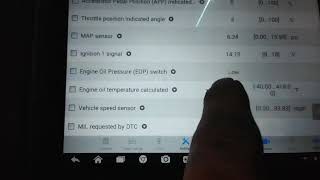
- Inspect the wiring and connector for the intake camshaft actuator solenoid (top of the engine, usually with a gray connector) for any damage, 🎬 Watch: A step-by-step diagnosis of P0010 and P0011 codes. corrosion, or loose connections.
- Swap the intake and exhaust VVT solenoids. They are identical parts. Clear the codes and drive the vehicle. If the code returns as P0014 (exhaust side), the solenoid you moved is faulty and needs to be replaced. This is a widely accepted diagnostic shortcut. 🎬 See how to diagnose VVT solenoids when your engine runs rough.
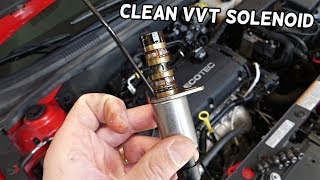
- If the code does not change after swapping solenoids, you can remove the intake solenoid and clean the mesh screens with brake or parts cleaner, then test it on a 12V source to see if it actuates. 🎬 Watch: How to clean and test your VVT solenoid screens.
- If solenoids are confirmed good, inspect the timing belt for wear, proper tension, and correct alignment. This is a more advanced step and may require a professional. A code appearing after a recent timing belt job strongly suggests a timing error.
- If all else fails, especially after a recent engine repair involving the camshafts, investigate the possibility of a missing camshaft actuator oil sleeve as described in TSB #PIP4543D.
Parts You'll Likely Need

- Intake Camshaft Position Actuator Solenoid
(OEM #55567050)— This is the most common part to fail that causes P0011, usually due to clogging from dirty oil or electrical failure. It is identical to the exhaust solenoid.
Trusted brands: ACDelco, Delphi, Dorman
OEM price range: $50-$95
Aftermarket price range: $25-$50 - Timing Belt Kit with Water Pump — If the timing belt is due for replacement or has stretched/jumped a tooth, it must be replaced to correct base timing. The water pump is replaced at the same time as it is driven by the belt and is a high-labor item to access.
Trusted brands: Gates, ACDelco, Continental
OEM price range: $250-$400
Aftermarket price range: $150-$250 - Engine Oil and Filter — Clean oil of the correct viscosity (5W-30) is essential for the VVT system to function properly. This should always be the first fix attempted.
Trusted brands: ACDelco, Mobil 1, Castrol
OEM price range: $50-$70
Aftermarket price range: $30-$50
Related Codes That Often Appear With This One
- P0010 — P0010 indicates a circuit problem with the intake camshaft actuator solenoid (e.g., open or short). If you see both, it points more strongly to an electrical issue with the solenoid or its wiring, rather than a mechanical/oil pressure problem.
- P0016 — P0016 indicates a correlation issue between the crankshaft and the intake camshaft. It often appears with P0011 when the timing is significantly off due to a jumped timing belt or a failed phaser. TSB #PIP4543D also lists this as a possible related code.
- P0014 — This is the corresponding code for the exhaust camshaft ('B' Camshaft). If you swap the intake and exhaust solenoids and P0011 is replaced by P0014, you have definitively diagnosed a bad solenoid.
Technical Service Bulletins (TSBs) & Recalls
- PIP4543D: Addresses DTCs P0011, P0014, P0016, or P0017 setting after engine repair, pointing to a missing camshaft actuator oil sleeve as the likely cause. This TSB applies to the Aveo, Pontiac G3/Wave, Saturn Astra, Chevy Cruze, and Sonic with the 1.6L or 1.8L engines.
Platform-Specific Known Issues
- Per TSB #PIP4543D, if P0
Mechanic-Grade Diagnostic Values
- Camshaft Position Actuator Solenoid Resistance — expected: 8 to 13 Ohms. Failure: A reading of OL (open loop), megaohms (millions of ohms), or a value significantly outside the 8-13 Ohm range indicates a failed solenoid.
- Camshaft Position Actuator Solenoid Connector Voltage (Key On, Engine Off) — expected: One pin should have battery voltage (approx. 12V).. Failure: No voltage on the supply pin indicates an open or short in the ignition voltage circuit, which must be repaired.
- Live Scan Tool Data - Camshaft Position Variance at Idle — expected: Should be at or very near 0 degrees for both intake and exhaust.. Failure: A consistent variance, such as one vehicle showing 12 degrees on the intake at idle, points to a timing or oil pressure issue.
Scan Tool Commands That Help
- Professional Scan Tool (e.g., GDS2, Tech2, Autel): VVT Actuator Test / Camshaft Position Control — Use this bidirectional control to command the intake VVT solenoid ON and OFF while the engine is idling. A functional solenoid and phaser will cause the engine to hesitate, run rough, or stall when the command is sent. If the engine's operation does not change, it confirms a problem in the solenoid, oil passages, or phaser.
Wiring & Ground Locations
- G103 — Below the engine coolant temperature sensor.. This is a primary engine ground. A poor connection at G103 can cause erratic behavior and fault codes for various engine sensors and actuators, including the VVT system.
- G104 — Next to the starter motor.. This is a main ground for the engine wiring harness. Corrosion or a loose connection here can lead to intermittent electrical issues and sensor faults.
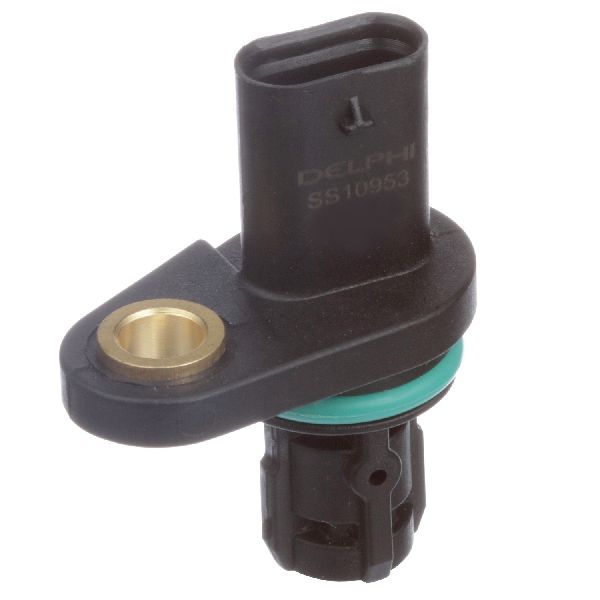
- Intake Camshaft Position Sensor Connector — On the top of the valve cover, connects to the intake camshaft position sensor.. This 3-wire connector provides the sensor with power, ground, and a signal line to the ECM. The pins are for 12V power, 5V signal, and ground. Damage or corrosion on these specific pins can cause faulty readings, leading to P0011 or related codes.
Real Owner Repair Stories
- YouTube user 'Fix It Rich' (Chevrolet Sonic (with same 1.6L engine as Aveo)) — Persistent P0011 code for over a year and a half.
❌ Tried (didn't work) Replaced intake VVT solenoid, Replaced intake camshaft position sensor, Performed multiple oil changes with different viscosities (5W-30, 10W-30, 10W-40), Used Seafoam engine flush, Redid the timing belt, Inspected oil pump gasket and oil filter housing plunger
✅ What actually fixed it Replacing the intake camshaft phaser (the gear/sprocket itself). The user sourced a used one from a junkyard, and the P0011 code was resolved immediately.
OEM Part Supersession History
12992408→55567050— Part has been updated by the manufacturer for improved reliability or material changes.
Heads up: The new part number (55567050) is the correct replacement for the original. Using old stock of 12992408 is not recommended if the updated part is available.
Model Year Variations Within This Range
- 2009: For the 2009 model year, the Aveo received a new, more fuel-efficient 1.6L Ecotec engine with variable valve timing, replacing the previous E-TEC II design. This change introduced the VVT system components (solenoids, phasers) that are central to the P0011 code. Models prior to 2009 with the older engine design would not experience this specific set of failures.
Helpful Videos

Used OEM Parts in Stock
New Aftermarket Parts Available


The information in this article is provided for general reference and educational purposes only. Vehicle specifications, procedures, and part compatibility can vary by production date, trim level, and region. Always consult your vehicle's factory service manual and verify part numbers before purchasing or performing repairs. Safety-critical components such as airbags, seat belts, and braking systems should be installed by a qualified professional.
- Chevrolet AVEO:
- 🎬 Helpful Videos
- 🛍️ Shop This Part
- What's Unique About the 2009-2011 Chevrolet AVEO
- Diagnostic Flowchart
- Symptoms You May Notice
- Most Likely Causes
- Rare But Worth Checking
- Diagnosis Steps
- Parts You'll Likely Need
- Related Codes That Often Appear With This One
- Technical Service Bulletins (TSBs) & Recalls
- Platform-Specific Known Issues
- Mechanic-Grade Diagnostic Values
- Scan Tool Commands That Help
- Wiring & Ground Locations
- Real Owner Repair Stories
- OEM Part Supersession History
- Model Year Variations Within This Range
- 🎟️ Get 5% Off