

P0011 on 2014-2019 Cadillac CTS: Causes and Fixes for Camshaft Timing Issues
On a 2014-2019 Cadillac CTS with either the 2.0T or 3.6L engine, DTC P0011 is overwhelmingly caused by a faulty Bank 1 intake camshaft position actuator solenoid. This failure is often due to degraded or low engine oil clogging the solenoid's screens. Replacing the affected solenoid is a common, affordable DIY repair that often resolves the issue without further intervention.
- P0011 on your CTS almost always points to a problem with the Bank 1 (passenger side) intake camshaft actuator solenoid.
- Before buying any parts, check your engine oil. Low or dirty oil is a very common cause of this code.
- The most likely fix is replacing the Bank 1 intake VVT solenoid (Part #12655420), a task that is accessible for most DIY mechanics.
- Multiple GM Technical Service Bulletins confirm this is a known issue, specifically mentioning debris on solenoid screens and internal sticking.
- If the code is accompanied by a rattling noise from the engine, it could indicate a more serious timing chain tensioner issue that should be inspected promptly.
What's Unique About the 2014-2019 Cadillac CTS

General Motors has issued several Technical Service Bulletins (TSBs) for this generation of CTS and related vehicles with the 2.0T and 3.6L engines, specifically pointing to issues with the camshaft position actuator solenoids. TSBs like #PIP5130K instruct technicians to inspect solenoid screens for debris and mention that sticking or binding solenoids are a known cause of this code, sometimes leading to severe symptoms like stalling or a crank-no-start condition. The VVT system's reliance on oil pressure makes it particularly sensitive to oil quality and maintenance intervals. For the 3.6L V6, a significant engine update occurred in 2016, moving from the LFX to the LGX design. The LGX features a redesigned, more robust VVT system and timing components to address issues found in the earlier LFX.
Diagnostic Flowchart
Tap your situation to follow the diagnostic path that matches what you're seeing on this vehicle.
Symptoms You May Notice
- Check Engine Light is on
- Rough or unstable idle
- Engine stalling, especially when slowing down or at idle
- Reduced engine power and sluggish acceleration
- Poor fuel economy
- Difficulty starting the engine, or a crank-no-start condition
- Rattling or ticking noise from the front of the engine, especially on startup
- Engine enters 'limp mode,' limiting RPM and speed
- Replacing the camshaft position sensor before thoroughly checking the oil and inspecting/swapping the actuator solenoid.
- Immediately assuming a major timing chain failure before ruling out the much more common, cheaper, and easier-to-fix VVT solenoids. Many owners report being quoted for a timing chain job when only a solenoid was needed.
Most Likely Causes

- Dirty or Failing Camshaft Position Actuator Solenoid (VVT Solenoid) 🔴 High Probability Multiple TSBs (#PIP5130K, #PIP5162) for this platform identify sticking solenoids and debris-clogged screens as the primary cause. Owners and mechanics widely report this as the first and most successful fix. The solenoids are electro-hydraulic valves that can get clogged with sludge from old oil or fail electrically.
How to confirm: Remove the Bank 1 intake solenoid (passenger side, front of the engine). Inspect the mesh screens for metallic debris or sludge. A definitive test is to swap the intake solenoid with the exhaust solenoid on the same bank (they are often the same part number). Clear the codes and drive. If the code changes to P0014 (Exhaust Cam Position), the solenoid is confirmed faulty. You can also test the resistance of the solenoid with a multimeter; a healthy solenoid should have a specific resistance (e.g., around 6.9 to 7.9 ohms), while a failed one may show an open circuit (infinite resistance).
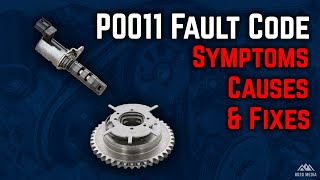
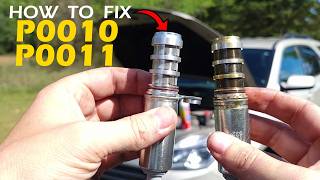
Typical fix: Clean the solenoid screens as a temporary measure, but replacement is the reliable, long-term solution. Many owners choose to replace all four solenoids (on V6) at once 🎬 Watch: A quick guide to fixing P0011 and P0014 on the 3.6L V6. as a preventative measure.
Est. part cost: $30-$70 per solenoid - Low or Dirty Engine Oil 🔴 High Probability The VVT system is entirely dependent on clean engine oil at the correct pressure to function. Extended oil change intervals can lead to sludge buildup that clogs the tiny passages and screens in the VVT solenoids and phasers, causing them to stick or respond slowly.
How to confirm: Check the oil level on the dipstick and note the oil's condition and mileage since the last change. If the oil is dark, below the 'add' line, or past its recommended service life, it is a primary suspect.
Typical fix: Perform an oil and filter change using a high-quality, full-synthetic oil that meets GM's dexos specification (e.g., 5W-30 for the 3.6L V6). This should be the very first step in addressing P0011.
Est. part cost: $60-$120 - Failing Camshaft Position Sensor ⚪ Low Probability
How to confirm: This sensor reports the camshaft's speed and position to the ECM. If the solenoid and oil are good, this is the next component to check. A failing sensor can send an erratic signal. Diagnosis often requires an oscilloscope to view the signal pattern or swapping it with a known-good sensor. Often, a failing sensor will also set other codes like P0341.
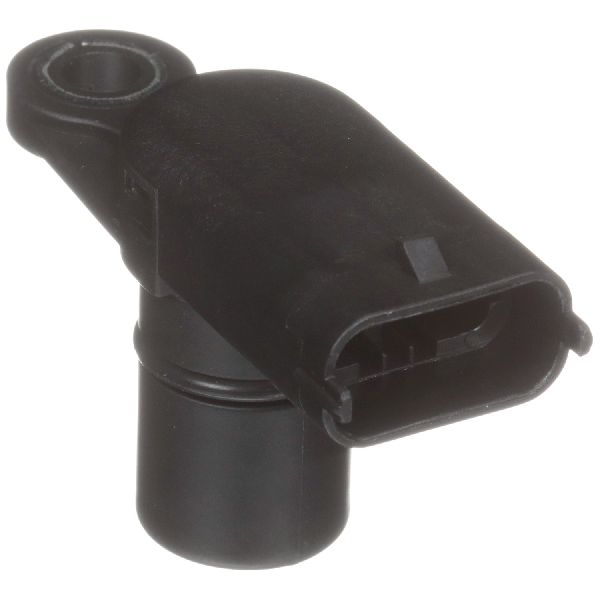
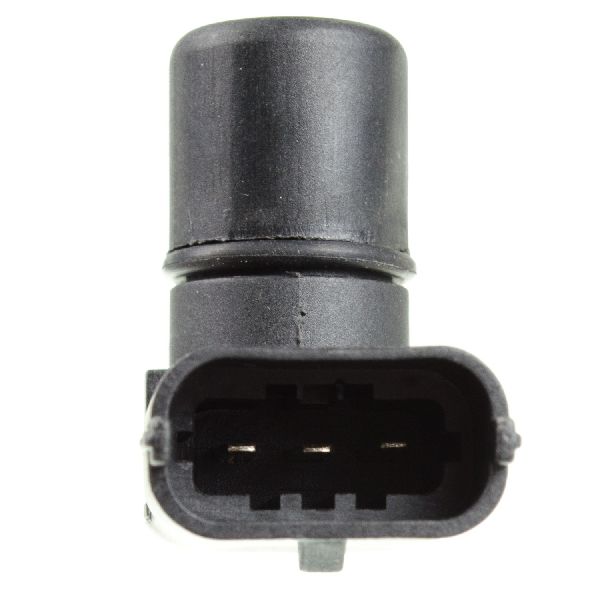
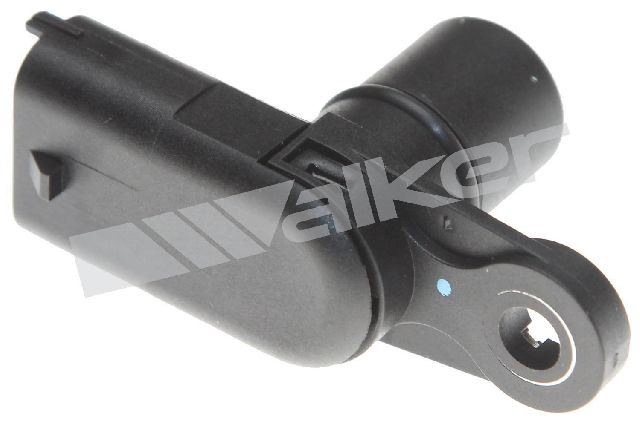
Typical fix: Replace the Bank 1 intake camshaft position sensor.
Est. part cost: $25-$50 - Stretched Timing Chain or Failed Tensioner ⚪ Low Probability While much less common than solenoid failure, the timing chains on the 3.6L V6 (especially the pre-2016 LFX engine) can stretch over time, particularly with high mileage or poor maintenance. TSB #PIP5652A notes that a stuck or collapsed tensioner can cause a rattle and set code P0011. Some GM documentation notes that an 'over-advanced' code can misleadingly indicate a retarded cam position due to chain slack.
How to confirm: This is a major diagnostic undertaking. It typically presents with a persistent rattling noise from the front of the engine. Confirmation requires significant disassembly to inspect the timing marks, chain guides for wear, and measure chain slack.
Typical fix: Replace the timing chains, guides, and tensioners. This is a very labor-intensive and expensive job.
Est. part cost: $500-$1000+
Rare But Worth Checking
- Failed Camshaft Phaser/Actuator Gear: The mechanical gear itself, which is controlled by the solenoid, can fail internally. This is usually diagnosed only after all other, more common causes have been ruled out. It may be clogged with debris or have a failure in its internal locking pin mechanism.
- Wiring Harness Damage: Damage to the wires or connector for the camshaft actuator solenoid or position sensor can cause a loss of signal, triggering the code. Check for frayed wires, oil contamination in the connector, or loose pins.
- Bent Camshaft Exciter Wheel: A rare issue where the reluctor wheel (exciter wheel) on the camshaft, which the camshaft position sensor reads, can become bent and contact the timing chain, causing an erratic signal. This requires inspection with a borescope through the sensor hole.
Diagnosis Steps

- Check the engine oil level and condition. If low, dirty, or past its service interval, perform an oil and filter change with the correct viscosity dexos-approved oil. Clear codes and re-test.
- Scan for any other diagnostic trouble codes. Codes for other solenoids (P0014, P0021, P0024) or sensors (P0341) can provide critical diagnostic clues.
- Inspect the wiring and connector for the Bank 1 intake camshaft position actuator solenoid for any visible damage, corrosion, or oil saturation.
- Following TSB #PIP5130K, a technician with a capable scan tool can command the solenoid on and off to check for a response. A sticking solenoid may free up temporarily after being cycled.
- Remove the Bank 1 intake solenoid. On the 3.6L V6, it is on the passenger-side cylinder head. On the 2.0T L4, it is on the top of the engine under the plastic cover. 🎬 See this walkthrough on how to replace the VVT solenoid. Inspect the solenoid's screens for sludge or metallic debris. Clean if dirty, but replacement is recommended for reliability.
- For a definitive test, swap the intake solenoid with the exhaust solenoid on the same bank (Part No. 12679099 and 12679100 are often physically identical). Clear codes and drive. If the code returns as P0014 (Exhaust Cam Position), the solenoid is faulty and must be replaced.
- If the solenoid swap does not move the code, test the resistance of the original solenoid with a multimeter. Compare its reading to a new part or the other solenoids. A reading between 6.9 and 7.9 ohms is expected; an open or shorted circuit indicates failure.
- If solenoids and oil are confirmed good, investigate the camshaft position sensor and its circuit.
- If a rattling noise is present and all other steps fail, the final step is to investigate for a mechanical timing problem, such as a stretched timing chain, worn guides, or a failed tensioner.
Parts You'll Likely Need

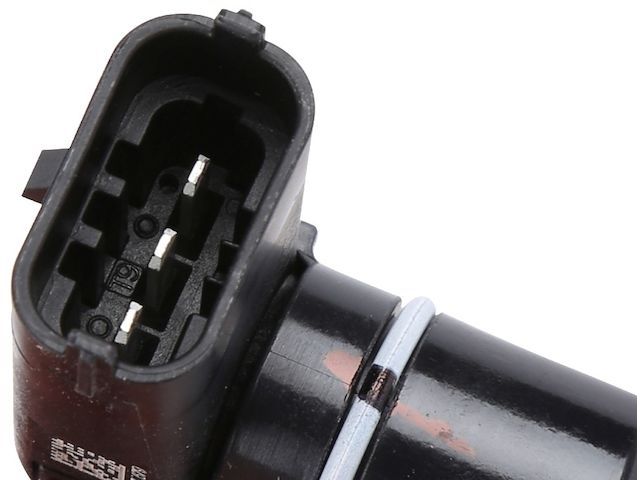
- Camshaft Position Actuator Solenoid (Intake, Bank 1)
(OEM #12679099 (supersedes 12655420, 12646783, 12628347, 12578517))— This is the most frequent failure point for code P0011. The original part numbers have been superseded multiple times.
Trusted brands: ACDelco (OEM), Dorman
Related Codes That Often Appear With This One
- P0014 — This code is for the exhaust camshaft on Bank 1. TSB #PIP5568E notes that these codes often set together, suggesting a common cause like an oil pressure/quality issue affecting the entire bank. Swapping a faulty intake solenoid with the exhaust one will cause P0011 to be replaced by P0014.
- P0021 — This is the equivalent code (Intake Cam Over-Advanced) for Bank 2 (driver's side). Seeing both P0011 and P0021 strongly points to a systemic issue like low/dirty oil or an out-of-date ECM calibration rather than a single failed part.
- P00C6 — TSBs #PIP5130K and #PIE0359A link this code with P0011, often in crank-no-start or stalling situations. This points to a severe timing deviation caused by a stuck solenoid.
- P0016 / P0017 — These codes indicate a correlation issue between the crankshaft and camshaft. They are more indicative of a base timing problem, such as a stretched timing chain or a jumped tooth, and may appear with P0011 if the mechanical timing is compromised.
Technical Service Bulletins (TSBs) & Recalls

- PIP5130K: Diagnosing intermittent crank-no-start with DTC P0011 or P00C6 due to a sticking Camshaft Position Actuator Solenoid Valve.
- PIP5568E: Investigation into P0011, P0014, P0021, P0024 setting together.
- PIE0359A: Concludes an engineering investigation into crank-no-start or stalling conditions with DTC P0011.
- PIP5162: Instructs technicians to inspect camshaft solenoid screens for debris.
- 17-NA-098: Recommends replacing both solenoids on a bank and updating ECM software.
Platform-Specific Known Issues
- TSB #PIP5130K: Crank-No-Start Condition: This bulletin details a procedure for a crank-no-start condition accompanied by P0011. It confirms the cause is often a sticking Camshaft Position Actuator Solenoid. The recommended dealer procedure is to use a scan tool (GDS) to cycle the solenoid multiple times to try and un-stick it before replacement.
- TSB #PIP5162: Debris on Solenoid Screens: An early bulletin for this platform that specifically instructs technicians to remove the camshaft solenoids and inspect the screens for debris as a primary diagnostic step for P0011 and P0014.
- TSB #17-NA-098: Solenoid Replacement and ECM Update: A later TSB that acknowledges high failure rates. It recommends replacing both the intake and exhaust camshaft position actuator solenoid valves for the affected bank and then verifying the ECM has the most up-to-date software calibration installed. It also provides the updated part numbers (12679099/12679100).
Mechanic-Grade Diagnostic Values
- Camshaft Position Actuator Solenoid Resistance — expected: 6.9 - 7.9 Ohms at 68°F (20°C). Failure: No reading (open circuit) or a reading outside the specified range.
- Engine Oil Pressure (3.6L Engine, Hot) — expected: Minimum 24 psi at 1,000 RPM. Failure: Pressure significantly below 24 psi at 1,000 RPM when the engine is at operating temperature.
Scan Tool Commands That Help
- GM GDS2 (Global Diagnostic System 2): Camshaft Position Actuator Control — This bidirectional control allows a technician to command the solenoid to change the camshaft angle. By observing the actual vs. desired cam angle on the scan tool's live data, a technician can determine if the solenoid is sticking, responding slowly, or not responding at all. This is a key step before replacing parts, as mentioned in TSB #PIP5130K.
Wiring & Ground Locations
- VVT Solenoid Connector (2.0T LTG) — On top of the engine, under the plastic engine cover. There are two solenoids, one for intake (Callout 26) and one for exhaust (Callout 21), each held by a 10mm bolt.. This is the primary electrical connection to inspect for damage, corrosion, or oil contamination when diagnosing P0011. A poor connection can mimic a failed solenoid.
- VVT Solenoid Connector (3.6L V6) — On the front of each cylinder head. Bank 1 (passenger side) and Bank 2 (driver side) each have an intake and exhaust solenoid, accessible from the top of the engine bay.. This is the main connection point for testing voltage and resistance of the Bank 1 intake solenoid. The connector has two pins for the solenoid's control circuit.
Real Owner Repair Stories
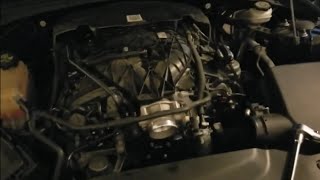
- YouTube user 'stollo770' (2014 Cadillac CTS 3.6L V6 with 80,000 miles) — Check Engine Light with code P0011. The user notes the car was not running rough, but the code was present.
❌ Tried (didn't work) The user went straight to the most likely cause.
✅ What actually fixed it The user replaced all four camshaft position actuator solenoids as a preventative measure. He demonstrates the location and replacement procedure, confirming this resolved the P0011 code. - YouTube user 'Fixing cars and stuff' (Cadillac ATS 2.0T (year not specified, but same LTG engine)) — Check Engine Light, sluggish performance, loss of power, especially when accelerating or going uphill. Code scan revealed an issue with the exhaust camshaft position actuator.
❌ Tried (didn't work) An oil change was performed, but the issue persisted.
✅ What actually fixed it Replaced both the intake and exhaust camshaft actuator solenoids. The user notes that even if only one is bad, it's good practice to replace both. This fixed the sluggish performance and cleared the check engine light.
OEM Part Supersession History
12655420 (and others)→12679099— GM regularly updates service parts to integrate new materials and technologies for improved reliability.
Heads up: The new part number 12679099 is the correct service replacement for a wide range of GM 4-cylinder and V6 engines, replacing 12578517, 12628347, and 12646783 among others.
Model Year Variations Within This Range
- 2014-2015 (3.6L V6): These years use the 3.6L LFX engine. While a capable engine, it is known to be more susceptible to timing chain stretch issues compared to its successor.
- 2016-2019 (3.6L V6): These years use the updated 3.6L LGX engine. This engine was a significant redesign, featuring a more robust timing chain system, improved VVT with an 'intermediate park' feature, and a variable displacement oil pump, all intended to increase reliability and efficiency over the LFX.
Helpful Videos
We Have This Part in Stock


The information in this article is provided for general reference and educational purposes only. Vehicle specifications, procedures, and part compatibility can vary by production date, trim level, and region. Always consult your vehicle's factory service manual and verify part numbers before purchasing or performing repairs. Safety-critical components such as airbags, seat belts, and braking systems should be installed by a qualified professional.
- Cadillac CTS:
- 🎬 Helpful Videos
- 🛍️ Shop This Part
- What's Unique About the 2014-2019 Cadillac CTS
- Diagnostic Flowchart
- Symptoms You May Notice
- Most Likely Causes
- Rare But Worth Checking
- Diagnosis Steps
- Parts You'll Likely Need
- Related Codes That Often Appear With This One
- Technical Service Bulletins (TSBs) & Recalls
- Platform-Specific Known Issues
- Mechanic-Grade Diagnostic Values
- Scan Tool Commands That Help
- Wiring & Ground Locations
- Real Owner Repair Stories
- OEM Part Supersession History
- Model Year Variations Within This Range
- 🎟️ Get 5% Off