

P0009 on 2010-2017 GMC Terrain: V6 Timing Chain Causes and Fixes
On a 2010-2017 GMC Terrain with a V6 engine, code P0009 almost always indicates stretched timing chains. This is a serious and expensive repair, often costing between $1,500 and $3,200, that requires replacing the three chains, tensioners, and guides. Ignoring the code can lead to catastrophic engine failure if the chain breaks.
- P0009 on a V6 GMC Terrain is a serious code that points directly to stretched timing chains.
- Do not waste money replacing camshaft or crankshaft sensors; they are almost never the root cause.
- The only correct fix is to replace all three timing chains, guides, and tensioners as a complete kit.
- This is a well-documented factory defect, previously covered by an extended warranty (10 years/120,000 miles) that has likely expired for these model years.
- Frequent oil changes with high-quality, dexos-approved oil are critical to prolonging the life of the replacement chains.
What's Unique About the 2010-2017 Gmc TERRAIN
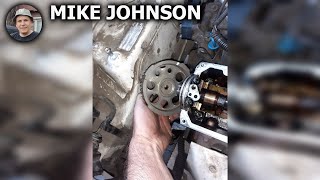
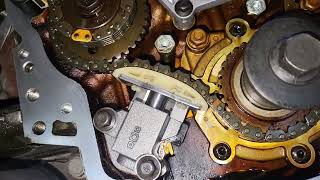
The 3.0L (LF1, LFW) and 3.6L (LLT) "High Feature" V6 engines used in this generation of the GMC Terrain and its platform mates are known for premature timing chain stretching. This issue was so prevalent that General Motors issued multiple Technical Service Bulletins (TSBs), such as #12-06-01-009F, acknowledging the problem and releasing updated timing chain kits. The issue is often attributed to a combination of factors including the original chain design, extended oil change intervals (following the oil life monitor), and oil degradation, which reduces lubrication and accelerates wear on the chains, guides, and hydraulic tensioners.
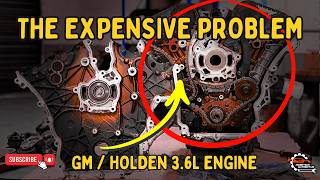
🎬 Watch: Why these GM V6 timing chains fail so often.Diagnostic Flowchart
Tap your situation to follow the diagnostic path that matches what you're seeing on this vehicle.
Symptoms You May Notice
- Check Engine Light is on
- Rough or unstable engine idle
- Reduced engine power and sluggish acceleration
- Rattling or whining noise from the engine, especially on startup or acceleration
- Difficulty starting the engine
- Decreased fuel economy
- Engine stalling, particularly at idle or low speeds
- Replacing only the camshaft or crankshaft position sensors without verifying the mechanical timing. The sensors are reporting a real problem, they are not the cause of it.
- Replacing only one or two of the three timing chains. All chains, guides, and tensioners wear together and should be replaced as a complete set to ensure a lasting repair.
- Replacing VVT solenoids without confirming the base mechanical timing is correct.
Most Likely Causes
- Stretched Timing Chains 🔴 High Probability The original timing chains (one primary, two secondary) on the 3.0L and 3.6L V6 engines were susceptible to premature wear and stretching, a fact acknowledged by GM in TSB #12-06-01-009F. This is the most common cause for P0009 on this platform.
How to confirm: A mechanic can use a scan tool to view cam/crank deviation data; a deviation greater than a few degrees is a strong indicator. A lab scope can also be used to compare camshaft and crankshaft sensor waveforms against a known-good pattern for definitive electronic diagnosis. Physical confirmation requires removing the engine's front cover to inspect the chains for slack.
Typical fix: Replace all three timing chains, all tensioners, and all guides with an updated kit. It is critical to replace everything as a set.
Est. part cost: $350-$600 - Failed Timing Chain Tensioners or Guides 🔴 High Probability Tensioners are hydraulic and can fail due to dirty oil or wear, losing their ability to keep the chain taut. The plastic guides can become brittle and break, with pieces sometimes falling into the oil pan. This is part of the overall system weakness.
How to confirm: Typically diagnosed during a timing chain inspection. Broken guide pieces may be found in the oil pan during the repair.
Typical fix: Always replaced as part of a complete timing chain service. It is not recommended to replace only the tensioners or guides.
Est. part cost: $0 (Included in timing chain kit) - Low or Degraded Engine Oil 🟡 Medium Probability The timing chain tensioners are hydraulic and rely on clean oil at the proper pressure to function. Following the factory Oil Life Monitor (OLM) can lead to extended drain intervals, allowing the oil to break down and form sludge. This starves components of lubrication and accelerates wear, contributing directly to chain stretch.
How to confirm: Check the oil level on the dipstick and inspect its condition. An oil pressure test can also be performed. This is often a contributing factor rather than the sole cause.
Typical fix: Change the oil and filter with the correct viscosity (5W-30) and type (dexos approved). This is a critical maintenance step but will not fix already stretched chains.
Est. part cost: $40-$80
Rare But Worth Checking
- Faulty Camshaft or Crankshaft Position Sensor: While these sensors can fail, they are often mistakenly replaced when the root cause is the mechanical timing. It's rare for a sensor to cause a persistent P0009 without other sensor-specific codes (e.g., P0340-P0349). The sensors are usually accurately reporting the timing deviation.
- Failing Camshaft Actuator Solenoids (VVT Solenoids): A stuck or slow-to-respond solenoid can cause a temporary cam/crank misalignment. However, this usually throws solenoid-specific codes (like P0010, P0013) in addition to correlation codes. They can be a contributing factor but are seldom the primary cause of a persistent P0009.
- Shifted Crankshaft Reluctor Wheel: In some GM vehicles, the reluctor wheel pressed onto the crankshaft can move slightly, causing the crankshaft position sensor to get an incorrect reading. TSB #PIP3423P mentions inspecting the reluctor wheel with a borescope through the crankshaft position sensor hole as a diagnostic step.
Diagnosis Steps
- Verify the code with a professional OBD-II scanner.
- Check the engine oil level and condition. If low or dirty, correct it, clear the codes, and see if the code returns. This is a critical first step.
- Use a scan tool to monitor live data for camshaft and crankshaft position. Observe the cam/crank correlation PIDs to see how far the timing has deviated. A consistent deviation of more than 4-5 degrees is a strong sign of a stretched chain.
- If available, use a lab scope to compare the crankshaft sensor signal with the camshaft position sensor signals for Bank 2. Compare the resulting waveform to a known-good pattern to definitively confirm a timing issue electronically.
- As per TSB #PIP3423P, consider a visual inspection of the crankshaft reluctor wheel using a borescope through the crank sensor port to rule out a shifted reluctor.
- If timing deviation is confirmed, the only reliable fix is timing chain replacement. Physical inspection of the timing chains by removing the front engine cover is the final definitive diagnostic step before committing to the repair.
Parts You'll Likely Need
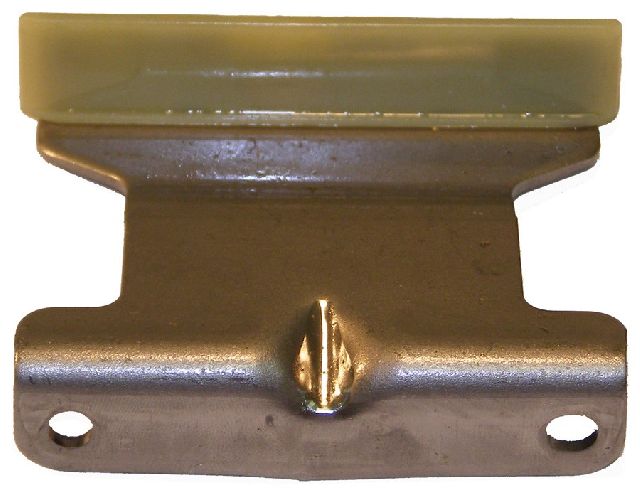
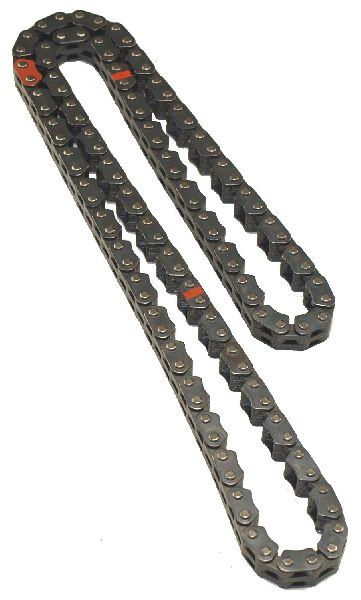
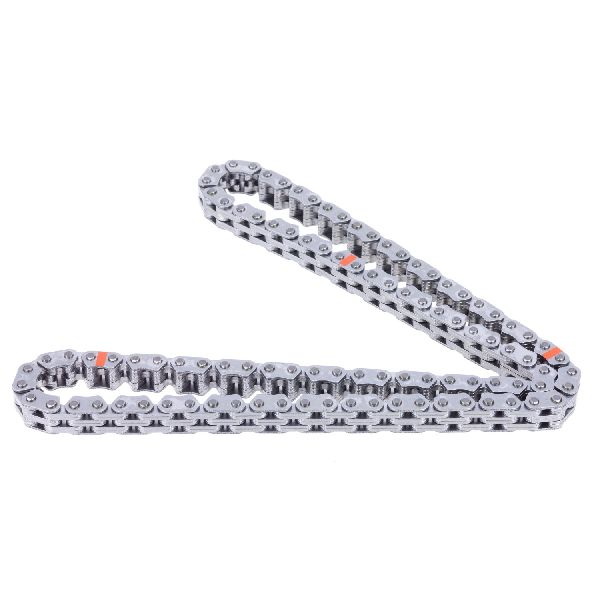
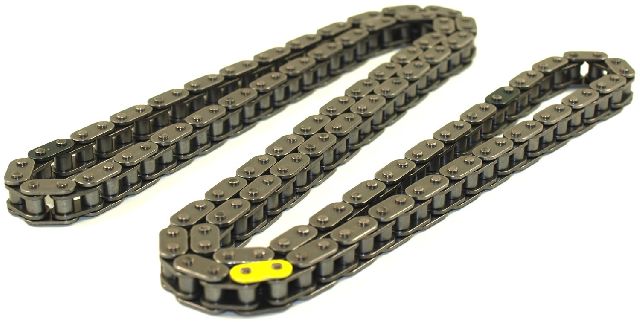
- Engine Timing Chain Kit
(OEM #12650230 (kit for many 2007-2012 models, verify by VIN), 12690933 (newer GM kit))— This is the comprehensive solution, containing the updated chains, tensioners, guides, and sometimes gears needed to correct the stretched chain issue. TSB #12-06-01-009F advises against replacing sprockets or actuators unless they are visibly worn.
Trusted brands: ACDelco (GM Genuine), Cloyes
OEM price range: $400-$600
Aftermarket price range: $250-$450
Related Codes That Often Appear With This One
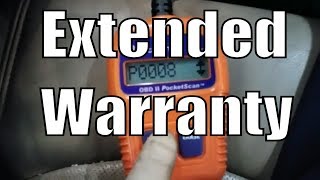
- P0008 — P0008 is the equivalent code for Bank 1 (the bank closer to the radiator). It is extremely common to see both P0008 and P0009 together, indicating the timing is off on both banks of the V6 engine, confirming a systemic timing chain issue.
- P0016, P0017, P0018, P0019 — These are more specific camshaft/crankshaft correlation codes for intake and exhaust cams on both banks. They often accompany P0008/P0009 and point to the same stretched timing chain issue, as noted in TSB #PIP3423P and TSB #12-06-01-009F.
Technical Service Bulletins (TSBs) & Recalls
- PIP3423P: Advises technicians to inspect for loose timing chains or a shifted crankshaft reluctor when P0009 (and related codes) are set.
- 12-06-01-009F: Announces availability of updated timing chain kits for V6 engines to fix issues causing P0009 and other timing codes. It also advises against replacing sprockets and actuators unless necessary.
- 11340C: A past Special Coverage program that extended the warranty for timing chain issues to 10 years/120,000 miles, highlighting the prevalence of the problem.
Platform-Specific Known Issues
- Special Coverage Adjustment 11340C: GM issued a special coverage program (11340C) extending the warranty on timing chains to 10 years or 120,000 miles for certain vehicles with the 3.6L V6 engine due to this known issue. While this program has likely expired for most 2010-2017 Terrains based on time, it serves as official acknowledgment of the defect.
- TSB #12-06-01-009F: Specifically mentions the availability of updated timing chain kits to repair stretched chains causing codes like P0009 on the High Feature V6 engines.
- TSB #PIP3423P: Instructs technicians to inspect for loose timing chains or a shifted crankshaft reluctor wheel when P0009 is present, confirming this as the primary diagnostic path.
Mechanic-Grade Diagnostic Values
- Camshaft/Crankshaft Correlation Deviation — expected: Less than 4-5 degrees at idle. Failure: A consistent deviation greater than 9 degrees will set the code on many GM vehicles. Any consistent deviation over 4-5 degrees indicates a likely mechanical timing issue.
- Camshaft Position Actuator Solenoid Resistance — expected: Approximately 5 ohms. Failure: A reading significantly higher or lower than 5 ohms suggests a faulty solenoid.
Scan Tool Commands That Help
- GDS2 (GM Global Diagnostic System 2): Camshaft Position Actuator Solenoid Test — Use this bidirectional control to command the VVT solenoids on and off while monitoring the camshaft angle PIDs. This helps verify if the solenoids are responding to commands from the ECM and if the phasers are moving. A non-responsive phaser could indicate a faulty solenoid, low oil pressure to the phaser, or a mechanically stuck phaser.
- GDS2 (GM Global Diagnostic System 2): View Camshaft Angle Parameters (Desired vs. Actual) — Before a DTC sets, observing the desired versus actual camshaft angle parameters can help isolate whether a condition is specific to one camshaft, one bank, or a primary timing issue affecting both banks. This is a key data point for diagnosis.
Wiring & Ground Locations
- G107 (or G105/G106 depending on year/engine) — Typically located on the engine block or cylinder head near the front of the engine on the driver's side. These are the primary grounds for the Engine Control Module (ECM).. A poor ECM ground can cause erratic sensor readings and incorrect calculations, potentially leading to false timing correlation codes. Verifying this ground is clean and tight is a crucial step in electrical diagnosis.
- Camshaft/Crankshaft Sensor Connectors — Bank 2 camshaft sensors are on the firewall side of the engine; the crankshaft sensor is located on the lower side of the engine block, often near the transmission bell housing.. The 3-wire connectors for the cam and crank sensors carry the 5V reference, signal, and ground circuits. Damage to this wiring from heat or abrasion can corrupt the signals sent to the ECM, causing timing codes.
Real Owner Repair Stories
- Camaro5 Chevy Camaro Forum (2011 Chevrolet Camaro V6 (LLT Engine) with 55,000 miles) — Check Engine Light with codes P0008, P0009, P0016. Sluggish performance and extreme power loss.
❌ Tried (didn't work) Replacing the timing chains with a new kit., Replacing all four VVT Cam Phasers.
✅ What actually fixed it The crankshaft reluctor wheel had slipped 1.5 teeth. A mechanic was able to reposition the wheel without removing the crankshaft and applied a small tack weld to prevent future movement. The user recommends inspecting the reluctor wheel position before replacing timing chains.
OEM Part Supersession History
N/A (Original Cam Phasers)→N/A (Updated Cam Phasers)— When replacing cam phasers (VVT actuators) as part of a timing job, TSB #12-06-01-009F notes that the replacement phasers are a different design and require a thinner thrust washer.
Heads up: Using the original, thicker thrust washers with the new style phasers will result in zero camshaft endplay, leading to rapid failure. The new and old phasers can be identified by the number of bolts holding them together (4 vs 5).
Model Year Variations Within This Range
- 2010-2012: Early models primarily used the 3.0L (LF1) and 3.6L (LLT) V6 engines. The LLT engine in particular is widely known for the timing chain stretching issue.
- 2013-2017: For 2013, the 3.6L V6 was updated from the LLT to the LFX engine. The LFX featured a redesigned, more durable timing chain system to address the premature stretching issue, though 2012 was a transition year and may still have the older chain design. The LFX also has integrated exhaust manifolds, meaning traditional exhaust headers cannot be fitted.
Helpful Videos
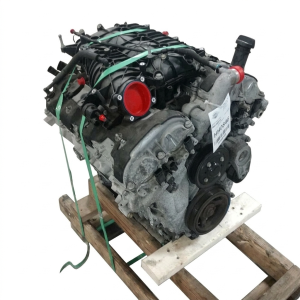
Used OEM Parts in Stock
New Aftermarket Parts Available



The information in this article is provided for general reference and educational purposes only. Vehicle specifications, procedures, and part compatibility can vary by production date, trim level, and region. Always consult your vehicle's factory service manual and verify part numbers before purchasing or performing repairs. Safety-critical components such as airbags, seat belts, and braking systems should be installed by a qualified professional.
- Gmc TERRAIN:
- 🎬 Helpful Videos
- 🛍️ Shop This Part
- What's Unique About the 2010-2017 Gmc TERRAIN
- Diagnostic Flowchart
- Symptoms You May Notice
- Most Likely Causes
- Rare But Worth Checking
- Diagnosis Steps
- Parts You'll Likely Need
- Related Codes That Often Appear With This One
- Technical Service Bulletins (TSBs) & Recalls
- Platform-Specific Known Issues
- Mechanic-Grade Diagnostic Values
- Scan Tool Commands That Help
- Wiring & Ground Locations
- Real Owner Repair Stories
- OEM Part Supersession History
- Model Year Variations Within This Range
- 🎟️ Get 5% Off